ADDITIONAL ISSUES FOR CLASSROOM DISCUSSION
1. Ask students what they think about banks in general and the services that
banks provide. How would they rank bankers compared with lawyers,
professors, and doctors in terms of prestige? With the advent of electronic
banking and the use of ATMs, many students will never have talked with
an actual banker. Students may be surprised to learn that much of a
banker’s activities involve salesmanship, especially finding borrowers in
competition with other banks.
2. Before they read the chapter, ask your students what they think about
bank’s charging ATM fees. Then, once they have read the chapter and in
particular the box on ATM fees, ask them to consider whether their earlier
views are still correct.
3. In recent years, some banks have been accused of exploitative practices
by getting poor people to take out credit cards or other forms of credit at
high interest rates or with high fees. But, as recently as 30 years ago,
people with low incomes and low wealth had no access to credit at all. Is it
better that they have access to credit at a high cost or that they have no
access to credit at all?
SOLUTIONS TO TEXTBOOK NUMERICAL
EXERCISES AND ANALYTICAL PROBLEMS
Numerical Exercises
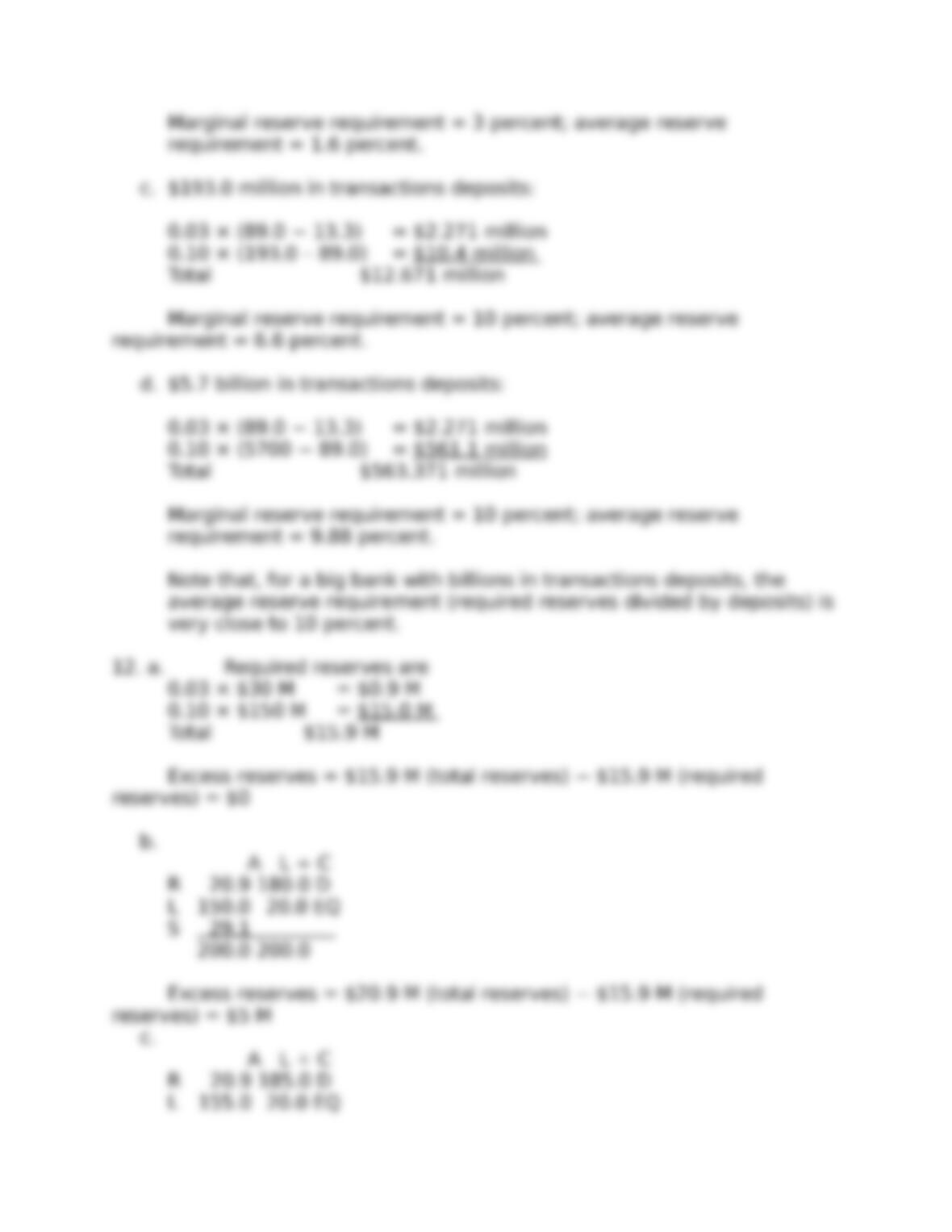
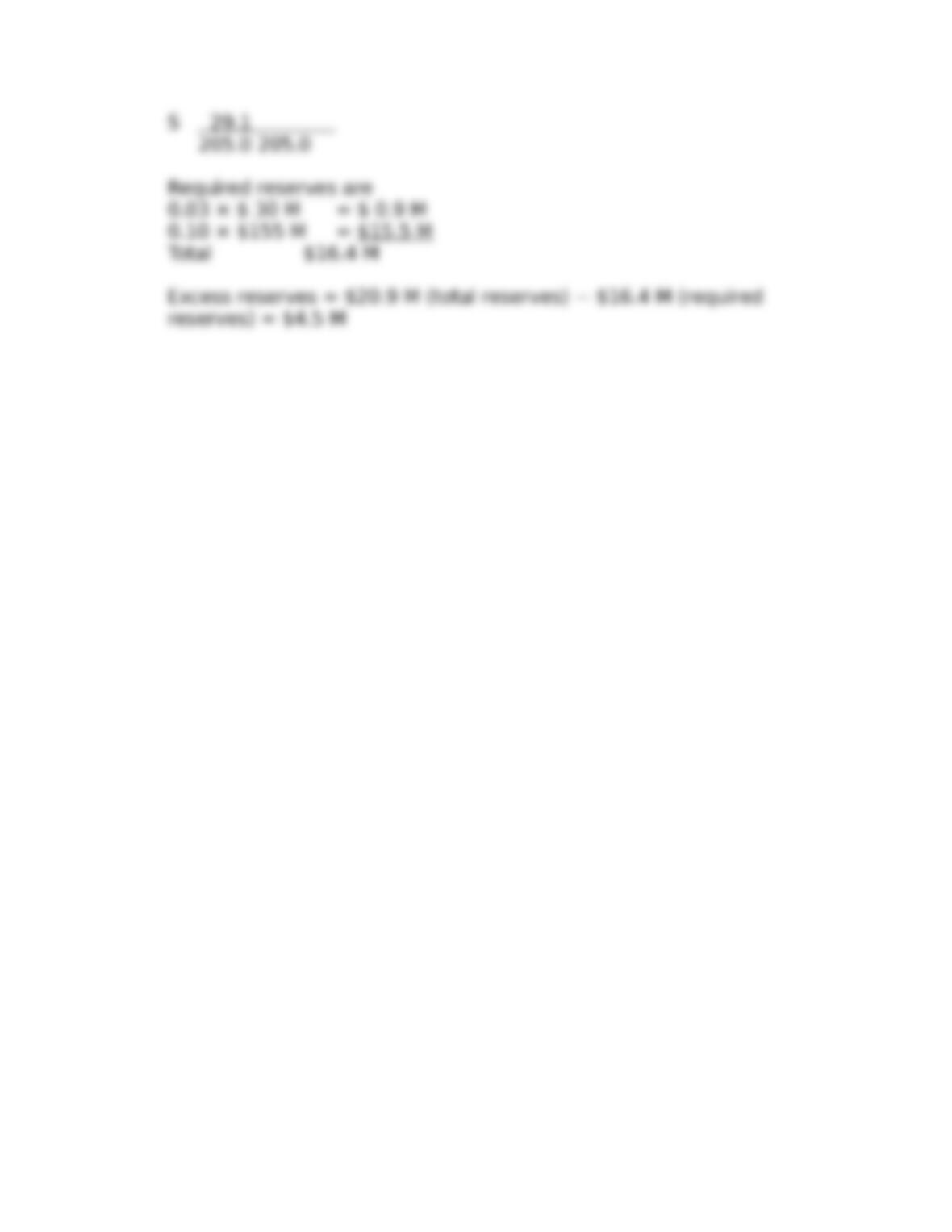
11. Each year, the Federal Reserve adjusts the reserve requirement
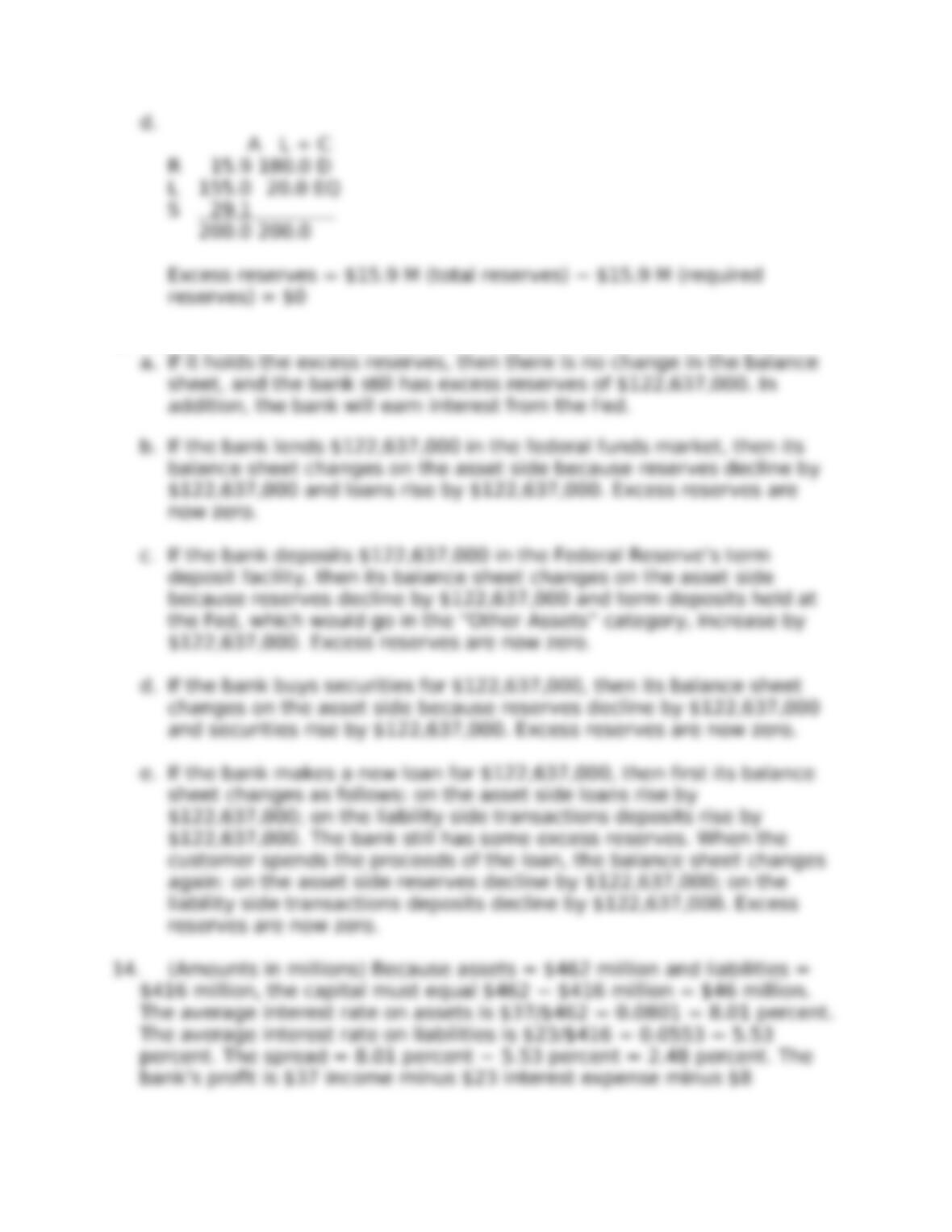
13. Barry’s Bank has excess reserves of $122,637,000.
Analytical Questions
15. Small firm depend more on bank loans than large #rms, so they are hurt
more by a credit crunch. In a credit crunch, banks lend less than they
otherwise would. Lending to small #rms is more subject to
16. In support of the policy, it could be argued that a higher insured amount
keeps wealthy people from withdrawing their funds, if a bank gets into
trouble; withdrawals would make the bank more likely to fail. Also, the
new policy protects a greater percentage of depositors. On the opposite
side is the argument that if wealthy people stand to lose, they will spend
more effort monitoring the bank’s health. This will ensure that the bank is
sound.
17. If the Fed paid interest on reserves equal to the federal funds rate, banks
would face a complicated choice. One important factor would be the
default risk in the federal funds market. If there is a recession, like the
deep one of 2008-2009, there may be many unhealthy banks. Healthy
banks would prefer the safety of earning interest on reserves. In order to
encourage loans in the federal funds market, the Fed would have to set its
interest rate on reserves below the prevailing federal funds rate.
Additionally, the Fed could provide insurance on federal funds market
loans in order to eliminate the default risk.
18. If a bank chose to keep its risk very low, it would not earn very much on
its assets, so it could not pay much to depositors and would lose business.
The idea of protecting banks from competition was the prevailing view of
government regulation of banking from the 1940s to the 1960s.
Government regulations prevented banks from competing vigorously, so
ADDITIONAL TEACHING NOTES
Example of Adverse Selection
Suppose a health insurance company offered major medical insurance to
anyone for $5,000 a year. It would #nd itself besieged with requests for
insurance from people with major illnesses; yet it would get no interest from
healthy people. Thus, people select whether to apply for the insurance or
not, based on the knowledge of their own health status. The role of
asymmetric information is clear in this example—the health insurance
company does not know anyone’s health history, but the people themselves
do.
How Monetary Policy Can Lead to a Credit Crunch