Chapter 03: Financial Analysis
b. Medical Heavy
Supplies Machinery Electronics
3-29. (Continued)
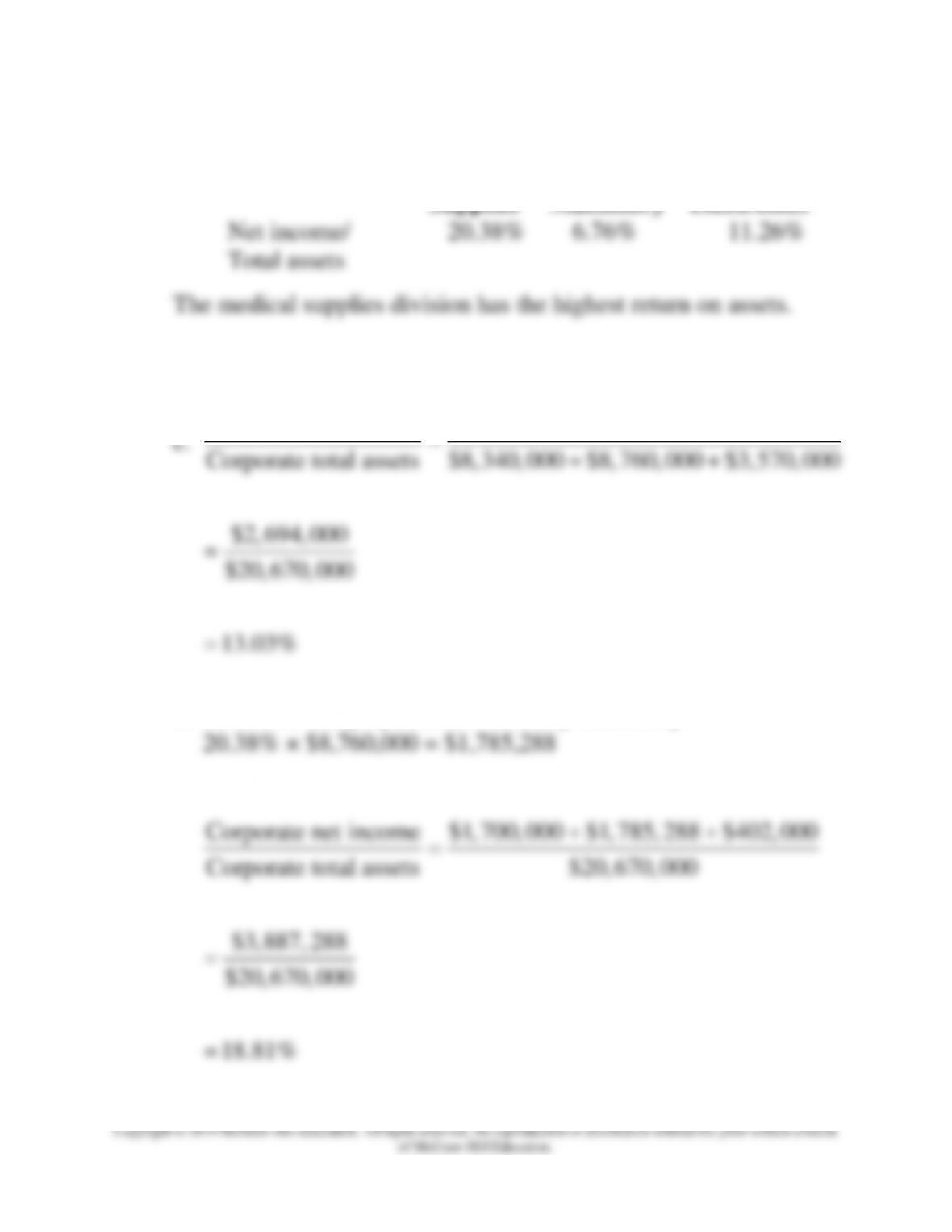
Corporate net income $1,700,000 $592,000 $402,000
$20,670,000
13.03%
++
=
d. Return on redeployed assets in heavy machinery.
Return on assets for the entire corporation:
Corporate net income $1,700,000 $1,785, 288 $402,000
Corporate total assets $20,670,000
$3,887, 288
$20,670,000
++
=
=
Chapter 03: Financial Analysis
30. Analysis by affiliates (LO1) Omni Technology Holding Company has the following three
affiliates:
Personal Foreign
Software Computers Operations
Sales …………………………… $40,200,000 $60,080,000 $100,680,000
Net income (after taxes) … 2,086,000 2,880,000 8,510,000
Assets …………………………. 5,820,000 25,790,000 60,630,000
Stockholders’ equity …….. 4,090,000 10,170,000 50,950,000
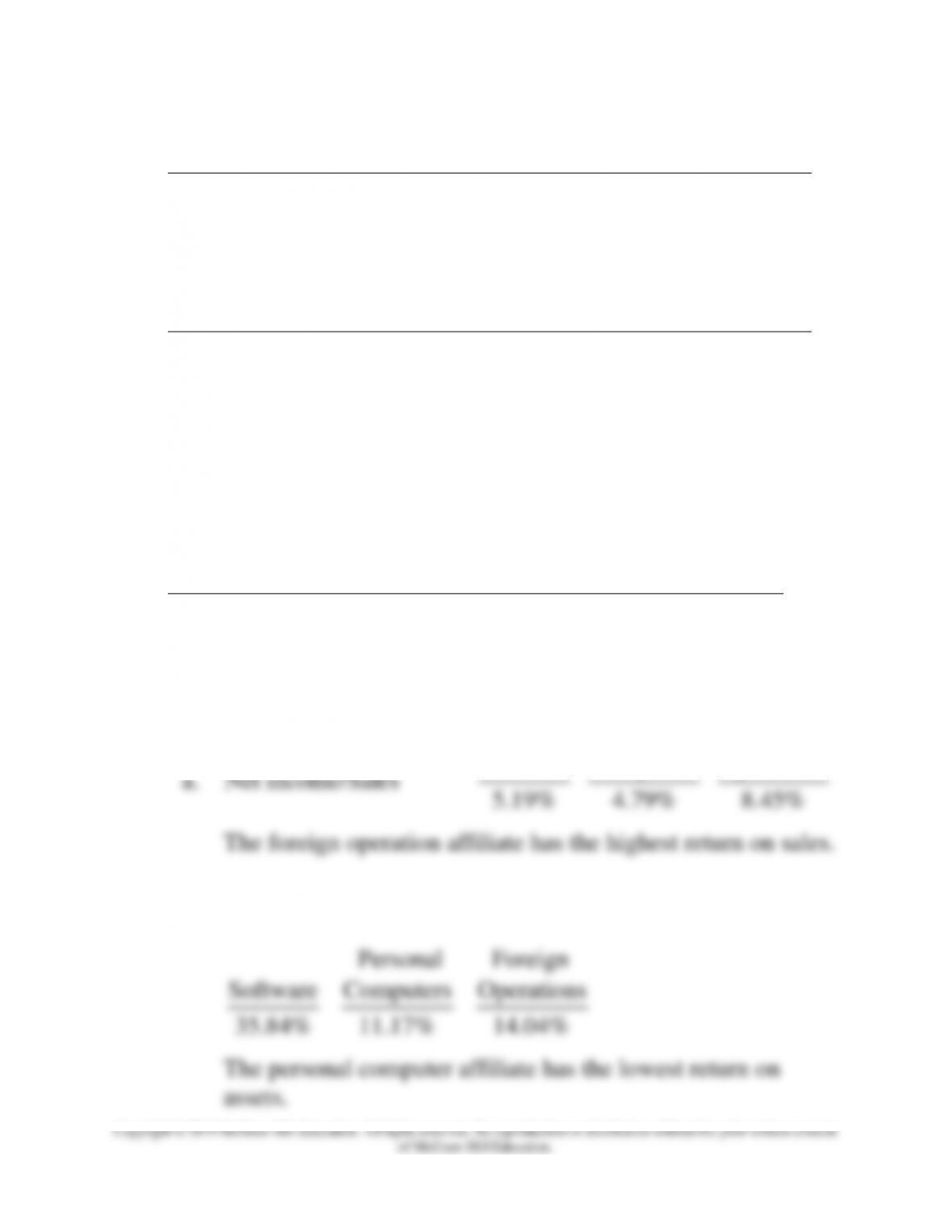
a. Which affiliate has the highest return on sales?
b. Which affiliate has the lowest return on assets?
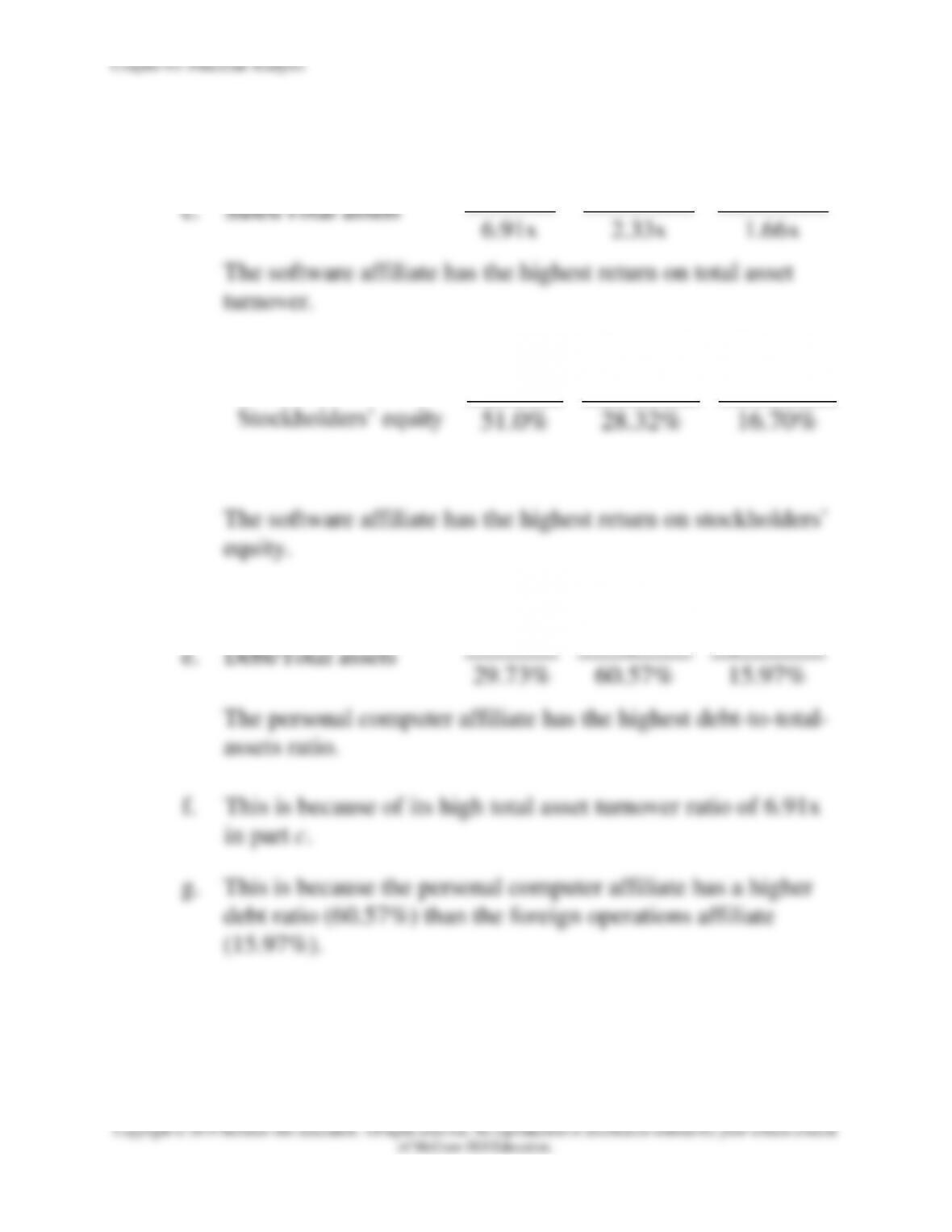
c. Which affiliate has the highest total asset turnover?
d. Which affiliate has the highest return on stockholders’ equity?
e. Which affiliate has the highest debt ratio? (Assets minus stockholders’ equity
equals debt.)
f. Returning to question b, explain why the software affiliate has the highest return on
total assets.
g. Returning to question d, explain why the personal computer affiliate has a higher
return on stockholders’ equity than the foreign operations affiliate even though it has
a lower return on total assets.
3-30. Solution:
Omni Technology Holding Company
Personal Foreign
Software Computers Operations
5.19% 4.79% 8.45%
The foreign operation affiliate has the highest return on sales.
b. Net income/Total assets
Chapter 03: Financial Analysis
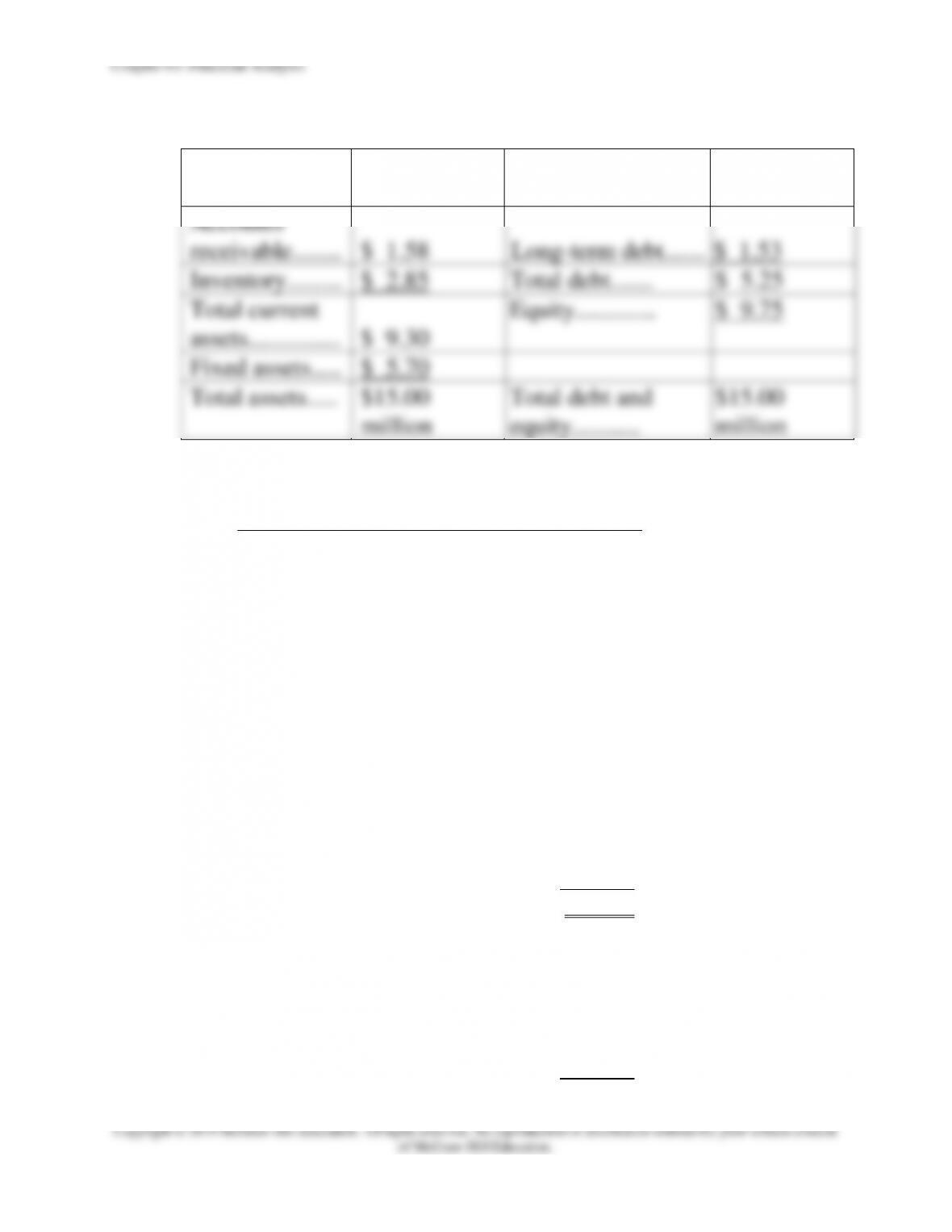
Pettit Corporation
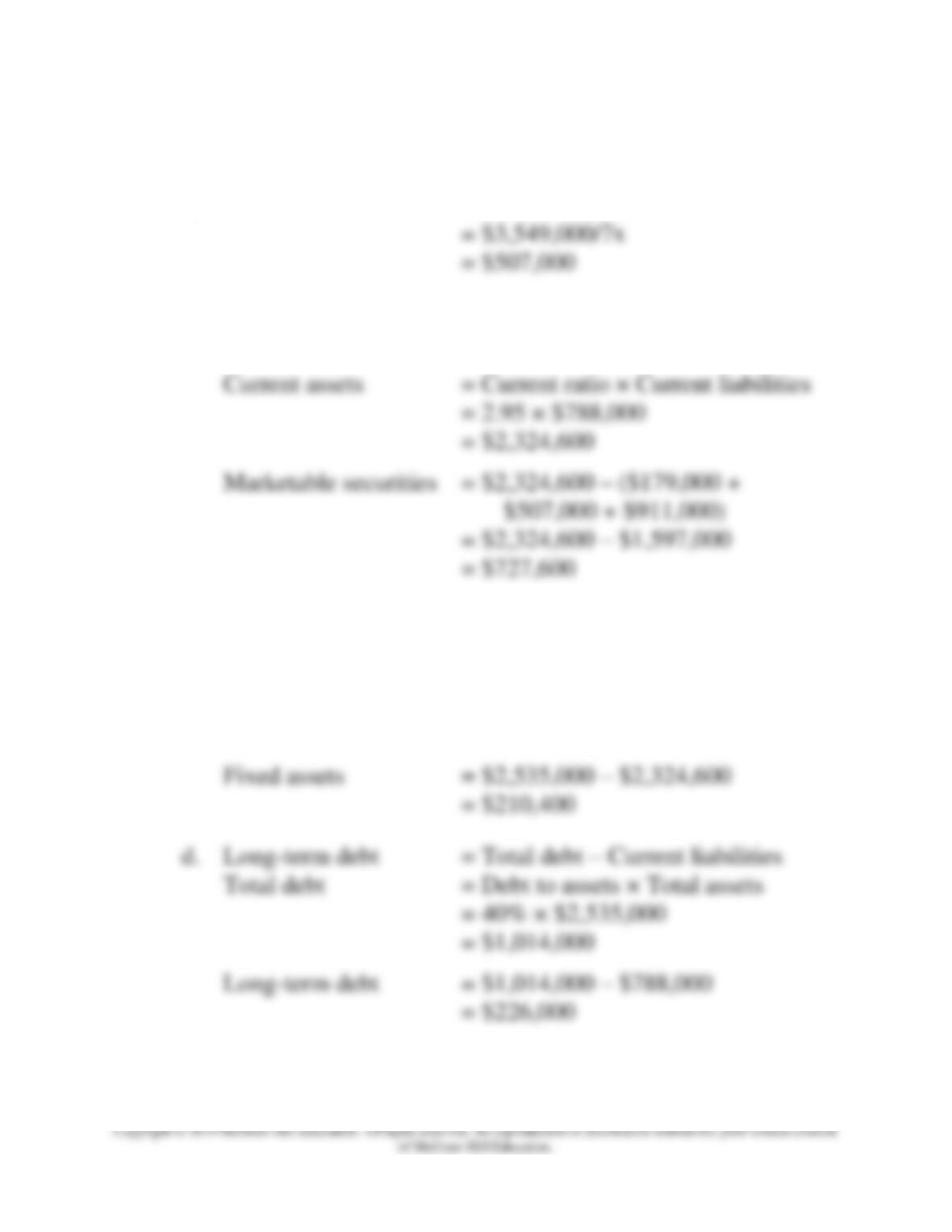
a. Accounts receivable = Sales/Receivable turnover
b. Marketable securities = Current assets – (Cash +
Accounts rec. + Inventory)
3-34. (Continued)
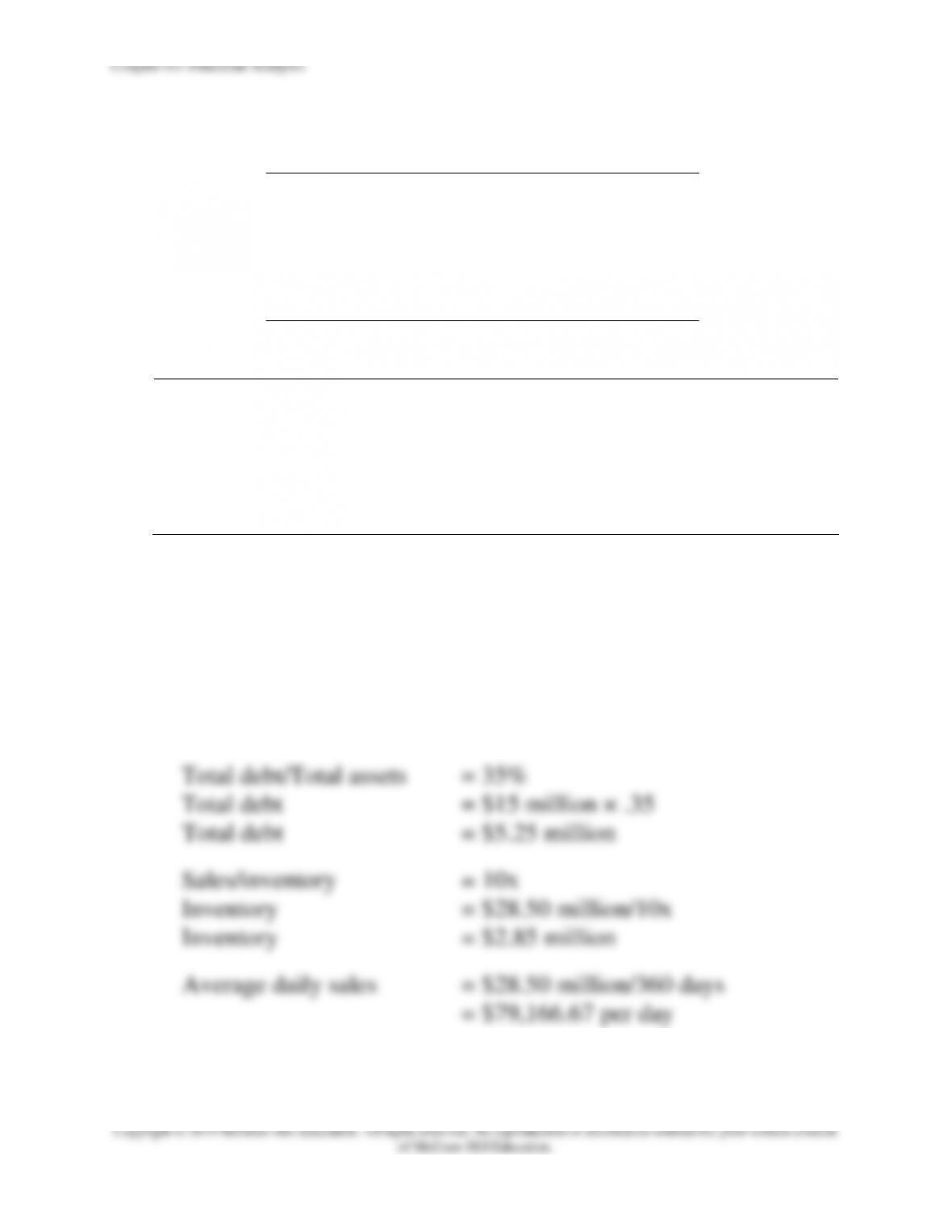
c. Fixed assets = Total assets – Current assets
Total assets = Sales/Asset turnover
= $3,549,000/1.40x
= $2,535,000
Chapter 03: Financial Analysis
Long-term liabilities:
Bonds payable ……………………………….. $153,200
Total liabilities ………………………………. $334,200
Stockholders’ equity
Preferred stock, $50 per value …………. 100,000
Common stock, $1 par value …………… 80,000
Capital paid in excess of par ……………. 190,000
Retained earnings …………………………… 242,300
Total stockholders’ equity…………….. 612,300
Total liabilities and stockholders’ equity $946,500
SNIDER CORPORATION
Income statement
For the Year Ending December 31, 20X1
Sales (on credit)………………………………………………………………………
$2,064,000
Less: Cost of goods sold ………………………………………………………
1,313,000
Gross profit ……………………………………………………………………………
751,000
Less: Selling and administrative expenses ………………………………
496,000*
Operating profit (EBIT) …………………………………………………………..
255,000
Less: Interest expense ………………………………………………………….
26,900
Earnings before taxes (EBT) …………………………………………………….
228,100
Less: Taxes…………………………………………………………………………
83,300
Earnings after taxes (EAT)……………………………………………………….
$ 144,800
*Includes $36,100 in lease payments.
3-36. Solution:
Snider Corporation
Profitability ratios
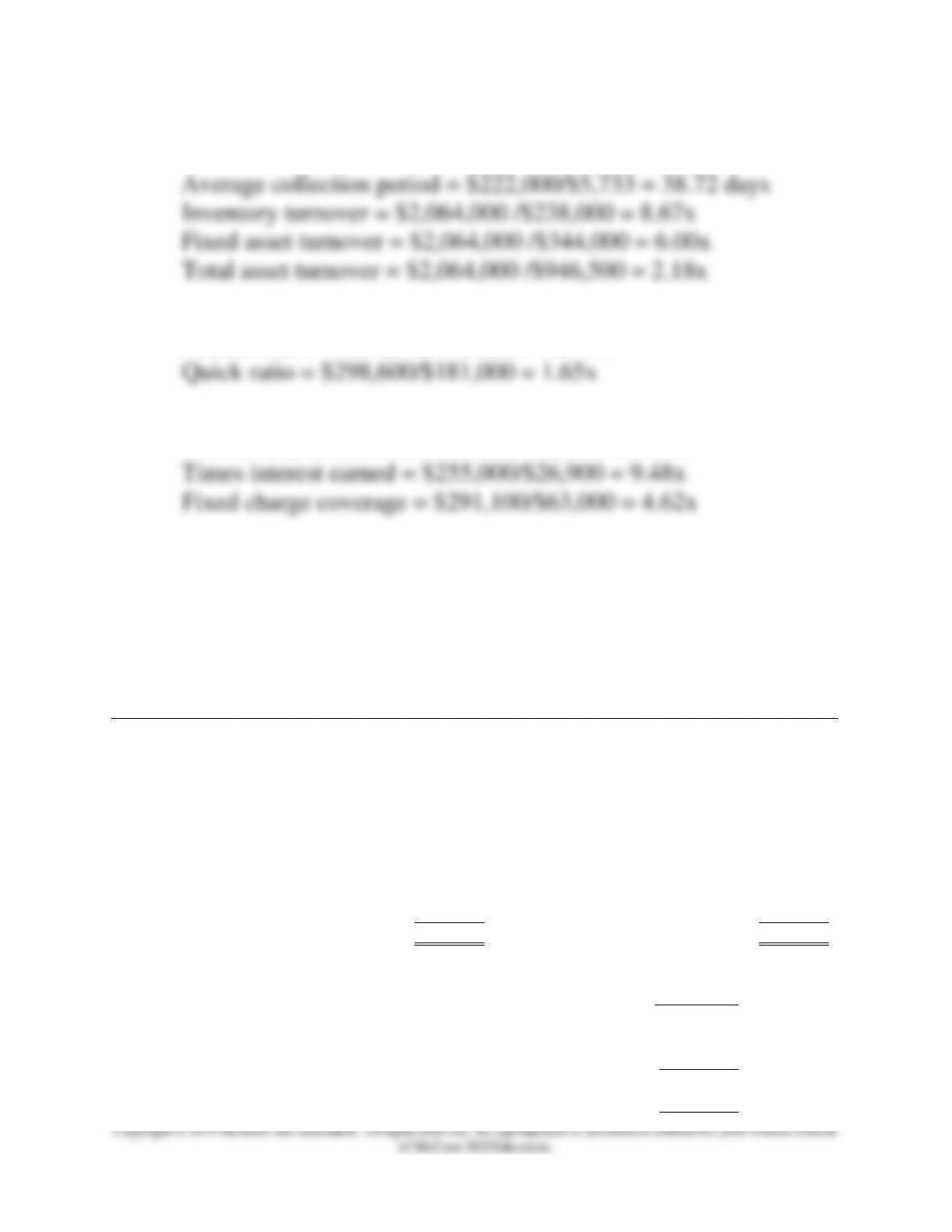
Profit margin = $144,800/$2,064,000 = 7.02%
Assets utilization ratios
Chapter 03: Financial Analysis
Receivable turnover = $2,064,000 /$222,000 = 9.30x
Liquidity ratio
Current ratio = $536,600/$181,000 = 2.96x
Debt utilization ratios
Debt to total assets = $334,200/$946,500 = 35.31%
37. Ratio computation and analysis (LO2) Given the financial statements for Jones
Corporation and Smith Corporation shown here:
a. To which one would you, as credit manager for a supplier, approve the extension of
(short-term) trade credit? Why? Compute all ratios before answering.
b. In which one would you buy stock? Why?
JONES CORPORATION
Current Assets
Liabilities
Cash……………………………………….
$ 20,000
Accounts payable ………………
$100,000
Accounts receivable …………………
80,000
Bonds payable (long-term) ….
80,000
Inventory ………………………………..
50,000
Long-Term Assets
Stockholders’ Equity
Fixed assets …………………………….
$500,000
Common stock …………………..
$150,000
Less: Accumulated depreciation
(150,000)
Paid-in capital ……………………
70,000
Net fixed assets* ……………………..
350,000
Retained earnings ………………
100,000
Total assets ………………………….
$500,000
Total liab. and equity ……..
$500,000
Sales (on credit) ……………………………………………………………………………
$1,250,000
Cost of goods sold ………………………………………………………………………..
750,000
Gross profit ………………………………………………………………………………….
500,000
Selling and administrative expense† ……………………………………………..
257,000
Less: Depreciation expense …………………………..…………………………..
50,000
Operating profit ……………………………………………………………………………
193,000
Interest expense ……………………………………………………………………………
8,000

Chapter 03: Financial Analysis
Earnings before taxes ……………………………………………………….
185,000
Tax expense …………………………………………………………………………………
92,500
Net income ………………………………………………………………………………….
$ 92,500
*Use net fixed assets in computing fixed asset turnover.
†Includes $7,000 in lease payments.