Chapter 03: Financial Analysis
Chapter 3
Financial Analysis
Discussion Questions
3-1.
If we divide users of ratios into short-term lenders, long-term lenders, and
stockholders, in which ratios would each group be most interested, and for what
reasons?
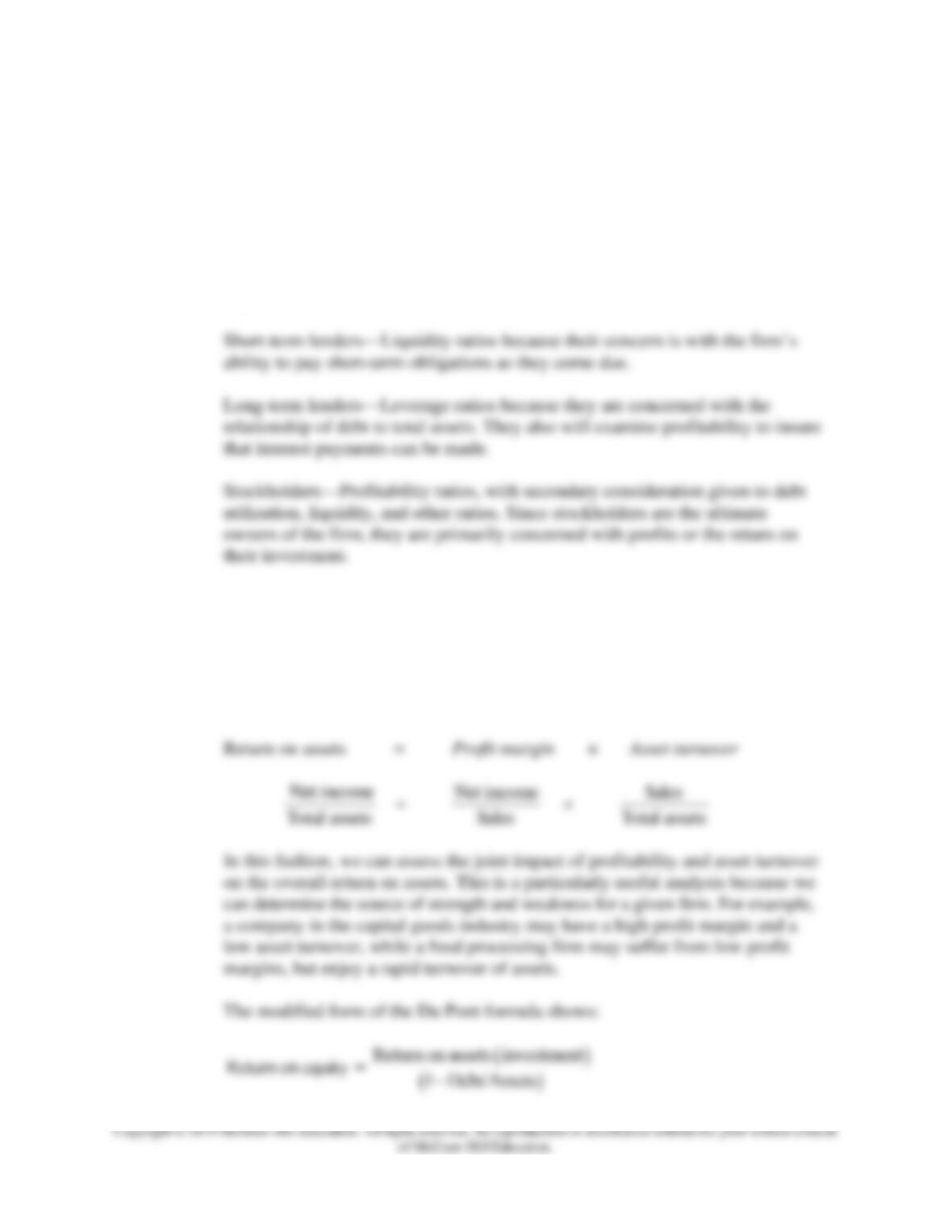
Short-term lenders—Liquidity ratios because their concern is with the firm’s
ability to pay short-term obligations as they come due.
Long-term lenders—Leverage ratios because they are concerned with the
relationship of debt to total assets. They also will examine profitability to insure
that interest payments can be made.
Stockholders—Profitability ratios, with secondary consideration given to debt
utilization, liquidity, and other ratios. Since stockholders are the ultimate
owners of the firm, they are primarily concerned with profits or the return on
their investment.
3-2.
Explain how the Du Pont system of analysis breaks down return on assets. Also
explain how it breaks down return on stockholders’ equity.
The Du Pont system of analysis breaks out the return on assets between the
profit margin and asset turnover.
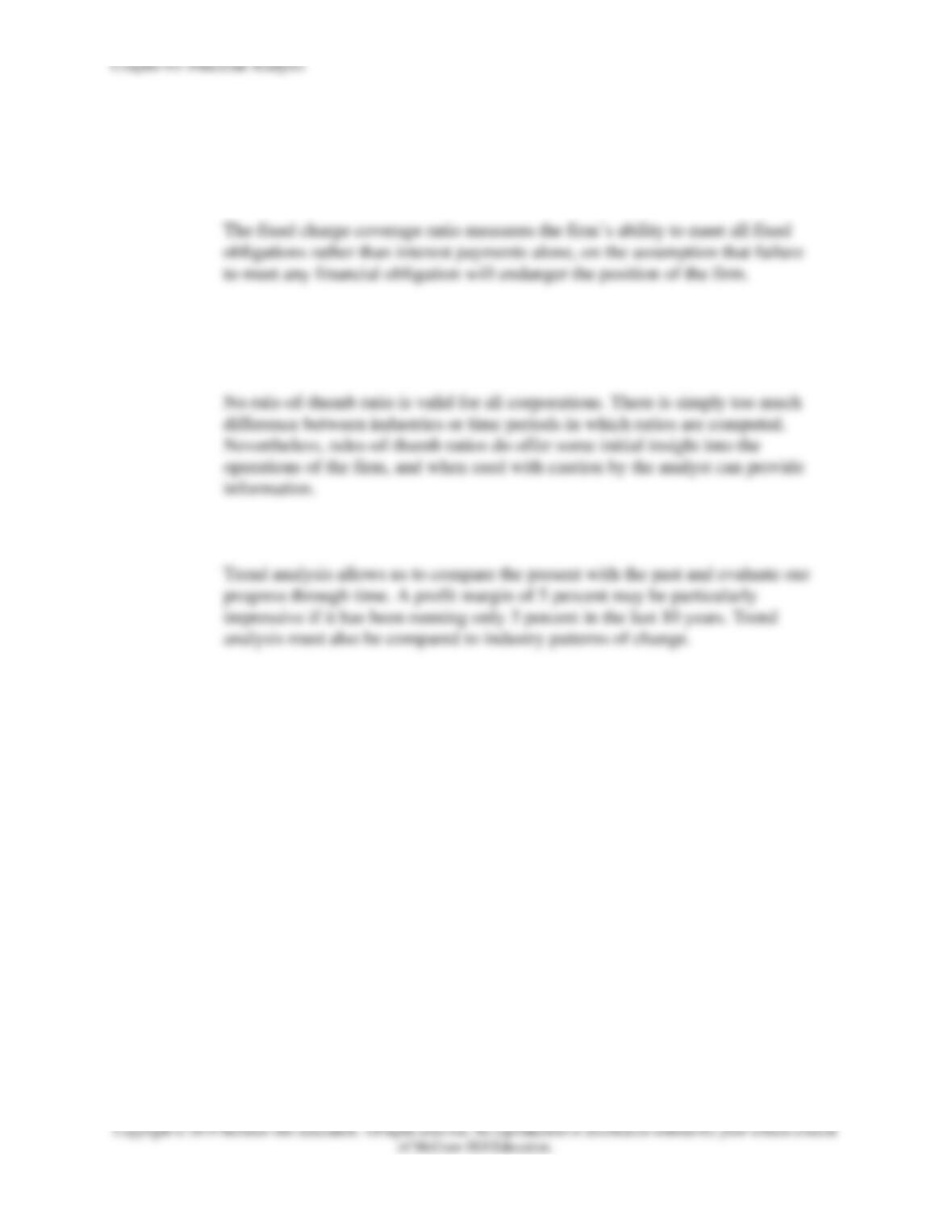
Return on assets = Profit margin × Asset turnover
assets Total
Sales
Sales
incomeNet
assets Total
incomeNet =

Chapter 03: Financial Analysis
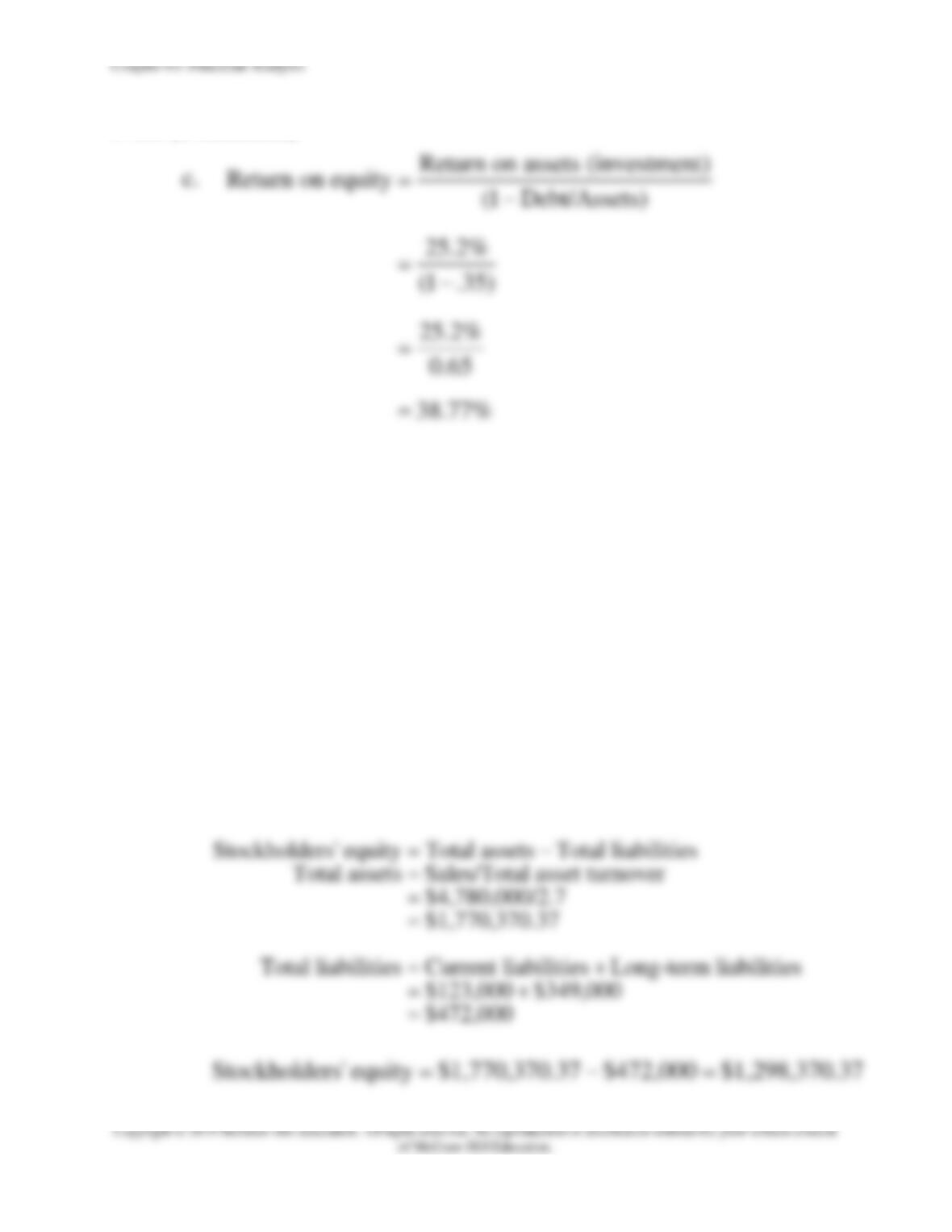
This indicates that return on stockholders’ equity may be influenced by return
on assets, the debt-to-assets ratio or a combination of both. Analysts or
investors should be particularly sensitive to a high return on stockholders’
equity that is influenced by large amounts of debt.
3-3.
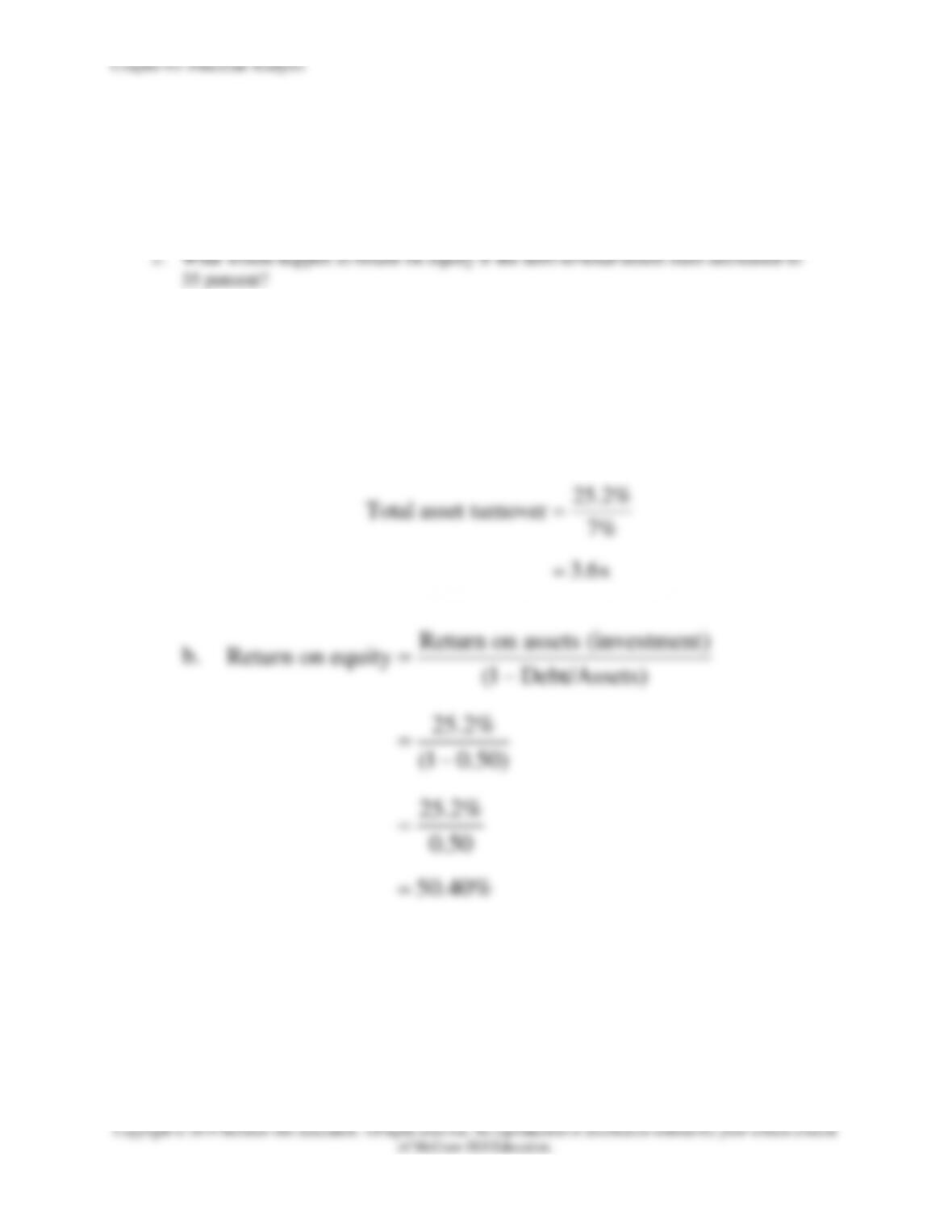
If the accounts receivable turnover ratio is decreasing, what will be happening
to the average collection period?
If the accounts receivable turnover ratio is decreasing, accounts receivable will
be on the books for a longer period of time. This means the average collection
period will be increasing.
Chapter 03: Financial Analysis
Haines Corp.
20X1 20X2
a.
Cost of goods sold $2,130,000 $2,850,000
65.9% 84.6%
Sales 3, 230, 000 3,370, 000
==
It is decreasing profitability.
8. Profitability ratios (LO2) Easter Egg and Poultry Company has $2,000,000 in assets and
$1,400,000 of debt. It reports net income of $200,000.
a. What is the firm’s return on assets?
b. What is its return on stockholders’ equity?
c. If the firm has an asset turnover ratio of 2.5 times, what is the profit margin
(return on sales)?
3-8. Solution:
Easter Egg and Poultry Company
a.
Net income
Return on assets (investment) Total assets
$200,000 10%
$2,000,000
=
=
Chapter 03: Financial Analysis
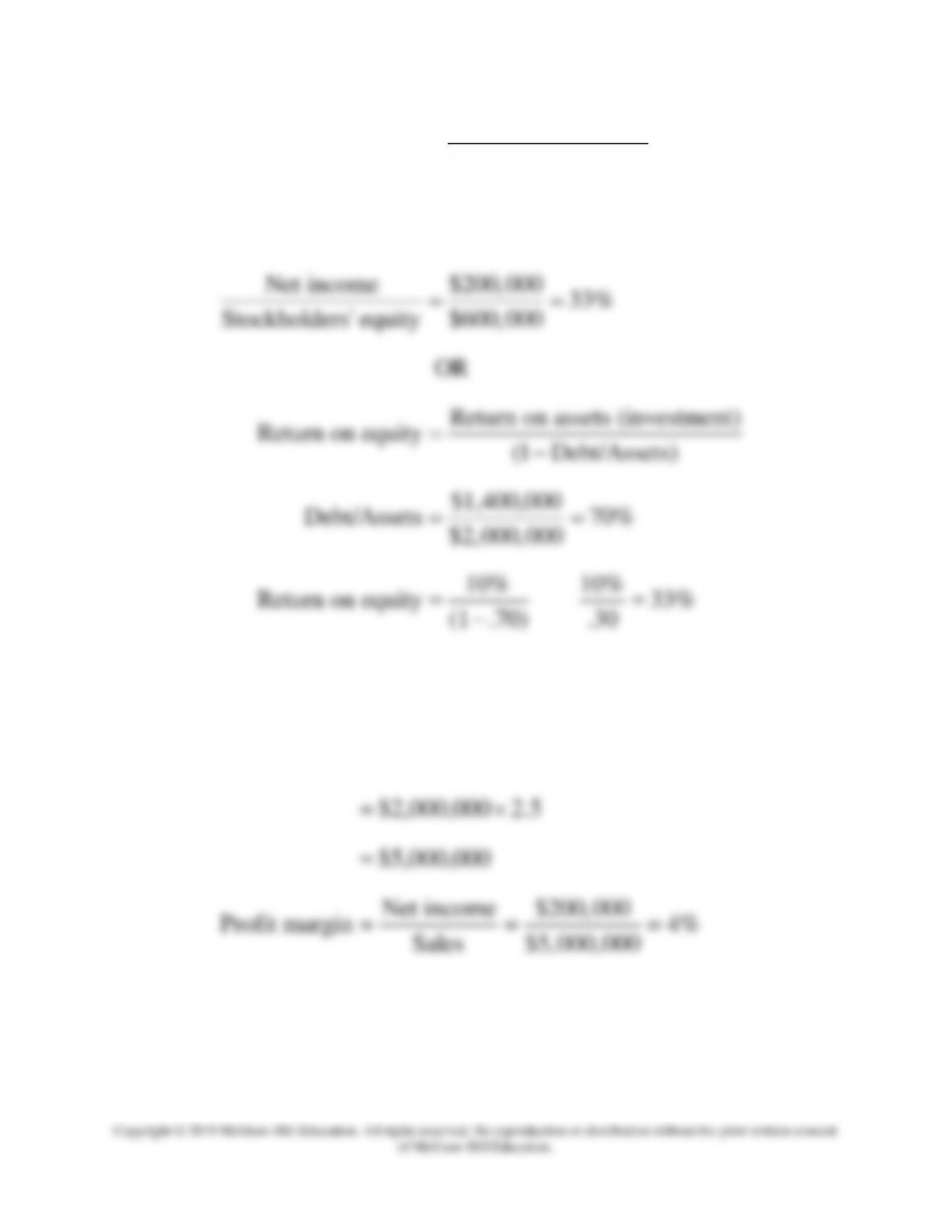
b.
Net income
Return on equity Stockholders’ equity
Stockholders’ equity Total assets Total debt
$2,000,000 $1,400,000
$600,000
Net income $200,000 33%
Stockholders’ equity $600,000
OR
Return
Return on equity
=
=−
=−
=
==
=on assets (investment)
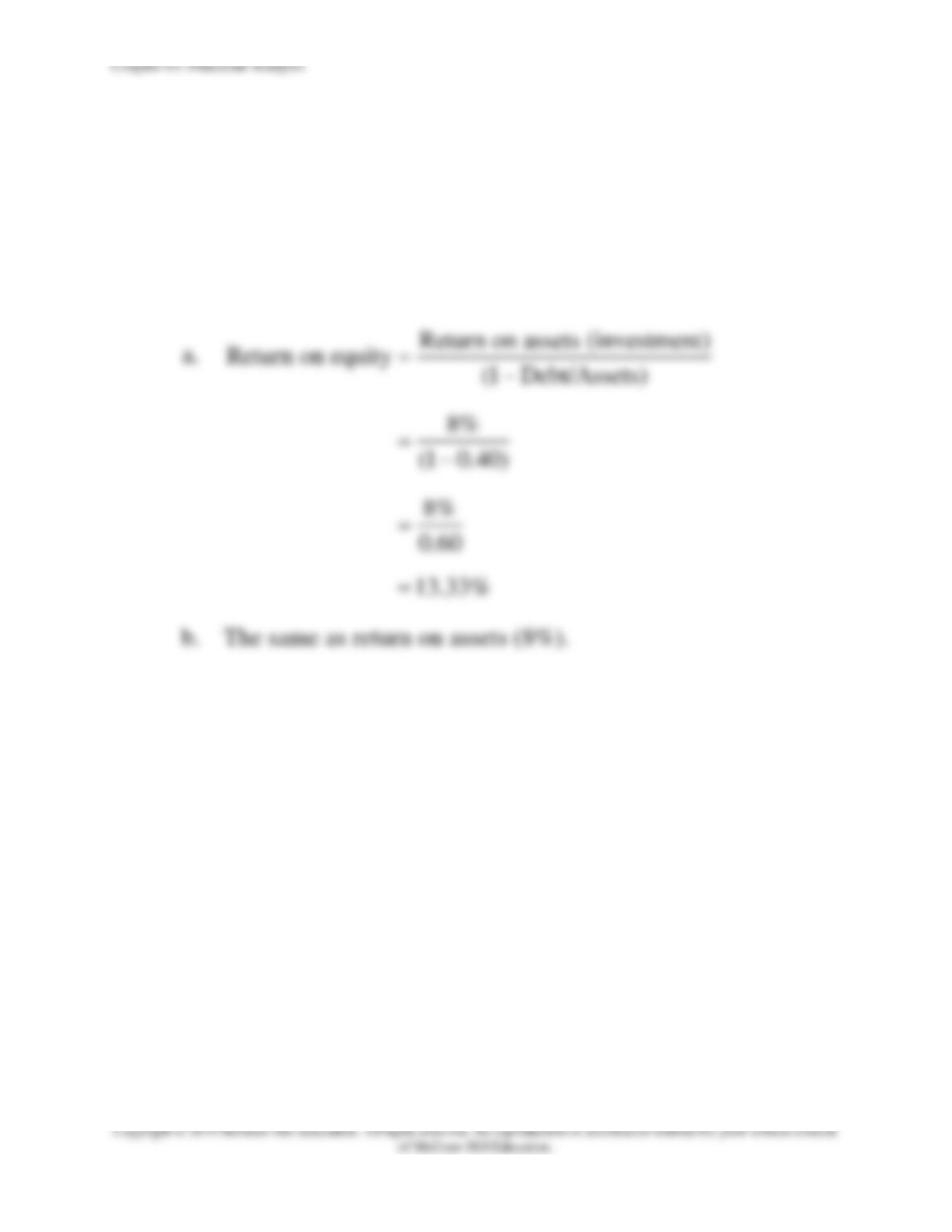
(1 Debt/Assets)
$1,400,000
Debt/Assets 70%
$2,000,000
10% 10%
Return on equity 33%
(1 .70) .30
−
==
==
−
3-8. (Continued)
c.
Sales Total assets Total assets turnover
$2,000,000 2.5
$5,000,000
=
=
=
of debt. Its return on sales is 8 percent. What is its return on stockholders’ equity?
Chapter 03: Financial Analysis
Network Communications
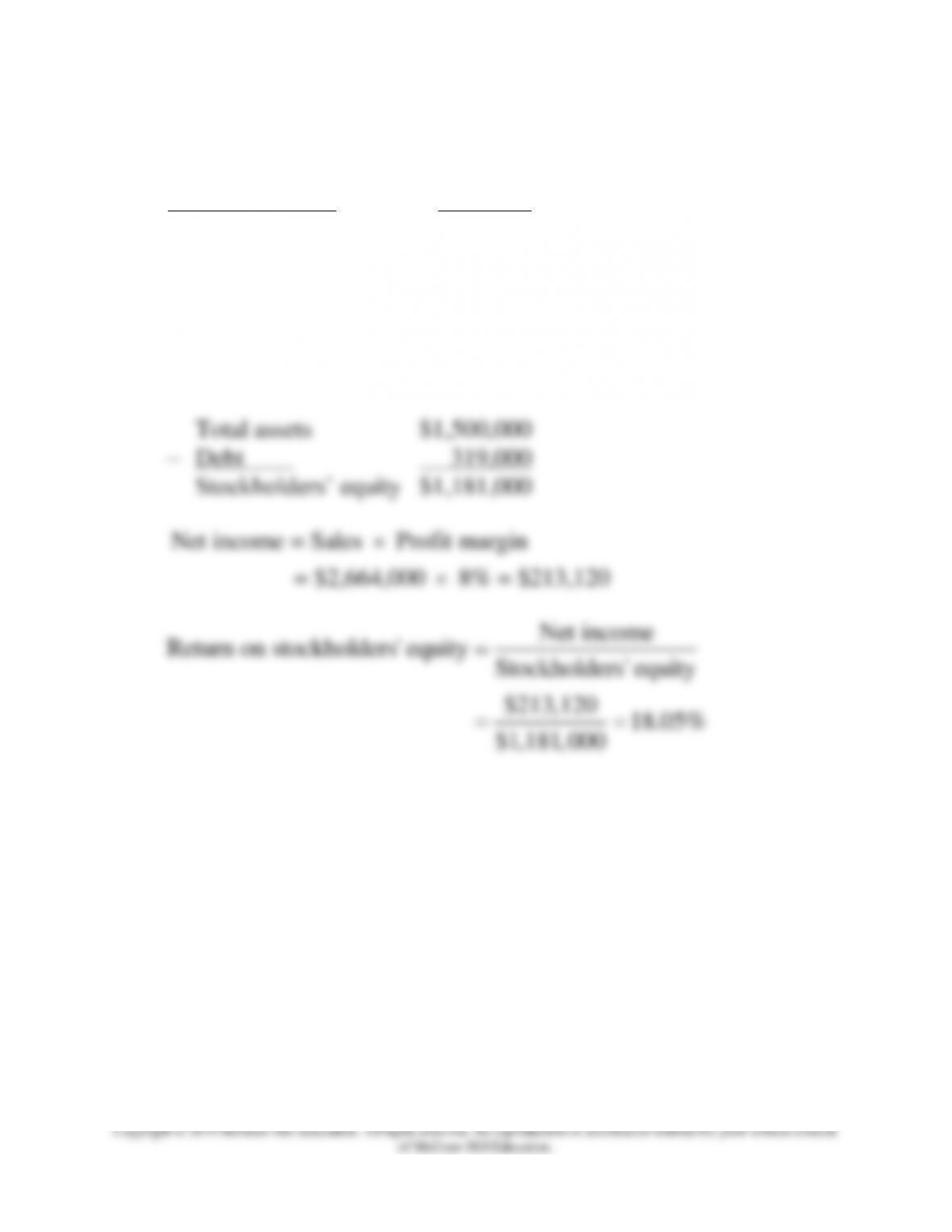
Total assets $1,500,000
– Current assets 612,000
Fixed assets $ 888,000
Sales Fixed assets Fixed asset turnover
$2,664,000 $888,000 3
=
=
$213,120 18.05%
$1,181,000
==