
Berkshire Instruments
Case 16
Cost of Capital
Purpose: The case gives the student additional opportunities to work with issues related to cost of capital.
It focuses on the irrelevance of historical cost and the close relationship of retained earnings and new
common stock in supplying equity capital. The concept of the marginal cost of capital is heavily stressed,
and the use of the capital asset pricing model as an alternative to computing the cost of equity capital is
also introduced.
Relation to Text: The case should follow Chapter 11.
Complexity: The case tends to be reasonably straightforward and requires about ½ hour.
Solutions
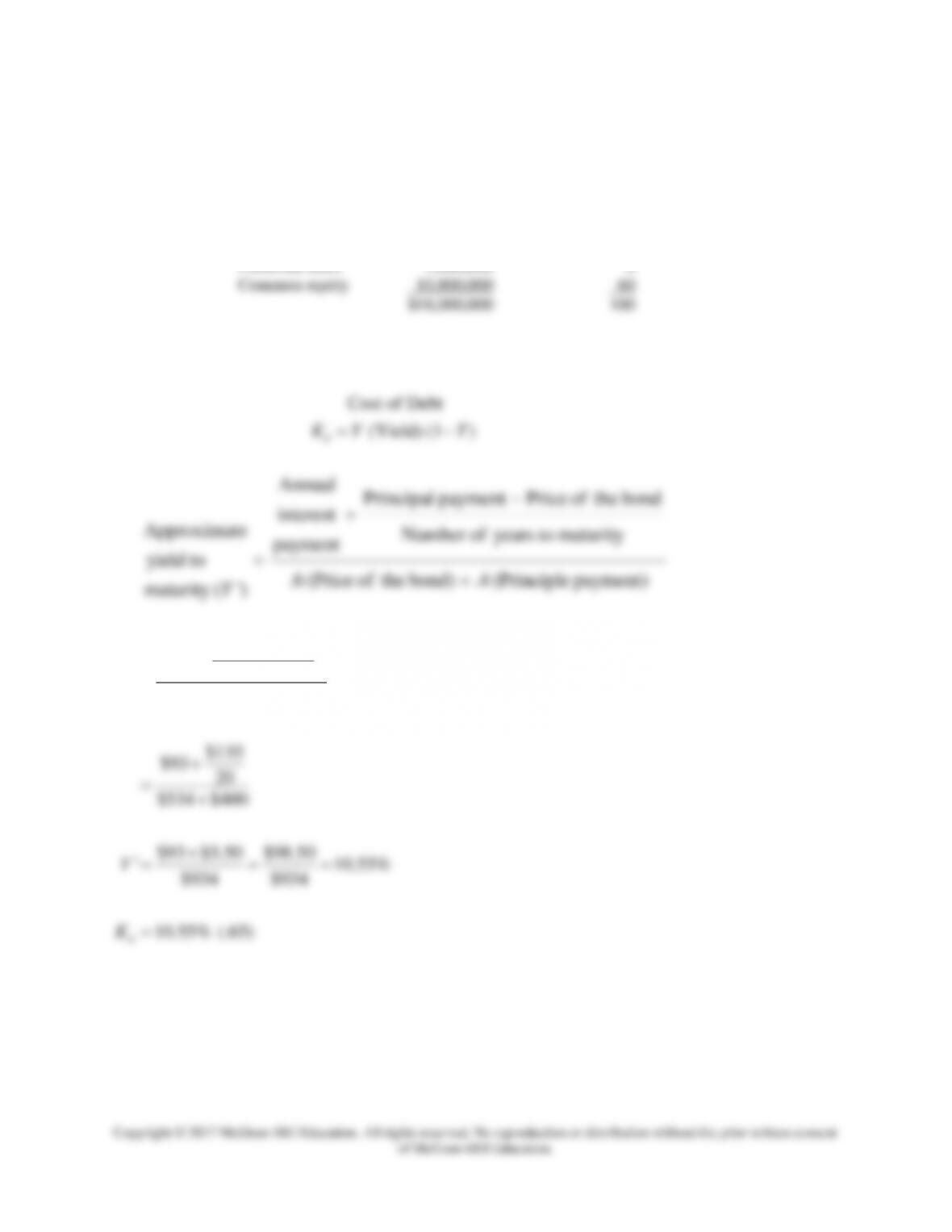
1. First determine the percentage composition in the capital structure.
Dollar amount
Percentage composition
Bonds ……………………….
$ 6,120,000
34
Preferred stock
1,080,000
6
Common equity
10,800,000
60
$18,000,000
100
Then determine the aftertax cost of each component (for now assume common equity is in the form of
retained earnings).
maturity ( ‘)Y
+
$1,000–$890
$93 20
‘.6 ($890) .4 ($1,000)
$110
$93 20
$534 $400
$93 $5.50 $98.50
‘ 10.55%
$934 $934
10.55% (.65)
d
Y
Y
K
+
=+
+
=+
+
= = =
=
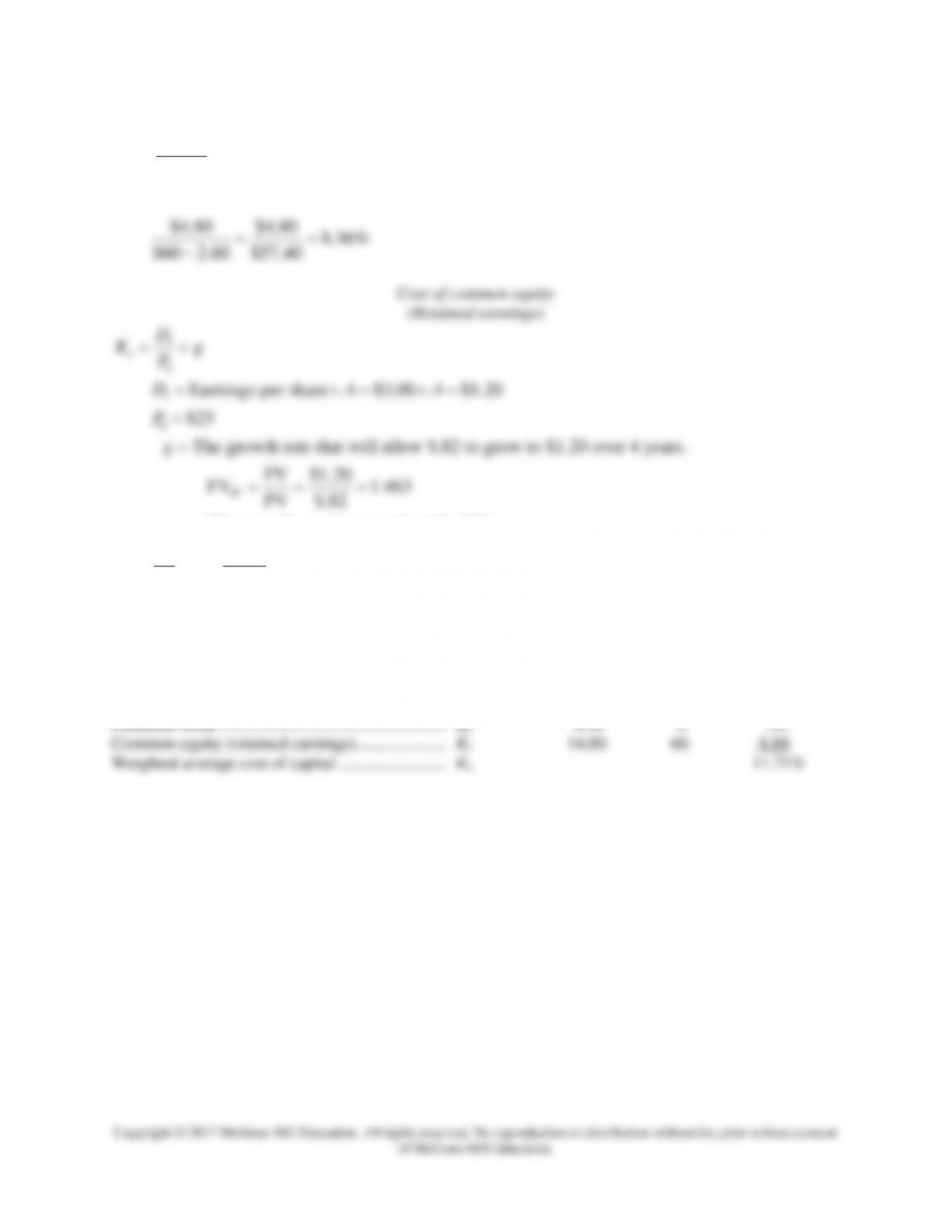
Cost of preferred stock
$4.80 $4.80 8.36%
$60 2.60 $57.40
P
P
P
D
KPF
=−
==
−
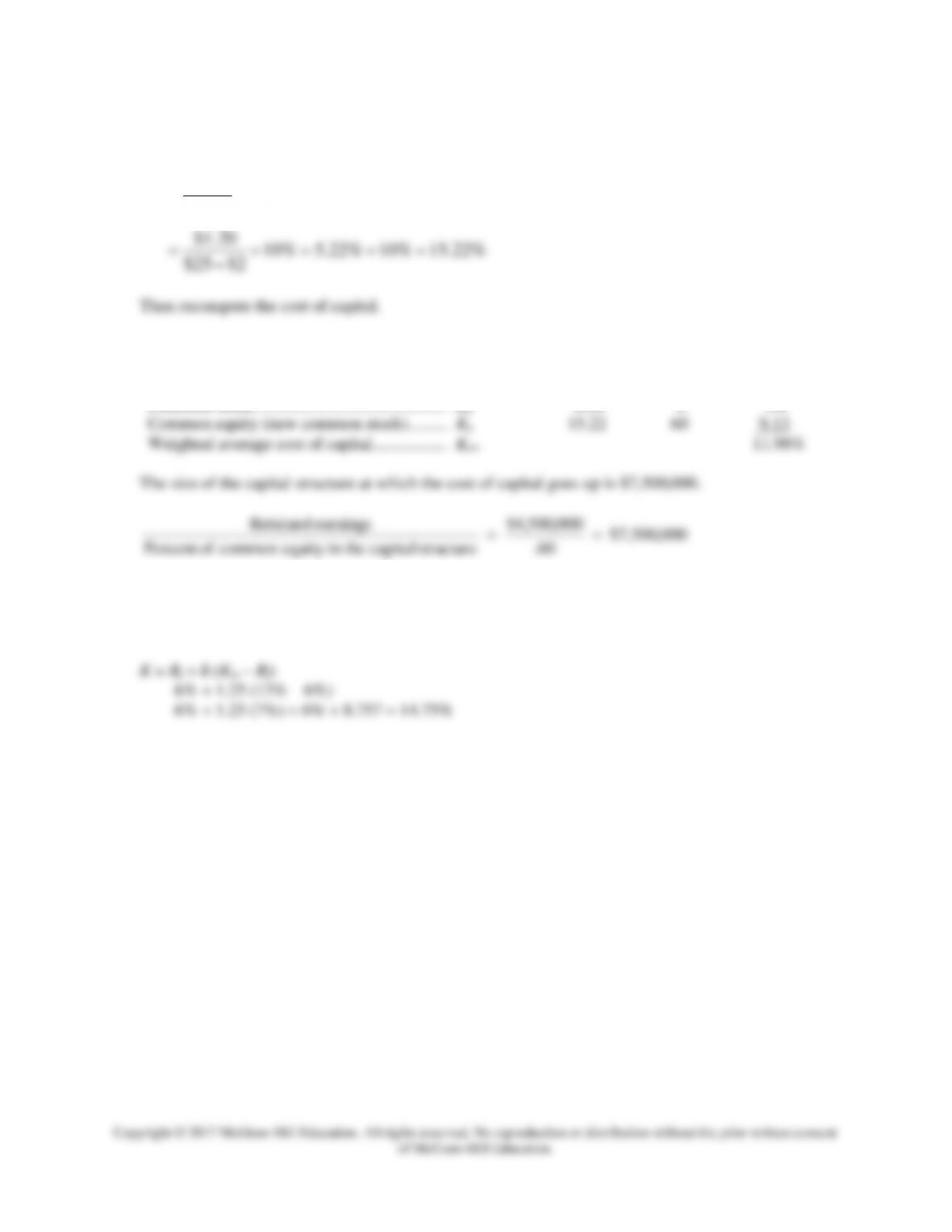
2. First compute the cost of new common stock.
1
0
$1.20 10% 5.22% 10% 15.22%
$25 $2
n
D
Kg
PF
=+
−
= + = + =
−
Cost
(aftertax)
Weights
Weighted
Cost
Bonds ………………………………………………………….
Kd
6.86%
34%
2.33%
Preferred stock ……………………………………………..
KP
8.36
6
.50
Common equity (new common stock)……………..
Kn
15.22
60
9.13
Weighted average cost of capital …………………….
Kmc
11.96%
60.
structure capital in theequity common ofPercent
3. Based on the capital asset pricing model, the cost of common stock (required return) is 14.75 percent.
This is quite close to the value derived using the dividend valuation model (Ke) in question 1 of 14.8
percent.