© The McGraw-Hill Companies, Inc., 2018. All rights reserved.
Solutions Manual, Chapter 8 1
Chapter 8
Master Budgeting
Solutions to Questions
8-1 A budget is a detailed quantitative plan
for the acquisition and use of financial and other
resources over a given time period. Budgetary
2. Budgets force managers to think about
and plan for the future. In the absence of the
4. The budgeting process can uncover
6. Budgets define goals and objectives that
which a manager is held responsible for those
items of revenues and costs—and only those
items—that the manager can control to a
future, and outlines the way in which these
plans are to be accomplished. The master
budget is composed of a number of smaller,
8-5 The level of sales impacts virtually every
other aspect of the firm’s activities. It
although related, concepts. Planning involves
8-7 Creating a “budgeting assumptions” tab
8-8 A self-imposed budget is one in which
persons with responsibility over cost control
© The McGraw-Hill Companies, Inc., 2018. All rights reserved.
2 Managerial Accounting, 16th Edition
often more accurate and reliable than estimates
prepared by top managers who have less
goals than when the goals are imposed from
8-9 The direct labor budget and other
budgets can be used to forecast workforce
© The McGraw-Hill Companies, Inc., 2018. All rights reserved.
Solutions Manual, Chapter 8 3
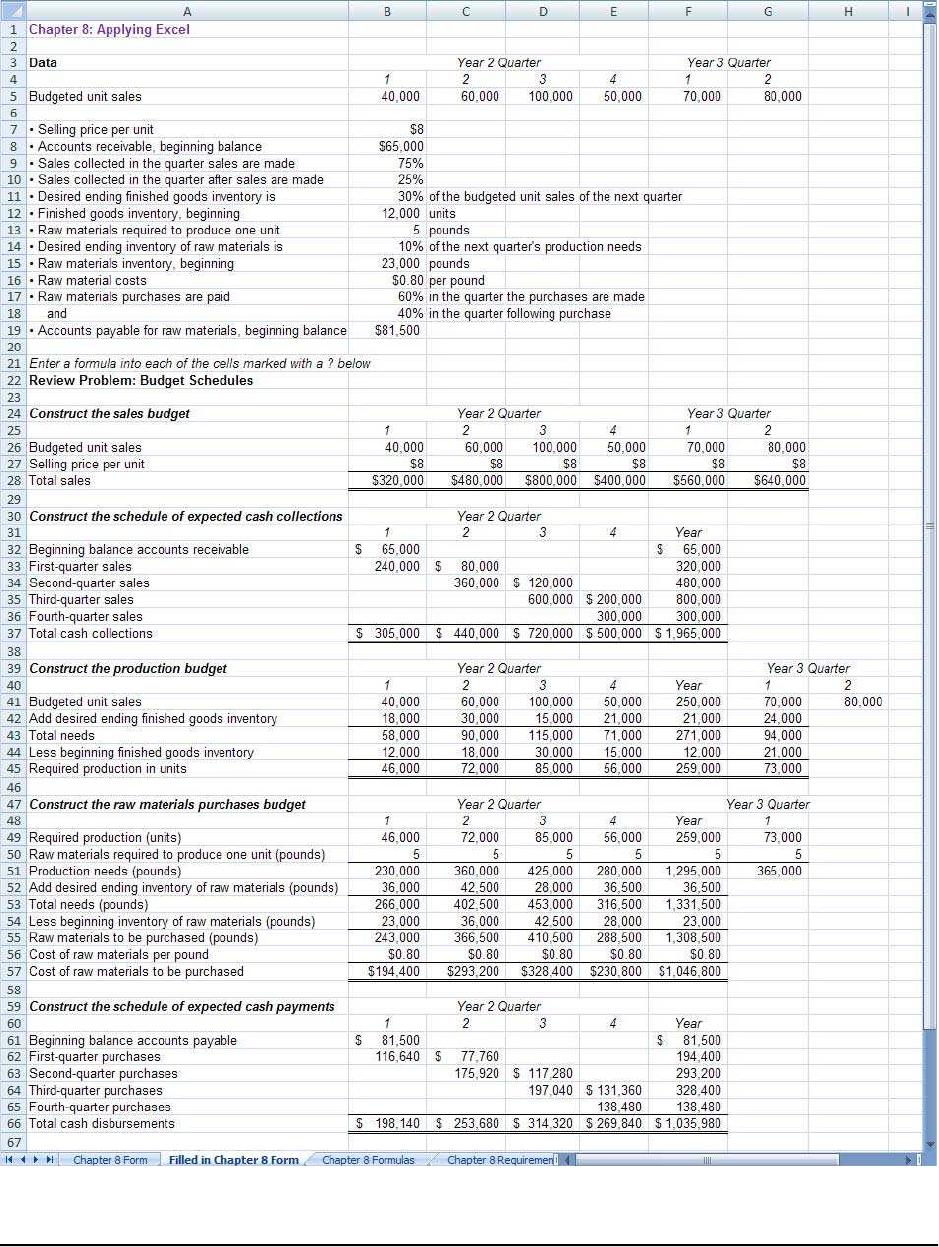
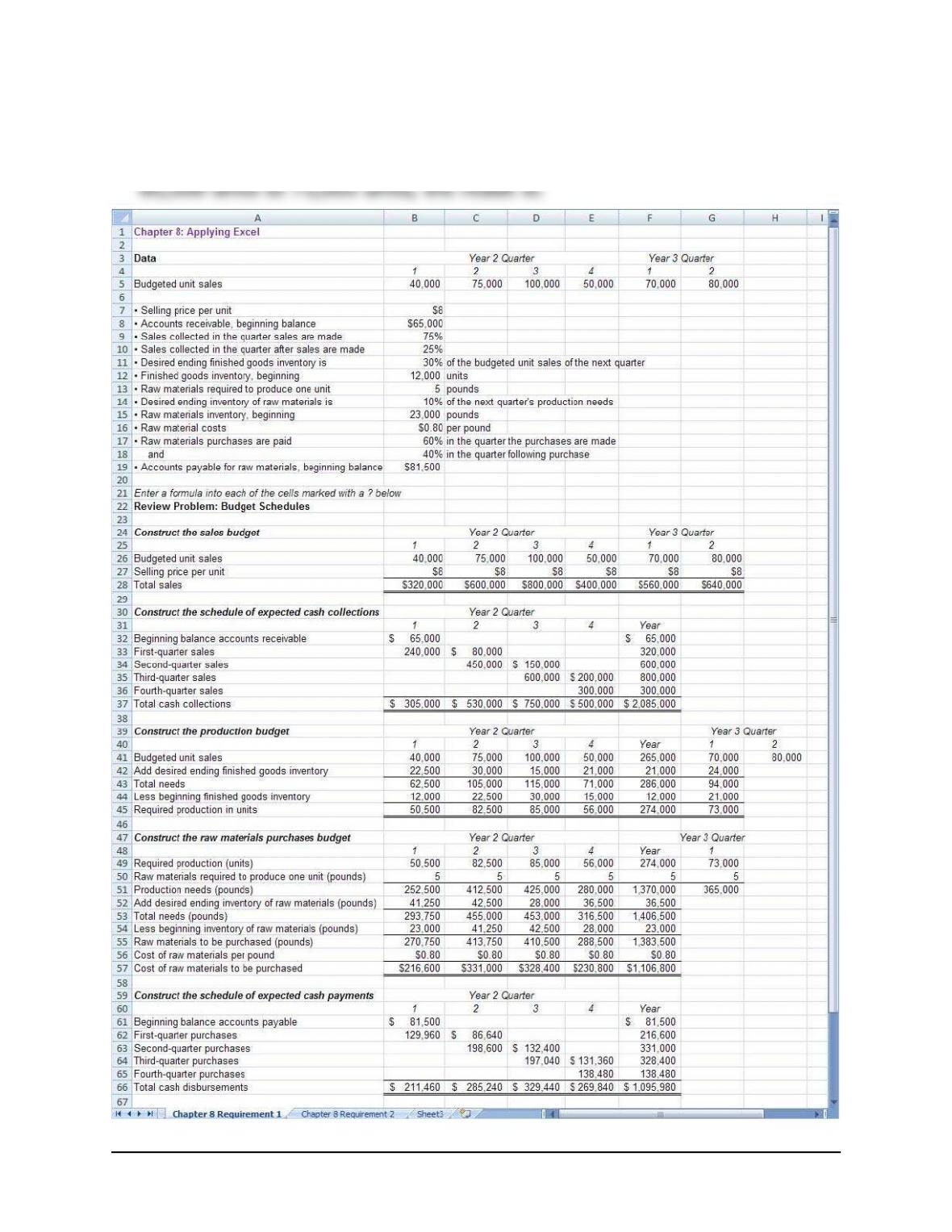
Chapter 8: Applying Excel
The completed worksheet is shown below.
© The McGraw-Hill Companies, Inc., 2018. All rights reserved.
4 Managerial Accounting, 16th Edition
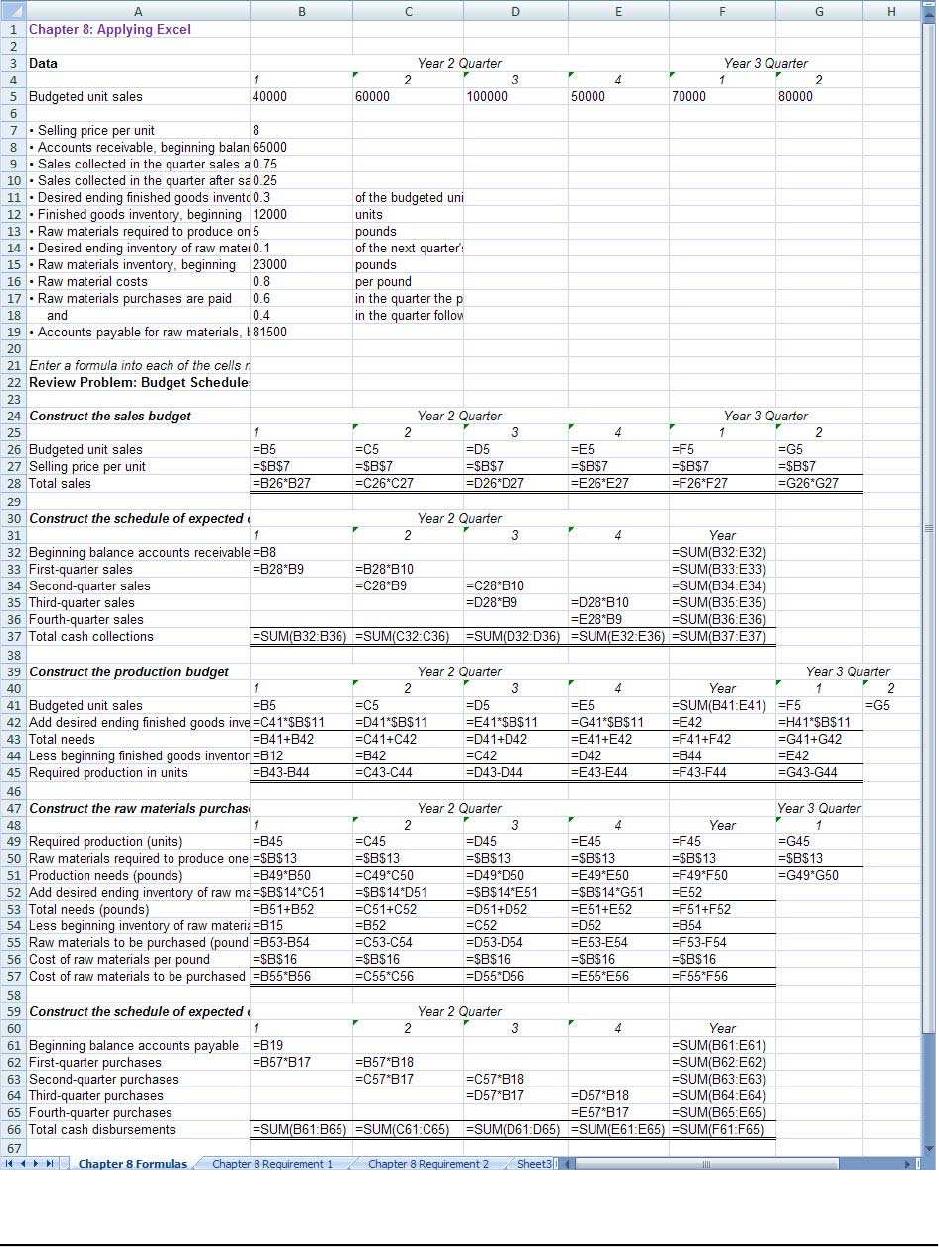
Chapter 8: Applying Excel (continued)
The completed worksheet, with formulas displayed, is shown below.
© The McGraw-Hill Companies, Inc., 2018. All rights reserved.
Solutions Manual, Chapter 8 5
Chapter 8: Applying Excel (continued)
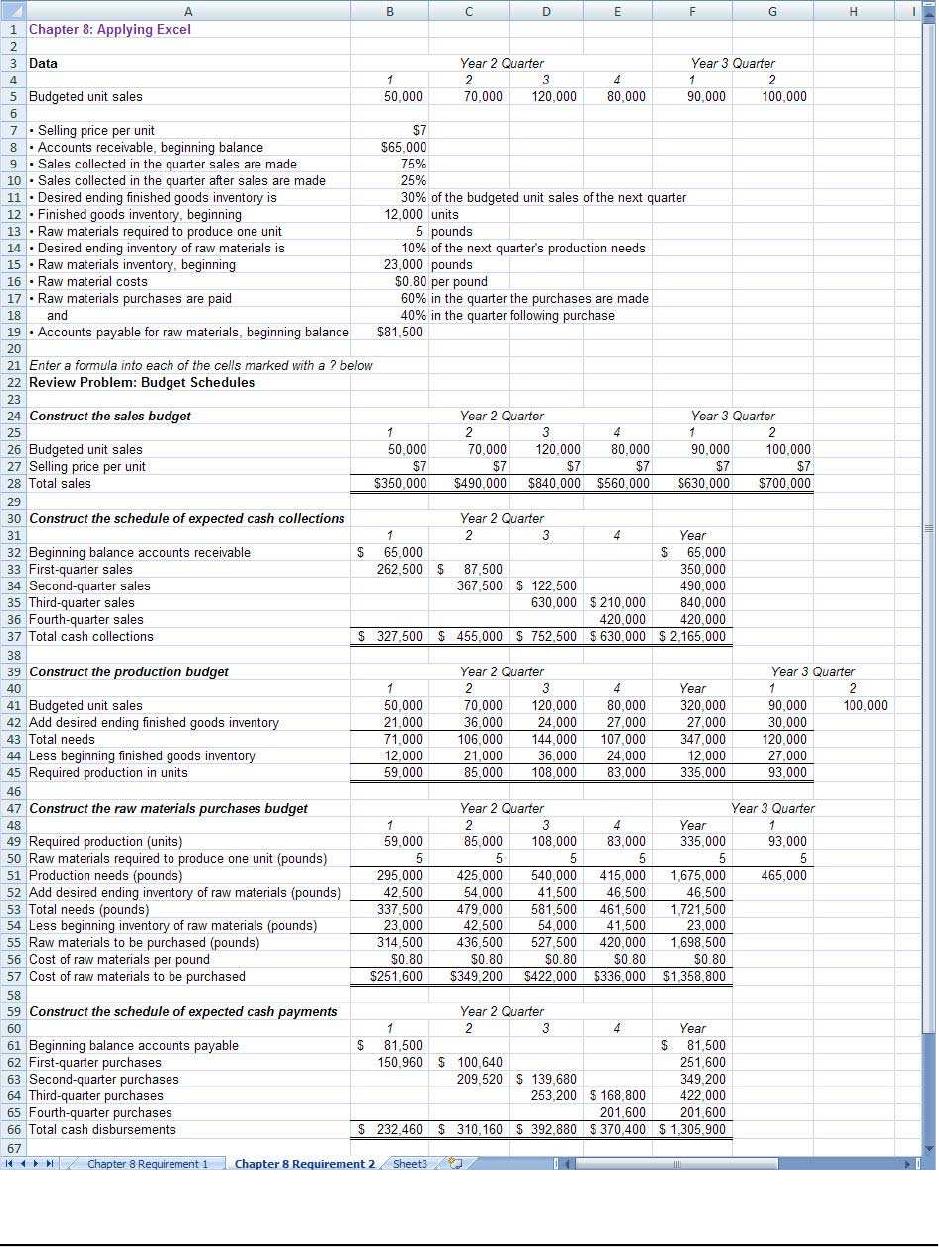
1. When the budgeted unit sales in the second quarter are increased from

© The McGraw-Hill Companies, Inc., 2018. All rights reserved.
6 Managerial Accounting, 16th Edition
Chapter 8: Applying Excel (continued)
The cash disbursements for raw materials have increased from
© The McGraw-Hill Companies, Inc., 2018. All rights reserved.
Solutions Manual, Chapter 8 7
Chapter 8: Applying Excel (continued)
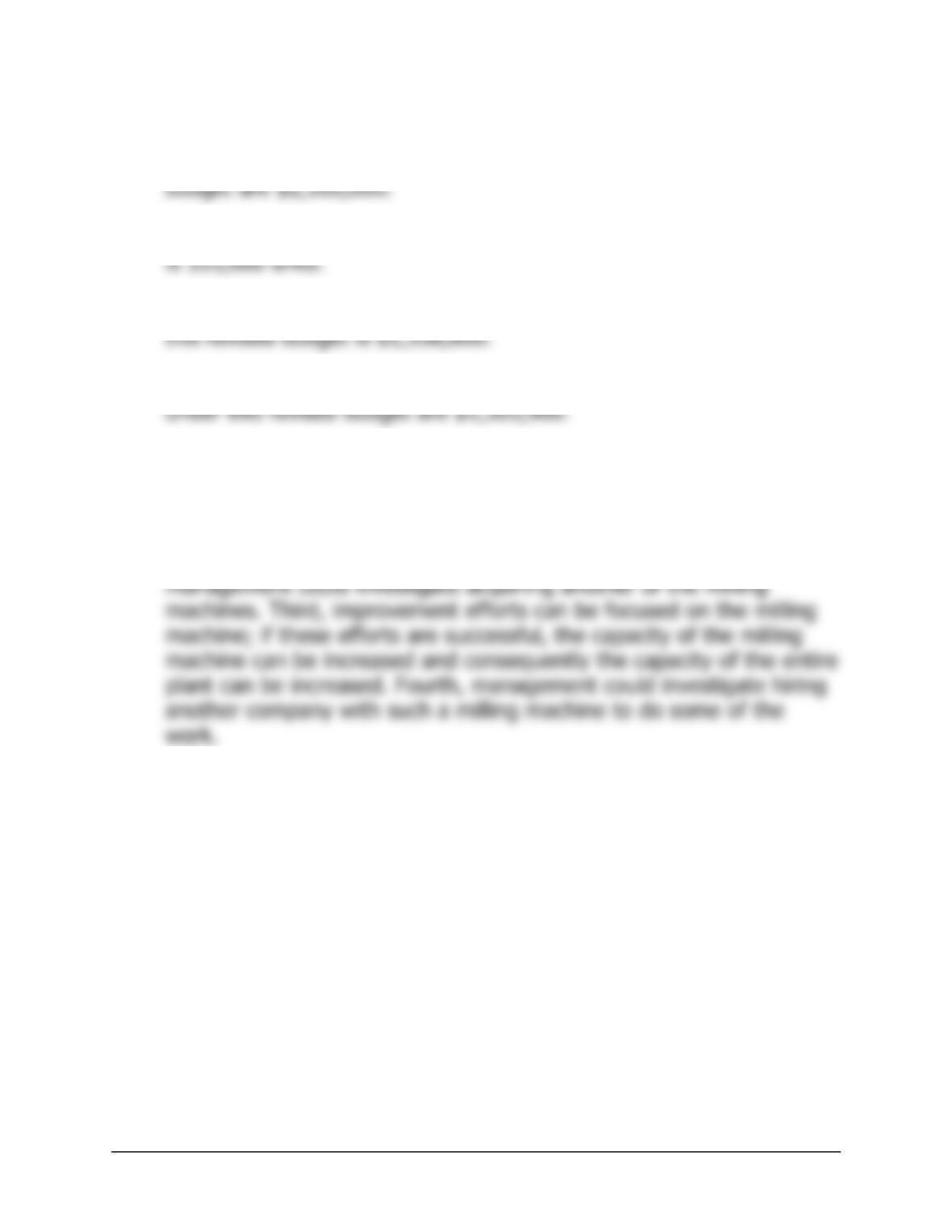
2. With the revised sales budget, the worksheet should look like this:
© The McGraw-Hill Companies, Inc., 2018. All rights reserved.
8 Managerial Accounting, 16th Edition
Chapter 8: Applying Excel (continued)
a. The total expected cash collections for the year under this revised
b. The total required production for the year under this revised budget
c. The total cost of raw materials to be purchased for the year under
d. The total expected cash disbursements for raw materials for the year
e. The production constraint of 90,000 units per quarter is a problem in
the third quarter of Year 2 and may be a problem later in Year 3. This
problem can be approached in a variety of ways. First, the excess
capacity in the first and second quarters could be used to build up
finished goods inventories beyond the usual levels. Second,
© The McGraw-Hill Companies, Inc., 2018. All rights reserved.
Solutions Manual, Chapter 8 9
The Foundational 15
1. The budgeted sales for July are computed as follows:
T
2. The expected cash collections for July are computed as follows:
July
June sales:
$588,000 × 60% ………………. $352,800
July sales:
T
3. The accounts receivable balance at the end of July is:
July sales (a) ……………………….. $700,000
A
4. The required production for July is computed as follows:
July
Bud
g
eted sales in units …………….. 10,000
A
dd desired endin
g
inventory*……. 2,400
T
© The McGraw-Hill Companies, Inc., 2018. All rights reserved.
10 Managerial Accounting, 16th Edition
The Foundational 15 (continued)
5. The raw material purchases for July are computed as follows:
July
Required production in units of finished
g
oods ……………. 10,400
Units of raw materials needed per unit of finished
g
oods 5
Units of raw materials needed to meet production……… 52,000
6. The cost of raw material purchases for July is computed as follows:
7. The estimated cash disbursements for materials purchases in July is
computed as follows:
July
June purchases:
$88,880 × 70% ………………… $62,216
July purchases:
8. The accounts payable balance at the end of July is:
July purchases (a)…………………. $105,800