© The McGraw-Hill Companies, Inc., 2018. All rights reserved.
Solutions Manual, Chapter 2 51
Problem 2-21 (continued)
The overhead applied to Job B is computed as follows:
Machinin
g
A
ssembly
T
otal
Quantity of allocation base used (a) 12 5
3. The plantwide approach will overcost jobs that are intensive users of As-
sembly and minimal users of Machining. Conversely, it will undercost
products that are intensive users of Machining and minimal users of As-
sembly. These cost distortions will adversely impact the company’s pric-
© The McGraw-Hill Companies, Inc., 2018. All rights reserved.
52 Managerial Accounting, 16th Edition
Case 2-22 (60 minutes)
1. a. Estimated total manufacturin
g
overhead cost
Predetermined =
overhead rate Estimated total amount of the allocation base
b. The manufacturing overhead cost applied to the Koopers job is com-
puted as follows:
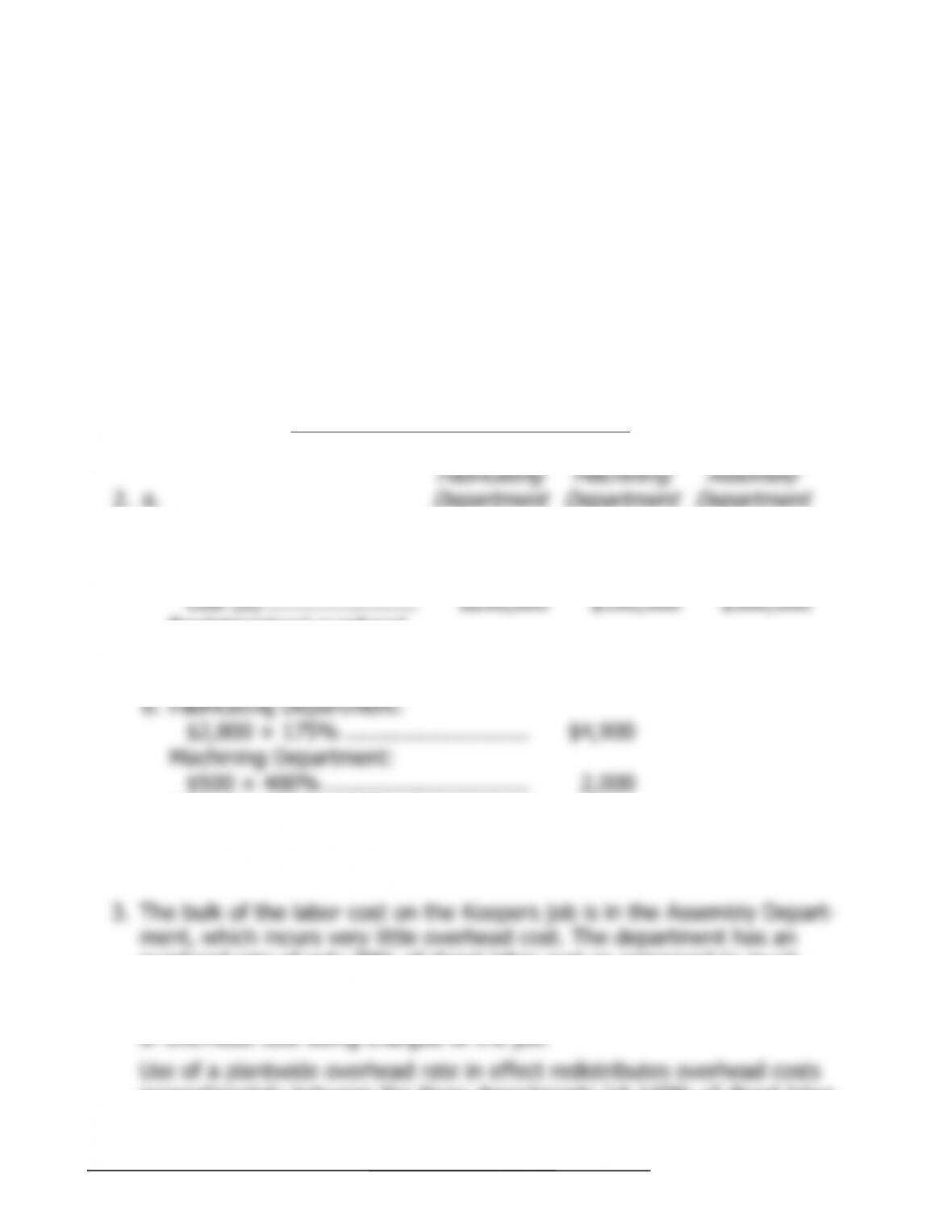
2. a.
Fabricating
Department
Machining
Department
Assembly
Department
Estimated manufacturin
g
b. Fabricatin
g
Department:
$2,800 × 175% ………………………. $4,900
Machinin
g
Department:
3. The bulk of the labor cost on the Koopers job is in the Assembly Depart-
ment, which incurs very little overhead cost. The department has an
overhead rate of only 30% of direct labor cost as compared to much
Use of a plantwide overhead rate in effect redistributes overhead costs
proportionately between the three departments (at 140% of direct labor
© The McGraw-Hill Companies, Inc., 2018. All rights reserved.
Solutions Manual, Chapter 2 53
Case 2-22 (continued)
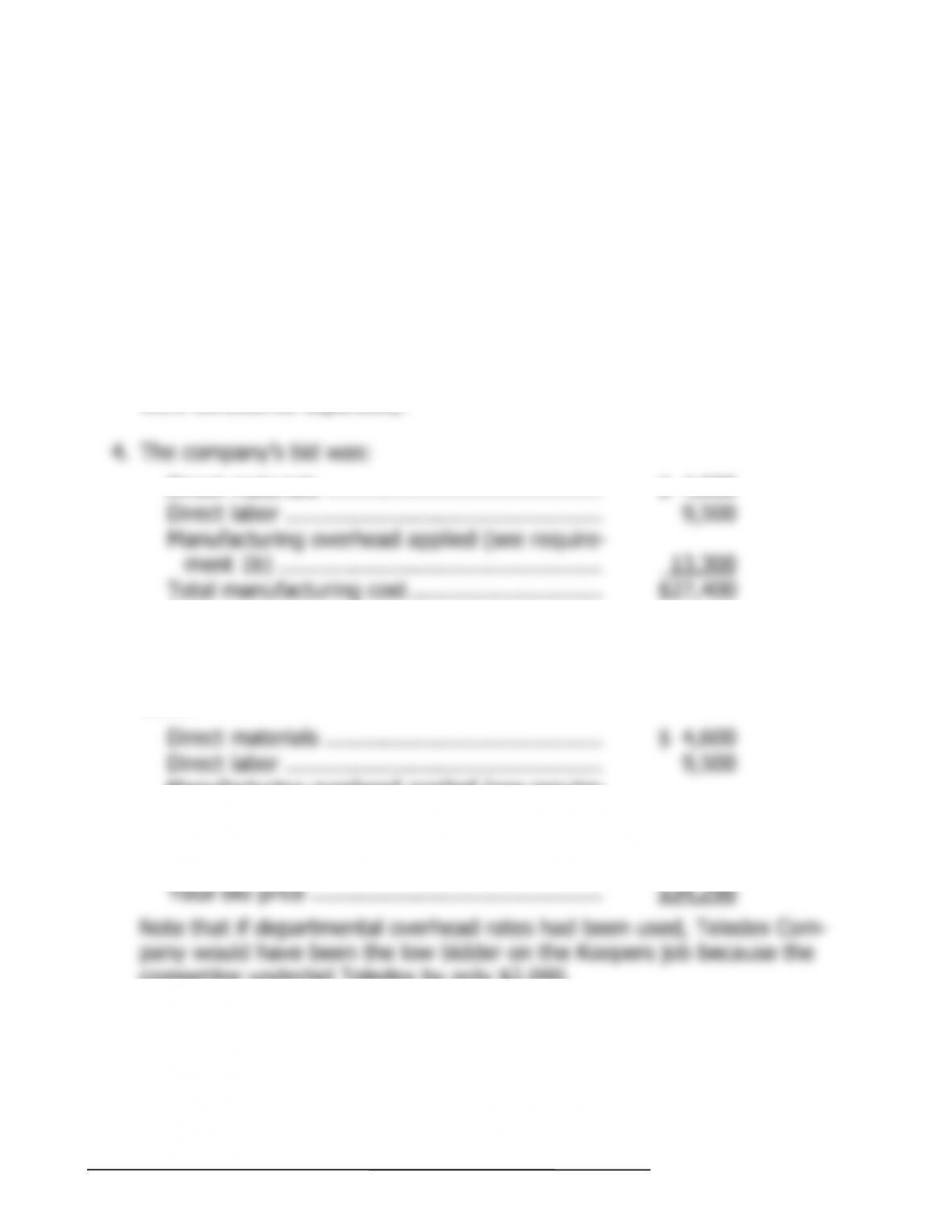
4. The company’s bid was:
Direct materials …………………………………… $ 4,600
Direct labor ………………………………………… 9,500
Manufacturin
g
overhead applied (see require-
If departmental overhead rates had been used, the bid would have
been:
Direct materials …………………………………… $ 4,600
Direct labor ………………………………………… 9,500
g
Note that if departmental overhead rates had been used, Teledex Com-

© The McGraw-Hill Companies, Inc., 2018. All rights reserved.
54 Managerial Accounting, 16th Edition
Appendix 2A
Activity-Based Absorption Costing
Exercise 2A-1 (20 minutes)
1. Activity rates are computed as follows:
Activity Cost Pool
(a)
Estimated
Overhead
Cost
(b)
Expected
Activity
(a) ÷ (b)
Activity
Rate
© The McGraw-Hill Companies, Inc., 2018. All rights reserved.
Solutions Manual, Appendix 2A 55
Exercise 2A-1 (continued)
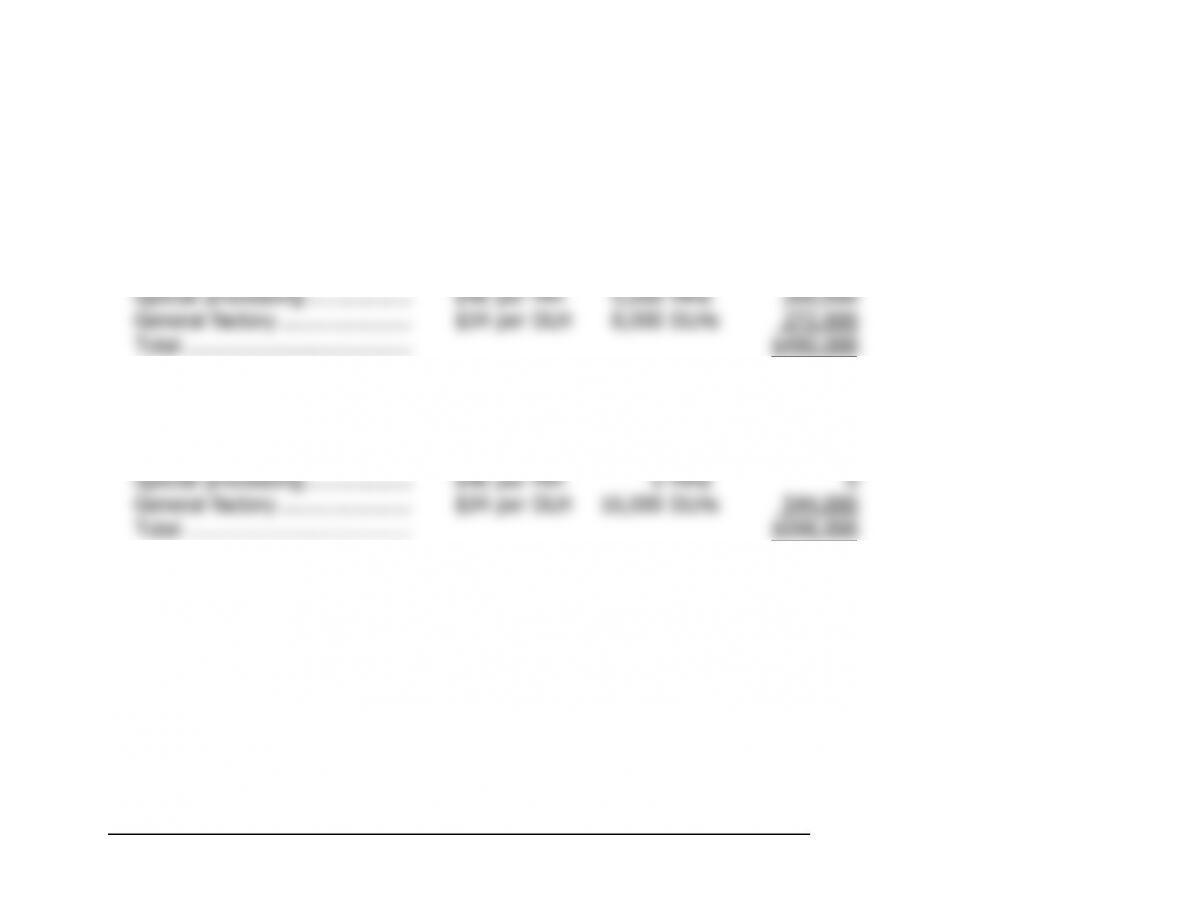
2. Overhead is assigned to the two products as follows:
Hubs:
Activity Cost Pool
(a)
Activity Rate
(b)
Activity
(a) × (b)
ABC Cost
Machine setups ………………… $180 per setup 100 setups $ 18,000
Sprockets:
Activity Cost Pool
(a)
Activity Rate
(b)
Activity
(a) × (b)
ABC Cost
Machine setups ………………… $180 per setup 300 setups $ 54,000

© The McGraw-Hill Companies, Inc., 2018. All rights reserved.
56 Managerial Accounting, 16th Edition
Exercise 2A-1 (continued)
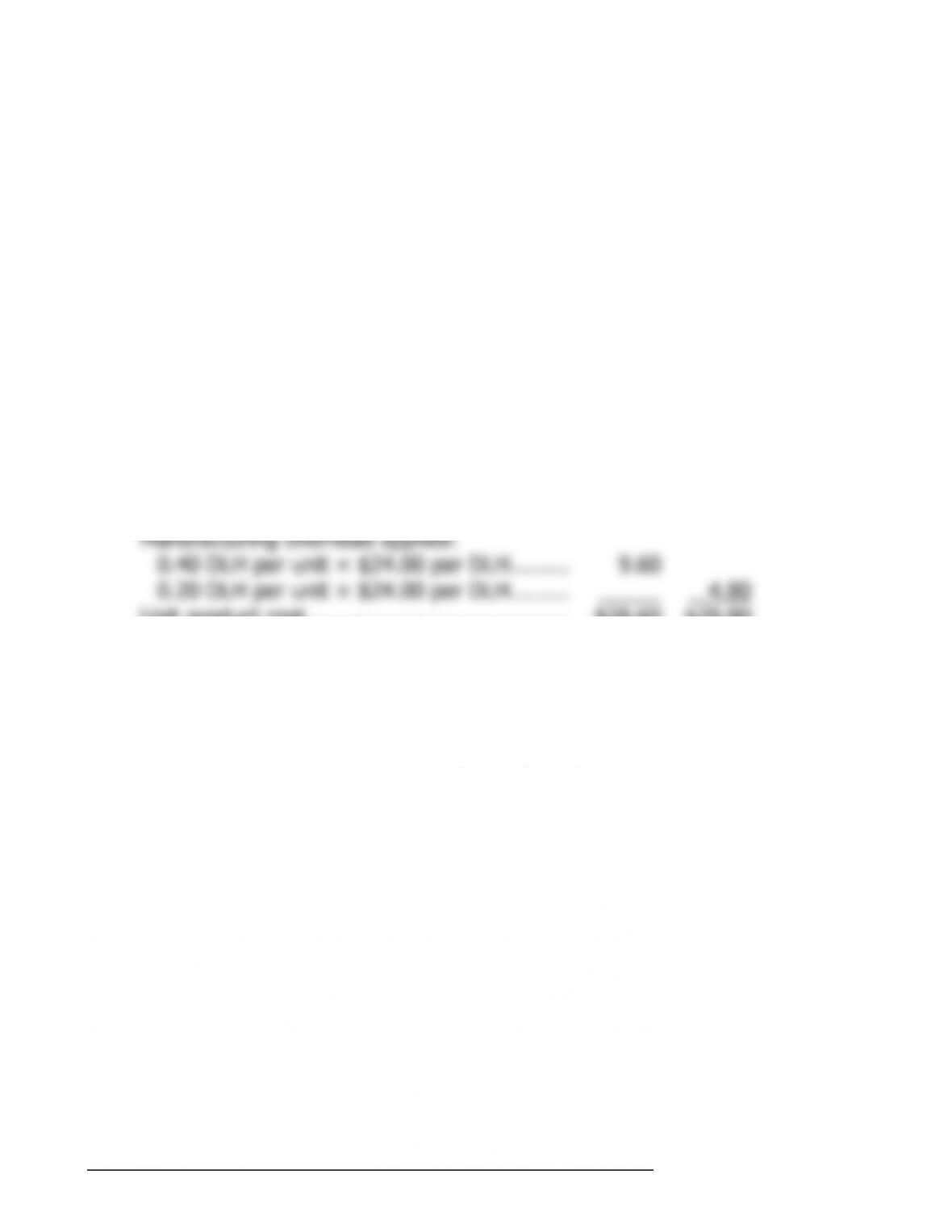
2. Each product’s unit product cost is computed as follows:
Hubs Sprockets
Direct materials ……………………………. $32.00 $18.00
Direct labor:
$15 per DLH × 0.80 DLHs per unit …. 12.00
$15 per DLH × 0.40 DLHs per unit …. 6.00
Overhead:
© The McGraw-Hill Companies, Inc., 2018. All rights reserved.
Solutions Manual, Appendix 2A 57
Exercise 2A-2 (45 minutes)
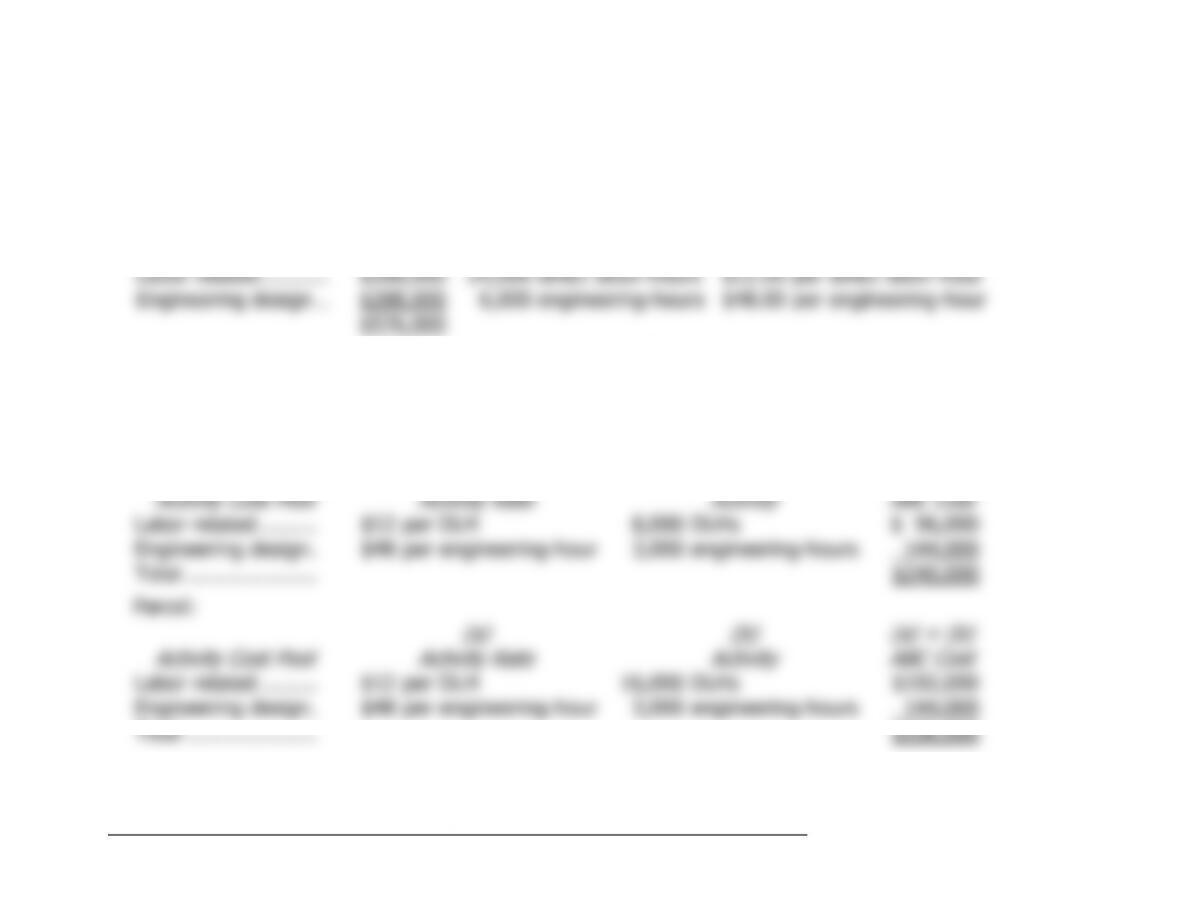
1. The unit product costs under the company’s traditional costing system
would be computed as follows:
Rascon Parcel Total
Number of units produced (a) ………………… 20,000 80,000
Direct labor-hours per unit (b) ……………….. 0.40 0.20
Rascon Parcel
Direct materials ………………………………….. $13.00 $22.00
Direct labor ……………………………………….. 6.003.00
Manufacturin
g
overhead applied:
© The McGraw-Hill Companies, Inc., 2018. All rights reserved.
58 Managerial Accounting, 16th Edition
Exercise 2A-2 (continued)
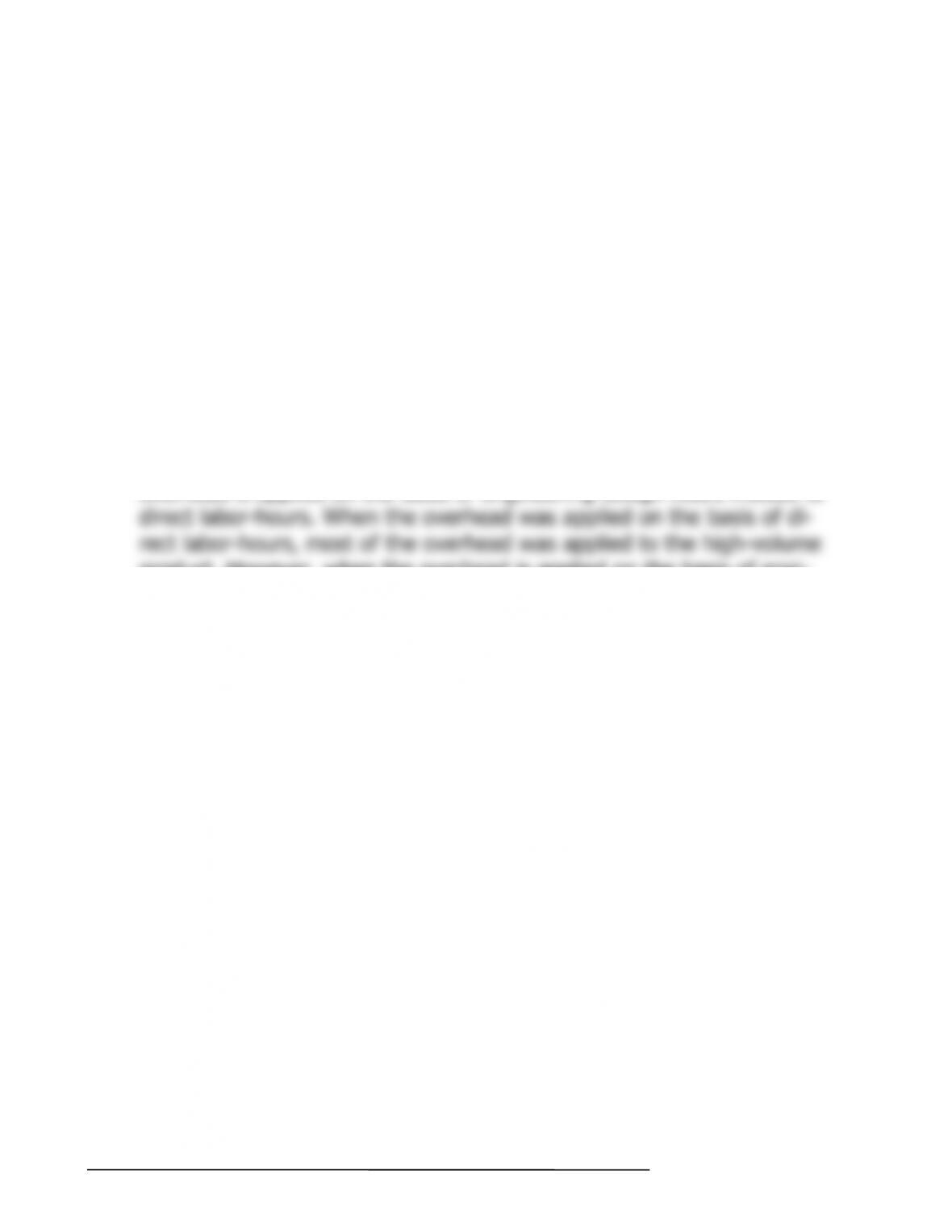
2. The unit product costs using activity-based absorption costing can be computed as follows:
Activity Cost Pool
Estimated
Overhead
Cost*
(b)
Expected Activity
(a) ÷ (b)
Activity Rate
*The total estimated manufacturing overhead cost of $576,000 is split evenly between the two activ-
ity cost pools.
Manufacturing overhead is assigned to the two products as follows:
Rascon:
(a)
(b)
(a) × (b)
Parcel:
Activity Cost Pool
(a)
Activity Rate
(b)
Activity
(a) × (b)
ABC Cost
Labor related ……… $12 per DLH 16,000 DLHs $192,000
© The McGraw-Hill Companies, Inc., 2018. All rights reserved.
Solutions Manual, Appendix 2A 59
Exercise 2A-2 (continued)
The unit product costs combine direct materials, direct labor, and over-
head costs:
Rascon Parcel
Direct materials ……………………………………. $13.00 $22.00
3. The unit product cost of the high-volume product, Parcel, declines under
the activity-based approach, whereas the unit product cost of the low-
volume product, Rascon, increases. This occurs because half of the
overhead is applied on the basis of engineering design hours instead of
direct labor-hours. When the overhead was applied on the basis of di-

© The McGraw-Hill Companies, Inc., 2018. All rights reserved.
60 Managerial Accounting, 16th Edition
Exercise 2A-3 (45 minutes)
1. The predetermined overhead rate is computed as follows:
$325,000
Predetermined
= = $6.50 per DLH
overhead rate 50,000 DLHs
The unit product costs under the company’s traditional costing system
are computed as follows:
Delux
e
Stand
–
ard
Direct materials ……………………………………….…….. $72.00 $53.00