© The McGraw-Hill Companies, Inc., 2018. All rights reserved.
Solutions Manual, Chapter 15 11
Exercise 15-5 (10 minutes)
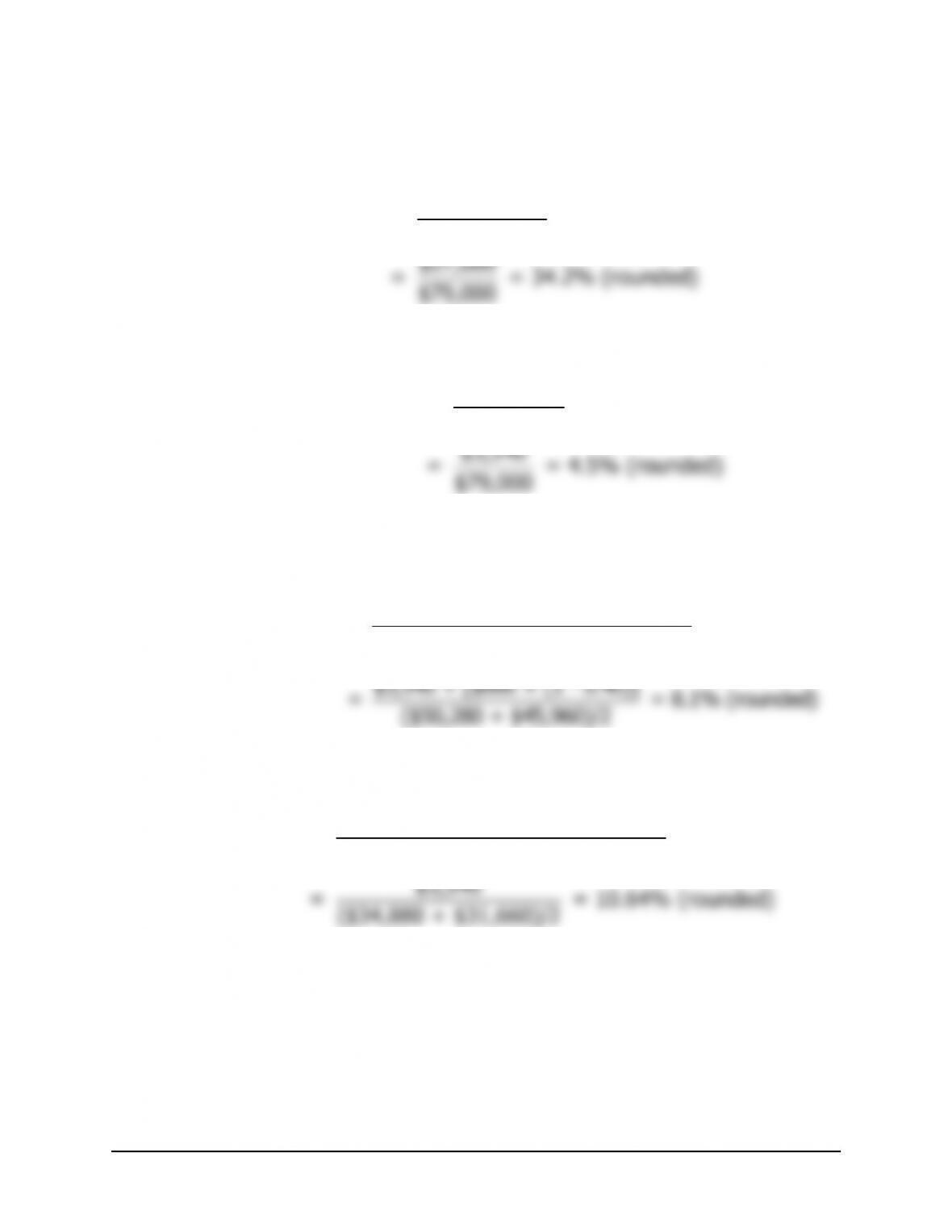
1. Calculation of the gross margin percentage:
Gross margin
Gross margin percentage = Sales
2. Calculation of the net profit margin percentage:
Net income
Net profit margin percentage = Sales
3. Calculation of the return on total assets:
Net income +
[Interest expense × (1 – Tax rate)]
Return on total assets = Average total assets
4. Calculation of the return on equity:
Net income
Return on equity =
Average total stockholders’ equity
© The McGraw-Hill Companies, Inc., 2018. All rights reserved.
12 Managerial Accounting, 16th Edition
Exercise 15-6 (15 minutes)
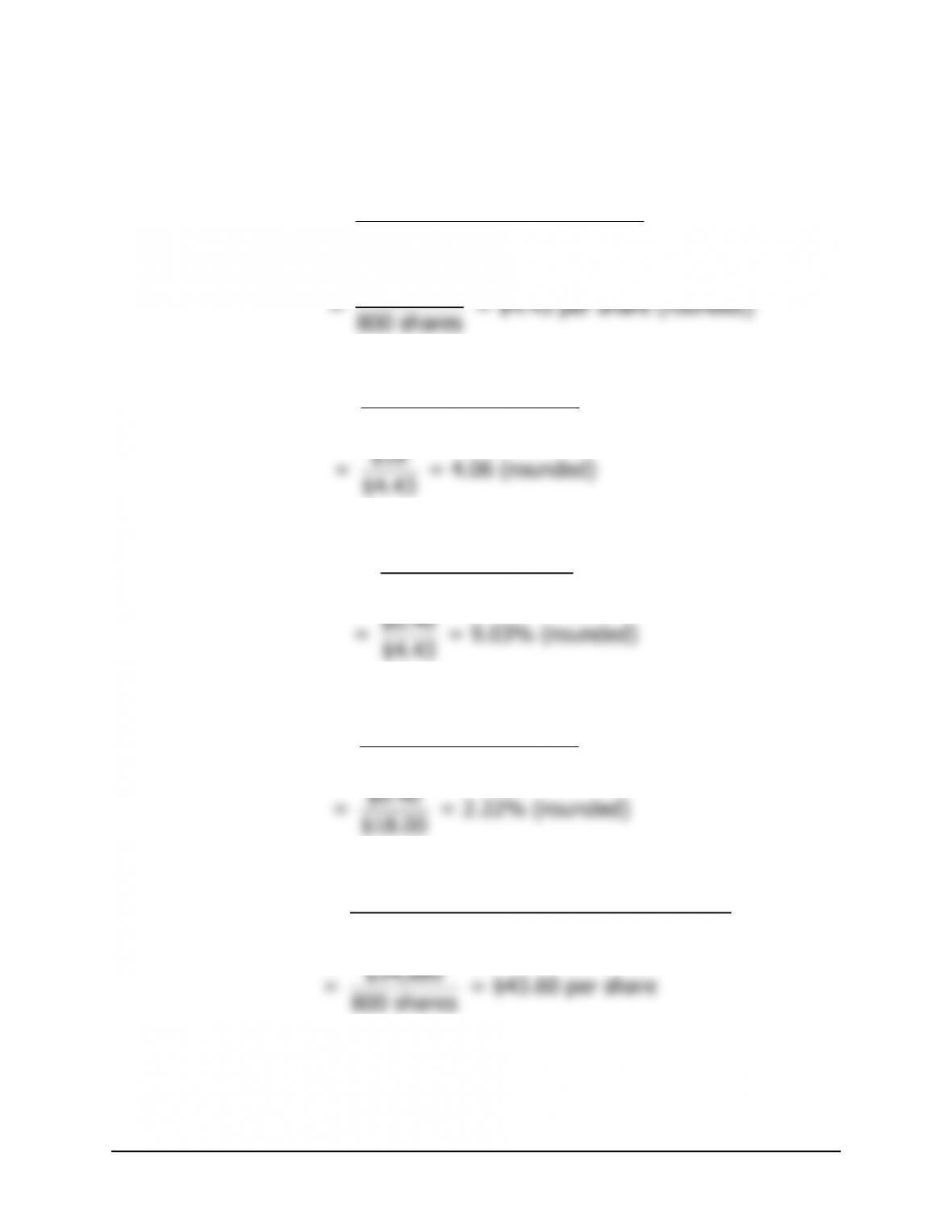
1. Calculation of the earnings per share:
Net income
Earnings per share =
Average number of common
shares outstanding
$3,540
2. Calculation of the price-earnings ratio:
Market price per share
Price-earnings ratio =
Earnings per share
3. Calculation of the dividend payout ratio:
Dividends per share
Dividend payout ratio =
Earnings per share
4. Calculation of the dividend yield ratio:
Dividends per share
Dividend yield ratio = Market price per share
5. Calculation of the book value per share:
Total stockholders’ equity
Book value per share = Number of common shares outstanding
© The McGraw-Hill Companies, Inc., 2018. All rights reserved.
Solutions Manual, Chapter 15 13
Exercise 15-7 (15 minutes)
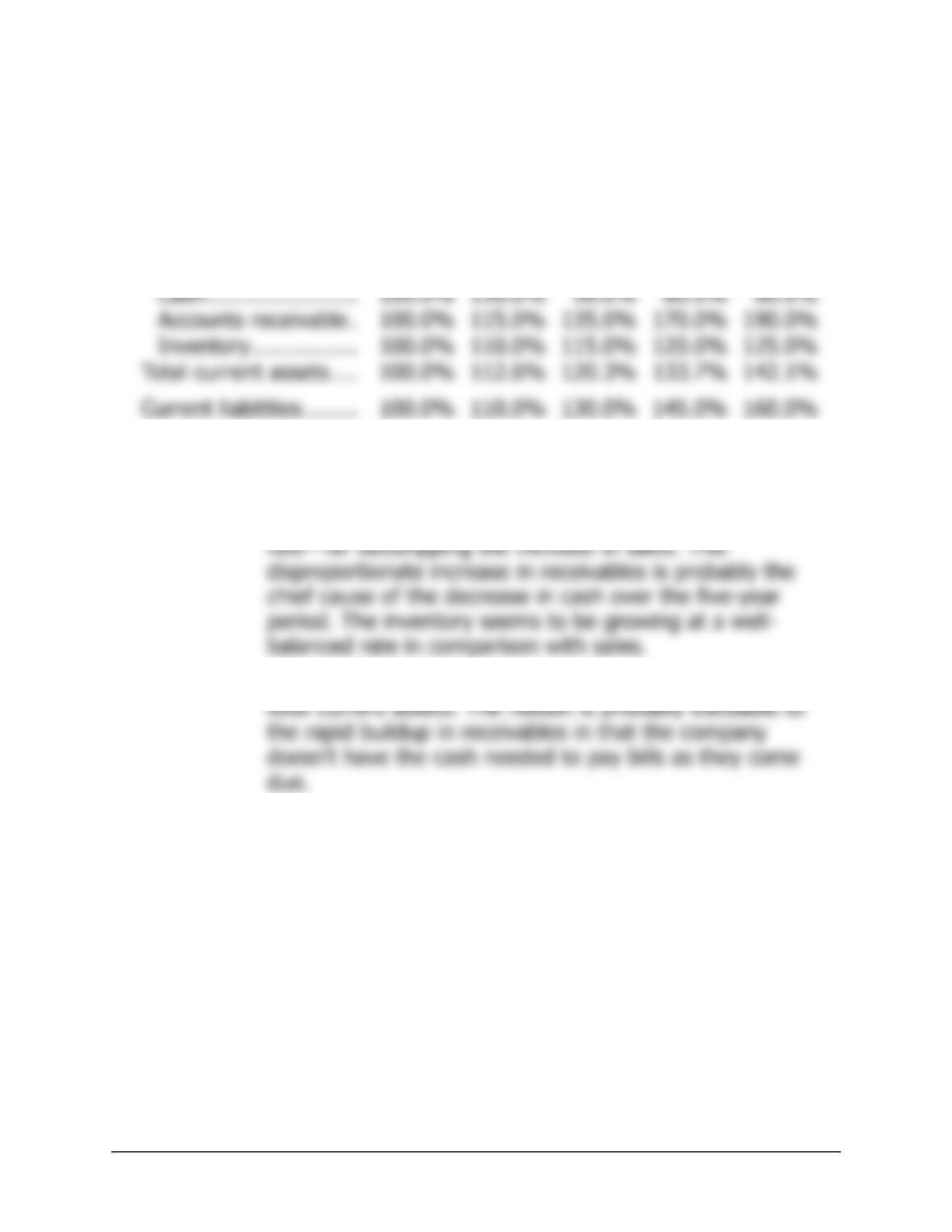
1. The trend percentages (rounded) are:
Year 1 Year 2 Year 3 Year 4 Year 5
Sales ……………………. 100.0% 110.0% 115.0% 120.0% 125.0%
Current assets:
A
T
2. Sales:
T
he sales are increasin
g
at a steady and consistent rate.
A
ssets:
T
he most noticeable thin
g
about the assets is that the
accounts receivable have been increasing at a rapid
Liabilities:
T
he current liabilities are
g
rowin
g
more rapidly than the

© The McGraw-Hill Companies, Inc., 2018. All rights reserved.
14 Managerial Accounting, 16th Edition
Exercise 15-8 (20 minutes)
1. Calculation of working capital:
Current assets ……………. $115,000
2. Current ratio:
3. Acid-test ratio:
Cash + Marketable securities
+ Accounts receivable + Short-term notes receivable
Acid-test ratio = Current liabilities
4. Debt-to-equity ratio:
5. Times interest earned:
Earnin
g
s before interest
and income taxes
Times interest earned = Interest expense
© The McGraw-Hill Companies, Inc., 2018. All rights reserved.
Solutions Manual, Chapter 15 15
Exercise 15-8 (continued)
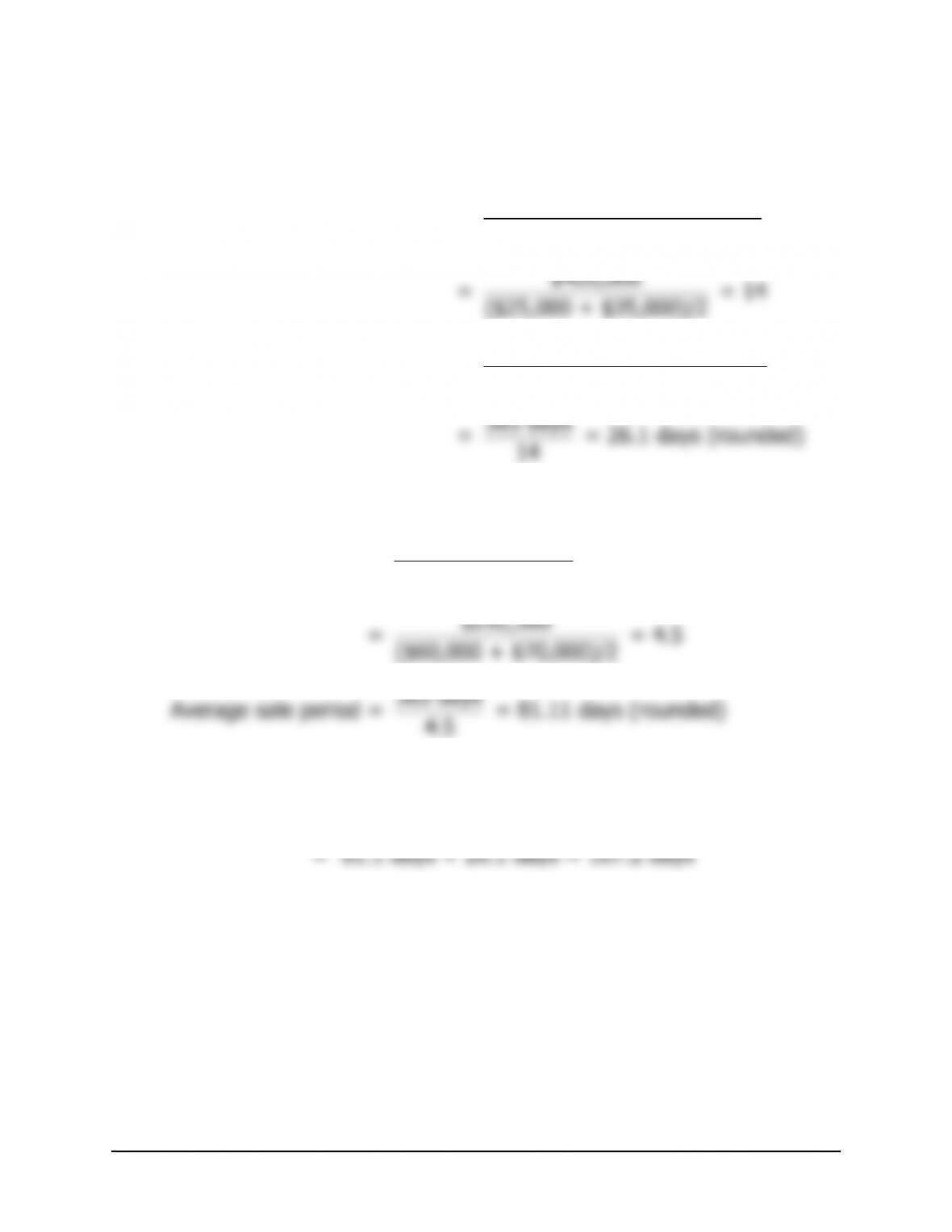
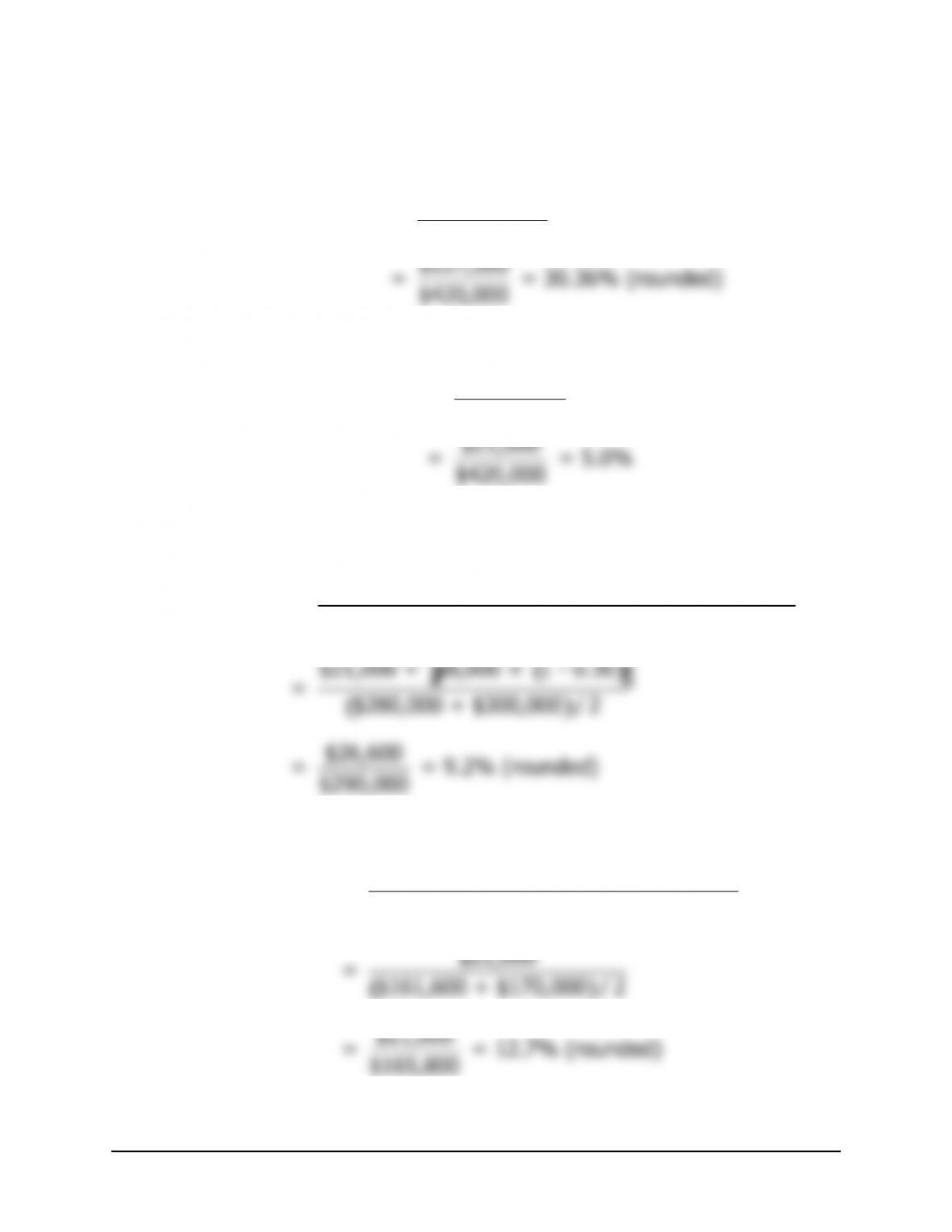
6. Average collection period:
Sales on account
Accounts receivable turnover = Average accounts receivable
365 days
Average collection period = Accounts receivable turnover
7. Average sale period:
Cost of goods sold
Inventory turnover = Average inventory
8. The operating cycle is computed as follows:
Operatin
g
cycle = Avera
g
e sale period +
A
vera
g
e collection period
© The McGraw-Hill Companies, Inc., 2018. All rights reserved.
16 Managerial Accounting, 16th Edition
Exercise 15-9 (20 minutes)
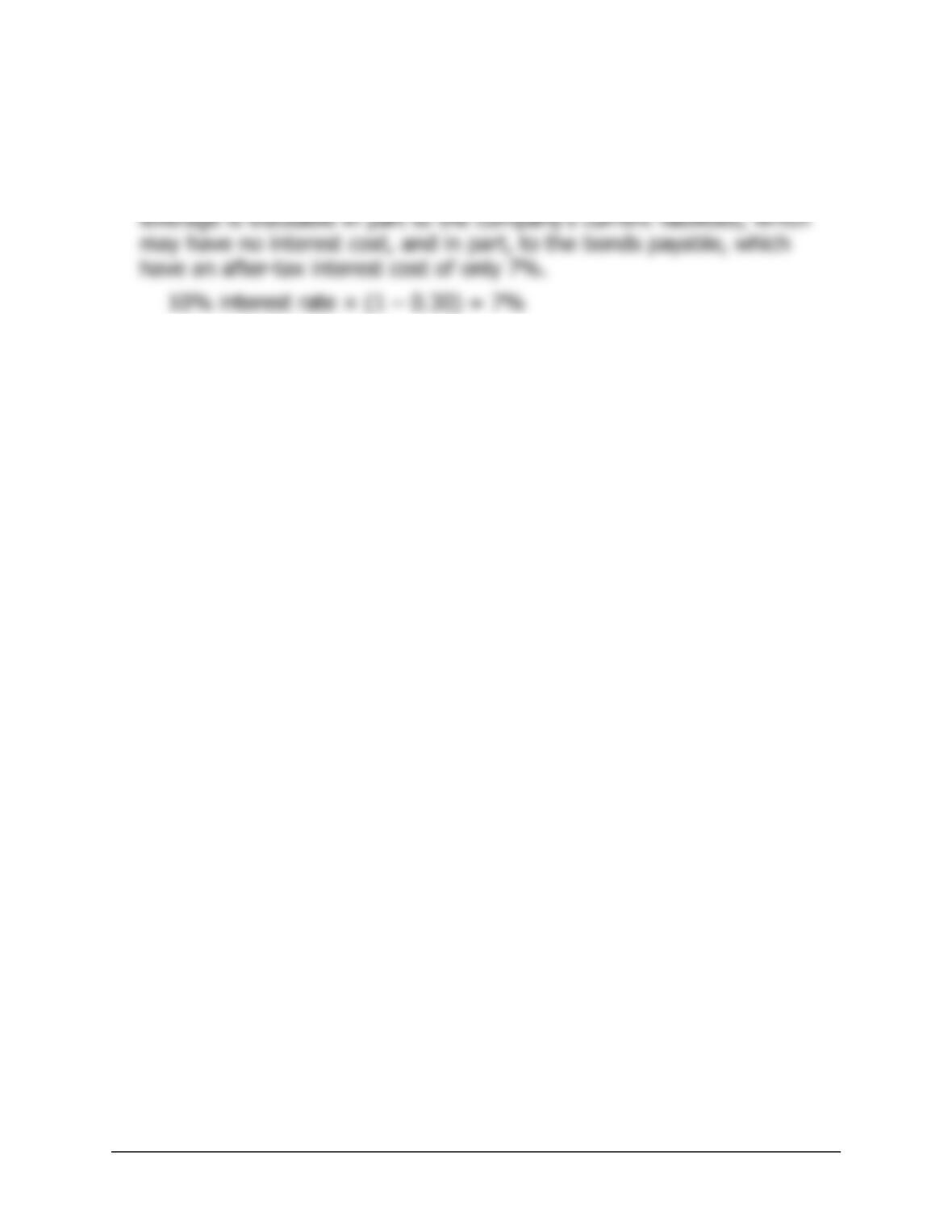
1. Calculation of the gross margin percentage:
Gross margin
Gross margin percentage = Sales
2. Calculation of the net profit margin percentage:
Net income
Net profit margin percentage = Sales
3. Return on total assets:
()
Net Income + Interest expense × 1 – Tax rate
Return on =
total assets Average total assets
é
ù
ê
ú
ë
û
© The McGraw-Hill Companies, Inc., 2018. All rights reserved.
Solutions Manual, Chapter 15 17
Exercise 15-9 (continued)
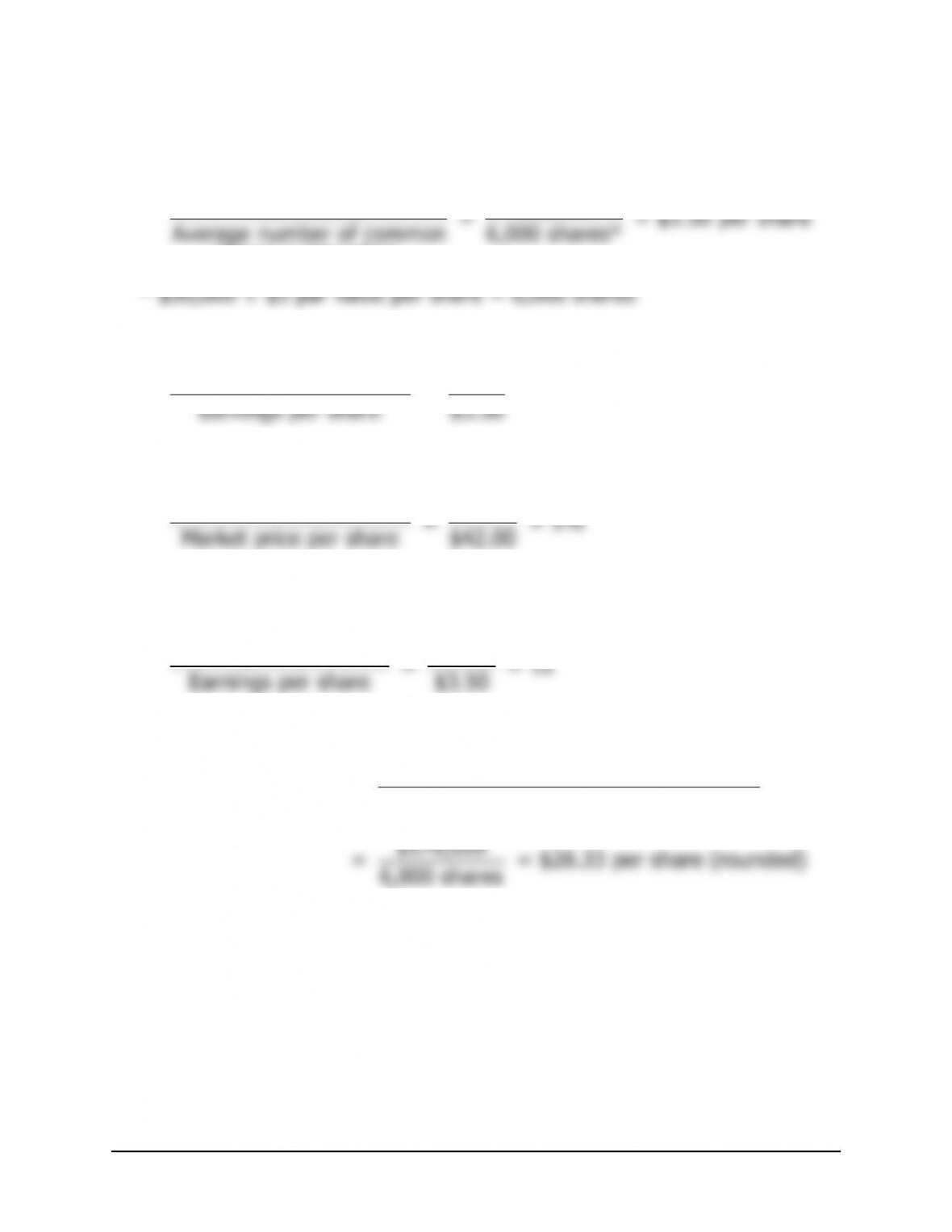
5. Financial leverage was positive because the return on equity (12.7%)
was greater than the return on total assets (9.2%). This positive
© The McGraw-Hill Companies, Inc., 2018. All rights reserved.
18 Managerial Accounting, 16th Edition
Exercise 15-10 (15 minutes)
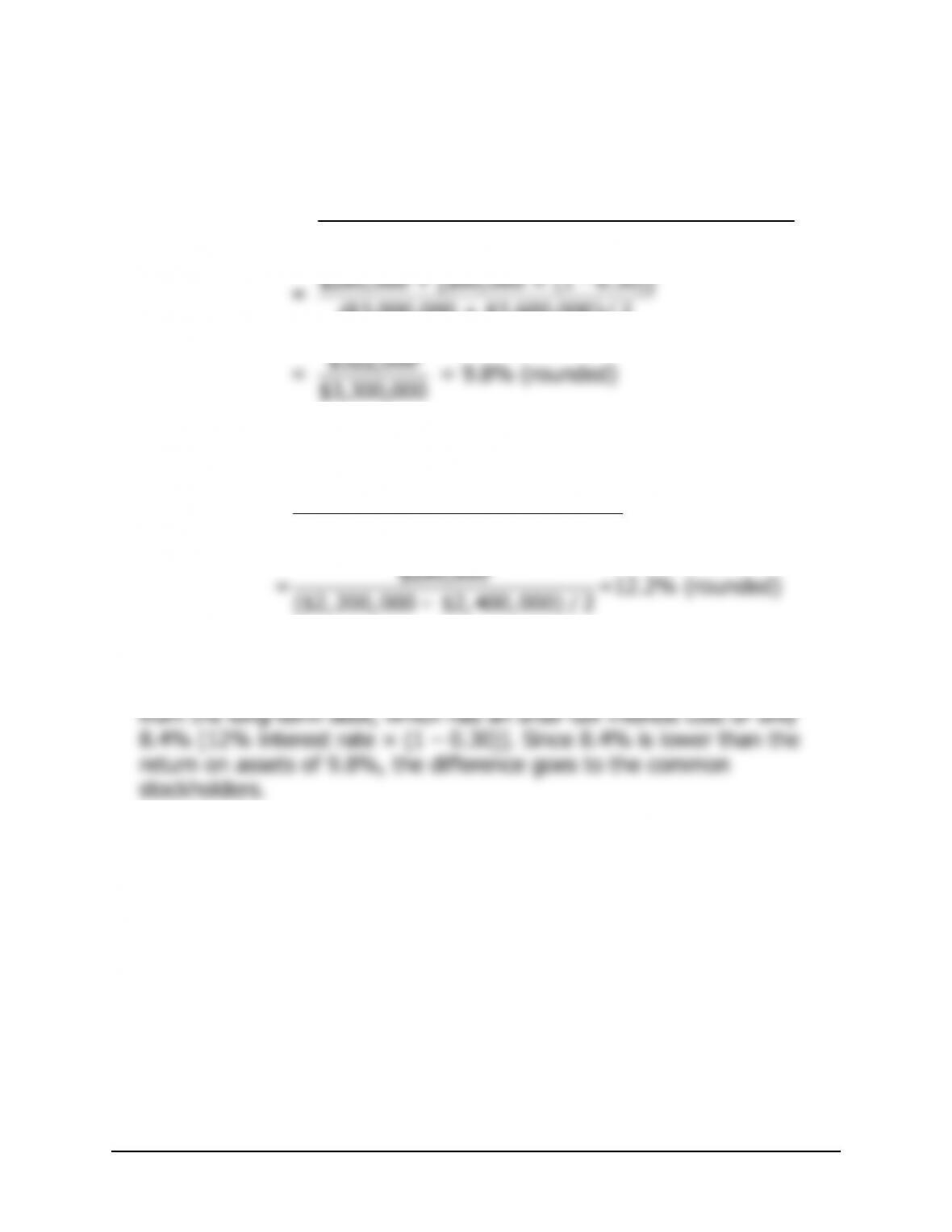
1. Earnings per share:
shares outstanding
2. Dividend payout ratio:
4. Price-earnings ratio:
5. Book value per share:
Total stockholders’ equity
Book value per share = Number of common shares outstanding
© The McGraw-Hill Companies, Inc., 2018. All rights reserved.
Solutions Manual, Chapter 15 19
Exercise 15-11 (15 minutes)
1. Return on total assets:
Net income + [Interest expense × (1 – Tax rate)]
Return on =
total assets Average total assets
2. Return on equity:
Net income
Return on =
equity Average total stockholders’ equity
3. Leverage is positive because the return on equity (12.2%) is greater
than the return on total assets (9.8%). This positive leverage arises
© The McGraw-Hill Companies, Inc., 2018. All rights reserved.
20 Managerial Accounting, 16th Edition
Exercise 15-12 (15 minutes)
1. Current assets
($90,000 + $260,000 + $490,000 + $10,000) ………… $850,000
2. Cash + Marketable securities + Accounts receivable
+ Short-term notes receivable
Acid-test =
ratio Current liabilities
3. a. Working capital would not be affected by a $40,000 payment on
accounts payable:
Current assets ($850,000
–
$40,000)…………. $810,000
–
b. The current ratio (of 2.5) would increase to 2.7 if the company makes
a $40,000 payment on accounts payable:
Current assets
Current ratio = Current liabilities