© The McGraw-Hill Companies, Inc., 2018. All rights reserved.
Solutions Manual, Chapter 15 1
Chapter 15
Financial Statement Analysis
Solutions to Questions
15-1 Horizontal analysis examines how a
particular item on a financial statement such as
sales or cost of goods sold behaves over time.
15-2 By looking at trends, an analyst hopes
15-3 Price-earnings ratios reflect investors’
expectations concerning future earnings. The
higher the price-earnings ratio, the greater the
15-4 A rapidly growing tech company would
probably have many opportunities to make
15-6 Financial leverage results from
borrowing funds at an interest rate that differs
from the rate of return on assets acquired using
15-7 If the company experiences big
variations in net cash flows from operations,
15-8 The market value of a share of common
stock often exceeds the book value per share.
15-9 A 2 to 1 current ratio might not be
© The McGraw-Hill Companies, Inc., 2018. All rights reserved.
2 Managerial Accounting, 16th Edition
The Foundational 15
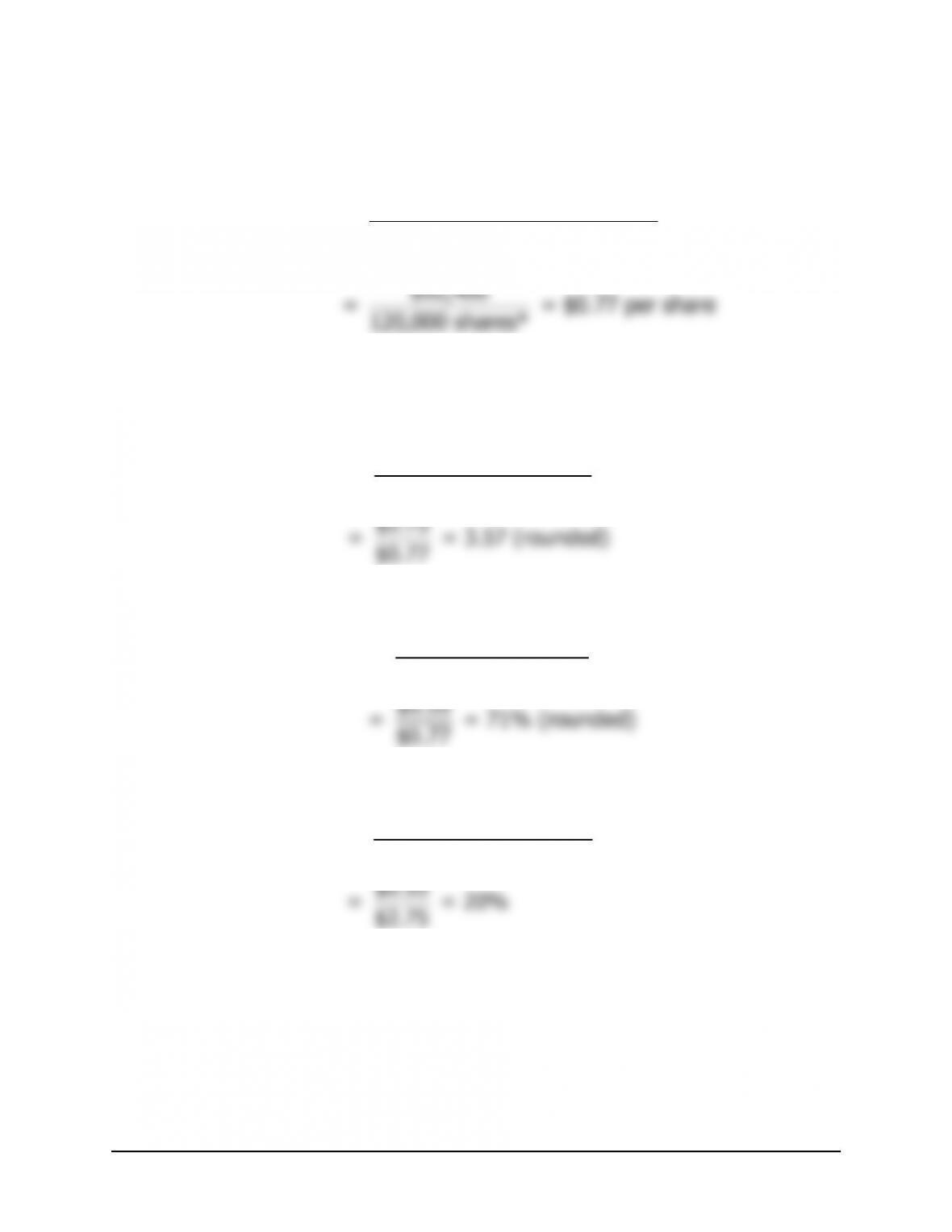
1. The earnings per share is computed as follows:
Net income
Earnings per share =
Average number of common
shares outstanding
* $120,000 ÷ $1 par value per share = 120,000 shares
2. The price-earnings ratio is computed as follows:
Market price per share
Price-earnings ratio =
Earnings per share
3. The dividend payout ratio is computed as follows:
Dividends per share
Dividend payout ratio =
Earnings per share
The dividend yield ratio is computed as follows:
Dividends per share
Dividend yield ratio = Market price per share
© The McGraw-Hill Companies, Inc., 2018. All rights reserved.
Solutions Manual, Chapter 15 3
The Foundational 15 (continued)
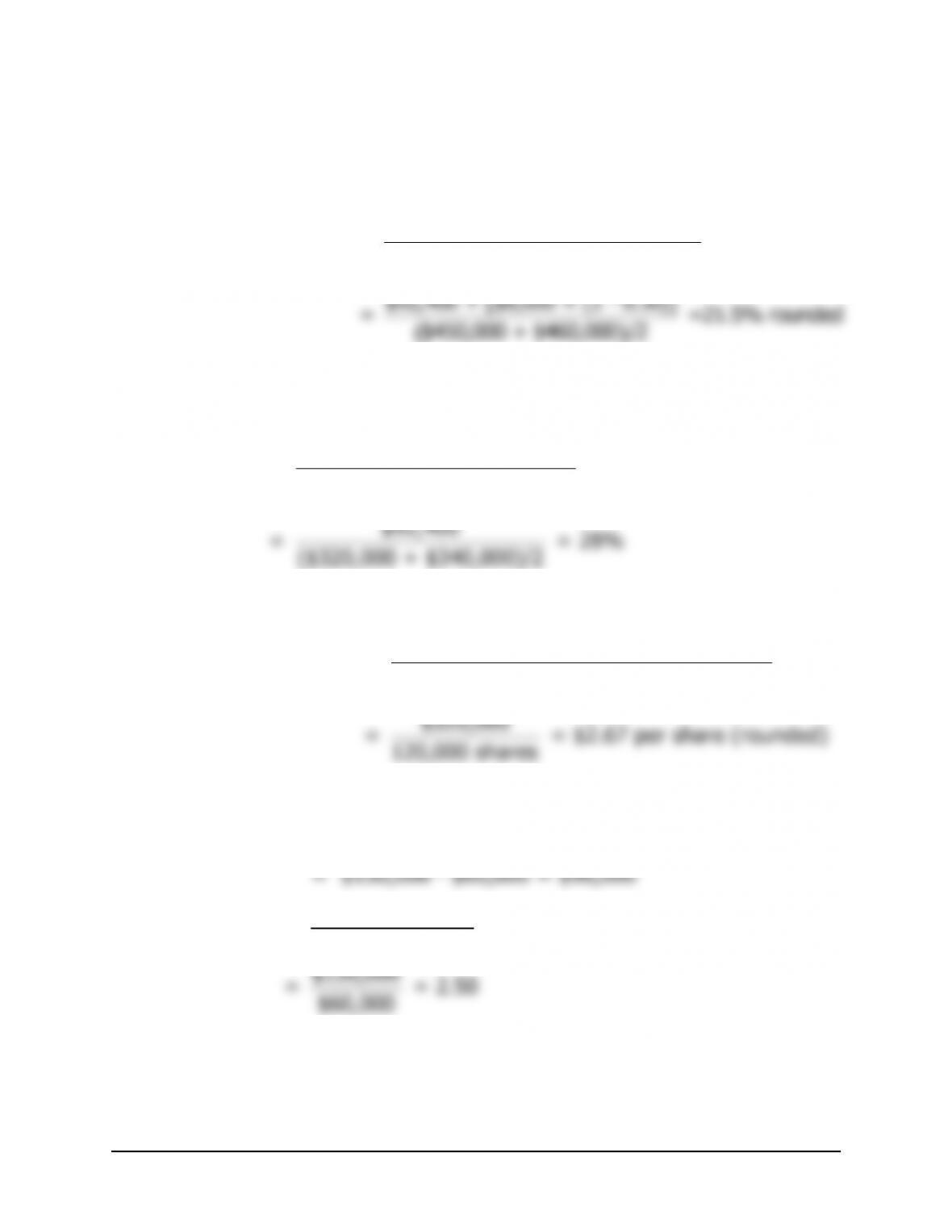
4. The return on total assets is computed as follows:
Net income +
[Interest expense × (1 – Tax rate)]
Return on total assets = Average total assets
5. The return on equity is computed as follows:
Net income
Return on =
equity Average stockholders’ equity
6. The book value per share is computed as follows:
Total stockholders’ equity
Book value per share = Number of common shares outstanding
7. The working capital and current ratio are computed as follows:
Workin
g
capital = Current assets – Current liabilities
Current assets
Current ratio = Current liabilities
© The McGraw-Hill Companies, Inc., 2018. All rights reserved.
4 Managerial Accounting, 16th Edition
The Foundational 15 (continued)
8. The acid-test ratio is computed as follows:
Cash + Marketable securities
+ Accounts receivable + Short-term notes receivable
Acid-test ratio = Current liabilities
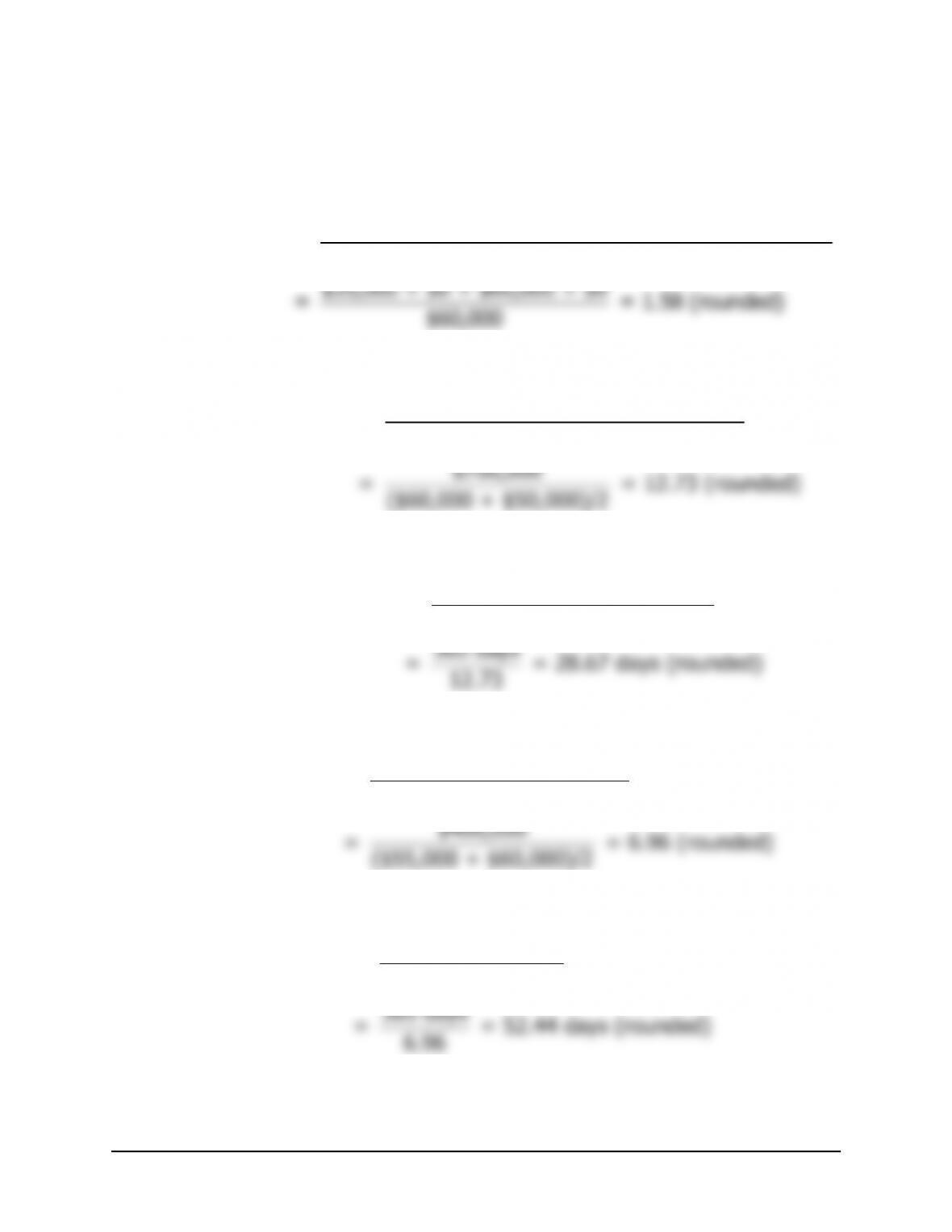
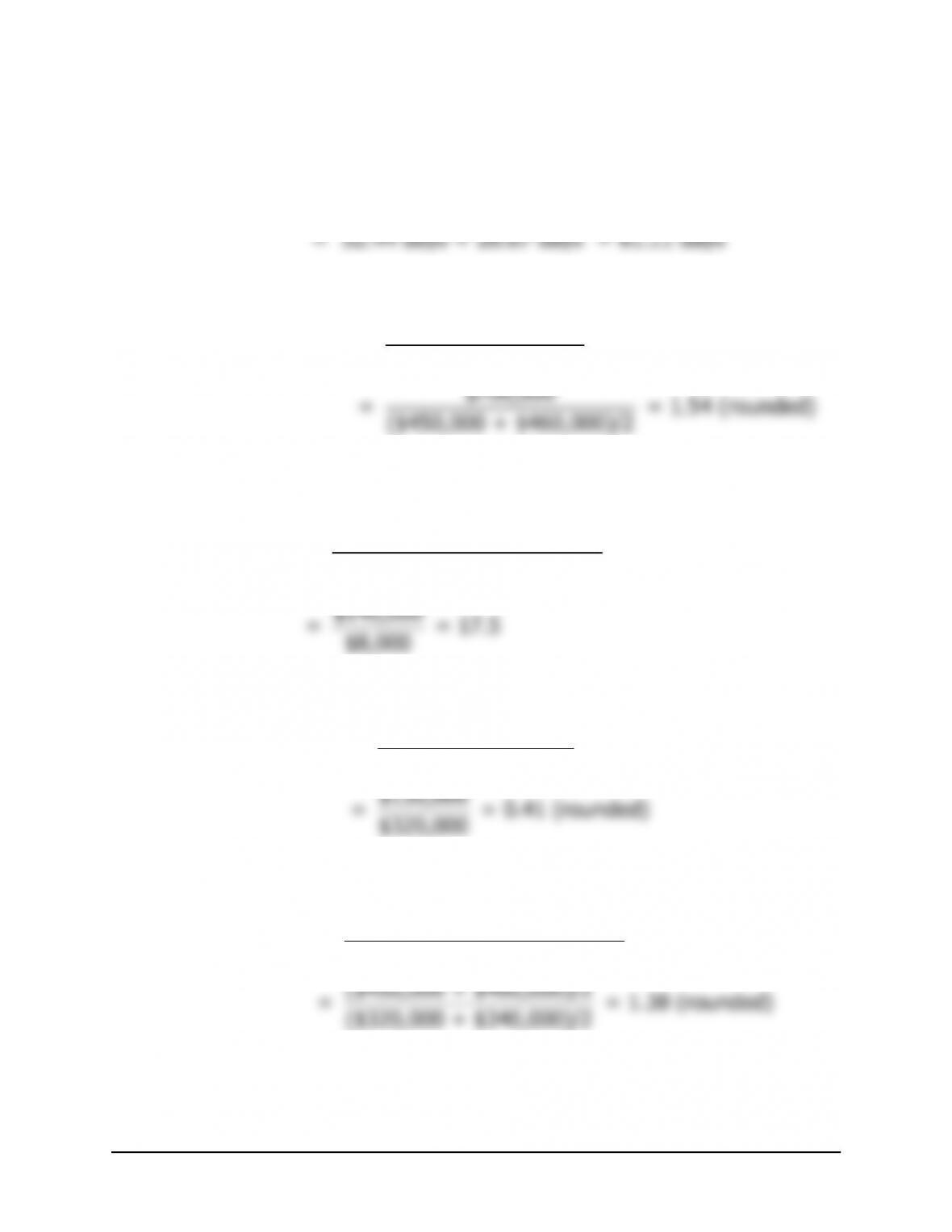
9. The accounts receivable turnover is calculated as follows:
Sales on account
Accounts receivable =
turnover Average accounts receivable balance
The average collection period is computed as follows:
365 days
Average collection period = Accounts receivable turnover
10. The inventory turnover is computed as follows:
Cost of goods sold
Inventory turnover = Average inventory balance
The average sale period is computed as follows:
365 days
Average sale period = Inventory turnover
© The McGraw-Hill Companies, Inc., 2018. All rights reserved.
Solutions Manual, Chapter 15 5
The Foundational 15 (continued)
11. The operating cycle is computed as follows:
Operatin
g
cycle = Avera
g
e sale period +
A
vera
g
e collection period
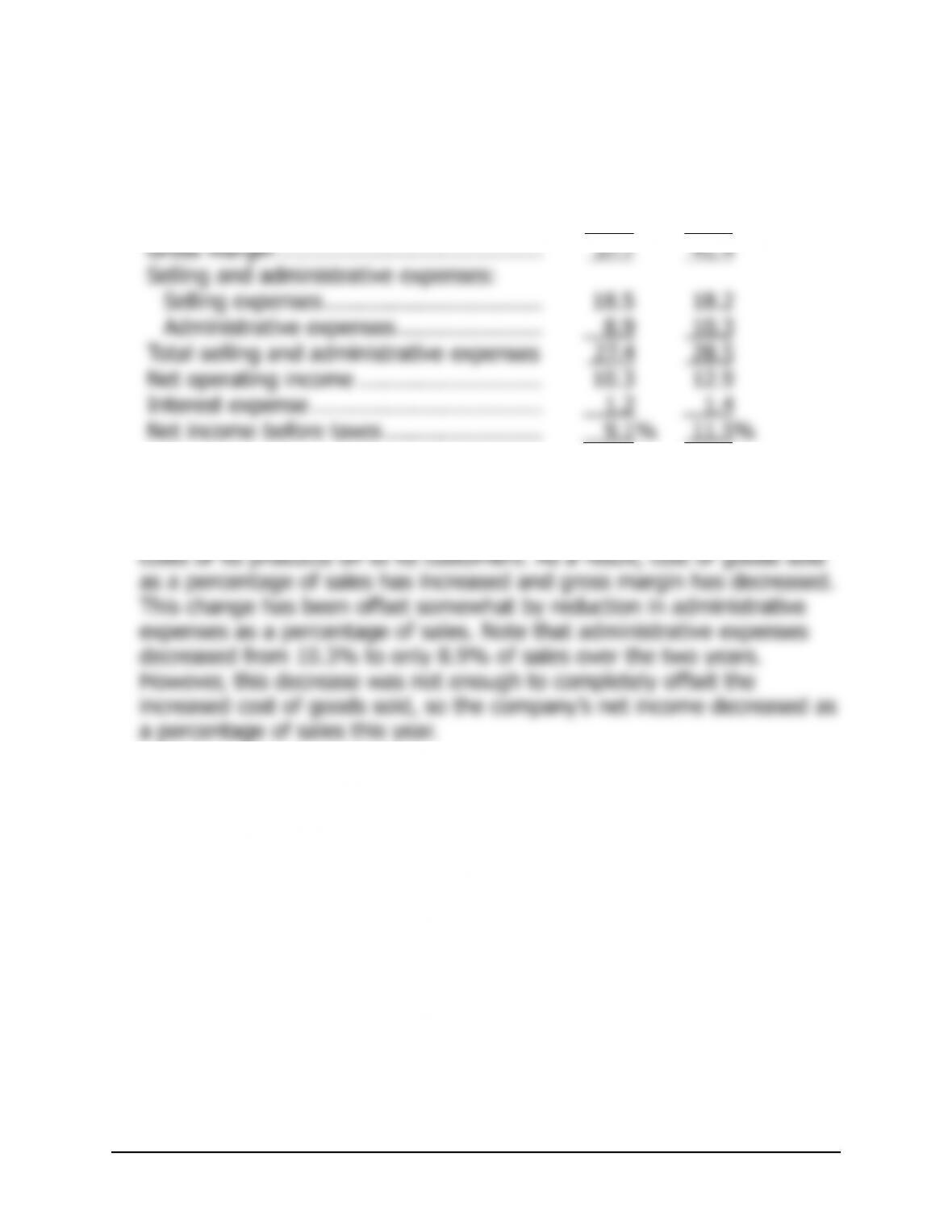
12. The total asset turnover is computed as follows:
Sales
Total asset turnover = Average total assets
13. The times interest earned ratio is computed as follows:
Earnings before interest
expense and income taxes
Times interest =
earned ratio Interest expense
14. The debt-to-equity ratio is computed as follows:
T
otal liabilities
Debt-to-equity ratio = Stockholders’ equity
15. The equity multiplier is computed as follows:
Average total assets
Equity multiplier = Average stockholders’ equity
© The McGraw-Hill Companies, Inc., 2018. All rights reserved.
6 Managerial Accounting, 16th Edition
Exercise 15-1 (15 minutes)
1.
This Year Last Year
Sales ……………………………………………. 100.0% 100.
0
%
Cost of
g
oods sold …………………………… 62.3 58.
6
2
5
9
5
2. The company’s major problem seems to be the increase in cost of goods
sold, which increased from 58.6% of sales last year to 62.3% of sales
this year. This suggests that the company is not passing the increases in
4

© The McGraw-Hill Companies, Inc., 2018. All rights reserved.
Solutions Manual, Chapter 15 7
Exercise 15-2 (10 minutes)
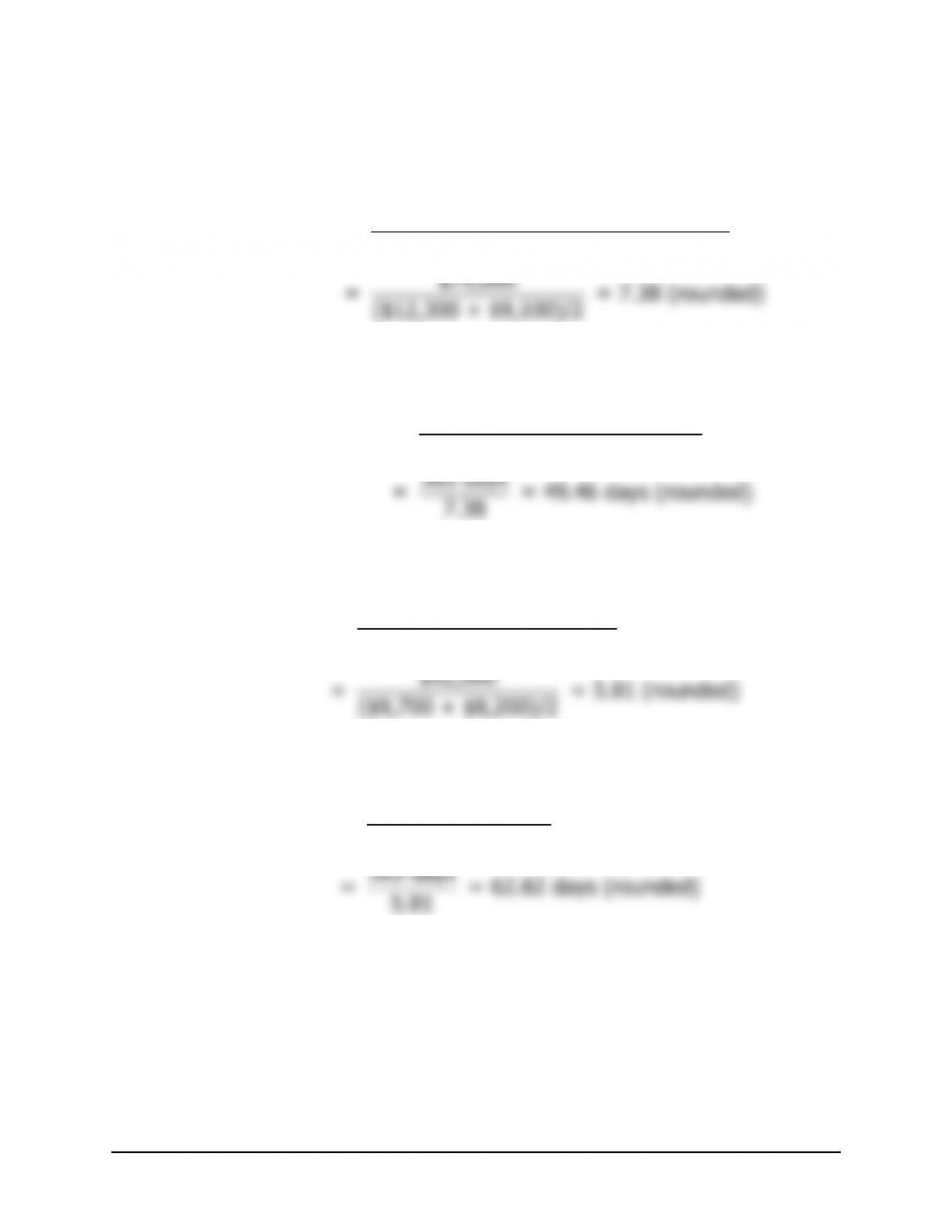
1. Calculation of working capital:
Current assets ……………. $25,080
2. Calculation of the current ratio:
Current assets
Current ratio = Current liabilities
$10,400
3. Calculation of the acid-test ratio:
Cash + Marketable securities
+ Accounts receivable + Short-term notes receivable
Acid-test ratio = Current liabilities
© The McGraw-Hill Companies, Inc., 2018. All rights reserved.
8 Managerial Accounting, 16th Edition
Exercise 15-3 (20 minutes)
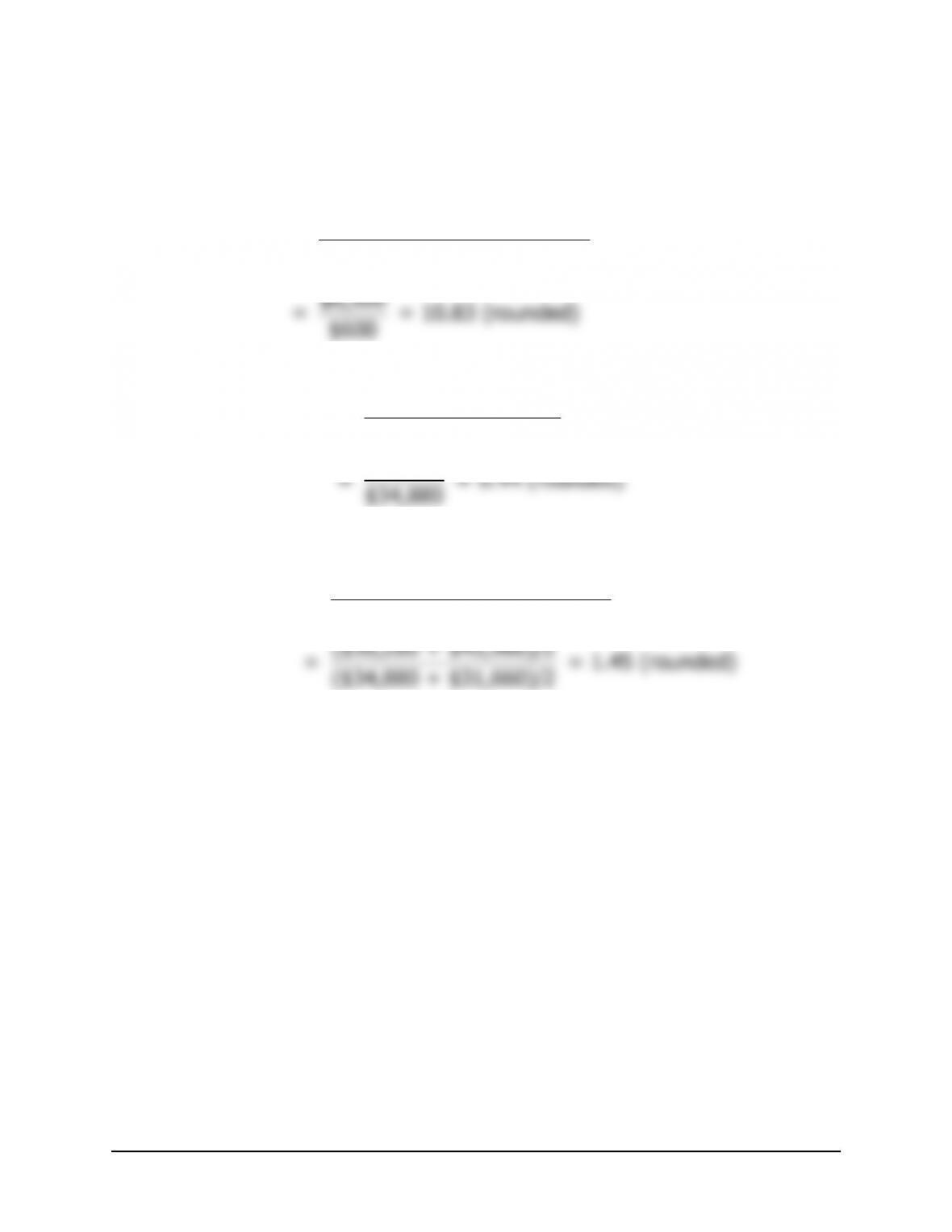
1. Calculation of accounts receivable turnover:
Sales on account
Accounts receivable =
turnover Average accounts receivable balance
2. Calculation of the average collection period:
365 days
Average collection period = Accounts receivable turnover
3. Calculation of inventory turnover:
Cost of goods sold
Inventory turnover = Average inventory balance
4. Calculation of the average sale period:
365 days
Average sale period = Inventory turnover

© The McGraw-Hill Companies, Inc., 2018. All rights reserved.
Solutions Manual, Chapter 15 9
Exercise 15-3 (continued)
5. The operating cycle is computed as follows:
Operatin
g
cycle = Avera
g
e sale period +
A
vera
g
e collection period
6. The total asset turnover is computed as follows:
Sales
Total asset turnover = Average total assets
© The McGraw-Hill Companies, Inc., 2018. All rights reserved.
10 Managerial Accounting, 16th Edition
Exercise 15-4 (10 minutes)
1. Calculation of the times interest earned ratio:
Earnin
g
s before interest
expense and income taxes
Times interest =
earned ratio Interest expense
2. Calculation of the debt-to-equity ratio:
T
otal liabilities
Debt-to-equity ratio = Stockholders’ equity
$15,400
3. Calculation of the equity multiplier:
Average total assets
Equity multiplier = Average stockholders’ equity