© The McGraw-Hill Companies, Inc., 2018. All rights reserved.
Solutions Manual, Chapter 14 41
Problem 14-13 (continued)
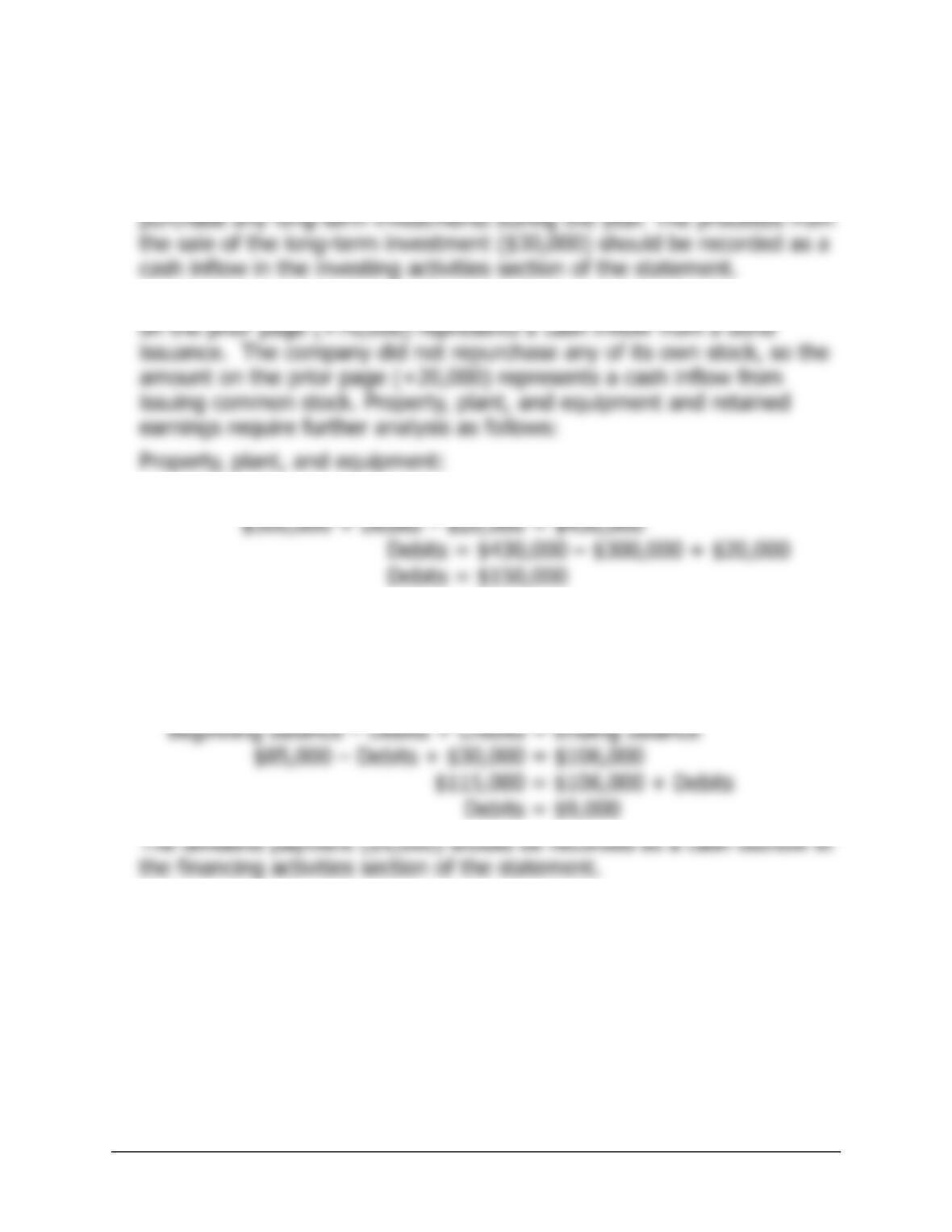
The decrease in the long-term investments account ($20,000) equals
the cost of the long-term investment sold; therefore, Rusco did not
The company did not retire any bonds during the year, so the amount
Beginning balance + Debits – Credits = Ending balance
The additions to property, plant, and equipment ($150,000) are
recorded as a cash outflow and the proceeds from the sale of equipment
($8,000) are recorded as a cash inflow.
Retained earnings:
© The McGraw-Hill Companies, Inc., 2018. All rights reserved.
42 Managerial Accounting, 16th Edition
Problem 14-13 (continued)
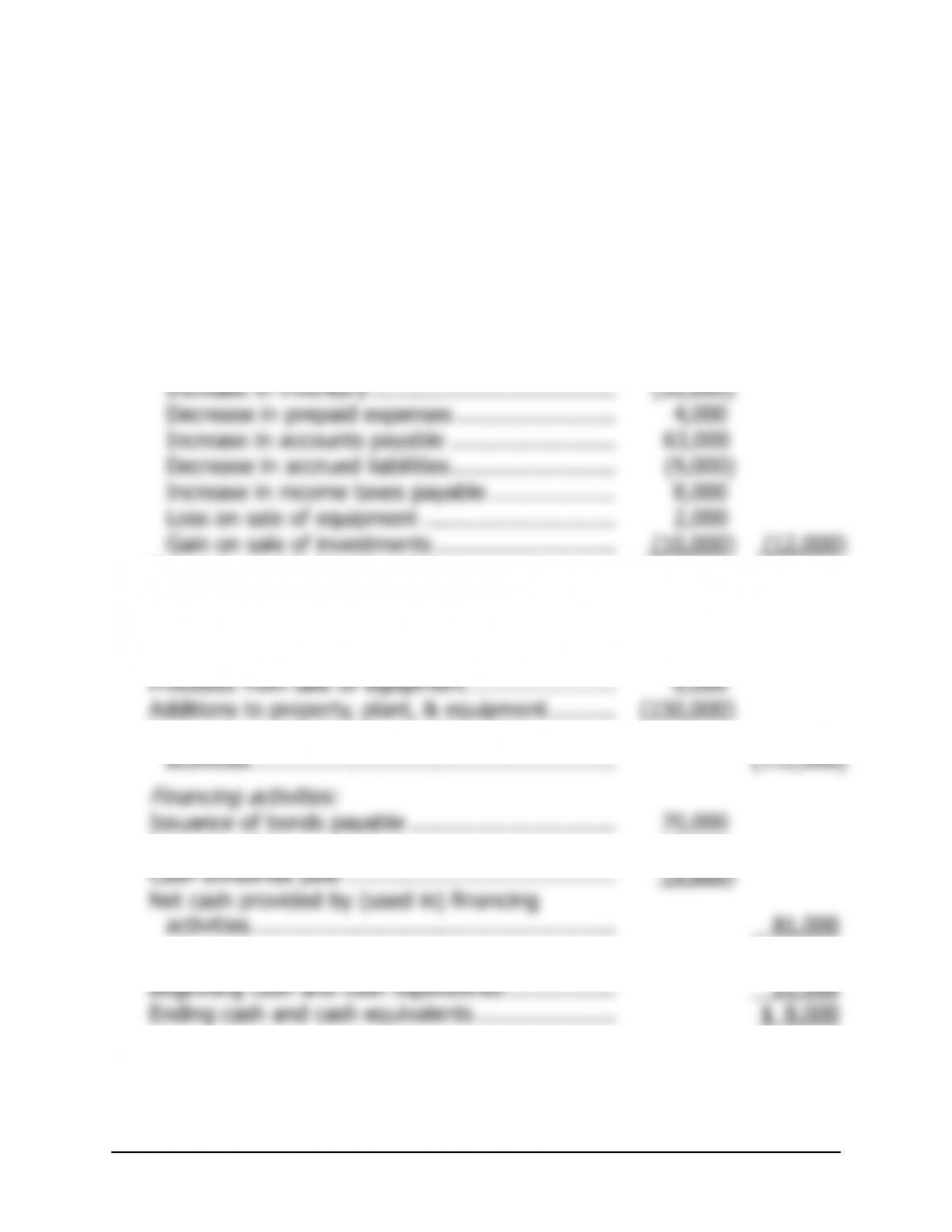
Rusco Company
Statement of Cash Flows
For
T
his
Y
ear Ended July 31
Operatin
g
activities
:
Net income …………………………………………….. $ 30,000
A
d
j
ustments to convert net income to cash basis:
Depreciation …………………………………………. $ 20,000
Increase in accounts receivable …………………. (40,000)
Net cash provided by (used in) operatin
g
activities …………………………………………….… 18,000
Investin
g
activities
:
Proceeds from sale of lon
g
-term investments ….. 30,000
A
Net cash provided by (used in) investin
g
Issuance of common stock …………………………. 20,000
Net decrease in cash and cash equivalents …….. (13,000)
g
© The McGraw-Hill Companies, Inc., 2018. All rights reserved.
Solutions Manual, Chapter 14 43
Problem 14-13 (continued)
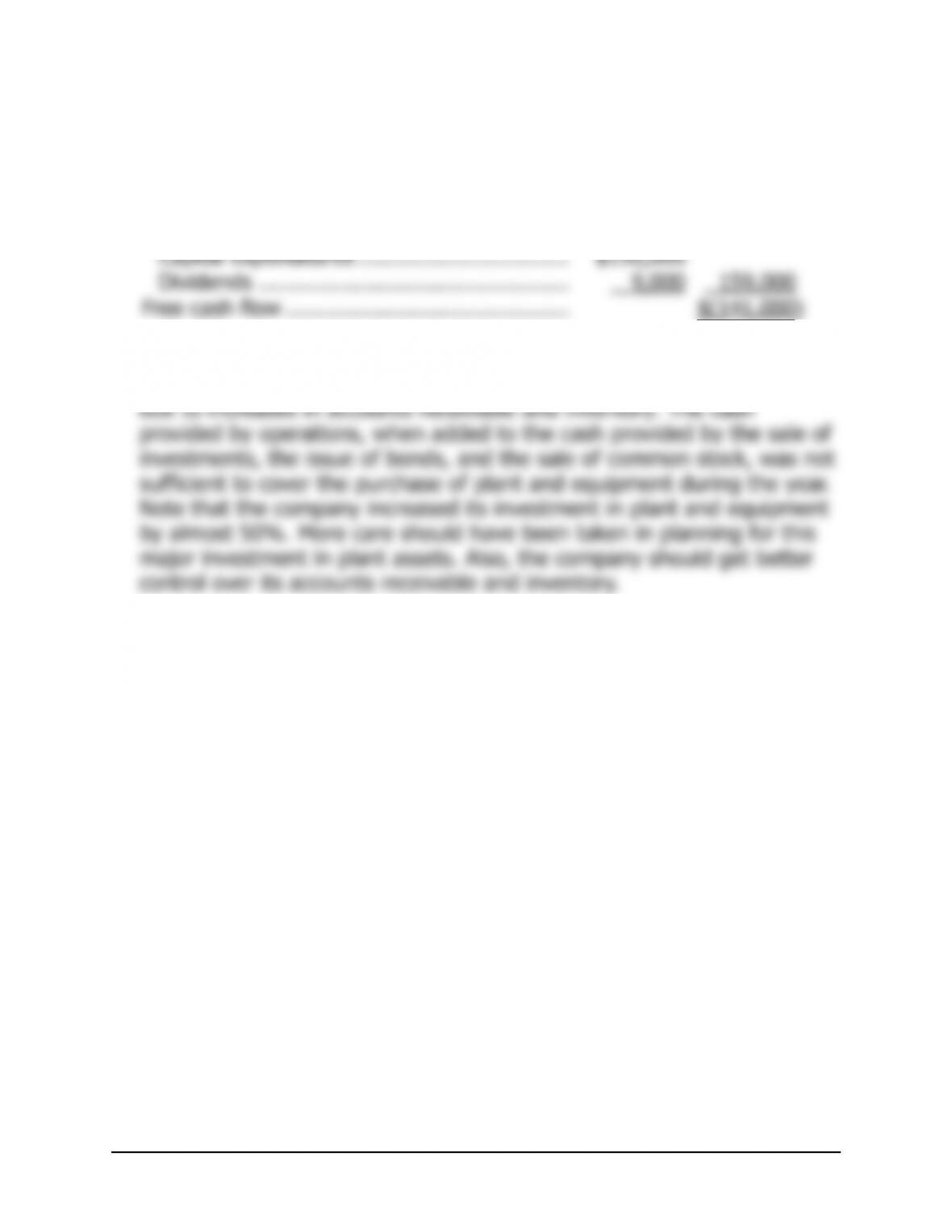
3. Free cash flow computation:
Net cash provided by operatin
g
activities ….. $ 18,000
Less:
4. Although the company reported $30,000 of net income for the year, a
smaller amount of cash was provided by operating activities ($18,000)
© The McGraw-Hill Companies, Inc., 2018. All rights reserved.
44 Managerial Accounting, 16th Edition
Problem 14-14 (45 minutes)
1. Prepare a statement of cash flows.
Operating activities:
Step 1: The following equation can be applied to the Accumulated
Depreciation account to compute the depreciation to add back to net
income:
Beginning balance – Debits + Credits = Ending balance
Step 2: The guidelines from Exhibit 14-2 can be used to analyze the
changes in noncash balance sheet accounts that impact net income as
follows:
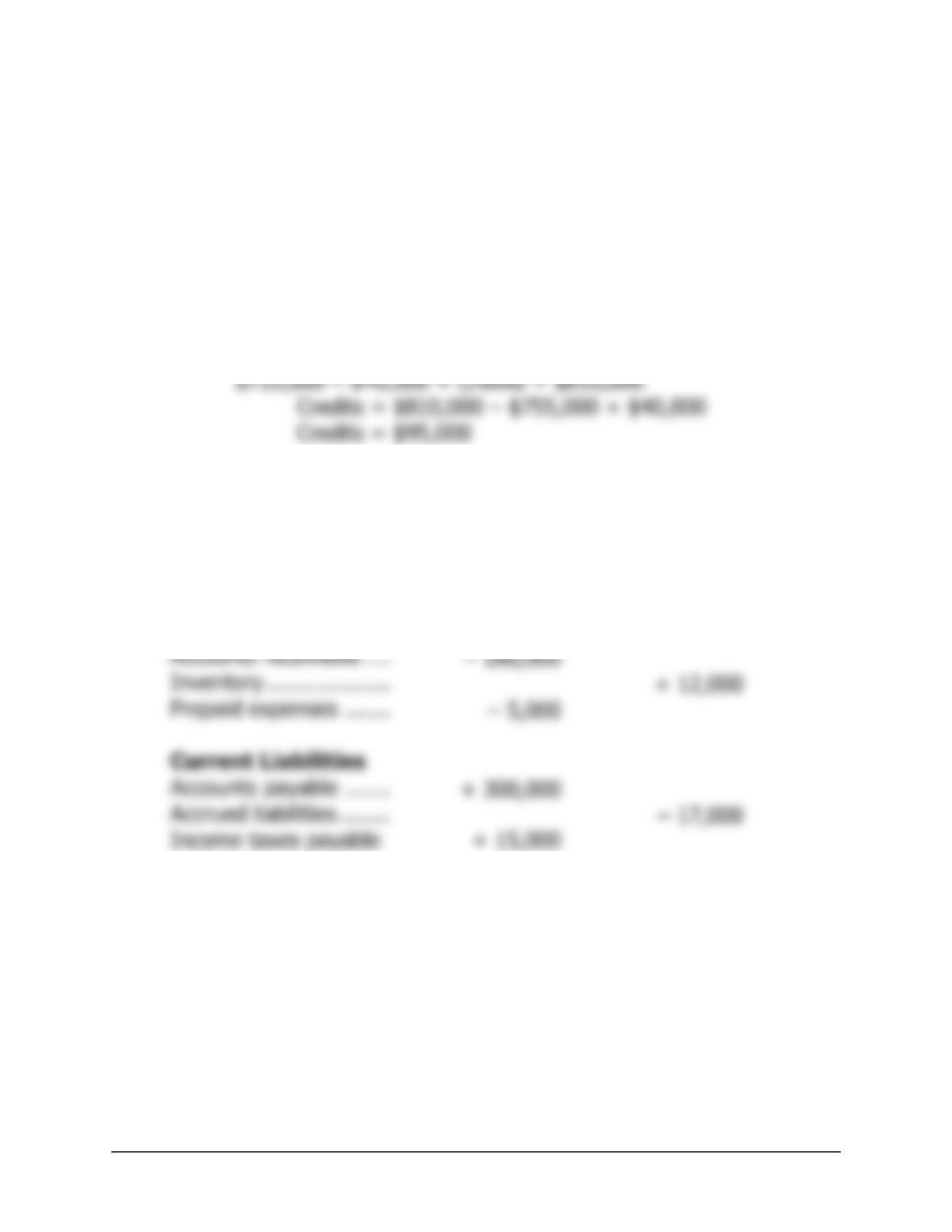
Increase in
Account Balance
Decrease in
Account Balance
Current Assets
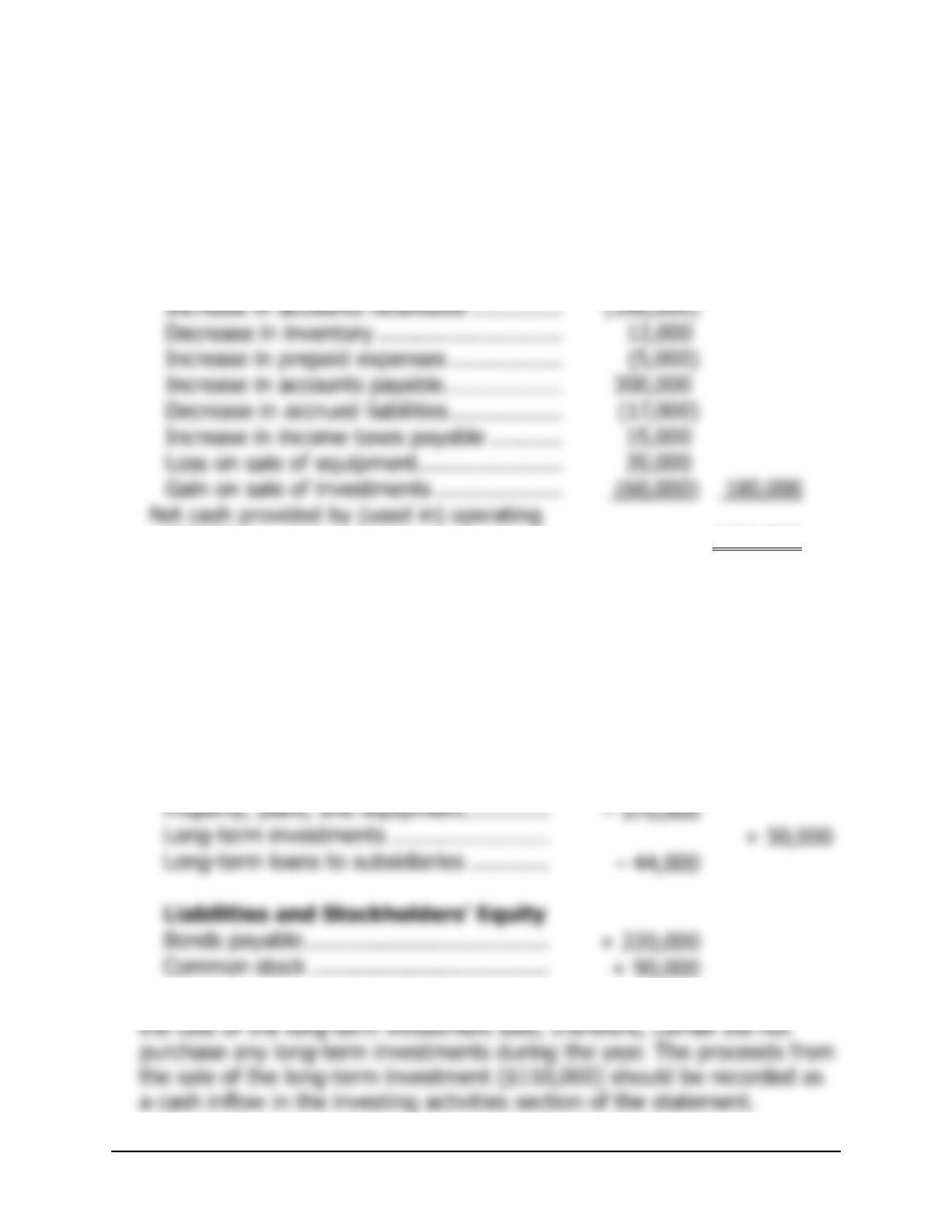
Step 3: The gain on sale of investments ($60,000) is subtracted from
net income. The loss on sale of equipment ($20,000) is added to net
income.
© The McGraw-Hill Companies, Inc., 2018. All rights reserved.
Solutions Manual, Chapter 14 45
Problem 14-14 (continued)
The net cash provided by (used in) operating activities can now be
calculated as follows:
Net income ………………………………………. $170,000
A
d
j
ustments to convert net income to cash basis:
Depreciation ………………………………….. $ 95,000
activities ……………………………………….. $350,000
Investing and Financing activities:
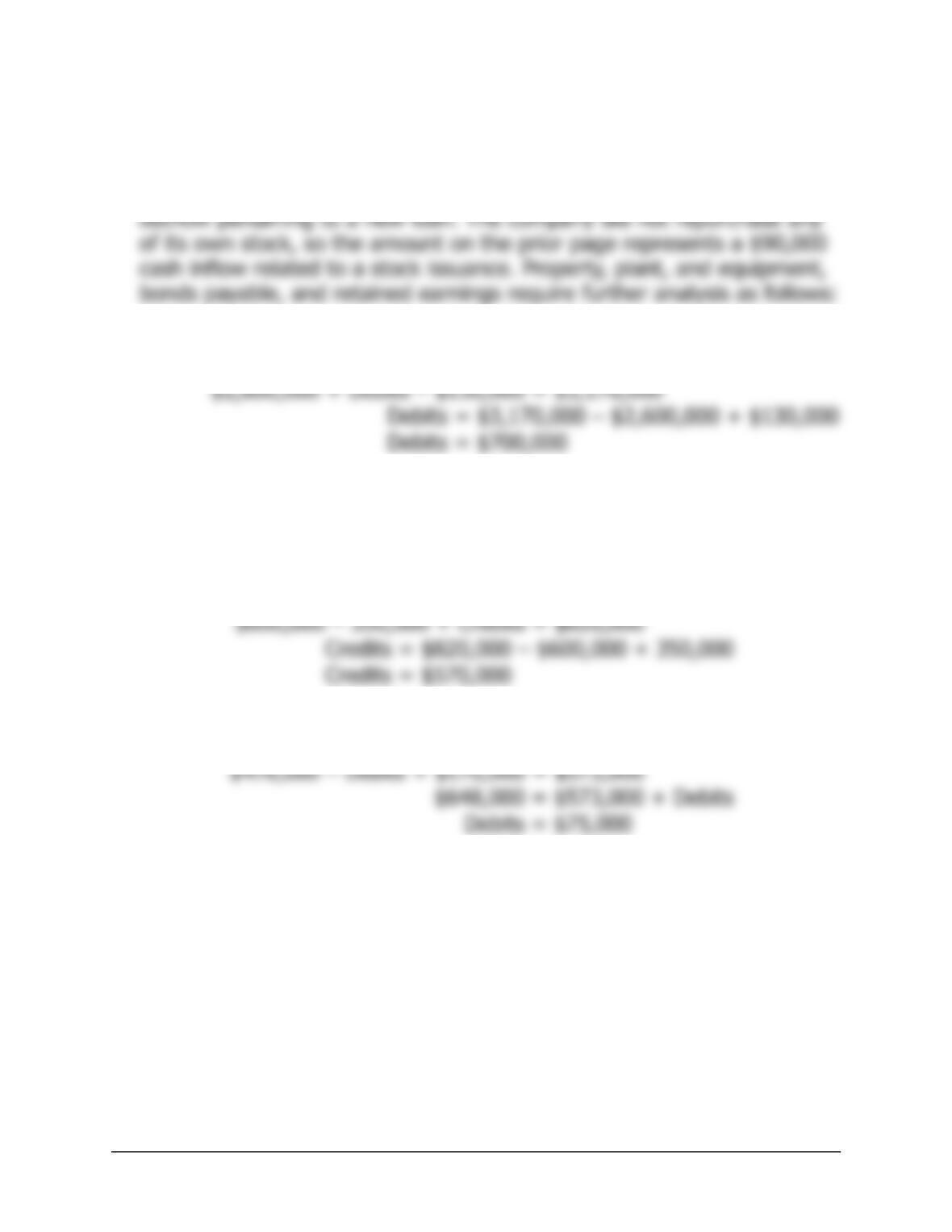
The guidelines from Exhibit 14-3 can be used to analyze the changes in
noncash balance sheet accounts that impact investing and financing
cash flows as follows:
Increase in
Account
Balance
Decrease in
Account
Balance
Noncurrent Assets
The decrease in the long-term investments account ($50,000) equals
© The McGraw-Hill Companies, Inc., 2018. All rights reserved.
46 Managerial Accounting, 16th Edition
Problem 14-14 (continued)
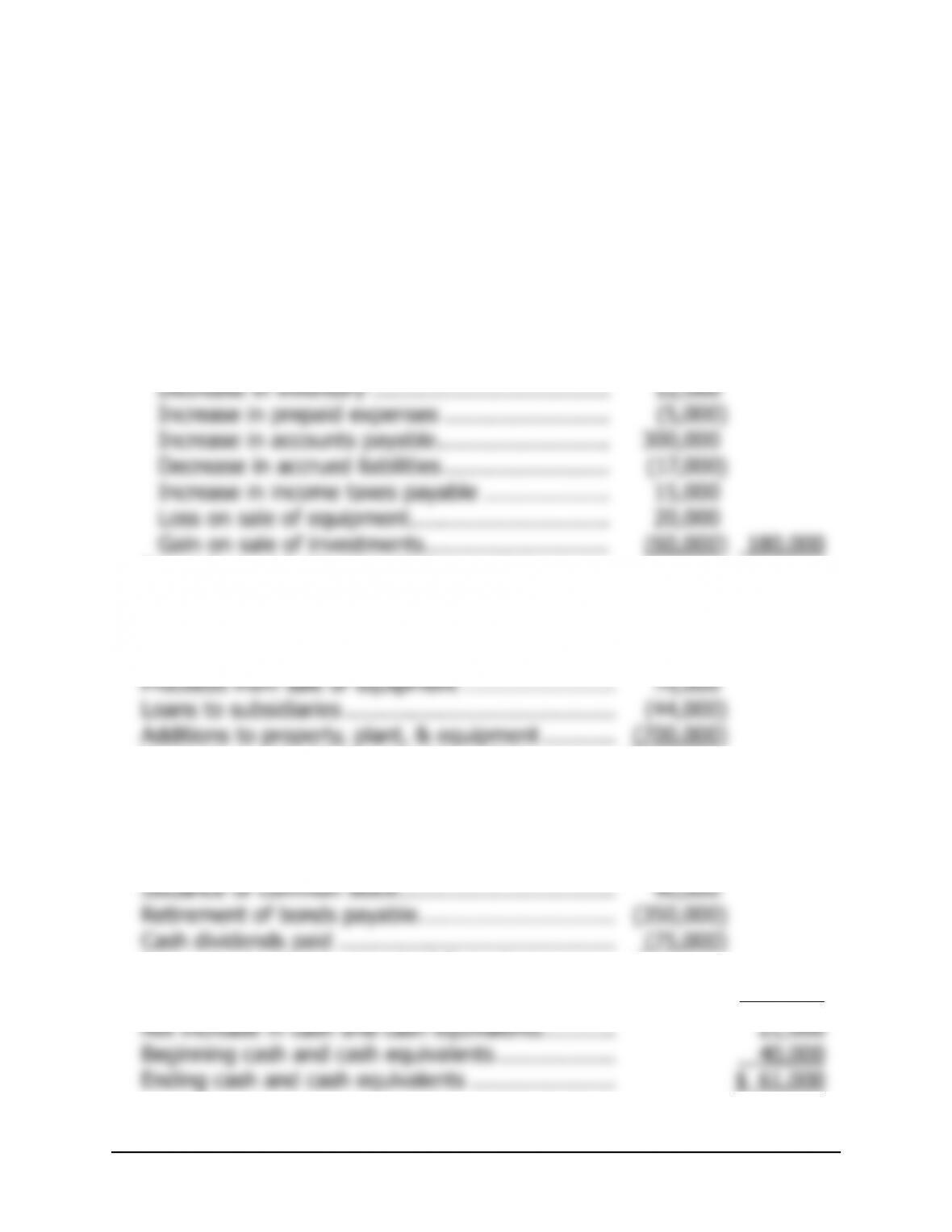
Lomax’s subsidiaries did not repay any loans during the year, therefore,
the amount in the table on the prior page (– 44,000) represents a cash
Property, plant, and equipment:
Beginning balance + Debits – Credits = Ending balance
The additions to property, plant, and equipment ($700,000) are
recorded as a cash outflow and the proceeds from the sale of equipment
($70,000) are recorded as a cash inflow.
Bonds Payable:
Beginning balance – Debits + Credits = Ending balance
Retained earnings:
Beginning balance – Debits + Credits = Ending balance
The dividend payment ($75,000) should be recorded as a cash outflow
in the financing activities section of the statement.
© The McGraw-Hill Companies, Inc., 2018. All rights reserved.
Solutions Manual, Chapter 14 47
Problem 14-14 (continued)
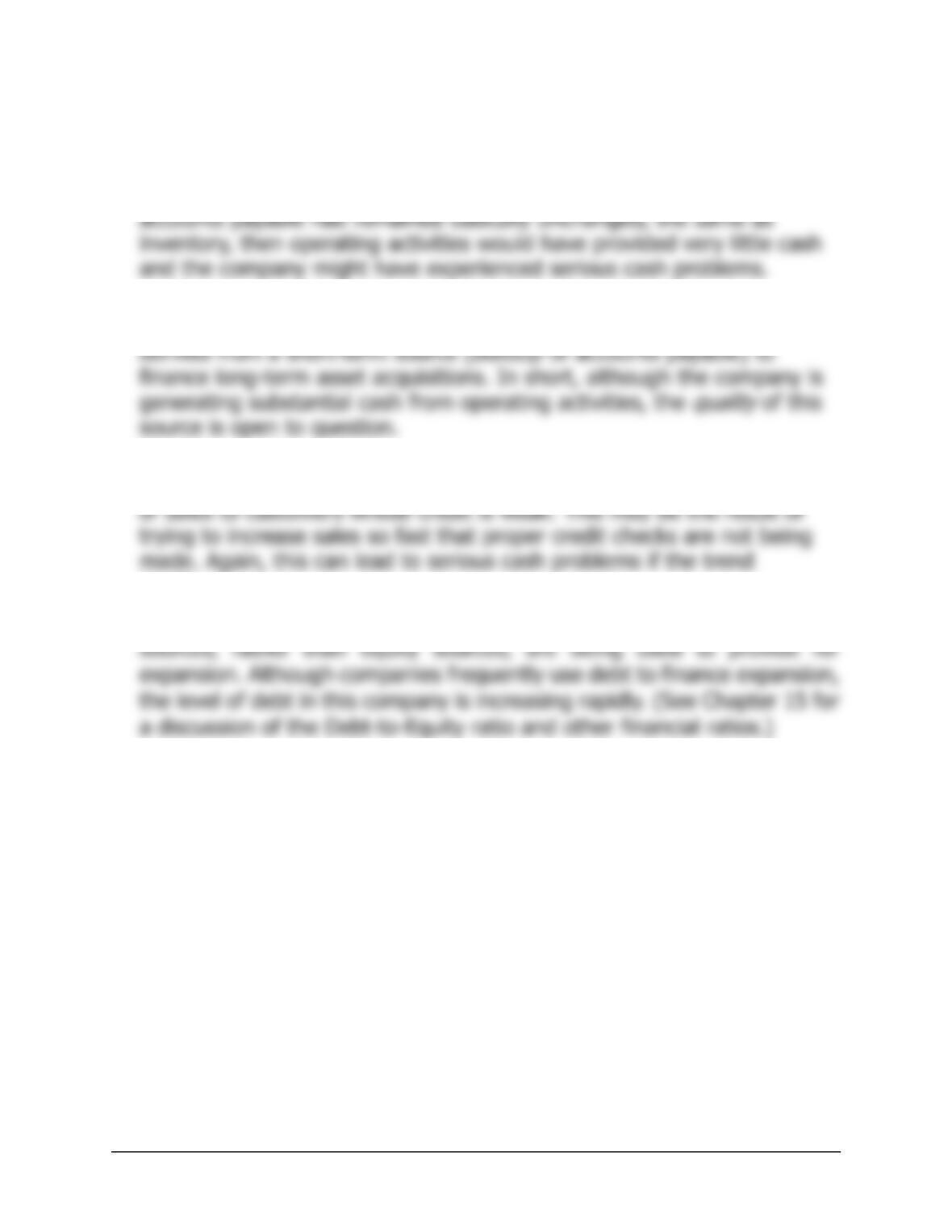
Lomax Company
Statement of Cash Flows
Operatin
g
activities
:
Net income ……………………………………………… $170,000
A
d
j
ustments to convert net income to cash basis:
Depreciation …………………………………………. $ 95,000
Increase in accounts receivable …………………. (180,000)
Net cash provided by (used in) operatin
g
activities …………………………………………….… 350,000
Investin
g
activities
:
Proceeds from sale of lon
g
-term investments …… 110,000
A
Net cash provided by (used in) investin
g
activities …………………………………………….…. (564,000)
Financing activities:
Issuance of bonds payable…………………………… 570,000
Net cash provided by (used in) financin
g
activities …………………………………………….…. 235,000
g
© The McGraw-Hill Companies, Inc., 2018. All rights reserved.
48 Managerial Accounting, 16th Edition
Problem 14-14 (continued)
2. The large amount of cash provided by operating activities is traceable
for the most part to the $300,000 increase in accounts payable. If the
Note particularly that the cash provided by operating activities was used
to purchase plant and equipment. Thus, the company is using cash
Also, note the substantial increase in accounts receivable. Apparently,
the company’s collections from customers are lagging, perhaps because
continues.
In the company’s financing activities, it appears that long-term debt
© The McGraw-Hill Companies, Inc., 2018. All rights reserved.
Solutions Manual, Appendix 14A 49
Appendix 14A
The Direct Method of Determining the Net Cash
Provided by Operating Activities
Exercise 14A-1 (15 minutes)
Sales ………………………………………………… $700
A
d
j
ustments to a cash basis:
Increase in accounts receivable …………..
–
110 $590
A
j
–
–
A
d
j
ustments to a cash basis:
Increase in prepaid expenses …………….. + 9
Decrease in accrued liabilities…………….. + 4
–
A
j
–
Net cash provided by (used in) operatin
g
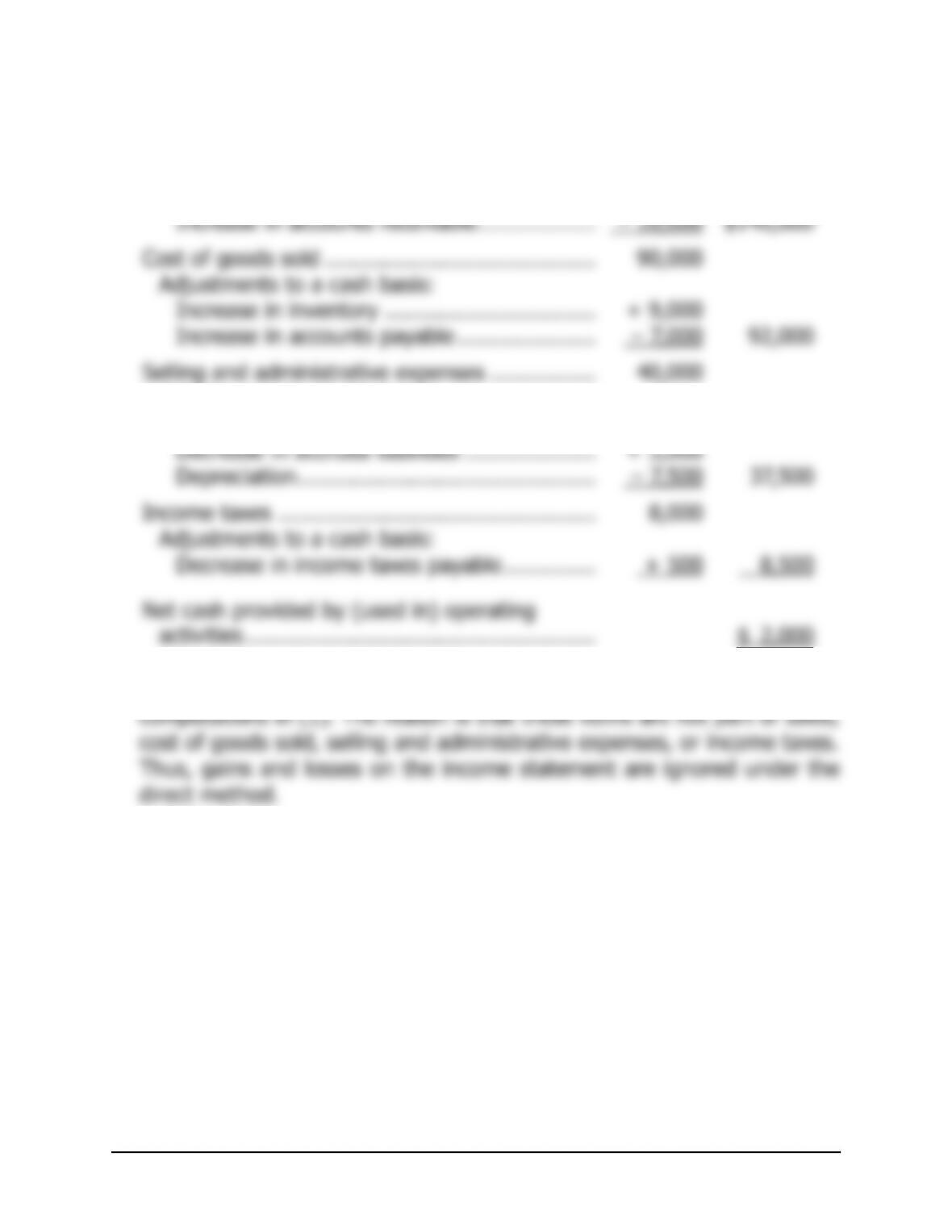
Note that the $130 “net cash provided” figure agrees with the indirect
method presented in Exercise 14-4.
© The McGraw-Hill Companies, Inc., 2018. All rights reserved.
50 Managerial Accounting, 16th Edition
Exercise 14A-2 (15 minutes)
1. Sales …………………………………………………… $150,000
A
d
j
ustments to a cash basis:
–
A
d
j
ustments to a cash basis:
Increase in prepaid expenses………………… + 2,000
–
A
j
2. Gains and losses on the sale of assets would have no effect on the
–
A
j