© The McGraw-Hill Companies, Inc., 2018. All rights reserved.
Solutions Manual, Chapter 14 31
Problem 14-11 (continued)
Step 3: The company had a $2,000 gain on the sale of equipment. The
book value of the equipment was $13,000 (= $50,000 – $37,000). The
company sold the equipment for $15,000, so its gain on the sale of
$2,000 (= $15,000 – $13,000) is subtracted from net income.
The net cash provided by (used in) operating activities can now be
calculated as follows:
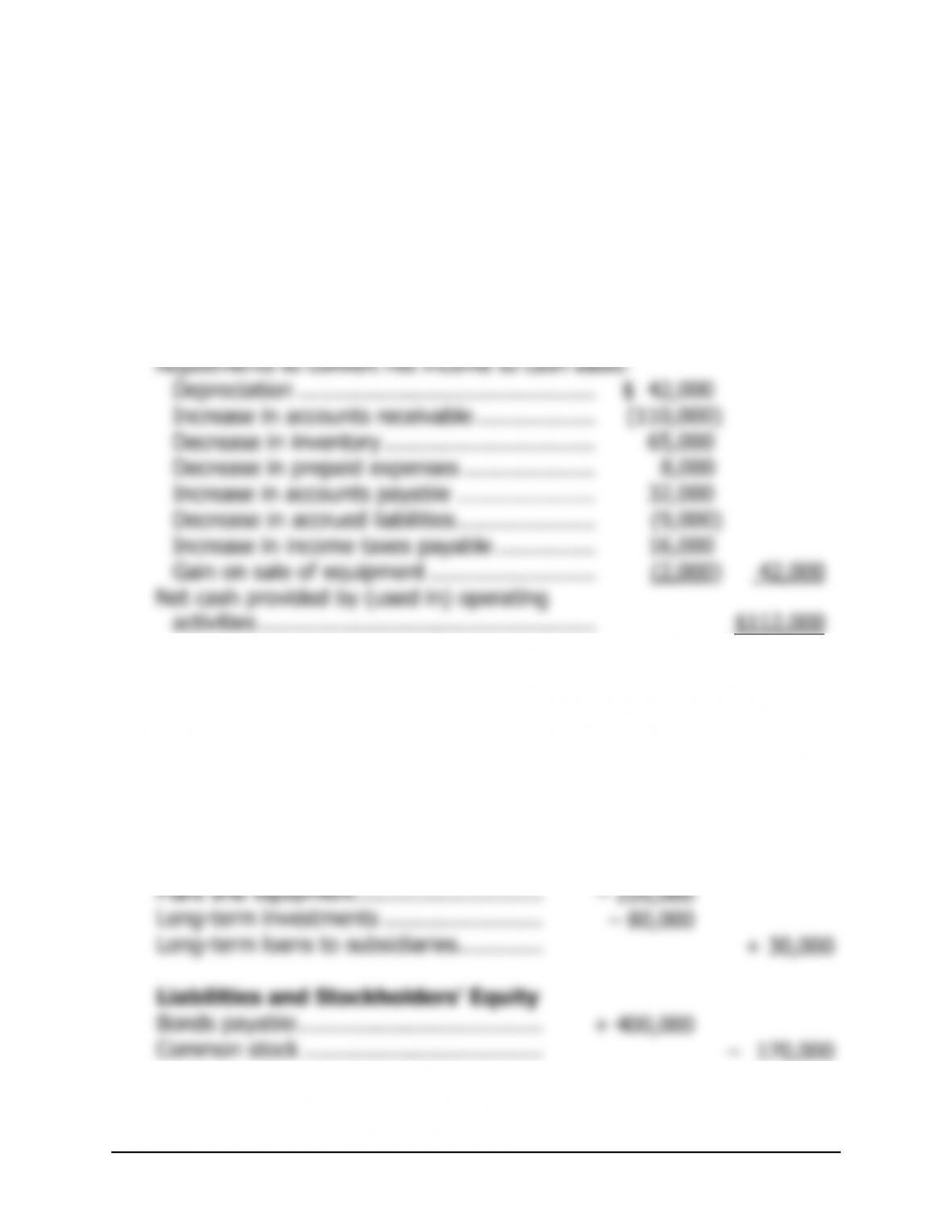
Net income ………………………………………….. $ 70,000
Investing and Financing activities:
The guidelines from Exhibit 14-3 can be used to analyze the changes in
noncash balance sheet accounts that impact investing and financing
cash flows as follows:
Increase in
Account
Balance
Decrease in
Account
Balance
Noncurrent Assets
© The McGraw-Hill Companies, Inc., 2018. All rights reserved.
32 Managerial Accounting, 16th Edition
Problem 14-11 (continued)
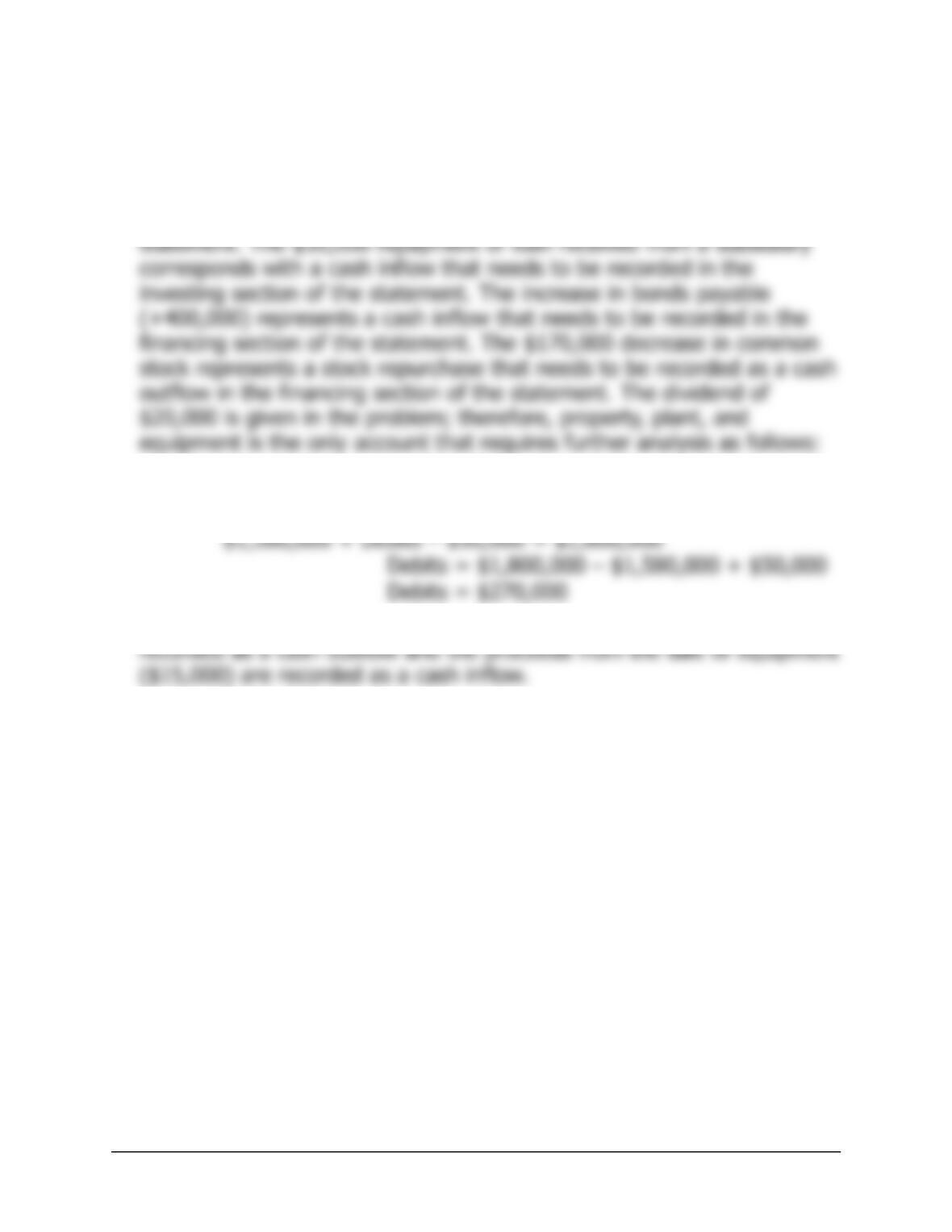
As stated in item “f” in the problem, it is reasonable to assume that the
$80,000 increase in long-term investments corresponds with a cash
outflow that needs to be recorded in the investing section of the
Property, plant, and equipment:
Beginning balance + Debits – Credits = Ending balance
The additions to property, plant, and equipment ($270,000) are
© The McGraw-Hill Companies, Inc., 2018. All rights reserved.
Solutions Manual, Chapter 14 33
Problem 14-11 (continued)
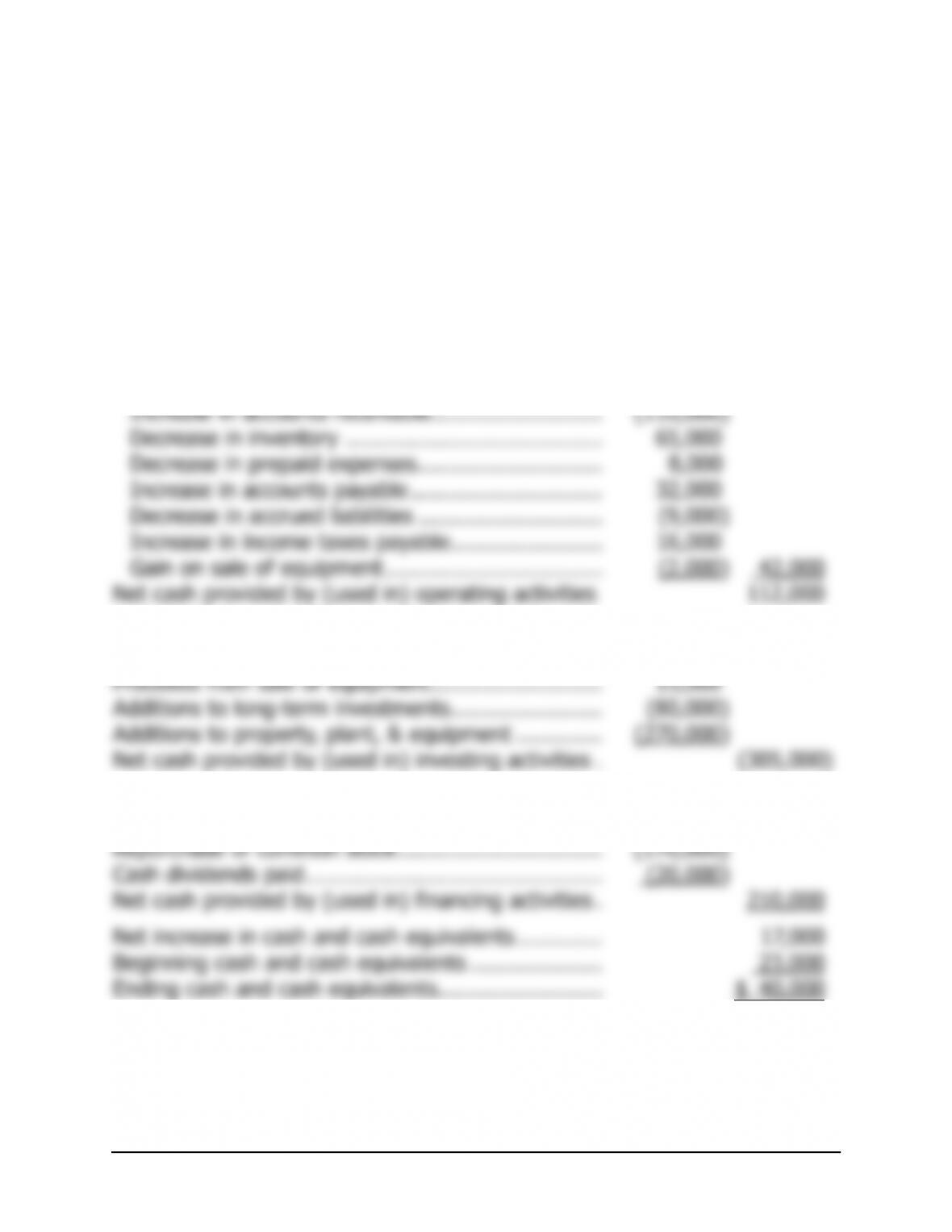
Given the amounts above, the statement of cash flows would be as follows:
Y
oric Company
Statement of Cash Flows
Operatin
g
activities
:
Net income …………………………………………….….. $ 70,000
A
d
j
ustments to convert net income to cash basis:
Depreciation …………………………………………….. $ 42,000
Investin
g
activities
:
Decrease in lon
g
-term loan to subsidiary…………… 30,000
A
A
Financin
g
activities
:
Issuance of bonds payable …………………………….. 400,000
g
© The McGraw-Hill Companies, Inc., 2018. All rights reserved.
34 Managerial Accounting, 16th Edition
Problem 14-12 (45 minutes)
1 Prepare a statement of cash flows (all numbers in millions).
Operating activities:
Step 1: The following equation can be applied to the Accumulated
Depreciation account to compute the depreciation to add back to net
income:
Beginning balance – Debits + Credits = Ending balance
Step 2: The guidelines from Exhibit 14-2 can be used to analyze the
changes in noncash balance sheet accounts that impact net income as
follows:
Increase in
Account Balance
Decrease in
Account Balance
Current Assets
Step 3: The gain on sale of equipment ($3) is subtracted from net
income.
© The McGraw-Hill Companies, Inc., 2018. All rights reserved.
Solutions Manual, Chapter 14 35
Problem 14-12 (continued)
As an intermediate step, the net cash provided by (used in) operating
activities can now be calculated as follows:
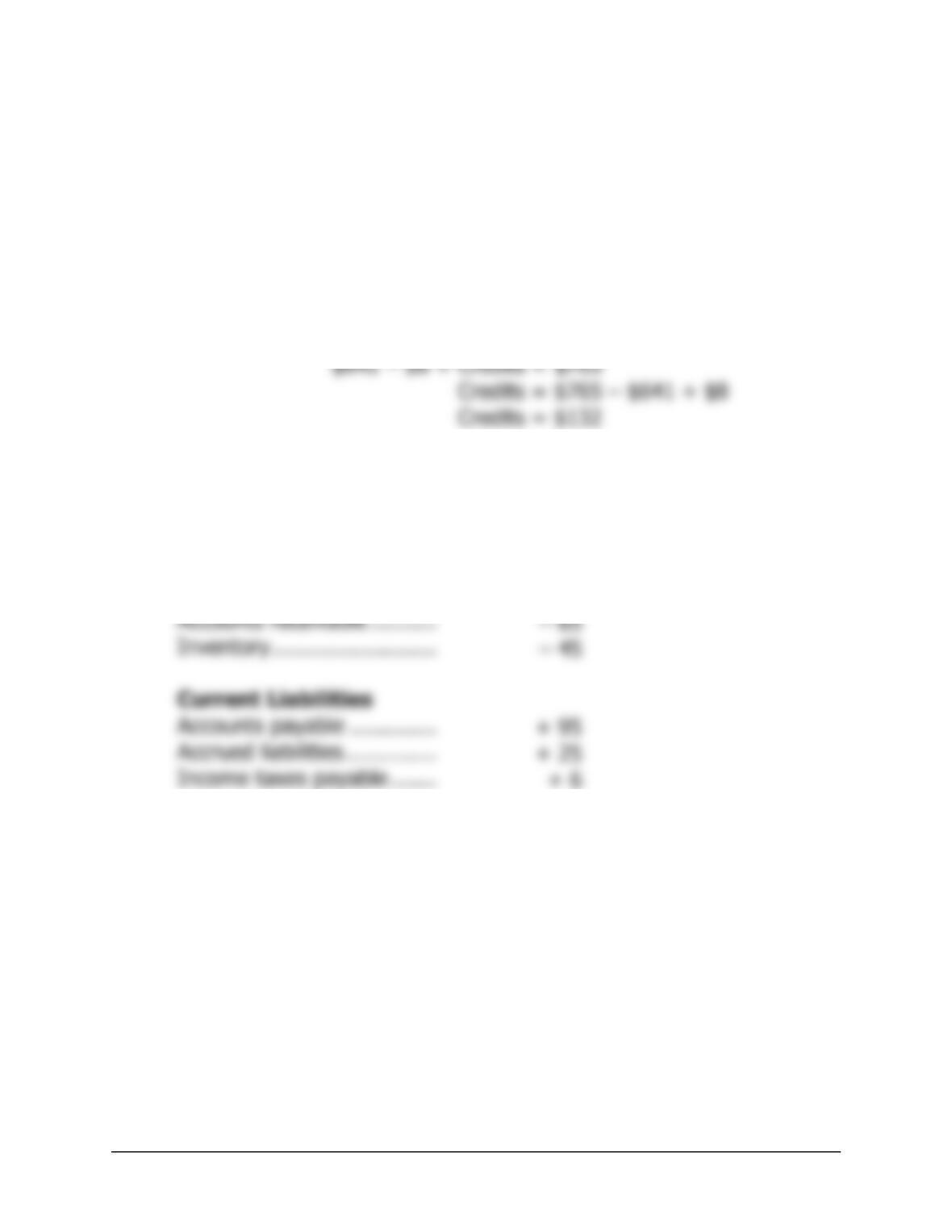
Net income …………………………………..……….... $115
A
d
j
ustments to convert net income to cash basis:
Depreciation ………………………………………….. $132
Investing and Financing activities:
The guidelines from Exhibit 14-3 can be used to analyze the changes in
noncash balance sheet accounts that impact investing and financing
cash flows as follows:
Increase
in Account
Balance
Decrease
in Account
Balance
Noncurrent Assets
© The McGraw-Hill Companies, Inc., 2018. All rights reserved.
36 Managerial Accounting, 16th Edition
Problem 14-12 (continued)
Burgess did not issue any bonds during the year; therefore, the amount
in the table on the prior page (–170) represents a cash outflow
pertaining to a bond retirement. Property, plant, and equipment and
retained earnings require further analysis as follows:
Property, plant, and equipment:
Beginning balance + Debits – Credits = Ending balance
The additions to property, plant, and equipment ($62) are recorded as a
cash outflow and the proceeds from the sale of equipment ($8) are
recorded as a cash inflow.
Retained earnings:
Beginning balance – Debits + Credits = Ending balance
The dividend payment ($66) should be recorded as a cash outflow in the
financing activities section of the statement.
© The McGraw-Hill Companies, Inc., 2018. All rights reserved.
Solutions Manual, Chapter 14 37
Problem 14-12 (continued)
Bur
g
ess Company
Statement of Cash Flows
Operatin
g
activities
:
Net income …………………………………………………. $ 115
A
d
j
ustments to convert net income to cash basis:
Depreciation ………………………………..………..….. $132
Investin
g
activities
:
Proceeds from sale of equipment ……………………… 8
A
Financin
g
activities
:
Retirement of bonds payable …………………………… (170)
g
2. Burgess’s net income decreased by $20 million (= $135 million – $115
million); however, its net cash provided by operating activities increased
© The McGraw-Hill Companies, Inc., 2018. All rights reserved.
38 Managerial Accounting, 16th Edition
Problem 14-12 (continued)
This suggests that Burgess may be inflating its net income by failing to
record a growing amount of uncollectible accounts. The company’s
Burgess’s free cash flow is $132 (= $260 – $62 – $66); however, a
© The McGraw-Hill Companies, Inc., 2018. All rights reserved.
Solutions Manual, Chapter 14 39
Problem 14-13 (45 minutes)
1. Net cash provided by (used in) operating activities:
Step 1: The following equation can be applied to the Accumulated
Depreciation account to compute the depreciation to add back to net
income:
Beginning balance – Debits + Credits = Ending balance
Step 2: The guidelines from Exhibit 14-2 can be used to analyze the
changes in noncash balance sheet accounts that impact net income as
follows:
Increase in
Account Balance
Decrease in
Account Balance
Current Assets
A
Prepaid expenses ……. + 4,000
Current Liabilities
A
ccounts payable ……. +63,000
A
ccrued liabilities …….. – 9,000
Step 3: The gain on sale of investments ($10,000) is subtracted from
© The McGraw-Hill Companies, Inc., 2018. All rights reserved.
40 Managerial Accounting, 16th Edition
Problem 14-13 (continued)
The net cash provided by (used in) operating activities can now be
calculated as follows:
Net income ………………………………………. $30,000
A
d
j
ustments to convert net income to cash basis:
Depreciation ………………………………….. $20,000
2. Prepare a statement of cash flows.
Investing and Financing activities:
The guidelines from Exhibit 14-3 can be used to analyze the changes in
noncash balance sheet accounts that impact investing and financing
cash flows as follows:
Increase in
Account
Balance
Decrease in
Account
Balance
Noncurrent Assets