© The McGraw-Hill Companies, Inc., 2018
Solutions Manual, Chapter 13 21
Exercise 13-8 (15 minutes)
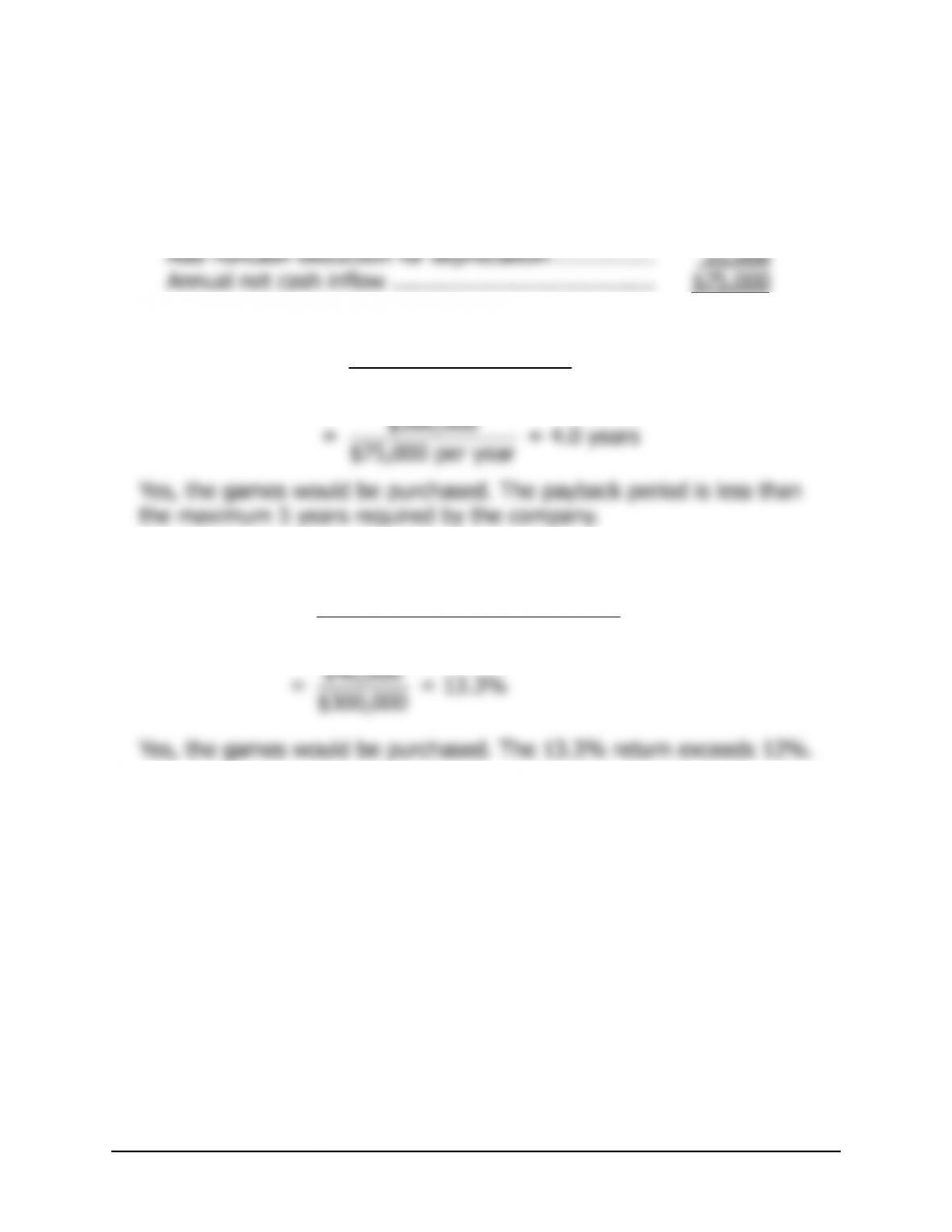
1. Computation of the annual cash inflow associated with the new
electronic games:
Net operatin
g
income …………………………………… $40,000
A
A
The payback computation would be:
Investment required
Payback period = Annual net cash inflow
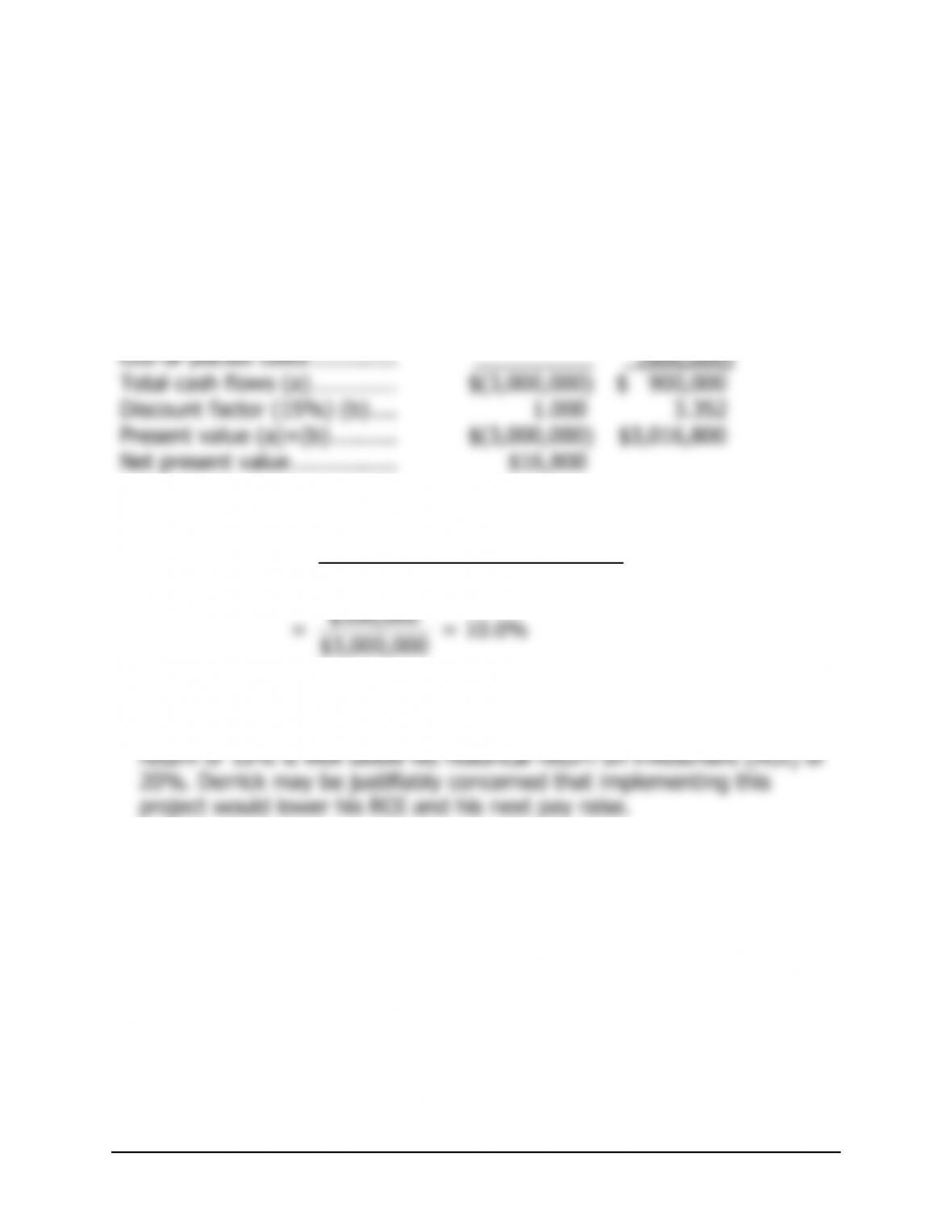
2. The simple rate of return would be:
A
nnual incremental net income
Simple rate =
of return Initial investment
© The McGraw-Hill Companies, Inc., 2018
22 Managerial Accounting, 16th Edition
Exercise 13-9 (20 minutes)
1. The net present value is computed as follows:
Now Years
1-5
Purchase of equipment …….. $(3,000,000)
Sales ……………………………. $ 2,500,000
Variable expenses …………… (1,000,000)
2. The simple rate of return would be:
A
nnual incremental net income
Simple rate =
of return Initial investment
3. The company would want Derrick to pursue the investment opportunity
because it has a positive net present value of $16,800. However, Derrick
might be inclined to reject the opportunity because its simple rate of
© The McGraw-Hill Companies, Inc., 2018
Solutions Manual, Chapter 13 23
Exercise 13-10 (10 minutes)
1.
Now
Years
1-3
Year
3
Purchase of stock …………………… $(13,000)
Annual cash dividend ………………. $420
Sale of stock …………………………. _______ ____ $16,000
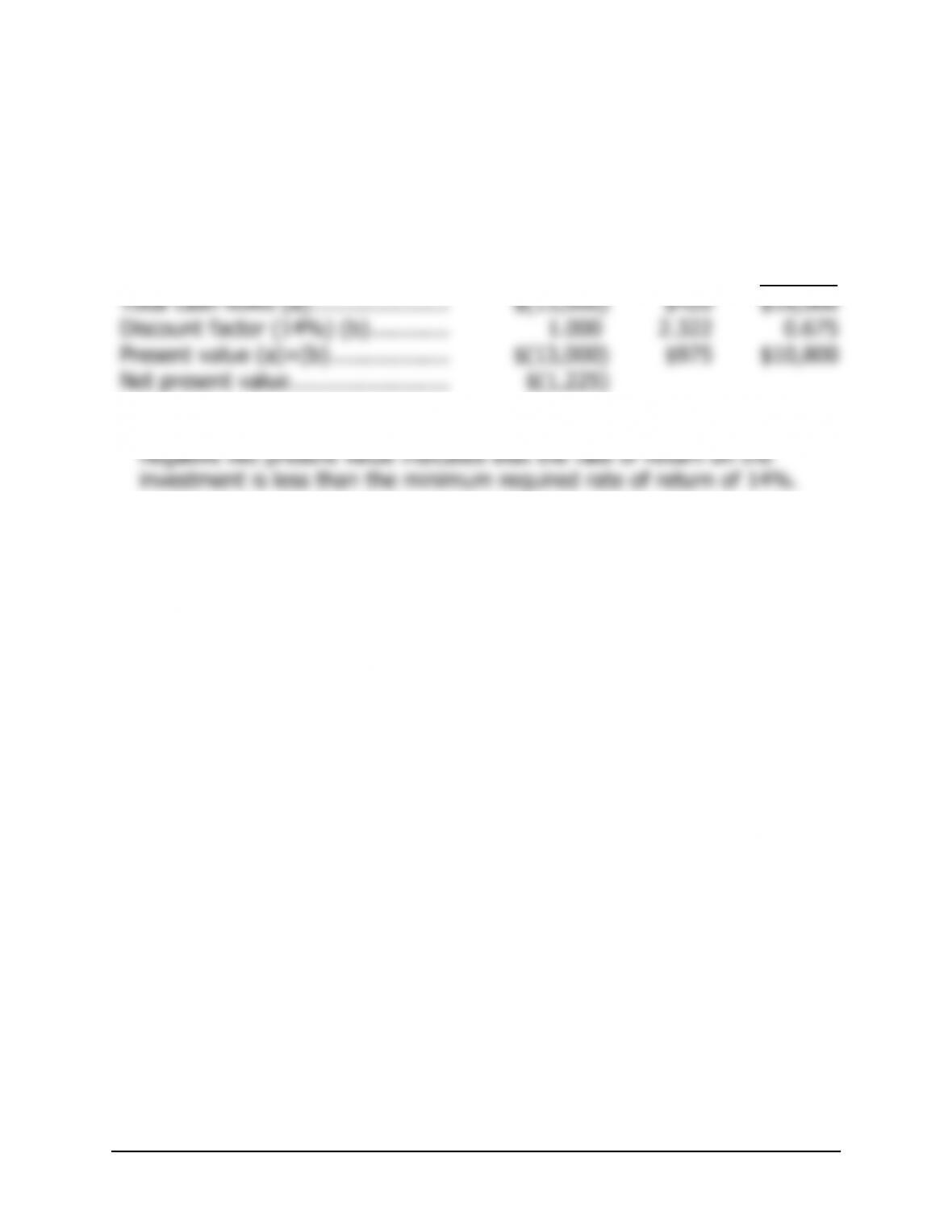
2. No, Kathy did not earn a 14% return on the Malti Company stock. The
© The McGraw-Hill Companies, Inc., 2018
24 Managerial Accounting, 16th Edition
Exercise 13-11 (30 minutes)
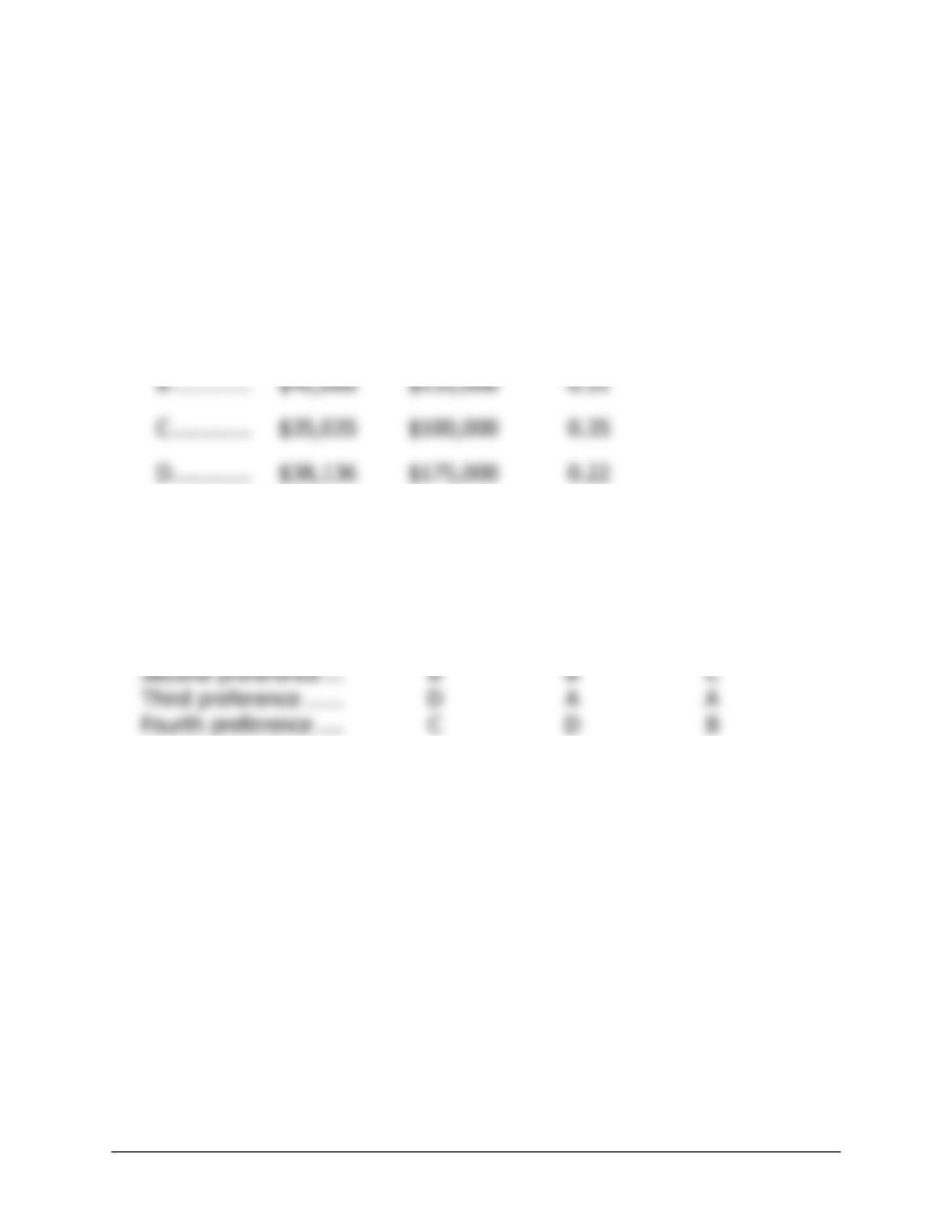
1. The project profitability index is computed as follows:
Project
Net Present
Value
(a)
Investment
Required
(b)
Project
Profitability
Index
(a) ÷ (b)
A ………… $44,323 $160,000 0.28
2. a., b., and c.
Net Present
Value
Project
Profitability
Index
Internal Rate
of Return
First preference …….
A
CD
T
A
A
© The McGraw-Hill Companies, Inc., 2018
Solutions Manual, Chapter 13 25
Exercise 13-11 (continued)
3. Oxford Company’s opportunities for reinvesting funds as they are
released from a project will determine which ranking is best. The
internal rate of return method assumes that any released funds are
The project profitability index approach also assumes that funds
released from a project are reinvested in other projects. But the
assumption is that the return earned by these other projects is equal to
The net present value is inferior to the project profitability index as a
ranking device, because it looks only at the total amount of net present
value from a project and does not consider the amount of investment
© The McGraw-Hill Companies, Inc., 2018
26 Managerial Accounting, 16th Edition
Exercise 13-12 (10 minutes)
Note: All present value factors in the computation below have been taken
from Exhibit 13B-1 in Appendix 13B, using a 12% discount rate.
A
mount of the investment ……………………… $104,950
Less present value of Year 1 and Year 2
cash inflows:
Y
Y
© The McGraw-Hill Companies, Inc., 2018
Solutions Manual, Chapter 13 27
Exercise 13-13 (15 minutes)
1. The payback period is:
Investment required
Payback period =
A
nnual net cash inflow
No, the equipment would not be purchased because the payback period
2. The simple rate of return would be computed as follows:
A
nnual cost savin
g
s ………………………………………. $90,000
A
g
A
nnual incremental net operatin
g
income
Simple rate of return = Initial investment
No, the equipment would not be purchased because its 12.5% rate of
© The McGraw-Hill Companies, Inc., 2018
28 Managerial Accounting, 16th Edition
Exercise 13-14 (10 minutes)
1. Project X:
Now
Years
1-6
Initial investment …………. $(35,000)
Annual cash inflows ………. ________ $12,000
2. Project Y:
Now
Year
6
Initial investment ………….. $(35,000)
Single cash inflow …………. _______ 90,000
3. Project X should be selected. Project Y does not provide the required
© The McGraw-Hill Companies, Inc., 2018
Solutions Manual, Chapter 13 29
Exercise 13-15 (30 minutes)
1. Investment required
Factor of the internal =
rate of return
A
nnual net cash inflow
2. The machine’s net present value is computed as follows:
Now Years
1-5
Purchase of machine ………. $(137,320)
Annual cash inflows ……….. _________ $40,000
The reason for the zero net present value is that 14% (the discount rate

© The McGraw-Hill Companies, Inc., 2018
30 Managerial Accounting, 16th Edition
Exercise 13-15 (continued)
3.
Investment required
Factor of the internal=
rate of return Annual net cash inflow
Looking in Exhibit 13B-2 and scanning along the 5-period line, a factor