© The McGraw-Hill Companies, Inc., 2018. All rights reserved.
Solutions Manual, Chapter 11 41
Problem 11-19 (continued)
b. Areas of deterioration:
Material control.
Scrap as a percentage of total cost has tripled (from
Machine performance.
Machine downtime has doubled (from 3% to
6%) over the last four months. This may be a result of the greater
Delivery performance.
All delivery performance measures are moving
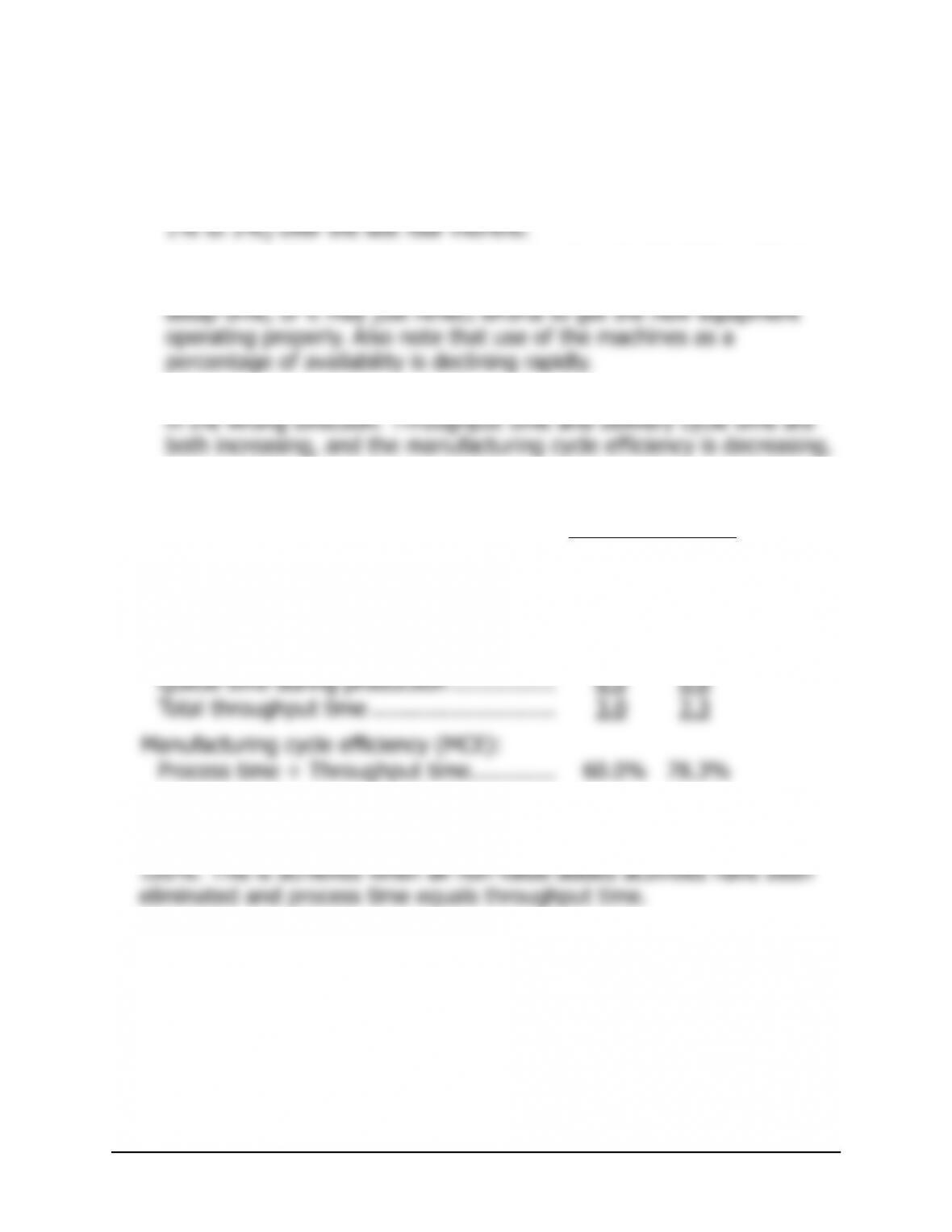
3. a. and b.
Month
5 6
T
hrou
g
hput time in days:
Process time ………………………………….. 1.8 1.8
Inspection time ………………………………. 0.7 0.0
Move time ……………………………………… 0.5 0.5
T
As non-value-added activities are eliminated, the manufacturing cycle
efficiency improves. The goal, of course, is to have an efficiency of
© The McGraw-Hill Companies, Inc., 2018. All rights reserved.
42 Managerial Accounting, 16th Edition
Problem 11-20 (30 minutes)
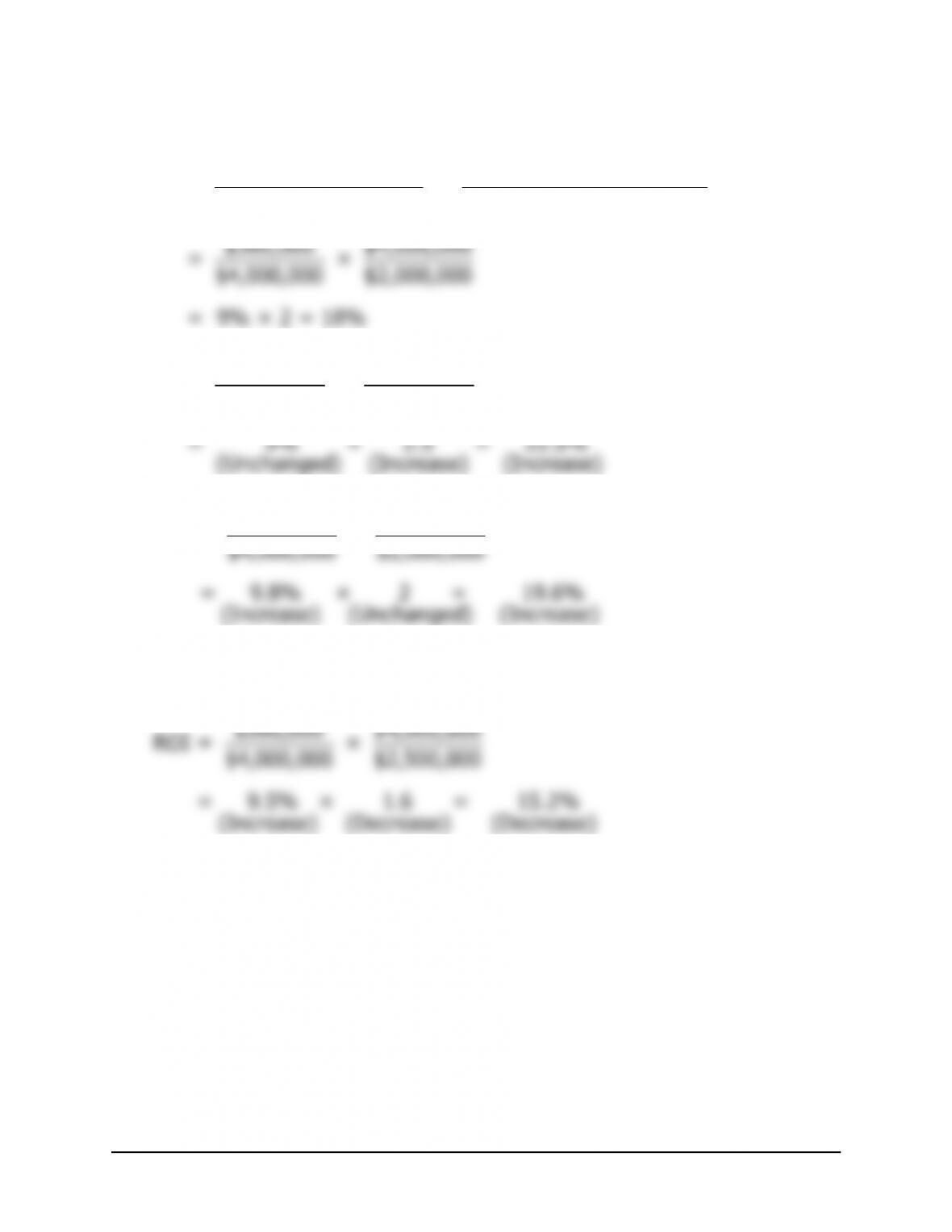
1. Net operating income Sales
ROI = ×
Sales Avera
g
e operatin
g
assets
2. $360,000 $4,000,000
ROI = ×
$4,000,000 $1,600,000
3. $392,000 $4,000,000
ROI = ×
4. Interest is a financing expense and thus it is not used to compute net
operating income.
© The McGraw-Hill Companies, Inc., 2018. All rights reserved.
Solutions Manual, Chapter 11 43
Problem 11-20 (continued)
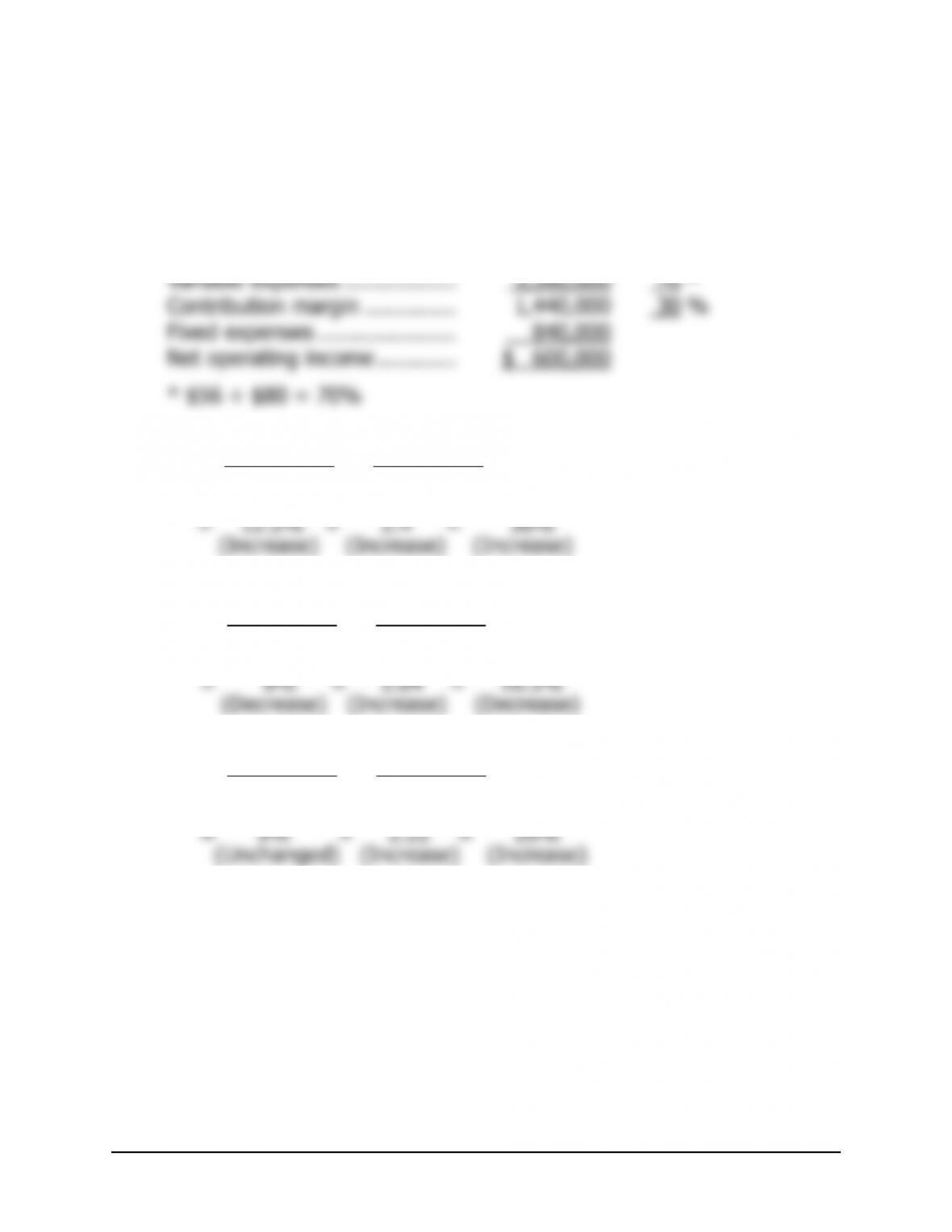
5. The company has a contribution margin ratio of 30% ($24 CM per unit,
divided by the $80 selling price per unit). Therefore, a 20% increase in
sales would result in a new net operating income of:
Sales (1.20 × $4,000,000) ….. $4,800,000 100 %
$600,000 $4,800,000
ROI = ×
$4,800,000 $2,000,000
6. $320,000 $4,000,000
ROI = ×
$4,000,000 $1,960,000
7. $360,000 $4,000,000
ROI = ×
$4,000,000 $1,800,000
© The McGraw-Hill Companies, Inc., 2018. All rights reserved.
44 Managerial Accounting, 16th Edition
Problem 11-21 (90 minutes)
1. Both companies view training as important; both companies need to
leverage technology to succeed in the marketplace; and both companies
are concerned with minimizing defects. There are numerous differences
between the two companies. For example, Applied Pharmaceuticals is a
product-focused company and Destination Resorts International (DRI) is
a service-focused company. Applied Pharmaceuticals’ training resources
are focused on their engineers because they hold the key to the success
© The McGraw-Hill Companies, Inc., 2018. All rights reserved.
Solutions Manual, Chapter 11 45
Problem 11-21 (continued)
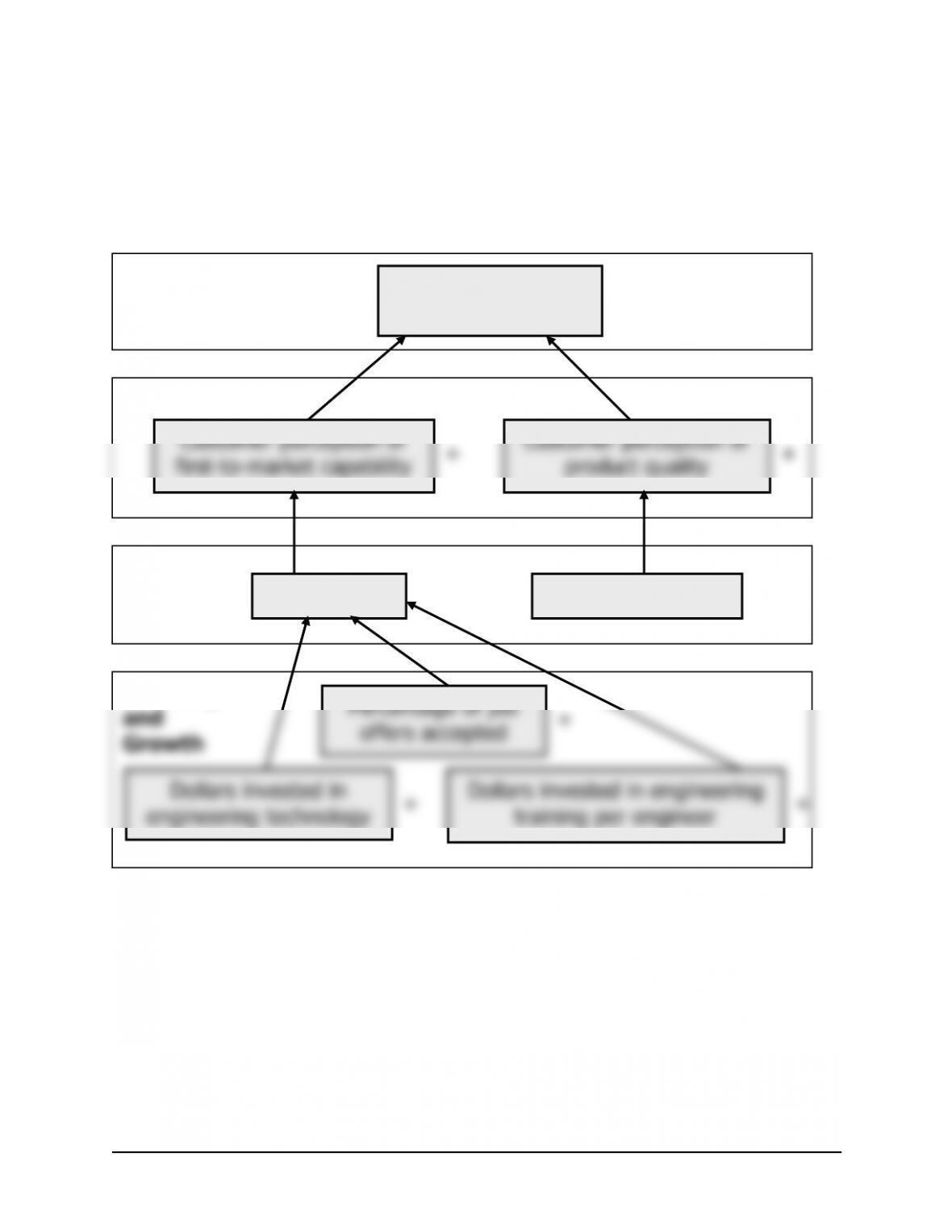
2. Students’ answers may differ in some details from this solution.
Applied Pharmaceuticals
Return on
Stockholders’ Equity
Financial
Customer
R&D Yield Defect rates
Internal
Business
Processes
Percentage of job
offers accepted
Learning
and
Growth
+
+ –
+
© The McGraw-Hill Companies, Inc., 2018. All rights reserved.
46 Managerial Accounting, 16th Edition
Problem 11-21 (continued)
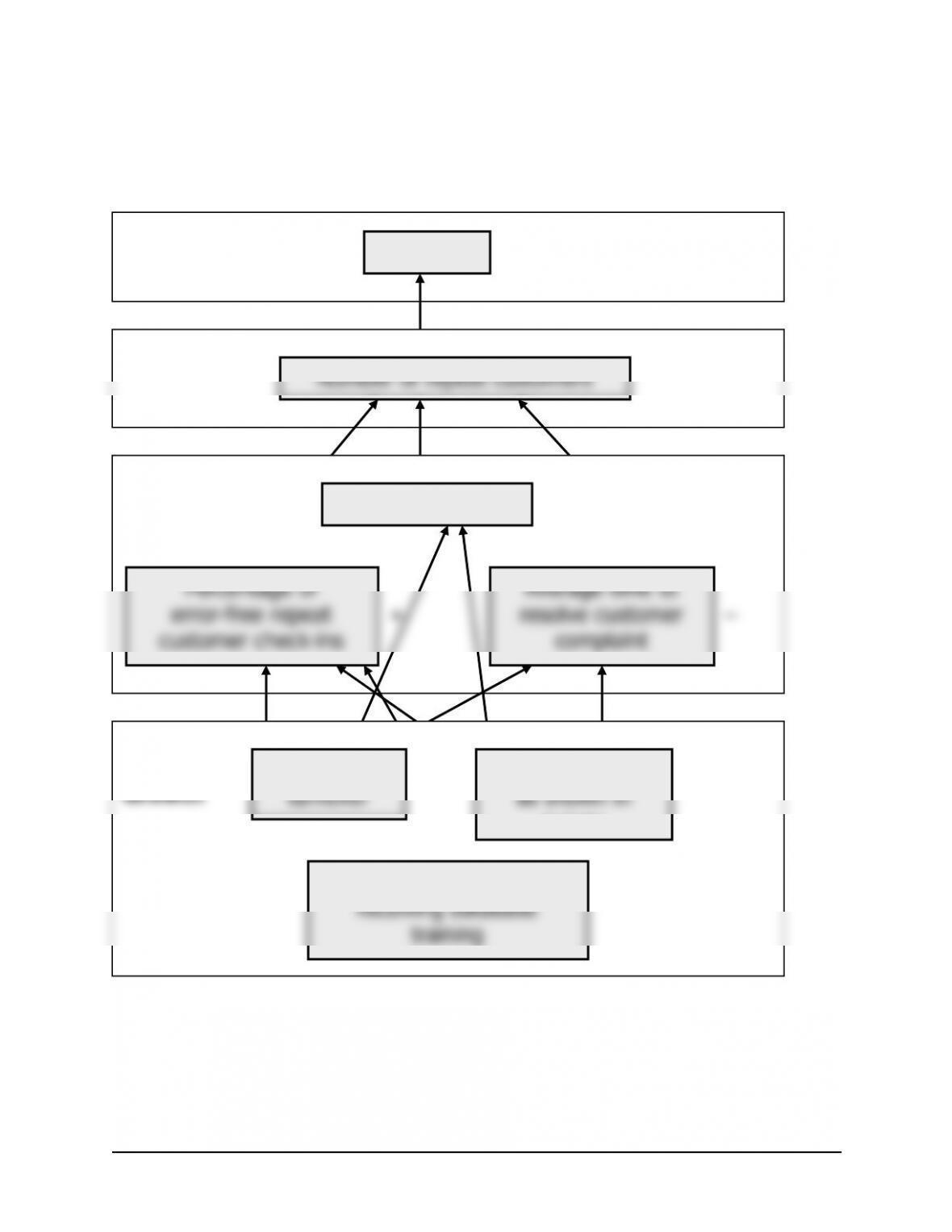
Destination Resorts International
Financial Sales +
Customer +
Internal
Business
Processes
+
Room cleanliness
Learning
and
Employee morale
surve
y
Employee
Number of employees
+

© The McGraw-Hill Companies, Inc., 2018. All rights reserved.
Solutions Manual, Chapter 11 47
Problem 11-21 (continued)
3. The hypotheses underlying the balanced scorecards are indicated by the
Applied Pharmaceuticals
o If the dollars invested in engineering technology increase, then the
o If the percentage of job offers accepted increases, then the R&D
o If the dollars invested in engineering training per engineer increase,
o If the R&D yield increases, then customer perception of first-to-
o If the defects per million opportunities decrease, then the customer
o If the customer perception of first-to-market capability increases,
o If the customer perception of product quality increases, then the
Destination Resort International
o If the employee turnover decreases, then the percentage of error-
o If the number of employees receiving database training increases,
o If employee morale increases, then the percentage of error-free
o If the percentage of error-free repeat customer check-ins increases,
o If the room cleanliness increases, then the number of repeat
o If the average time to resolve customer complaints decreases, then
© The McGraw-Hill Companies, Inc., 2018. All rights reserved.
48 Managerial Accounting, 16th Edition
Problem 11-21 (continued)
Each of these hypotheses is questionable to some degree. For example,
in the case of Applied Pharmaceuticals, R&D yield is not the sole driver
of the customers’ perception of first-to-market capability. More
specifically, if Applied Pharmaceuticals experimented with nine possible
drug compounds in year one and three of those compounds proved to
be successful in the marketplace it would result in an R&D yield of 33%.
If in year two, it experimented with four possible drug compounds and
© The McGraw-Hill Companies, Inc., 2018. All rights reserved.
Solutions Manual, Chapter 11 49
Problem 11-22 (45 minutes)
The answers below are not the only possible answers. Ingenious people
can figure out many different ways of making performance look better
even though it really isn’t. This is one of the reasons for a
balanced
scorecard
. By having a number of different measures that ultimately are
linked to overall financial goals, “gaming” the system is more difficult.
1. Speed-to-market can be improved by taking on less ambitious projects.
Instead of working on major product innovations that require a great
2. In this case, the ground crews raced from one arriving airplane to
another in an effort to unload luggage from these airplanes as soon as
Another flaw of the CEO’s bonus system is that ground crews would
probably “smooth” their rate of improvement to earn as many monthly
3. In real life, the production manager simply added several weeks to the
delivery cycle time. In other words, instead of promising to deliver an
© The McGraw-Hill Companies, Inc., 2018. All rights reserved.
50 Managerial Accounting, 16th Edition
Problem 11-22 (continued)
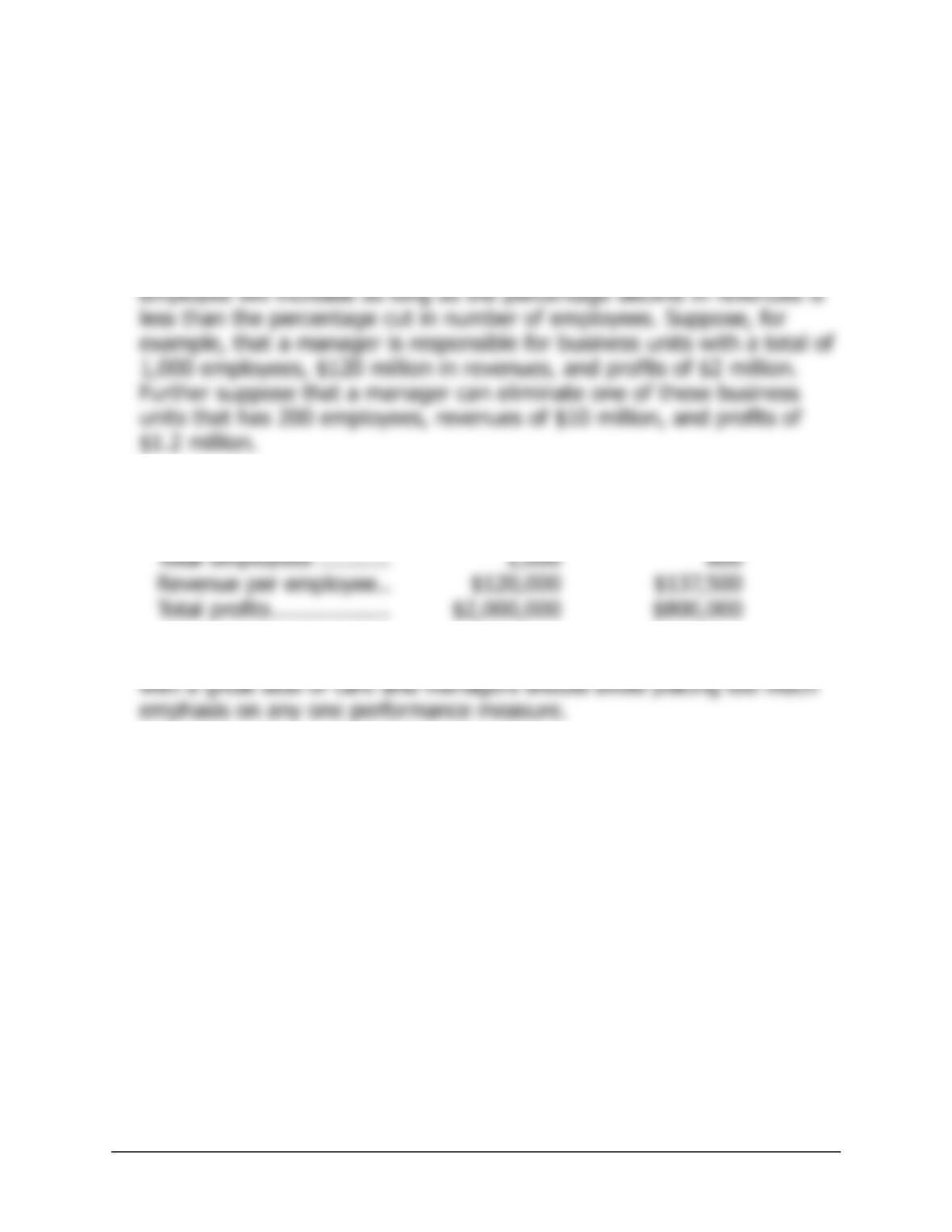
4. As stated above, ratios can be improved by changing either the
numerator or the denominator. Managers who are under pressure to
increase the revenue per employee may find it easier to eliminate
employees than to increase revenues. Of course, eliminating employees
may reduce total revenues and total profits, but the revenue per
Before eliminatin
g
the business unit
After eliminating
the business unit
T
otal revenue …………… $120,000,000 $110,000,000
T
T
As these examples illustrate, performance measures should be selected