© The McGraw-Hill Companies, Inc., 2018. All rights reserved.
Solutions Manual, Chapter 11 21
Exercise 11-7 (continued)
4. Each office’s individual performance should be based on the scorecard
measures only if the measures are controllable by those employed at
the branch offices. In other words, it would not make sense to attempt
to hold branch office managers responsible for measures such as the
percent of job offers accepted or the amount of compensation paid
© The McGraw-Hill Companies, Inc., 2018. All rights reserved.
22 Managerial Accounting, 16th Edition
Exercise 11-8 (15 minutes)
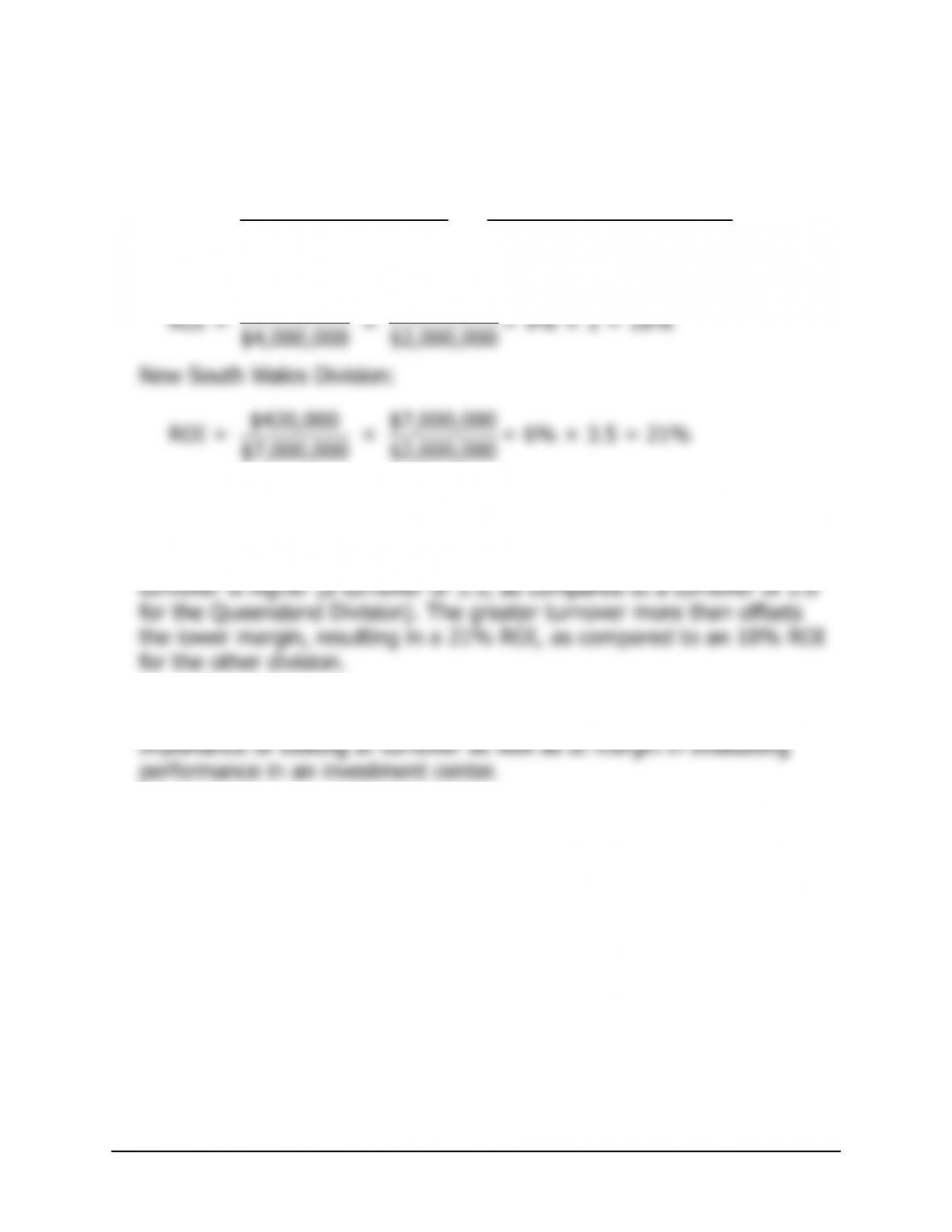
1. ROI computations:
Net operating income Sales
ROI = ×
Sales Avera
g
e operatin
g
assets
Queensland Division:
2. The manager of the New South Wales Division seems to be doing the
better job. Although the New South Wales Division’s margin is three
percentage points lower than the margin of the Queensland Division, its
Notice that if you look at margin alone, then the Queensland Division
appears to be the stronger division. This fact underscores the
© The McGraw-Hill Companies, Inc., 2018. All rights reserved.
Solutions Manual, Chapter 11 23
Exercise 11-9 (15 minutes)
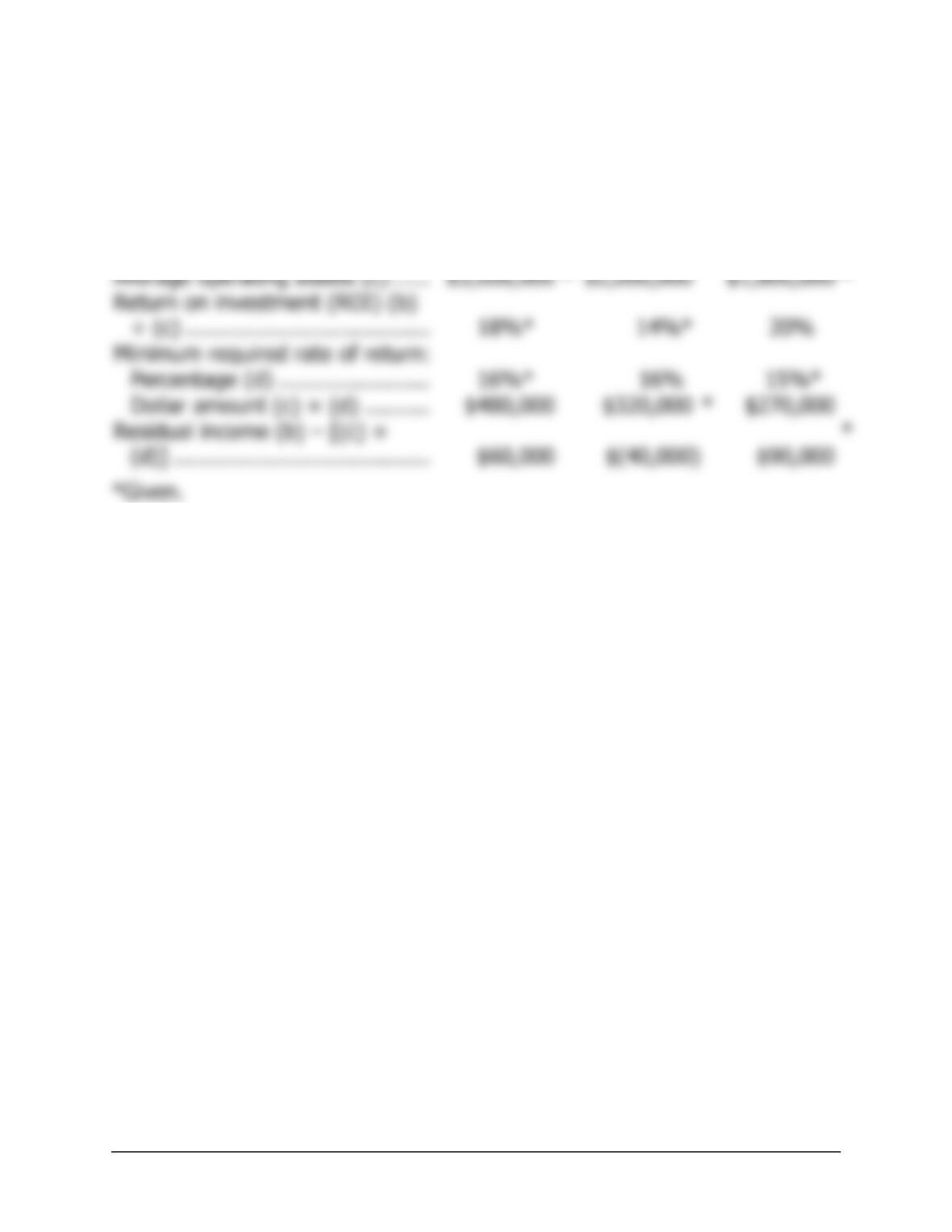
Company A Company B Company C
Sales (a)…………………………….. $9,000,000 * $7,000,000 * $4,500,000 *
Net operatin
g
income (b) ……….. $540,000 $280,000 * $360,000
© The McGraw-Hill Companies, Inc., 2018. All rights reserved.
24 Managerial Accounting, 16th Edition
Exercise 11-10 (20 minutes)
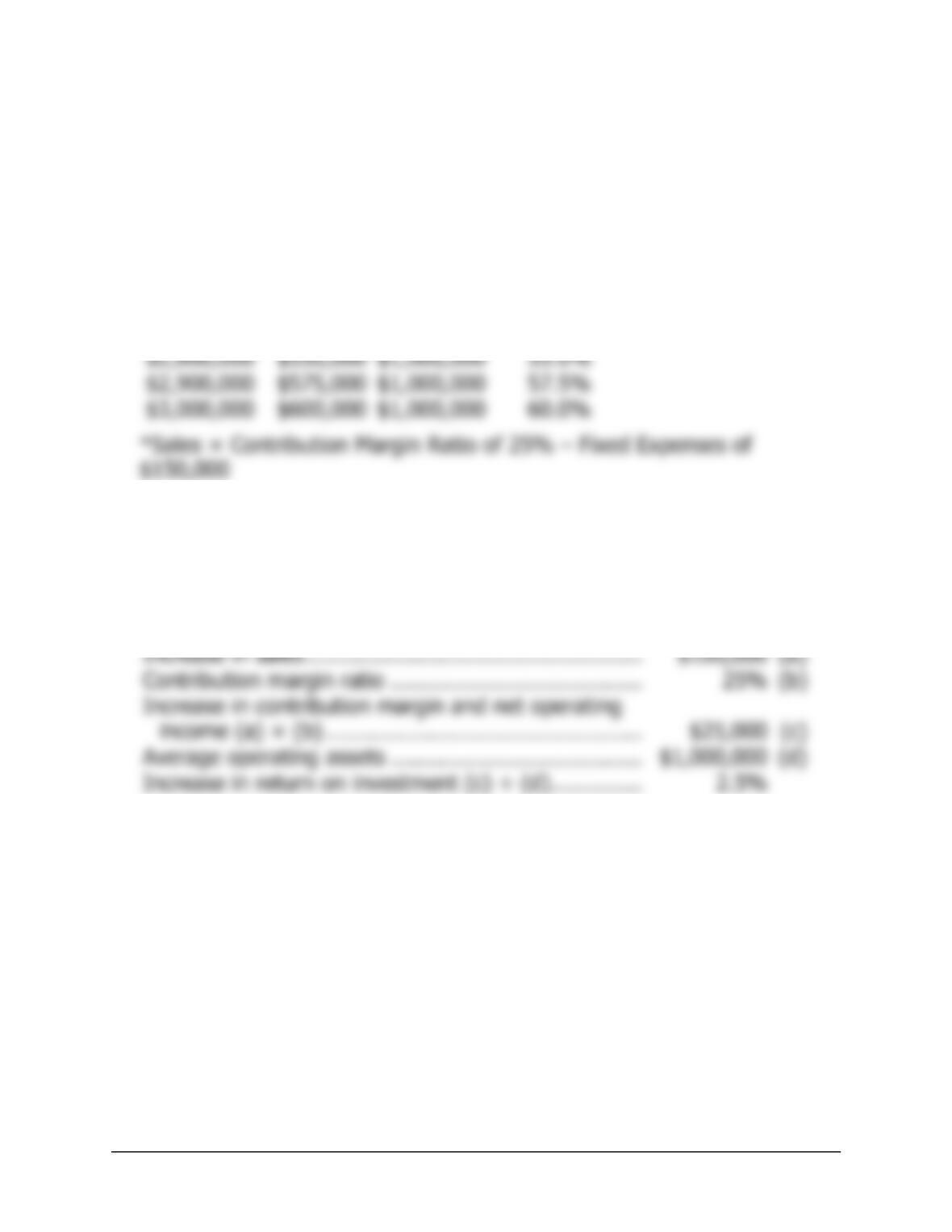
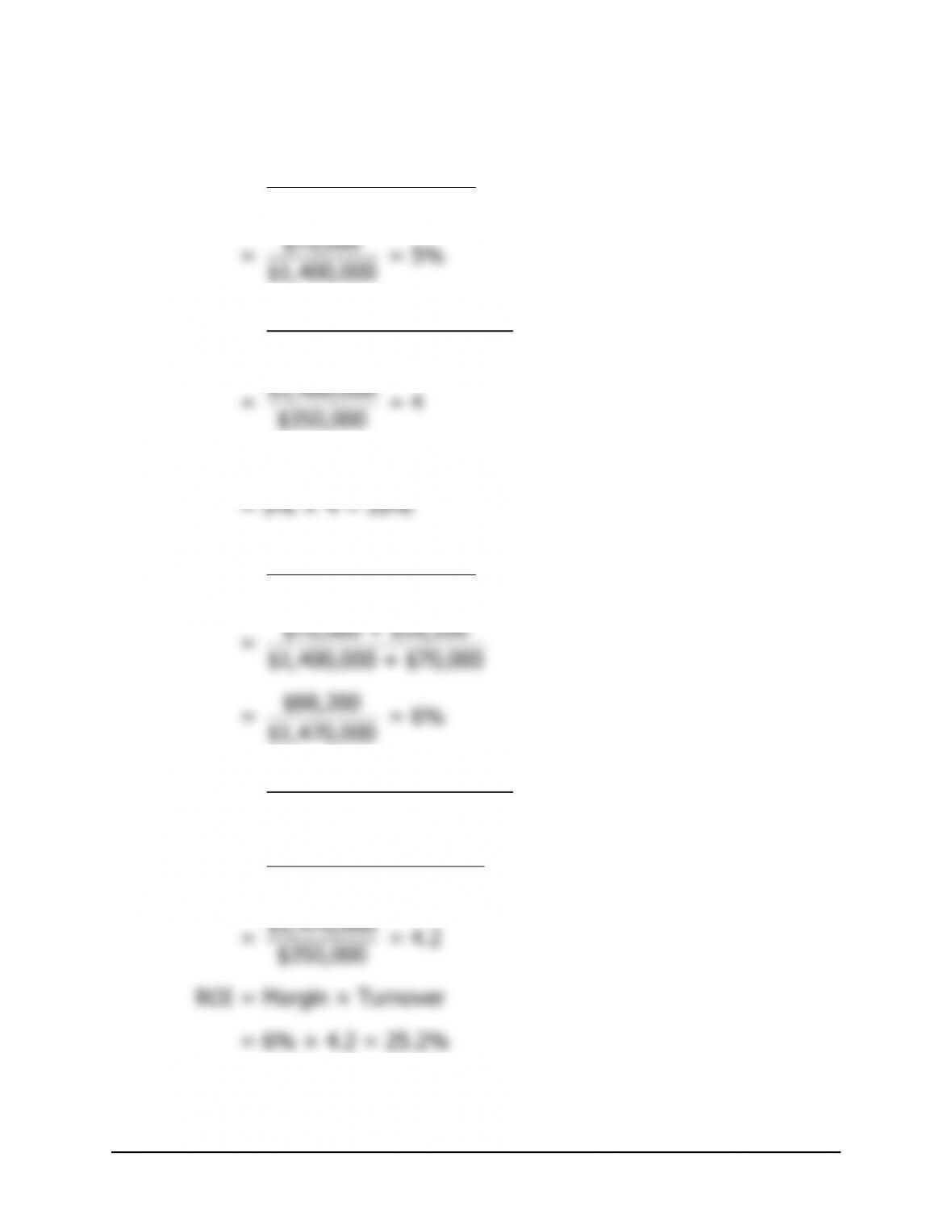
1.
(b) (c)
Net Average
(a) Operating Operating ROI
Sales Income* Assets (b) ÷ (c)
$2,500,000 $475,000 $1,000,000 47.5%
$2,600,000 $500,000 $1,000,000 50.0%
$2,700,000 $525,000 $1,000,000 52.5%
2. The ROI increases by 2.5% for each $100,000 increase in sales. This
happens because each $100,000 increase in sales brings in an additional
profit of $25,000. When this additional profit is divided by the average
operating assets of $1,000,000, the result is an increase in the
company’s ROI of 2.5%.
© The McGraw-Hill Companies, Inc., 2018. All rights reserved.
Solutions Manual, Chapter 11 25
Exercise 11-11 (30 minutes)
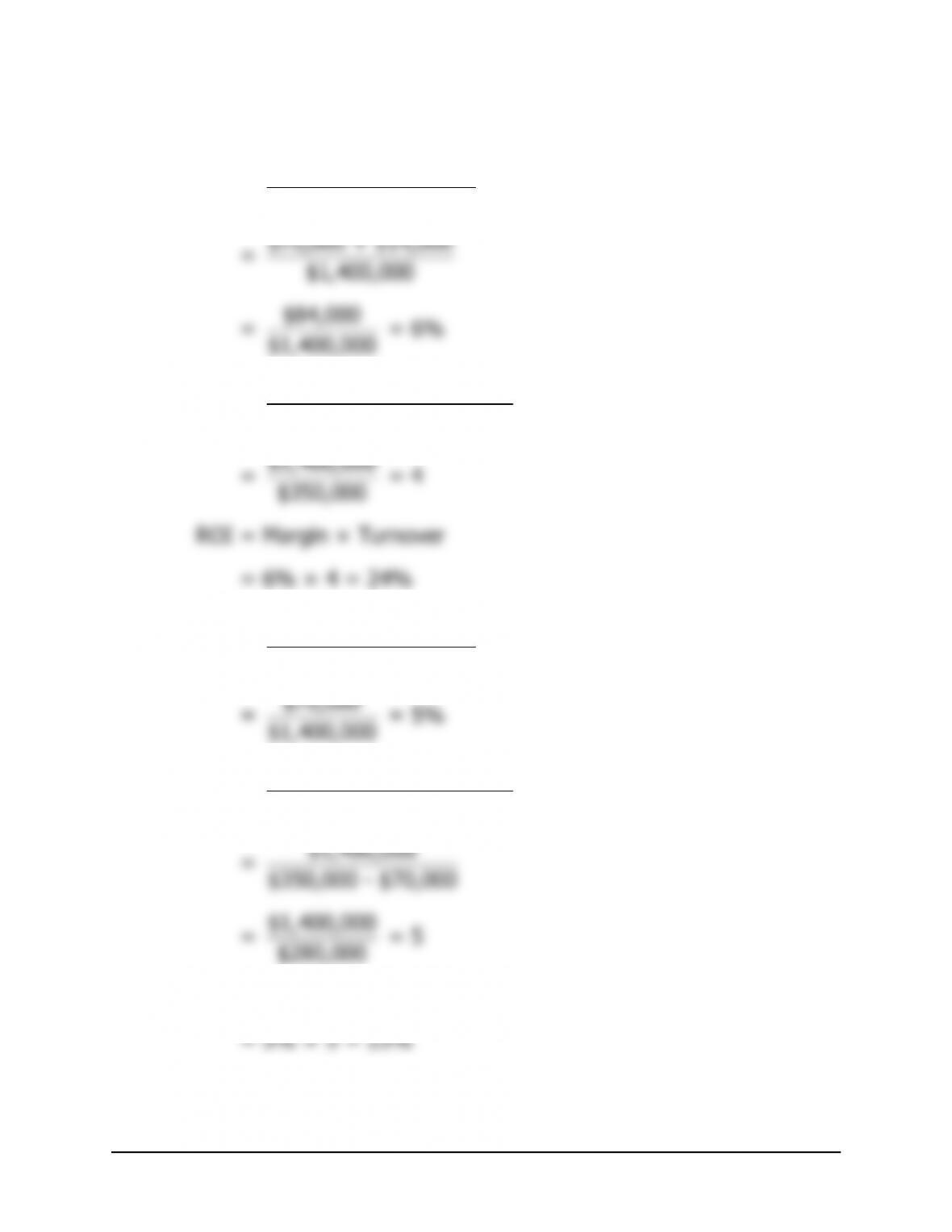
1. Net operating income
Margin = Sales
Sales
Turnover =
A
vera
g
e operatin
g
assets
ROI = Margin × Turnover
2. Net operating income
Margin = Sales
Sales
Turnover =
A
vera
g
e operatin
g
assets
$1,400,000 + $70,000
= $350,000
© The McGraw-Hill Companies, Inc., 2018. All rights reserved.
26 Managerial Accounting, 16th Edition
Exercise 11-11 (continued)
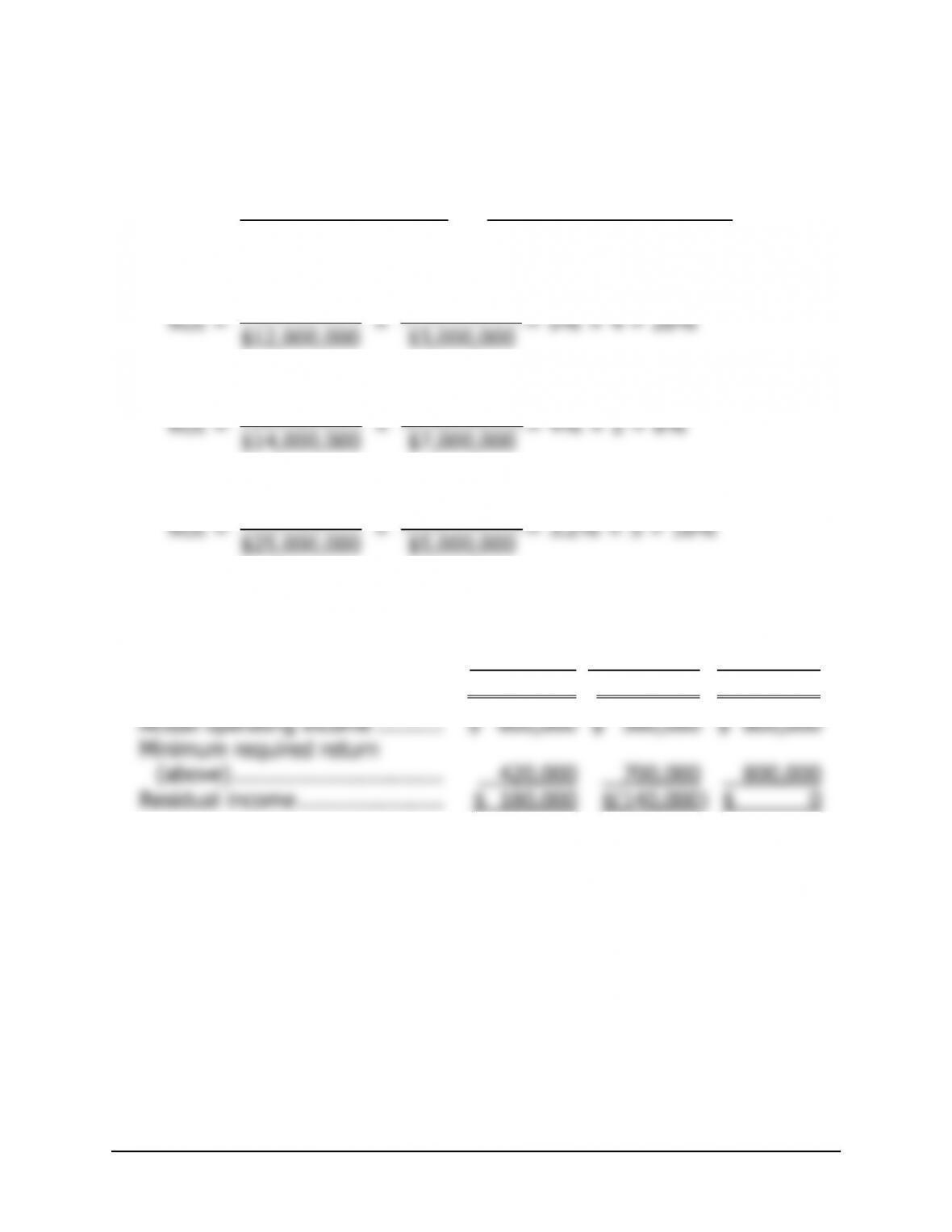
3. Net operatin
g
income
Margin = Sales
Sales
Turnover =
A
vera
g
e operatin
g
assets
4. Net operatin
g
income
Mar
g
in =
Sales
Sales
Turnover =
A
vera
g
e operatin
g
assets
ROI = Margin × Turnover
© The McGraw-Hill Companies, Inc., 2018. All rights reserved.
Solutions Manual, Chapter 11 27
Exercise 11-12 (30 minutes)
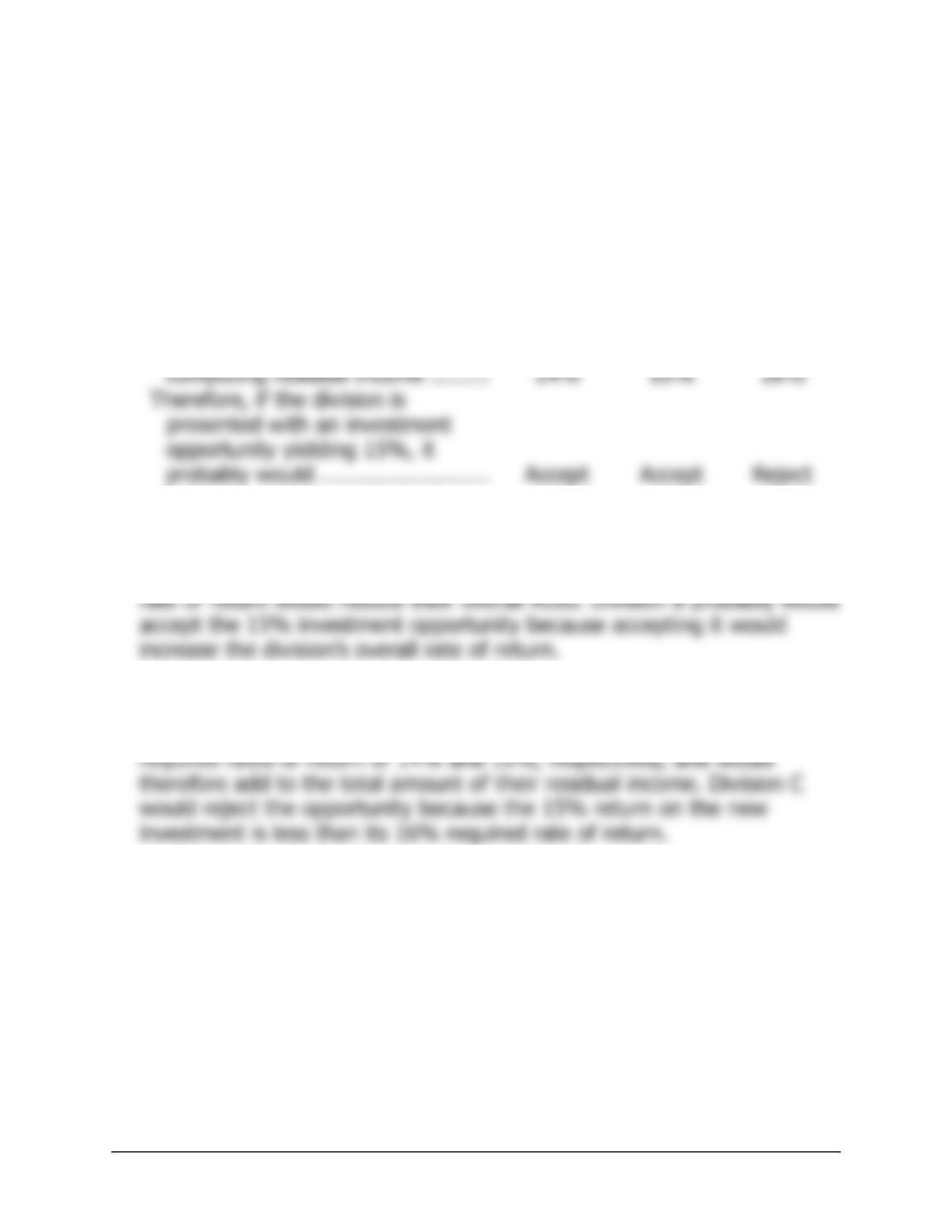
1. ROI computations:
Net operating income Sales
ROI = ×
Sales Avera
g
e operatin
g
assets
Division A:
Division B:
Division C:
2.
Division A Division B Division C
A
vera
g
e operatin
g
assets ……… $3,000,000 $7,000,000 $5,000,000
Required rate of return ………… × 14% × 10% × 16%
Minimum required return ……… $ 420,000 $ 700,000 $ 800,000
A
© The McGraw-Hill Companies, Inc., 2018. All rights reserved.
28 Managerial Accounting, 16th Edition
Exercise 11-12 (continued)
3. a. and b.
Division A Division B Division C
Return on investment (ROI)……….. 20% 8% 16%
T
herefore, if the division is
presented with an investment
opportunity yielding 15%, it
probably would ……………..……… Reject Accept Reject
Minimum required return for
If performance is being measured by ROI, both Division A and Division C
probably would reject the 15% investment opportunity. These divisions’
ROIs currently exceed 15%; accepting a new investment with a 15%
If performance is measured by residual income, both Division A and
Division B probably would accept the 15% investment opportunity. The
15% rate of return promised by the new investment is greater than their
T
© The McGraw-Hill Companies, Inc., 2018. All rights reserved.
Solutions Manual, Chapter 11 29
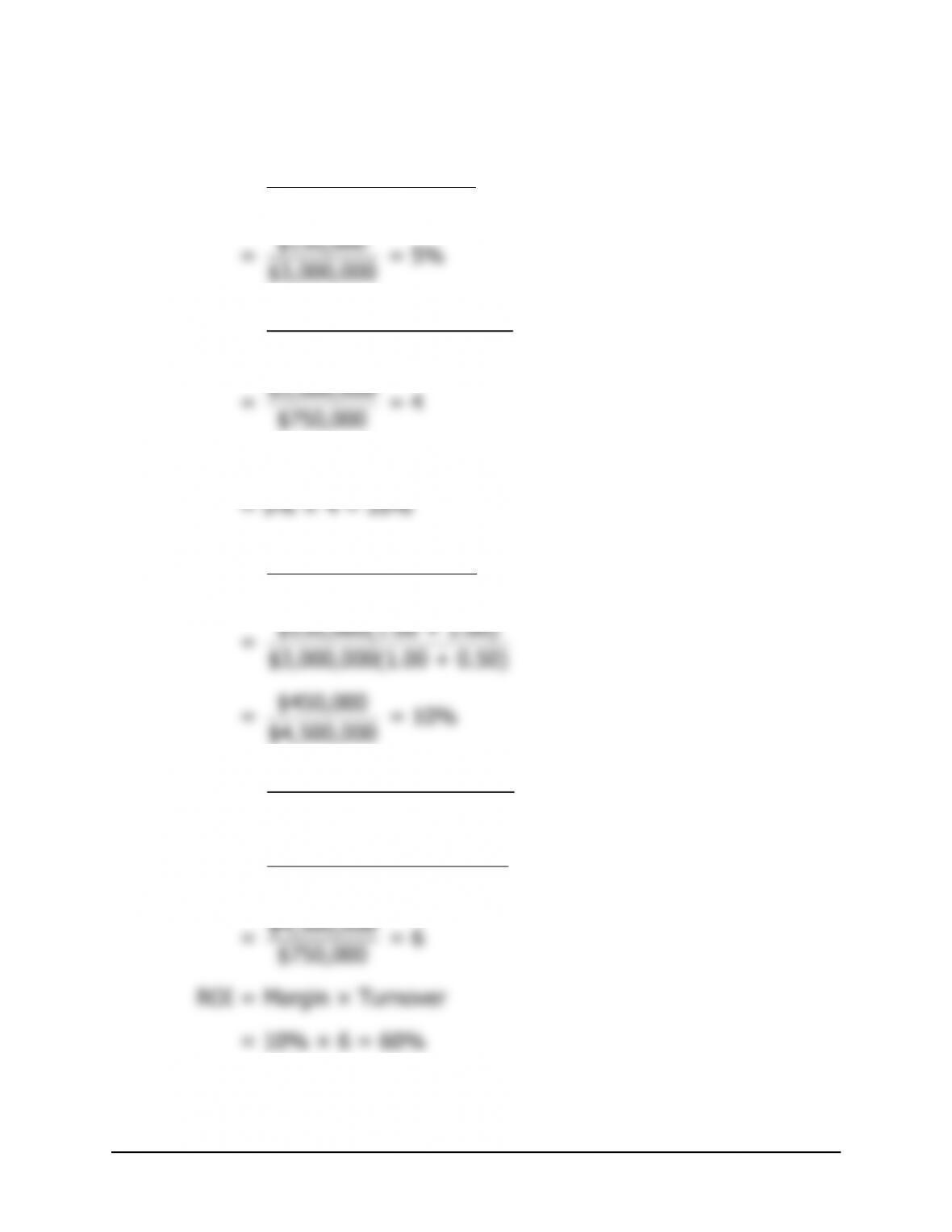
Exercise 11-13 (15 minutes)
1. Net operating income
Margin = Sales
Sales
Turnover =
A
vera
g
e operatin
g
assets
ROI = Margin × Turnover
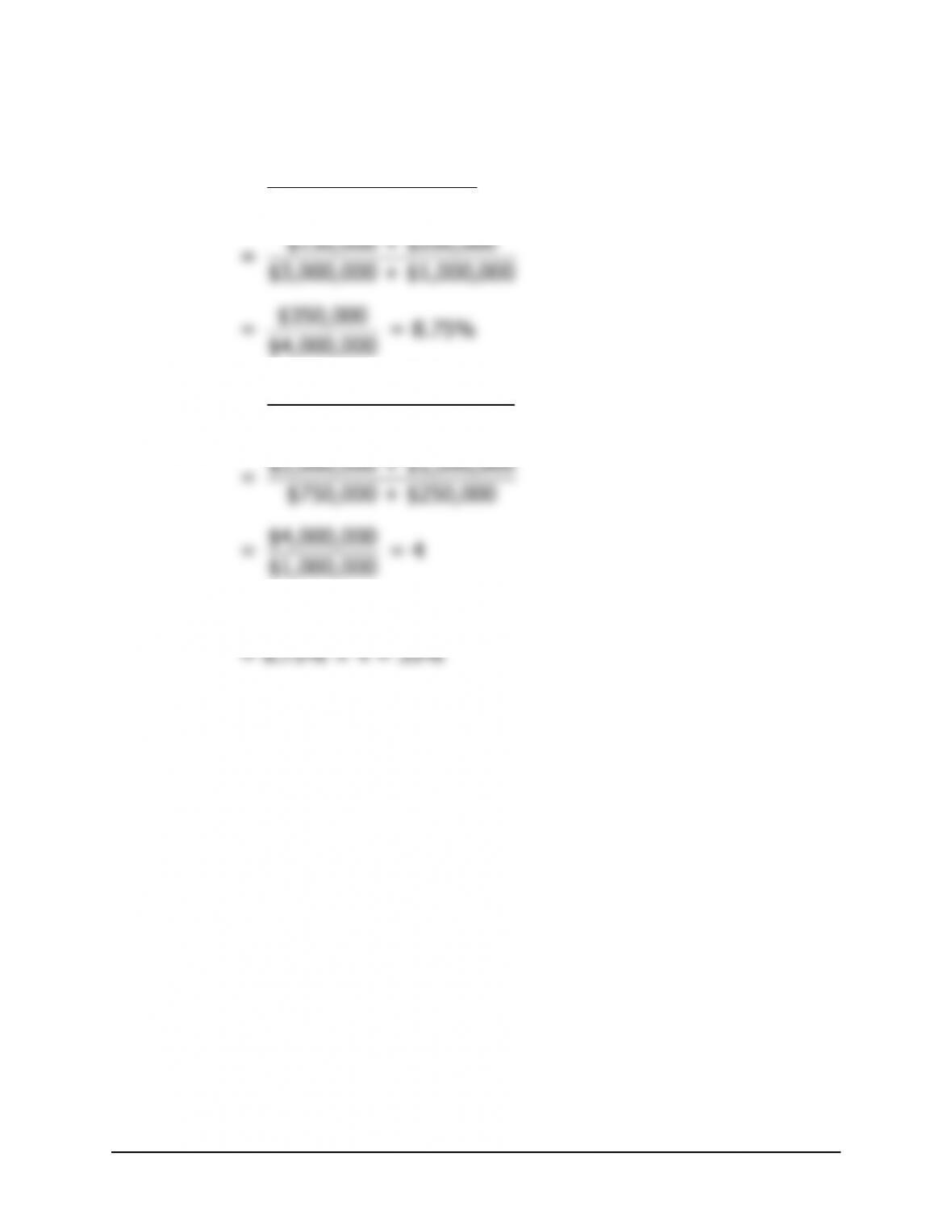
2. Net operatin
g
income
Margin = Sales
Sales
Turnover =
A
vera
g
e operatin
g
assets
$3,000,000(1.00 + 0.50)
= $750,000
© The McGraw-Hill Companies, Inc., 2018. All rights reserved.
30 Managerial Accounting, 16th Edition
Exercise 11-13 (continued)
3. Net operating income
Margin = Sales
Sales
Turnover =
A
vera
g
e operatin
g
assets
ROI = Margin × Turnover