© The McGraw-Hill Companies, Inc., 2018. All rights reserved.
Solutions Manual, Appendix 10A 61
Exercise 10A-7 (15 minutes)
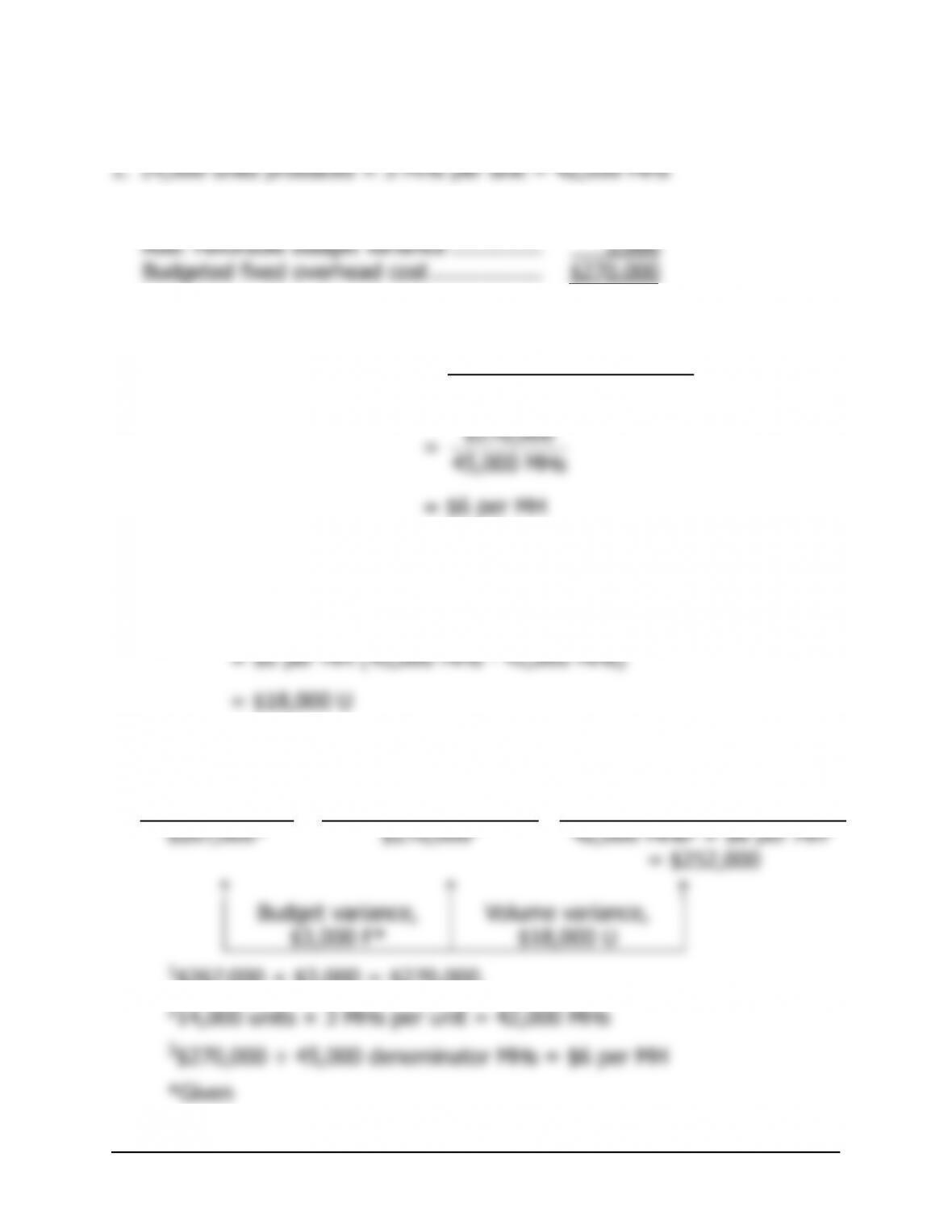
2.
A
ctual fixed overhead incurred……………. $267,000
A
g
3.
Budgeted fixed overhead
Fixed element of the =
predetermined overhead rate Denominator activity
4. Fixed portion of Standard
Volume Denominator
= the predetermined – hours
Variance hours
overhead rate allowed
æö
÷
ç
÷
ç
÷
ç
÷
ç
÷
ç
èø
Alternative solution to parts 1-3:
A
ctual Fixed
Overhead
Bud
g
eted Fixed
Overhead
Fixed Overhead Applied
to Work in Process
g
v
v
1
3
© The McGraw-Hill Companies, Inc., 2018. All rights reserved.
62 Managerial Accounting, 16th Edition
Problem 10A-8 (45 minutes)
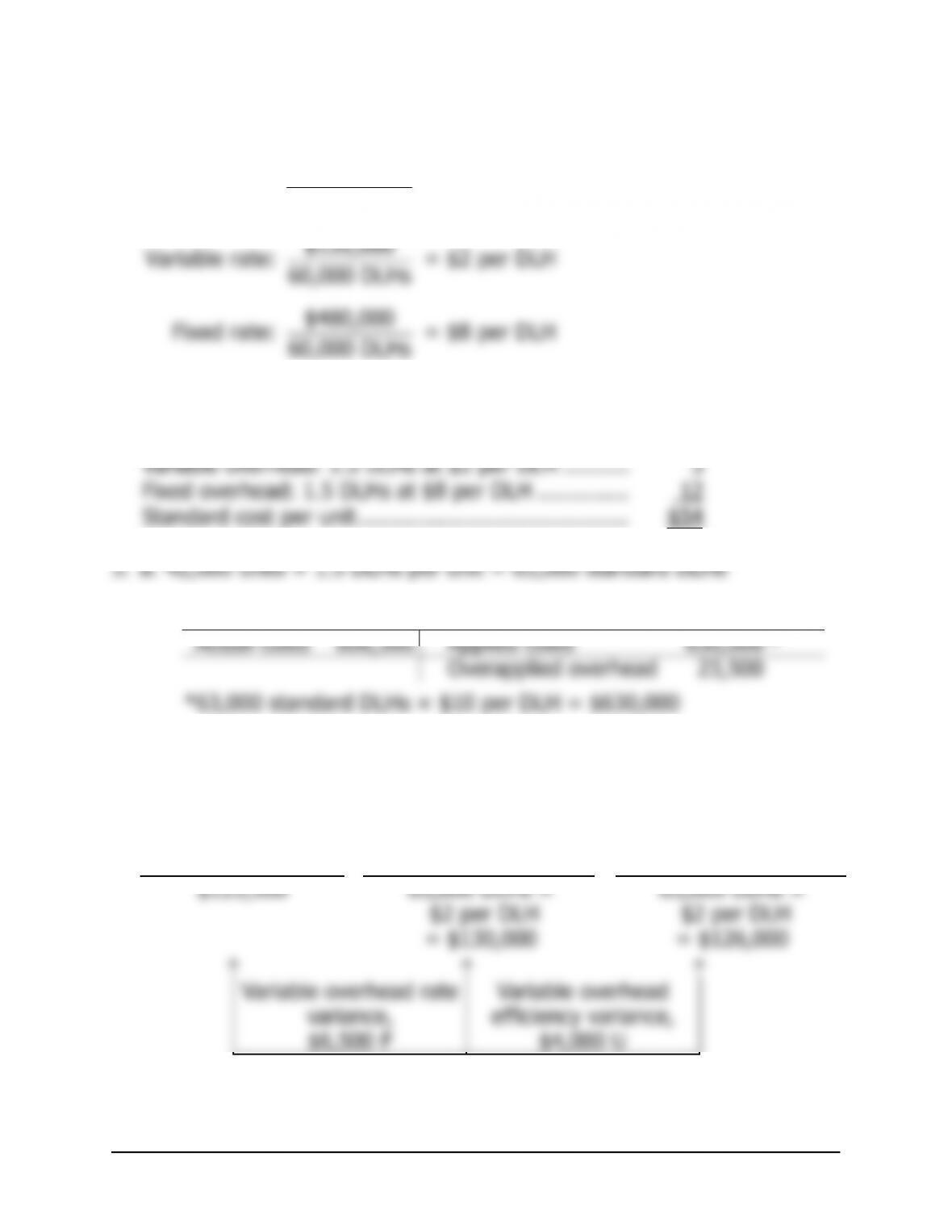
1. $600,000
T
otal rate: = $10 per DLH
60,000 DLHs
2. Direct materials: 3 pounds at $7 per pound ………. $21
Direct labor: 1.5 DLHs at $12 per DLH……………… 18
V
b. Manufacturin
g
Overhead
A
A
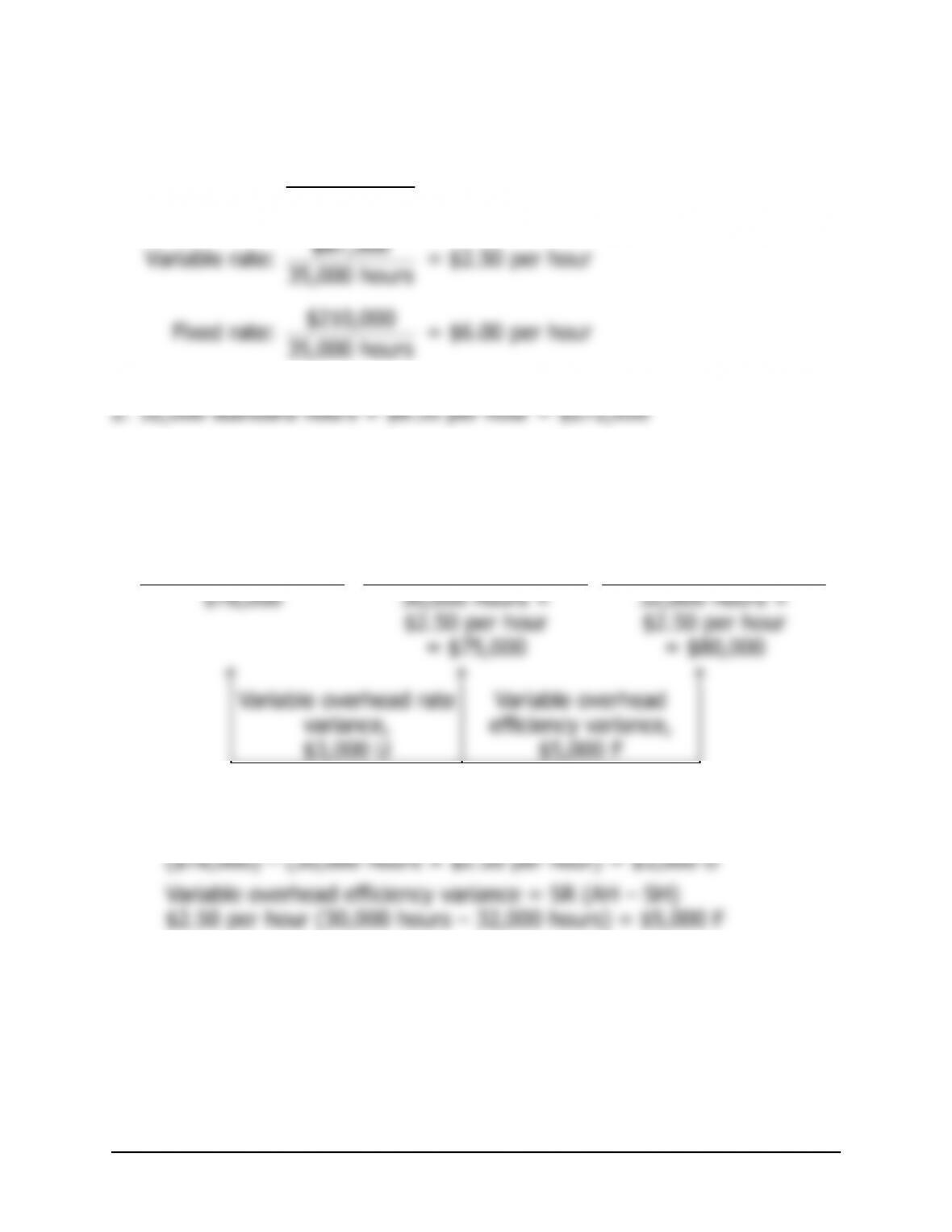
4. Variable overhead variances:
A
ctual Hours of
Input, at the
Actual Rate
Actual Hours of Input,
at the Standard Rate
Standard Hours
Allowed for Output, at
the Standard Rate
(AH ×
A
R) (AH × SR) (SH × SR)
© The McGraw-Hill Companies, Inc., 2018. All rights reserved.
Solutions Manual, Appendix 10A 63
Problem 10A-8 (continued)
Alternative solution:
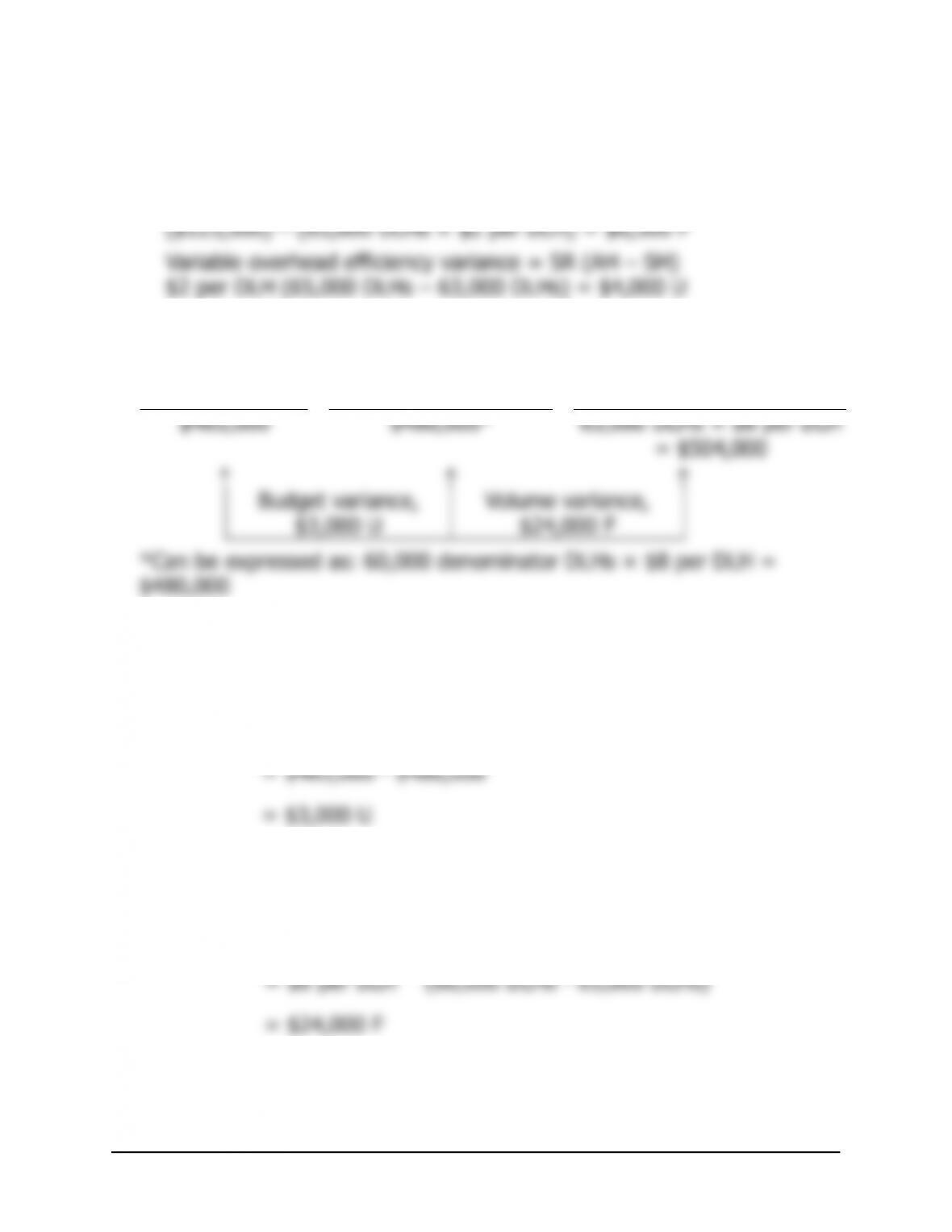
Variable overhead rate variance = (AH × AR) – (AH × SR)
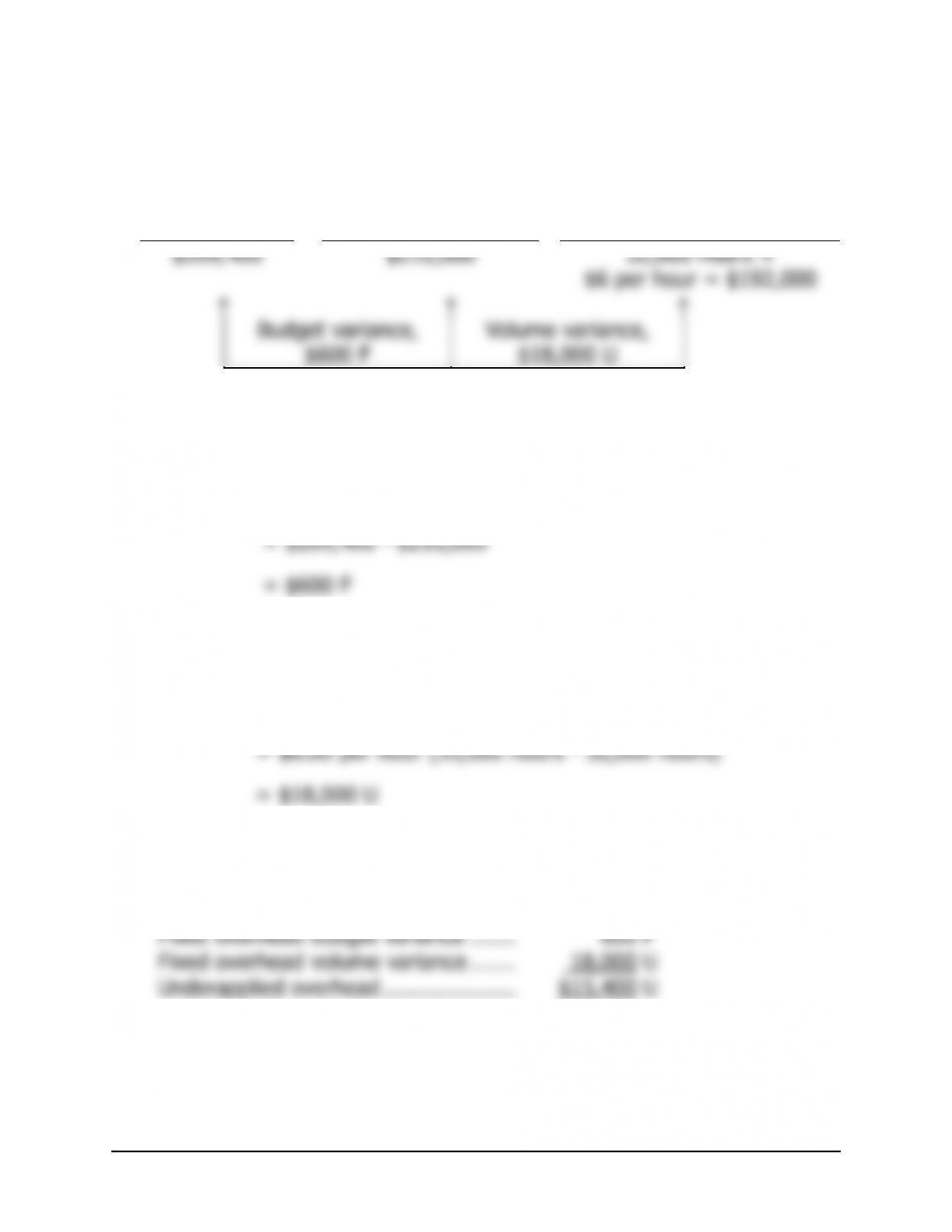
Fixed overhead variances:
A
ctual Fixed
Overhead
Bud
g
eted Fixed
Overhead
Fixed Overhead
Applied to Work in Process
g
v
v
Alternative solution:
Budget variance:
Bud
g
et Actual fixed Bud
g
eted fixed
= –
variance overhead overhead
Volume variance:
æ
ö
÷
ç
÷
ç
÷
ç
÷
ç
÷
÷
ç
è
ø
Fixed portion of Standard
Volume Denominator
= the predetermined – hours
Variance hours
overhead rate allowed
© The McGraw-Hill Companies, Inc., 2018. All rights reserved.
64 Managerial Accounting, 16th Edition
Problem 10A-8 (continued)
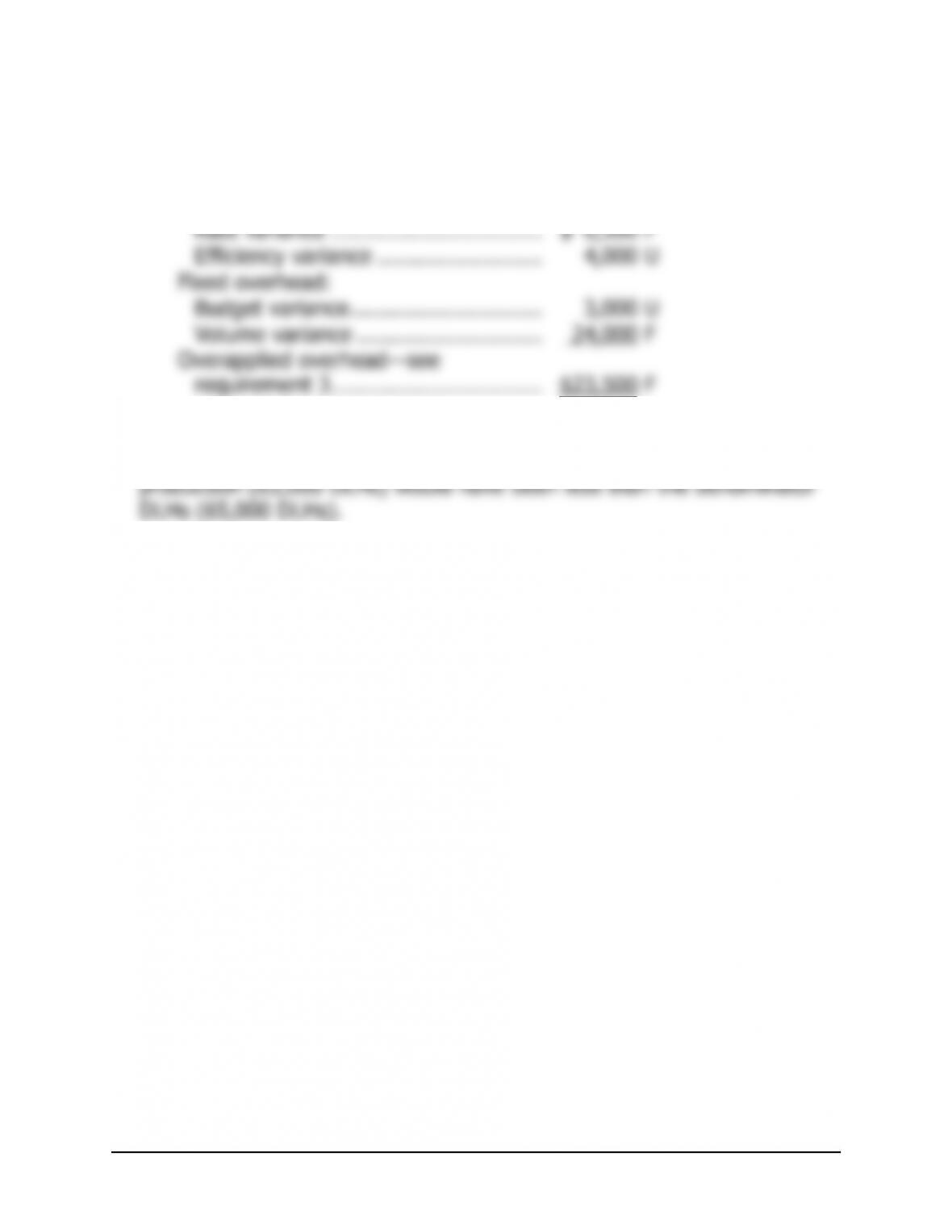
The company’s overhead variances can be summarized as follows:
V
ariable overhead:
5. Only the volume variance would have changed. It would have been
unfavorable because the standard DLHs allowed for the year’s
—
© The McGraw-Hill Companies, Inc., 2018. All rights reserved.
Solutions Manual, Appendix 10A 65
Problem 10A-9 (45 minutes)
1. $297,500
T
otal rate: = $8.50 per hour
35,000 hours
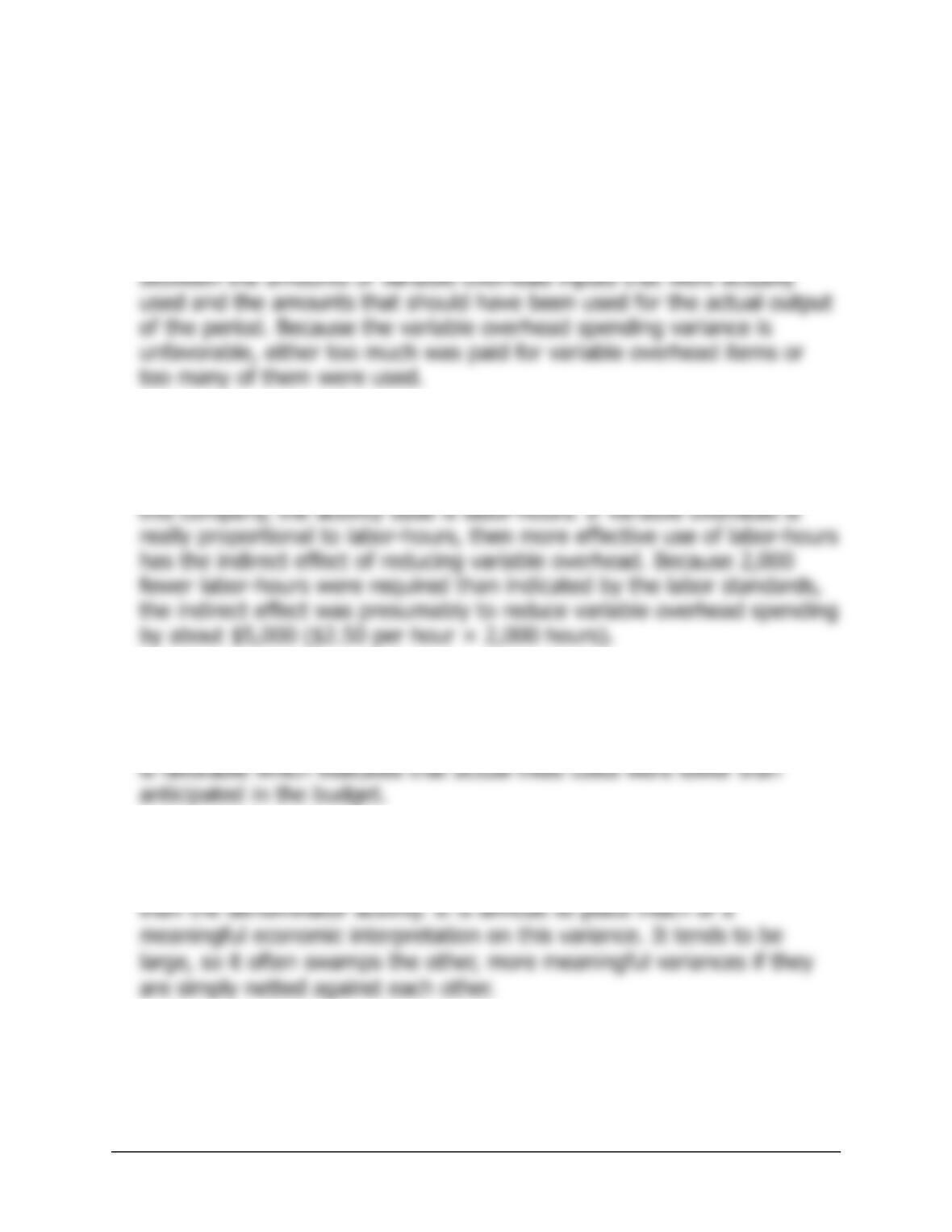
3. Variable overhead variances:
A
ctual Hours of
Input, at the
Actual Rate
A
ctual Hours of Input,
at the Standard Rate
Standard Hours
A
llowed for Output, at
the Standard Rate
(AH ×
A
R) (AH × SR) (SH × SR)
Alternative solution:
Variable overhead rate variance = (AH × AR) – (AH × SR)
© The McGraw-Hill Companies, Inc., 2018. All rights reserved.
66 Managerial Accounting, 16th Edition
Problem 10A-9 (continued)
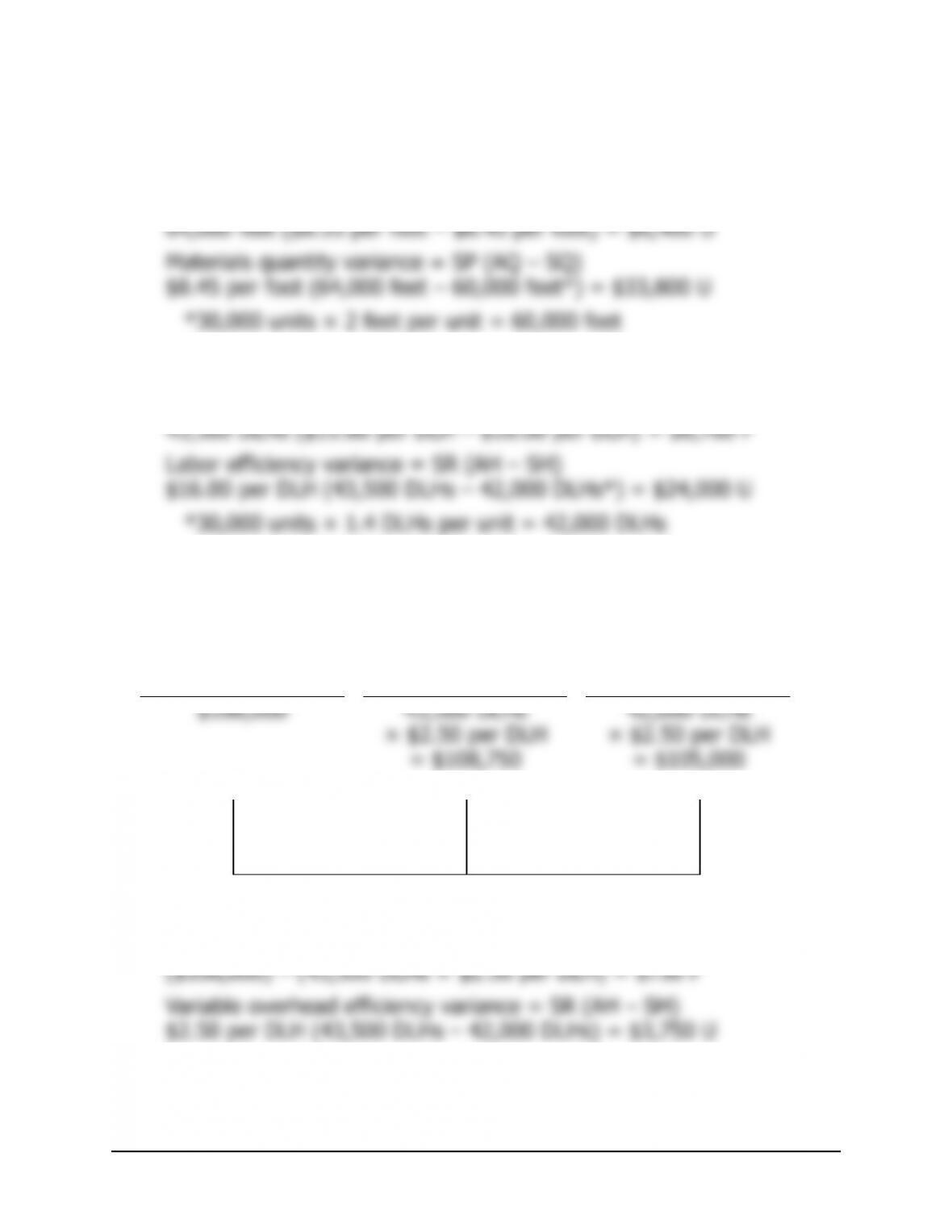
Fixed overhead variances:
A
ctual Fixed
Overhead
Bud
g
eted Fixed
Overhead
Fixed Overhead Applied to
Work in Process
Alternative solution:
Budget variance:
Bud
g
et Actual fixed Bud
g
eted fixed
= –
variance overhead overhead
Volume variance:
Fixed portion of Standard
Volume Denominator
= the predetermined – hours
Variance hours
overhead rate allowed
æö
÷
ç÷
ç÷
ç÷
ç÷
÷
ç
èø
V
erification:
Variable overhead rate variance …….. $ 3,000 U
Variable overhead efficiency variance 5,000 F
g
v
v
© The McGraw-Hill Companies, Inc., 2018. All rights reserved.
Solutions Manual, Appendix 10A 67
Problem 10A-9 (continued)
4. Variable overhead
Rate variance:
This variance includes both price and quantity elements.
The overhead spending variance reflects differences between actual and
standard prices for variable overhead items. It also reflects differences
Efficiency variance:
The term “variable overhead efficiency variance” is a
misnomer, because the variance does not measure efficiency in the use
of overhead items. It measures the indirect effect on variable overhead
of the efficiency or inefficiency with which the activity base is utilized. In
Fixed overhead
Budget variance:
This variance is simply the difference between the
budgeted fixed cost and the actual fixed cost. In this case, the variance
Volume variance:
This variance occurs as a result of actual activity being
different from the denominator activity in the predetermined overhead
rate. In this case, the variance is unfavorable, so actual activity was less
© The McGraw-Hill Companies, Inc., 2018. All rights reserved.
68 Managerial Accounting, 16th Edition
Problem 10A-10 (45 minutes)
1. Direct materials price and quantity variances:
Materials price variance = AQ (AP – SP)
2. Direct labor rate and efficiency variances:
Labor rate variance = AH (AR – SR)
3. a. Variable overhead spending and efficiency variances:
A
ctual Hours of
Input, at the
Actual Rate
A
ctual Hours of
Input, at the
Standard Rate
Standard Hours
Allowed for Output,
at the Standard Rate
(AH ×
A
R) (AH × SR) (SH × SR)
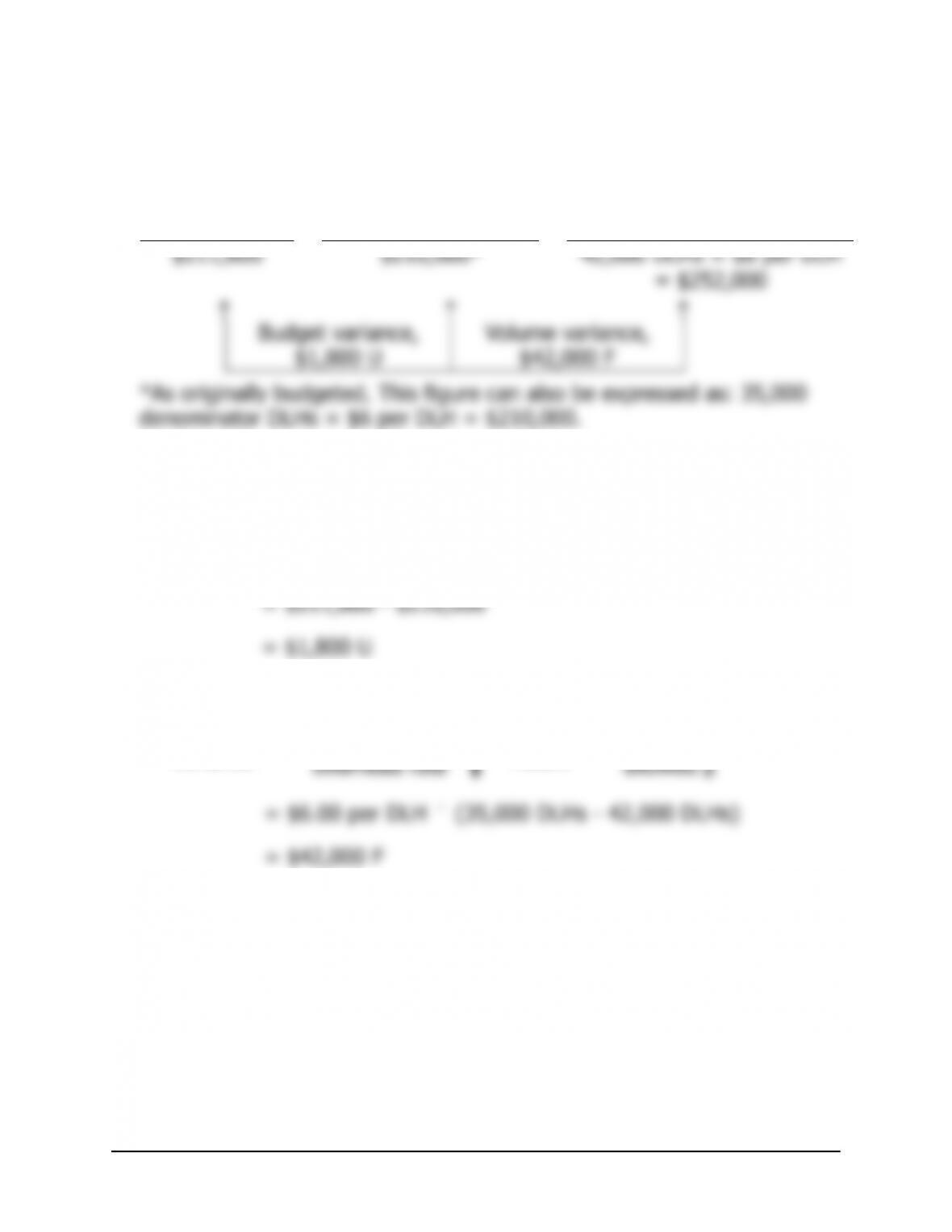
Variable overhead
r
ate
variance,
$750 F
Variable overhead
efficiency variance,
$3,750 U
Alternative solution:
Variable overhead rate variance = (AH × AR) – (AH × SR)
© The McGraw-Hill Companies, Inc., 2018. All rights reserved.
Solutions Manual, Appendix 10A 69
Problem 10A-10 (continued)
b. Fixed overhead budget and volume variances:
A
ctual Fixed
Overhead
Bud
g
eted Fixed
Overhead
Fixed Overhead Applied to
Work in Process
Alternative solution:
Budget variance:
Bud
g
et Actual fixed Bud
g
eted fixed
= –
variance overhead overhead
Volume variance:
æö
÷
ç÷
ç÷
ç÷
ç÷
Fixed portion of Standard
Volume Denominator
= the predetermined – hours
Variance hours
g
v
v
© The McGraw-Hill Companies, Inc., 2018. All rights reserved.
70 Managerial Accounting, 16th Edition
Problem 10A-10 (continued)
4. The total of the variances would be:
Direct materials variances:
Direct labor variances:
V
ariable manufacturin
g
overhead variances:
Fixed manufacturin
g
overhead variances:
Bud
g
et variance ………………………………….. 1,800 U
T
Note that the total of the variances agrees with the $18,300 variance
mentioned by the president.
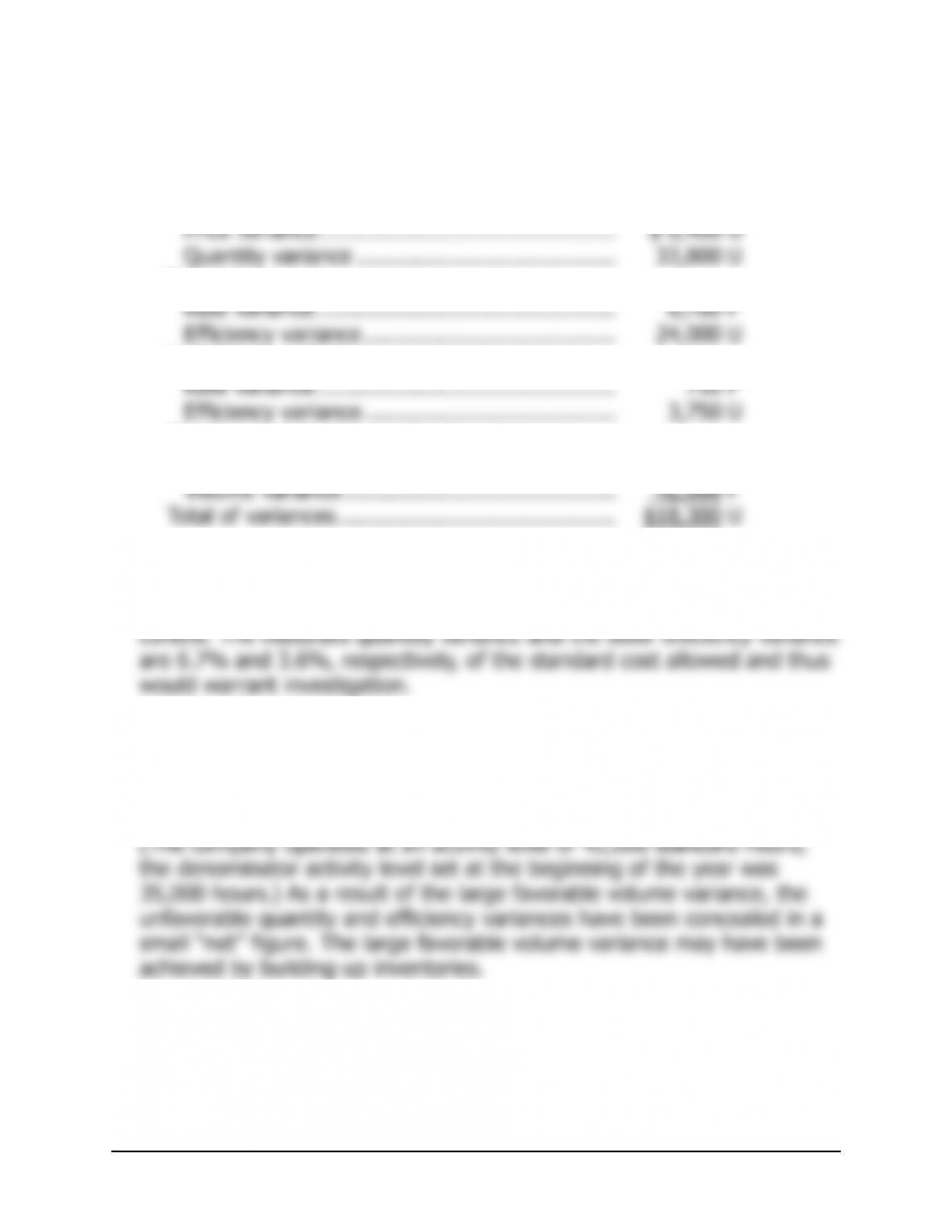
It appears that not everyone should be given a bonus for good cost
The company’s large unfavorable variances (for materials quantity and
labor efficiency) do not show up more clearly because they are offset by
the favorable volume variance. This favorable volume variance is a result
of the company operating at an activity level that is well above the
denominator activity level used to set predetermined overhead rates.