© The McGraw-Hill Companies, Inc., 2018. All rights reserved.
Solutions Manual, Chapter 10 41
Problem 10-14 (continued)
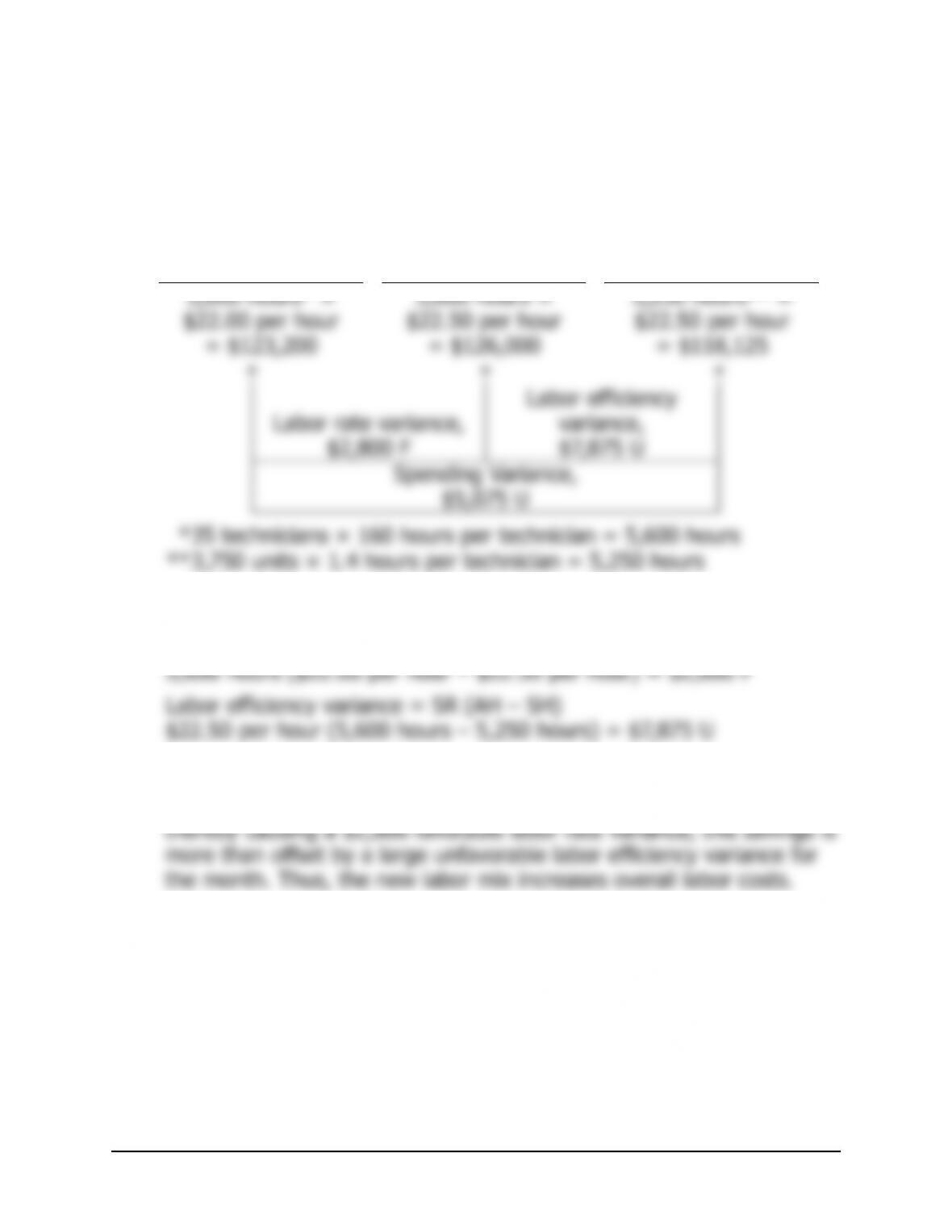
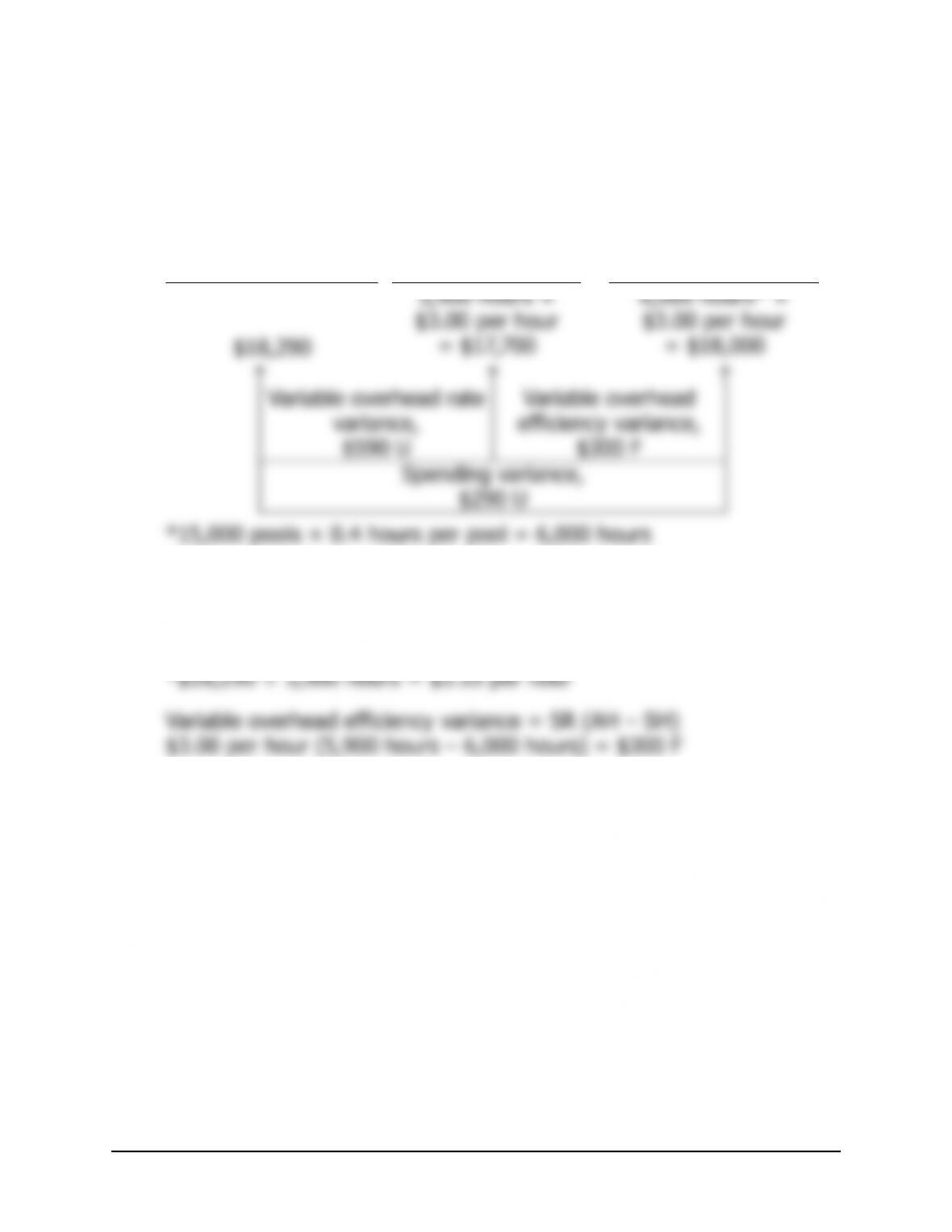
2. a.
A
ctual Hours of
Input, at the
Actual Rate
A
ctual Hours of
Input, at the
Standard Rate
Standard Hours
A
llowed for Output, at
the Standard Rate
(AH × AR) (AH × SR) (SH × SR)
Alternatively, the variances can be computed using the formulas:
Labor rate variance = AH (AR – SR)
b. No, the new labor mix probably should not be continued. Although it
decreases the average hourly labor cost from $22.50 to $22.00,
© The McGraw-Hill Companies, Inc., 2018. All rights reserved.
42 Managerial Accounting, 16th Edition
Problem 10-14 (continued)
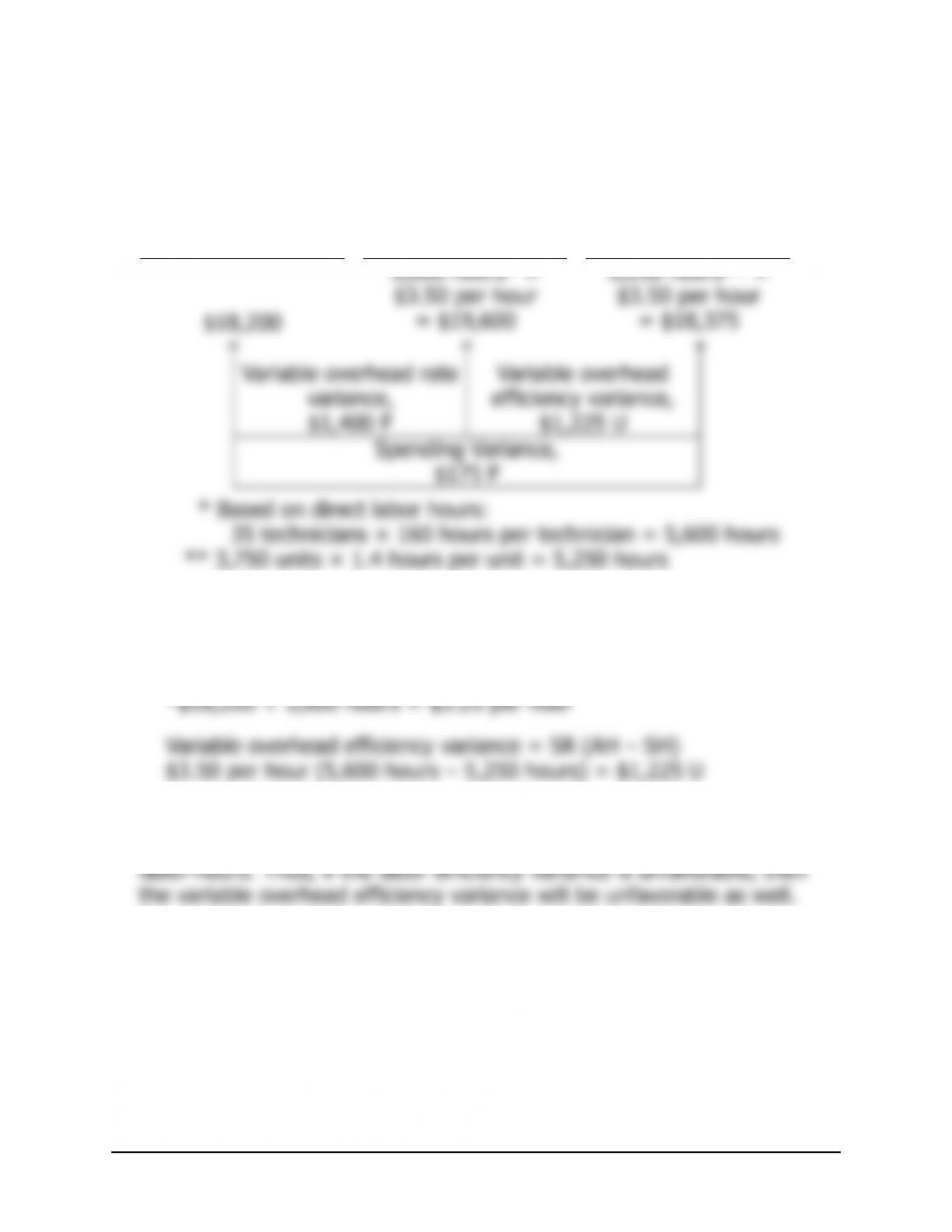
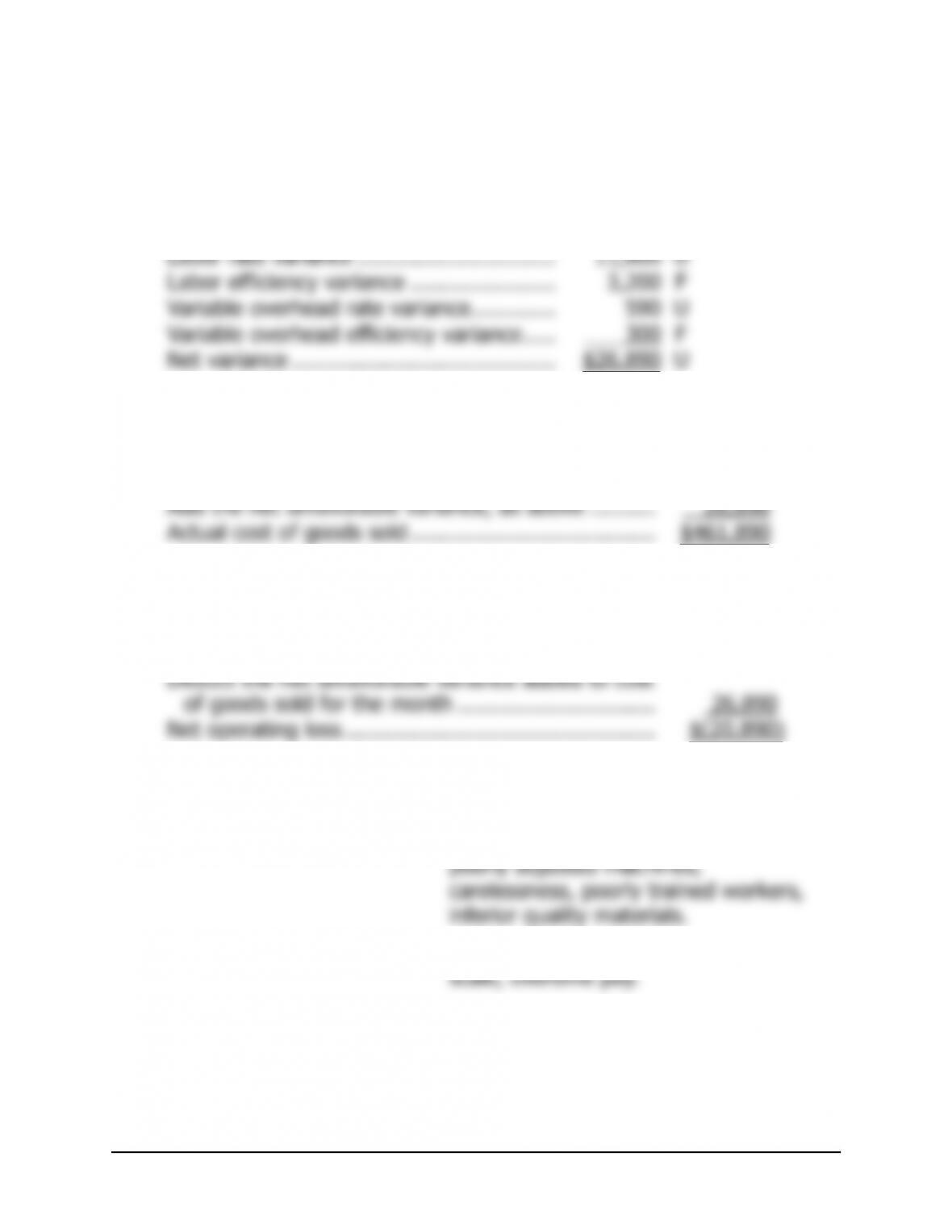
3.
A
ctual Hours of
Input, at the
Actual Rate
A
ctual Hours of
Input, at the
Standard Rate
Standard Hours
Allowed for Output,
at the Standard Rate
(AH × AR) (AH × SR) (SH × SR)
Alternatively, the variances can be computed using the formulas:
Variable overhead rate variance = AH (AR – SR)
5,600 hours ($3.25 per hour* – $3.50 per hour) = $1,400 F
Both the labor efficiency variance and the variable overhead efficiency
variance are computed by comparing actual labor-hours to standard
© The McGraw-Hill Companies, Inc., 2018. All rights reserved.
Solutions Manual, Chapter 10 43
Problem 10-15 (45 minutes)
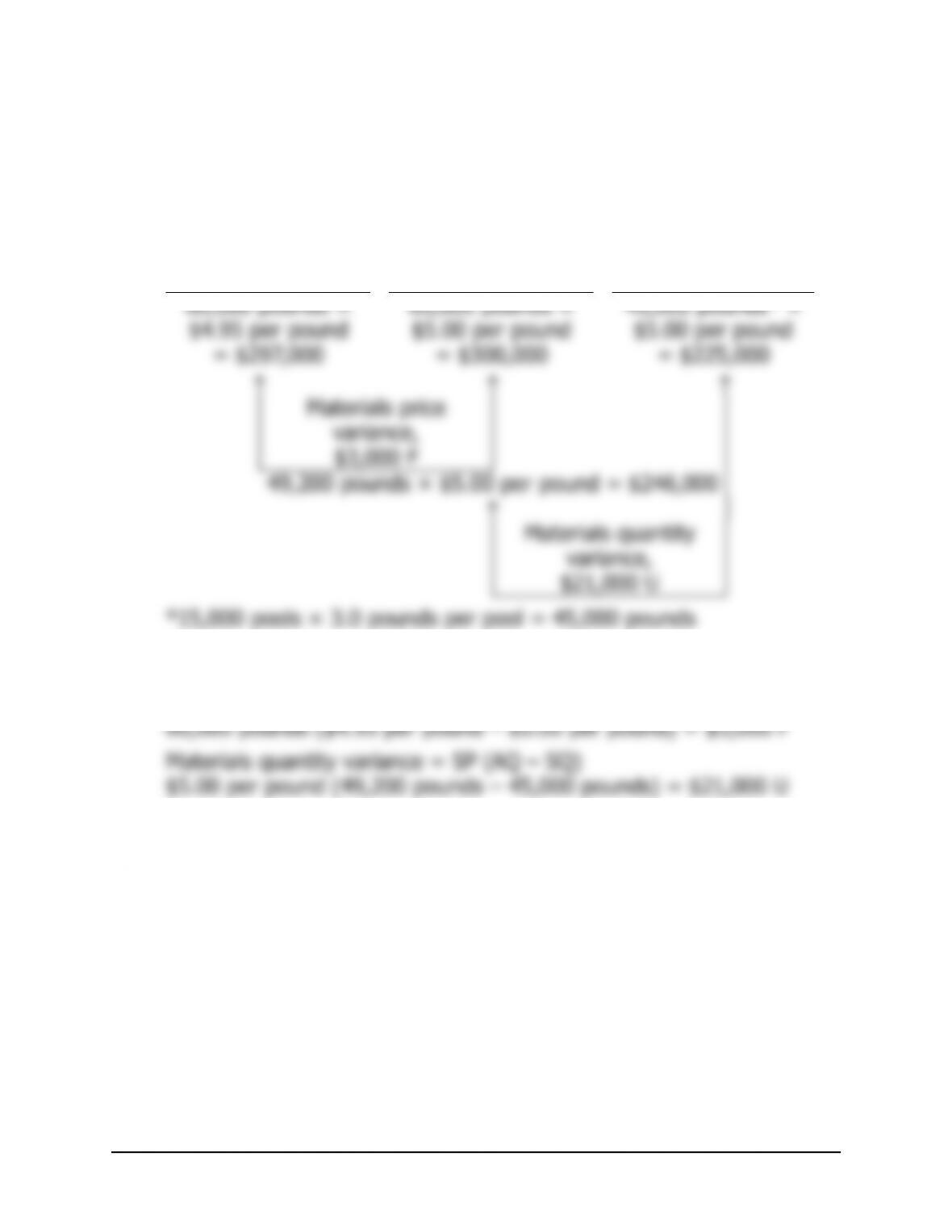
1. a.
Actual Quantity of
Input, at Actual Price
A
ctual Quantity
of Input, at
Standard Price
Standard Quantity
Allowed for Output,
at Standard Price
(AQ × AP) (AQ × SP) (SQ × SP)
Alternatively, the variances can be computed using the formulas:
Materials price variance = AQ (AP – SP)
Problem 10-15 (continued)
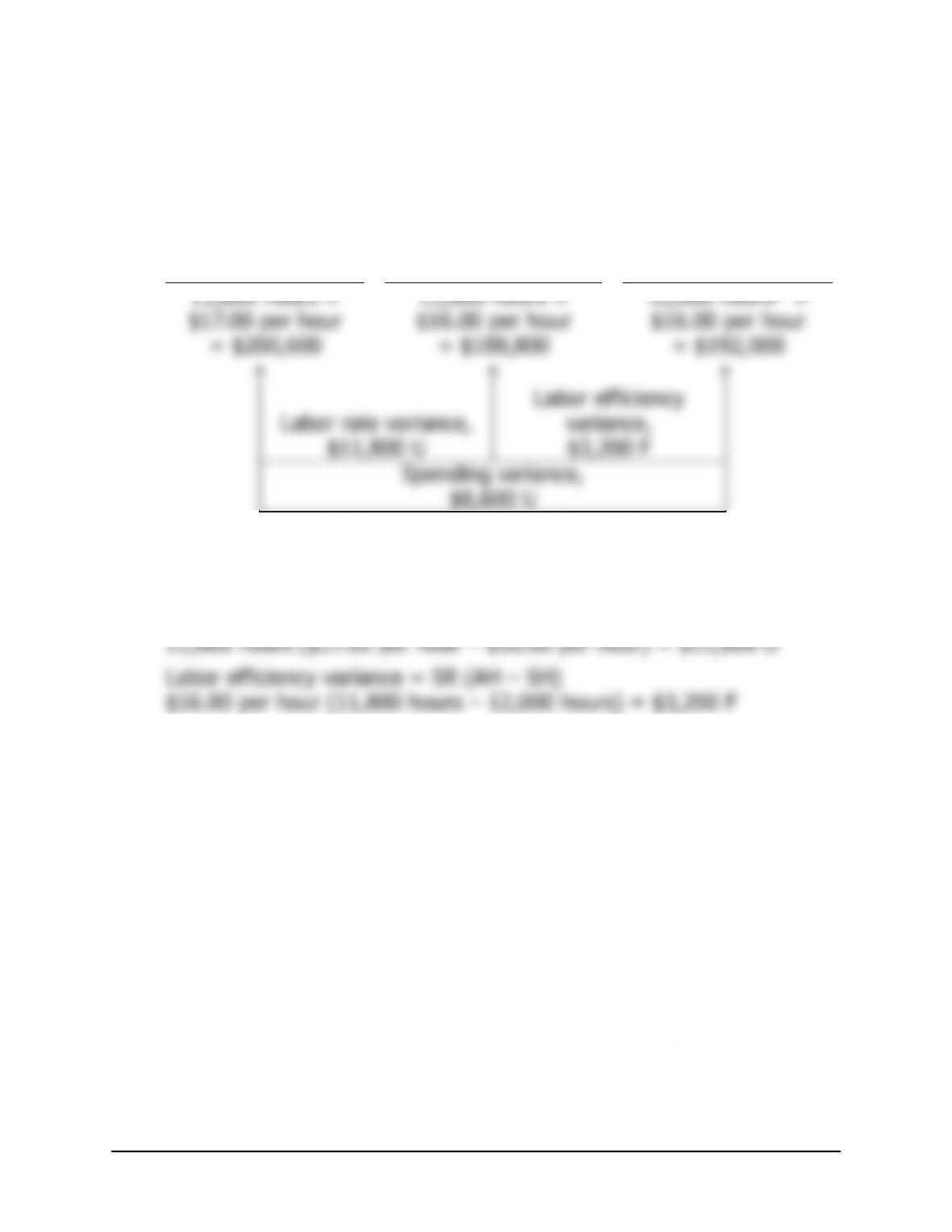
b.
A
ctual Hours of
Input, at the
Actual Rate
A
ctual Hours of Input,
at the Standard Rate
Standard Hours
Allowed for Output,
at the Standard Rate
(AH × AR) (AH × SR) (SH × SR)
v
Problem 10-15 (continued)
c.
A
ctual Hours of
Input, at the
Actual Rate
A
ctual Hours of
Input, at the
Standard Rate
Standard Hours
Allowed for Output,
at the Standard Rate
(AH × AR) (AH × SR) (SH × SR)
v
© The McGraw-Hill Companies, Inc., 2018. All rights reserved.
46 Managerial Accounting, 16th Edition
Problem 10-15 (continued)
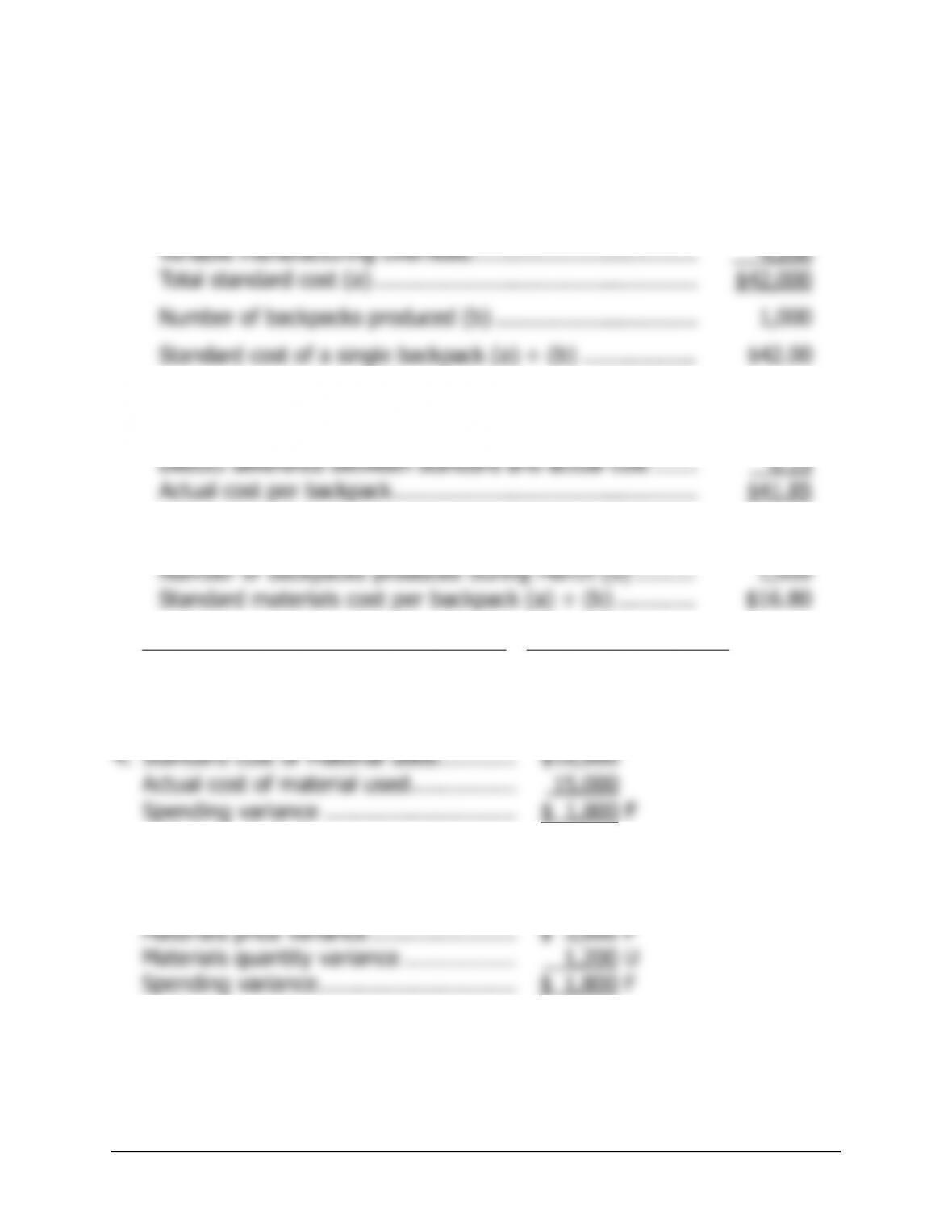
2. Summary of variances:
Material price variance…………………….. $ 3,000 F
Material quantity variance………………… 21,000 U
The net unfavorable variance of $26,890 for the month caused the
plant’s variable cost of goods sold to increase from the budgeted level of
$435,000 to $461,890:
Bud
g
eted cost of
g
oods sold at $29 per pool ……… $435,000
This $26,890 net unfavorable variance also accounts for the difference
between the budgeted net operating income and the actual net
operating income for the month.
Bud
g
eted net operatin
g
income………………………. $ 6,000
3. The two most significant variances are the materials quantity variance
and the labor rate variance. Possible causes of the variances include:
Materials quantity variance: Outdated standards, unskilled workers,
Labor rate variance: Outdated standards, chan
g
e in pay
© The McGraw-Hill Companies, Inc., 2018. All rights reserved.
Solutions Manual, Chapter 10 47
Problem 10-16 (60 minutes)
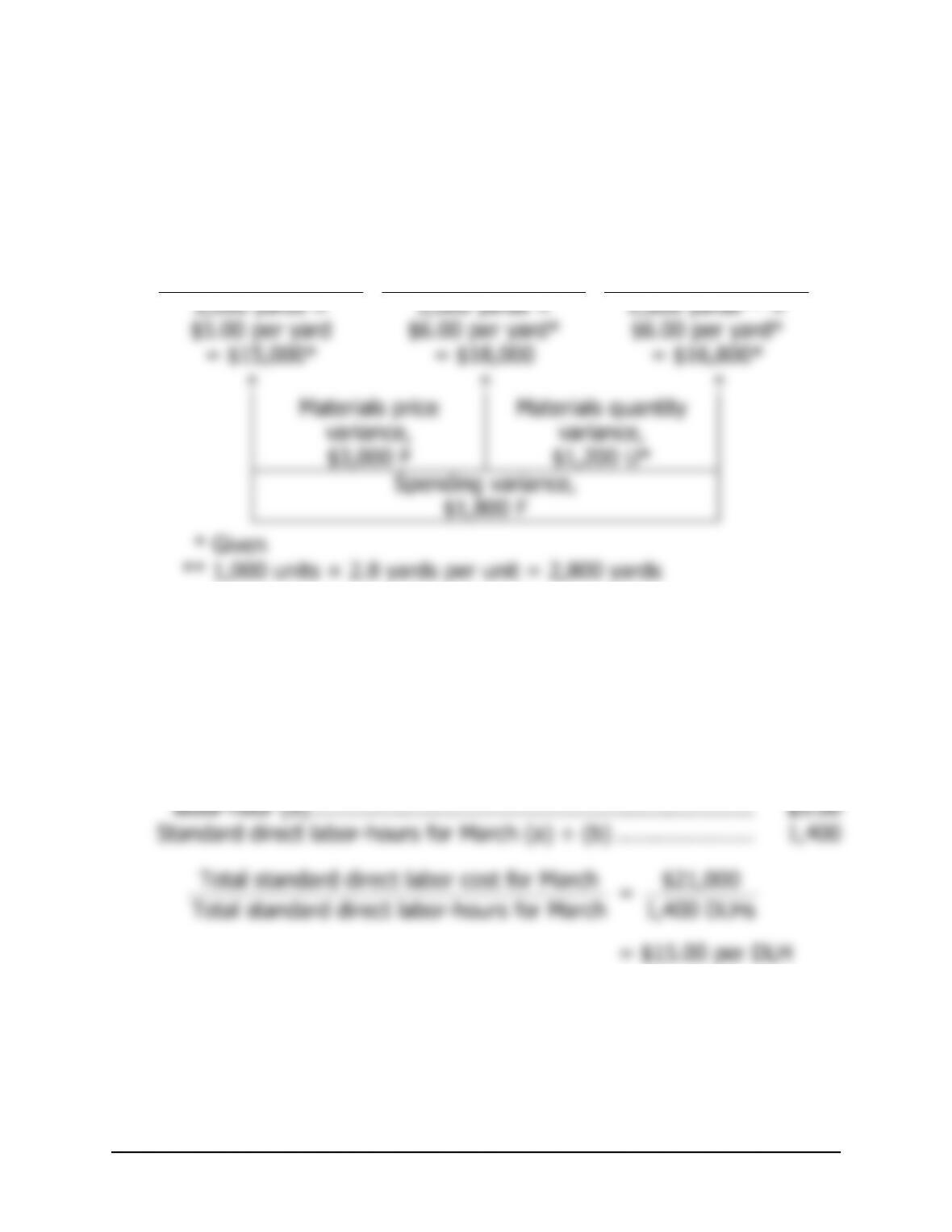
1. Standard cost for March production:
Materials ……………………………………………..……………… $16,800
Direct labor ………………………………...………..…………….. 21,000
2. Standard cost of a single backpack (above) ………………… $42.00
A
3.
T
otal standard cost of materials durin
g
March (a)……….. $16,800
Standard materials cost per backpack $16.80 per backpack
=
Standard materials cost per yard $6.00 per yard
= 2.8 yards per backpack
The materials price and quantity variances together equal the spending
variance. If the materials quantity variance is $1,200 U, then the
materials price variance must be $3,000 F:
T
Problem 10-16 (continued)
Alternative Solution:
A
ctual Quantity
of Input, at
Actual Price
A
ctual Quantity
of Input, at
Standard Price
Standard Quantity
Allowed for Output,
at Standard Price
(AQ × AP) (AQ × SP) (SQ × SP)
v
T
Problem 10-16 (continued)
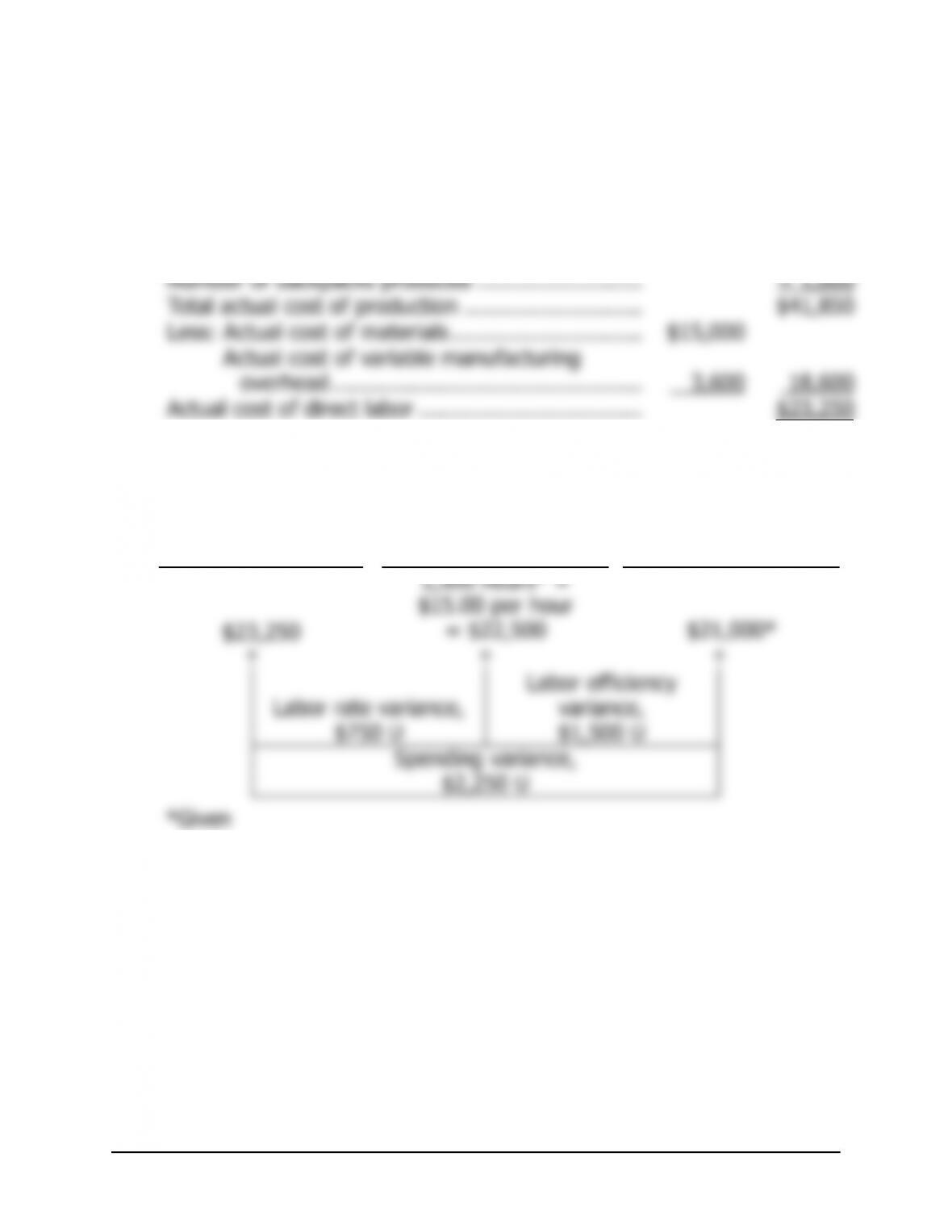
6. Before the labor variances can be computed, it is necessary to compute
the actual direct labor cost for the month:
A
ctual cost per backpack produced (see
requirement 2) ……………………………………….. $ 41.85
T
A
A
With this information, the variances can be computed:
A
ctual Hours of
Input, at the
Actual Rate
Actual Hours of Input,
at the Standard Rate
Standard Hours
A
llowed for Output, at
the Standard Rate
(AH × AR) (AH × SR) (SH × SR)
v
Problem 10-16 (continued)
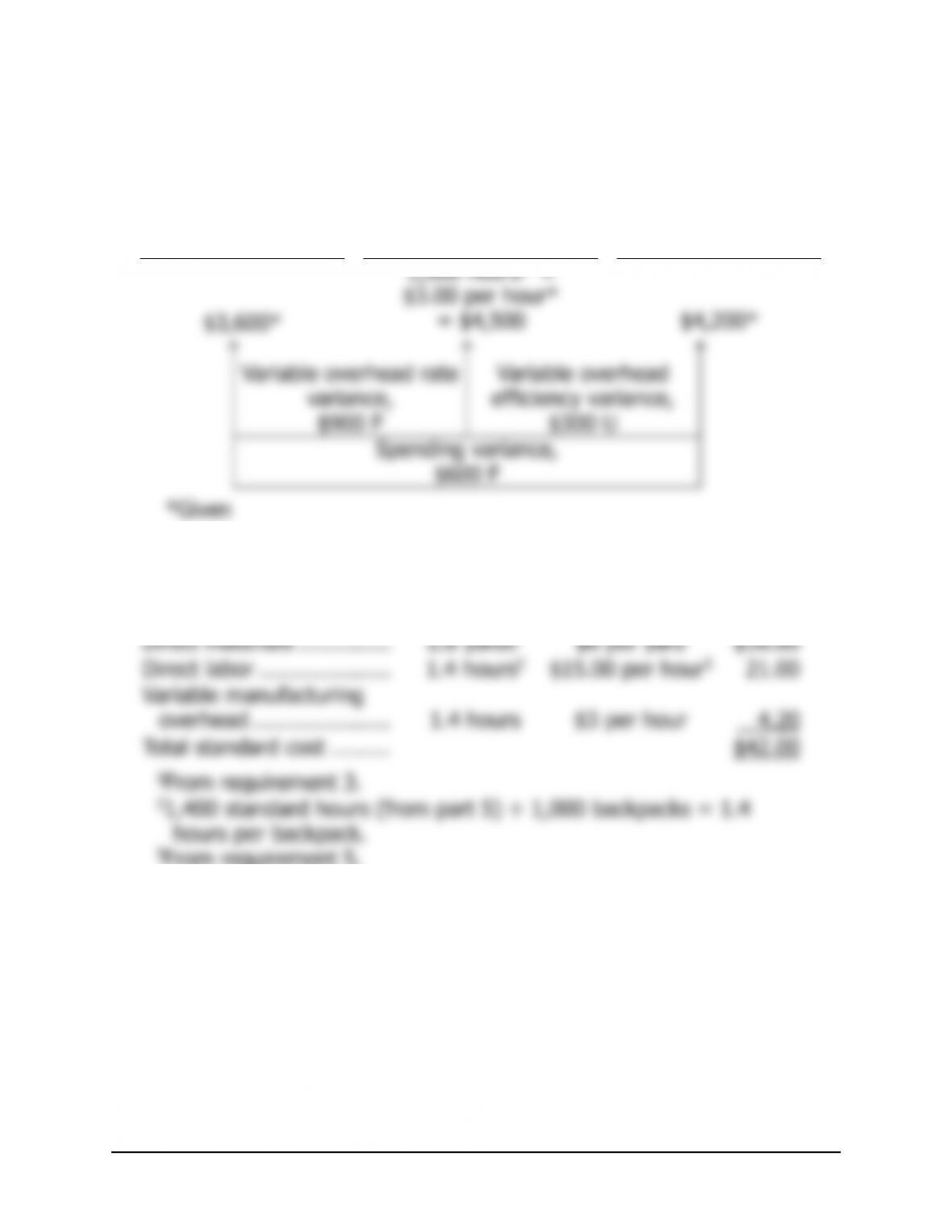
7.
A
ctual Hours of
Input, at the
Actual Rate
Actual Hours of Input,
at the Standard Rate
Standard Hours
Allowed for Output,
at the Standard Rate
(AH × AR) (AH × SR) (SH × SR)
v
V
T