Problem 10-11 (45 minutes)
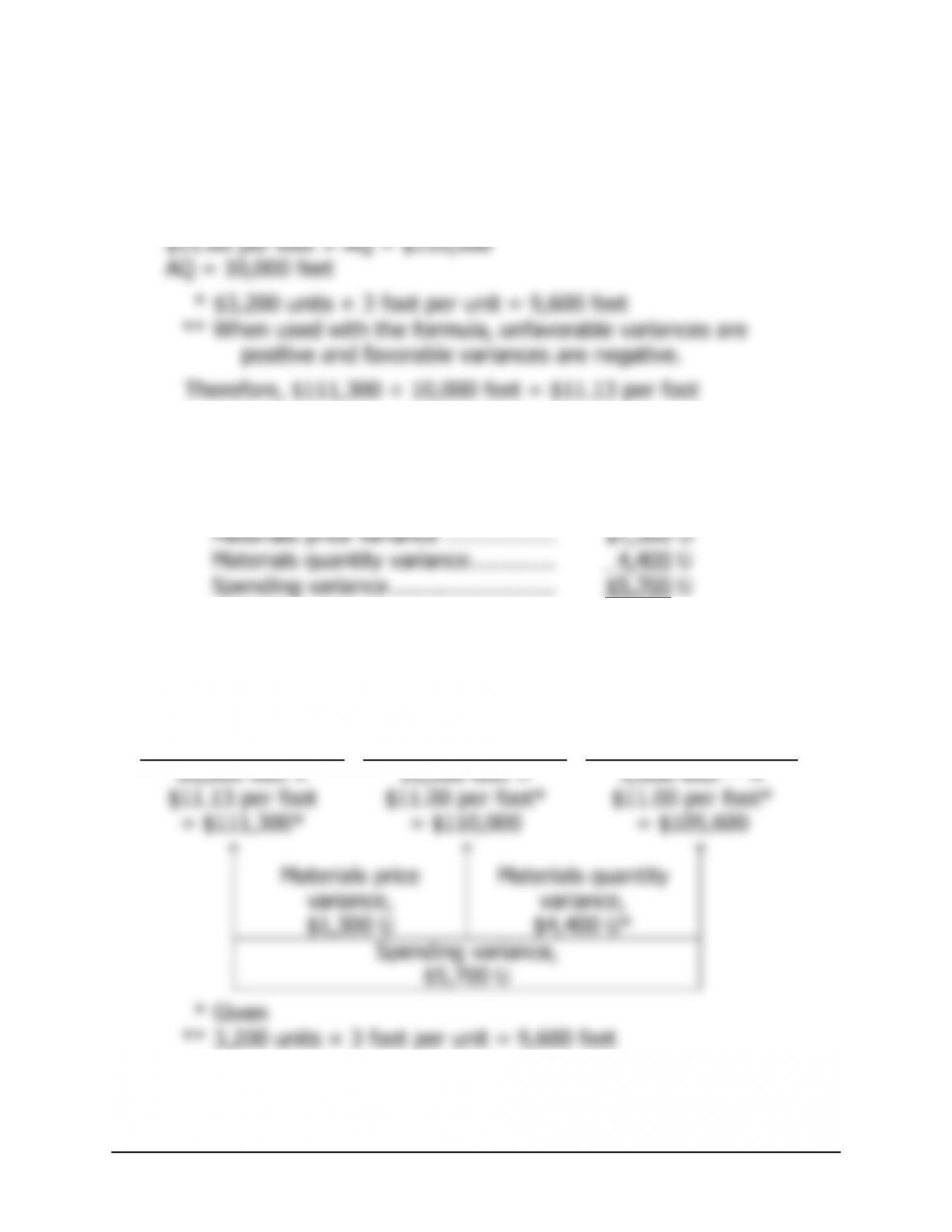
1. a. Materials quantity variance = SP (AQ – SQ)
$11.00 per foot (AQ – 9,600 feet*) = $4,400 U
$11.00 per foot × AQ – $105,600 = $4,400**
b. Materials price variance = AQ (AP – SP)
10,000 feet ($11.13 per foot – $11.00 per foot) = $1,300 U
The total variance for materials is:
Alternative approach to parts (a) and (b):
Actual Quantity of
Input, at Actual Price
A
ctual Quantity
of Input, at
Standard Price
Standard Quantity
Allowed for Output,
at Standard Price
(AQ × AP) (AQ × SP) (SQ × SP)
v
Problem 10-11 (continued)
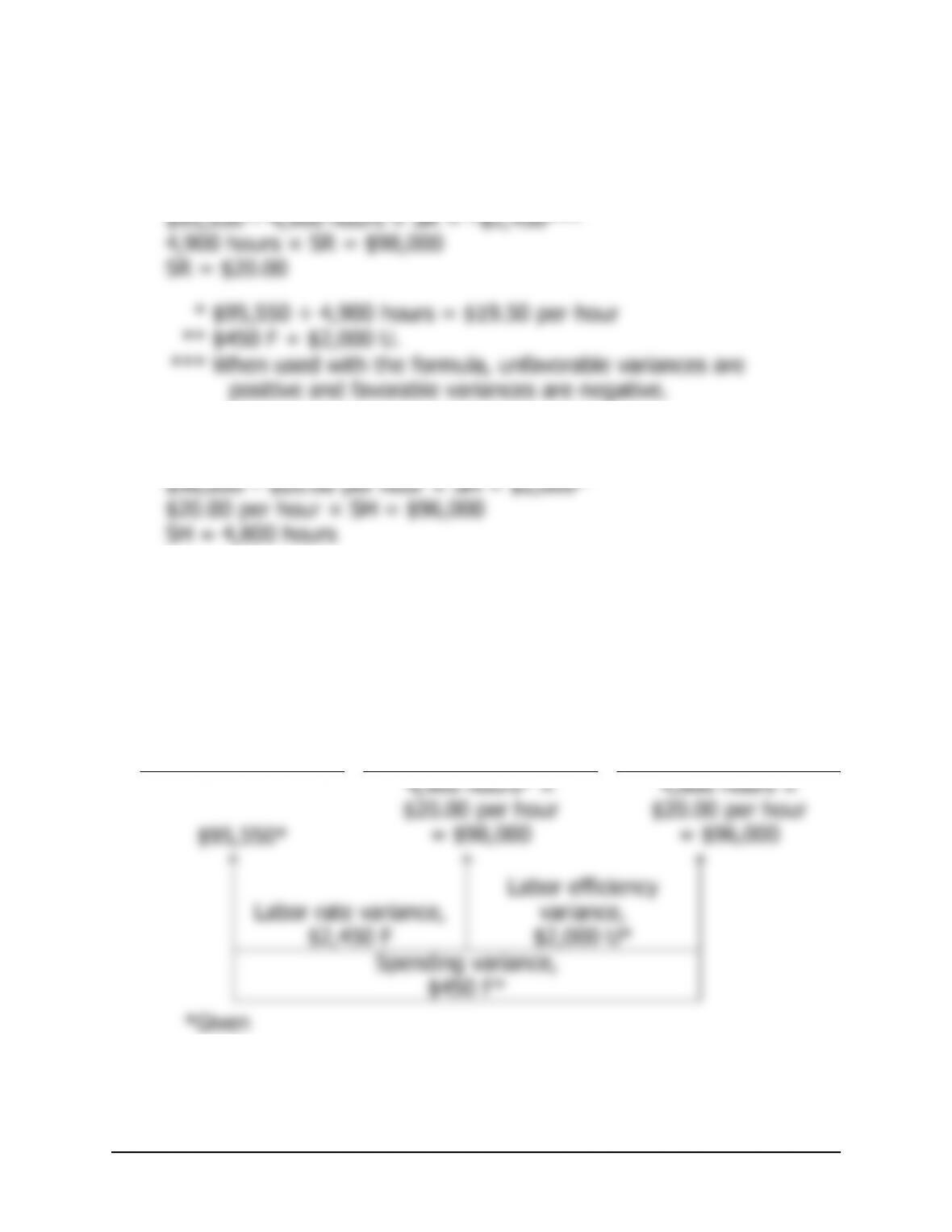
2. a. Labor rate variance = AH (AR – SR)
4,900 hours ($19.50 per hour* – SR) = $2,450 F**
b. Labor efficiency variance = SR (AH – SH)
$20.00 per hour (4,900 hours – SH) = $2,000 U
* When used with the formula, unfavorable variances are positive
and favorable variances are negative.
Alternative approach to parts (a) and (b):
A
ctual Hours of
Input, at the
Actual Rate
Actual Hours of Input,
at the Standard Rate
Standard Hours
Allowed for Output,
at the Standard Rate
(AH × AR) (AH × SR) (SH × SR)
v
© The McGraw-Hill Companies, Inc., 2018. All rights reserved.
Solutions Manual, Chapter 10 33
Problem 10-12 (45 minutes)
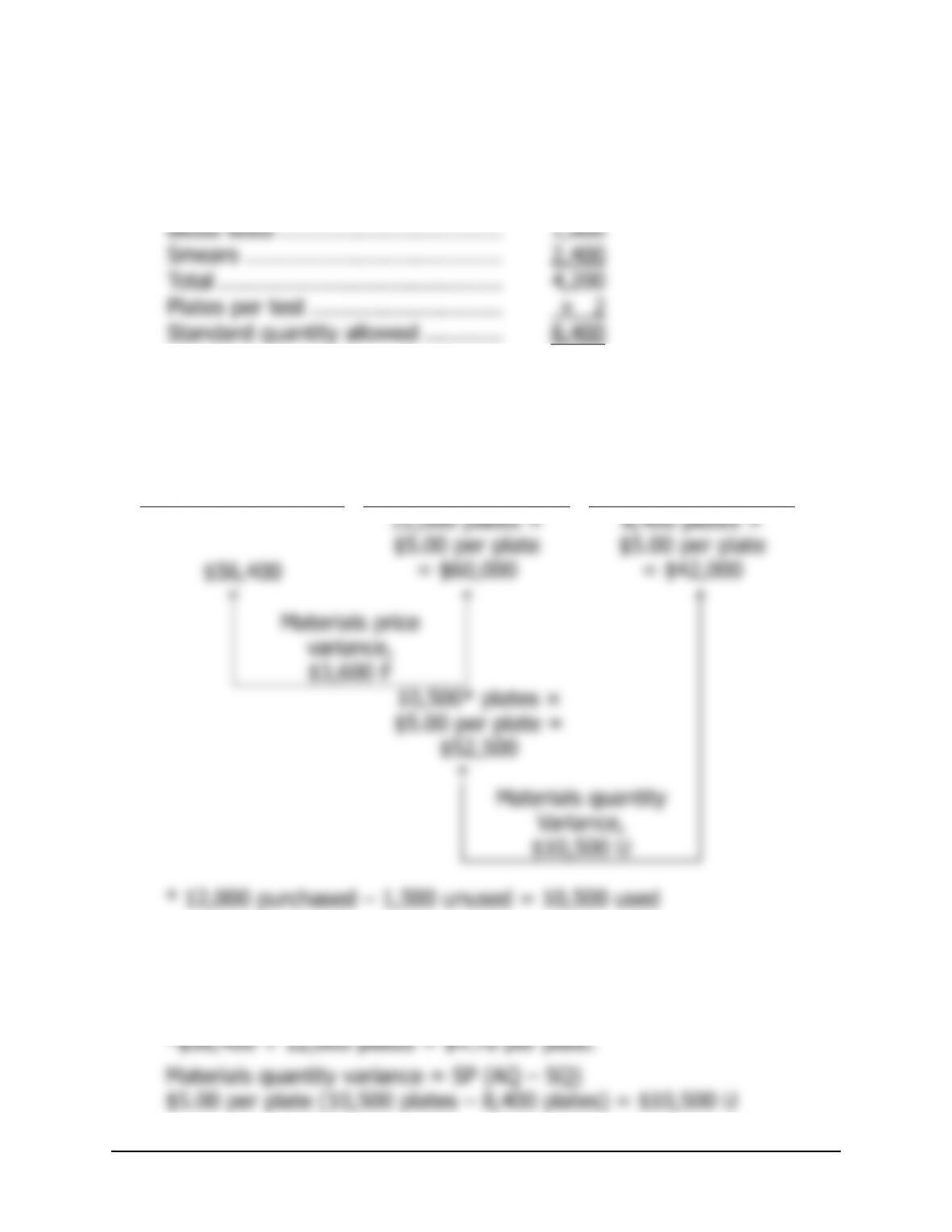
1. The standard quantity of plates allowed for tests performed during the
month would be:
T
The variance analysis for plates would be:
Actual Quantity of
Input, at Actual Price
A
ctual Quantity
of Input, at
Standard Price
Standard Quantity
Allowed for Output,
at Standard Price
(AQ × AP) (AQ × SP) (SQ × SP)
Alternatively, the variances can be computed using the formulas:
Materials price variance = AQ (AP – SP)
12,000 plates ($4.70 per plate* – $5.00 per plate) = $3,600 F
Problem 10-12 (continued)
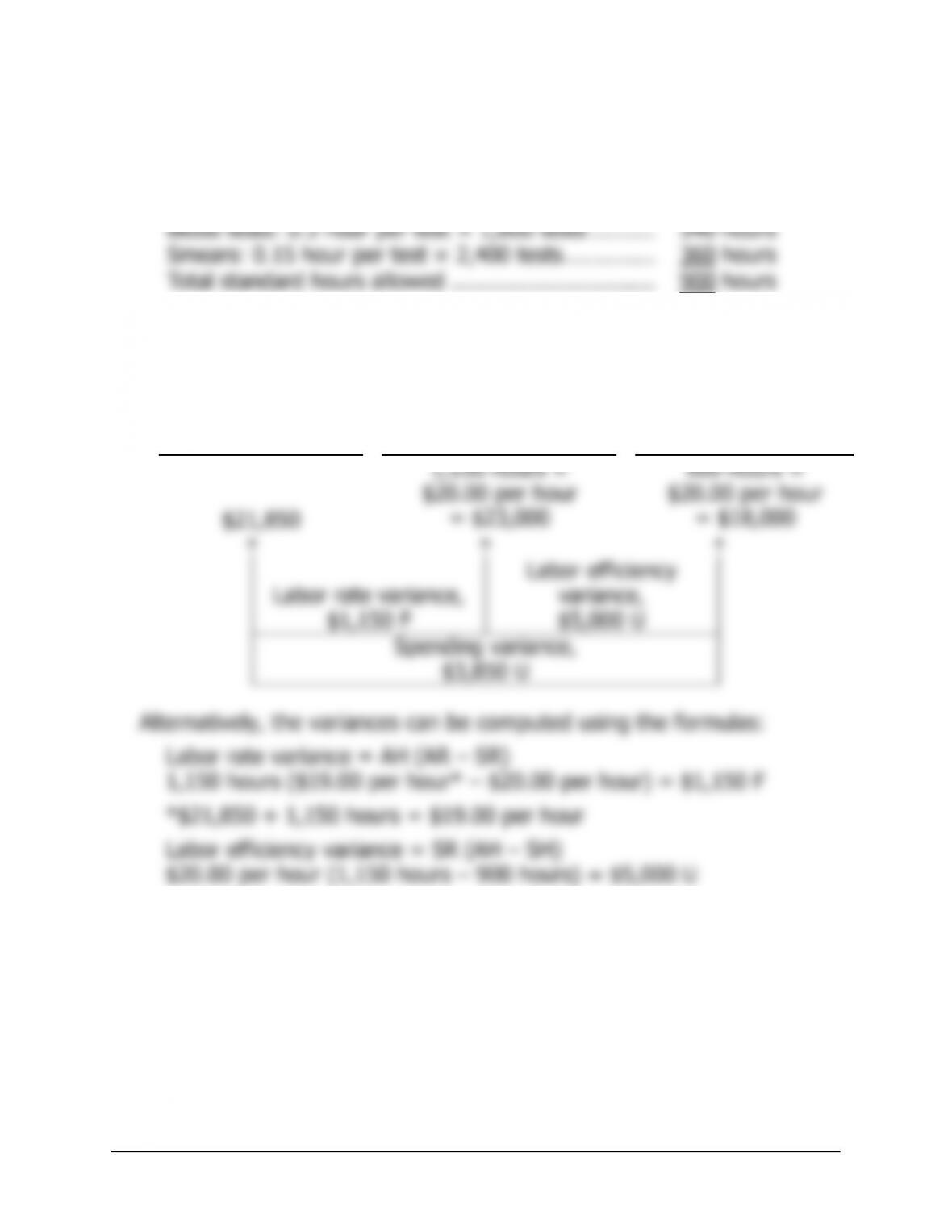
2. a. The standard hours allowed for tests performed during the month
would be:
T
The variance analysis would be:
A
ctual Hours of
Input, at the
Actual Rate
Actual Hours of Input,
at the Standard Rate
Standard Hours
A
llowed for Output, at
the Standard Rate
(AH × AR) (AH × SR) (SH × SR)
v
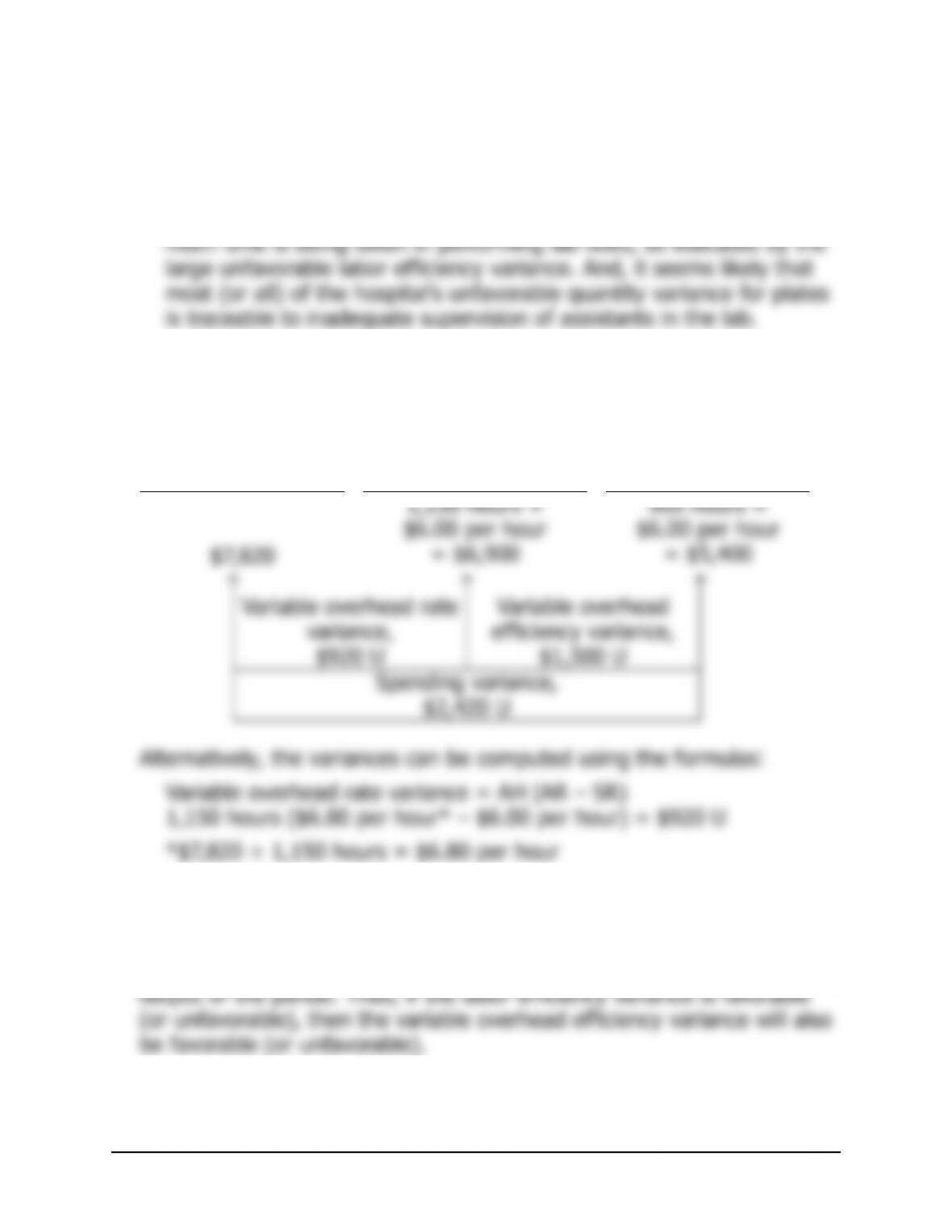
Problem 10-12 (continued)
b. The policy probably should not be continued. Although the hospital is
saving $1 per hour by employing more assistants than senior
technicians, this savings is more than offset by other factors. Too
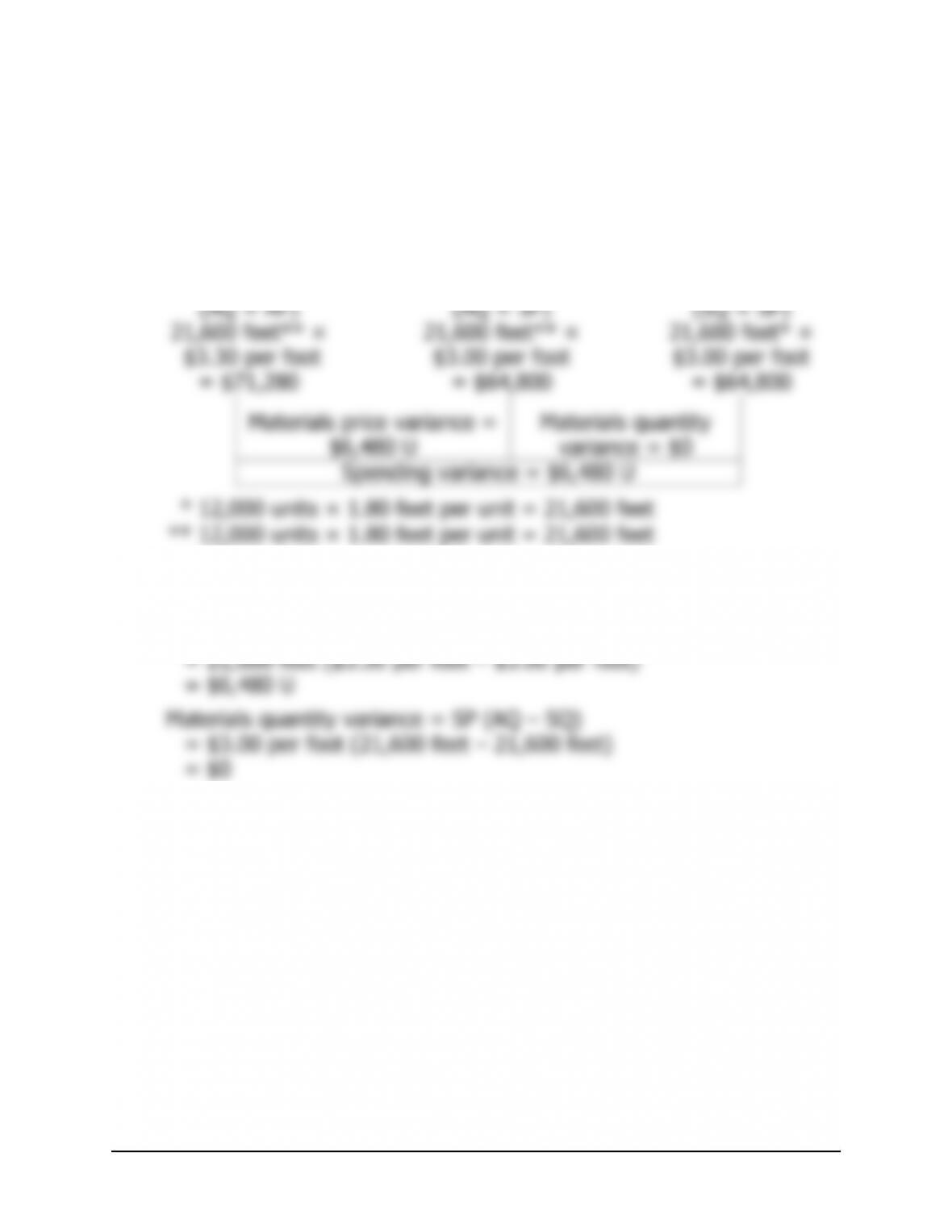
3. The variable overhead variances follow:
A
ctual Hours of
Input, at the
Actual Rate
A
ctual Hours of Input,
at the Standard Rate
Standard Hours
Allowed for Output,
at the Standard Rate
(AH × AR) (AH × SR) (SH × SR)
v
© The McGraw-Hill Companies, Inc., 2018. All rights reserved.
36 Managerial Accounting, 16th Edition
Problem 10-13 (45 minutes)
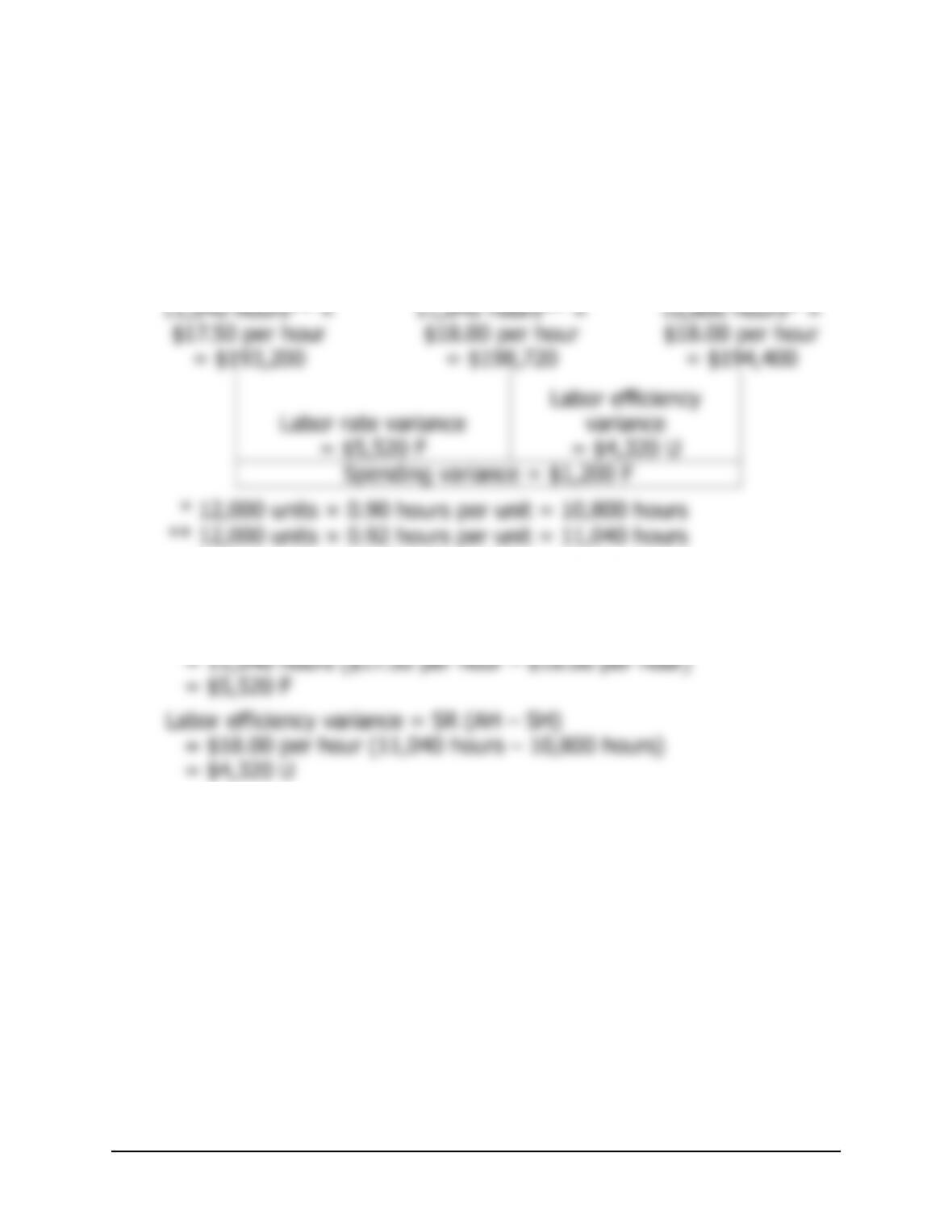
1. a.
Actual Quantity of Input,
at Actual Price
Actual Quantity of
Input,
at Standard Price
Standard Quantity
Allowed
for Actual Output,
at Standard Price
Alternatively, the variances can be computed using the formulas:
Materials price variance = AQ (AP – SP)
© The McGraw-Hill Companies, Inc., 2018. All rights reserved.
Solutions Manual, Chapter 10 37
Problem 10-13 (continued)
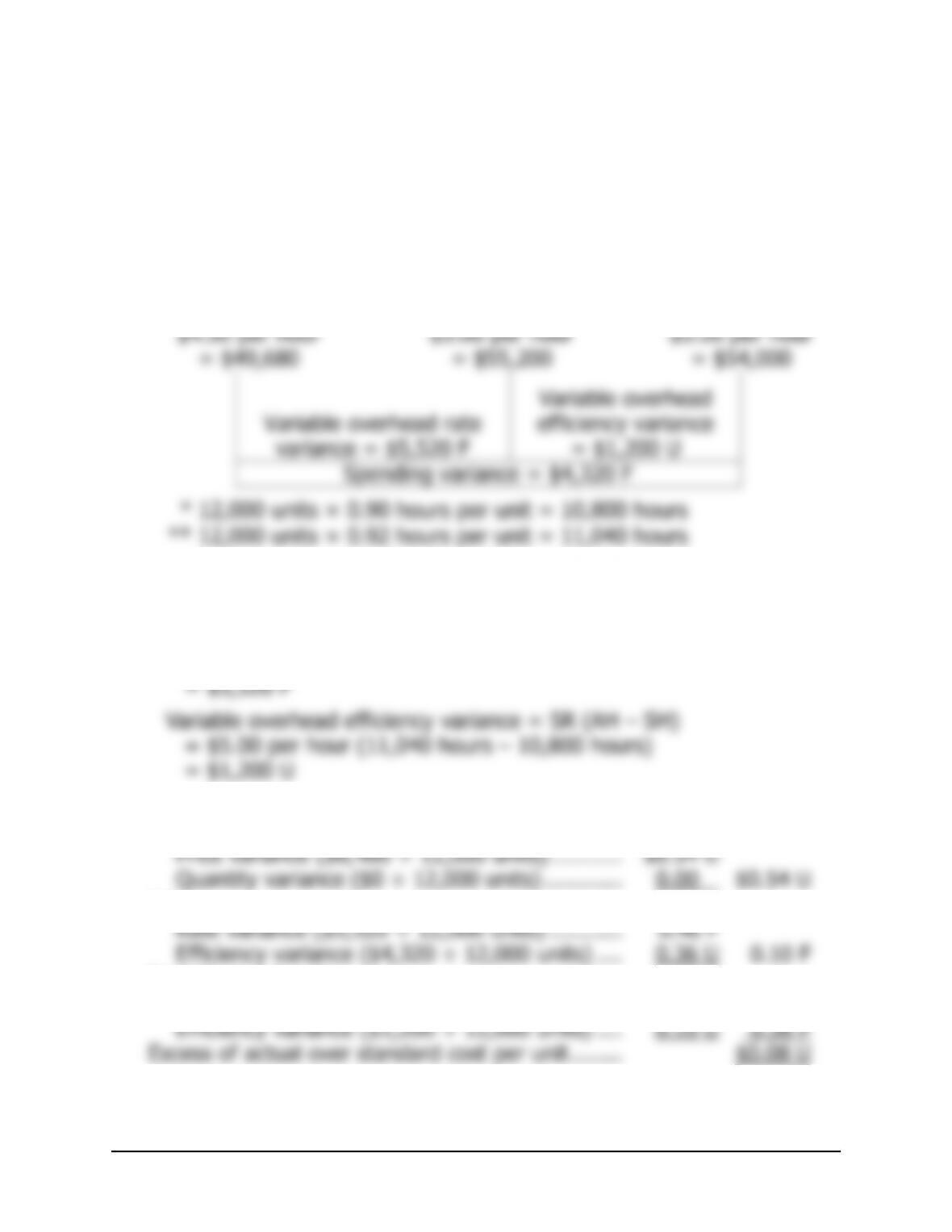
1. b.
Actual Hours of Input,
at Actual Rate
(AH × AR)
Actual Hours of Input,
at Standard Rate
(AH × SR)
Standard Hours
A
llowed
for Actual Output,
at Standard Rate
(SH × SR)
Alternatively, the variances can be computed using the formulas:
Labor rate variance = AH (AR – SR)
© The McGraw-Hill Companies, Inc., 2018. All rights reserved.
38 Managerial Accounting, 16th Edition
Problem 10-13 (continued)
1. c.
Actual Hours of Input,
at Actual Rate
(AH × AR)
Actual Hours of Input,
at Standard Rate
(AH × SR)
Standard Hours
A
llowed
for Actual Output,
at Standard Rate
(SH × SR)
11,040 hours** ×
11,040 hours** ×
10,800 hours* ×
Alternatively, the variances can be computed using the formulas:
Variable overhead rate variance = AH (AR – SR)
= 11,040 hours ($4.50 per hour – $5.00 per hour)
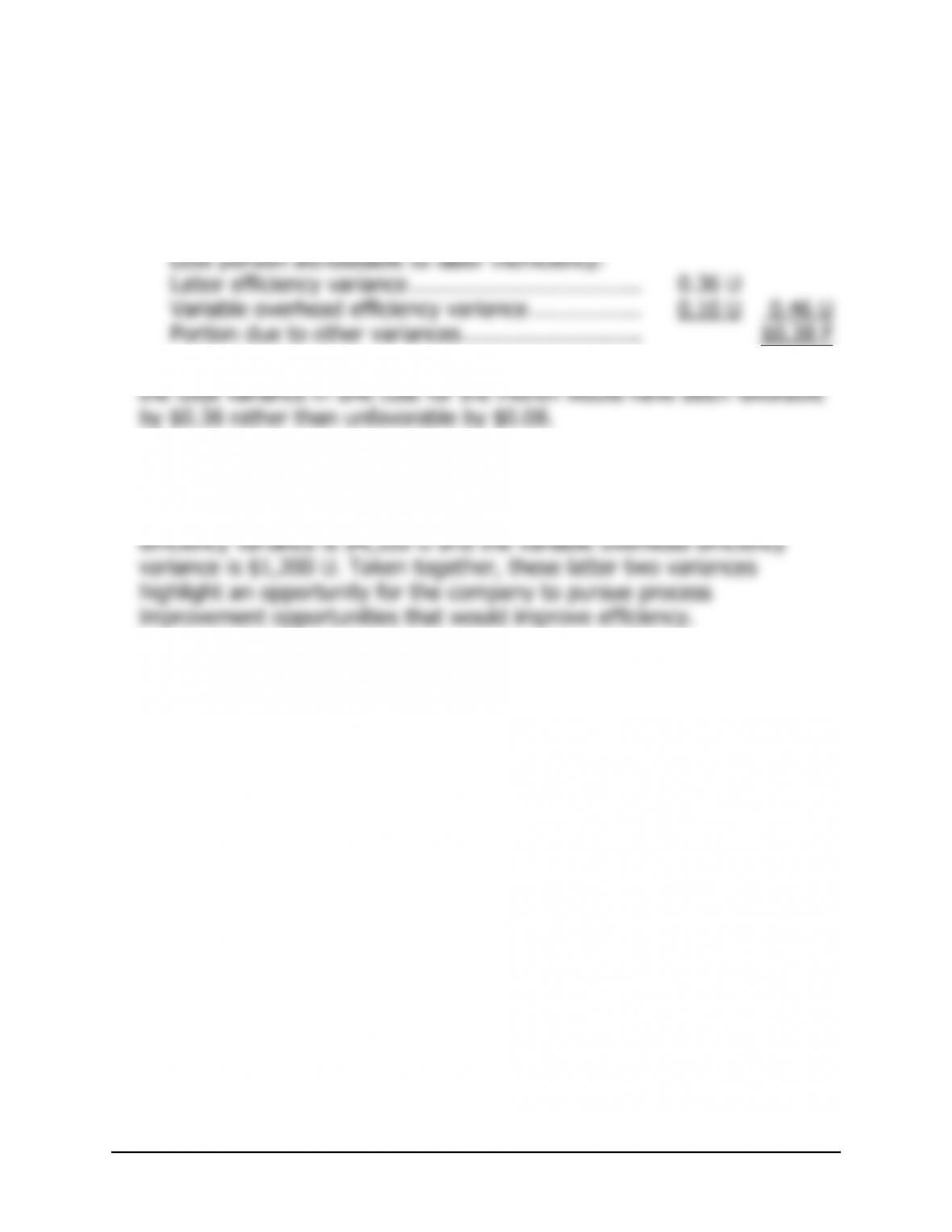
2.
Materials:
Labor:
Variable overhead:
Rate variance ($5,520 ÷ 12,000 units) ……….. 0.46 F
© The McGraw-Hill Companies, Inc., 2018. All rights reserved.
Solutions Manual, Chapter 10 39
Problem 10-13 (continued)
3. Both the labor efficiency and variable overhead efficiency variances are
affected by inefficient use of labor time.
Excess of actual over standard cost per unit ……. $0.08 U
In sum, had it not been for the apparent inefficient use of labor time,
4. Although the excess of actual cost over standard cost is only $0.08 per
unit, the details of the variances are significant. The materials price
variance is $6,480 U and it warrants further investigation. The labor
© The McGraw-Hill Companies, Inc., 2018. All rights reserved.
40 Managerial Accounting, 16th Edition
Problem 10-14 (45 minutes)
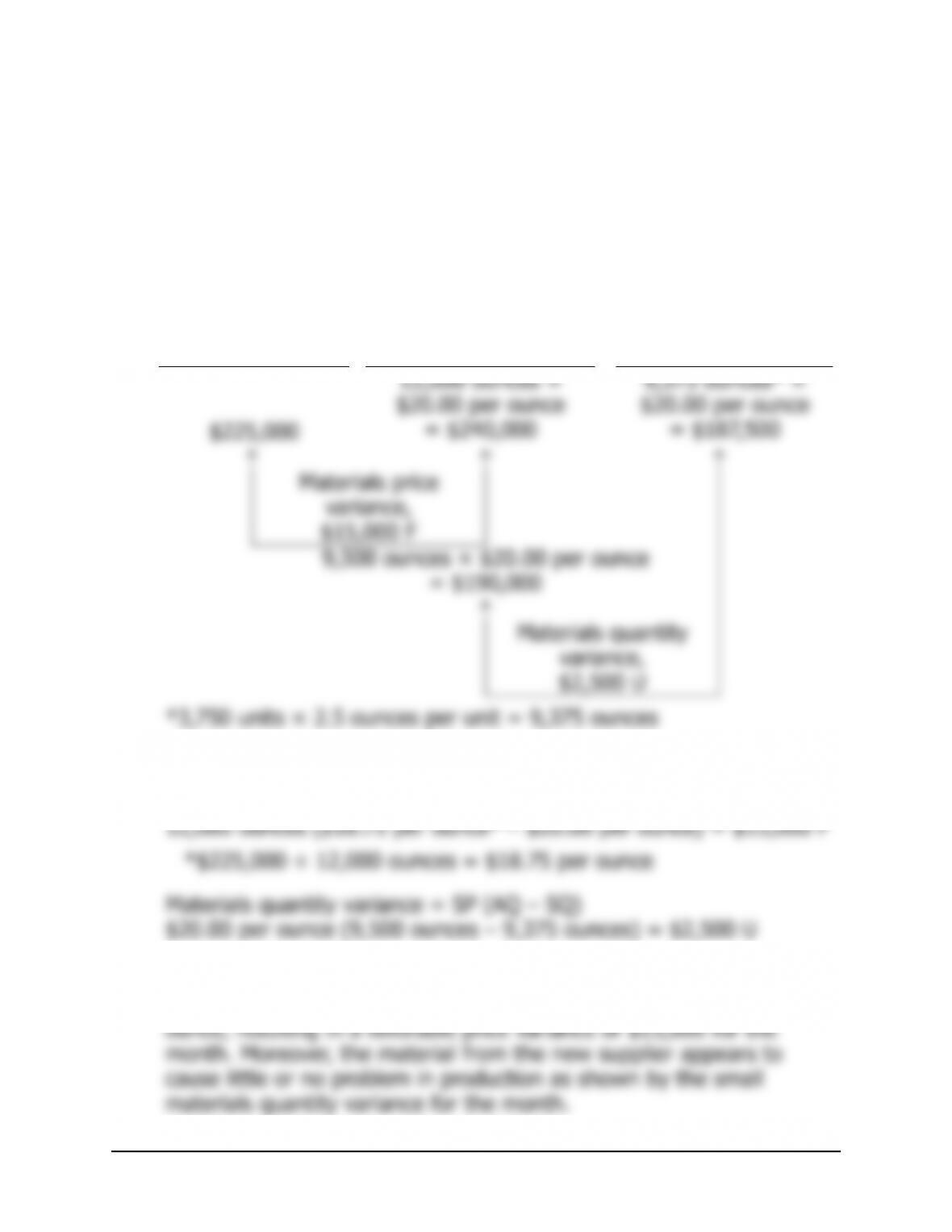
1. a. In the solution below, the materials price variance is computed on the
entire amount of materials purchased whereas the materials quantity
variance is computed only on the amount of materials used in
production:
A
ctual Quantity of
Input, at
Actual Price
A
ctual Quantity
of Input, at
Standard Price
Standard Quantity
A
llowed for Output, at
Standard Price
(AQ × AP) (AQ × SP) (SQ × SP)
Alternatively, the variances can be computed using the formulas:
Materials price variance = AQ (AP – SP)
b. Yes, the contract probably should be signed. The new price of $18.75
per ounce is substantially lower than the old price of $20.00 per