Chapter 13 – Perfect Competition
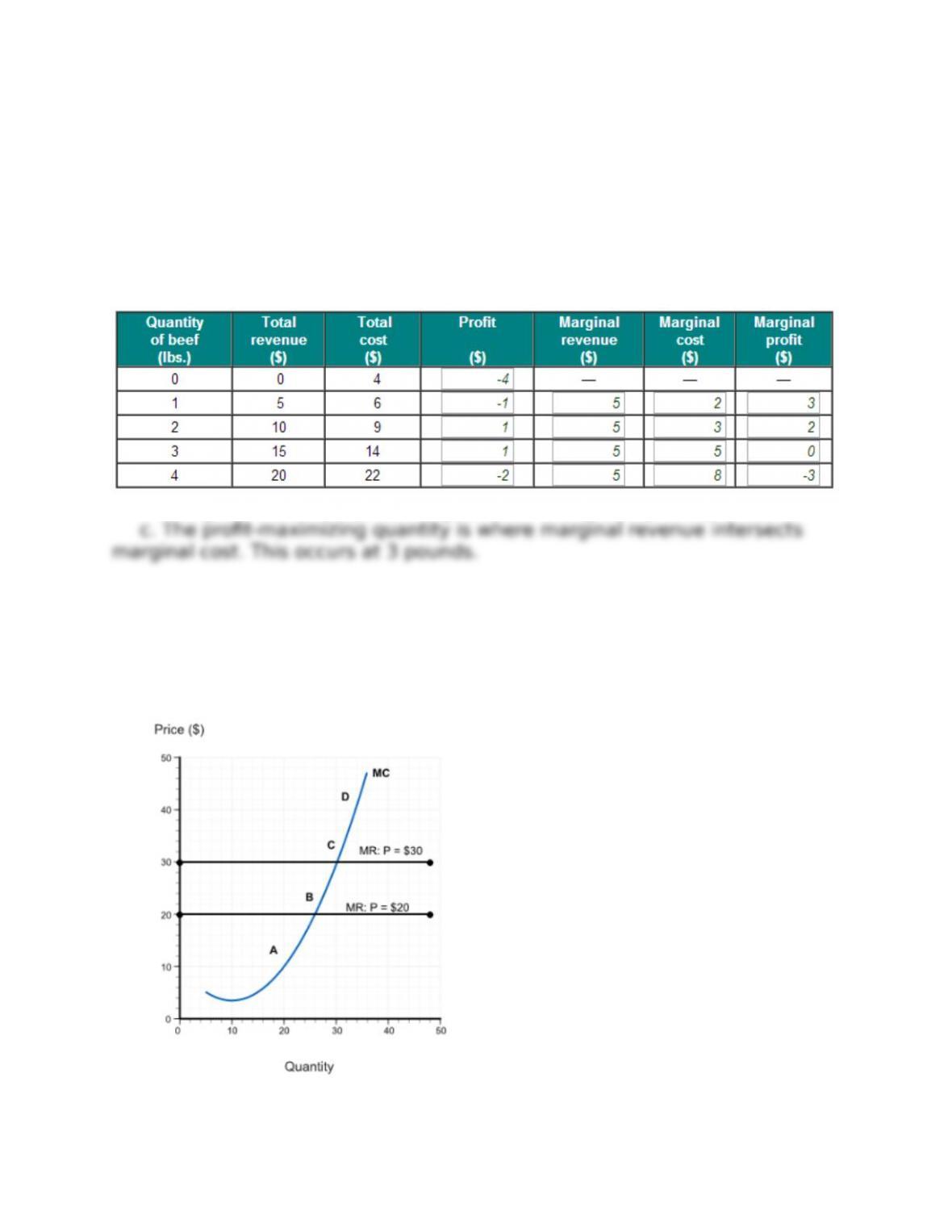
1. Paulina sells beef in a competitive market where the price is $5 per
pound. Her total revenue and total costs are given in Table 13P-2. [LO 13.3]
a. Fill out the table.
b. At what quantity does marginal revenue equal marginal cost?
c. What is the pro’t-maximizing quantity?
Answer:
a.
b. Marginal revenue equals marginal cost at a quantity of 3 pounds.
2. On Figure 13P-1, show the pro’t-maximizing quantity when price is P1.
Label this point Qmax1. Show the pro’t-maximizing quantity when price is
P2. Label this point Qmax2.
[LO 13.3]
Answer:
13-1
Copyright © 2018 McGraw-Hill Education. All rights reserved. No reproduction or distribution without the prior written consent of McGraw-Hill
Education.
Chapter 13 – Perfect Competition
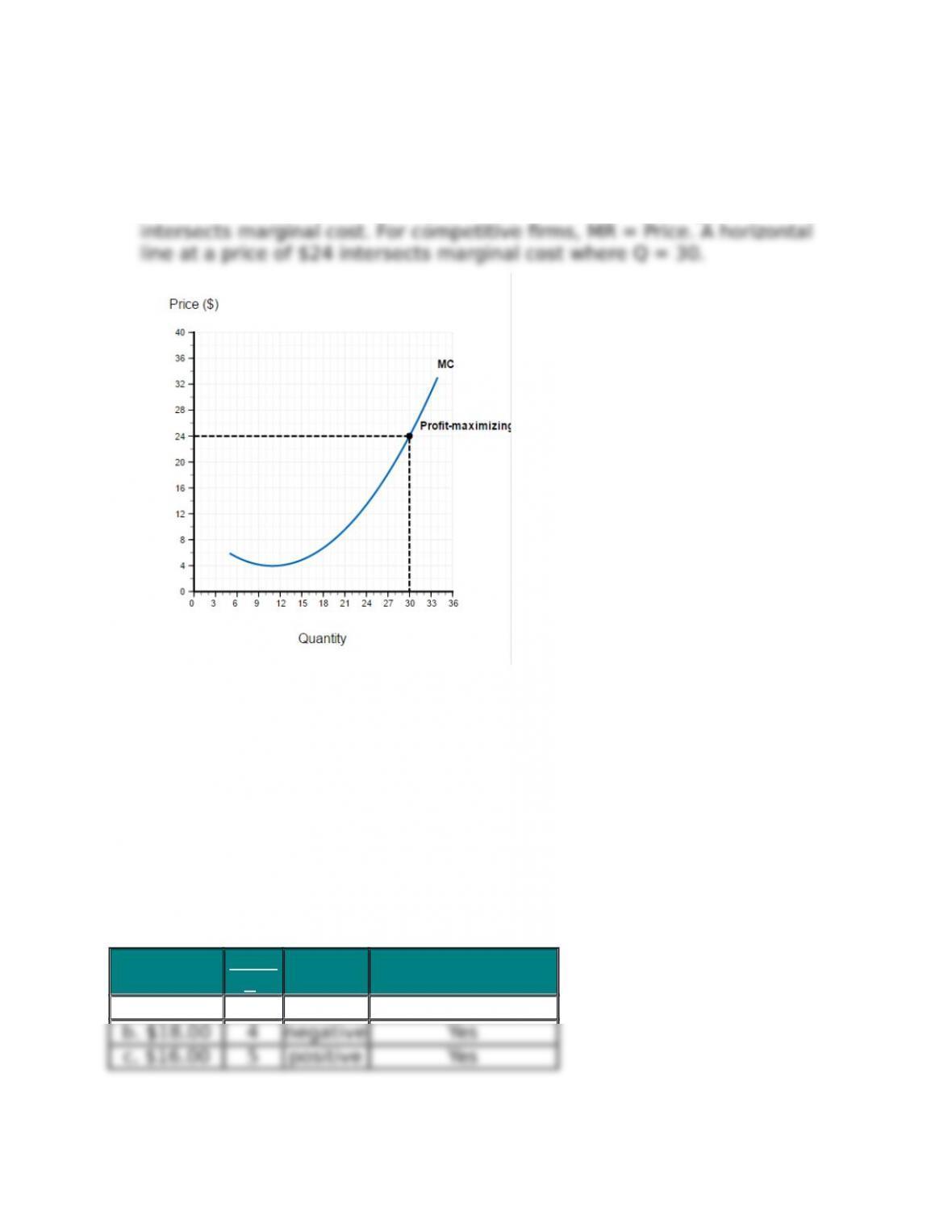
3. Figure 13P-2 shows the marginal cost curve for a firm in a competitive
market. The market price is $24. Plot this ‘rm’s pro’t-maximizing price and
quantity. [LO 13.3]
Answer: The pro’t-maximizing quantity occurs where marginal revenue
4. The data in Table 13P-3 are the monthly average variable costs (AVC),
average total costs (ATC), and marginal costs (MC) for Alpacky, a typical
alpaca wool manufacturing firm in Peru. The alpaca wool industry is
competitive. For each market price given below, give the pro‘t-maximizing
output quantity and state whether Alpacky’s profit are positive, negative, or
zero. Also state whether Alpacky should produce or shut down in the short
run. [LO 13.4]
a. $22.00
b. $18.00
c. $16.00
Answer:
13-2
Copyright © 2018 McGraw-Hill Education. All rights reserved. No reproduction or distribution without the prior written consent of McGraw-Hill
Education.
Market
Price
Qma
x
Profit
(+,−, 0)
Produce in SR?
(Y/N)
a. $22.00 5 positive Yes
Chapter 13 – Perfect Competition
a. At a price of $22, MR = $22. The pro’t-maximizing quantity occurs where
b. At a price of $18, MR = $18. Again, the pro’t-maximizing quantity occurs
where MR = MC. When MC = 18, Q = 4. At Q = 4, the price is less than
c. At a price of $16, MR = $16. Again, the pro’t-maximizing quantity occurs
where MR = MC. When MC = 16, Q = 3. However, at Q = 3, the price is
less than ATC (ATC = $20 and Price = $16). This indicates that pro’ts are
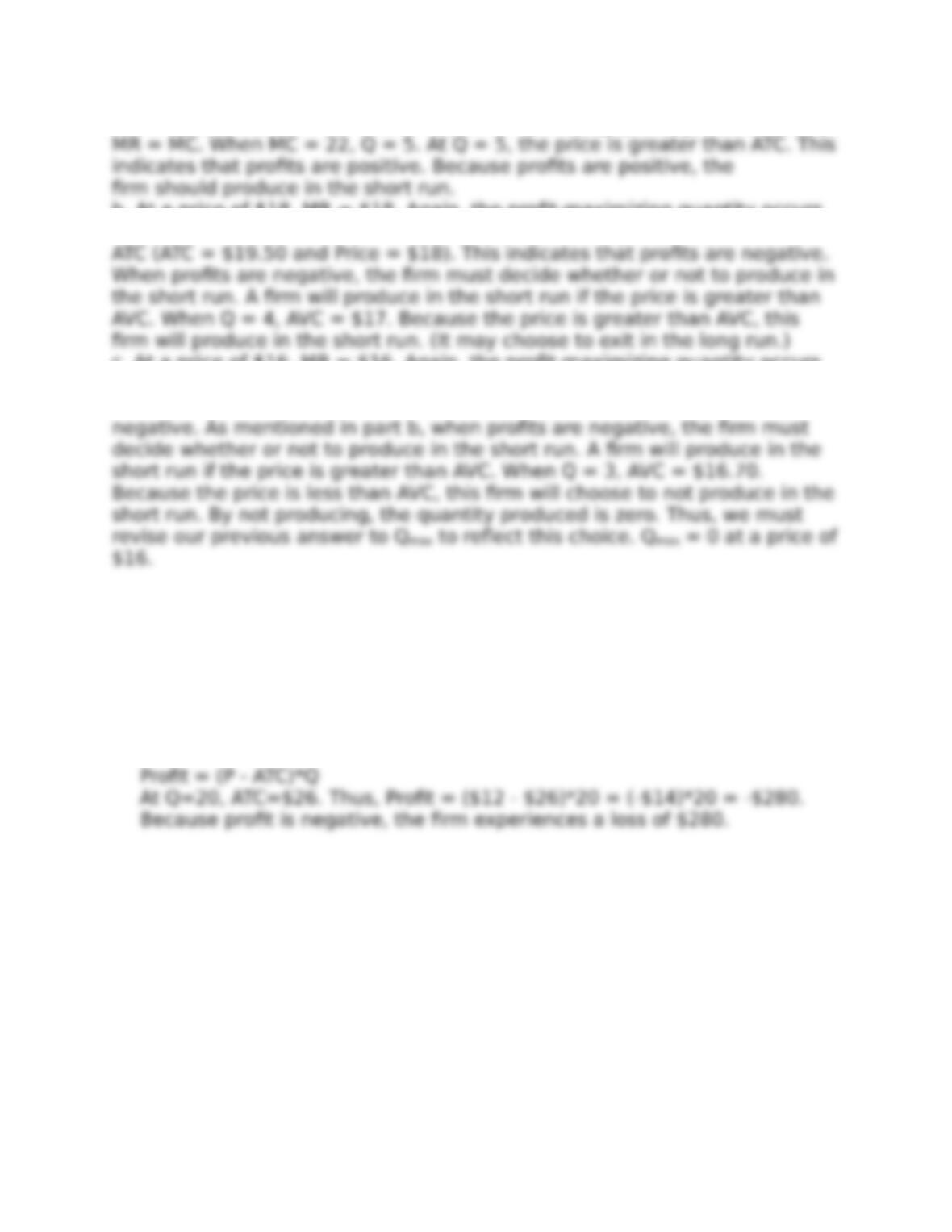
5. The marginal costs, average variable costs (AVC), and average total costs
(ATC) for a firm are shown in Figure 13P-3. In the ‘gure, mark the quantity
the firm will choose to produce in the short run given this cost structure and
the market price. Does the ‘rm earn positive or negative pro’ts? Graph the
area that de’nes the firm’s pro’t (or loss) at this rate of output. [LO 13.4]
Answer: The loss minimizing output occurs where MC = MR or Q = 20
units.
13-3
Copyright © 2018 McGraw-Hill Education. All rights reserved. No reproduction or distribution without the prior written consent of McGraw-Hill
Education.
Chapter 13 – Perfect Competition
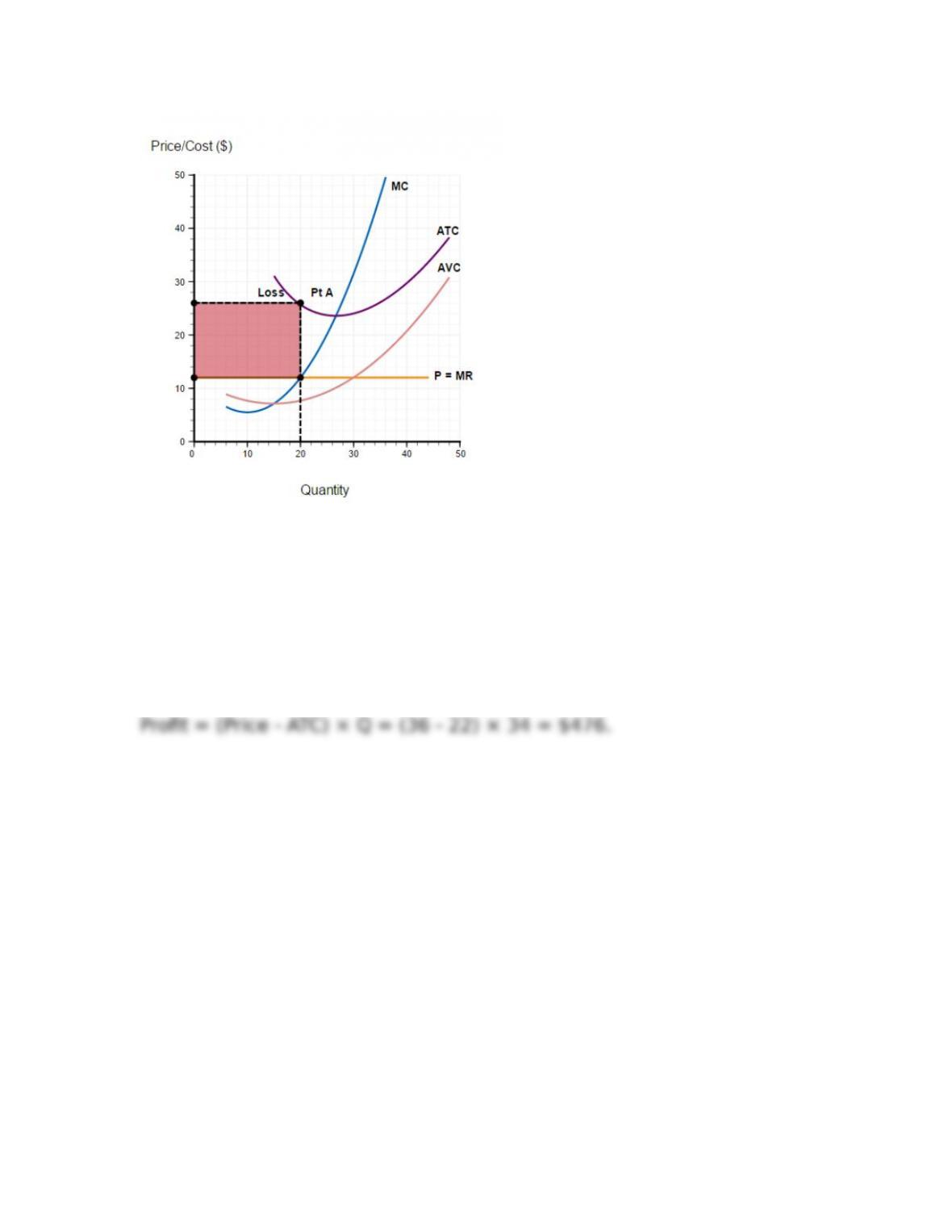
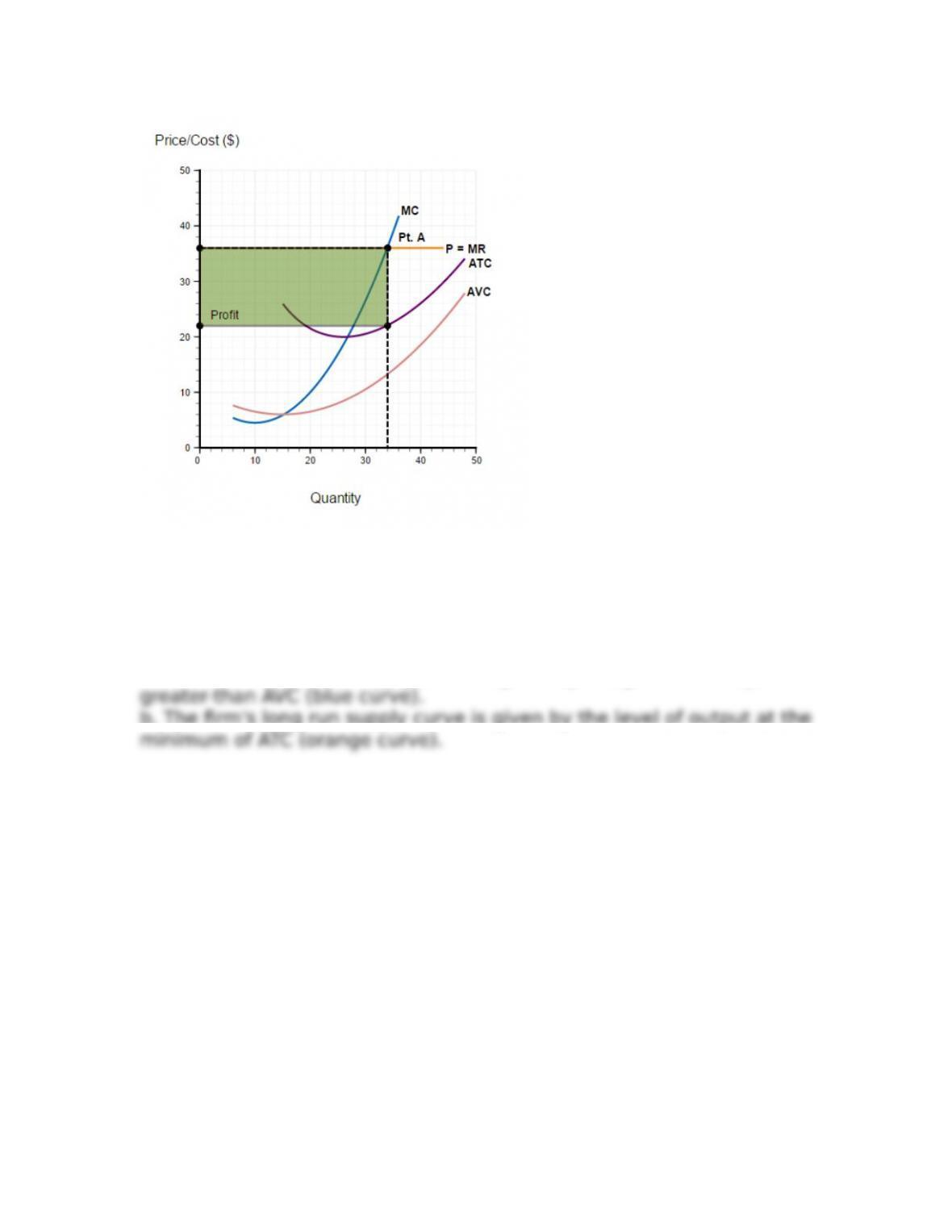
6. The marginal costs, average variable costs (AVC), and average total costs
(ATC) for a firm are shown in Figure 13P-4. In the ‘gure, mark the quantity
the firm will choose to produce in the short run given this cost structure and
the market price. Does the ‘rm earn positive or negative pro’ts? Graph the
area that de’nes the firm’s pro’t (or loss) at this rate of output. [LO 13.4]
Answer: The pro’t maximizing output occurs where MC = MR or Q = 34
units.
13-4
Copyright © 2018 McGraw-Hill Education. All rights reserved. No reproduction or distribution without the prior written consent of McGraw-Hill
Education.
Chapter 13 – Perfect Competition
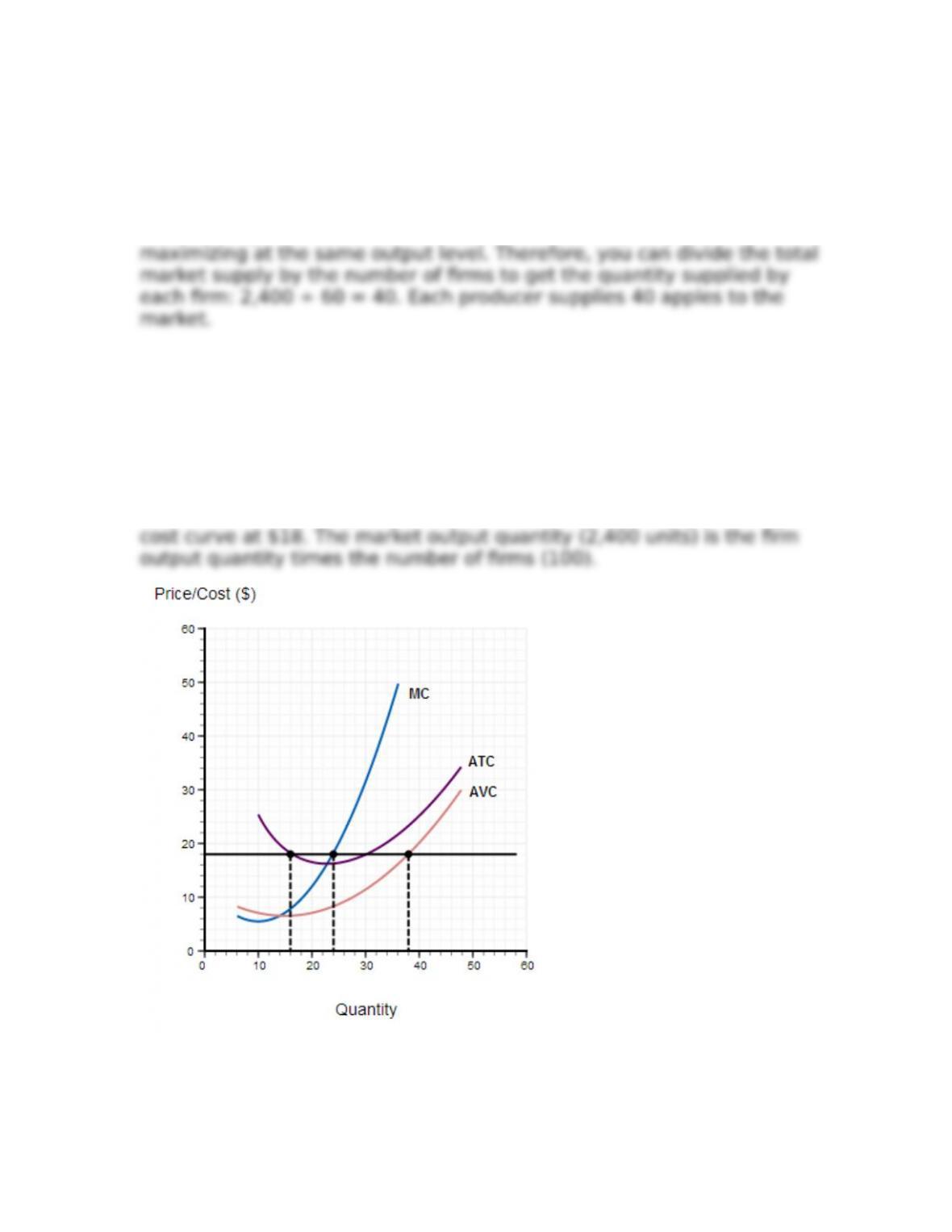
7. The cost curves for an individual ‘rm are given in Figure 13P-5. [LO 13.4]
a. In Figure 13P-5 (A), highlight the ‘rm’s short-run supply curve.
b. In Figure 13P-3 (B), highlight the ‘rm’s long-run supply curve.
Answer:
a. The firm’s short run supply curve is given by marginal costs equal-to or
b. The firm’s long run supply curve is given by the level of output at the
13-5
Copyright © 2018 McGraw-Hill Education. All rights reserved. No reproduction or distribution without the prior written consent of McGraw-Hill
Education.
Chapter 13 – Perfect Competition
8. Suppose the quantity of apples supplied in your market is 2,400. If there
are 60 apple producers, each with identical cost structures, how many apples
does each producer supply to the market? [LO 13.5]
Answer: If producers have the same cost structure, they are all pro’t
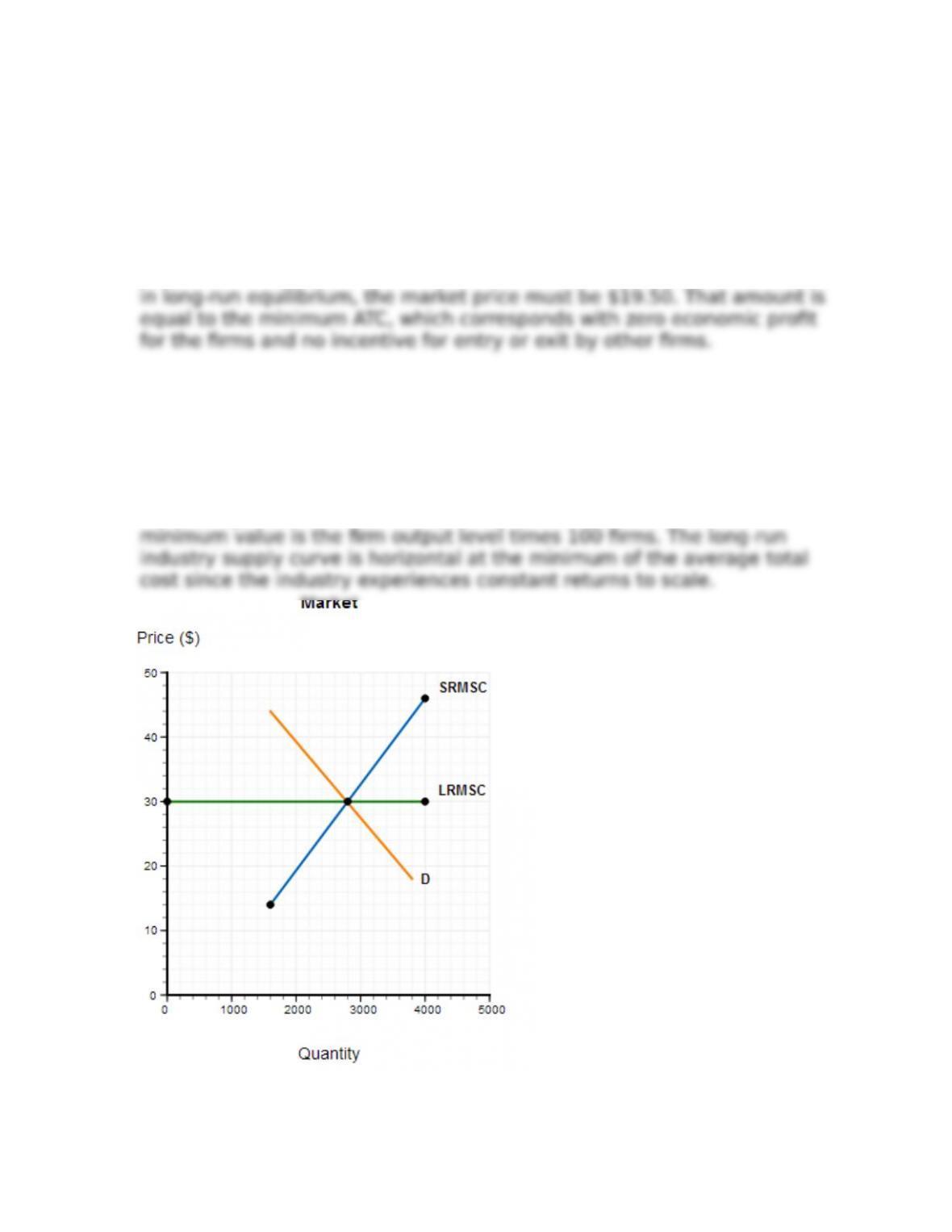
9. Suppose an industry consists of many firms with identical cost structures,
represented by the “typical individual ‘rm” in panel A of Figure 13P–6. Price
is P1. With the aid of panel A, draw the short-run market supply curve in
panel B and show the firm and market output quantities at the equilibrium
price in each panel. Label the ‘rm output q1 and the market output Q1. [LO
13.5]
Answer: The firm output quantity (24 units) is found along the marginal
13-6
Copyright © 2018 McGraw-Hill Education. All rights reserved. No reproduction or distribution without the prior written consent of McGraw-Hill
Education.
Chapter 13 – Perfect Competition
10. The monthly average variable costs, average total costs, and marginal
costs for Alpacky, a typical alpaca wool manufacturing firm in Peru, are
shown in Table 13P-3. All firms in the industry share the same costs as
Alpacky, and the industry is in long-run equilibrium. What is the market
price? [LO 13.6]
Answer: If the firms all share the same cost structure and the industry is
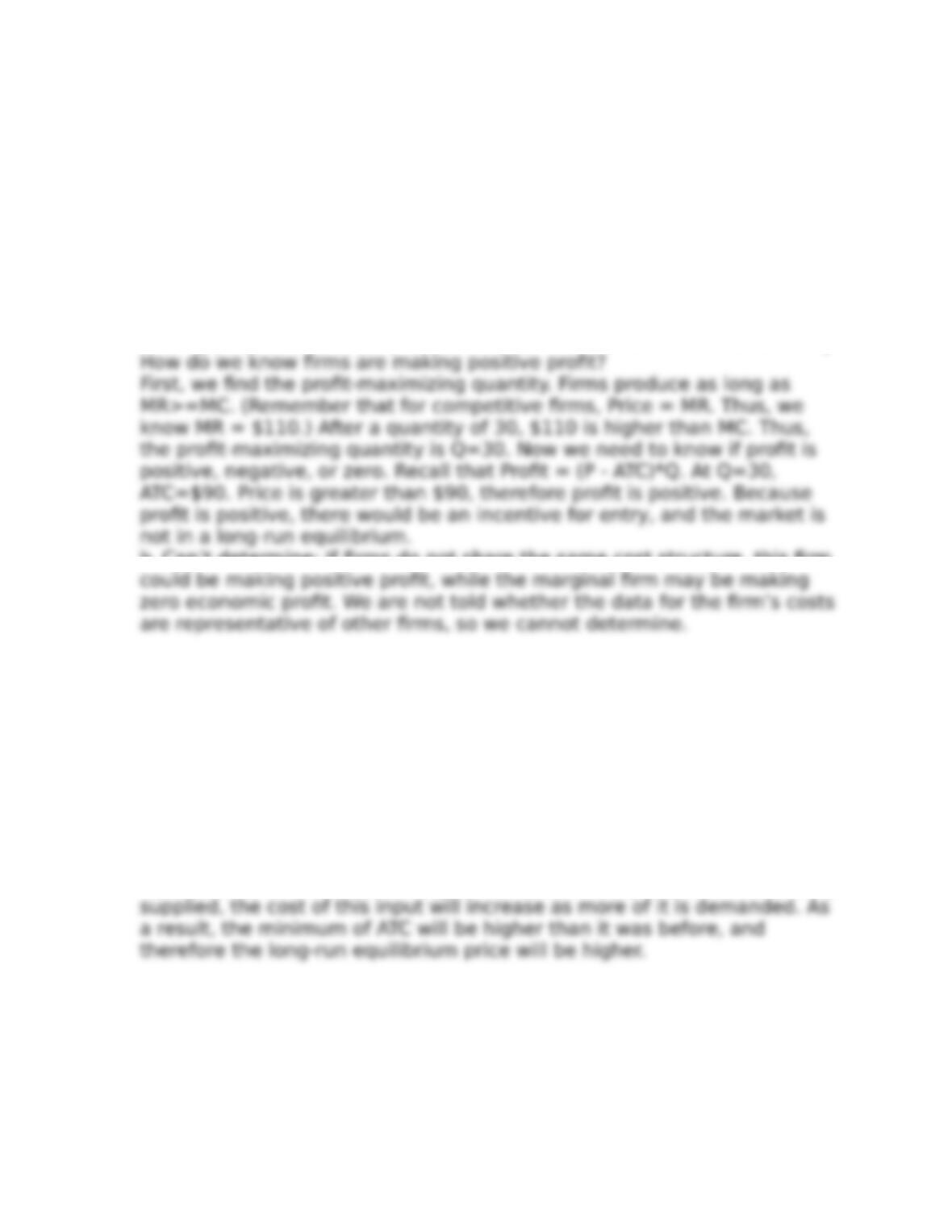
11. he industry in Figure 13P-7 consists of many firms with identical cost
structures, and the industry experiences constant returns to scale. [LO 13.6]
a. Draw the short-run market supply curve.
b. Draw the long-run market supply curve.
Answer: The short-run market supply curve begins at the minimum of
the average variable cost. The quantity for every price above this
13-7
Copyright © 2018 McGraw-Hill Education. All rights reserved. No reproduction or distribution without the prior written consent of McGraw-Hill
Education.
Chapter 13 – Perfect Competition
12. A firm’s costs are represented in Table 13P-4. Suppose the price in the
market is $110. [LO 13.7]
a. Suppose all firms in the market have identical cost structures. Is the
market in long-run equilibrium—yes, no, or can’t determine?
b. Suppose the firms in the market may have diLerent cost structures. Is the
market in long-run equilibrium—yes, no, or can’t determine?
Answer:
a. If all firms in this market have the same cost structure, then the market
would not be in long-run equilibrium because the firms would all be
making positive economic pro’t and there would be an incentive for entry.
b. Can’t determine: If ‘rms do not share the same cost structure, this ‘rm
13. Curling is a sport that involves sliding a granite stone over a patch of
ice. The Winter Olympics has generated a lot of excitement about the
fascinating sport of curling. As a result, demand for curling stones has
increased. Curling stones are made from blue Trefor granite. There are
limited deposits of blue Trefor, and other types of granite are poor
substitutes. If the increase in demand for curling stones persists, do you
expect the long-run equilibrium price to increase, decrease, or stay the
same? [LO 13.7]
Answer: The long-run equilibrium price would increase. Because a key
input in the production of curling stones (blue Treforgranite) is inelastically
13-8
Copyright © 2018 McGraw-Hill Education. All rights reserved. No reproduction or distribution without the prior written consent of McGraw-Hill
Education.
Chapter 13 – Perfect Competition
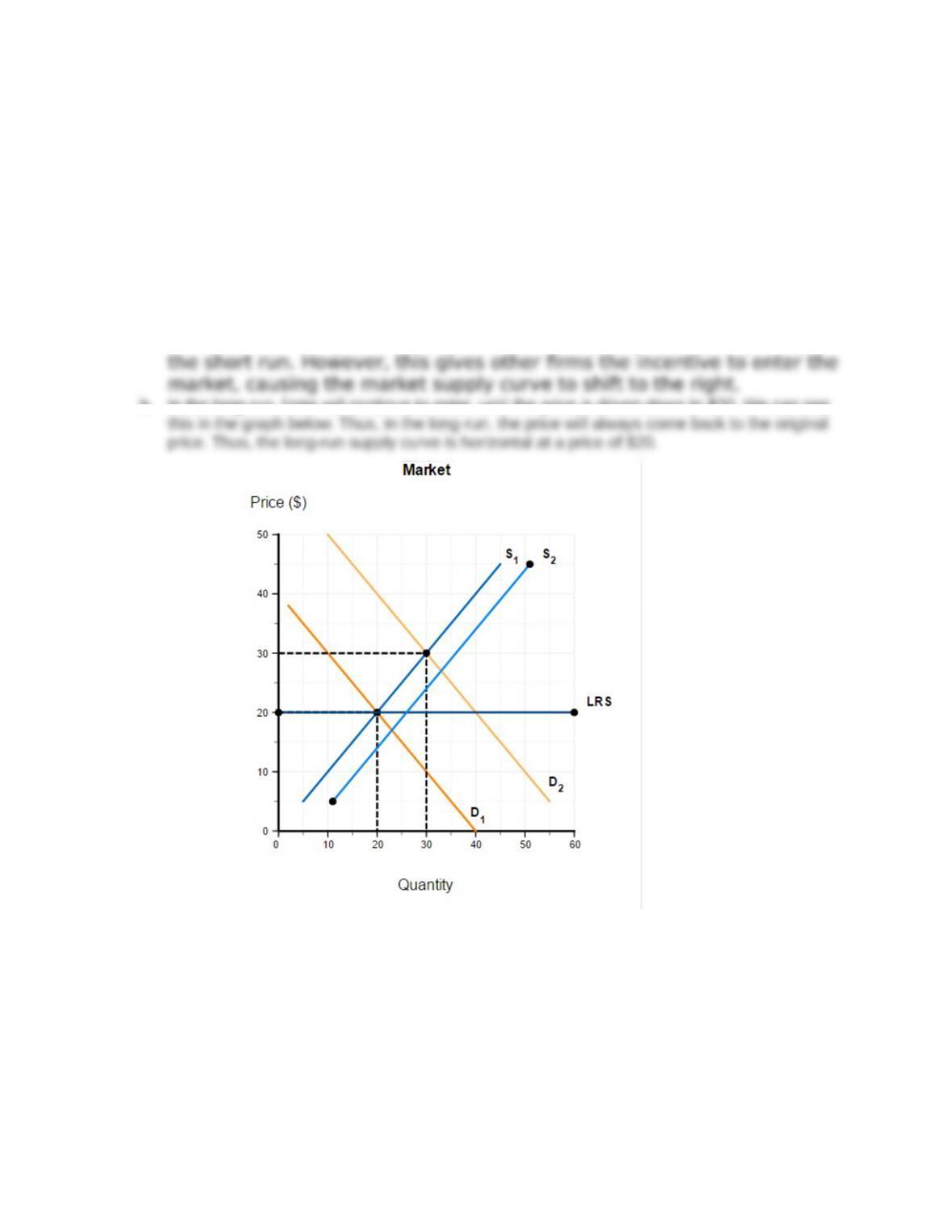
14. The industry in Figure 13P-8 consists of many ‘rms with identical cost
structures, and the industry experiences constant returns to scale. Consider
a change in demand from D1 to D2, which increases price from P1 to P2 in
the short run. [LO 13.8]
a. Draw the new short-run supply curve that will occur in response to the
increase in demand and increase in price.
b. Draw the long-run supply curve.
Answer:
a. As a result of the price increase, ‘rms in the market will earn pro’ts in
b. In the long-run, firms will continue to enter, until the price is driven down to $20. We can see
13-9
Copyright © 2018 McGraw-Hill Education. All rights reserved. No reproduction or distribution without the prior written consent of McGraw-Hill
Education.
Chapter 13 – Perfect Competition
15. Suppose the market for gourmet chocolate is in long-run equilibrium,
and an economic downturn has reduced consumer discretionary incomes.
Assume chocolate is a normal good, and the chocolate producers have
identical cost structures. [LO 13.8]
a. What will happen to demand—shift right, shift left, no shift?
b. What will happen to profit for chocolate producers in the short run—
increase, decrease, or no change?
c. What will happen to the short-run supply curve—increase, decrease, or no
change?
d. What will happen to the long-run supply curve—increase, decrease, or no
change?
Answer:
a. Demand will shift left since income fell.
b. Pro’ts for chocolate producers in the short run will decrease since the
price will fall.
13-10
Copyright © 2018 McGraw-Hill Education. All rights reserved. No reproduction or distribution without the prior written consent of McGraw-Hill
Education.