Solutions to Questions – Chapter 18
Structuring Real Estate Investments: Organizational Forms and Joint Ventures
Question 18-1
What is the difference between an IRR preference and an IRR lookback?
Question 18-2
What is the advantage of the limited partnership ownership form for real estate syndications?
Question 18-3
How can the general partner-syndicator structure the partnership to offer incentives to limited partners?
Question 18-4
Why is the Internal Revenue Service concerned with how partnership agreements in real estate are structured?
Question 18-5
What is the main difference between the way a partnership is taxed versus the way a corporation is taxed?
Question 18-6
What are special allocations?
Question 18-7
What causes the after-tax IRR (ATIRRe) for the general partner to differ from that of the limited partner?
Question 18-8
What is the significance of capital accounts? What causes the balance in a capital account to change each year?
Question 18-9
How does the risk associated with investment in a partnership differ for the general partner versus a limited
partner?
Question 18-10
What are the different ways that the general partner is compensated?
Question 18-11
How do you think the federal income tax policy affects the desirability of investing in real estate partnerships?
Question 18-12
What concerns should an investor in a real estate syndication have regarding general partners?
Question 18-13
Differentiate between public and private syndications? What is an accredited investor? Why is the distinction
used?
Question 18-14
How are general partners usually compensated in a syndication? What major concerns should investors consider
Question 18 – 15
What is the main difference between organizing a real estate venture a corporation versus a general partnership?
How does a limited partnership have some of the characteristics of both?

Solutions to Problems – Chapter 18
Partnerships, Joint Ventures, and Syndications
INTRODUCTION
The problems in this chapter parallel that of the example in the textbook. We have assumed the syndication expenses can not
be expensed or amortized. That is, they are capitalized but not depreciated. Note that this is similar to the tax treatment of
land. The proper way of handling syndication fees is somewhat controversial and depends on the specific nature of the
syndication expense. Some commentators have suggested that syndication costs might be amortizable over the life of a
limited partnership, but most practitioners are dubious of this position. Most writers suggest that fees paid for services
rendered in connection with acquisition of the property can be capitalized as part of the basis of the acquired asset and
depreciated over the recovery period of that asset. Examples of service relating to the acquisition of an asset include
negotiation of a lease of the partnership’s property, negotiation of the partnership’s purchase of real estate, and legal and
brokerage fees paid by the syndication with respect to acquisition of the asset. However, legal and marketing fees related to
the creation of the syndication securities are capitalized but cannot be depreciated. Rather, these fees would be deductible
only upon termination or liquidation of the partnership (see Promoters’ and Managers’ Compensation, Page 511).
For simplicity, we have chosen to simply assume that all “syndication fees” are capitalized but not depreciated. However, the
instructor may want to bring this issue to the attention of the students.
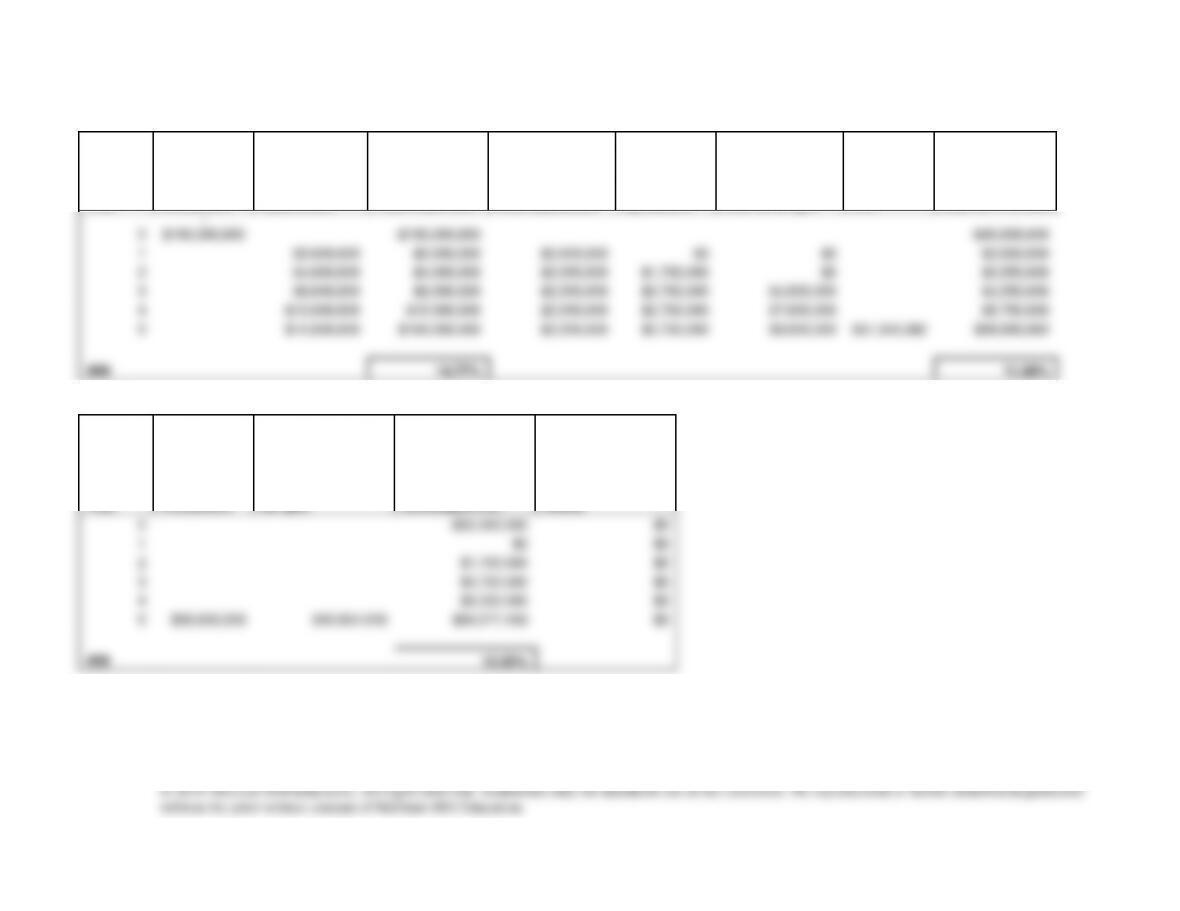
Problem 18-1
Table 1
Year
Initial
Investment
Cash flow from
Operations
Total Cash flow
ABC fund return
from operations
Newtown
Developers
Inc. return
from
operations
Remaining
operating cash
flow to be split
ABC fund
from sale
for 11%
IRR
ABC fund cash
flow for 11% IRR
0
–
$100,000,000
-$100,000,000
-$45,000,000
1
$2,000,000
$2,000,000
$2,000,000
$0
$0
$2,000,000
2
$4,000,000
$4,000,000
$2,250,000
$1,750,000
$0
$2,250,000
3
$9,000,000
$9,000,000
$2,250,000
$2,750,000
$4,000,000
$4,250,000
4
$12,000,000
$12,000,000
$2,250,000
$2,750,000
$7,000,000
$5,750,000
5
$14,000,000
$164,000,000
$2,250,000
$2,750,000
$9,000,000
$51,345,082
$58,095,082
IRR
14.77%
11.00%
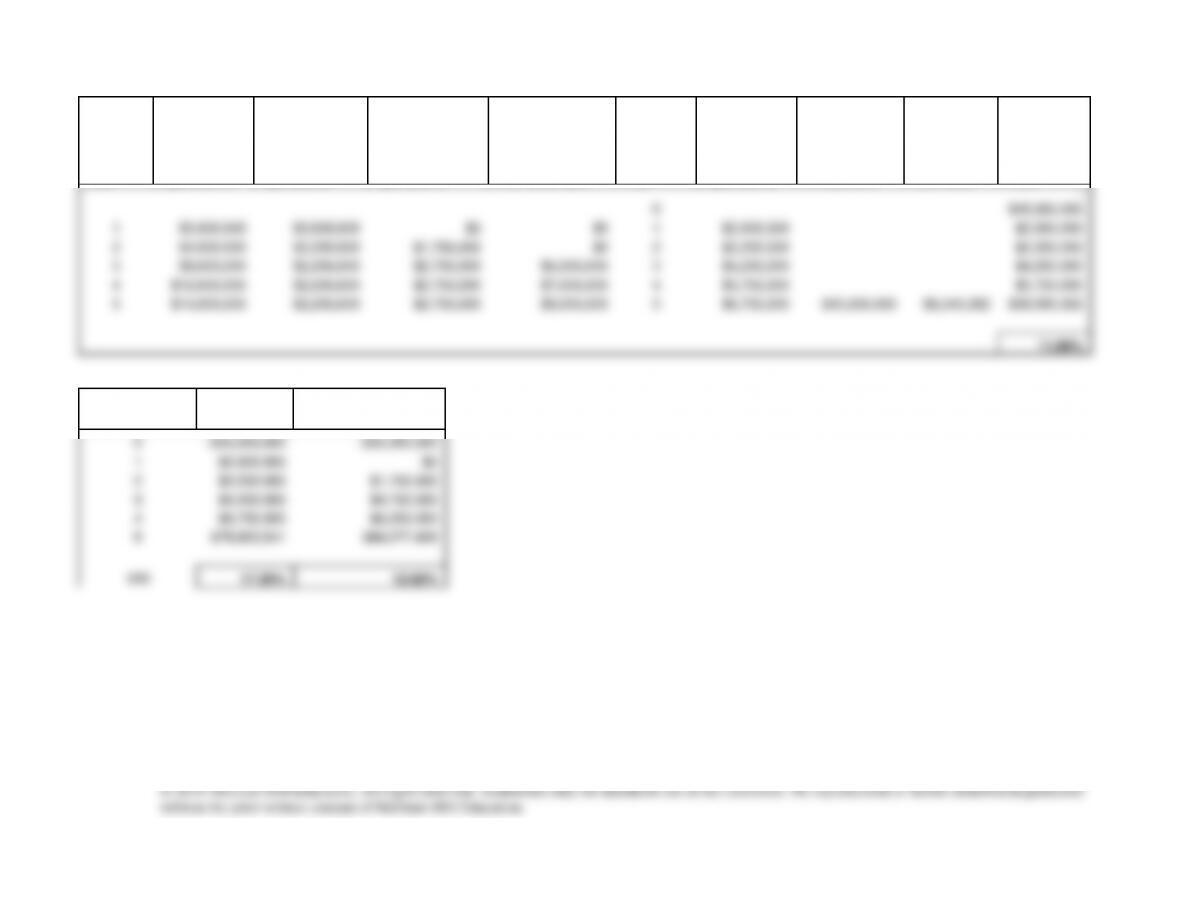
Table 1 continued..
Year
Newtown
Developers
Inc. return of
initial
investment
Remaining cash
flow from sale to
be split
Newtown
Developers Inc.
Check
0
-$55,000,000
$0
1
$0
$0
2
$1,750,000
$0
3
$4,750,000
$0
4
$6,250,000
$0
5
$55,000,000
$43,654,918
$84,077,459
$0
IRR
12.62%
Year
Cash flow
from
Operations
ABC fund Inc.
return from
operations
Newtown
Developers Inc.
return from
operations
Remaining
operating cash
flow to be split
Year
ABC fund
Inc. cash
flow from
Operations
ABC fund Inc.
return of
initial
investment
ABC fund
additional
cash flow
from Sale
Total Cash
Flow
0
–
$45,000,000
1
$2,000,000
$2,000,000
$0
$0
1
$2,000,000
$2,000,000
2
$4,000,000
$2,250,000
$1,750,000
$0
2
$2,250,000
$2,250,000
3
$9,000,000
$2,250,000
$2,750,000
$4,000,000
3
$4,250,000
$4,250,000
4
$12,000,000
$2,250,000
$2,750,000
$7,000,000
4
$5,750,000
$5,750,000
5
$14,000,000
$2,250,000
$2,750,000
$9,000,000
5
$6,750,000
$45,000,000
$6,345,082
$58,095,082
11.00%
Year
ABC fund
Inc.
Newtown Developers
Inc.
0
-$45,000,000
-$55,000,000
1
$2,000,000
$0
2
$2,250,000
$1,750,000
3
$4,250,000
$4,750,000
4
$5,750,000
$6,250,000
5
$79,922,541
$84,077,459
IRR
17.30%
12.62%
Problem 18-2
(REFER TO TEMPLATE 18_1.XLS)
ASSUMPTIONS:
COST BREAKDOWN
FINANCING
Land
1,000,000
Loan Amount
8,000,000
Improvements
9,000,000
Interest rate
11.00%
Points
100,000
Term
25
Subtotal
10,100,000
Points
100,000
Organization fee
100,000
Pmts / Year
12
Syndication expenses
100,000
Amortized over loan term
Total funding required
10,300,000
Annual Pmt
940,909
Years amortized
5
PARTNERSHIP FACTS AND EQUITY REQUIREMENTS
Equity capital
Cash distrib.
Tax. Income
Alloc. gain
contribution
Operations
Operations
Sale
General partner
10.00%
10.00%
10.00%
15.00%
Limited Partners
90.00%
90.00%
90.00%
85.00%
# of Limited Partners
35
OPERATING AND TAX PROJECTIONS
INITIAL EQUITY REQUIREMENTS
Potential gross income
1,750,000
Land
1,000,000
Projected growth in PGI
3.00%
Improvements
9,000,000
Vacancy and coll. Loss
10.00%
of PGI
Points on Loan
100,000
Operating Expenses
35.00%
of EGI
Organization fee
100,000
Depreciable Life
31.5
years
Syndication fee
100,000
Projected Resale
13,500,000
Total
10,300,000
Tax rate-Limited Partner
28.00%
Less loan
8,000,000
Tax rate-General Partner
28.00%
Equity
2,300,000
Selling Expenses
5.00%
General Partner
230,000
Holding Period
5
years
Limited Partners
2,070,000
Loan Information:
Year
1
2
3
4
5
Interest
876,833
869,419
861,146
851,916
841,618
Loan Balance
7,935,925
7,864,435
7,784,672
7,695,680
7,596,389
Depreciation per year
285,714
STATEMENT OF BEFORE-TAX CASH FLOW
Year
1
2
3
4
5
Potential gross income
1,750,000
1,802,500
1,856,575
1,912,272
1,969,640
Vacancy and collection loss
175,000
180,250
185,658
191,227
196,964
Effective gross income
1,575,000
1,622,250
1,670,918
1,721,045
1,772,676
Operating Expenses
551,250
567,788
584,821
602,366
620,437
Net operating income
1,023,750
1,054,463
1,086,096
1,118,679
1,152,240
Debt service
940,909
940,909
940,909
940,909
940,909
Before-tax cash flow
82,841
113,554
145,188
177,771
211,331
Distribution of BTCF
General Partner
8,284
11,355
14,519
17,777
21,133
Limited Partners
74,557
102,199
130,669
159,994
190,198
STATEMENT OF INCOME (LOSS)
Year
1
2
3
4
5
Net operating income
1,023,750
1,054,463
1,086,096
1,118,679
1,152,240
Less: Interest
876,833
869,419
861,146
851,916
841,618
Depreciation
285,714
285,714
285,714
285,714
285,714
Amortization of:
Organization fee
20,000
20,000
20,000
20,000
20,000
Loan fee
4,000
4,000
4,000
4,000
84,000
Taxable income
(162,798)
(124,670)
(84,764)
(42,951)
(79,092)
Distribution of Taxable Income
General Partner
(16,280)
(12,467)
(8,476)
(4,295)
(7,909)
Limited Partners
(146,518)
(112,203)
(76,287)
(38,656)
(71,183)
CALCULATION OF CAPITAL GAIN
Sales Price
13,500,000
Sales Costs
675,000
Original costs basis
10,100,000
Accumulated depreciation
1,428,571
Adjusted basis
8,671,429
Total taxable gain
4,153,571
Allocation of Gain
General Partner
623,036
Limited Partners
3,530,536
CAPITAL ACCOUNTS – LIMITED PARTNERS
Year
0
1
2
3
4
5
Equity
2,070,000
Plus Income(loss)
(146,518)
(112,203)
(76,287)
(38,656)
(71,183)
Plus Gain from Sale
3,530,536
Less Cash Distributed
74,557
102,199
130,669
159,994
190,198
Total for Year
2,070,000
(221,075)
(214,402)
(206,957)
(198,650)
3,269,155
Balance
2,070,000
1,848,925
1,634,523
1,427,566
1,228,917
4,498,071
CAPITAL ACCOUNTS – GENERAL PARTNER
Year
0
1
2
3
4
5
Equity
230,000
Plus Income(loss)
(16,280)
(12,467)
(8,476)
(4,295)
(7,909)
Plus Gain from Sale
623,036
Less Cash Distributed
8,284
11,355
14,519
17,777
21,133
Total for Year
230,000
(24,564)
(23,822)
(22,995)
(22,072)
593,993
Balance
230,000
205,436
181,614
158,618
136,546
730,540
(a)
ATIRR:
AFTER-TAX CASH FLOW AND ATIRR – LIMITED PARTNERS
Year
0
1
2
3
4
5
Operation:
BTCF
(2,070,000)
74,557
102,199
130,669
159,994
190,198
Taxable Income
(146,518)
(112,203)
(76,287)
(38,656)
(71,183)
Taxes
0
(41,025)
(31,417)
(21,360)
(10,824)
(19,931)
ATCF
(2,070,000)
115,582
133,616
152,030
170,817
210,129
Reversion:
BTCF
4,498,071
Capital gain
3,530,536
Taxes
988,550
ATCF
3,509,521
Total ATCF
(2,070,000)
115,582
133,616
152,030
170,817
3,719,651

ATIRR
17.11%
(b)
ATIRR:
AFTER-TAX CASH FLOW AND ATIRR – GENERAL PARTNER
Year
0
1
2
3
4
5
Operation:
BTCF
(230,000)
8,284
11,355
14,519
17,777
21,133
Taxable Income
(16,280)
(12,467)
(8,476)
(4,295)
(7,909)
Taxes
0
(4,558)
(3,491)
(2,373)
(1,203)
(2,215)
ATCF
(230,000)
12,842
14,846
16,892
18,980
23,348
Reversion:
BTCF
730,540
Capital gain
623,036
Taxes
174,450
ATCF
556,090
Total ATCF
(230,000)
12,842
14,846
16,892
18,980
579,437
ATIRR
24.53%
(c)
Problem 18-3
Before tax cash flow:
Taxable income:
(a)
Capital Accounts after First Year of Operations
A’s Capital Account B’s Capital Account
(b)
Cash from sale

(c)
Cash distributions from sale
(d)
Capital gain from sale after 1 year:
(e)
Capital Accounts after Sale of Building
A’s Capital Account B’s Capital Account
Problem 18-4
The general partner’s return is now 13.68% versus 22.24% and the limited partner’s return is also 13.68% versus 13.15%.