

Structure of the Case
Bank of America (BAC) is a publicly traded company formed through the merger of two banks that
originated on opposite coasts of the United States. The first, Commercial National Bank, was founded
in 1874 in Charlotte, North Carolina. Eight-five years later, Commercial embarked on a series of acqui-
sitions that eventually took it into Florida, Texas, and Georgia. It changed its name to NationsBank in
1991 and continued to acquire additional banks. By 1997, NationsBank had $284 billion in assets and
2,600 branches across the southeast.
Out west, Amadeo Giannini founded the Bank of Italy in San Francisco in 1904, which was renamed
Bank of America in 1930. It likewise engaged in a strategy of growth through acquisitions. The bank
was weakened by bad investments during the 1980s, but successfully rebuffed takeover attempts and
regained its position as the largest bank in America by total deposits. It was less fortunate, however,
when a hedge fund client defaulted on $1.4 billion in loans it had used to invest in the unstable Russian
bond market. In 1998, Bank of America was acquired by NationsBank for $65 billion, the largest bank
acquisition to date. Although technically NationsBank purchased Bank of America, the deal was struc-
tured as a merger and the new bank holding company was named the Bank of America Corporation.
The case next discusses BAC’s growth up through the financial meltdown that started in 2007.
Despite increasing signs of trouble in the mortgage industry, BAC acquired Countrywide Financial in
2008, making it the largest mortgage originator and servicer in the United States. Soon thereafter, the
housing market bubble burst and a wave of defaults and foreclosures ensued. As mortgage defaults
increased, securities based on the underlying assets suffered write downs, causing massive losses for
banks. These write downs had a particularly large effect on the shadow banking system. (Shadow
banks are nonbank financial institutions that lend corporations the capital necessary to operate, typi-
cally through commercial paper.) Several investment banks had used funds from commercial paper
sales to invest in asset-backed securities, and were therefore highly vulnerable to security devalua-
tion. Concerns about the banks’ ability to repay their debts led to a virtual freezing of the commercial
paper market. Subsequently, Bear Stearns collapsed (and was purchased by JPMorgan Chase), Lehman
Brothers filed for bankruptcy, and Merrill Lynch suffered substantial losses. In 2008, BAC purchased
Merrill Lynch in spite of its ongoing financial difficulties.
The third section of the case depicts the U.S. financial industry after the meltdown. Federal Reserve
Chairman Ben Bernanke and Treasury Secretary Hank Paulson made several difficult decisions, includ-
ing taking mortgage lenders Fannie Mae and Freddie Mac into conservatorship. They also drove the
Bank of America and the New Financial Landscape
TEACHING NOTE
MHE-FTR-007
1259420477
REv: JANUARy 6, 2012


Teaching Note —Bank of America and the New Financial Landscape
implementation of the $700 billion Troubled Asset Relief Program (TARP). This government inter-
vention effectively restructured the banking system, and forced shadow banks to reorganize as bank
holding companies under the auspices of the Federal Reserve. The recession that started in 2007 was
declared technically over in the second quarter of 2009, though unemployment and bank health took
longer to recover.
Although BAC regained its financial footing, the bank’s senior management came under heavy fire
for decisions made during the crisis. Government investigations revealed that the Federal Reserve
pressured BAC CEO Ken Lewis into proceeding with the merger without disclosing significant poten-
tial losses on the part of Merrill Lynch or an agreement to make $3.6 billion in bonus payments to
Merrill executives. Ultimately, Lewis was removed as CEO and BAC paid $150 million to shareholders
in settlement, although BAC did not admit to any wrongdoing. Many other senior BAC executives
were also replaced.
BAC’s management is now tasked with returning the bank to financial stability. Both the Countrywide
and Merrill Lynch acquisitions came with baggage that needs to be dealt with to clear the way for a
better future. The new units also have unique competencies that could be used to reshape the bank’s
future strategy. Key questions include: Can the bank afford to continue to invest in innovation? Are
services still a valuable source of differentiation? What governance policies are necessary to prevent
future ethical breaches? Finally, should BAC continue to follow its strategy of growth through acquisi-
tions when the last two acquisitions nearly destroyed the bank? If so, how can BAC avoid repeating its
past mistakes?
Suggested Questions
AnAlysis: Focus on internAl And externAl environment
1. Perform an internal (VRIO) analysis of BAC’s resources, capabilities, and core competencies.
Which competencies should be the basis of the bank’s future strategy?
2. Analyze the leadership changes at BAC after the financial crisis. Do you think they will be effec-
tive? Why or why not?
3. Did BAC breach ethical standards by failing to disclose the extent of Merrill’s losses and its
agreement to pay year-end bonuses to Merrill executives?
FormulAtion: Focus on Business, corporAte or GloBAl
strAteGy
4. What should be BAC’s corporate-level strategy moving forward? What should the newly inte-
grated bank look like and do in terms of activities?
5. How did corporate governance policies (or lack thereof) contribute to the financial crisis of 2008?

Teaching Note —Bank of America and the New Financial Landscape
implementAtion: Focus on recommendAtions And How to
execute tHem
6. Can/should companies self-regulate, or should the government play a stronger role? Under what
conditions is governmental intervention in business warranted?
Suggested Answers
AnAlysis: Focus on internAl And externAl environment
1. Perform an internal (VRIO) analysis of BAC’s resources, capabilities and core competencies.
Which competencies should be the basis of the bank’s future strategy?
BAC’s resources are assets such as its cash, buildings, personnel, processes, or intellectual property
that the corporation draws upon when formulating and implementing a strategy. Their capabilities
are the resources that the company has linked together in an effective way through organizational
and managerial skills to aid the company to achieve its strategy. BAC’s core competencies are unique
One of the most important determinants of acquisition success is the integration phase, during which
the resources and capabilities of the acquired firm must be reorganized to create synergy under new
ownership. Clearly, BAC obtained additional financial resources, physical locations (both domestic
As expected in a knowledge- and service-based industry such as banking, BAC’s intangible resources
and capabilities (bottom portion of the table) are more likely to satisfy the vRIO criteria. The knowl-
edge and experience brought to the firm by its new managers, as well as what BAC has learned from
past acquisitions, are valuable and costly to imitate, but not necessarily rare. The extent to which their
value is realized depends on what knowledge-sharing mechanisms BAC puts into place. Historically,

Teaching Note —Bank of America and the New Financial Landscape
2. Analyze the leadership changes at BAC after the financial crisis. Do you think they will be effec-
tive? Why or why not?
Firms that undergo significant difficulties (financial, ethical, and otherwise) often replace their lead-
ership. The effect may be symbolic (signaling a commitment to doing things differently) and/or sub-
stantive (bringing in someone with different skills and values) in nature.
BAC did not make leadership changes voluntarily, at least at first. Ken Lewis was removed as chair-
man of the board by shareholder vote, only to be replaced by a close friend and colleague who had
supported his prior decisions. Under continued external pressure, BAC did replace several manag-
ers roughly one year after the Merrill Lynch acquisition, reportedly to “enhance future success at the
A more significant signal of potential change is the fact that BAC has named eight new directors
since mid-2009. This again, was a function of regulatory pressure to increase board independence and
to recruit more members with banking experience. Even with senior managers who have been pro-
Moynihan ultimately replaced Lewis as CEO in January 2010, and has since instigated a host of
managerial changes. He has replaced the chief financial officer and chief risk officer twice in the two
While Moynihan is not an obvious agent of change given his inside succession, a deeper look into
his past history sheds light on why he may have been selected for the clean-up job. As a young lawyer,
3. Did BAC breach ethical standards by failing to disclose the extent of Merrill’s losses and its
agreement to pay year-end bonuses to Merrill executives?
In April 2009, New york Attorney General Andrew Cuomo alleged that federal officials, namely for-
mer Treasurer Secretary Hank Paulson and Federal Reserve Chairman Bernanke, pressured CEO Ken

Teaching Note —Bank of America and the New Financial Landscape
Lewis into proceeding with the acquisition of Merrill Lynch without disclosing the significant losses
that the brokerage was carrying on its books. Evidence also indicates that Lewis had advance knowl-
edge of the agreement to pay $3.6 billion in bonuses to Merrill Lynch executives in spite of the $27.6
At BAC’s 2009 annual meeting, Ken Lewis told shareholders that the bank did not have a legal obli-
gation to disclose the content of its meetings with government representatives regarding the Merrill
Lynch acquisition. While this point is itself debatable in light of the SEC investigations, Lewis’s answer
effectively sidestepped the issue of whether or not BAC had an ethical obligation to be honest with its
shareholders when making an investment that put the financial health of the company at risk. BAC’s
ethical responsibilities go beyond its legal obligations; they embody the full scope of the expectations,
FormulAtion: Focus on Business, corporAte or GloBAl
strAteGy
4. What should be BAC’s corporate-level strategy moving forward? What should the newly inte-
grated bank look like and do in terms of activities?
BAC’s corporate strategy to date has been to gain market power and broaden its geographic and
product diversification through acquisitions. Between 2005 and 2009, BAC engaged in five major
acquisitions and increased its total assets by approximately $1 billion (see Case Exhibit5). By absorbing
competitors, the company grew to be the second largest bank holding company in the United States;
only JPMorgan Chase is larger (Case Exhibit 6). A comparison of Case Exhibits 8 and 14 illustrates
On the one hand, BAC successfully utilized its recent acquisition of Countrywide and Merrill Lynch
to reshape competition in the industry and redesign its corporate portfolio. However, the integration of

Teaching Note —Bank of America and the New Financial Landscape
these new businesses into BAC’s existing operations has not been a smooth process; in fact, the deals
nearly destroyed the bank financially. This raises the question of whether BAC’s strategy of growing
through acquisitions was inherently flawed, or if it was a good strategy that was implemented poorly.
Moving forward, the bank needs to consider its optimal level of diversification given recent changes
in the financial industry and ongoing instability in the world economy. As the case closes, macroeco-
nomic indicators like unemployment, growth rates, and housing purchases are still not back to pre-
There are two points of view on how to position your company in the midst of an economic down-
turn. On the one hand, competition is less intense while assets tend to be undervalued, creating oppor–
tunities for expansion and cheap(er) investments. On the other hand, firms that are not well positioned
financially tend to retrench to reduce their overall risk profile. At this juncture, BAC’s own recovery is
5. How did corporate governance policies (or lack thereof) contribute to the financial crisis of 2008?
The lack of external governance in the shadow banking industry played a significant role in the
financial crisis of 2008. Because nonbank financial institutions such as investment banks, hedge funds,
and pension funds were not regulated by the Federal Reserve, they did not have to maintain minimum
capital levels to protect against potential losses and did not have the safeguard of drawing on federally
BAC’s corporate governance policies should be designed to provide checks and balances to ensure
that the bank pursues its strategic goals both legally and ethically. yet the board approved the Merrill

Teaching Note —Bank of America and the New Financial Landscape
Shareholders eventually made their displeasure known by voting to remove Ken Lewis from his
position as Chairman of the Board. A similar vote failed in 2008, but by 2009 investors garnered enough
support to split the CEO and Chair positions by a narrow 50.34 percent margin. the wall street Journal
implementAtion: Focus on recommendAtions And How to
execute tHem
6. Can/should companies self-regulate, or should the government play a stronger role? Under what
conditions is governmental intervention in business warranted?
This question is designed to encourage student discussion about the case. Most likely, several stu-
Note that the question is not as simple as it appears. For instance, banks are not permitted to self-reg-
ulate under the U.S. banking system. Banks are founded based on charters granted to them by the state
government if the bank is state-focused, or in the case of BAC, by the federal government. Not only
are banks required to disclose detailed financial statements to the public on a quarterly basis, but they
An analogy to this is the process that individuals go through to obtain their driver’s license and then
to drive a vehicle on public roads. No one can legally drive a car without a document from the govern-
ment that shows the driver has met certain criteria (for example, age requirement, residency, passage
of a driving test, and so on). Once licensed, the individual appears to be self-regulating while driving,
One recommendation for instructors is to stay away from a politically based discussion (Keynesian
versus non-Keynesian economics) and instead focus on business ethics and strategic leadership. If a

Teaching Note —Bank of America and the New Financial Landscape
company’s top management team makes strategic decisions based on ethical principles, and not just
the legal minimum required by law, stakeholders’ interests should be reasonably protected. This is the
Recent Updates
Ongoing legal and financial woes—Lest the case give students the impression that BAC has weathered
the worst of the storm, we provide a brief recapping of recent events next.
• June 30, 2011 – BAC announced an $8.5 billion settlement over mortgage-backed securities sold by
Countrywide, settling allegations from 22 bond investors, including the Federal Reserve Bank of
New york, BlackRock, MetLife, and Freddie Mac. Investors charged that Countrywide loans did not
satisfy underwriting guidelines and that BAC did not service them appropriately after they were
sold. The bank’s total write-down for mortgage-related costs was $20.6 billion in the second quarter.
• July 2, 2011 – New york State Attorney General issued subpoenas seeking new information from
BAC executives, signaling the intensification of the civil-fraud investigation initiated previously by
Andrew Cuomo. BAC has already paid $150 million to settle SEC allegations that the bank misled
investors about the extent of Merrill Lynch’s losses. The AG also recently opened a new investiga-
tion into BAC’s packaging of mortgage-backed securities.
• July 6, 2011 – A group of bond investors (Walnut Place LLC) challenged BAC’s $8.5 billion settle-
ment, citing concerns that BAC’s trustee, Bank of New york Mellon, had a conflict of interest and
failed to adequately represent shareholders in the trusts. They estimated the bank could be liable to
repurchase loans with up to $242 billion in unpaid principle balances.
• August 9, 2011 – AIG announced a $10.5 billion lawsuit against BAC alleging the bank misrepre-
sented the quality of 593 mortgage-backed securities sold to AIG for $28 billion.
• August 26, 2011 – Warren Buffet announced that he is investing $5 billion in BAC as a show of con-
fidence in the bank.
• August 30, 2011 – More than 20 (additional) investors filed objections to BAC’s July settlement on the
Tuesday before the August 30 expiration date.
• August 31, 2011 – U.S. Bancorp filed a suit to force BAC to repurchase a pool of $1.75 billion in mort-
gage bonds from a 2005 deal. The lawsuit stated that 46 percent of the 2,084 mortgages in the pool
had defaulted or were at least 60 days delinquent.
• September 22, 2011 – Moody’s cuts BAC’s long-term senior debt from A2 to Baa1 and short-term
debt from Prime 1 to Prime 2. BAC was not the only bank to see reductions, but its stock was most
heavily affected by the news.

Teaching Note —Bank of America and the New Financial Landscape
• October 19, 2011 – A federal judge ruled that the $8.5 billion settlement agreement between BAC and
2009, which the board was hoping to have lifted.
Project New BAC—Since assuming BAC’s leadership position, Moynihan has instituted a plan called
“Project New BAC” to put the bank on firm financial footing. His strategy is threefold: (1) sell non-
core holdings; (2) eliminate mortgage problems associated with the 2008 acquisition of Countrywide;
and (3) strengthen the balance sheet to withstand future stresses. He has placed 44 executives on the
Project New BAC team, as well as hired roughly two dozen consultants from EHS Partners and the
Promontory Financial group, specialists in bank turnarounds. The team is tasked with reviewing each
of the bank’s business lines, starting with consumers and then moving on to the commercial units.
Moynihan has sold more than $45 billion in assets during his two-year tenure as CEO. Some of the
actions he has taken are listed next.
second quArter 2011
• Eliminated 63 unprofitable branches, with plans to close 750 more (out of 5,700 total) in the next few
years.
tHird quArter 2011
• BAC sold its Canadian credit-card portfolio to Toronto-Dominion Bank.
• Exited UK and Ireland credit-card businesses.
• Sold one half of its shares in China Construction Bank for $3.6 billion.
• Announced plans to sell its correspondent mortgage business (after previously exiting the wholesale
business), significantly reducing its volume of mortgage originations and further retreating from its
2008 purchase of Countrywide.
• Elimination of 3,500 jobs company-wide, with more significant reductions anticipated in the near
future.

Teaching Note —Bank of America and the New Financial Landscape
Debit fee debacle – In September 2011, BAC announced that it would start charging a $5 monthly fee
for debit card transactions early next year, unleashing a public relations fiasco. The fees were intended
to compensate for an anticipated loss of nearly $2 billion when the Dodd-Frank’s Durbin Amendment
was merely one of the largest and most transparent to do so. Regional banks SunTrust (Atlanta) and
Regions Financial (Alabama) had already begun charging $5 and $4, respectively, and First Horizon
National (Tennessee) had plans to institute a $3 charge. Major competitors Wells Fargo and JPMorgan
Chase were quietly conducting their own market tests of a proposed $3 monthly fee. However, it was
BAC’s announcement that unleashed the fury of angry customers, who complained to branch manag-
have already disappeared, and banks are likely to look for other places to add or increase fees for
services.
Sallie Krawcheck ousted from BAC – CEO Brian Moynihan dismissed Sallie Krawcheck two years
after she took the job as head of Merrill’s wealth-management division, reportedly in an effort to
streamline management structure at the struggling bank. Also leaving is Joseph Price, who served as
article also mentions that BAC is considering issuing a separate class of Merrill trading stock as part of
a contingency plan if its financial situation continues to worsen. BAC’s shares are down 48 percent for
the year and there are concerns about the adequacy of its capital cushion.
Additional Resources
1. http://www.charlierose.com/view/clip/9406 (1:50). ted Forstmann on the reasons for the Financial
2. http://www.hbo.com/movies/too-big-to-fail/index.html. too Big to Fail. This is the link to the web-

Teaching Note —Bank of America and the New Financial Landscape
3. http://www.pbs.org/wgbh/pages/frontline/story/2009/07/bank-of-america-merrill-merger.
html (4:53). Bank of America-merrill lynch merger. This is a Frontline segment depicting interviews
with both Ken Lewis (BAC) and John Thain (Merrill Lynch CEO) after it is revealed that Merrill is
going to have huge losses in the fourth quarter of 2008. The full one-hour documentary, Breaking
the Bank, can be viewed online at http://www.pbs.org/wgbh/pages/frontline/breakingthebank/
view/.
4. http://video.pbs.org/video/1204060010# (8:05). Bank of America settles sec charges and shakes up
management. This is an August 2009 PBS nightly Business report segment on BAC’s settlement with
5. http://video.pbs.org/video/1334561052# (3:27). congress debates the Bank of America/merrill lynch
merger. This is a November 2009 segment of PBS’s nightly Business report that shows Congress
debating whether BAC took advantage of regulators or whether regulators strong-armed BAC into
the Merrill Lynch acquisition.
6. http://video.pbs.org/video/2127209919# (9:56). Amid major Job cuts, is Bank of America “too Big to
manage”? This is a pBs news Hour segment dated September 12, 2011 surrounding BACs announce-
ment that it will lay off more than 30,000 people by 2013, cut expenses by $5 billion yearly, and dis-
continue several noncore businesses.
7. http://www.mckinseyquarterly.com/video/The_future_of_capitalism_Credit_lending_and_
leverage_2555 (1:03:16). the Future of capitalism: credit, lending, and leverage. This mcKinsey quarterly

Teaching Note —Bank of America and the New Financial Landscape
ExHIBIt tN-1 vRIO analysis of BAC
BAC’s Resources and Capabilities
… are they?
Valuable
V
Rare
R
Costly to
Imitate
I
Organized to
capture value
O
Teaching Note —Bank of America and the New Financial Landscape
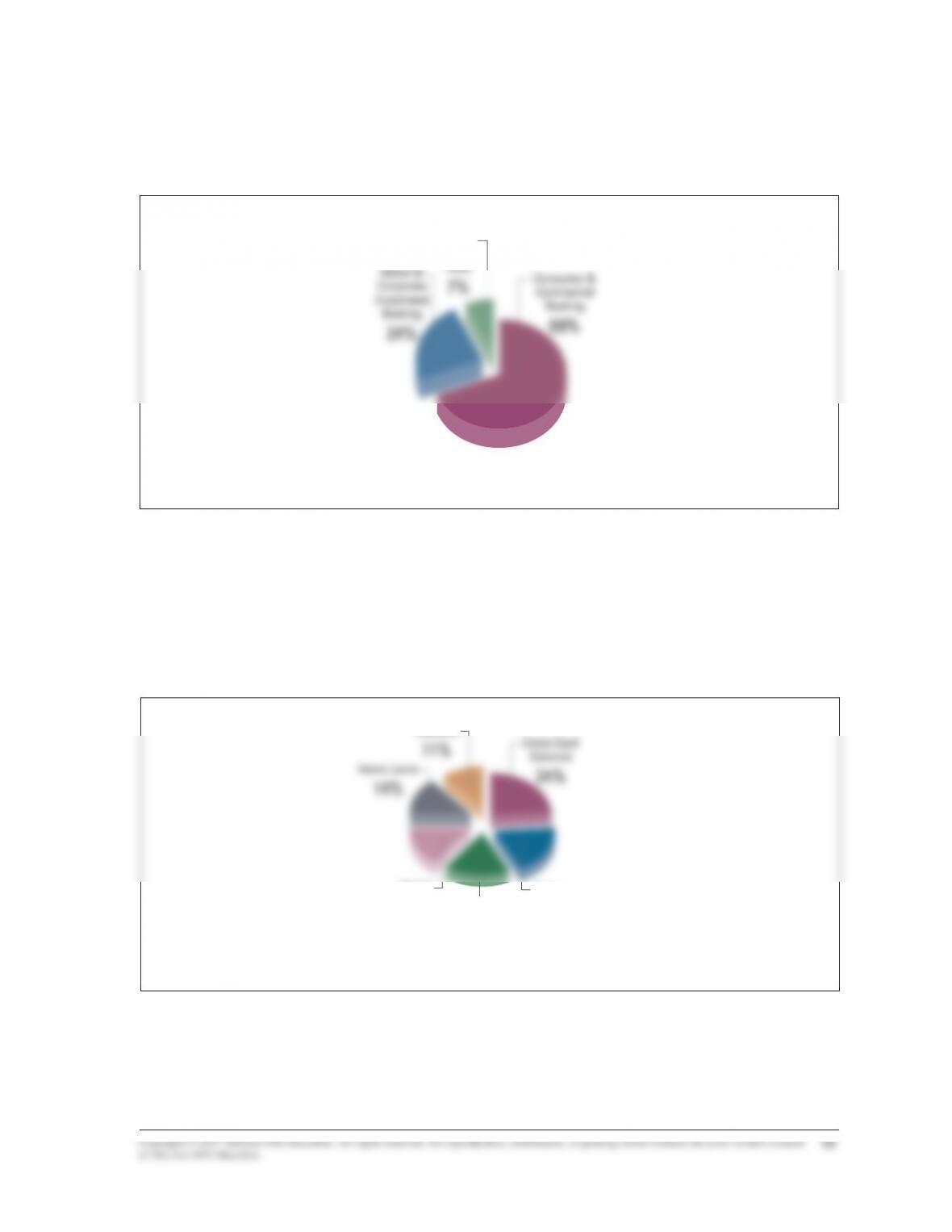
ExHIBIt tN-2 Bank of America’s Diversification Strategy in 2003
Percent of Revenue
Asset
Manage–
Source: Blamely, R. S., S. Griffin, Q. Makins, B. Rule, and D. Thompson (2010), “A strategic perspective on Bank of America,”
Georgia Institute of Technology.
Global
Banking
19%
Deposits
Global
Wealth
15%
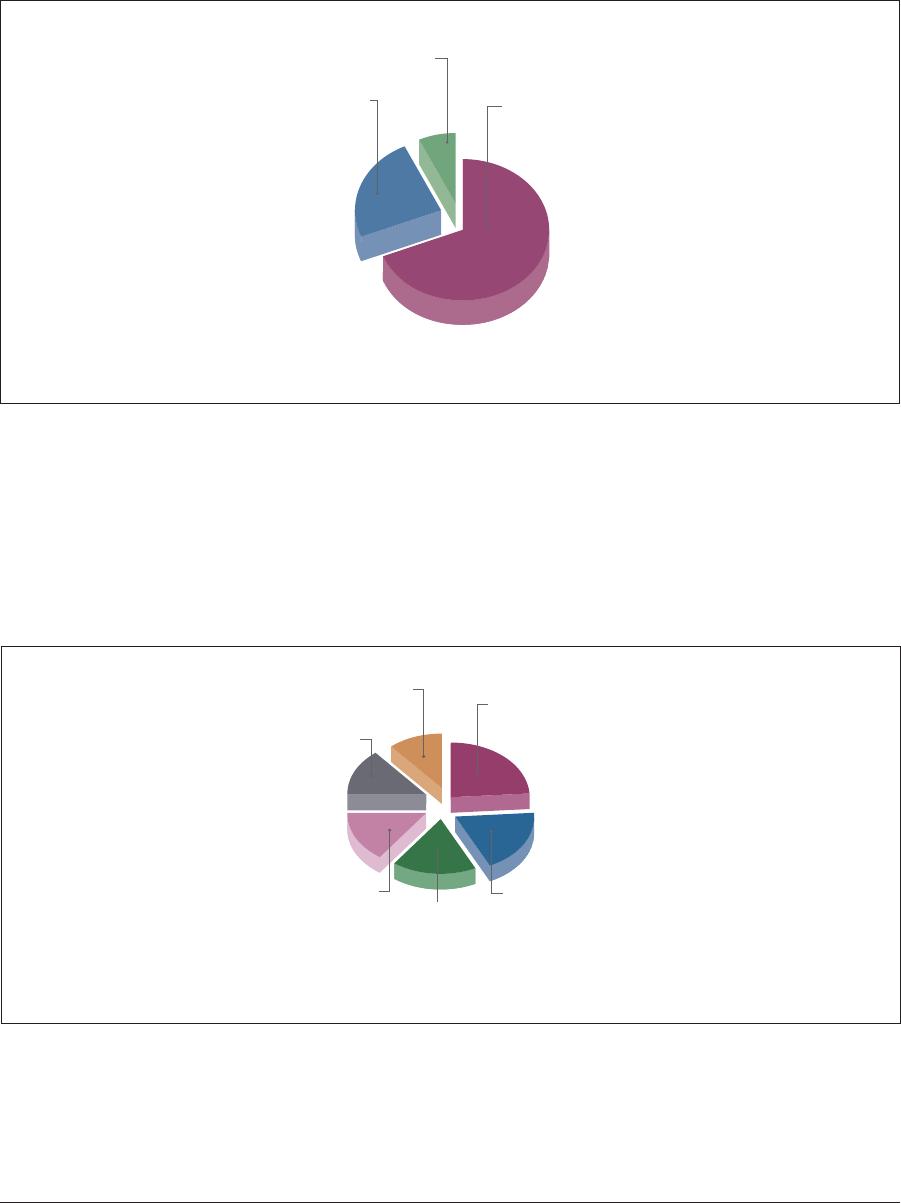
Percent of Revenue
Global
Markets
17%
ExHIBIt tN-3 Bank of America’s Diversification Strategy in 2009
Source: Blamely, R. S., S. Griffin, Q. Makins, B. Rule, and D. Thompson (2010), “A strategic perspective on Bank of America,”
Georgia Institute of Technology.

Teaching Note —Bank of America and the New Financial Landscape
Works Cited
Baer, J., Bond, S., and Thomas, H. (2011), “Buffett invests $5 bn in BofA,” Financial times, August 26. p. 1.
“Bank of America hands Krawcheck $6 million severance,” Bloomberg, October 7, 2011. http://www.bloomberg.
com/news/2011-10-07/bank-of-america-gives-krawcheck-6-million-severance-package-after-ouster.html.
Benoit, D. (2011), “BofA’s big mortgage settlement is moved to U.S. court,” the wall street Journal, October 19.
Bond, S., and Braithwaite, T. (2011), “BofA worst hit by Moody’s downgrade,” Financial times, September 22. p. 17.
Braithwaite, T., and Masters, B. (2011), “BofA shares dive as AIG sues,” Financial times, August 9. p. 13.
“Busting Bank of America: A case study in how to spread systemic financial risk,” the wall street Journal, April 28,
2009. http://online.wsj.com/article/SB124078909572557575.html.
Fitzpatrick, D. (2011), “Bank of America set to slice jobs; reductions total 3,500 in current quarter; many more seen,”
the wall street Journal, August 19.
Fitzpatrick, D. (2011), “Bank of America to exit another line,” the wall street Journal, August 31.
Fitzpatrick, D. (2011), “BofA haunted by Countrywide deal,” the wall street Journal, June 30.
Fitzpatrick, D. (2011), “BofA readies the knife – bank plans to cut $5 billion in costs by end of 2013; 30,000 jobs to
disappear,” the wall street Journal,” September 13. p. C1.
Fitzpatrick, D. (2011), “BofA warned to get stronger,” the wall street Journal, November 22. p. C1.
Fitzpatrick, D. (2011), “Heavy is the head that wears crown – Bank of America abdicates as asset king,” the wall
street Journal, October 19. p. C1.
Fitzpatrick, D. (2011), “New york Attorney General steps up probe into BofA-Merrill disclosures,” the wall street
Journal, July 2.
Fitzpatrick, D., and Eckblad, M. (2009), “Lewis ousted as BofA Chairman,” the wall street Journal. April 30. http://
online.wsj.com/article/SB124101668502368771.html.
Fitzpatrick, D., and Paletta, D. (2009), “Regulators urged BofA to revamp its board,” the wall street Journal, May
16. http://online.wsj.com/article/SB124235572006122687.html.
Kapner, S. (2011), “Investors challenge BofA settlement,” Financial times, July 6. p. 24.
30.
Roose, K. (2011), “Outsiders’ ideas help Bank of America cut jobs and costs,” September 12. http://dealbook.
nytimes.com/2011/09/12/outsiders-ideas-help-bank-of-america-trim-jobs-and-costs/.