
Chapter 15 – Supply Chain and Channel Management M: Marketing 6th
Copyright © 2019 McGraw-Hill Education. All rights reserved. No reproduction or distribution without the prior written consent of
McGraw-Hill Education.
1
Instructor’s Manual: Implementation
Guide
This improved Instructor’s Manual (IM) contains more than just summaries of key concepts and features from the
sixth edition of M: Marketing that can be used as springboards for class discussion; it also provides best practices for
how to utilize the full product suite (from the textbook to SmartBook® to Connect®). In addition, this manual
includes a variety of supplemental teaching resources to enhance your ability to create an engaging learning
experience for your students. Regardless of whether you teach in face–to-face traditional classrooms, blended
(flipped) classrooms, online environments, or hybrid formats, you’ll find everything you need in this improved
resource.
The IM follows the order of the textbook outline for each chapter and is divided into sections for each learning
objective. To ease your class preparation time, we’ve included references to relevant PowerPoint slides that can be
shown during class. Note that you can adjust slides as needed to ensure your students stay actively engaged
throughout each session.
AVAILABLE INSTRUCTOR RESOURCES
Within the Instructor Resources Tab, located in the Connect® Library, you will find the following Instructor
Resources:
▪ Instructor’s Manual
▪ PowerPoint Presentations (Accessible)
▪ Test Bank
▪ Author Newsletter Blog
▪ Video Library
▪ Connect Content Matrix
Instructor’s Manual
This Instructor’s Manual is posted by chapter. Within each section of the IM you will find an assortment of feature
summaries, examples, exercises, and Connect® Integration assignments intended to enhance your students’ learning
and engagement.

Chapter 15 – Supply Chain and Channel Management M: Marketing 6th
Copyright © 2019 McGraw-Hill Education. All rights reserved. No reproduction or distribution without the prior written consent of
McGraw-Hill Education.
2
PowerPoint Presentations
A set of ADA-accessible PowerPoints is available with each chapter and covers:
▪ Chapter Learning Objectives
▪ Key examples
▪ Key exhibits
▪ Key concepts and frameworks
▪ Progress checks
▪ Glossary terms
Some slides include teaching notes to guide your discussion of the content that appears on each slide.
Test Bank
Test Bank questions are posted by chapter. You will find a variety of question types within the test bank such as
Matching, Ranking, Multiple Choice, Select-All-That-Apply, True/False, Short Answer, and Essay to test student
mastery across Bloom’s Taxonomy (i.e., Understand, Apply, and Analyze). Due to the evolving needs around
generating high-quality print test experiences, McGraw-Hill Education provides a free copy of the industry-leading
test generation software TestGen® to users (more details can be found within the Instructor Resources tab under
“Test Bank”). Furthermore, due to its limitations to function with the latest browsers and operating systems,
McGraw-Hill Education has discontinued EZ-Test Online. Some of the robust new features present in TestGen®,
include:
▪ Cross-platform software compatibility with Windows and Mac
▪ Multiple LMS export formats, including Blackboard, Moodle, Desire2Learn, and Sakai
▪ Highly customizable formatting and editing option
Video Library
The Video Library provides links to all the assignable videos in Connect®, as well as legacy videos that are no
longer available as assignments, but that remain available as an additional resource. These videos can be directly
streamed from within the library that is located in the Instructor’s Resource tab. Accompanying each video is a brief
video guide that summarizes the key concepts of the video.

Chapter 15 – Supply Chain and Channel Management M: Marketing 6th
Copyright © 2019 McGraw-Hill Education. All rights reserved. No reproduction or distribution without the prior written consent of
McGraw-Hill Education.
3
Connect Content Matrix
The Connect Content Matrix provides a brief overview of all the application exercises available in the course. It
lists the Learning Objectives, topic tags, Bloom’s levels, and difficulty levels associated with each exercise.
Connect®, McGraw-Hill’s online assignment and assessment system, offers a wealth of content for both students
and instructors. Assignable activities include the following:
USING SMARTBOOK® TO ENHANCE STUDENTS’
PERFORMANCE
The LearnSmart®-powered SmartBook® is assignable through Connect. One of the first fully adaptive and
individualized study tools designed for students, it creates for them a personalized learning experience, giving them
the opportunity to practice and challenge their understanding of core marketing concepts. The reporting tools within
SmartBook® show where students are struggling to understand specific concepts.
Typically, SmartBook® is assigned by module (chapter), and you can set which learning objectives to cover as well
as the number of probes the student will see for each assignment. You can also set the number of points a
SmartBook® module is worth in the course. Usually, applying a minimal number of points for completion of each
module is enough to encourage students to read the chapter. Many instructors assign these modules to be completed
before the class or online session.
SmartBook® provides several diagnostic tools for you to gauge which concepts your students struggle to understand.
Below is the set of adaptive assignment reports available in SmartBook®:
▪ Progress Overview: View student progress broken down by module
▪ Student Details: View student progress details plus completion level breakdown for each module
▪ Module Details: View information on how your class performed on each section of their assigned modules
▪ Practice Quiz: This gives you a quick overview of the quizzes results for your students
▪ Missed Questions
▪ Metacognitive Skills
The Module Details report shows you the results for the students in the class overall. These details reveal where in
the chapters students might be struggling. The module gives the chapter section, average time spent, average
questions per student correct/total, and the percentage of correctness (based in number of assigned items).
Information about the most challenging sections for students can help you refine the focus of the next face–to-face,
hybrid, or online session.
The Metacognitive Skills report captures students’ confidence in their competency of the materials. Below you will
find a recreation of the Metacognitive Skills report. In it, you can see that the second student is confident and mostly
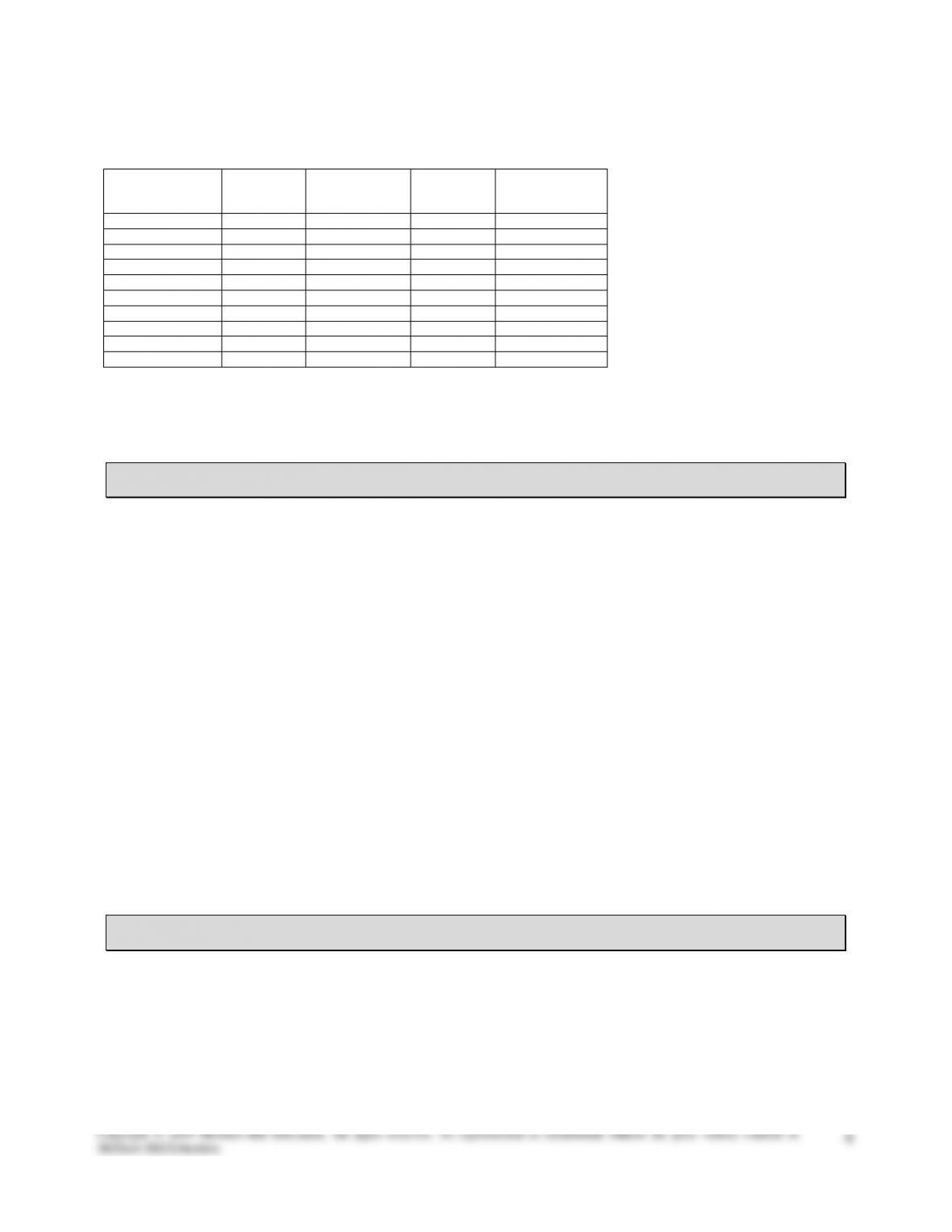
Chapter 15 – Supply Chain and Channel Management M: Marketing 6th
Copyright © 2019 McGraw-Hill Education. All rights reserved. No reproduction or distribution without the prior written consent of
McGraw-Hill Education.
4
correct (see the 91% in the Correct and Aware column) while the first student “doesn’t know what she doesn’t
know” (see the 39% in the Incorrect and Unaware column).
STUDENT
CORRECT
and
AWARE
CORRECT and
UNAWARE
INCORRECT
and
AWARE
INCORRECT and
UNAWARE
Student 1
61%
0%
0%
39%
Student 2
91%
0%
3%
5%
Student 3
81%
0%
0%
19%
Student 4
83%
0%
0%
17%
Student 5
76%
0%
3%
21%
Student 6
66%
0%
9%
25%
Student 7
77%
0%
3%
12%
Student 8
91%
0%
2%
7%
Student 9
93%
0%
2%
5%
Student 10
70%
0%
6%%
25%
APPLICATION EXERCISES, QUIZZES, AND TEST BANK
Book-level Resources
Application Exercises require students to apply key concepts to close the knowing and doing gap; they provide
instant feedback for the student and progress tracking for the instructor. Before getting into chapter-level
assignments, let’s first look at the book-level assignments available.
Three exercise types are available for instructors to assign beyond the chapter materials. These are 1) Marketing
Plan Prep Exercises, 2) Marketing Analytics Exercises, and 3) Marketing Mini Simulation.
1) Marketing Plan Prep exercises use guided activities and examples to help students understand and
differentiate the various elements of a marketing plan.
2) Marketing Analytics exercises are data analytics activities that challenge students to make decisions using
metrics commonly seen across the marketing professions. The goal of these activities is to give students
practice analyzing and using data to make marketing decisions.
3) Marketing Mini Simulation helps students apply and understand the interconnections of elements in the
marketing mix by having them take on the role of Marketing Manager for a backpack manufacturing
company. The simulation can be assigned by topic or in its entirety.
Chapter-level Resources
Chapter-level Application Exercises are built around chapter learning objectives, so you can choose which ones to
assign based on your focus for each specific chapter. Several types of Application Exercises are available in each
chapter. These are 1) iSeeit! Animated Video Cases, 2) Case Analyses, 3) Video Cases, and 4) Click-and-Drag
exercises.
1) The iSeeit! Video series comprises short, contemporary animated videos that provide engaging
introductions to key course concepts. These are perfect for launching lectures and assigning as either pre-

Chapter 15 – Supply Chain and Channel Management M: Marketing 6th
Copyright © 2019 McGraw-Hill Education. All rights reserved. No reproduction or distribution without the prior written consent of
McGraw-Hill Education.
5
or post-lecture activities. Each animation is accompanied by three to four multiple-choice questions to
check student attention and comprehension.
2) Case Analyses and Video Cases each feature real-world firms and industries different than those discussed
in the textbook. Each case analysis and video case is accompanied by questions that ask students to analyze
and apply marketing theory and concepts.
3) Click-and-Drag exercises help students actively demonstrate their understanding of the associated learning
objectives. Some require students to match examples to concepts, to place series of steps in the correct
sequence, or to group examples together under their correct categories.
Application Exercises can be assigned as preparatory exercises due before class (this is especially good for flipped
classrooms), or after class as concept comprehension checks. Consider assigning two or three Application Exercises
per chapter.
Applications Exercises will generally be assigned as homework or practice as part of the overall class grade. A
general rule of thumb would be to make application exercises worth 5 to 10 points each, since these require more
time and thought than a test bank question might.
To find the Applications in Connect®, go to “Add Assignment” and select “Question Bank.” Within this question
bank will find a drop-down menu of all the book-level assignments and chapter-level assignments. You can then
select the ones you wish to assign.
Chapter-level quizzes and full chapter test banks are also found in the Question Bank’s drop-down menu. Apply a
relatively low value to each question—for example, 1 or 2 points each—since numerous questions are typically
assigned for each chapter. You can decide when to surface the feedback to students. Selecting to display feedback
after the assignment due date helps to prevent cheating; that is, it keeps students from sharing the correct answers
with other students while the questions are still open and available. For this reason, it is suggested that no feedback
to quizzes and test bank exams be made available until after the assignment is due.
ASSIGNING EXERCISES AND GRADING POLICIES: BEST
PRACTICES
To fully utilize the power of the digital components, it is recommended that you assign the SmartBook® reading and
adaptive learning probes before class meets. Application Exercises can be completed either before or after class; if
they are completed before class, they can sometimes serve as good springboards for class discussions. The chapter
quiz makes a good check on comprehension of the material and may work best if assigned after each class period.
The test bank serves as a good resource for building mid-term or final exams.
More detailed information on SmartBook® and Connect® is available through several resources at McGraw-Hill. A
good starting point is your local Learning Technology Representative, who can be found here:
http://www.mheducation.com/highered/platforms/connect/features-educators.html
Connect® gives instructors a wide array of flexibility in making assignments and creating grading policies.
Instructors may choose to:
• assign as many assignments as appropriate given the level and time commitment expected for the class,
• determine point values for each question/application that works within the total course percentages,
• make available multiple attempts per assignment with options of accepting the highest score or averaging all the

Chapter 15 – Supply Chain and Channel Management M: Marketing 6th
Copyright © 2019 McGraw-Hill Education. All rights reserved. No reproduction or distribution without the prior written consent of
McGraw-Hill Education.
6
attempts together (several attempts are particularly good for homework assignments),
• deduct points for late assignment submissions (percentage deduction per hour/day/week/etc.) or create hard
deadlines thus accepting no late submissions,
• show feedback on application/questions immediately upon submission or at the time the assignment is due for
the whole class, create new assignments or questions from scratch, or edited versions from a variety of provided
resources.
Throughout the IM for each chapter, we integrate materials from the PowerPoint slides and provide summaries for
each of the Connect® Application Exercises at the end of each chapter. These summaries are intended to give you a
sense of the learning goal behind each exercise. We hope this integration of resources will help you to convey core
Chapter 15 – Supply Chain and Channel Management M: Marketing 6th
Copyright © 2019 McGraw-Hill Education. All rights reserved. No reproduction or distribution without the prior written consent of
McGraw-Hill Education.
7
Chapter 15
Supply Chain and Channel Management
Tools for Instructors
• Chapter Overview
• Brief Chapter Outline
• Learning Objectives
• Extended Chapter Outline
• PowerPoint Slides
• Additional Resources
• Connect Application Exercises
Chapter Overview
This chapter introduces the student to supply chain management. Instructors should tie in the role of the
supply chain to value creation and how it contributes to the marketing effort.
Brief Chapter Outline
The Importance of Marketing Channel/Supply Chain Management
Designing Marketing Channels
Managing the Marketing Channel and Supply Chain
Making Information Flow through Marketing Channels
Making Merchandise Flow through Marketing Channels
Learning Objectives
LO15-1 Understand the importance of marketing channels and supply chain management.
Marketing channels allow companies to get their products in the appropriate outlets in sufficient quantities
to meet consumer demand. To anticipate this demand, advertising and promotions must be coordinated
and marketing.
LO15-2 Understand the difference between direct and indirect marketing channels.
There are two ways by which businesses get their goods to consumers. Using a direct marketing channel,
LO15-3 Describe how marketing channels are managed.
Chapter 15 – Supply Chain and Channel Management M: Marketing 6th
Copyright © 2019 McGraw-Hill Education. All rights reserved. No reproduction or distribution without the prior written consent of
McGraw-Hill Education.
8
The more closely aligned the marketing channel members are with each other, the less likely there will be
LO15-4 Describe the flow of information and merchandise in the marketing channel.
Information flow involves: flow 1 (customer to store), flow 2 (store to buyer), flow 3 (buyer to
Extended Chapter Outline
I. The Importance of Marketing Channel/Supply Chain Management (PPT 15-04)
A. Marketing Channels Add Value (PPT 15-07, 15-08)
B. Marketing Channel Management Affects Other Aspects of Marketing (PPT 15-09)
II. Designing Marketing Channels (PPT 15-10)
Ethical & Societal Dilemma 15.1: When Advances in Technology Mean Steps Back for Retail
Workers discusses how the options for direct marketing channels and the related technology
advancements might have implications for the workforce. Would students be willing to pay more for
products that they know are made by human workers?
A. Direct Marketing Channel
B. Indirect Marketing Channel
III. Managing the Marketing Channel and Supply Chain (PPT 15-11)
Marketing Analytics 15.1: Analytics in Support of Anticipatory Shipping by Amazon details how
Amazon is attempting to combine all supply chain roles by leveraging its access to massive amounts of
customer data. What are the advantages and disadvantages of “anticipatory shipping”?
1. Administered Vertical Marketing System (PPT 15-13)
3. Corporate Vertical Marketing System (PPT 15-13)
B. Managing Marketing Channels and Supply Chains through Strategic Relationships (PPT 15-15)

Chapter 15 – Supply Chain and Channel Management M: Marketing 6th
Copyright © 2019 McGraw-Hill Education. All rights reserved. No reproduction or distribution without the prior written consent of
McGraw-Hill Education.
11
Additional Resources
Students can understand how a product gets from point A to the end delivery point but may not
understand the role of the intermediaries in transport and their responsibility to the marketing effort.
These factors should be addressed in teaching the chapter.
Students can find this chapter difficult to fully understand. Showing the DVD for this chapter titled “New
Balance: Managing Supply from U.S. and Overseas” may clarify the role of supply chain management in
the marketing effort.
Instructors may want to assign students to roles in the distribution channel (manufacturer, warehouse
distributor, truck driver or transport person, wholesale, retailer) and various intermediaries with the
assignment given to them as follows: How does your role add to the marketing effort? This exercise gets
students to think about the connection to “Place,” one of the elements of the marketing mix, to the overall
marketing strategy.
Similar to the last chapter, the instructor may want to review the vocabulary of the chapter by having
students complete story problems surrounding the vocabulary words presented in this chapter.
Chapter 15 – Supply Chain and Channel Management M: Marketing 6th
Copyright © 2019 McGraw-Hill Education. All rights reserved. No reproduction or distribution without the prior written consent of
McGraw-Hill Education.
12
Connect Application Exercises
This section summarizes each Application Exercise available with this chapter. Each summary comprises
an introduction to the exercise, concept review, and follow-up activity. Associated details related to the
learning objectives, activity type, AASCB category, and difficulty levels are also included. These
summaries are intended to guide your course planning; perhaps you want to assign these exercises as
homework or practice, before or after class. For best practices on how and when to assign these
exercises, see the IM Implementation Guide at the beginning of this chapter.
Activity
Type
Learning Objectives 15–
01
02
03
04
New Balance: Managing Supplies for U.S. and
Overseas
Video Case
X
X
X
Supply Chain Management
Video Case
X
X
X
Making Information Flow and Making Merchandise
Flow
Click & Drag
X
Walmart: Pioneer in Supply Chain Management
Case Analysis
X
X
X
Fast Fashion: Efficient Supply Chain Management at
Zara
Case Analysis
X
X
Supply Chain: Icebreaker
Video Case
X
X
Supply Chain: How Domino’s Gets Its Pizza to Plate
Video Case
X
X
X
ISeeIt Video Case: Supply Chain
Video Case
X
X
X
New Balance: Managing Supplies for U.S. and Overseas
▪ Activity Type: Video Case
▪ Learning Objectives: 15-01, 15-03, 15–04
▪ Difficulty: Medium
▪ Activity Summary: The video case discusses the challenges of managing a global supply chain, as
conducted by New Balance. After the video ends, students are asked questions about the video and
related course concepts.
Activity
▪ Introduction: Most consumers recognize the New Balance brand as one associated with quality
athletic shoes and apparel. What consumers don’t know is that behind the scenes, New Balance is
able to provide excellent product and customer service because of its commitment to creating an
organized and efficient supply chain.
▪ Concept Review: Every marketing decision is affected by the supply chain. When products are
designed and manufactured, how and when the critical components reach the factory must be
coordinated with production. The sales department must coordinate its delivery promises with the
factory or distribution centers. Five interrelated processes emerge in supply chain management:
making information flow, making merchandise flow, managing inventory, designing the supply chain,
and managing the relationships among supply chain partners.
▪ Video: The video is presented to the student below the introductory information. The video plays
embedded on the page, after which questions are presented.

Chapter 15 – Supply Chain and Channel Management M: Marketing 6th
Copyright © 2019 McGraw-Hill Education. All rights reserved. No reproduction or distribution without the prior written consent of
McGraw-Hill Education.
13
Follow-Up Activities
For a fascinating look at a global supply chain, show “Planet Money Makes a T-Shirt” in class and then
discuss it (you could also assign it to be watched outside class and ask students to write about it).
http://apps.npr.org/tshirt/ – /title
This is a five-part video, but the videos are very short, with a total length of less than 15 minutes. They
follow the supply chain for a t-shirt from the start (growing the cotton) to the end (boxing them up and
sending them to consumers who ordered them). This includes short looks at garment factories in
Bangladesh and Colombia, where the shirts were sewn.
If you are interested in more details, you can listen to the original podcasts, which go beyond supply chain
basics to address questions of global outsourcing:
http://www.npr.org/series/248799434/planet-moneys-t-shirt-project
Supply Chain Management
▪ Activity Type: Video Case
▪ Learning Objectives: 15-01, 15-02, 15–04
▪ Difficulty: Medium
▪ Activity Summary: In this simulated meeting, a retailer and one of her suppliers discuss a problem
that has arisen with a large order. After the video ends, students are asked questions about the video
and related course concepts.
Activity
▪ Introduction: Beth Armstrong owns a sporting goods store for kids in a Northeastern town. When a
500-unit order Beth places online goes awry, she meets with a senior account representative, Bill
Schule, to resolve the issues. The interaction raises a wide range of issues pertaining to the retailer,
the supplier, and the consumer.
▪ Concept Review: Supply chain management refers to a set of approaches and techniques firms
employ to: (1) efficiently and effectively integrate their suppliers, manufacturers, warehouses, stores,
and transportation intermediaries into a seamless value chain in which merchandise is produced and
distributed in the right quantities, to the right locations, and at the right time; and (2) minimize system–
wide costs while satisfying the service levels their customers require. Inefficiency in the supply chain
can lead to a variety of problems, including delayed shipments, higher prices, and dissatisfied
customers.
▪ Video: The video is presented to the student below the introductory information. The video plays
embedded on the page, after which questions are presented.
Follow-Up Activities
This video offers an opportunity to integrate current and past course material. Ask students to watch the
video again from the perspective of the three service recovery strategies: listen to the customer, find a fair
solution, and resolve the problem quickly. The supplier’s rep does all of those things fairly skillfully, and as

Chapter 15 – Supply Chain and Channel Management M: Marketing 6th
Copyright © 2019 McGraw-Hill Education. All rights reserved. No reproduction or distribution without the prior written consent of
McGraw-Hill Education.
14
a result he is able to manage the retailer’s emotional state and work with her to solve her immediate
problem.
Making Information Flow and Making Merchandise Flow
▪ Activity Type: Click & Drag
▪ Learning Objectives: 15–04
▪ Difficulty: Medium
▪ Activity Summary: Students are asked to identify different types of information flows in the supply
chain.
Activity
▪ Introduction: When a customer decides to purchase a Sony DVD player at her local Best Buy store,
it triggers action throughout the entire supply chain. It is possible that by the time she leaves the
parking lot, the manufacturer has already ordered another player to be built, and this occurs with the
tens of thousands of these players being sold every day around the world. Read about this purchase,
and then assemble the information flow model as instructed.
▪ Concept Review: Supply chain management refers to a set of approaches and techniques firms
employ to: (1) efficiently and effectively integrate their suppliers, manufacturers, warehouses, stores,
and transportation intermediaries into a seamless value chain in which merchandise is produced and
distributed in the right quantities, to the right locations, and at the right time; and (2) minimize system–
wide cost while satisfying the service levels their customers require. Five interrelated activities
emerge in supply chain management: making information flow, making merchandise flow, managing
inventory, designing the supply chain, and managing the relationships among supply chain partners.
Walmart: Pioneer in Supply Chain Management
▪ Activity Type: Case Analysis
▪ Learning Objectives: 15-01, 15-03, 15–04
▪ Difficulty: Hard
▪ Activity Summary: Discusses how Walmart manages its supply chain. Students are asked questions
relating chapter concepts to the case.
Activity
▪ Introduction: Walmart dominates the retailing industry in terms of its sales revenues, its tremendous
customer base, and its ability to drive down costs and deliver value to customers. Walmart takes
pride in having received numerous accolades for its ability to continuously improve efficiency in the
supply chain while meeting its corporate mandate of offering customers everyday low prices. Review
the following case and answer the corresponding questions regarding Walmart’s supply chain
strategy.

Chapter 15 – Supply Chain and Channel Management M: Marketing 6th
Copyright © 2019 McGraw-Hill Education. All rights reserved. No reproduction or distribution without the prior written consent of
McGraw-Hill Education.
15
▪ Concept Review: Supply chain management refers to a set of approaches and techniques firms use
to streamline the flow of merchandise. Firms with a supply chain management focus strive to
efficiently and effectively integrate their suppliers, manufacturers, warehouses, stores, and
transportation intermediaries into a seamless value chain in which merchandise is produced and
distributed in the right quantities, to the right locations, and at the right time. Supply chain
management also focuses on minimizing system-wide costs while satisfying the service levels
customers require.
Follow-Up Activity
Assign the following article: http://time.com/money/4182681/walmarts-express-stores-close/
The article explains that Walmart has given up on its “Express Stores” format, which was a smaller store
along the lines of a convenience store.
Discussion question or writing prompt: The article notes that Walmart’s supply chain is optimized for the
superstore format. What supply chain changes would be needed to support smaller stores?
Fast Fashion: Efficient Supply Chain Management at Zara
▪ Activity Type: Case Analysis
▪ Learning Objectives: 15-03, 15–04
▪ Difficulty: Hard
▪ Activity Summary: This case describes Zara’s “fast fashion” supply chain. Students answer
questions relating chapter concepts to the case.
Activity
▪ Introduction: In the fast fashion retail business strategy, supply chain management processes serve
to introduce fashionable merchandise rapidly, such that stores can respond immediately to customer
demand for merchandise. This was pioneered by Zara, a global specialty apparel chain located in La
Coruna, Spain. The approach is particularly effective for specialty apparel retailers that target fashion–
conscious consumers who simply must have the latest looks—but want to do so on a very limited
budget. These shoppers load up on new fast fashions every few weeks, instead of purchasing a few
higher-priced basics every few months. This creates unique challenges for a firm’s supply chain
management.
▪ Concept Review: Supply chain management refers to a set of approaches and techniques firms
employ to efficiently and effectively integrate their suppliers, manufacturers, warehouses, stores, and
transportation intermediaries into a seamless operation in which merchandise is produced and
distributed in the right quantities, to the right locations, and at the right time. Another goal is to
minimize system-wide costs while satisfying the service levels customers require. Supply chain
management adds value for customers because it gets the products to them efficiently, quickly, and
at low cost.

Chapter 15 – Supply Chain and Channel Management M: Marketing 6th
Copyright © 2019 McGraw-Hill Education. All rights reserved. No reproduction or distribution without the prior written consent of
McGraw-Hill Education.
16
Follow-Up Activity
For the “dark side” of the Zara supply chain, these articles shed some light on concerns about the impact
of “fast fashion” on garment workers and the environment. This is related to the “Planet Money T–Shirt”
video recommended as a follow-up to the New Balance video case.
http://www.sustainablebrands.com/news_and_views/stakeholder_trends_insights/jennifer_elks/ethical_fa
st_fashion_hm_trying_prove_its_no
http://www.ethicalfashionforum.com/the-issues/fast-fashion-cheap-fashion
In addition, a 2015 film called The True Cost addresses issues related waste and exploitation in fast
fashion. Its approach is simplistic, so don’t expect any startling insights or creative solutions, but for
someone who hasn’t thought about these issues—and some students probably haven’t—it might be of
value. For more about the film, visit truecostmovie.com.
Supply Chain: Icebreaker
▪ Activity Type: Video Case
▪ Learning Objectives: 15-02, 15–03
▪ Difficulty: Medium
▪ Activity Summary: This case explains supply chain management for Icebreaker, a New Zealand
clothing company. After the video ends, students are asked questions about the video and related
course concepts.
Activity
▪ Introduction: In 1994, Jeremy Moon founded Icebreaker, a New Zealand–based company that
makes high-tech clothing from merino wool and other natural sources. Icebreaker is now a global
enterprise with manufacturing plants, distribution centers, and retail outlets on four continents. Getting
the right product to the right place at the right time requires successful marketing channel
management. Watch the following video to discover the variety of approaches and techniques
Icebreaker uses to efficiently and effectively manage the company’s supply chain.
▪ Concept Review: Marketing channel management refers to a set of approaches and techniques
firms employ to efficiently and effectively integrate their suppliers, manufacturers, warehouses,
stores, and transportation intermediaries into a seamless operation. The goal of marketing channel
management is that merchandise is produced and distributed in the right quantities, to the right
locations, and at the right time while minimizing costs. There is no one best channel structure.
Channels can be direct, indirect, or some combination thereof. The majority of firms today use vertical
marketing systems (VMS) to manage their channels. In a VMS, channel members act as a unified
system. There are three types of vertical marketing systems: contractual, administered, and
corporate. More often than not, channel members also establish long-term strategic partnerships.
▪ Video: The video is presented to the student below the introductory information. The video plays
embedded on the page, after which questions are presented.

Chapter 15 – Supply Chain and Channel Management M: Marketing 6th
Copyright © 2019 McGraw-Hill Education. All rights reserved. No reproduction or distribution without the prior written consent of
McGraw-Hill Education.
17
Supply Chain: How Domino’s Gets Pizza to Plate
▪ Activity Type: Video Case
▪ Learning Objectives: 15-02, 15-03, 15–04
▪ Difficulty: Medium
▪ Activity Summary: The video explains the hub-and-spokes approach Domino’s uses to manage
delivery of ingredients to its retail outlets. After the video, students are asked questions applying
chapter concepts to the case material.
Activity
▪ Introduction: Domino’s needs an efficient supply chain in order to profitably serve pizza to its large
customer base. This video explains various aspects of the company’s supply chain operations and
relationships. This activity is important because marketers must be able to design and manage
efficient and effective supply chains. Problems in a supply chain can lead to reduced profits and lost
customers. The goal of this exercise is to check your understanding of key supply chain concepts by
applying them to Domino’s.
▪ Video: The video is presented to the student below the introductory information. The video plays
embedded on the page, after which questions are presented.
ISeeIt Video Case: Supply Chain
▪ Activity Type: Video Case
▪ Learning Objectives: 15-01, 15-02, 15–04
▪ Difficulty: Medium
▪ Activity Summary: This video case looks at supply chain issues for a bottled water company.
Activity
▪ Introduction: Marketing channels involve a series of intermediary organizations or individuals who
help move products and services from the manufacturer to the end user. Supply chain management
represents the management of diverse intermediaries and channels including middlemen, brokers,
wholesalers, retailers, distributors, and dealers—all of which add value, and cost, to the final
consumed product. Take for instance Hope Springs and the supply chain it uses to get its bottled
water from one of the company’s three manufacturing facilities into the hands of thirsty
customers. Hope Springs knows that while distribution may add cost to the final product, it also adds
significant value because of the complexity behind effectively managing this process. From delivery to
warehousing and restocking to inventory, Hope Springs knows it needs to focus on the core of its
business and let distributors take care of the logistics, facilitation, and transactional aspects of getting
bottled water to customers.
▪ Video: The video is presented to the student below the introductory information. The video plays
embedded on the page, after which questions are presented.