
Part 09 – Performance Management
9-21
JULY
Take time to listen to our patients to understand their needs.
Prizes included “Easy Listening” CD to focus on improving our listening skills, along with logo items.
Treat each other as equals and maintain a supportive and caring work environment.
We highlighted the “Care Persons of the Month” over the past year, these are associates who had been
nominated by patients, fellow employees and supervisors for their outstanding contributions. We
encouraged everyone to actively participate in the Care program, and also raffled off logo items.
AUGUST
Tend to the needs of our patients in an atmosphere of support and open communication.
We highlighted the various internal communication materials we provide for our patients, such as the
patient handbook, Living Will issues, and specific disease management publications. We also raffled off
various logo items.
Reach agreement in a cooperative manner, offer assistance and promote harmony.
In addition to the logo prizes, we raffled a variety of therapeutic items, such as aromatic lotions, candles,
etc. to support the “harmony” theme.
SEPTEMBER
Understand the needs of our patients and their families in an honest and professional manner.
We highlighted the comments received from patients and their families in our patient satisfaction vehicle
that demonstrated the associates accomplishing this goal. We not only put them in the display cases but
had some blown up as posters, and had them in the elevators and sign holders throughout the facilities.
We also raffled off logo items.
OCTOBER
Understand the needs of our patients and their families for privacy and dignity.
We had a very special promotion this month, we asked the associated to write an essay describing what
“Privacy and Dignity Mean to Me” as an employee of SLH. We received the essays and removed the
names, had an impartial group of judges review them without names, and selected one winner from each
facility to receive a stereo/5CD sound system. We surprised both winners with their prizes, took photos,
which were displayed. The winning essays were then put in poster form and displayed around the
hospital as well as published in our bi–weekly newsletter “Interviews.” The essays were wonderful and
quite compelling to read.

Part 09 – Performance Management
9-22
Use honesty and integrity in all our actions.
In addition to the above we raffled off logo items, with names from the participation boards.
NOVEMBER
Show a positive attitude and helpfulness in all that we do.
This month we used a series of items from Succesories” with the “Attitude” photo of the drop of water
and its ripple. “Attitude is a little Thing That Makes a BIG Difference.” We raffled off one large framed
poster at each facility, then several smaller ones, along with mouse pads, mugs, pens, etc.
Show compassion and concern for each other, being sensitive to each person’s special needs.
We highlighted some of the “Diversity Committee’s” efforts and highlighted various cultures within our
employee population. We also had several special mea days in the cafeteria honoring the different
cultures, one Hispanic meal day, and one African American meal day. We also raffled off various logo
items.
DECEMBER
Train qualified and thoroughly knowledgeable staff to provide courteous, kind, friendly and
professional care for every patient, every time.
We highlighted the efforts of our education department and how they provide continuing education to our
associates to maintain our high levels of competence. We also displayed photo collages of all of our
associates attending the Image Enhancement Sessions. We raffled off logo items as well and publicized
the results of all of our efforts. We had a significant increase in patient satisfaction scores, and significant
improvement in market share. In addition to the positive personal aspects of the program we had
concrete evidence of significant financial improvement, and more satisfied customers.
Train, inform and lend a helping hand to all. Emphasize a one team attitude. “Together Everyone
Accomplishes More.”
We ended the year with Hat, Glove and Mitten drive for Women’s Crises Shelter. We asked all
associates to donate new items for the Crises Center. With each donation they had an opportunity to put
their name in a raffle for a color TV/VCR. We had one winner at each facility. We also delivered a car
full of new hats/gloves and mittens to the women’s Crises Center. A very rewarding experience for all.
The use of logo items throughout the campaign was to reinforce the TRUST message by means of useful
items the associates could use or wear. We also distributed TRUST pins to each associate to wear every
day, so they saw it on others as well as themselves. We have discontinued the participation boards, but
still have the display cases filled each month with various logo items, and we had the Promises
permanently framed and placed by each display cabinet.
Other Examples
Table 9.3 lists sample organizations that have used positive reinforcement and similar behavior
modification programs to improve employee performance and the results experienced.
Part 09 – Performance Management
9-23
TABLE 9.3: RESULTS OF POSITIVE REINFORCEMENT AND SIMILAR BEHAVIOR MODIFICATION PROGRAMS IN
ORGANIZATIONS
Organization and
Sponsor/Author
Number of
Employees
Covered/
Total
Employees
Types of Employees
Specific Goals
Frequency of
Feedback
Reinforcers Used
Results
Emery Air Freight
John C. Emery Jr.,
President
500/2,800
Entire Work Force
a. Increase productivity
b. Improve quality of
service
Immediate to monthly,
depending on task
Praise and
recognition
Cost savings were
directly attributed to the
program
Michigan Bell-Operator
Services
E.D. Grady, General
Manager
2,000/5,500
Employees at all levels
in operating services
a. Decrease turnover and
absenteeism
b. Increase productivity
c. Improve union-
management relations
a. Lower level—
weekly and daily
b. Higher level—
monthly and quarterly
a. Praise and
recognition
b. Opportunity to
see oneself improve
a. Attendance improved
by 50%
b. Productivity and
efficiency increased in
areas where positive
reinforcement was used
Michigan Bell-
Maintenance Services
W. Clay Hammer,
Consultant
220/5,500
Maintenance workers,
mechanics, and 1st and
2nd level supervisors
Improve
a. Productivity
b. Safety
c. Customer service
d. Attendance
e. Employee relations
Daily, weekly, and
quarterly
a. Self feedback
b. Supervisory
feedback
a. Cost efficiency
increased
b. Safety improved
c. Service improved
d. No change in
absenteeism
e. Satisfaction with
supervisors and co-
workers improved
Connecticut General
Life Insurance
Company
Donald D. Illig, Director
of Human Resources
3,000/13,500
Clerical Employees and
first line supervisors
a. Decrease absenteeism
b. Decrease lateness
Immediate
a. Self Feedback
b. System feedback
c. Earned time off
Absenteeism and lateness
were reduced

Part 09 – Performance Management
9-24
TABLE 9.3: RESULTS OF POSITIVE REINFORCEMENT AND SIMILAR BEHAVIOR MODIFICATION PROGRAMS IN
ORGANIZATIONS (continued)
General Electric
Melvin Sorcher, Director of
Research
1,000
Employees at all levels
a. Increase productivity
b. Meet EEO objectives
c. Decrease absenteeism
and turnover
Immediate—modeling
and role playing used
as training tools to
teach interpersonal
exchanges and
behavior requirements
Social reinforcers
(praise, rewards,
and constructive
feedback)
a. Productivity increased
b. Raised self-esteem of
minority groups
c. Direct labor cost
decreased
d. Cost savings were
directly attributed to the
program
B.F. Goodrich Company
Donald J. Barnicki,
Production Manager
100/420
Manufacturing
employees at all levels
a. Better meeting of
schedules
b. Increase productivity
Weekly
Praise and
recognition;
freedom to choose
one’s own activity
Production increased
over 300%
Standard Oil of Ohio
T.E. Standings, Manager of
Psychological Services
28
Supervisors
Increase supervisor
competence
Weekly over 5 weeks
(25-hour training
period)
Feedback
a. Improved supervisory
ability to give judicious
feedback
Weyhaeuser Company
Gary P. Latham, Manager of
Human Resources
500/40,000
Clerical and production
employees, middle-
level managers and
scientists
Teach managers to
a. Minimize criticism and
maximize praise
b. Make rewards
contingent on specified
performance levels
c. Use optimal schedule to
increase productivity
Immediate—daily and
quarterly
a. Pay
b. Praise and
recognition
Obtained a 33% increase
in productivity with one
group of employees, an
18% increase with a
second group, and an 8%
increase in a third group

Part 09 – Performance Management
9-25
TABLE 9.3: RESULTS OF POSITIVE REINFORCEMENT AND SIMILAR BEHAVIOR MODIFICATION PROGRAMS IN
ORGANIZATIONS (continued)
ACDC Electonics
Division of Emerson
Electronics
Edward J. Feeney,
Consultant
350/350
All levels
a. 95% attendance
b. 90% engineering
specifications met
c. Daily production
objectives met 95% of the
time
d. Cost reduced by 10%
Daily and Weekly
feedback from first
level supervisor to
company president
Positive feedback
a. Profit increased
25% over forecast
b. $550,000 cost
reduction on $10 m
sales
c. Returned 1,900% on
investment including
consulting fees
d. Turnaround time on
repairs went from 30
to 10 days
c. Attendance
improved 98.2% (from
93.5)
Three contract
companies—Offshore
Drilling Industry, Gulf
of Mexico,
Zhiwei Zhu,
Research Director
190
Oil drilling crew
members;
Experimental Rig 1 =
58;
Experimental Rig 2 =
74;
Control Rig 3 = 58
a. improve employee
safety practices—100%
compliance
b. reduce avoidable
injuries
Weekly for 12-month
period
Positive feedback,
public report
a. Safety incident rates
dropped for
Experimental Rig 1
(15%) and
Experimental Rig 2
(2.1%)
b. Safety incidents
increased for Control
Rig 3 (8.7%)
c. Medical costs
decreased from $1.5
million to $40,000
City of Detroit Waste
Collectors
Manager of Human
Resources
1,122/1930
Waste Collectors
a. Reduction in paid labor
per ton
b. Reduction in overtime
c. 90% of routes completed
according to standard
d. Effectiveness (quality of
work performed)
Daily and quarterly,
based on formula
negotiated by city and
sanitation union
Bonus (profit sharing)
and praise
a. Citizen complaints
declined significantly
b. City saved
$1,654,000 first year
after bonus paid

Part 09 – Performance Management
CASE
Emery Air Freight
The “power of positive reinforcement” is a topic that has been talked about by psychologists,
organization behavior specialists, and managers for years. Much study has been done on the
effects of positive reinforcement, but most of those studies have been with animals and humans
in a laboratory setting. However, field studies, involving operating organizations, are now being
reported in the literature, with some interesting results. The case of Emery Air Freight is one of
those.
The Program
Perhaps the most widely known example of the application of behavior modification in industry
is that of Emery Air Freight. Under the direction of Edward J. Feeney, Emery selected behavior
modification as a simple answer to the persistent problems of inefficiency and low productivity.
In an air freight firm, rapid processing of parcels is important to corporate profitability.
Emery air Freight began with a performance audit, which attempted to identify the kind of job
behaviors which had the greatest impact on profit and the extent to which these behaviors were
used in the company. One area of special concern was the use of containers. Emery loses
money if shipping containers are not fully loaded when shipped. Hence, one goal was to ensure
that empty container space was minimized. Before the program was implemented, workers
reported that they believed they were filling the containers about 90% of the time. However, the
performance audit revealed that this was really so only about 45% of the time. In other words,
over half of the containers were shipped unfilled.
The Results
Through the use of feedback (in the form of self-report checklists provided to each worker) and
positive reinforcement (praise), the percentage of full containers rose swiftly from 45% to 95%.
Cost reductions for the first year alone exceeded $500,000, and rose to $2 million during the first
three years. In other words, when workers were given consistent feedback and kept informed of
their performance, subsequent output increased rapidly. As a result of this initial success, similar
programs were initiated at Emery, including the setting of performance standards for handling
customer problems on the telephone and for accurately estimating the container sizes needed for
shipment of lightweight packages. Again, positive results were achieved.
Source: Adapted, by permission of the publisher, from “Behavior Modification on the Bottom Line,” by W.C.

Part 09 – Performance Management
9-27
QUESTIONS
1. What are the advantages and disadvantages of behavior modification to improve productivity?
Consider each step: identifying key performance behaviors; providing feedback on performance;
providing recognition and positive reinforcement for good performance.
2. How would you apply behavior modification principles to individual performance problems?

Part 09 – Performance Management
9-28
CASE
The Forklift Fiasco
There are three forklift truck operators in the warehouse. Two of them are young employees who have
both been warned twice (the second warning in writing) about careless operation of the trucks. Last week
one of them (Jack) made a fast turn and spilled a shipment. The dropped cartons had to be opened and
inspected and a number of damaged items sent back for repair.
The supervisor said it was inexcusable carelessness and gave him a three-day layoff. He warned all
truck operators that any damage with trucks would be punished by layoff from then on.
Today Ray Harrison, the third truck operator, ran into a door frame overhead and spilled the entire
load he was carrying. He had simply failed to lower the truck. He is a valued employee and has never
had an accident before or any disciplinary record in all his years on the job. He is a friend and neighbor
of the supervisor and they ride to work together. Everyone is watching to see what the supervisor is going
to do about it.
Discussion Questions
1. If a supervisor makes a threat, is it necessary to carry it out?
2. Have you ever been punished for a mistake on the job? Was the action fair? Explain.
Part 09 – Performance Management
9-29
NOTES AND ANECDOTES
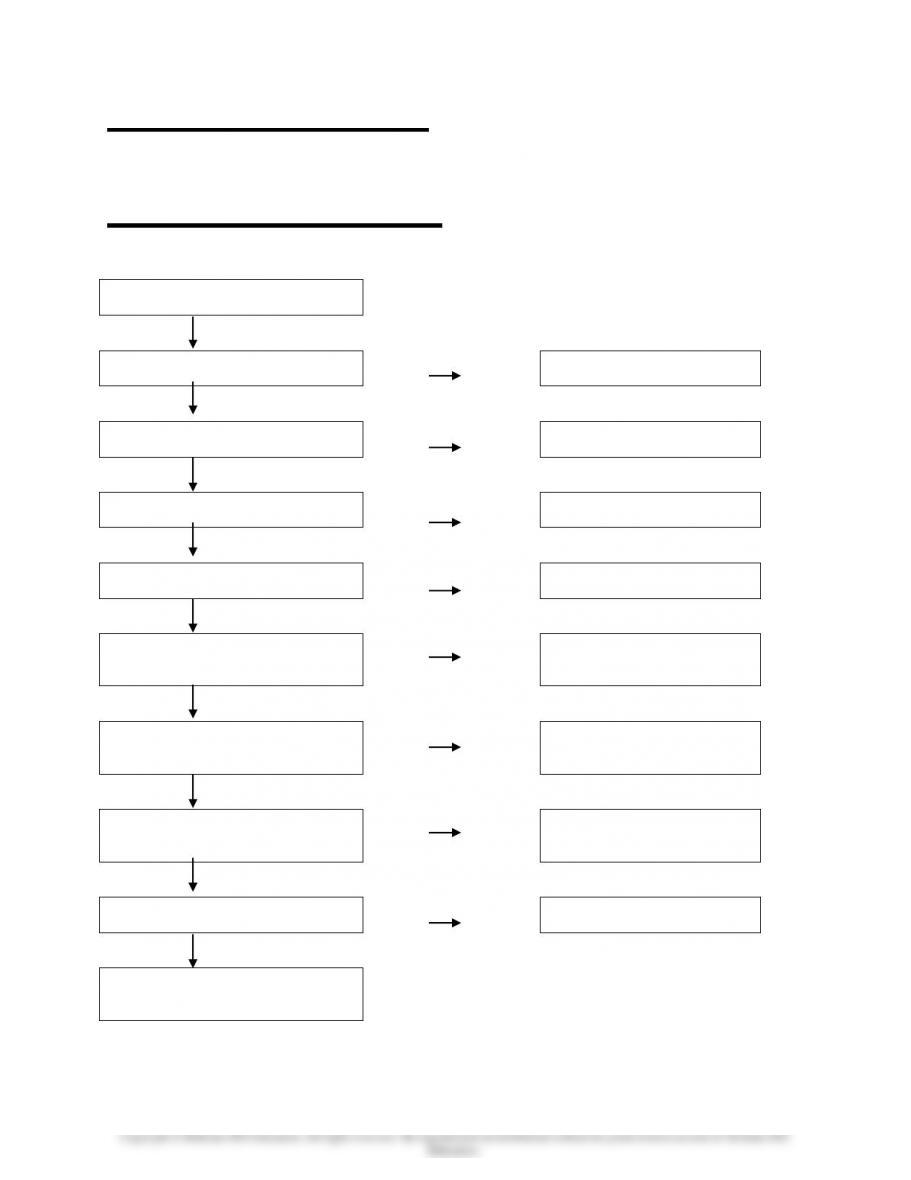
See Table 9.4 for a flow chart to be used in dealing with behavior problems.
TABLE 9.4: BEHAVIOR PROBLEM FLOW CHART
Identify behavior problem.
Is it worth your time and effort?
No
Don’t waste time on it.
Yes
Does employee know behavior
is unsatisfactory?
No
Let employee know; provide
feedback.
Yes
Does employee know what is supposed
to be done and when?
No
Let employee know plan to
improve.
Yes
Are there obstacles beyond employee’s
control?
Yes
Remove obstacles.
No
Does employee know how to behave?
No
Train employee and/or provide
practice.
Yes
Does negative consequence follow bad
behavior?
No
Change consequences.
Yes
Does positive consequence follow good
behavior?
No
Change consequences.
Yes
Could employee behave correctly if he or
she wanted to?
No
Reassign or terminate.
Yes
Redirect employee’s behavior through
coaching.

Part 09 – Performance Management
9-30
APPLICATION
Employee Performance Review Rating Scale
Written performance reviews have been an important mechanism for performance planning, coaching,
and evaluation for decades. According to the Wall Street Journal, retailer Lord and Taylor was the first to
use them in 1914.
Performance management includes: 1) planning work and setting expectations; 2) monitoring
performance with an eye to reinforcing good practices and correcting performance problems; 3) periodic
rating of performance in a summary fashion; and 4) formal recognition or reward for good performance.
The Employee Performance Review Rating Scale can be used as a tool for effective performance
management.
Directions
Read the entire evaluation form carefully. Then consider each item separately. Rate the employee as
“failing,” “below average,” “average,” “above average,” or “excellent” on each item by checking the
appropriate box. The last item (15) is the overall evaluation of the employee. When rating this item,
check the appropriate box and indicate whether the employee is at the high-end (H) or the low-end (L) of
the scale.
Use the spaces provided to cite specific behaviors explaining your ratings and to identify steps to
improve. These comments should be clear and complete so the employee can understand your rating.
Use the evaluation process to offer constructive advice.
One useful variation is to ask the employee to evaluate her or himself. Compare evaluations and have a
two-way discussion on what should be done to maintain or develop effective performance.
Use the following as a rating guide:
Failing. This is the lowest possible rating. The employee has been either unable or unwilling to meet
reasonable job requirements. If you check this box for any of the items on the evaluation, you should
include comments and examples indicating what can be done to improve. Unless there is
improvement, the employee should be reassigned or disciplinary action should be taken.
Below average. This is the second lowest rating. It informs the employee of serious shortcomings.
If you check this box for any item, it means that more training, a different assignment, or additional
effort is required. Indicate by your comments what you see as the problem and the solution. Give
examples and discuss them; make suggestions for improvement before it is too late.
Average. This is the middle rating. It indicates that the employee has done a satisfactory job
throughout the rating period. Do not hesitate to explain on the form some possible avenues for
further improvement.

Part 09 – Performance Management
9-31
Above average. This is the second highest category and should be given only to those who perform
consistently above average during the rating period. Reserve this rating for those employees who
give more than is required. Show appreciation for positive contributions and encourage all employees
to strive for this rating.
Excellent. This is the top performance rating. The employee who deserves this rating is
exemplary—there is almost no room for improvement. Job performance was consistently superior
during the entire rating period. Comments that describe outstanding work should accompany this
rating.
As you complete the evaluation, concentrate on the duties and requirements of the position held by the
employee. What do you expect in the way of performance? Then, rate the employee’s job behavior.
Remember, you are evaluating work behavior—how the individual performs on the job. Include both
strengths and weaknesses.
Avoid common rating problems such as being too lenient, being too strict, letting personal biases
interfere, rating everyone alike, and allowing isolated events and recent performance to overly influence
you.
Performance reviews are intended to develop employee competence, maintain morale, and solve
performance problems. Take a helpful, problem-solving approach in reviewing employee performance.
Remember to listen to employees as they discuss job strengths and weaknesses, and to suggest tangible
actions they can take to improve.
EMPLOYEE PERFORMANCE REVIEW
Employee Title
Department Date Hired
Review period from to

Part 09 – Performance Management
9-32
EMPLOYEE PERFORMANCE REVIEW (continued)
1) Job knowledge. Evaluate the employee’s familiarity with job requirements and standards and
understanding of policies and procedures. Consider the following:
Is the employee familiar with the tools, equipment, and methods needed to perform the job?
Does the employee frequently need assistance in determining or understanding procedures?
Is work done correctly?
Does the employee know what to do without having specific instructions?
Is there a consistent pattern of mistakes reflecting misunderstanding or lack of job knowledge?
Failing
Below
Average
Average
Above
Average
Excellent
Remarks:
Steps for improvement:
2) Initiative. Assess the employee’s willingness to take on job assignments and offer suggestions to
improve performance. Consider the following:
Is the employee a self-starter?
Does the employee pitch in when something needs to be done, without waiting to be told to do so?
Does the employee offer practical, workable suggestions for improvement?
Are suggestions and ideas shared freely with others?
Does the employee demonstrate a desire to improve?
Does the employee voluntarily participate in training or educational programs?
Failing
Below
Average
Average
Above
Average
Excellent
Remarks:
Steps for improvement:

Part 09 – Performance Management
9-33
EMPLOYEE PERFORMANCE REVIEW (continued)
3) Responsibility. Assess the reliability of the employee. Consider the following:
Can you count on the employee to carry out assignments and meet obligations?
Are deadlines frequently missed?
Is close supervision required?
Does the employee follow through on assignments?
Does the employee overcome obstacles to meet responsibilities?
Is the employee dependable and true to his word?
Failing
Below
Average
Average
Above
Average
Excellent
Remarks:
Steps for improvement:
4) Work habits. Analyze the employee’s method of working. Consider the following:
Is the employee a safe worker?
Is the employee productive or merely busy?
Does the employee organize and coordinate actions for maximum effectiveness?
Does thee employee make effective use of time?
Does the employee waste materials, lose tools, or otherwise waste resources?
Is the employee resourceful?
Failing
Below
Average
Average
Above
Average
Excellent
Remarks:
Steps for improvement:

Part 09 – Performance Management
9-34
EMPLOYEE PERFORMANCE REVIEW (continued)
5) Judgment. Appraise the employee’s judgment and decision making on the job. Consider the
following:
Does the employee demonstrate good judgment in handling problems?
Are decisions thoroughly analyzed before implementing them?
Does the employee weigh both positive and negative consequences of actions?
How effectively does the employee respond to difficult situations?
Does the employee have the ability to work under pressure?
Are emergencies handled effectively?
Does the employee recognize personal deficiencies and seek help when appropriate?
Failing
Below
Average
Average
Above
Average
Excellent
Remarks:
Steps for improvement:
6) Learning ability. Evaluate the employee’s ability to learn new tasks and methods. Consider the
following:
Does the employee learn new methods quickly?
How does the employee adjust to changes and new conditions?
Does the employee profit from experience?
Is the employee open to personal and professional growth?
Failing
Below
Average
Average
Above
Average
Excellent
Remarks:
Steps for improvement:

Part 09 – Performance Management
9-35
EMPLOYEE PERFORMANCE REVIEW (continued)
7) Attitude. Assess the employee’s attitude and demeanor. Consider the following:
Does the employee show interest and the desire to do a good job?
Does the employee make a positive contribution to work morale?
Is constructive criticism accepted positively?
Does the employee project a positive and professional image?
Do customers complain about the employee’s attitude?
Does the employee show pride in his or her work?
Failing
Below
Average
Average
Above
Average
Excellent
Remarks:
Steps for improvement:
8) Relations with people. Evaluate the employee’s relations with others. Consider the following:
How well does the employee get along with others?
Does the employee cause conflicts or disrupt the work of others?
Is the employee polite and courteous to others?
Does the employee listen and communicate effectively?
Is the employee cooperative and helpful to others?
Does the employee show consideration and sensitivity to the needs of others?
Failing
Below
Average
Average
Above
Average
Excellent
Remarks:
Steps for improvement: