
Part 07 – Multiplying Effectiveness
7-40
Questions
Never
Rarely
Sometimes
Often
Always
12. Do you find it easier to
express yourself in conversation
than in writing?
1
2
3
4
5
13. Are you critical of the ideas,
opinions, and behavior of others?
1
2
3
4
5
14. Do you think about the
meaning of life?
1
2
3
4
5
15. Do you want things settled
and secure in your life?
1
2
3
4
5
16. Do you enjoy giving
speeches?
1
2
3
4
5
17. Are you action oriented?
1
2
3
4
5
18. Are you attentive to details?
1
2
3
4
5
19. Will you sit at a restaurant
table you do not like rather than
request a better one?
1
2
3
4
5
20. Do you like to be the center
of attention?
1
2
3
4
5
21. Among your colleagues, are
you the one who decides what
the group will do?
1
2
3
4
5
22. Do you prefer to listen in
social situations?
1
2
3
4
5
23. Are competitive situations
unpleasant to you?
1
2
3
4
5
24. Do you like activities, such
as parties and meetings?
1
2
3
4
5
25. Do you control the various
groups in which you participate?
1
2
3
4
5
26. Are you a quiet person?
1
2
3
4
5
27. If you have a disagreement
with someone, do you try to
smooth things over?
1
2
3
4
5
28. Do people usually remember
you?
1
2
3
4
5
29. With your family and
friends, are you the one “in
charge”?
1
2
3
4
4
30. Do you prefer a more
planned than spontaneous life?
1
2
3
4
5
31. Is it hard for you to express
anger toward others?
1
2
3
4
5
32. Do you like to work with
people?
1
2
3
4
5
33. Do you step in and make
decisions for others?
1
2
3
4
5

Part 07 – Multiplying Effectiveness
7-41
Questions
Never
Rarely
Sometimes
Often
Always
34. Do you prefer to do a perfect
job when you know less would
be acceptable?
1
2
3
4
5
35. Are you cautious in
approaching new or difficult
problems?
1
2
3
4
5
36. Do you like to talk about
yourself?
1
2
3
4
5
37. Do personal restrictions
upset you?
1
2
3
4
5
38. Is privacy important to you?
1
2
3
4
5
39. Do arguments upset you?
1
2
3
4
5
40. Do you make friends easily?
1
2
3
4
5
41. Do you try to persuade other
people to your way of thinking?
1
2
3
4
5
42. Do you prefer to work alone?
1
2
3
4
5
43. Are you easygoing?
1
2
3
4
5
44. Do you enjoy it when people
talk about you?
1
2
3
4
5
45. Do you like to create events
and “make things happen”?
1
2
3
4
5
46. Do you find it easier to
express yourself in writing than
in speaking?
1
2
3
4
5
47. Is it easy for you to relax?
1
2
3
4
5
48. Do you overlook details
because of other interests?
1
2
3
4
5
49. Once you have made a
decision, is it difficult for you to
change your mind?
1
2
3
4
5
50. Do you show your emotions
less than most people?
1
2
3
4
5
51. Do you have trouble saying
“no” to people?
1
2
3
4
5
52. Do you enjoy people?
1
2
3
4
5
53. Are you an opinionated
person?
1
2
3
4
5
54. Do you enjoy the pleasures
of solitude such as reading,
writing, and thinking, over social
activities?
1
2
3
4
5
55. Do you believe people are
basically good?
1
2
3
4
5
Questions
Never
Rarely
Sometimes
Often
Always

Part 07 – Multiplying Effectiveness
7-42
56. Do you like to show
affection?
1
2
3
4
5
57. Are you achievement
oriented?
1
2
3
4
5
58. Do you make decisions only
after gathering all available
facts?
1
2
3
4
5
59. Are you a good team player?
1
2
3
4
5
60. Do you feel comfortable in
social situations?
1
2
3
4
5
61. Do you consider yourself to
be a leader rather than a
follower?
1
2
3
4
5
62. Are you patient and
methodical in problem-solving
situations?
1
2
3
4
5
63. Are power and prestige
unimportant to you?
1
2
3
4
5
64. Do you like variety in your
social life?
1
2
3
4
5
65. Are you a forceful person?
1
2
3
4
5
66. Do others find you hard to
understand?
1
2
3
4
5
67. Do you try to avoid
interpersonal conflict?
1
2
3
4
5
68. Do you enjoy selling your
ideas?
1
2
3
4
5
69. Do you like competitive
situations?
1
2
3
4
5
70. Do you rewrite your letters,
reports, and other assignments?
1
2
3
4
5
71. Are you a soft-spoken
person?
1
2
3
4
5
72. Would you prefer going to a
party over reading a book?
1
2
3
4
5
73. If you were waiting in a line,
would you confront someone
who crowded ahead of you?
1
2
3
4
5
74. Are you neat and orderly?
1
2
3
4
5
75. Does it upset you to say
unpleasant things to others?
1
2
3
4
5
76. Do you make decisions
impulsively?
1
2
3
4
5

Part 07 – Multiplying Effectiveness
7-43
Questions
Never
Rarely
Sometimes
Often
Always
77. Are you persistent in
pursuing your goals?
1
2
3
4
5
78. Do you keep your feelings
private?
1
2
3
4
5
79. Are you tactful in your
relations with others?
1
2
3
4
5
80. Do you talk more than you
listen?
1
2
3
4
5
SCORING
To find your score on the Types of People Questionnaire, first place the number you circled for
each question in the appropriate space in the answer key that follows. Then, obtain the totals for
dominance, peacefulness, introversion, and extroversion, and divide each of these by 2.
Questionnaire Answer Key
Ascendancy Sociability
Dominance Peacefulness Introversion Extroversion
1. _____ 41. _____ 3. _____ 43. _____ 2. _____ 42. _____ 4. _____ 44. _____
5. _____ 45. _____ 7. _____ 47. _____ 6. _____ 46. _____ 8. _____ 48. _____
9. _____ 49. _____ 11. _____ 51. _____ 10. _____ 50. _____ 12. _____ 52. _____
13. _____ 53. _____ 15. _____ 55. _____ 14. _____ 54. _____ 16. _____ 56. _____
17. _____ 57. _____ 19. _____ 59. _____ 18. _____ 58. _____ 20. _____ 60. _____
21. _____ 61. _____ 23. _____ 63. _____ 22. _____ 62. _____ 24. _____ 64. _____
25. _____ 65. _____ 27. _____ 67. _____ 26. _____ 66. _____ 28. _____ 68. _____
29. _____ 69. _____ 31. _____ 71. _____ 30. _____ 70. _____ 32. _____ 72. _____
33. _____ 73. _____ 35. _____ 75. _____ 34. _____ 74. _____ 36. _____ 76. _____
37. _____ 77. _____ 39. _____ 79. _____ 38. _____ 78. _____ 40. _____ 80. _____
_____ + _____ _____ + _____ _____ + _____ _____ + _____
= _____/2 = _____/2 = _____/2 = _____/2
= _____ = _____ = _____ = _____
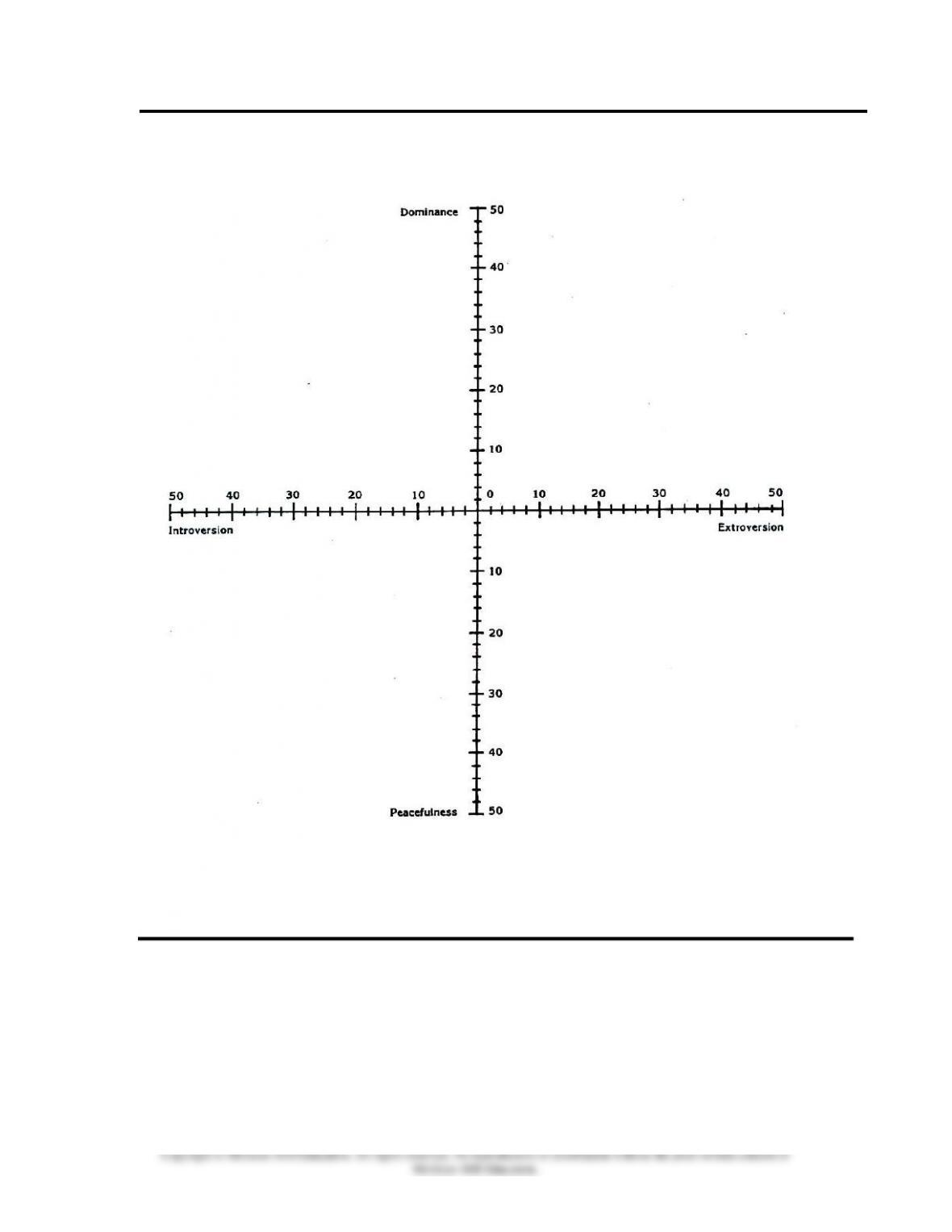
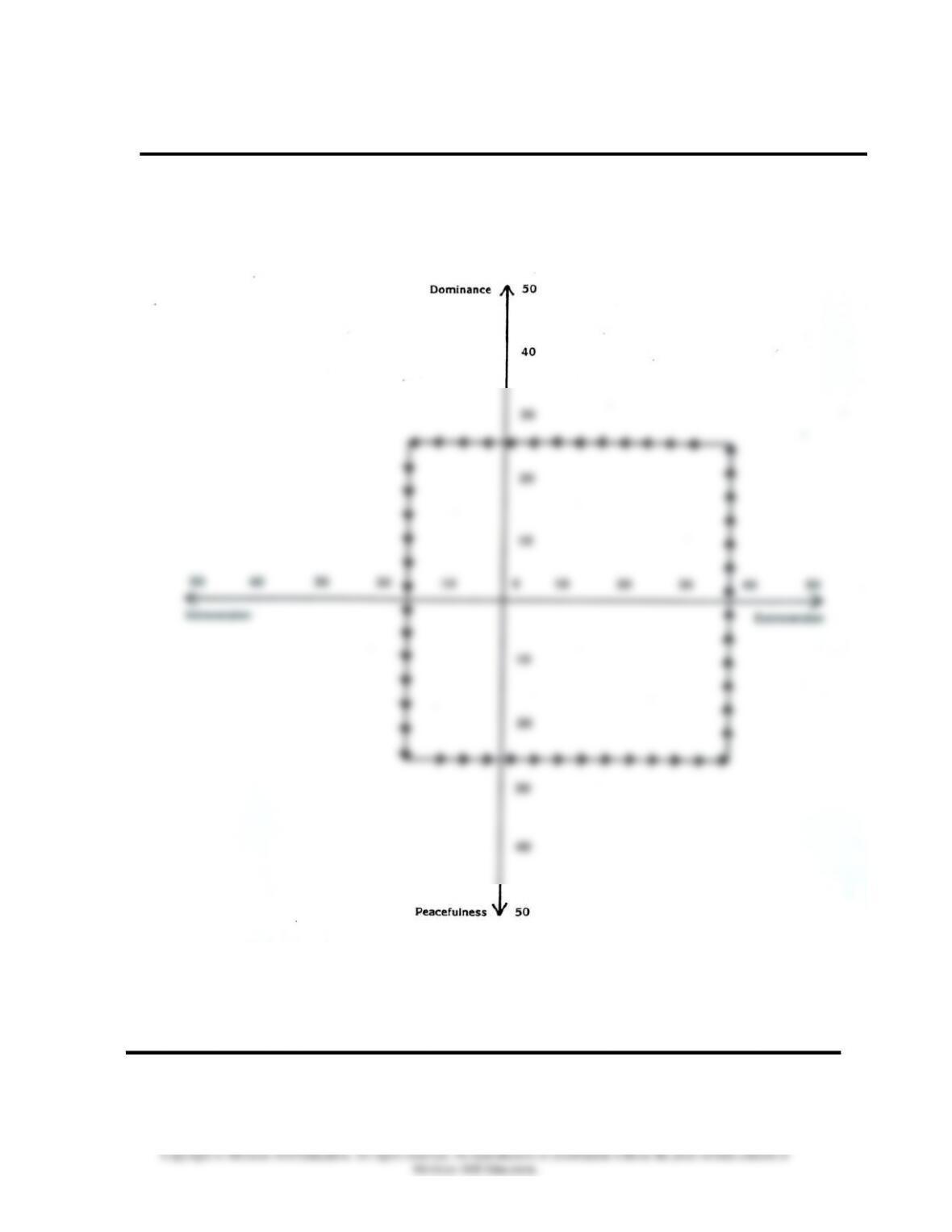
Next chart your scores for dominance, peacefulness, introversion, and extroversion on the
“personality profile” in Figure 7.5. When you have placed your scores in the appropriate
locations, draw a line from each score to create a picture of your personality type, as shown in
Figure 7.6.
Part 07 – Multiplying Effectiveness
7-44
FIGURE 7.5: PERSONALITY PROFILE
Part 07 – Multiplying Effectiveness
7-45
FIGURE 7.6: SAMPLE PERSONALITY PROFILE

Part 07 – Multiplying Effectiveness
7-46
INTERPRETATION
“Types of People—Different Strokes for Different Folks” measures two important traits of
personality: ascendancy and sociability. The following describes the dimensions of each trait.
Ascendancy
Dominance. The dominant person expresses emotions in a forceful way and is concerned with
obtaining results. Dominant people enjoy competitive situations and can become demanding
when trying to complete a task. They usually take a direct approach to obtaining results. The
following are characteristics of the dominant personality:
• likes to be in command;
• prefers to be the leader;
• often is critical of the ideas and opinions of others;
• usually is forceful in dealings with others; often is stubborn;
• is persistent in obtaining goals, strong willed, and opinionated;
• enjoys having power and prestige;
• enjoys competitive situations;
• becomes impatient when requests are not met;
• makes things happen; takes a direct approach;
• enjoys difficult assignments; is achievement oriented;
• looks for opportunities to advance; accepts challenges;
• questions the status quo; seeks positions of authority.
Peacefulness. The peaceful person expresses emotions in a quiet and calm manner. Peaceful
people conduct human relations and business dealings in a low-pressure way and avoid direct
confrontation, interpersonal conflict, and arguments whenever possible. The following are
characteristics of the peaceful personality:
• is soft spoken and easygoing;
• has difficulty saying “no”;
• likes to have things secure;
• does not like arguments;
• wants harmony in human relations;
• does not want to hurt people;
• approaches new situations with caution;
• does not value power and prestige;
• is sincere in human relations;
• values love;
• shows consideration for people;
• wants to help others.

Part 07 – Multiplying Effectiveness
7-47
In Between Dominance and Peacefulness. The personality that falls in between the dominant
and the peaceful is a balance of the two extremes. The “in-between” person pursues goals with a
relaxed but persistent approach and demonstrates consideration for people’s feelings and
problems when giving orders and making decisions. He or she prefers cooperation in problem
solving and involves others whenever possible when taking steps to accomplish goals.
Sociability
Extroversion. The extroverted person is comfortable in social situations and genuinely enjoys
people. Extroverts find it easy to express their feelings. They like variety and enjoy talking
about themselves and their activities. In a sense, extroverts “wear their hearts on their sleeves”
and are likely to behave in an impulsive and spontaneous way. The following are characteristics
of the extroverted personality:
• makes new friends easily;
• likes to talk; laughs readily;
• dislikes details; does not take particular care of personal possessions;
• generates enthusiasm; has a high energy level;
• feels comfortable in groups;
• enjoys human interaction;
• likes to work with people;
• stimulates others;
• responds to public praise;
• likes attention;
• usually is self-confident;
• avoids direct controls and routine work.
Introversion. The introverted person does not readily express emotion and feels comfortable
working alone. Introverts like to see the results of their own efforts. They are conscientious,
precise, and systematic in their work and value self-control and self-reliance. Introverts are
individualistic and reserved in their relations with others. The following are characteristics of the
introverted personality:
• values independence;
• like to work alone;
• dislikes social functions;
• moves deliberately; does not like to be hurried;
• is a perfectionist about work;
• is uncomfortable in groups; values privacy;
• is slow in making new friends;
• struggles with a problem rather than ask for help;
• appears aloof;
• is self-conscious in social situations;
• values self-discipline;
• prefers books and solitary activities.

Part 07 – Multiplying Effectiveness
7-48
In Between Extroversion and Introversion. The “in-between” person is a balance of the two
extremes, extrovert and introvert. Such people feel equally comfortable in social situations and
solitary activities. They are flexible and can usually adapt to situations that require perfectionist
behavior as well as situations that require tolerance of imperfections.
The two traits of personality (ascendancy and sociability) and their four dimensions
(dominance, peacefulness, introversion, and extroversion) interact to create four personality
types: social/leader; social/charm; decisive/analytical; and detail/supportive. We all have
qualities of each personality type; however, usually one type is most characteristic of each of us.
Each personality type has unique qualities and requires different treatment to bring out its best.
Typical characteristics and the most effective way to lead each are as follows.
The Social/Leader Personality Type
Figure 7.7 shows the personality profile for the social/leader type. This personality type has high
levels of dominance and sociability and directs these traits toward the competency motive. This
person wants to make things happen and create events involving people and things rather than
wait passively for circumstances to take shape.
The social/leader personality responds to personal challenge, is comfortable with people,
enjoys variety, and is stimulated by change. Optimistic and socially outgoing, this person is self–
confident and enjoys daily contact with people. Possessing initiative and drive, the social/leader
personality leads by persuasion and contagious enthusiasm. Although independent and firm in
thought, this person can appreciate and accept the views and contributions of others and has the
ability to motivate people to work together. The social/leader type has many natural leadership
traits.

Part 07 – Multiplying Effectiveness
7-49
FIGURE 7.7: PERSONALITY PROFILE FOR THE SOCIAL/LEADER TYPE
The social/leader personality wants:
• responsibility;
• challenge;
• prestige;
• social influence;
• variety;
• achievement;
• opportunity for advancement.
The correct way to lead this personality type is to:
• provide opportunity for leadership; give the person full authority with corresponding
responsibility;
• require excellence; provide rewards for good performance;
• provide demanding assignments; judge according to results;
• place the person in charge of developing others;
• offer freedom of operation;
• challenge the person’s competitive spirit.
Adjectives most often used to describe the social/leader personality include ambitious,
aggressive, flexible, variety loving, forceful, self-confident, and successful.
E
I
D
P

Part 07 – Multiplying Effectiveness
7-50
Possible work problems include: (1) talking too much and listening too little; (2) overlooking
important details; (3) overpowering or inhibiting others; and (4) a tendency toward over–
scheduling and taking on more than can be done.
The Social/Charm Personality Type
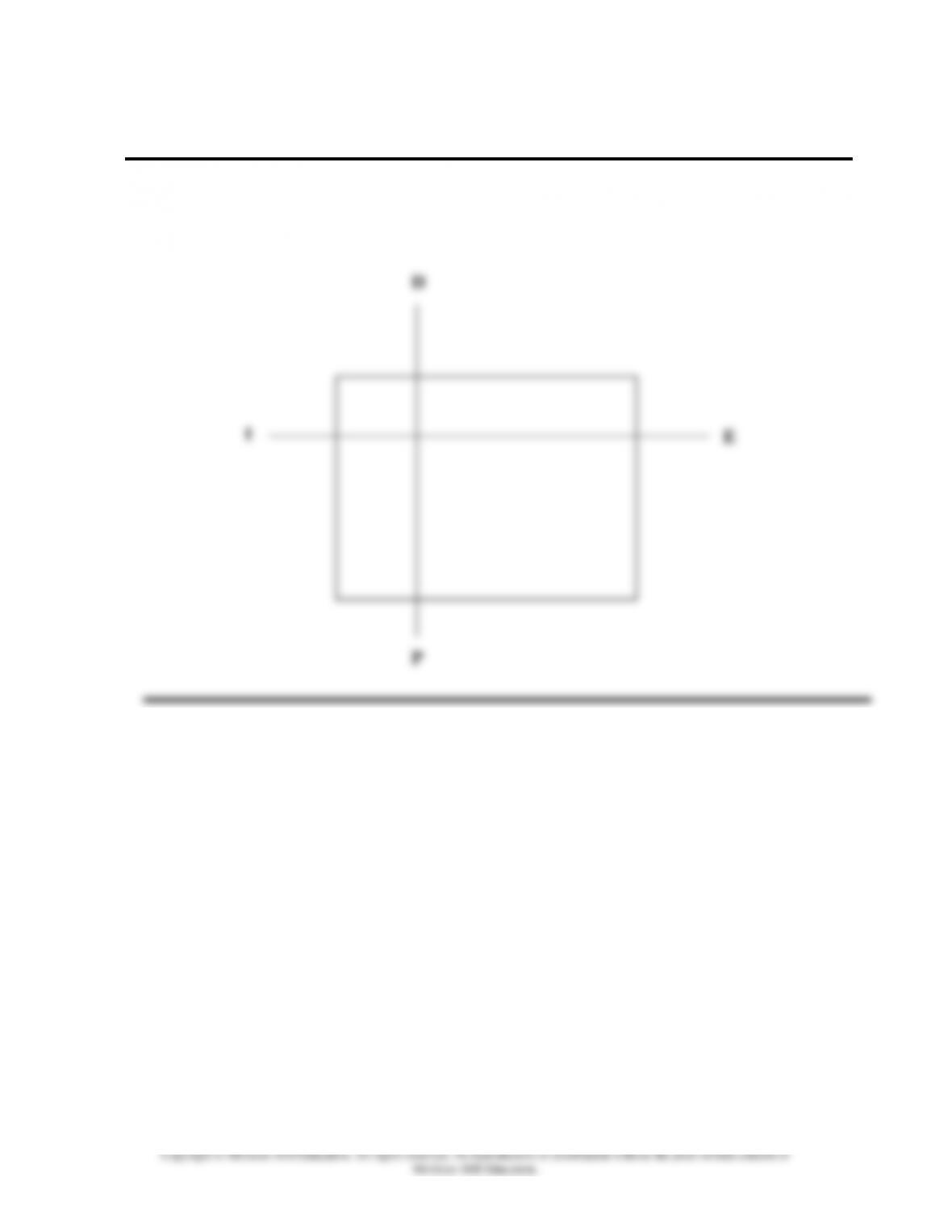
The social/charm personality (see Figure 7.8) is both extroverted and peaceful. As such,
important goals are affiliation and security. This person has a basic concern for people’s welfare.
Helping others is important, and so is the security of having personal beliefs shared and
confirmed by others. Outgoing and friendly, such people enjoy working with and through others,
and their polite and helpful manner helps them to be quickly accepted. This type is somewhat
cautious when dealing with new or difficult problems and usually demonstrates a good sense of
timing. The social/charm personality requires a harmonious work atmosphere, avoids
interpersonal conflict, and tries to keep things running smoothly. Relaxed and interested, this
person likes to be sought out in time of need and enjoys playing a counseling role. The
social/charm personality is a good listener and a good team player.
Part 07 – Multiplying Effectiveness
7-51
FIGURE 7.8: PERSONALITY PROFILE FOR THE SOCIAL/CHARM TYPE
The social/charm personality wants:
• to work with people;
• opportunity for discussion;
• warmth and support;
• human interaction;
• a chance to motivate others;
• social recognition.
The correct way to lead this personality type is to:
• provide a warm and supportive emotional environment;
• provide opportunities for talking about ideas, people, and activities;
• provide a means for transferring talk into action;
• allow time for stimulating activities and social interaction;
• provide participative job relationships; include the person in the decision-
making process;
• provide social incentives for taking on tasks;

Part 07 – Multiplying Effectiveness
7-52
• demonstrate consideration for human feelings and welfare.
Adjectives most often used to describe the social/charm personality include friendly, sociable,
altruistic, considerate, helpful, understanding, and supportive.
Possible work problems include: (1) trying too hard to please; (2) being easily hurt; (3) not
attending to details; and (4) lacking job focus and task completion.
The Decisive/Analytical Personality Type
The decisive/analytical personality (see Figure 7.9) is both dominant and introverted. This person
has a strong desire to do things “the right way” and is not always people oriented. This person
tends to have a questioning, philosophical attitude and is most productive when there is ample
time for private reflection, unencumbered by social considerations. Independent and self-assured,
the decisive/analytical person enjoys challenging situations and takes pride in handling problems
alone. Placing a high value on privacy, this person refers others to take the social initiative and
does not mind working alone. This person is exacting in work behavior and is reluctant to
delegate to others. In any field⎯business, science, art⎯the decisive/analytical personality is
seen as an independent and strong-willed person with little patience in human relations and a
tendency to be brusque and even abrasive. When sufficiently motivated, the decisive/analytical
personality is capable of significant personal accomplishments.

Part 07 – Multiplying Effectiveness
7-53
FIGURE 7.9: PERSONALITY PROFILE FOR THE DECISIVE/ANALYTICAL TYPE
The decisive/analytical personality wants:
• privacy;
• personal accomplishment;
• independence;
• self-reliance;
• difficult assignments;
• few restrictions.
The correct way to lead this personality type is to:
• challenge the person’s intellect;
• provide individual rewards for individual accomplishments;
• recognize the individual’s personal independence;
• praise past performances, set deadlines – then let go;
• stick to business; be brief and to the point;
• provide difficult tasks that require independent accomplishment.
Adjectives most often used to describe the decisive/analytical personality include creative,
persistent, thinking, opinionated, independent, rigid, immodest, stubborn, and perfectionist.
Possible work problems include: (1) insensitivity in human relations; (2) impatience in
decision-making; (3) unwillingness to listen to other people; and (4) failure to delegate.
E
I
D
P

Part 07 – Multiplying Effectiveness
7-54
The Detail/Supportive Personality Type
The detail/supportive personality (see Figure 7.10) is quiet and peaceful and works best in an
environment that permits order and stability. Willing to help others, this person will usually turn
a hand to anything that is requested, often at the expense of personal desires. Basically cautious
by nature, this person is slow to accept the new and experimental until it is proven completely.
Preferring established ways, there is a tendency toward conservatism and traditional values and
an appreciation of the importance of policy and precedent in dealing with problems. The
detail/supportive personality likes a dependable work environment and avoids situations in which
many things are “up in the air,” with little predictability of results. Work goals include being
correct and precise, specializing in areas of special competencies, and performing duties well.
Rewards include being an accepted, appreciated member of the work group or organization and
being respected for special talents.
The detail/supportive personality wants:
• order;
• stability;
• no sudden changes;
• precise job descriptions;
• recognition for loyalty and dependability;
• detailed instructions;
• personal respect.

Part 07 – Multiplying Effectiveness
7-55
FIGURE 7.10: PERSONALITY PROFILE FOR THE DETAIL/SUPPORTIVE TYPE
The correct way to lead this personality type is to:
• provide a secure work environment;
• ask questions to obtain the person’s involvement; use participative management;
• be patient in drawing out his or her ideas;
• clearly define goals and roles;
• present new ideas or departures from status quo in a nonthreatening manner; give the
person a chance to adjust; support changes with detailed and accurate data;
• if criticism is in order, provide construction recommendations; disagree with the facts,
not with the person―and do so in private;
• provide leadership that is clear and logical;
• give thorough training, explaining why things are done as they are;
• show appreciation for length of service and personal loyalty.
E
I
D
P

Part 07 – Multiplying Effectiveness
7-56
Adjectives most often used to describe the detail/supportive personality include cautious,
quiet, modest, structured, reserved, cooperative, and dependable.
Possible work problems include: (1) unwillingness to make unpopular decisions; (2) difficulty
in delegating; (3) a tendency to be too cautious or conservative; and (4) a tendency to become
buried in detail.
What is your personality type? Are you a social/leader, social/charm, decisive/analytical, or
detail/supportive person? Does your world match your personality type? Are you right for your
job? Do your family and friends understand your personality and support your needs? Discuss.

Part 07 – Multiplying Effectiveness
7-57
DISCUSSION QUESTIONS AND ACTIVITIES
To personalize the subject of Multiplying Effectiveness, ask your students to consider
questions such as these:
1. Do you subscribe to Andrew Carnegie’s admonition: “It marks a big step in a supervisor’s
development to realize that other people can be called upon to help do a better job than one can
do alone.”?
2. Discuss the two ways of exerting leadership strength: 1) pushing down; 2) pulling up.
3. Discuss the role of interpersonal style in your work career. Have you had work assignments,
co-workers, and leaders who valued and supported your ways and needs?
4. Think of three people who are important to you—traditional, participative, and individualistic.
Describe the positive qualities of each.
5. What techniques and activities would you employ to meet the needs of traditional,
participative, and individualistic employees?
6. How can a leader multiply personal effectiveness by delegating authority? What are
the rules for effective delegation?
7. Gather in a group to discuss types of organizations.
a. Identify a traditional organization. What contributions could a participative
add to such an organization? What could an individualist add?
b. Identify a participative industry or profession. What could a traditional give to
this environment? What could an individualist give?
c. Think of an individualistic profession or organization. What could a
participative add? What could a traditional contribute?
8. How should a leader give orders? What principles and techniques should be used?
9. What is your style of interpersonal relations—traditional, participative,
individualistic? How did your style develop?

Part 07 – Multiplying Effectiveness
7-58
10. What are the major personal qualities and social roles that define your personality?
11. How has your self-concept influenced your life?
12. Describe yourself using the concepts of id, ego, and superego. Which is the
dominant component of your personality?
13. Which defense mechanisms are you most likely to use? Can you cite a time when
psychological defenses helped to preserve your mental health? Can you recall a time
when defense mechanisms were improperly used, resulting in reduced personal and
social adjustment?
14. Is your interpersonal style compatible with your world? Do your job and career
support your style? Do your family and friends appreciate your characteristics?
15. Think of someone who is traditional, another who is participative, and another who is
individualistic. What are the positive qualities of each? What are the positive
qualities shared by all?
16. If you experience a failure to communicate because of personality conflict, what
steps should you take?