
Part 05 – Leadership Principles
5-21
FIGURE 5.4: Summary of Human Relations Styles
Turtle
Owl
Bull-In-A-
China Shop
Picture
Window
Features of the
Relationship
The “region of the
unknown”
dominates
The “façade”
dominates
The “blind spot”
dominates
The “arena”
dominates
Skills Used:
Listening
Expressing
Minimal
Minimal
Often used
Rarely Used
Rarely used
Often used
Often used
Often used
Effects on the
Individual
Distrust; over
concern with self-
protection;
detachment
Self-censure;
relationships
important but
guarded; lack of
spontaneity
Need to assert
ego; unaware of
impact on others
and their
responses
Trust and
respect for
others
Effects on the
Relationship
Misunderstanding;
aversion to risk
taking; untapped
creativity;
impersonal
relationships; low
satisfaction
Suspicion;
avoidance of
conflict; reduced
problem solving
Resentment;
reduced quality;
lack of
cooperation
Consensus out
of confrontation;
creative problem
solving;
emotional
support;
stimulating and
satisfying
relationships

Part 05 – Leadership Principles
5-22
Φ CASE
The Coffee Break
You are the personnel director of a large company. While there has been no written policy
regarding coffee breaks, they are a long-established tradition, and all employees avail themselves
of the privilege each morning and afternoon of the workday. In fact, company management has
allowed a vending machine company to place their machines in several locations throughout the
building in which the company is located. As a result, employees take coffee breaks, usually 10
minutes long, at any time of the day they desire.
In general, this approach has not caused too much difficulty in work accomplishment, but in
one department, in the opinion of its supervisor, the work has suffered. There was socializing
around desks while the coffee was consumed; telephones went unanswered, and work came to a
halt. In some instances, the employees in that department took breaks longer than 10 minutes,
and this too upset work patterns.
Because of this, the supervisor, Mr. Kobe, issued a memorandum to all employees under his
jurisdiction. In it he reaffirmed the tradition of the coffee break, but he restricted it to 10:15 to
10:25 in the morning and 3:15 to 3:25 in the afternoon. He also requested all employees to be
back at their desks at the end of each break.
When the memo was received, many of the employees reacted negatively. Indignation ran
high, and two employees were designated as spokesmen to come to you with their grievance
without first going to their supervisor, Mr. Kobe.
Discussion Questions
1. If you were a supervisor, how would you handle questions about employee breaks?
2. If you had a complaint about your manager, what would you do to solve the problem?
3. How would you handle the coffee break issue? What would you do or say with the
employees? What would you do or say with Mr. Kobe?

Part 05 – Leadership Principles
5-23
EXERCISE 5.2: EFFECTIVE MEASURES FOR RAISING MORALE
Directions
Consider the policies of your organization in the nine areas listed. Rate each
factor on a scale of 1 to 5 (1 is low; 5 is high).
Pay and reward. A group bonus system is used.
1 2 3 4 5
Job autonomy and discretion. Employees determine their own work methods.
1 2 3 4 5
Support services. Technical expertise is available when needed.
1 2 3 4 5
Training. Training is provided for new employees, experienced employees, and
managers.
1 2 3 4 5
Organizational structure. The presence of few hierarchical levels allows freedom to
operate.
1 2 3 4 5
Technical and physical aspects. Small work units are the norm.
1 2 3 4 5
Task assignments. Whole tasks are assigned, rather than monotonous repetition of one or
a few steps.
1 2 3 4 5
Information and feedback. Direct feedback on the quality of work is provided on a
timely basis.
1 2 3 4 5

Part 05 – Leadership Principles
5-24
Interpersonal and group processes. Employee involvement in group activities is
encouraged.
1 2 3 4 5
INTERPRETATION
How does your organization rate on the Effective Measures for Raising Morale test? Add
up your scores, and look up the total in the following chart.
If Scores
Total:
Conditions Are:
36–45
Very good; morale can be expected to be high.
27-35
Good; morale can be expected to be
favorable.
18-26
Unsatisfactory; morale problems can be
expected.
9-17
Poor; morale can be expected to be low.
In summary, when an employee has an attitude problem that is work related, management
should study the situation and try to help. It may be discovered that management is part of the
problem. Sometimes, the problem will be caused by other employees. Often, the problem is self–
caused by the individual employee. In any case, management’s potential to help is enormous.
If you are a manager and have an employee attitude problem, you should be concerned
for the sake of the individual and the good of the organization. If the problem is work related, it
has its origin in one or a combination of the following areas—problems with the job; problems
with the work group; problems with management; problems with economic rewards—and you
can help to solve it if you try.
Part 05 – Leadership Principles
5-25
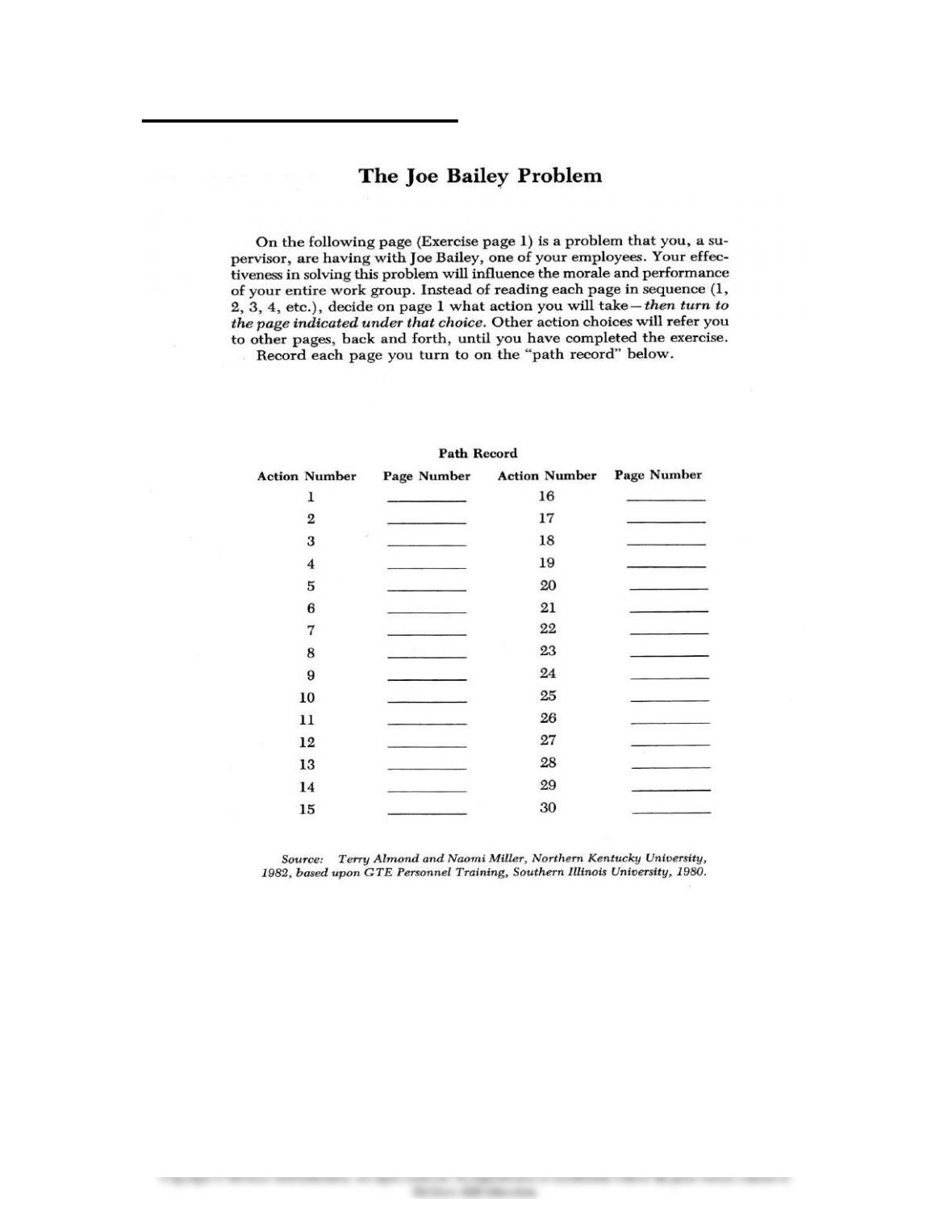
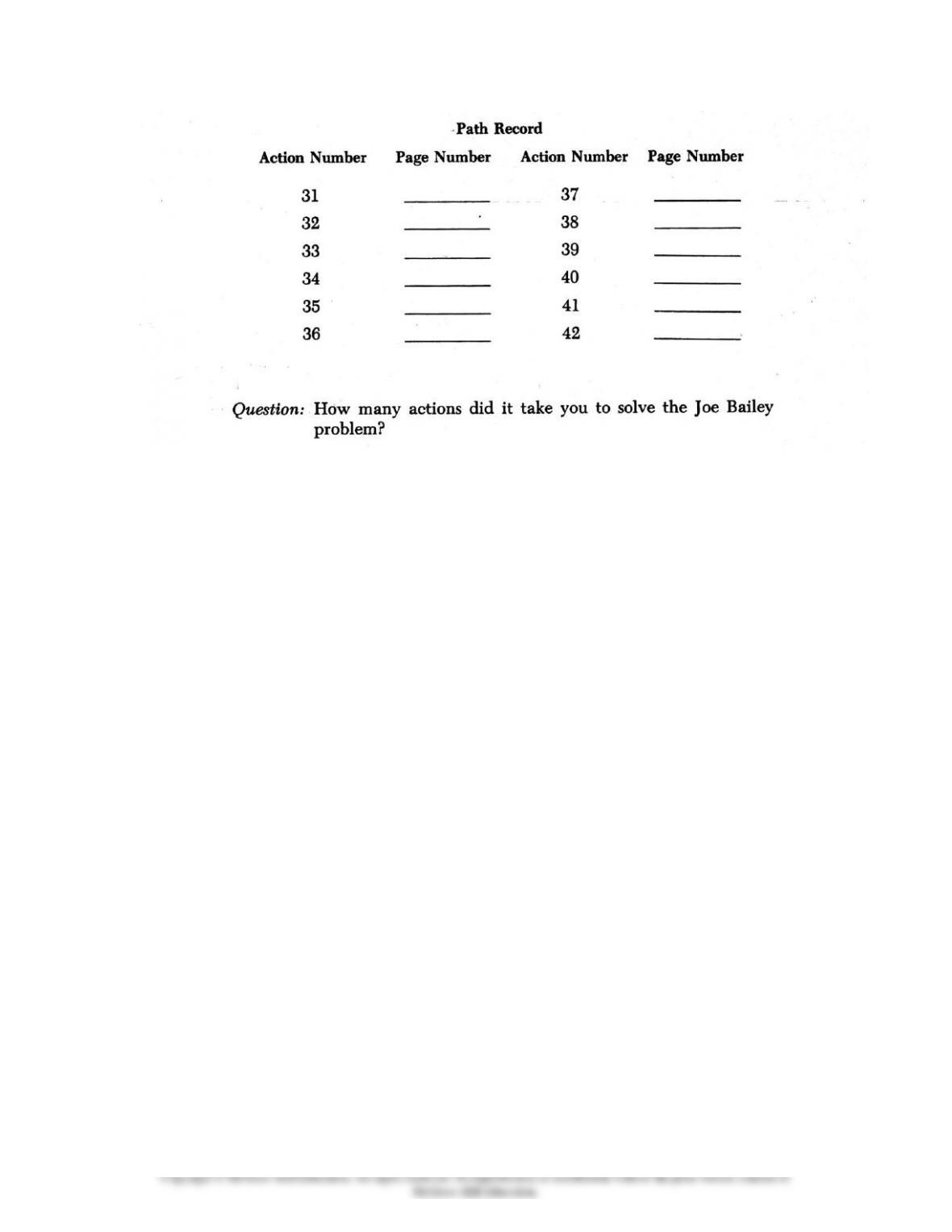
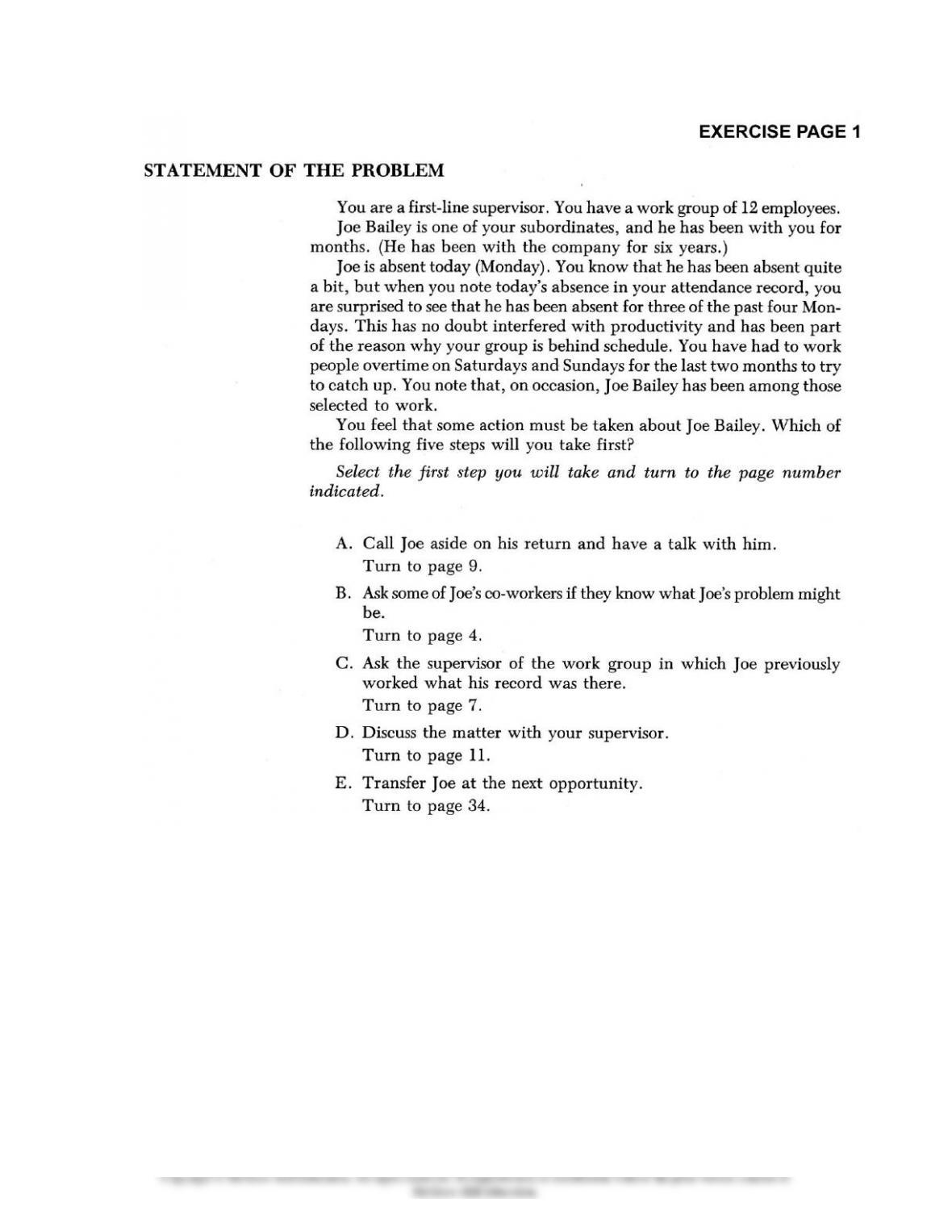
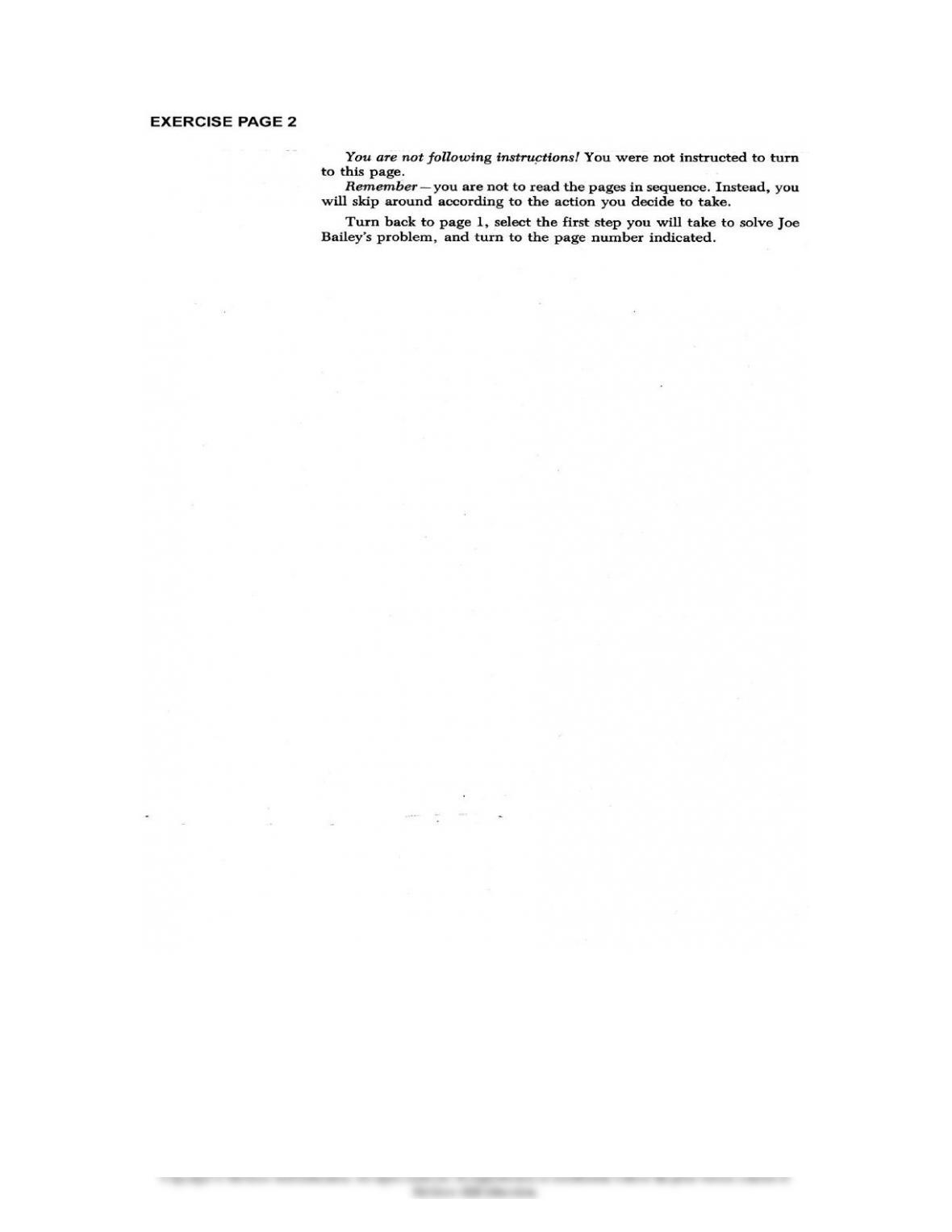
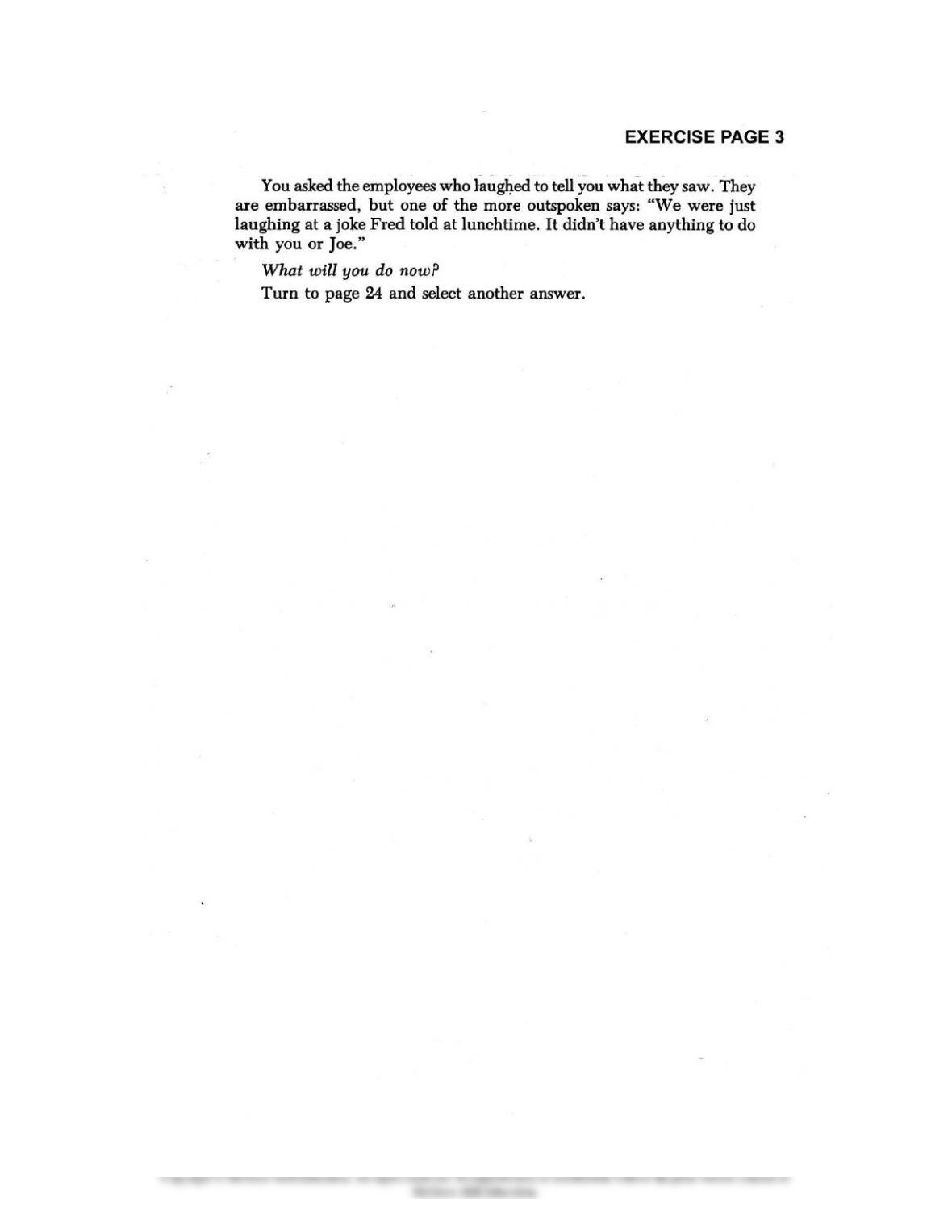
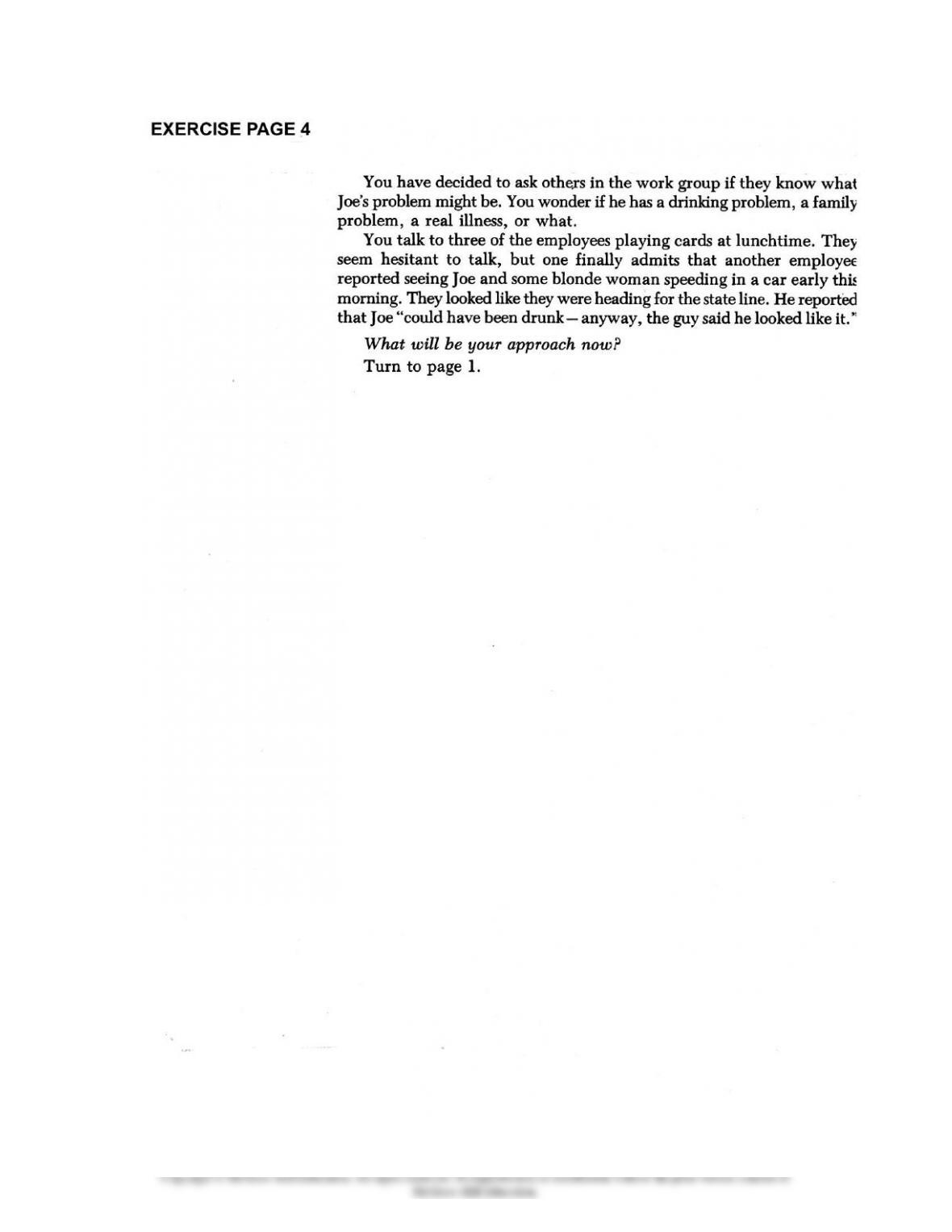
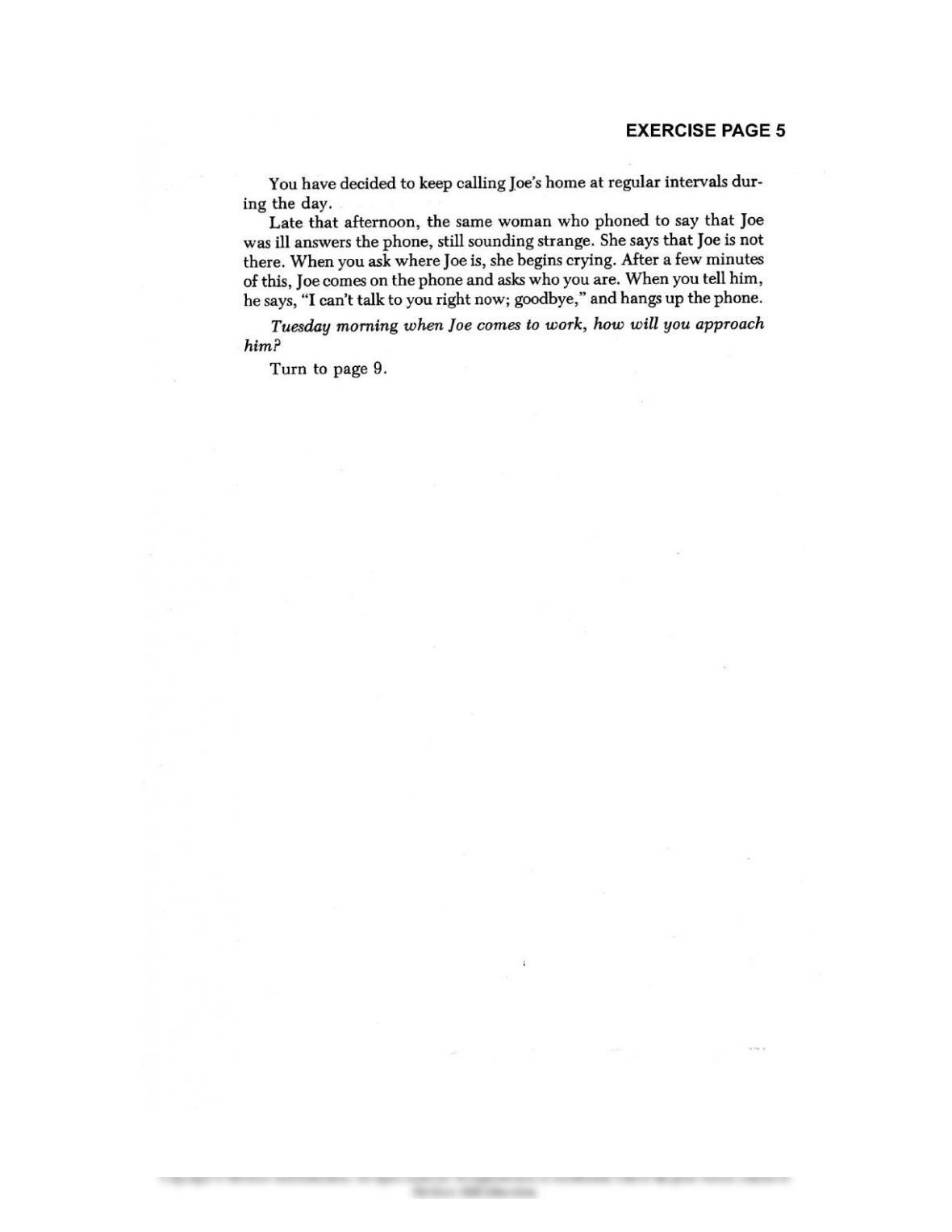
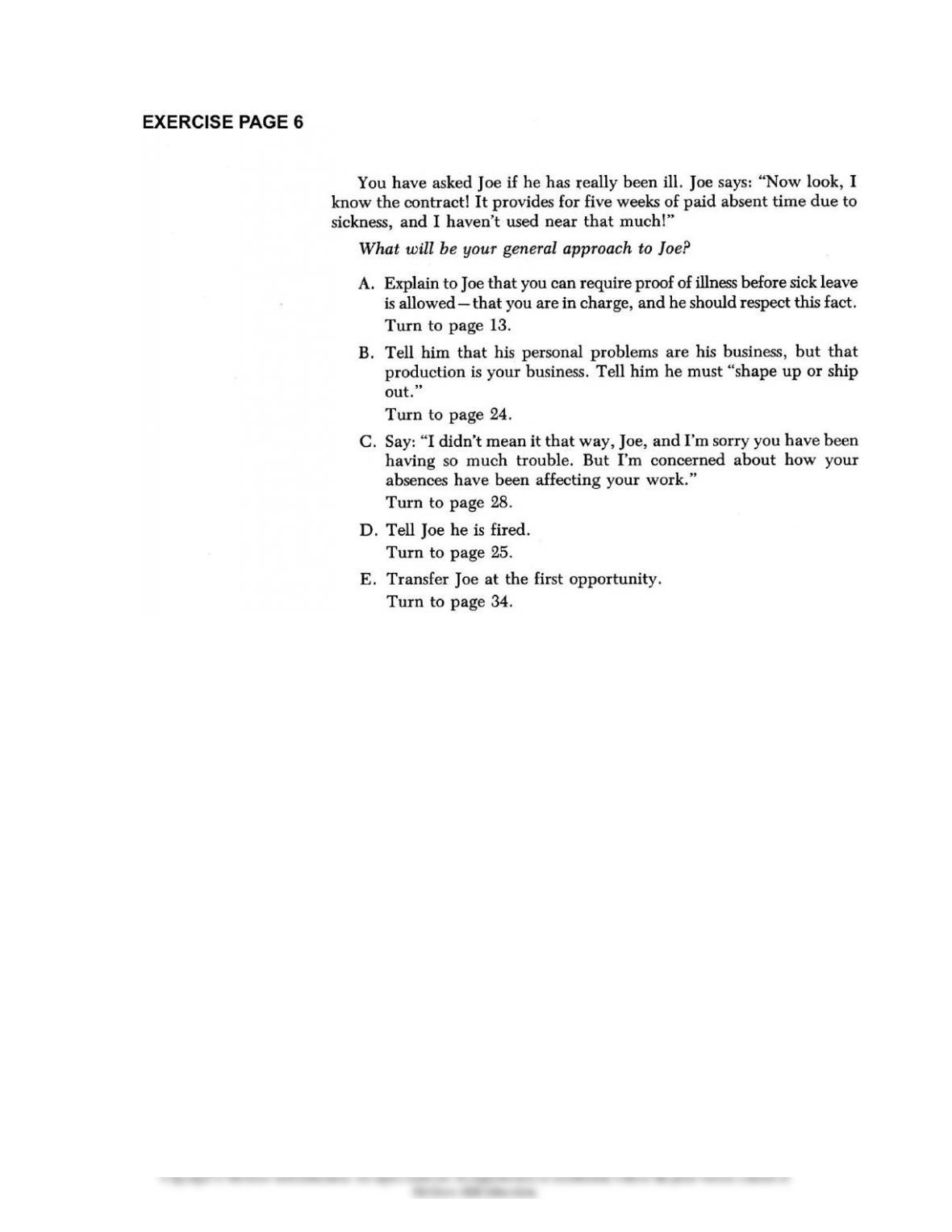
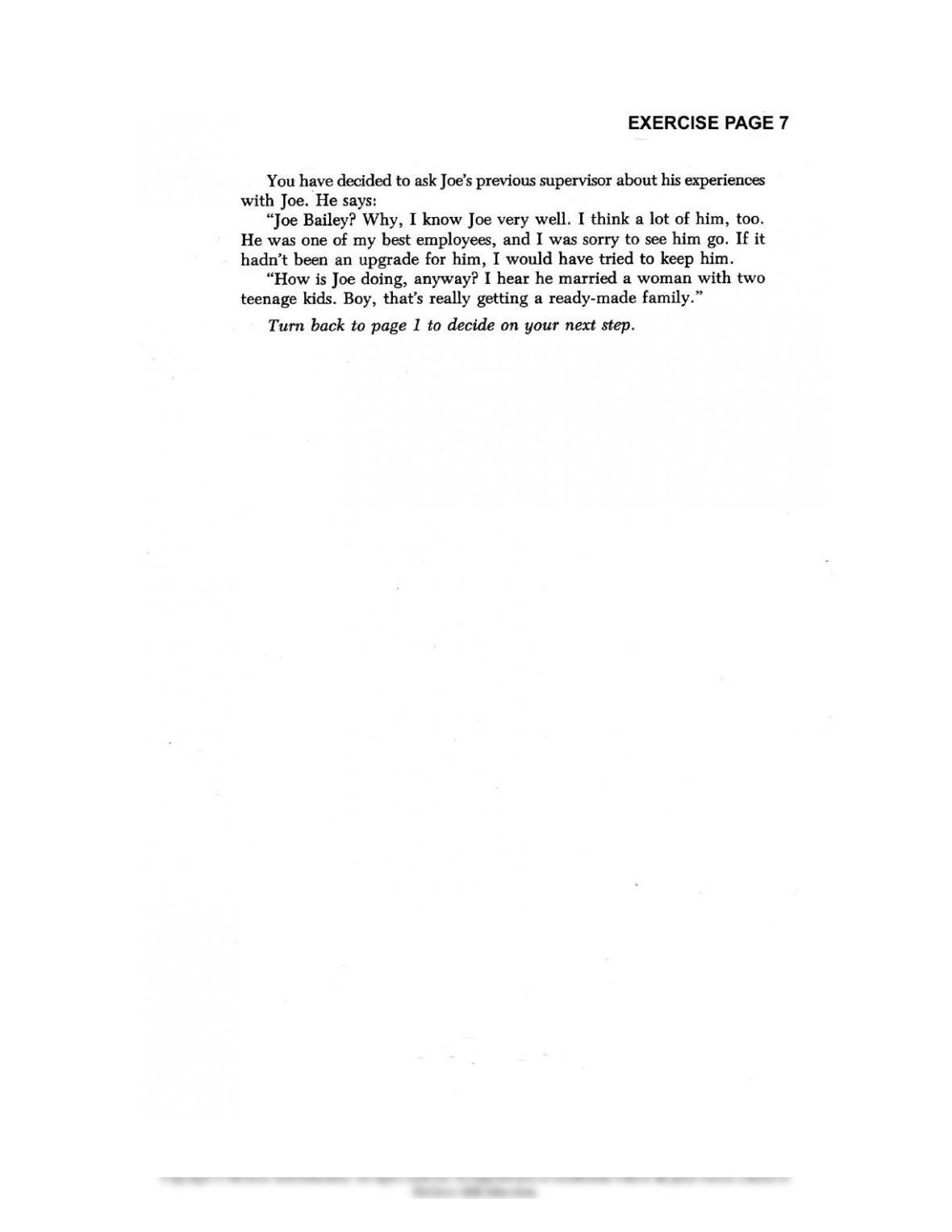
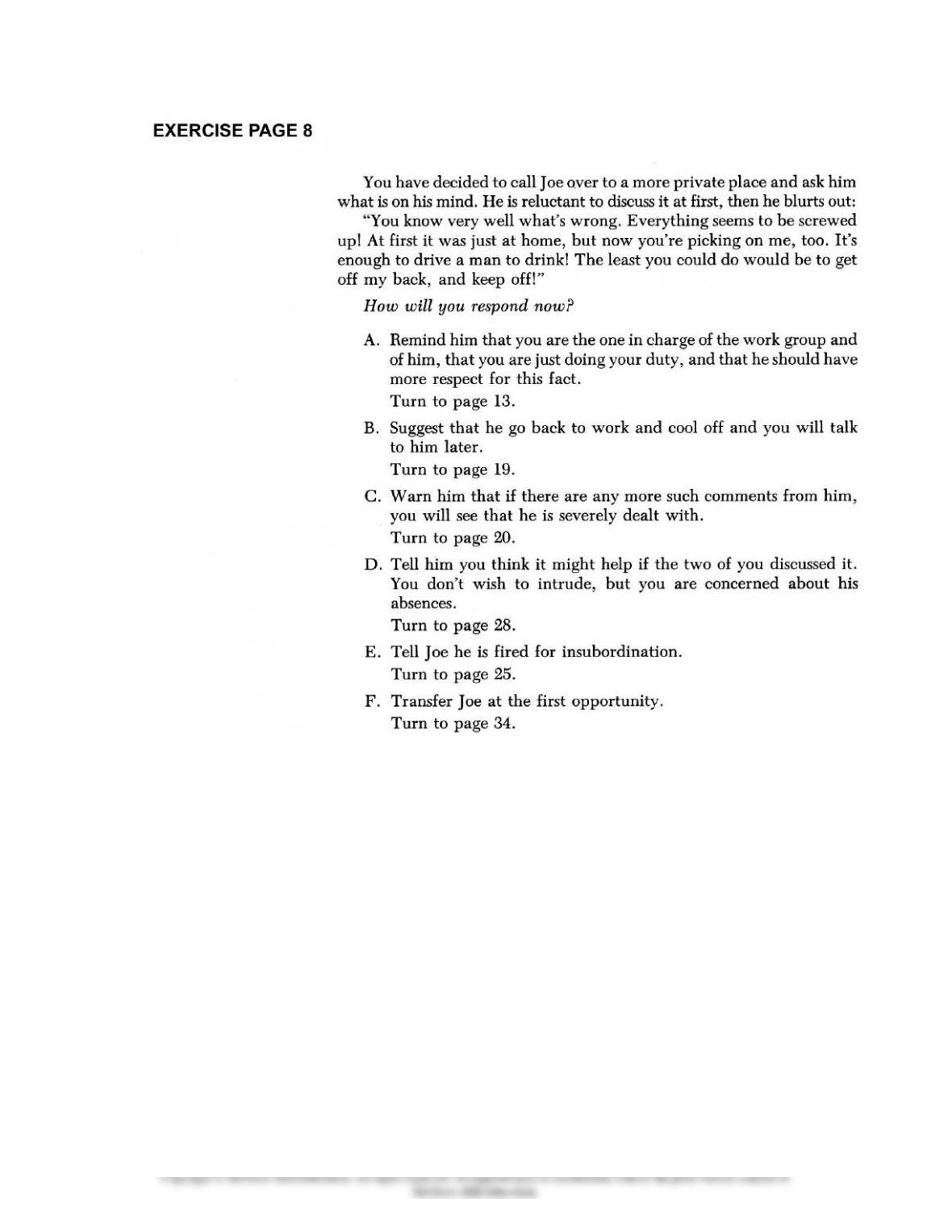
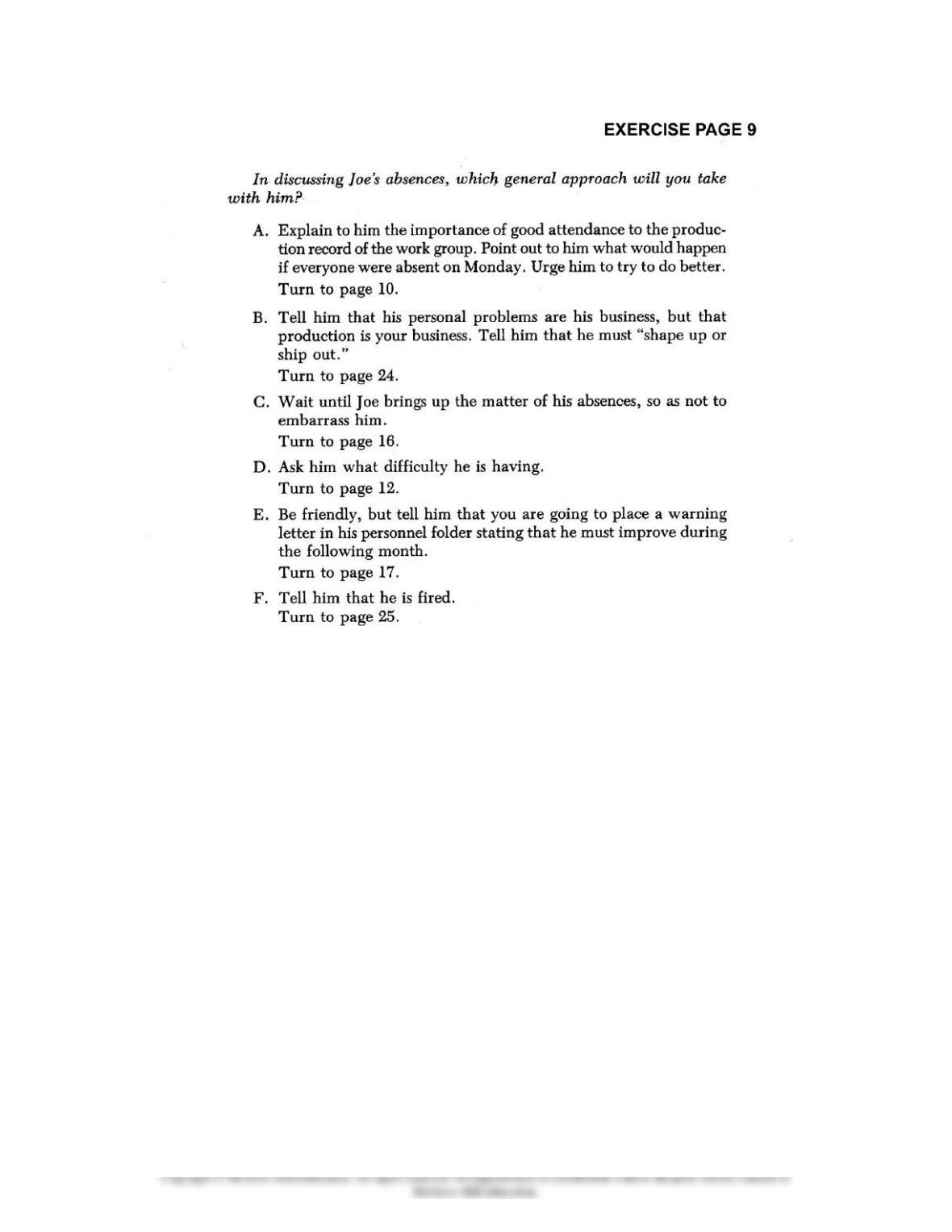
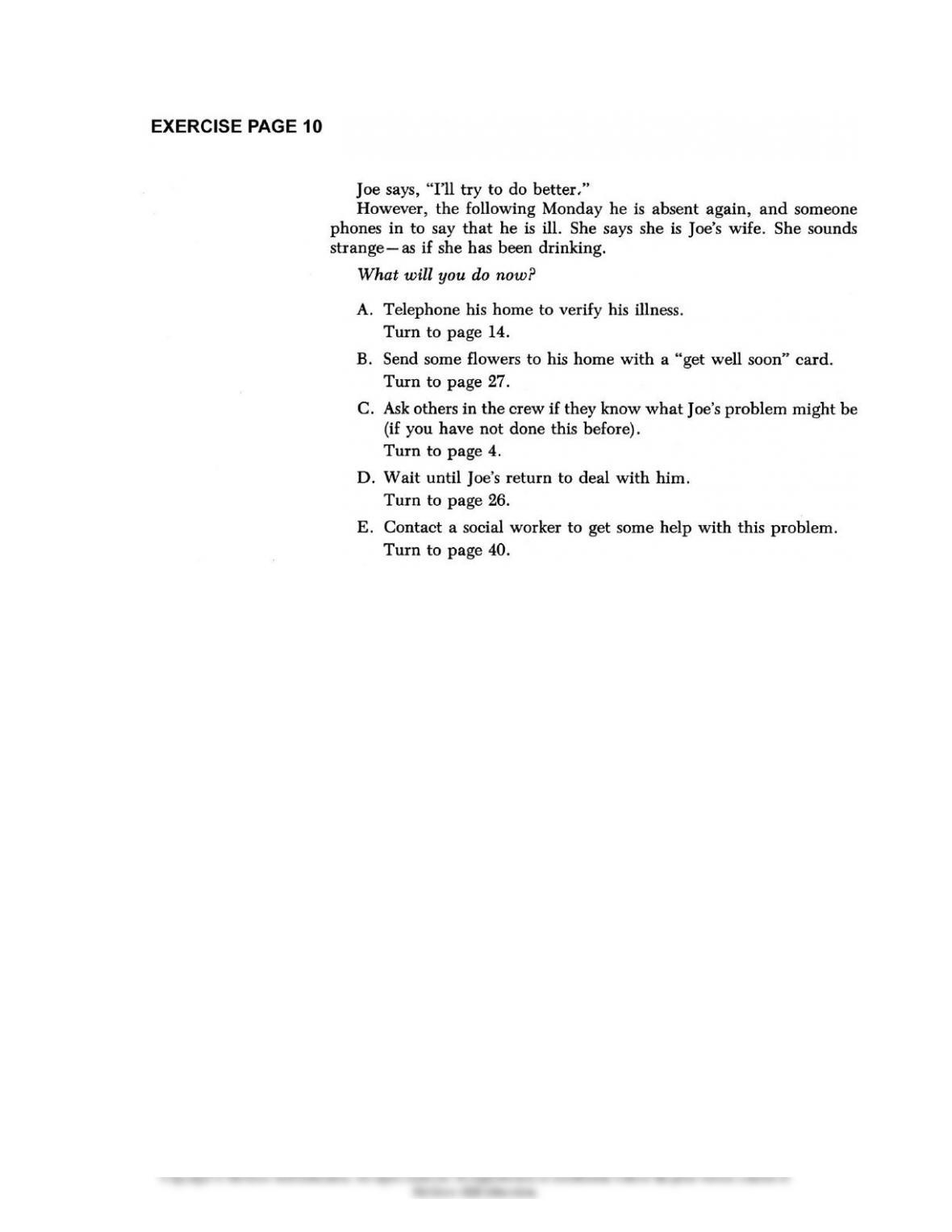
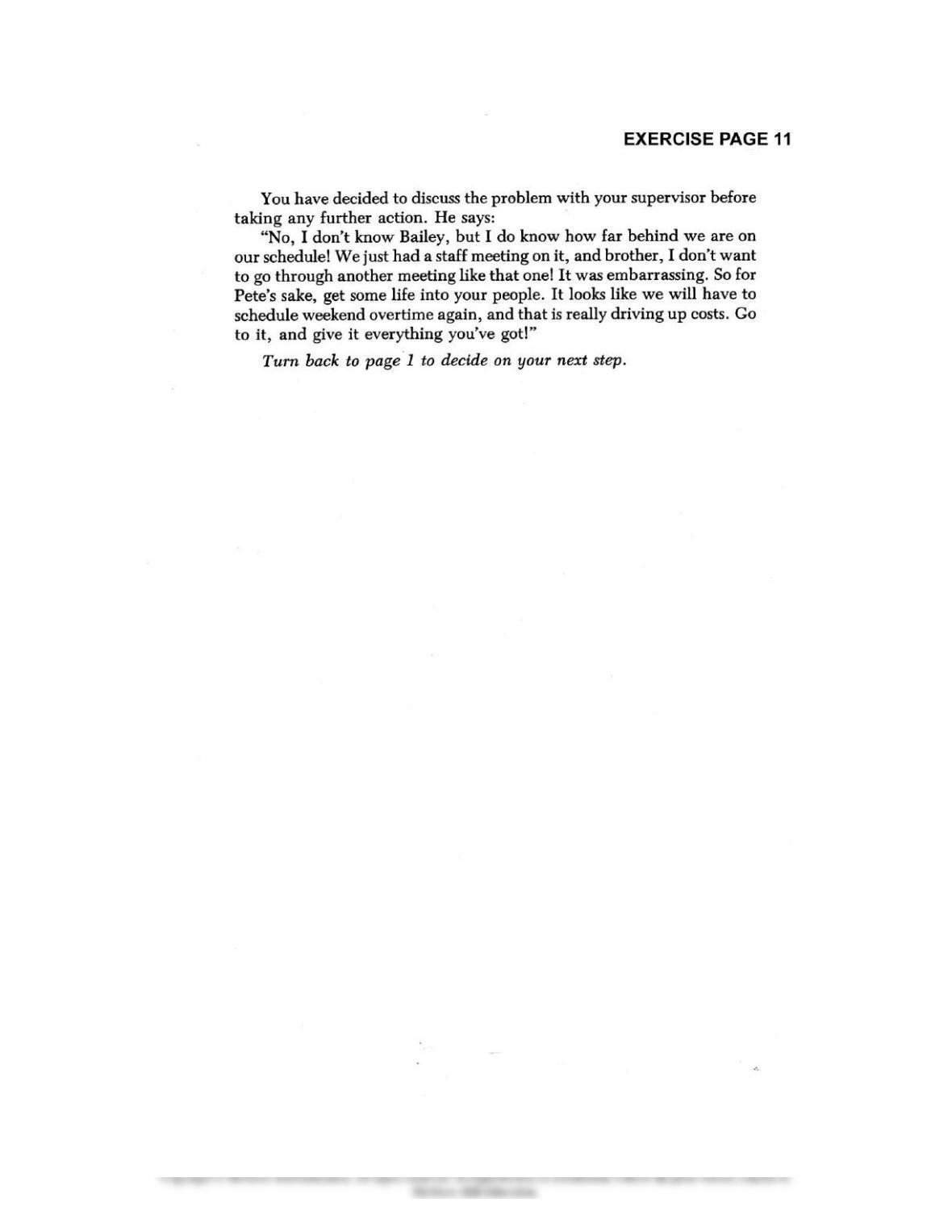
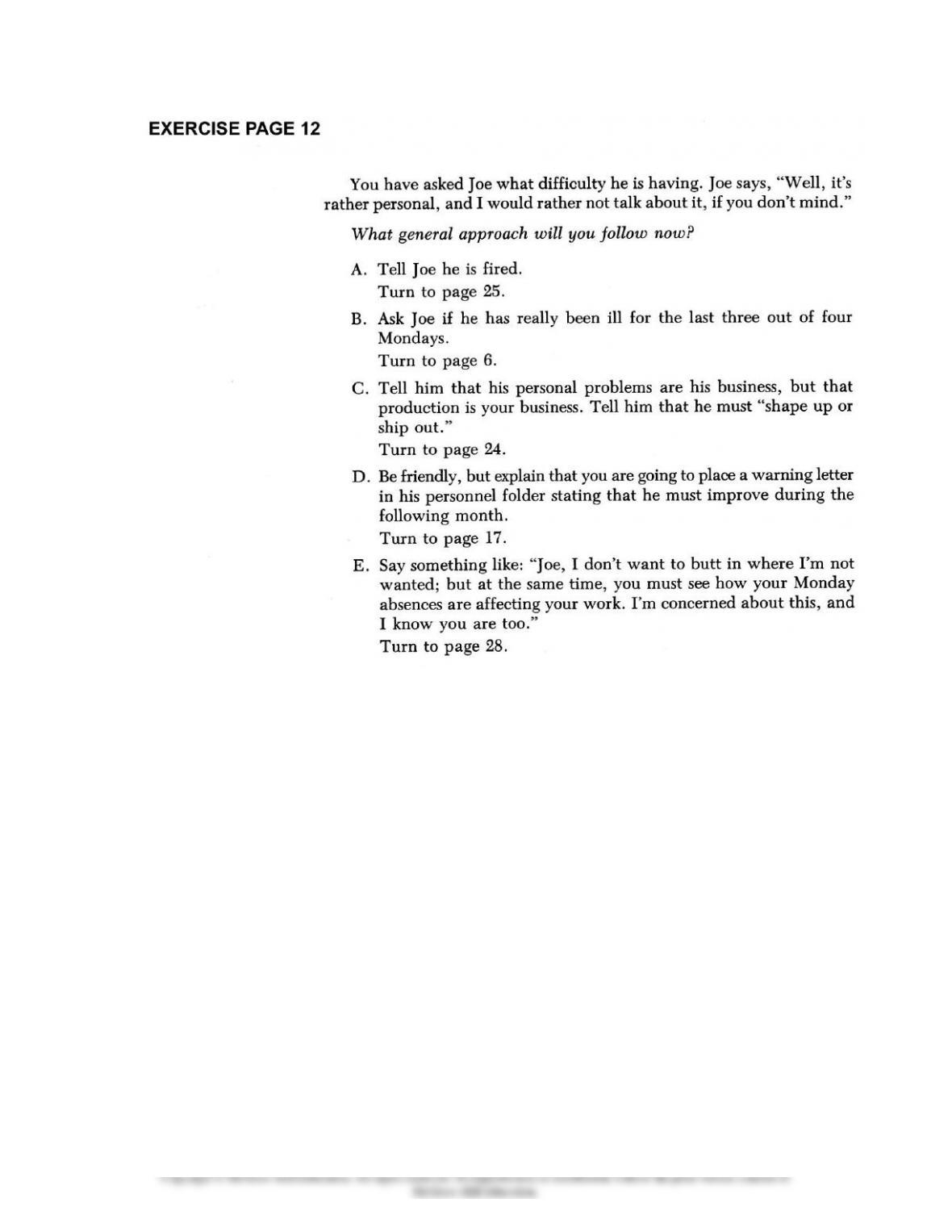
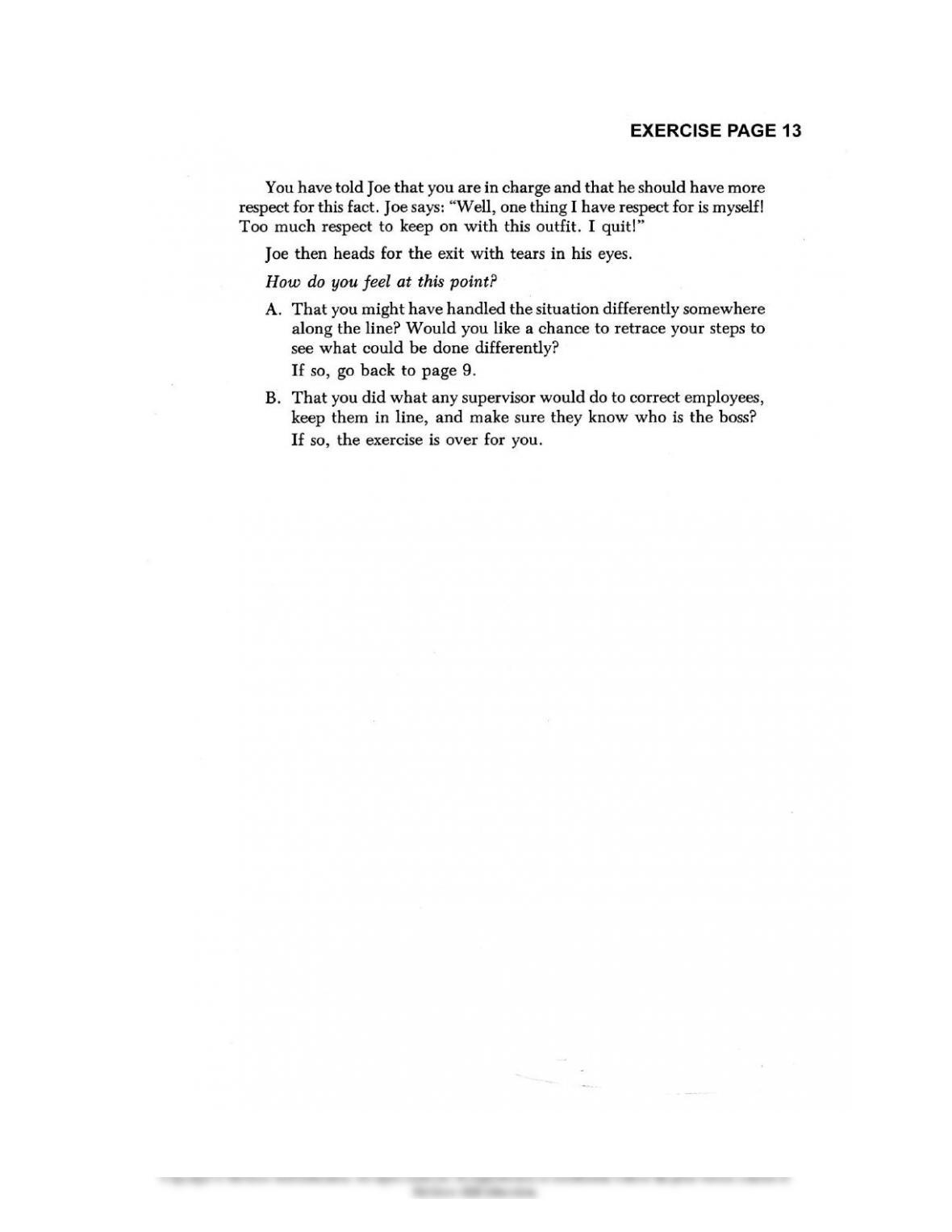
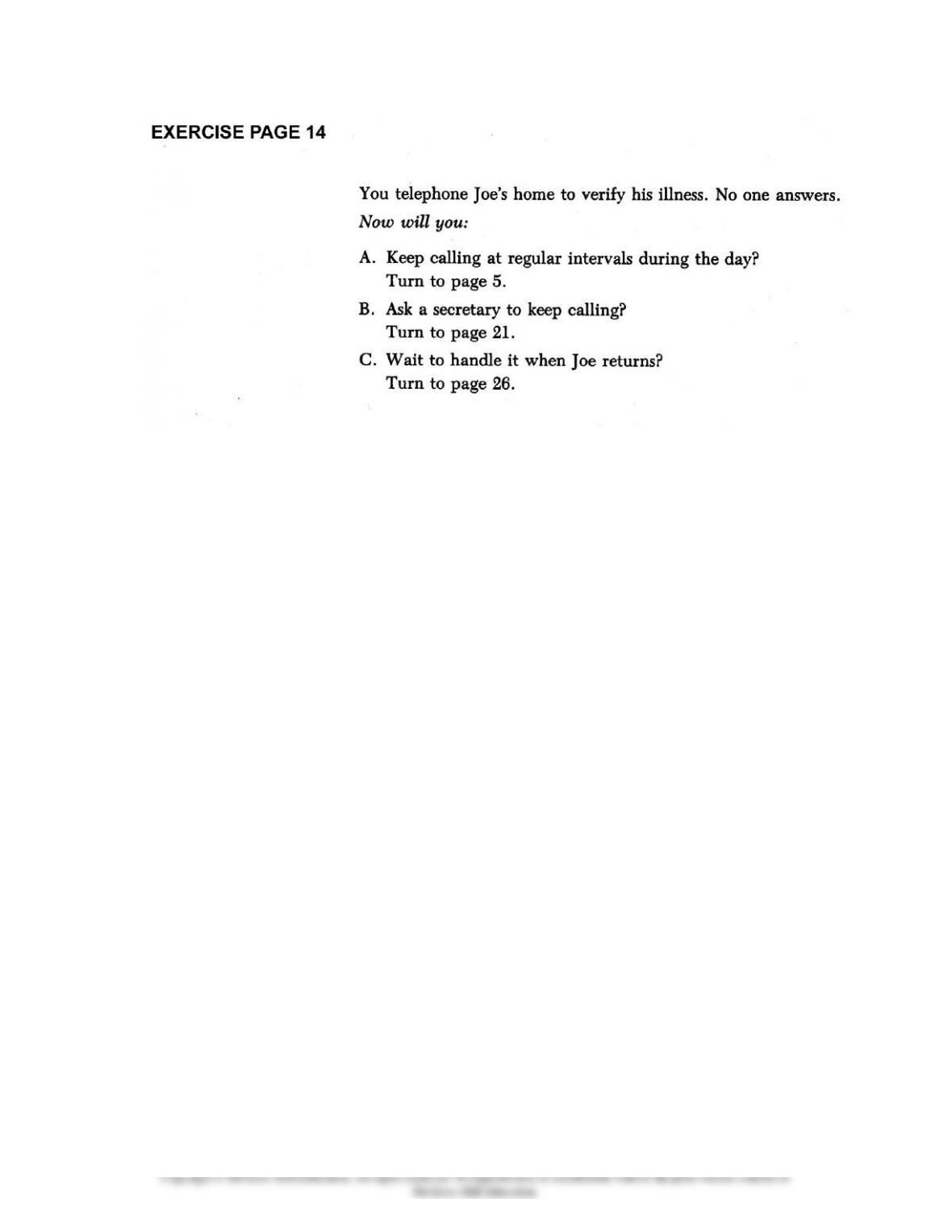
Exercise 5.3
Part 05 – Leadership Principles
5-26
Part 05 – Leadership Principles
5-27
Part 05 – Leadership Principles
5-28
Part 05 – Leadership Principles
5-29
Part 05 – Leadership Principles
5-30
Part 05 – Leadership Principles
5-31
Part 05 – Leadership Principles
5-32
Part 05 – Leadership Principles
5-33
Part 05 – Leadership Principles
5-34
Part 05 – Leadership Principles
5-35
Part 05 – Leadership Principles
5-36
Part 05 – Leadership Principles
5-37
Part 05 – Leadership Principles
5-38
Part 05 – Leadership Principles
5-39
Part 05 – Leadership Principles
5-40