Problem 9–13 (continued)
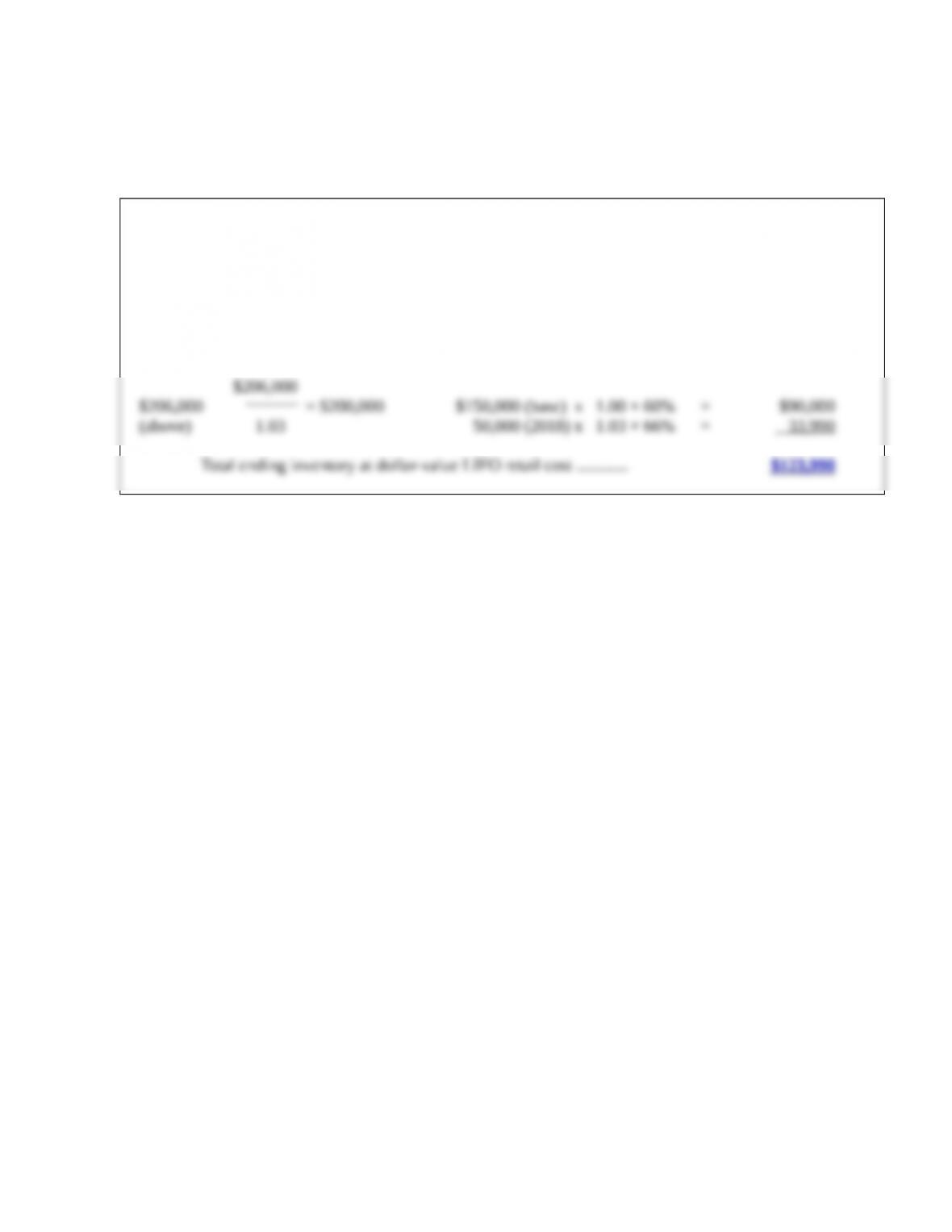
2018
Step 1 Step 2 Step 3
Ending Ending Inventory Inventory
Inventory Inventory Layers Layers
at Year-End at Base Year at Base Year Converted to
Retail Prices Retail Prices Retail Prices Cost
Problem 9–13 (continued)
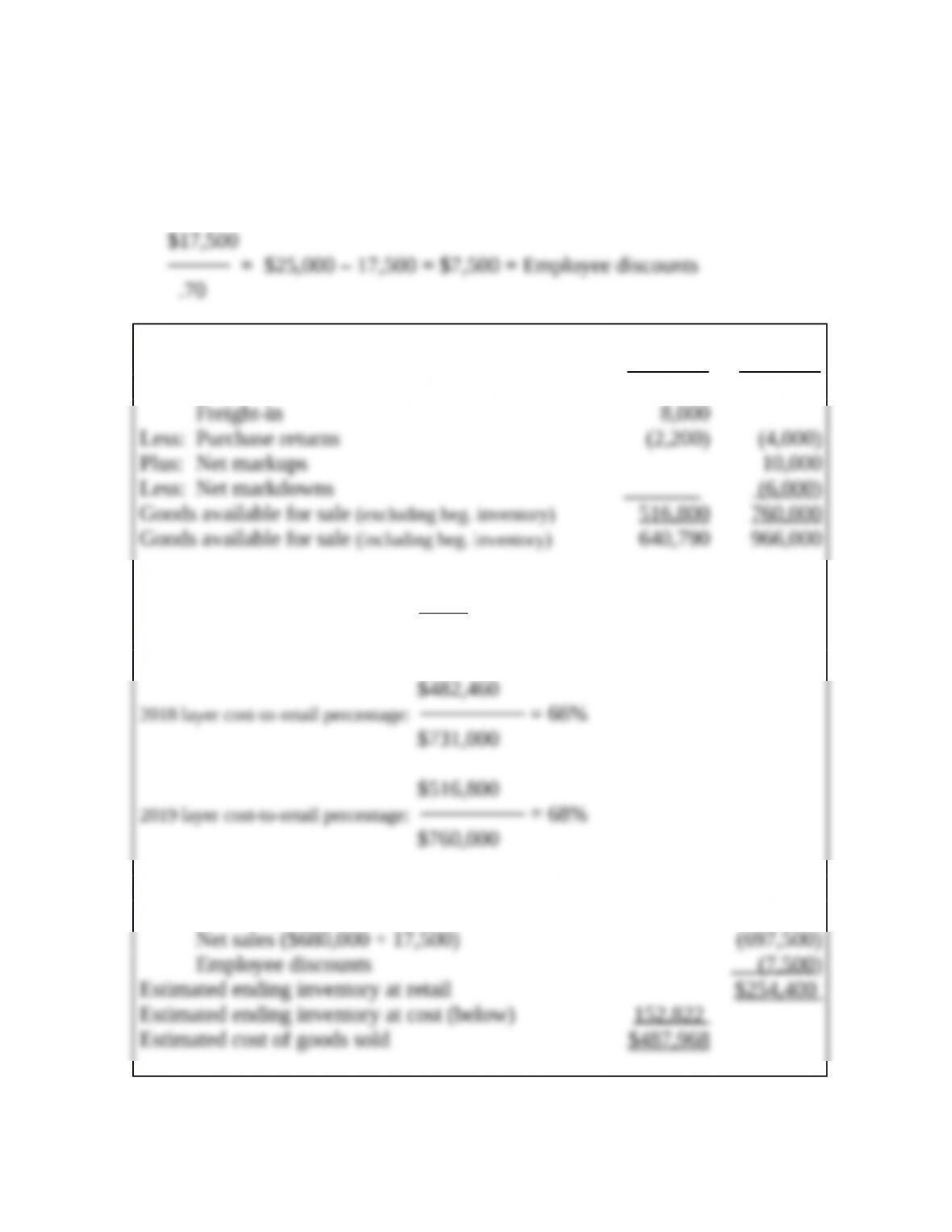
Employees must be deducted in the retail column.
2019:
Cost Retail
Beginning inventory $123 ,990 $206 ,000
Plus: Purchases 511,000 760,000
$90,000
Base layer cost-to-retail percentage: = 60%
$150,000
Less:
Normal spoilage
(6,600)
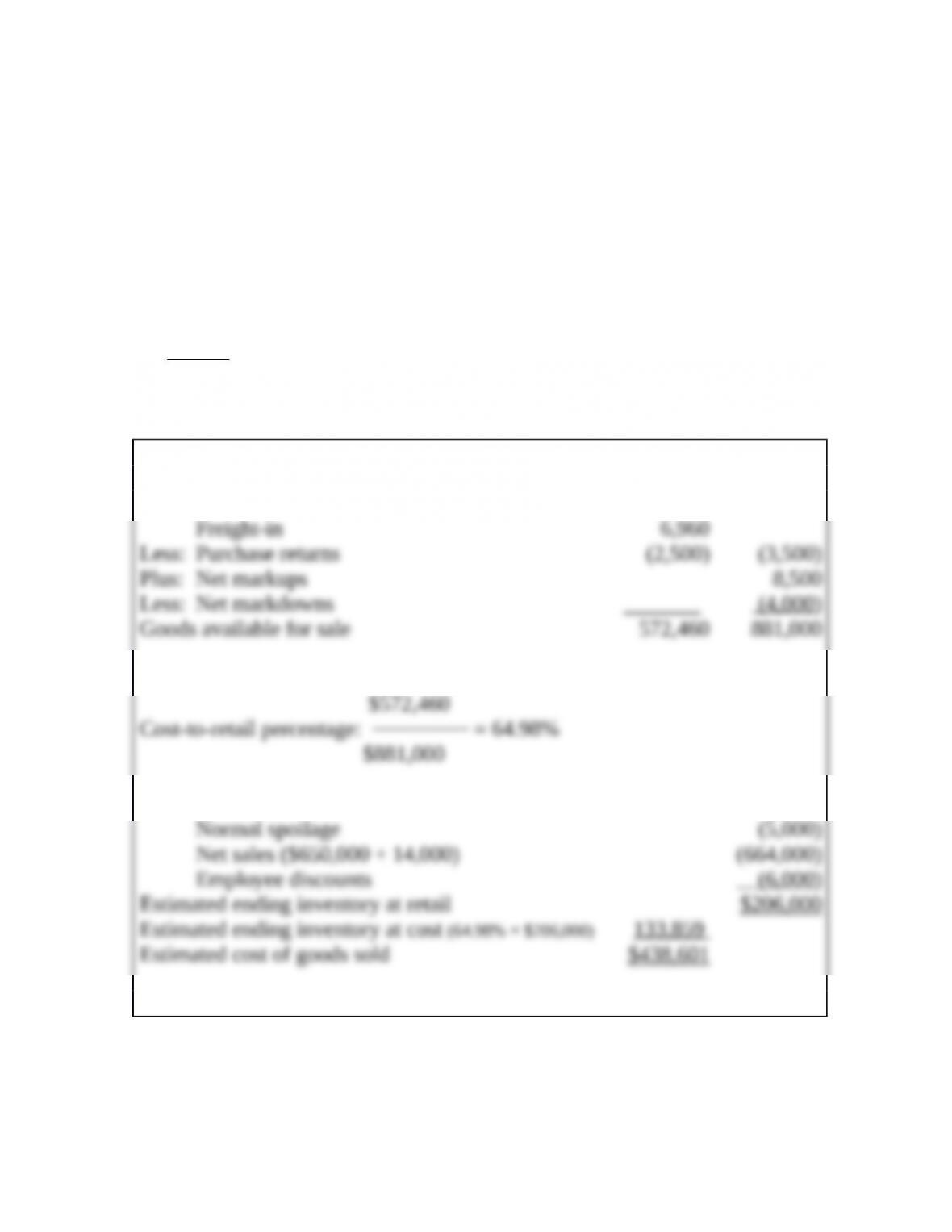
Problem 9–13 (continued)
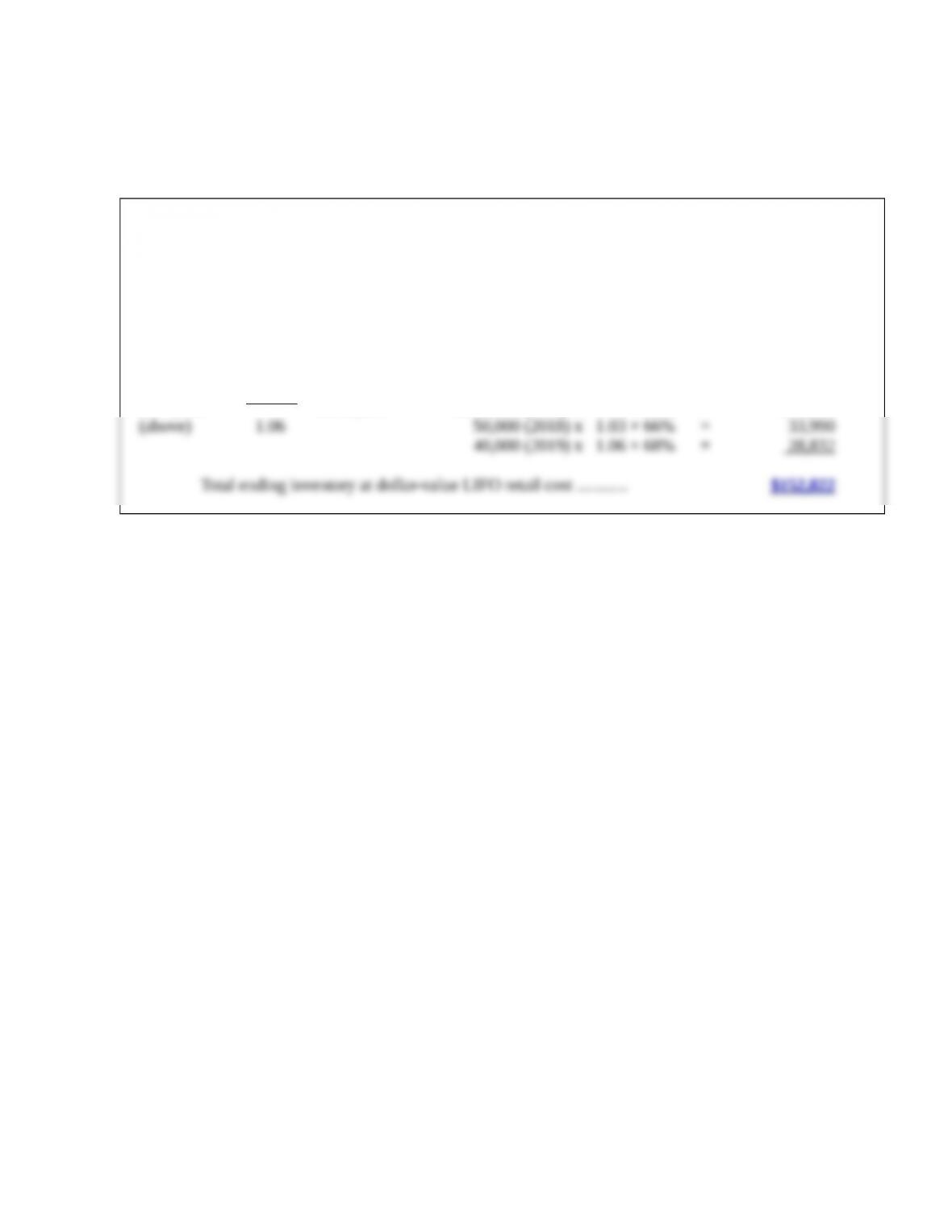
2019
Step 1 Step 2 Step 3
Ending Ending Inventory Inventory
Inventory Inventory Layers Layers
at Year-End at Base Year at Base Year Converted to
Retail Prices Retail Prices Retail Prices Cost
$254,400
$254,400 = $240,000 $150,000 (base) x 1.00 × 60% = $90,000
Problem 9–13 (continued)
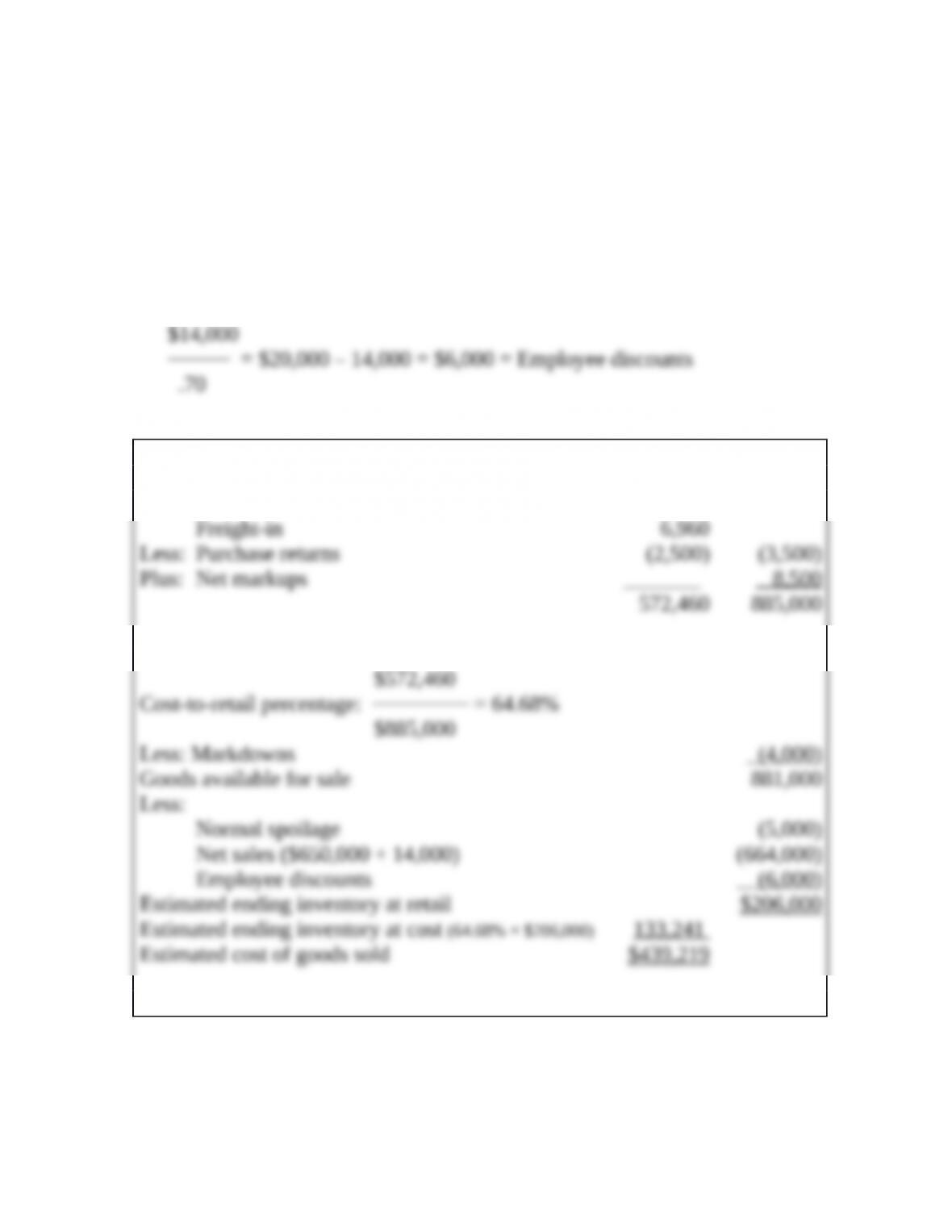
Requirement 2
Average cost retail
Employee discounts must be deducted in the retail column.
2018:
$14,000
= $20,000 – 14,000 = $6,000 = Employee discounts
.70
Cost Retail
Beginning inventory $ 90,000 $150,000
Plus: Purchases 478,000 730,000
Less:
Problem 9–13 (concluded)
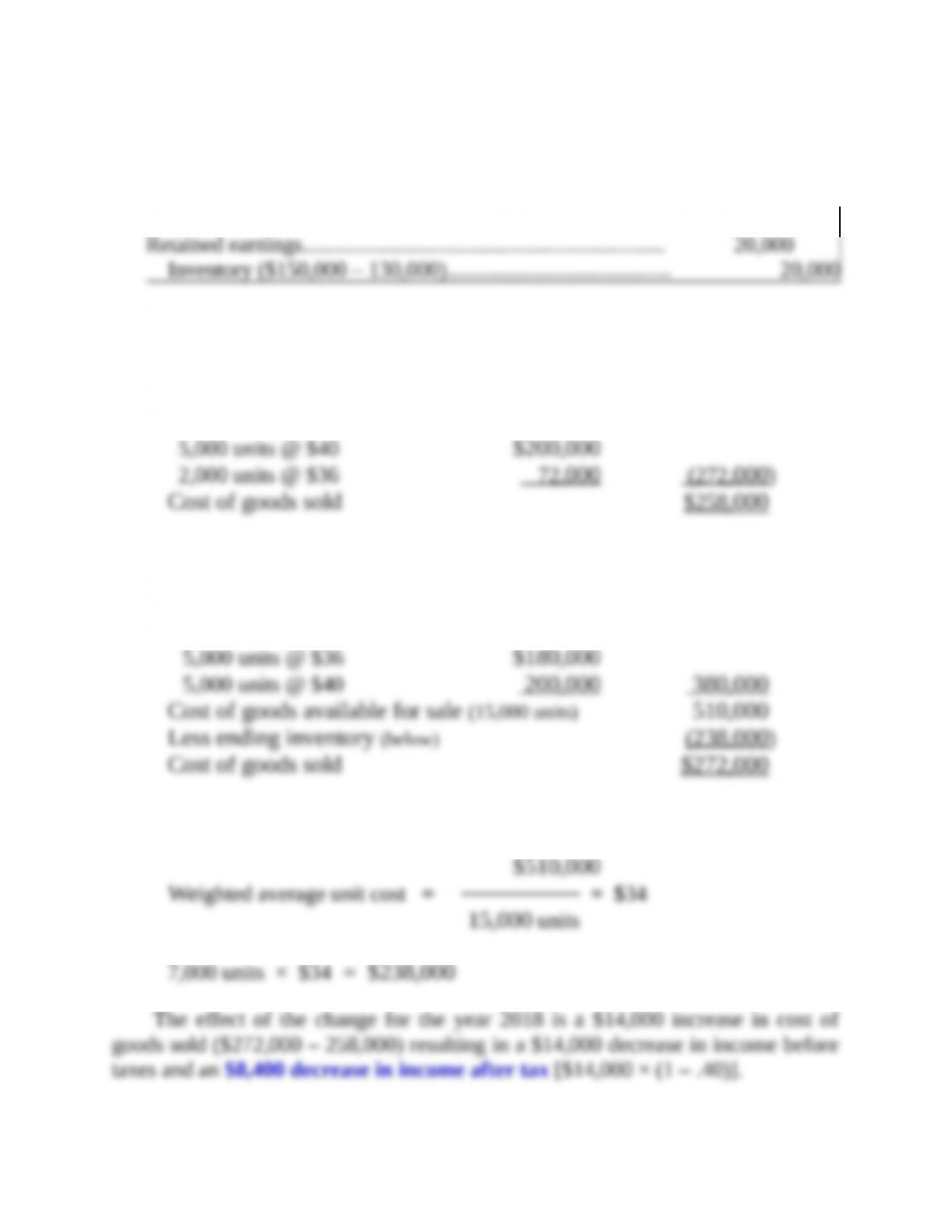
Requirement 3
Conventional retail
Employee discounts must be deducted in the retail column.
2018:
Cost Retail
Beginning inventory $ 90,000 $150,000
Plus: Purchases 478,000 730,000
Problem 9–14
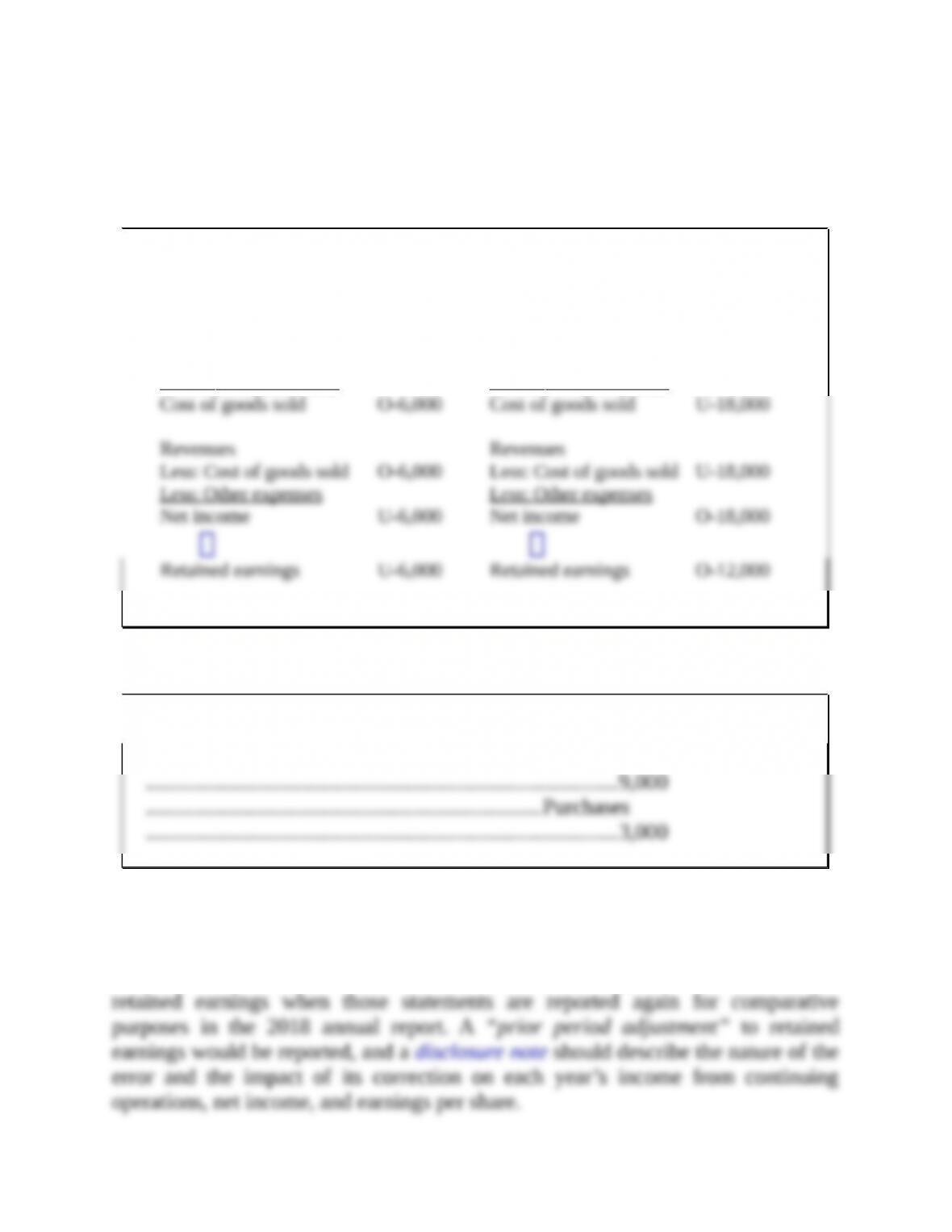
Requirement 1
Requirement 2
FIFO method cost of goods sold:
Cost of goods available for sale $530,000
Less ending inventory:
Average cost method cost of goods sold:
Beginning inventory (5,000 units) $130,000
Purchases:
Cost of ending inventory:
Problem 9–15
Requirement 1
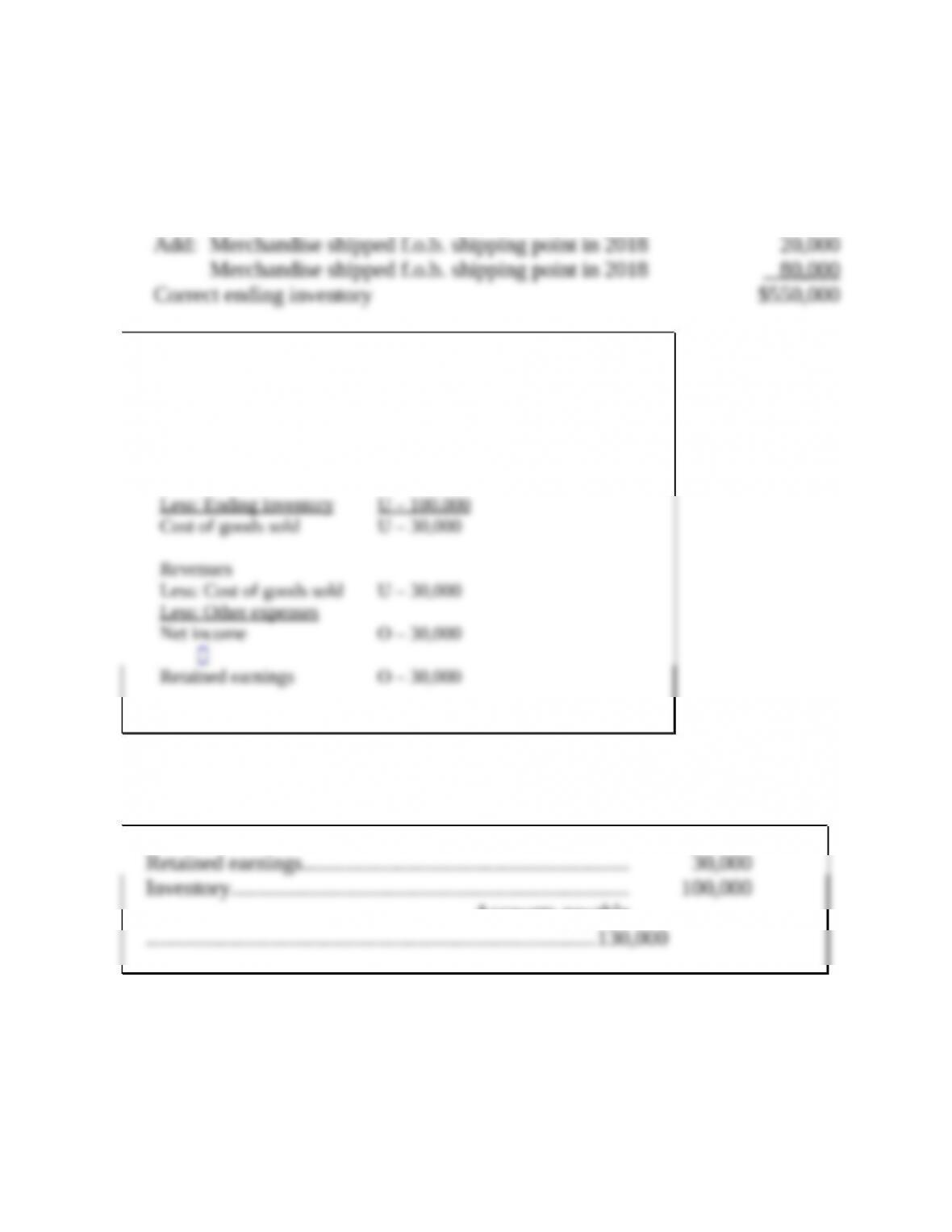
Analysis: U = Understated
O = Overstated
2016 2017
Beginning inventory Beginning inventory U-6,000
Plus: Net purchases Plus: Net purchases U-3,000
Less: E nding inventory U-6,000 Less: E nding inventory O-9,000
Requirement 2
Retained earnings…………………………………………………... 12,000
……………………………………………………….…..….Inventory
Requirement 3
The financial statements that were incorrect as a result of both errors (effect of
one error in 2016 and effect of three errors in 2017) would be retrospectively
restated to report the correct inventory amounts, cost of goods sold, income, and
Problem 9–16
Requirement 1
December 31, 2018, inventory, based on a physical count $450,000
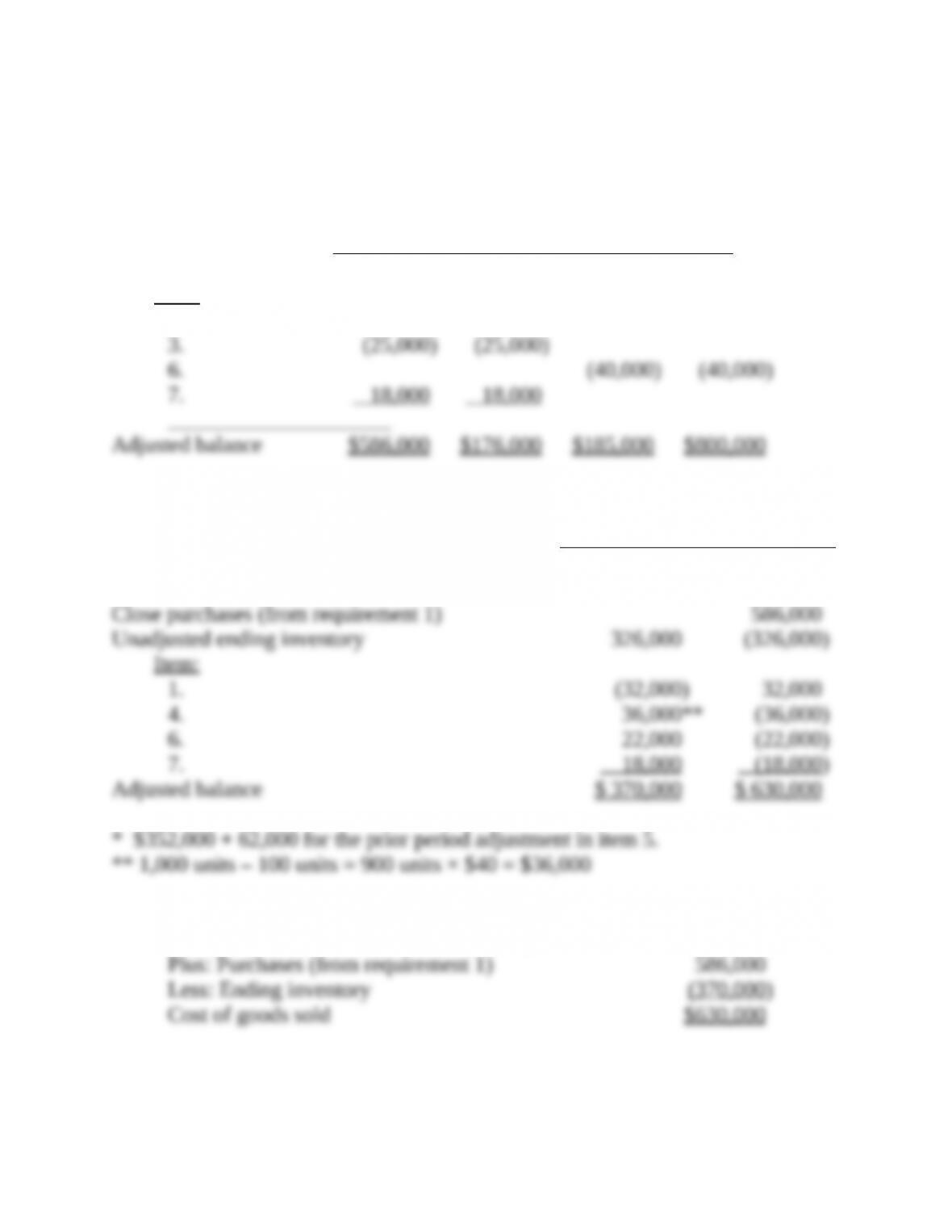
Analysis: U = Understated
O = Overstated
2018
Beginning inventory
Plus: Net purchases U – 130,000 ($50,000 + 80,000)
Requirement 2
………………………………………………..….Accounts payable
Problem 9–17
Requirement 1
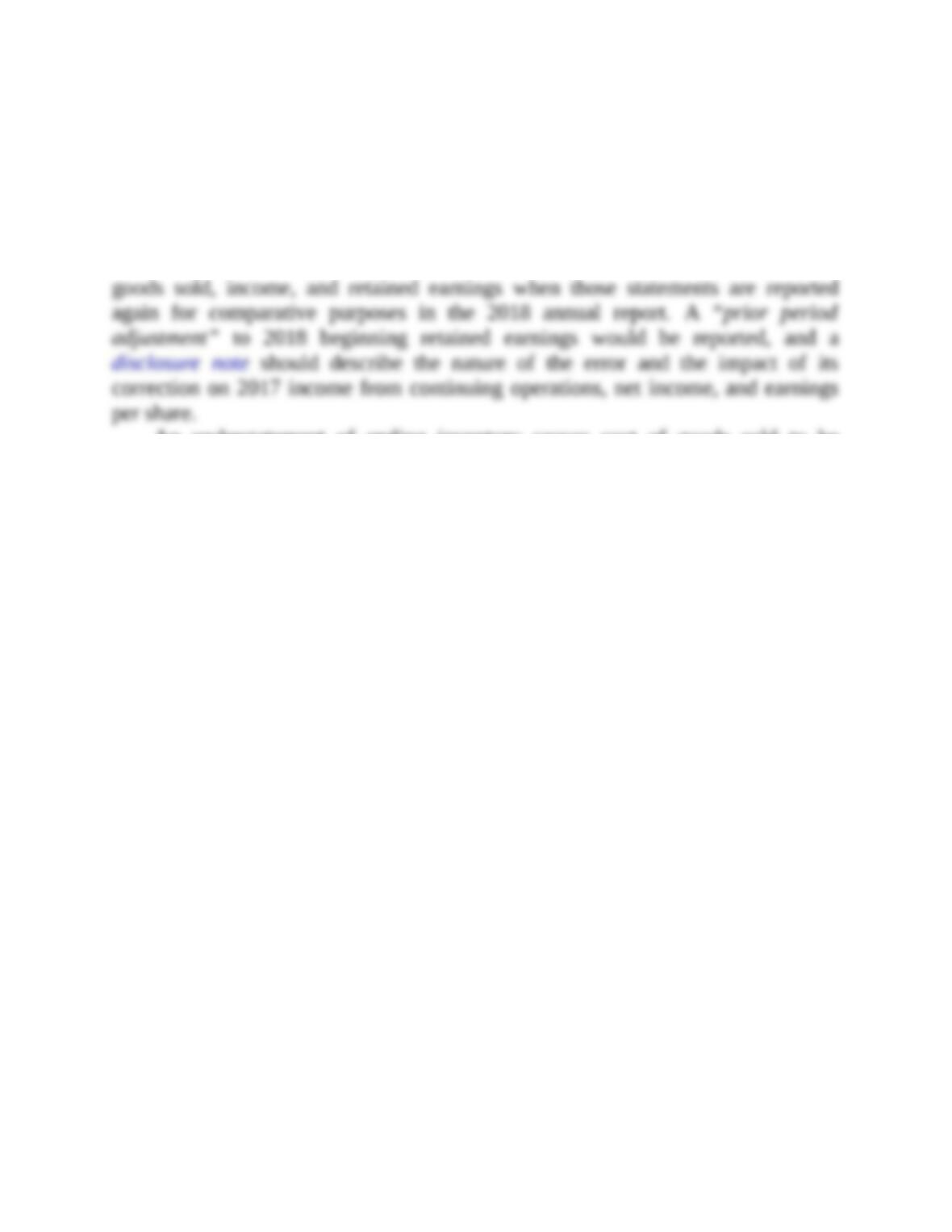
Accounts Accounts Sales
Purchases payable receivable revenue
Unadjusted balance $620,000 $210,000 $225,000 $840,000
Item:
2. (27,000) (27,000)
Requirement 2
Ending Cost of
Inventory Goods Sold
Beginning balance $ 414,000* $ 0
Close beginning inventory (414,000) 414,000
Alternatively:
Beginning inventory ($352,000 + 62,000) $414,000
Problem 9–17 (concluded)
Requirement 3
The 2017 financial statements that were incorrect as a result of the error
would be retrospectively restated to report the correct inventory amounts, cost of
An understatement of ending inventory causes cost of goods sold to be
overstated. Therefore, 2017 before-tax income was understated by $62,000.
Problem 9–18
Requirement 1
a. $10.50
If market price is equal to or greater than the contract price, the purchase is
recorded at cost.
b. $9.50
If market price is less than the contract price, the purchase is recorded at the
market price.
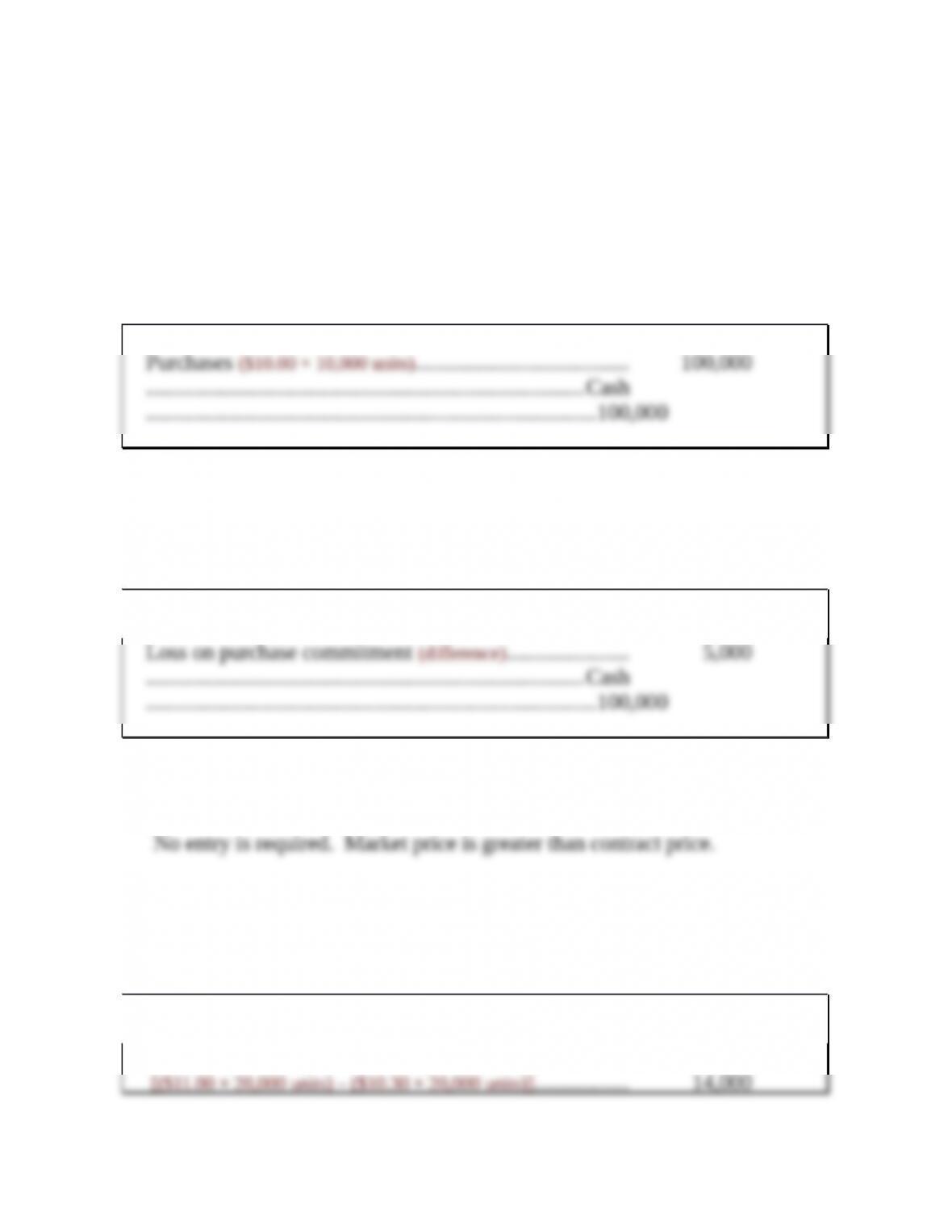
Purchases ($9.50 × 10,000 units)…………………………….….… 95,000
Requirement 2
a. $12.50
b. $10.30
If market price at year-end is less than contract price for outstanding purchase
commitments, a loss is recorded for the difference.
December 31, 2018
Estimated loss on purchase commitment