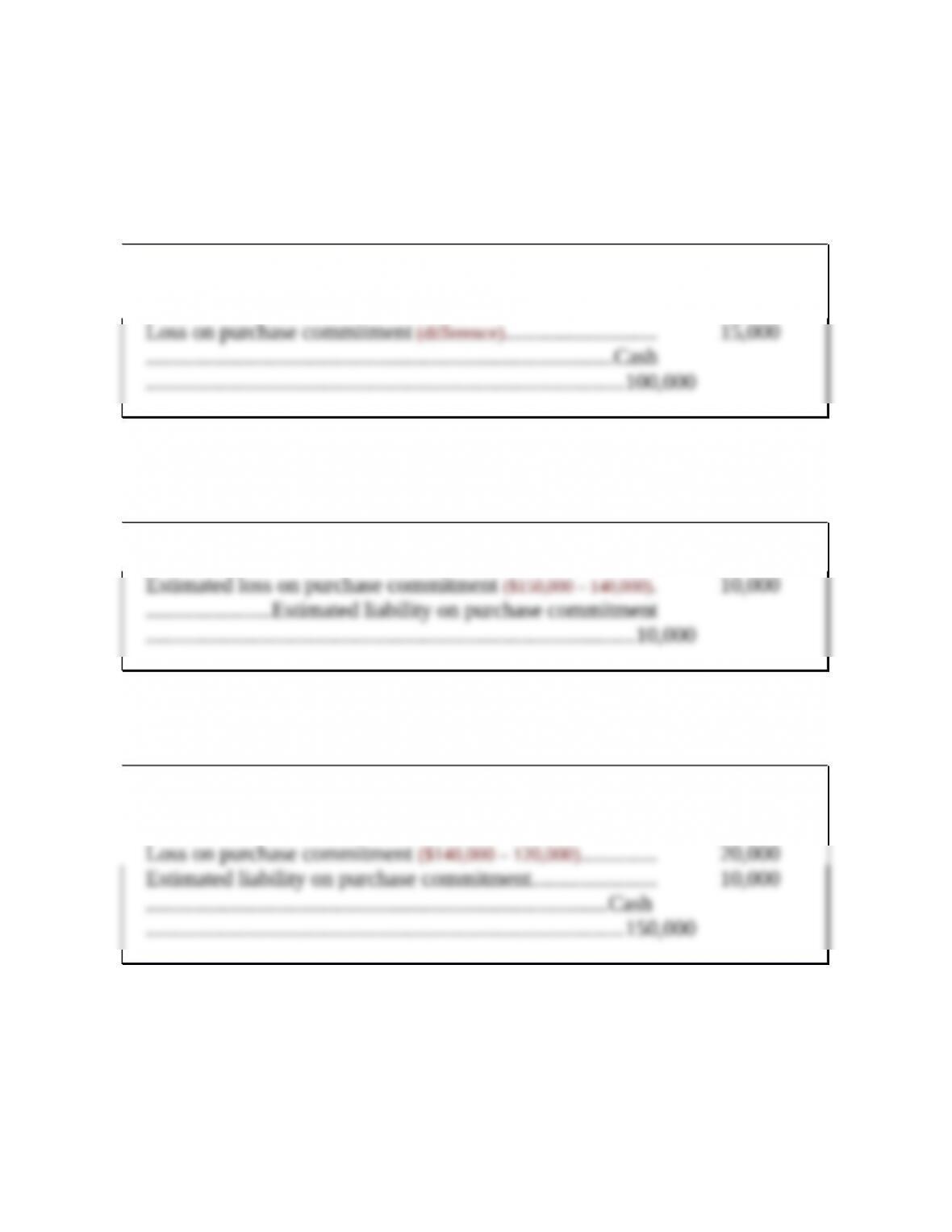
Exercise 9–31
If market price is less than the contract price, the purchase is recorded at the
market price.
June 15, 2018
Purchases (market price)………………………………………………… 85,000
If market price at year-end is less than contract price for outstanding purchase
commitments, a loss is recorded for the difference.
June 30, 2018
If market price on purchase date declines from year-end price, the purchase is
recorded at market price.
August 20, 2018
Purchases (market price)………………………………………………… 120,000
Problem 9–1
Requirement 1
(1) (2)
Product
(units) Cost
NRV*
Inventory
Value
[Lower of
(1) or (2)]
A (1,000) $10,000 $13,600 $10,000
B (800) 12,000 12,240 12,000
Inventory carrying value would be $31,450.
* Selling price less costs to sell. Costs to sell = 15% of selling price
Product Selling price NRV per unit
A $16 $16 – (15% × $16) = $13.60
Requirement 2
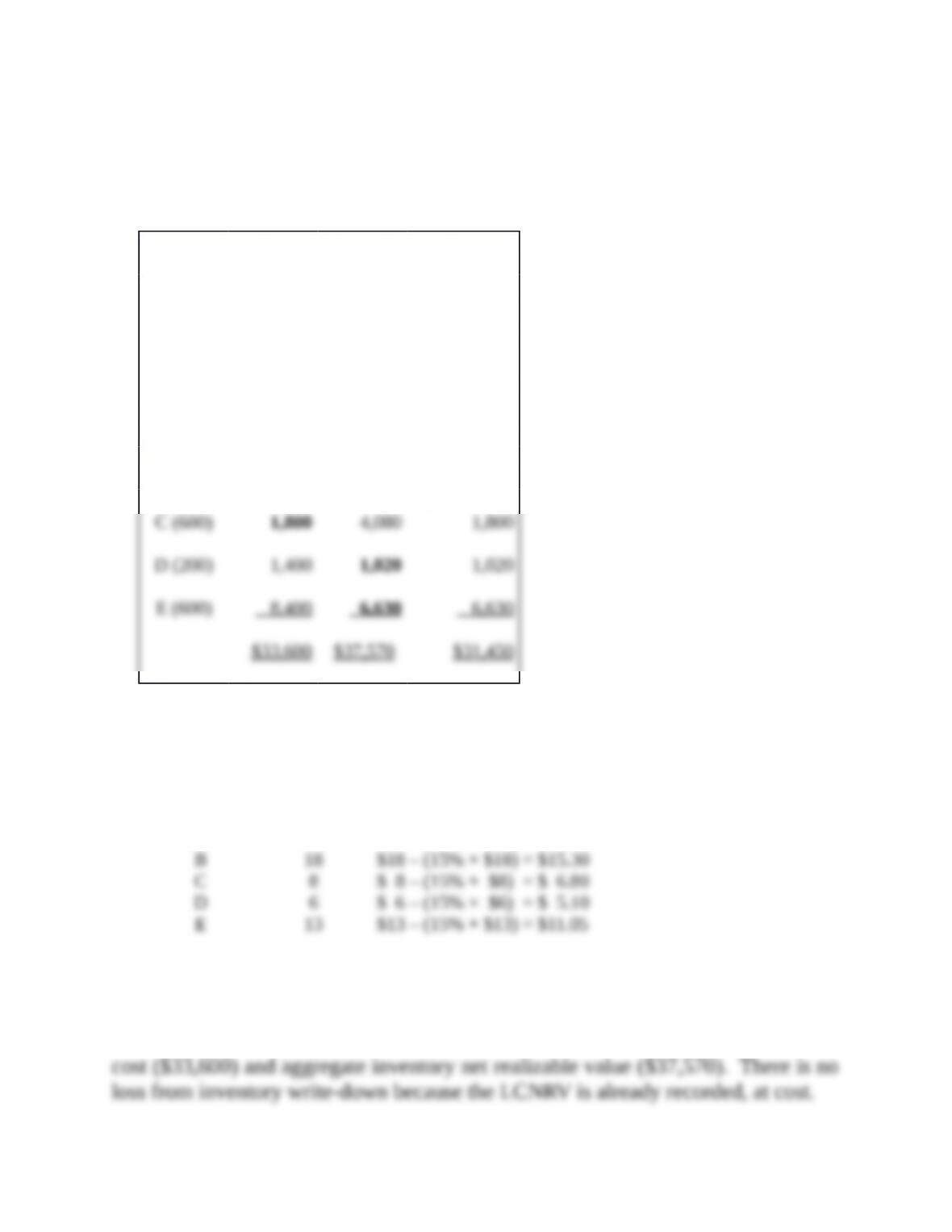
Inventory carrying value would be $33,600, the lower of aggregate inventory
PROBLEMS
Problem 9–2
Requirement 1
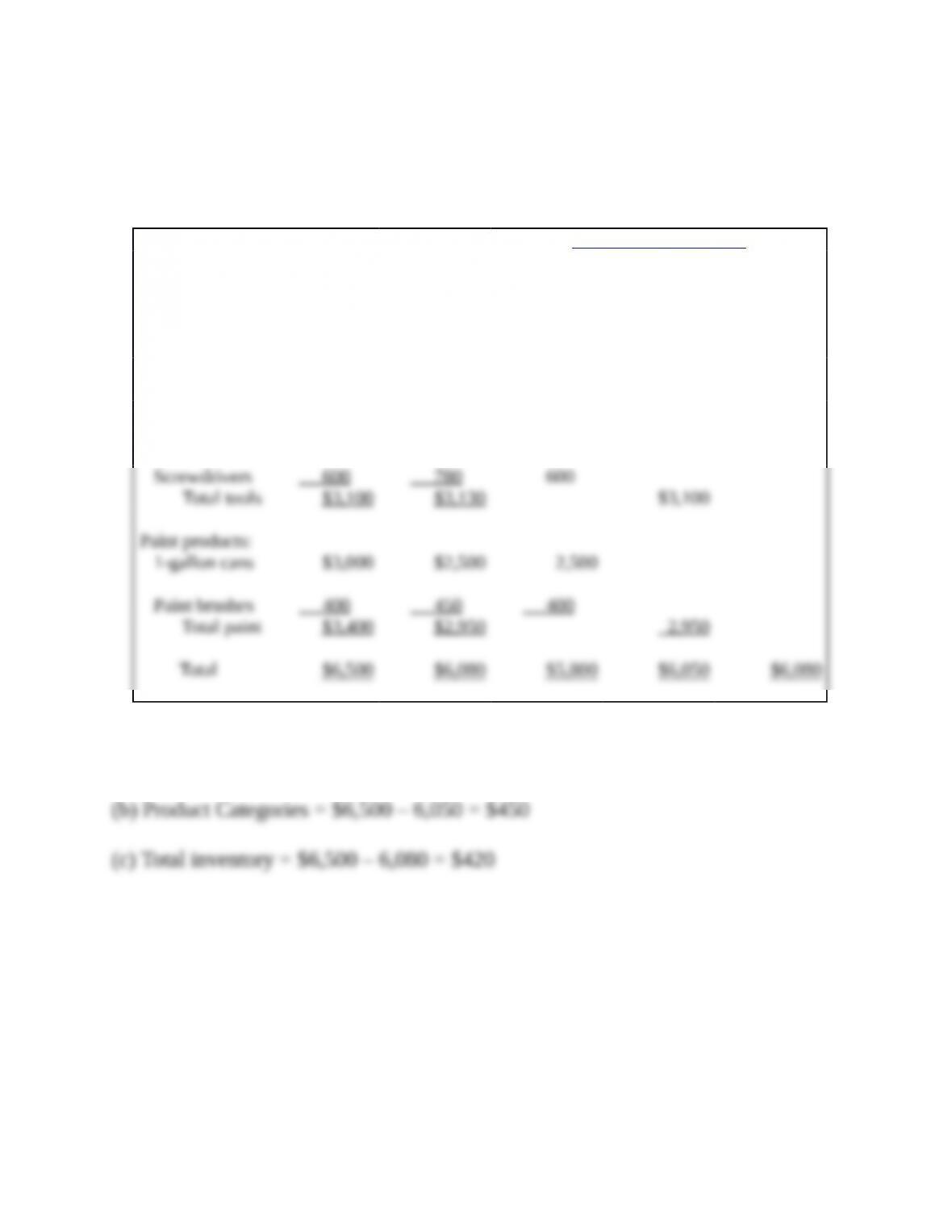
Lower of cost or NRV
Product Cost
Net
Realizable
Value
(a)
By
Individual
Products
(b)
By
Product
Type
(c)
By Total
Inventory
Tools:
Hammers $ 500 $ 550 $ 500
Saws 2,000 1,800 1,800
Requirement 2
(a) Individual products = $6,500 – 5,800 = $700
Problem 9–3
Requirement 1
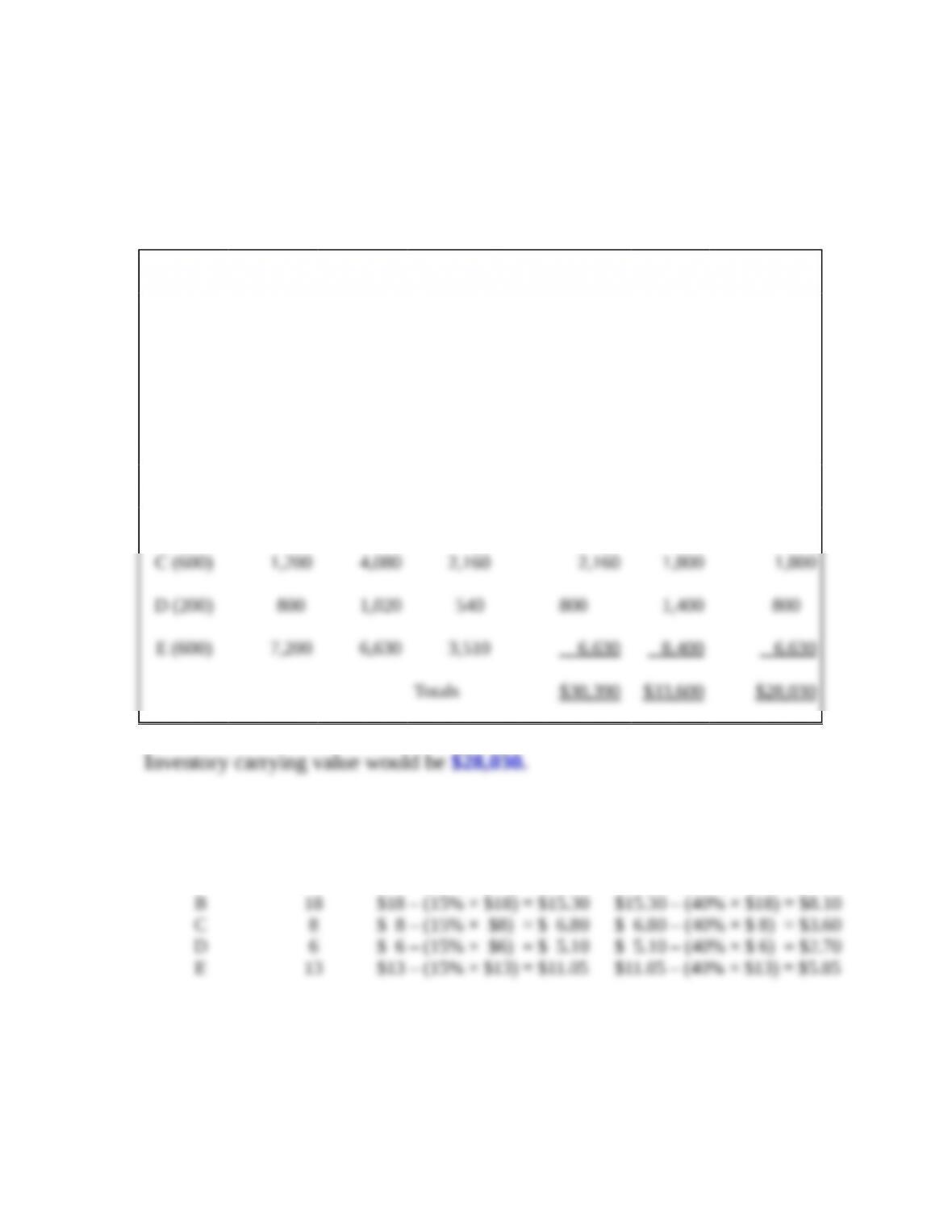
(1) (2) (3) (4) (5)
Product
(units) RC
Ceiling
NRV*
Floor
NRV –
NP**
Market
[Middle value
of (1), (2) & (3)] Cost
Inventory
Value
[Lower of
(4) or (5)]
A (1,000) $12,000 $13,600 $7,200 $12,000 $10,000 $10,000
B (800) 8,800 12,240 6,480 8,800 12,000 8,800
* Selling price less costs to sell. Costs to sell = 15% of selling price
** NRV less normal profit margin. Profit = 40% of the selling price.
Product Selling price NRV per unit NRV – NP per unit
A $16 $16 – (15% × $16) = $13.60 $13.60 – (40% × $16) = $7.20
Requirement 2
Inventory carrying value would be $30,390, the lower of aggregate inventory
Problem 9–4
Requirement 1
Lower of cost or market
Product Cost Market
(a)
By
Individual
Products
(b)
By
Product
Type
(c)
By Total
Inventory
Furniture:
Chairs $1,250 $1,550 $1,250
Accessories:
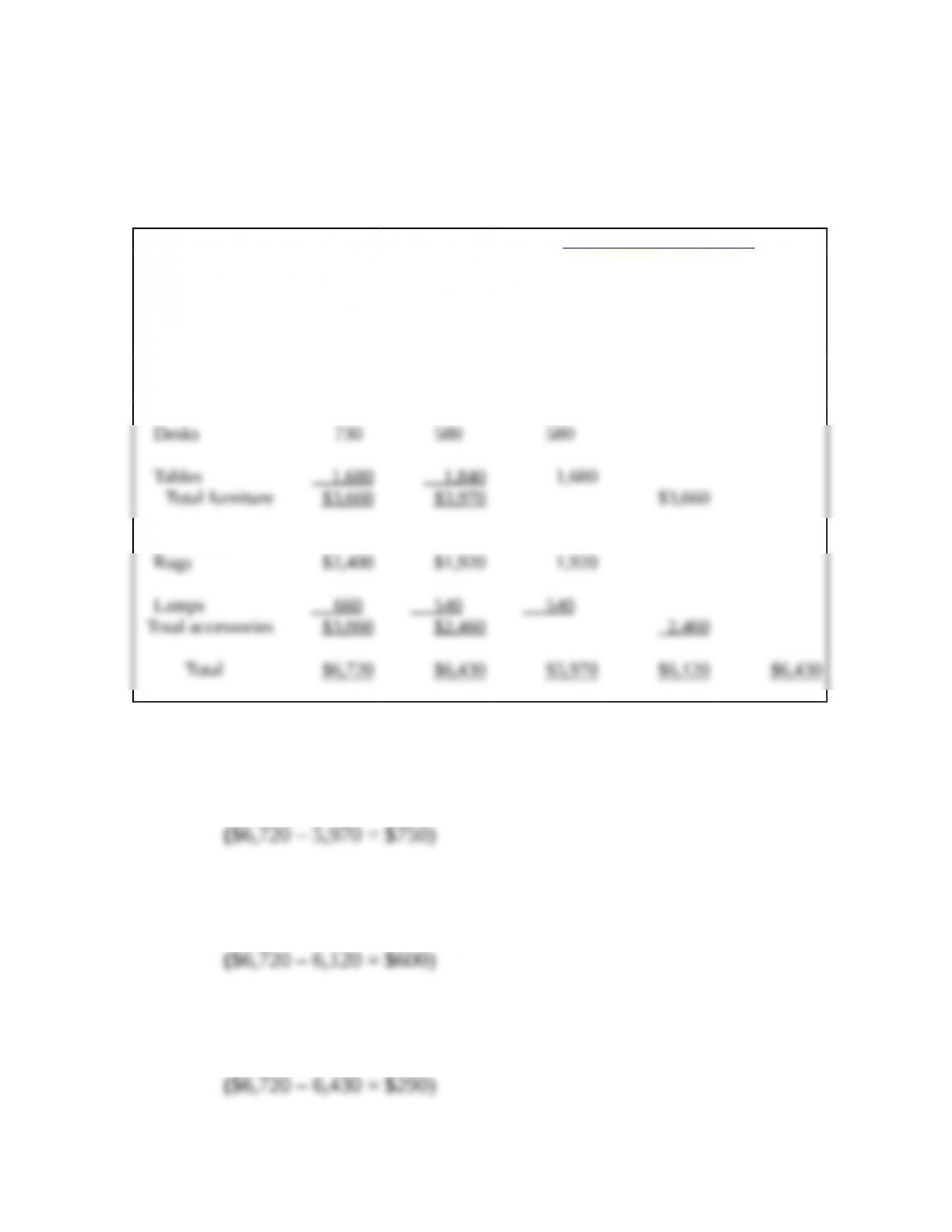
Requirement 2
(a) Individual products
Cost of Goods Sold 750
Inventory 750
(b) Product Categories
Cost of Goods Sold 600
Inventory 600
(c) Total inventory
Cost of Goods Sold 290
Inventory 290
Problem 9–5
Requirement 1
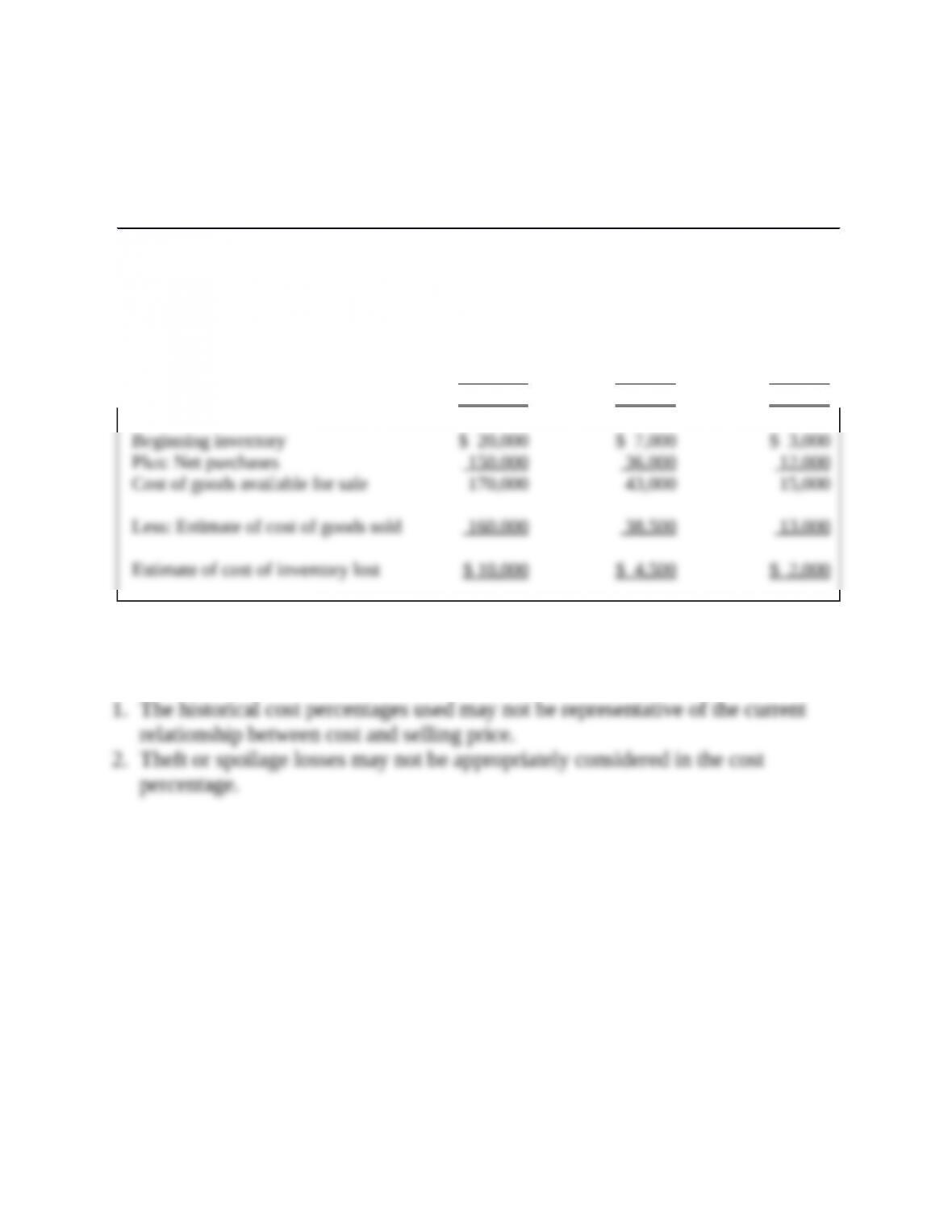
Fruit Marshmallow Chocolate
Toppings Toppings Topping
Estimate of cost of goods sold:
Cost percentage 80% 70% 65%
× Net sales $200 ,000 $55 ,000 $20 ,000
$160 ,000 $38 ,500 $13 ,000
Requirement 2
The two main factors that could cause the estimates of the inventory lost to be
over- or understated are:
Problem 9–6
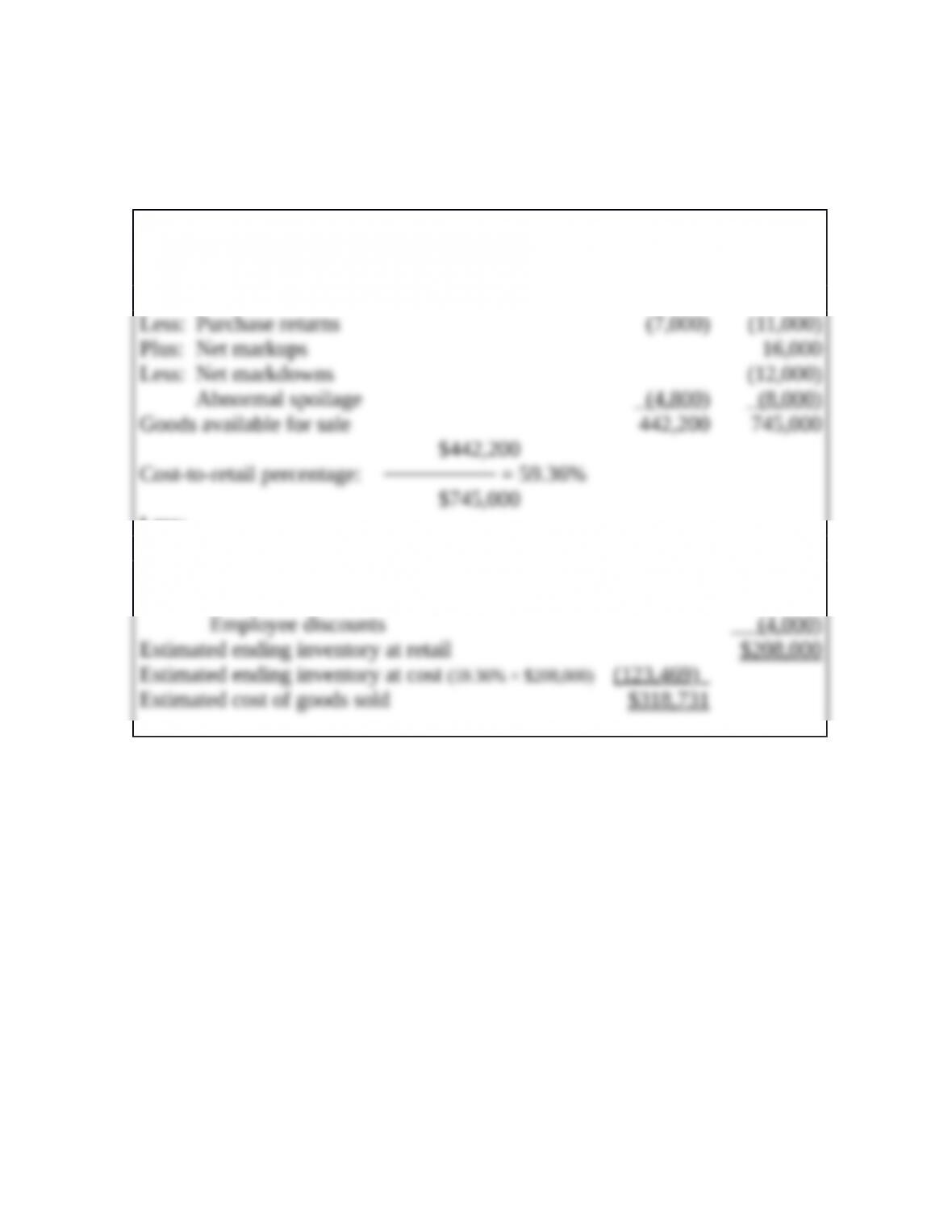
1. Average cost
Cost Retail
Beginning inventory $ 90,000 $180,000
Plus: Purchases 355,000 580,000
Freight-in 9,000
Less:
Normal spoilage (3,000)
Sales:
Net sales ($540,000 – 10,000) (530,000)
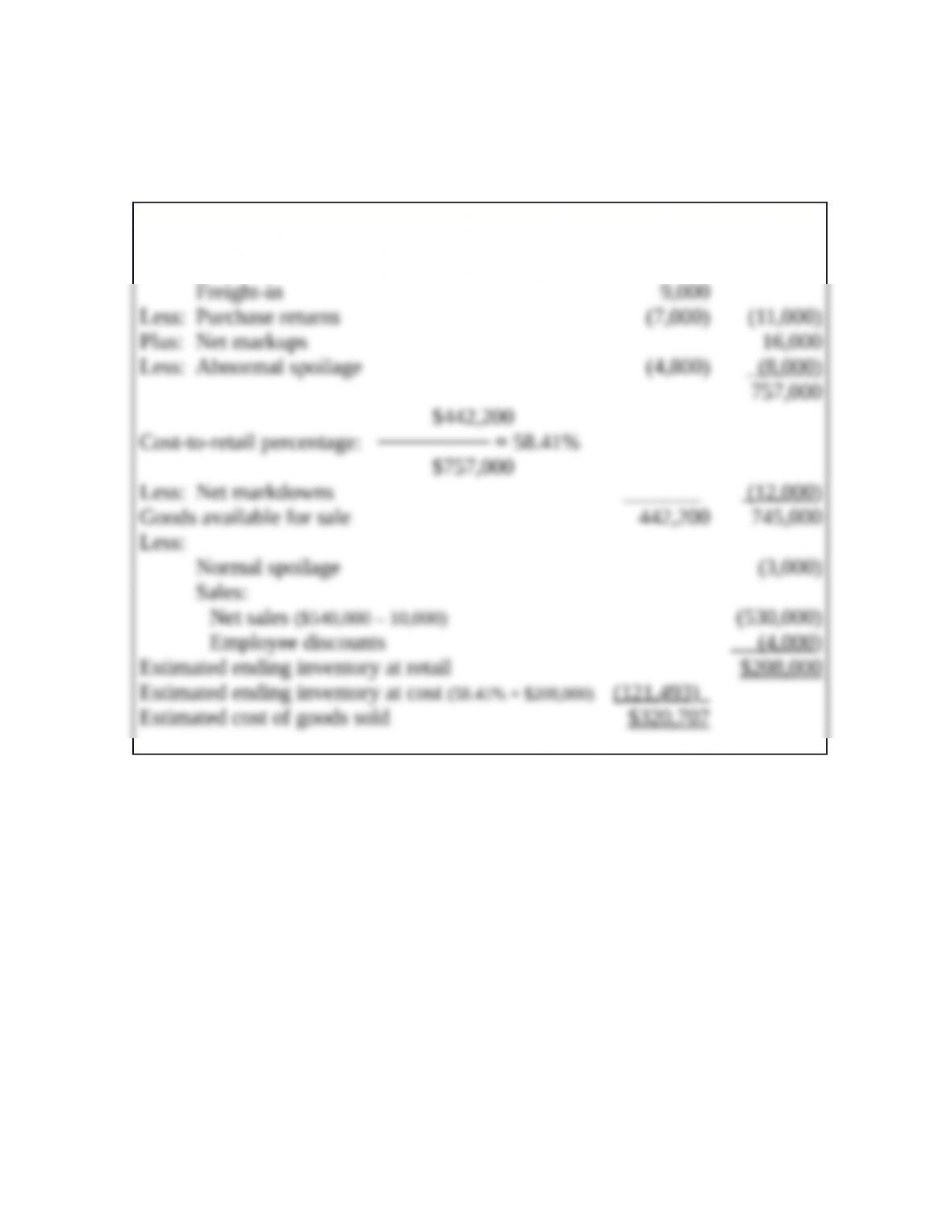
Problem 9–6 (concluded)
2. Conventional
Cost Retail
Beginning inventory $ 90,000 $180,000
Plus: Purchases 355,000 580,000