Exercise 9–24
Requirement 1
Requirement 2
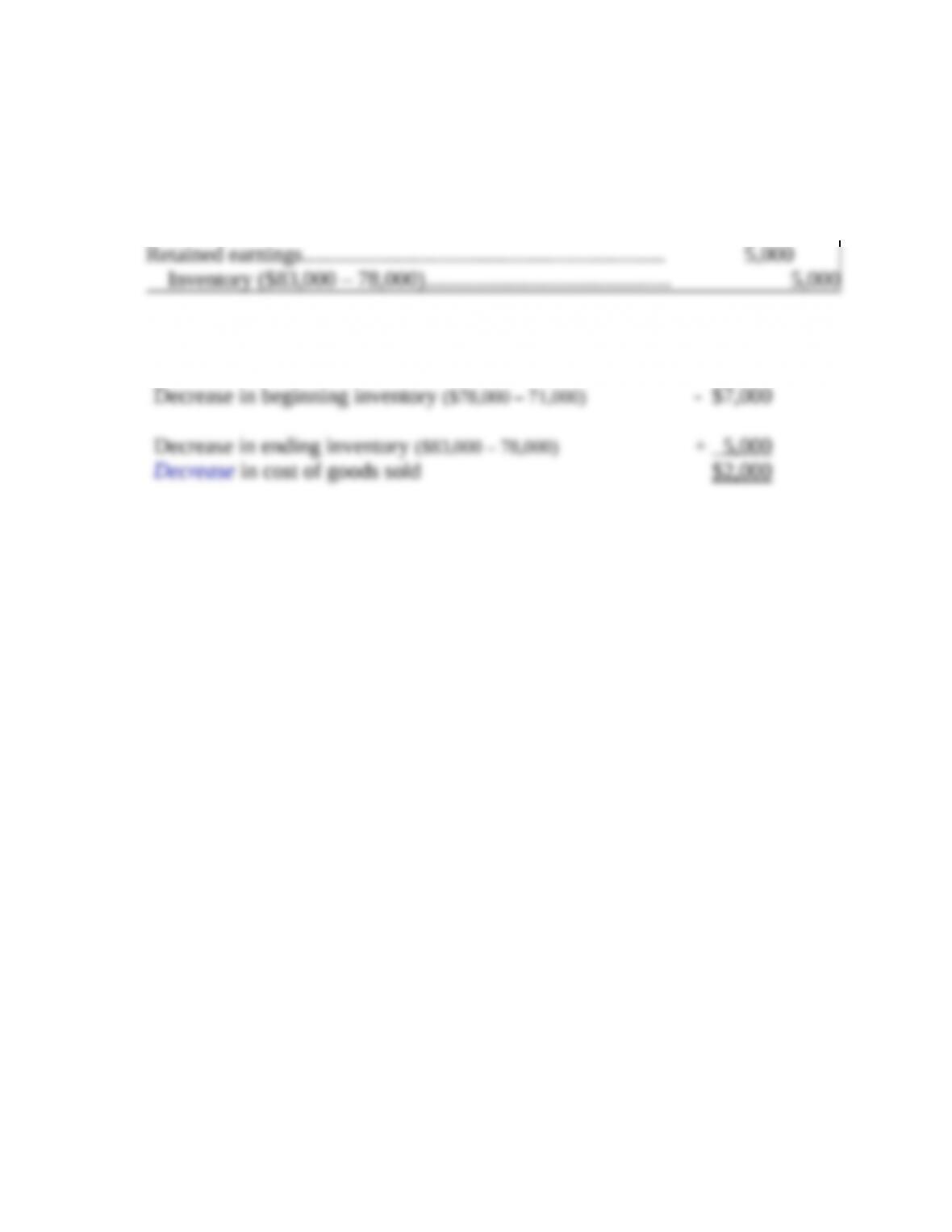
Effect on cost of goods sold:
Cost of goods sold for 2017 would be $2,000 lower in the revised income
statement.
Exercise 9–25
Requirement 1
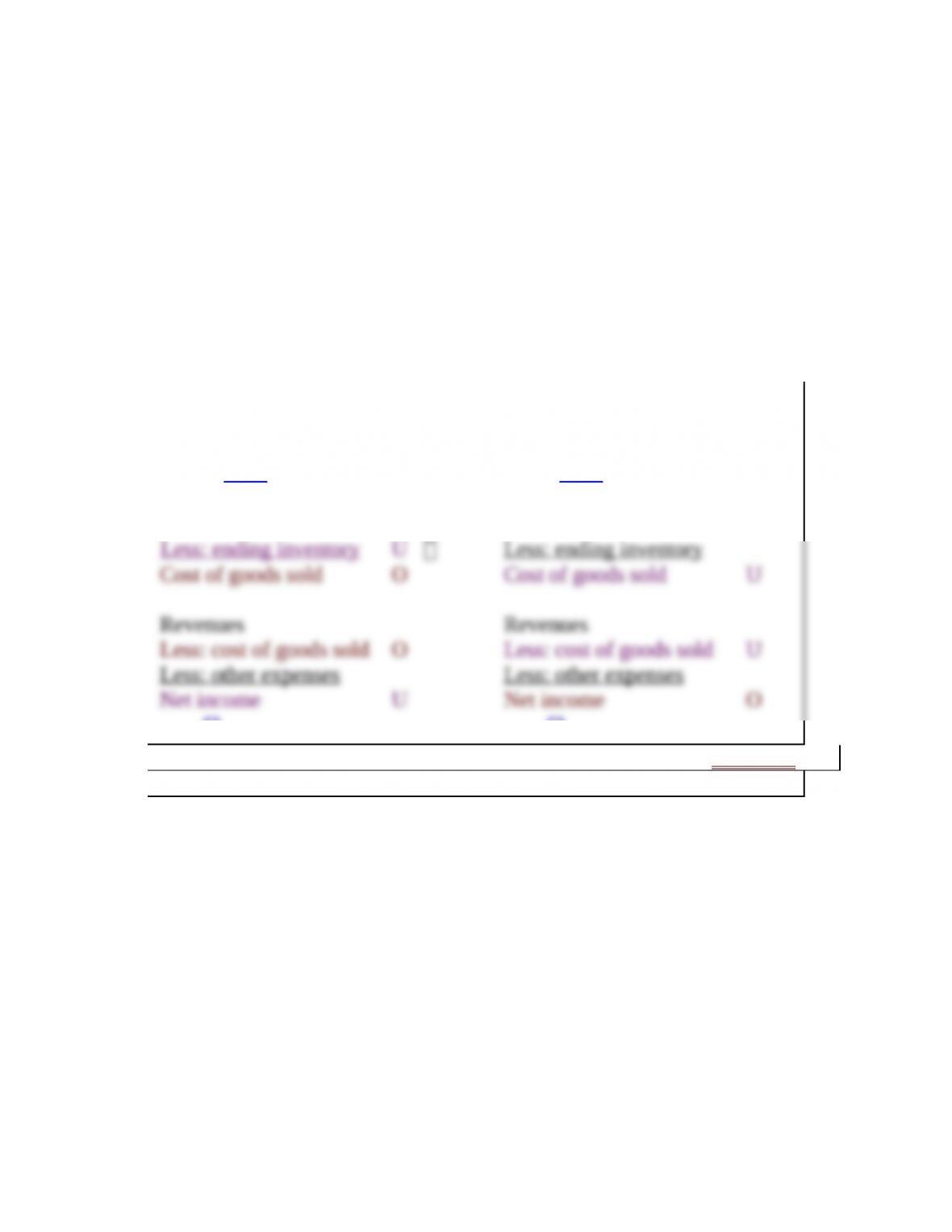
The 2016 error caused 2016 net income to be understated, but since 2016
ending inventory is 2017 beginning inventory, 2017 net income was overstated by
the same amount. So, the income statement was misstated for 2016 and 2017, but
the balance sheet (retained earnings) was incorrect only for 2016. After that, no
account balances are incorrect due to the 2016 error.
Analysis of 2016 ending inventory effects:
U = Understated
O = Overstated
2016 2017
Beginning inventory Beginning inventory U
Plus: net purchases Plus: net purchases
Retained earnings U Retained earnings corrected
Exercise 9–25 (concluded)
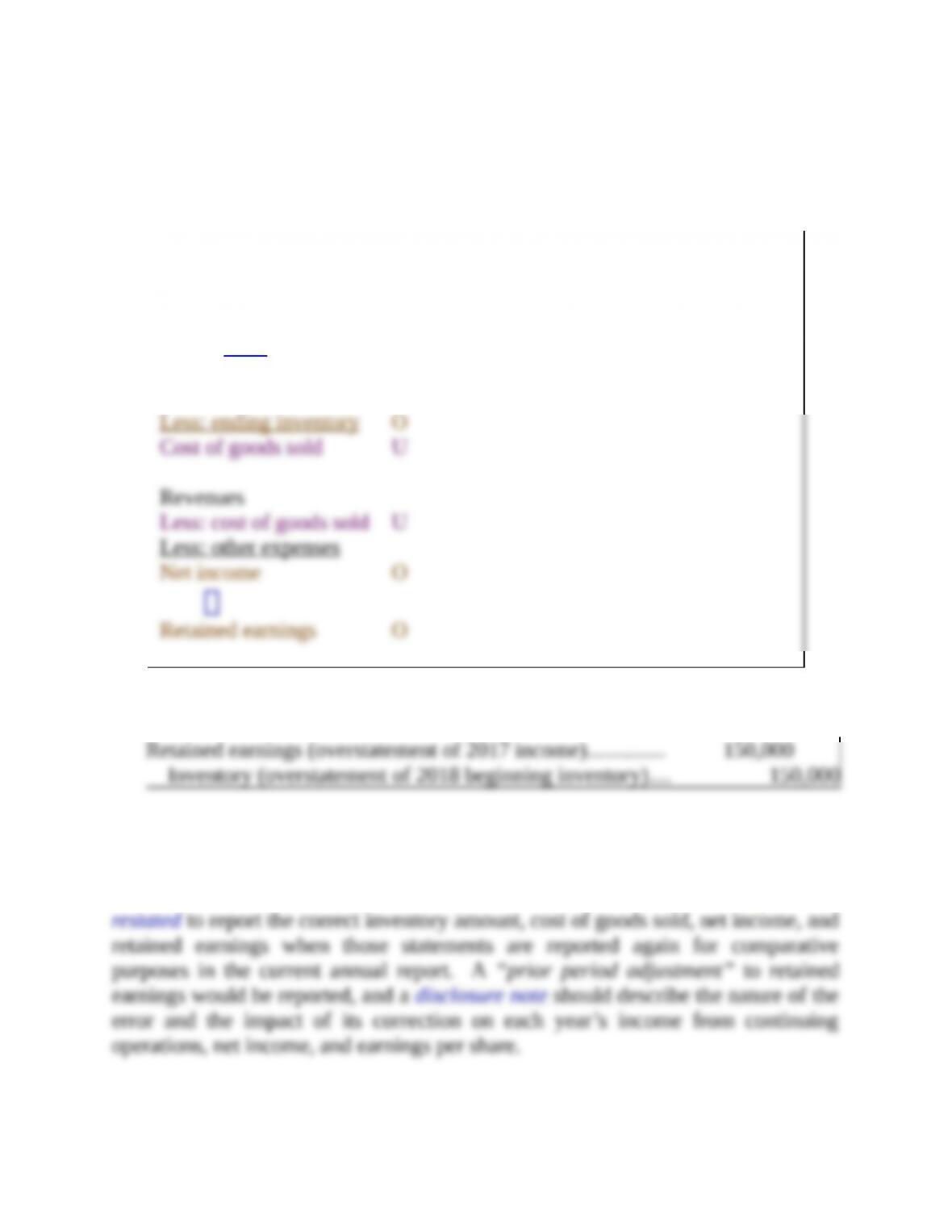
However, the 2017 error has not yet self-corrected. Both retained earnings
and inventory still are overstated as a result of the second error.
Analysis of 2017 ending inventory error effects:
U = Understated
O = Overstated
2017
Beginning inventory
Plus: net purchases
Requirement 2
Requirement 3
The financial statements that were incorrect as a result of both errors (effect of
one error in 2016 and effect of two errors in 2017) would be retrospectively
Exercise 9–26
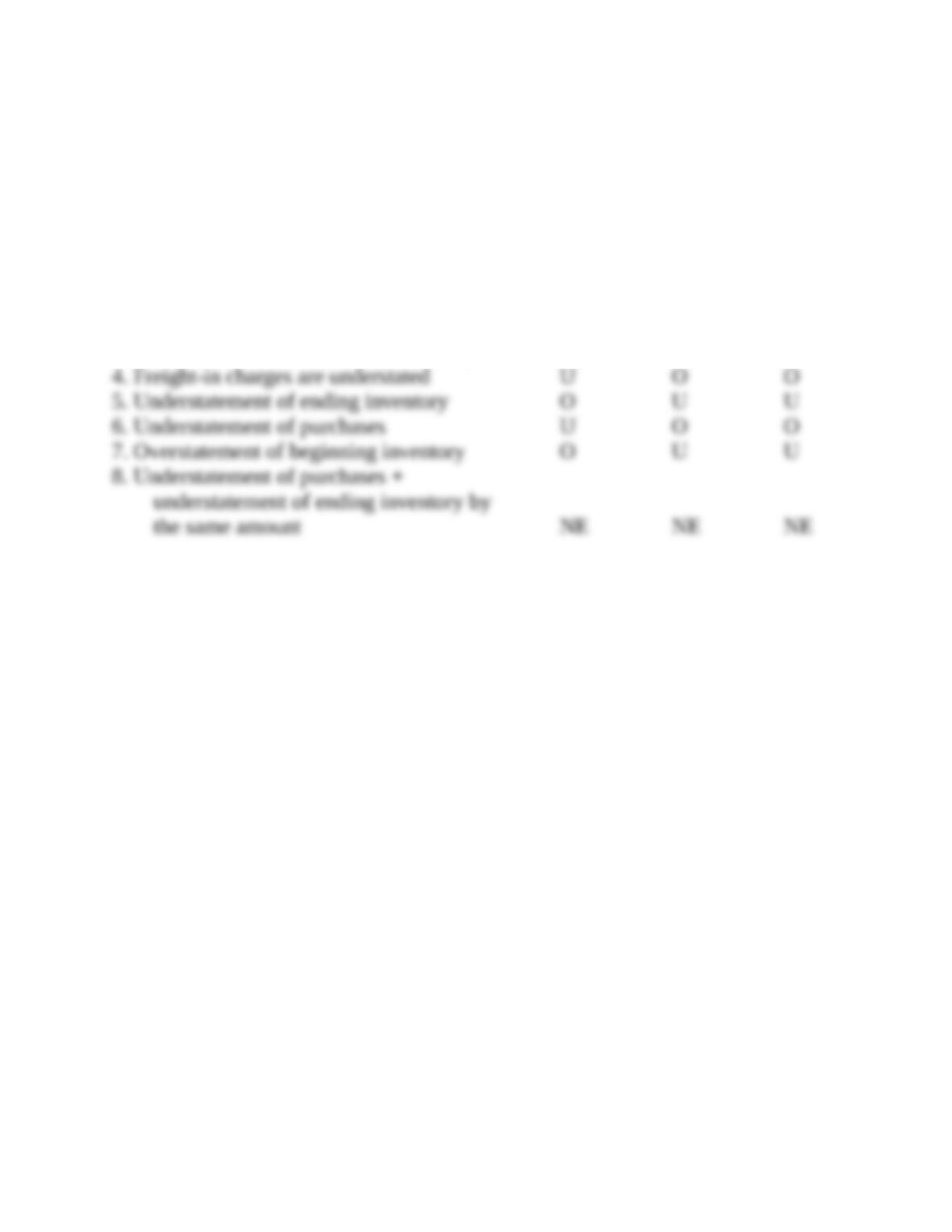
U = understated
O = overstated
NE = no effect
Cost of Net Retained
Goods Sold Income Earnings
1. Overstatement of ending inventory U O O
2. Overstatement of purchases O U U
3. Understatement of beginning inventory U O O
Exercise 9–27
1. To include the $4 million in year 2018 purchases and increase retained
earnings to what it would have been if 2017 cost of goods sold had not
included the $4 million purchases:
Analysis:
2017 2018
Beginning inventory Beginning inventory
Purchases O Purchases U
Less: Ending inventory
($ in millions)
2. The 2017 financial statements that were incorrect as a result of the errors
would be retrospectively restated to reflect the correct cost of goods sold,
3. A “prior period adjustment” to retained earnings would be reported, and a
Exercise 9–28
Requirement 1
The $42,000 should have been charged to purchases instead of advertising
expense. This error caused 2017 net purchases and thus cost of goods sold to be
understated and advertising expense to be overstated by $42,000. The
understatement of ending inventory for the $30,000 in merchandise held on
consignment caused 2017 cost of goods sold to be overstated.
Analysis: U = Understated
O = Overstated
2017
Beginning inventory
Plus: net purchases U by 42,000
Requirement 2
Requirement 3
The 2017 financial statements that were incorrect as a result of the two errors
would be retrospectively restated to report the correct inventory amount, cost of

Exercise 9–29
List A List B
e 1. Gross profit ratio a. Reduction in selling price below the
original
selling price.
i 2. Cost-to-retail percentage b. Beginning inventory is not included in the
calculation of the cost-to-retail percentage.
l 3. Additional markup c. Deducted in the retail column after the
calculation of the cost-to-retail percentage.
Exercise 9–30
Requirement 1
If market price at year-end is less than contract price for outstanding purchase
commitments, a loss is recorded for the difference.
December 31, 2018
Estimated loss on purchase commitment ($60,000 – 56,000) … 4,000
Requirement 2
If market price on purchase date declines from year-end price, the purchase is
recorded at market price.
March 21, 2019
Inventory…………………………………………………………………… 54,000