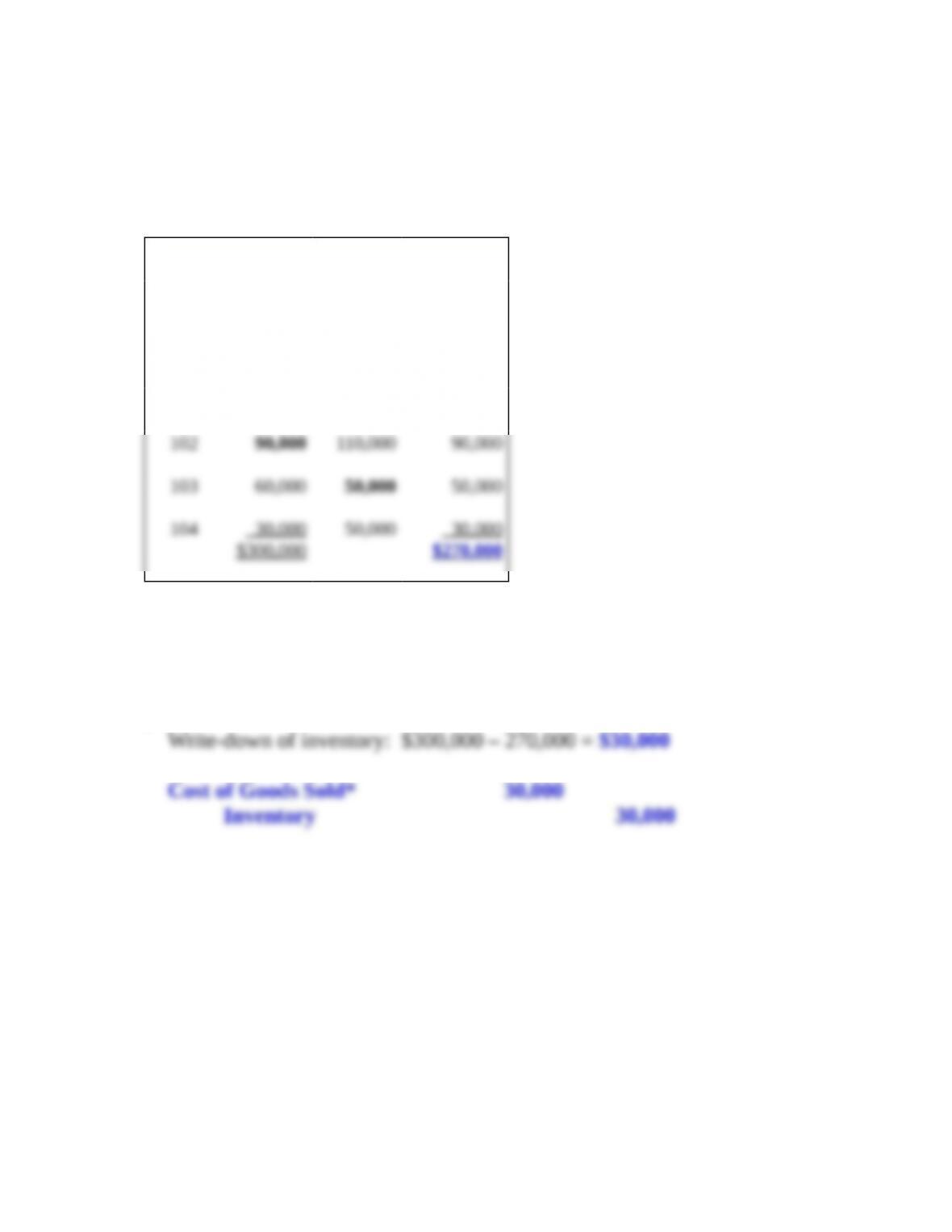
Exercise 9–3
Requirement 1
(1) (2)
Product Cost NRV
Inventory
Value
[Lower of
(1) and (2)]
101 $120,000 $100,000 $100,000
The inventory value is $270,000.
Requirement 2
* If the write-down of inventory was considered unusual, the debit would have
been to a separate Loss account.
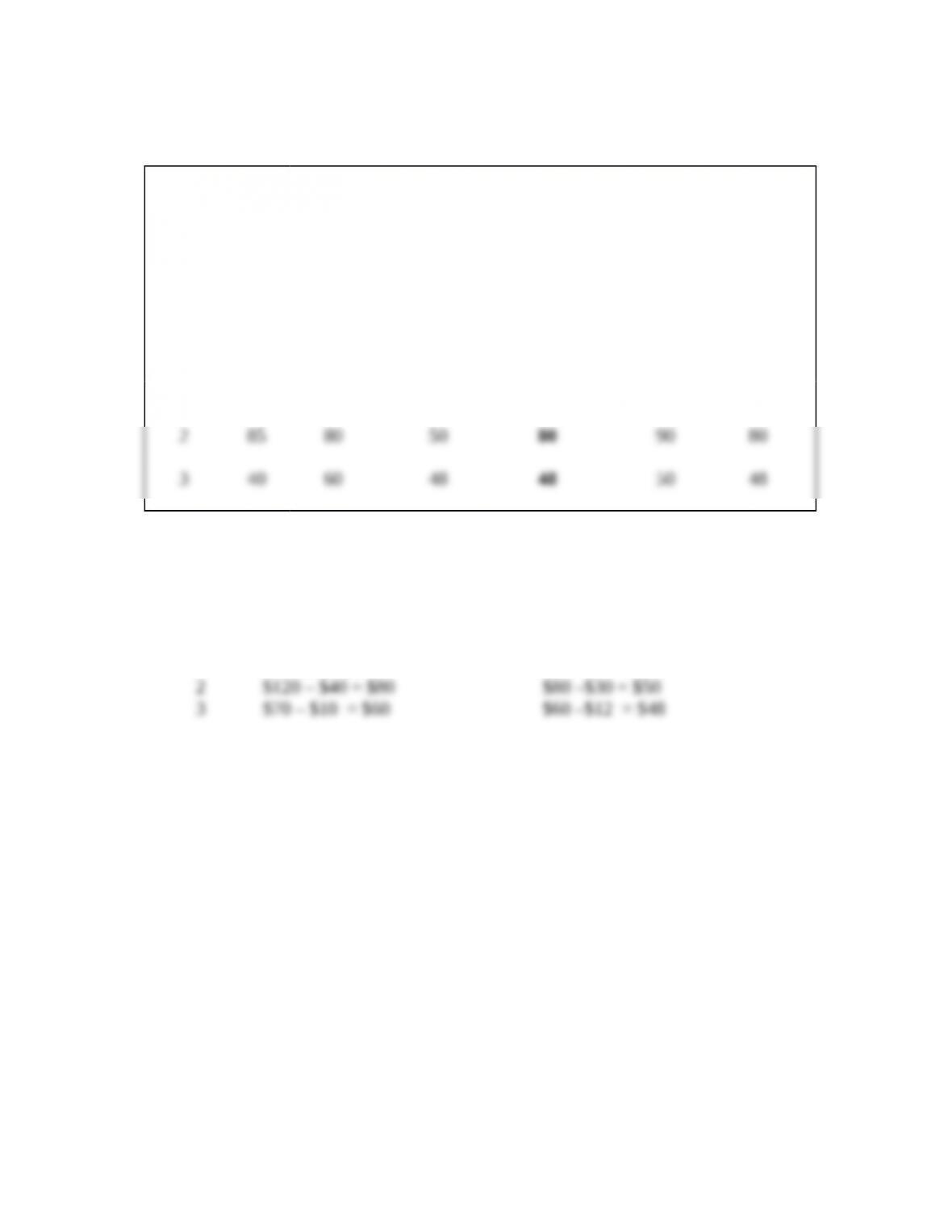
Exercise 9–4
(1) (2) (3) (4) (5)
Product RC
Ceiling
NRV (*)
Floor
NRV –
NP
(**)
Market
[Middle value
of (1), (2) & (3)]
Cost
Per Unit
Inventory
Value
[Lower of (4)
and (5)]
1 $18 $ 34 $29 $29 $20 $20
* Selling price less selling costs.
** NRV less normal profit margin.
Product NRV per unit NRV – NP per unit
1 $40 –$6 = $34 $34 –$5 = $29
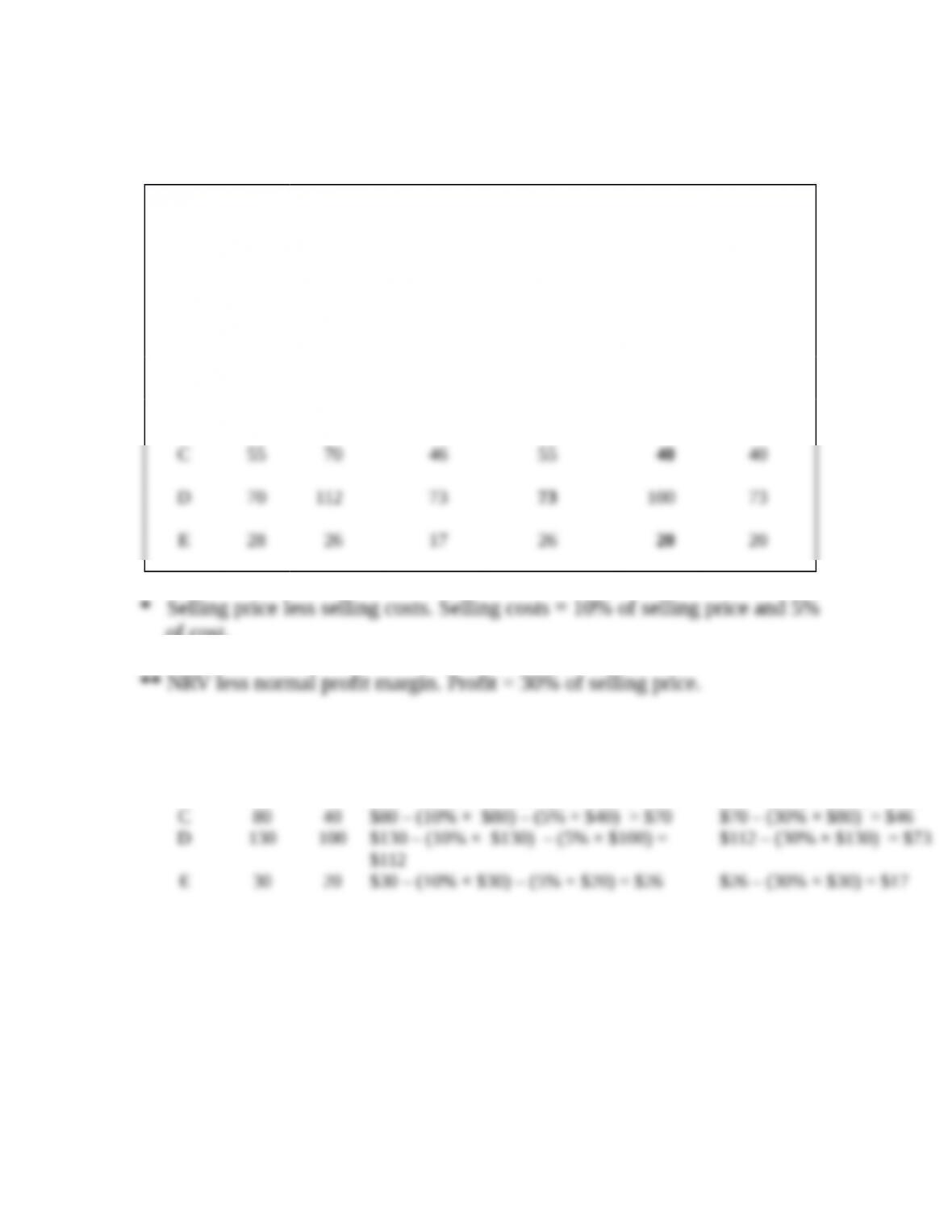
Exercise 9–5
(1) (2) (3) (4) (5)
Product RC
Ceiling
NRV (*)
Floor
NRV –
NP
(**)
Market
[Middle value
of (1), (2) & (3)] Cost
Per Unit
Inventory
Value
[Lower of (4)
and (5)]
A $35 $52 $34 $35 $40 $35
B 70 86 56 70 80 70
of cost.
Product
Selling
price Cost NRV per unit NRV – NP per unit
A $60 $40 $60 – (10% × $60) – (5% × $40) = $52 $52 – (30% × $60) = $34
B 100 80 $100 – (10% × $100) – (5% × $80) = $86 $86 – (30% × $100) = $56
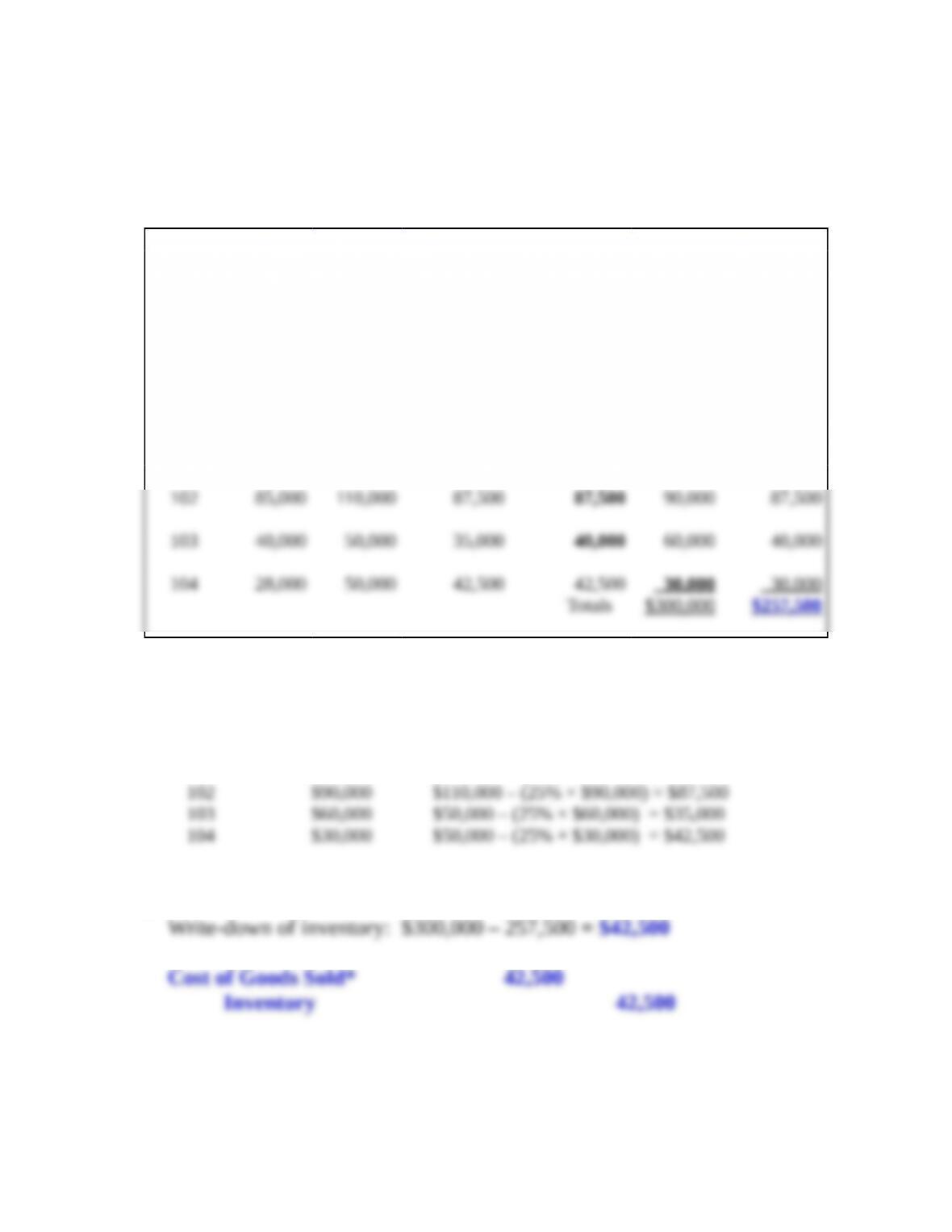
Exercise 9–6
Requirement 1
(1) (2) (3) (4) (5)
Product RC
Ceiling
NRV
Floor
NRV – NP*
Market
[Middle
value of (1),
(2) & (3)] Cost
Inventory
Value
[Lower of
(4) and (5)]
101 $100,000 $100,000 $70,000 $100,000 $120,000 $100,000
The inventory value is $257,500.
*NP = 25% of total cost
Product Total cost NRV – NP
101 $120,000 $100,000 – (25% × $120,000) = $70,000
Requirement 2
* If the write-down of inventory was considered unusual, the debit would have
been to a separate Loss account.
Exercise 9–7
The FASB Accounting Standards Codification® represents the single source of
authoritative U.S. generally accepted accounting principles. The specific citation
for each of the following items is:
1. Measurement of ending inventory using the lower of cost or net realizable
value (LCNRV) rule:
Inventory measured using any method other than LIFO or the retail inventory
method (for example, inventory measured using first-in, first-out (FIFO) or
2. Measurement of ending inventory using the lower of cost or market
(LCM) rule:
FASB ASC 330–10–35–1C: “Inventory–Overall–Subsequent Measurement.”
A departure from the cost basis of pricing inventory measured using LIFO or the
retail inventory method is required when the utility of the goods is no longer as
great as their cost. Where there is evidence that the utility of goods, in their
3. The level of aggregation that should be used in applying the LCNRV or
LCM rule:
FASB ASC 330–10–35–8 to 11: “Inventory–Overall–Subsequent Measurement.”
Depending on the character and composition of the inventory, the guidance in
The purpose of reducing the carrying amount of inventory is to reflect fairly the
income of the period. The most common practice is to apply the applicable
subsequent measurement guidance separately to each item of the inventory.
Similarly, where more than one major product or operational category exists, the
application of the applicable subsequent measurement guidance to the total of the
items included in such major categories may result in the most useful
determination of income. When no loss of income is expected to take place as a
To the extent, however, that the stocks of particular materials or components are
excessive in relation to others, the more widely recognized procedure of applying

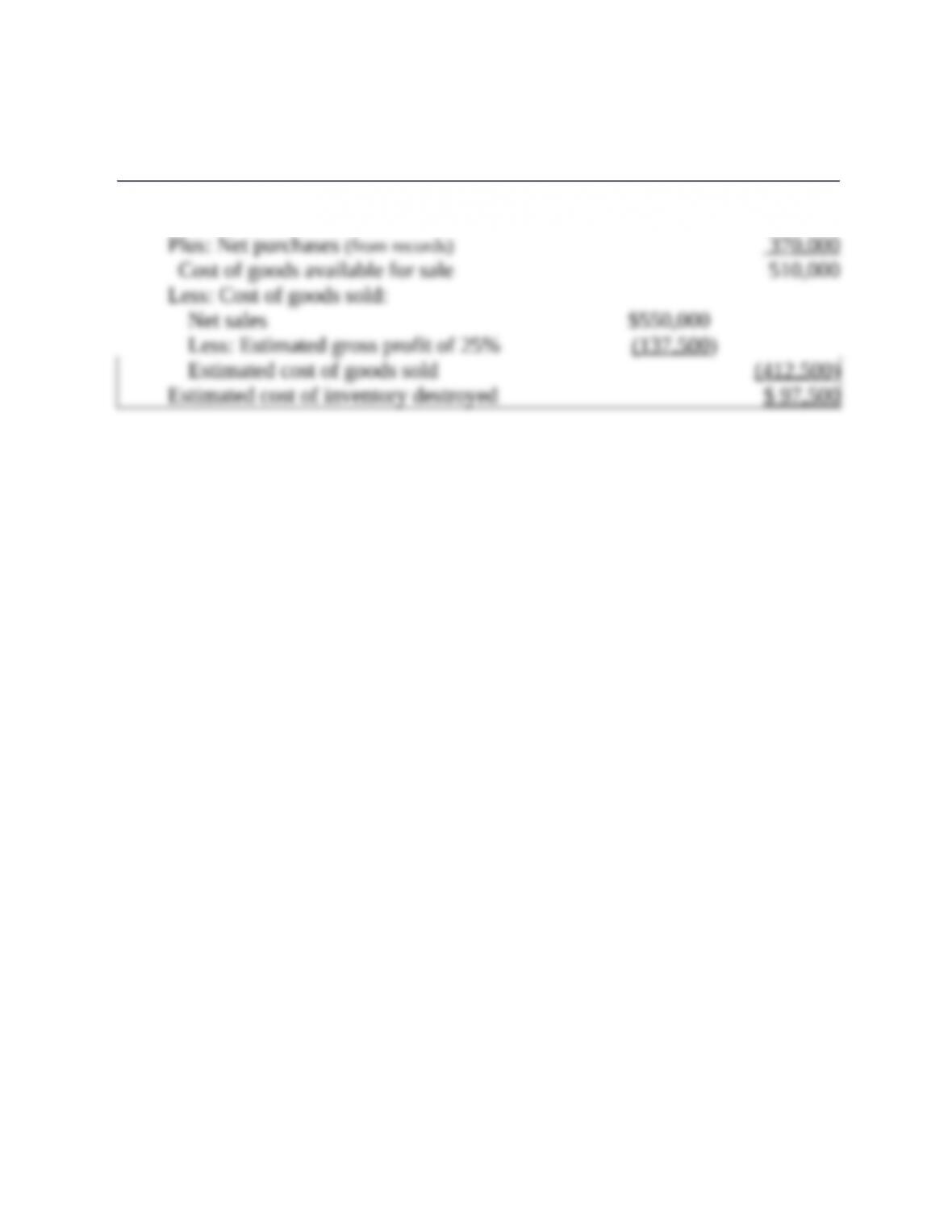
Exercise 9–8
Beginning inventory (from records) $140,000
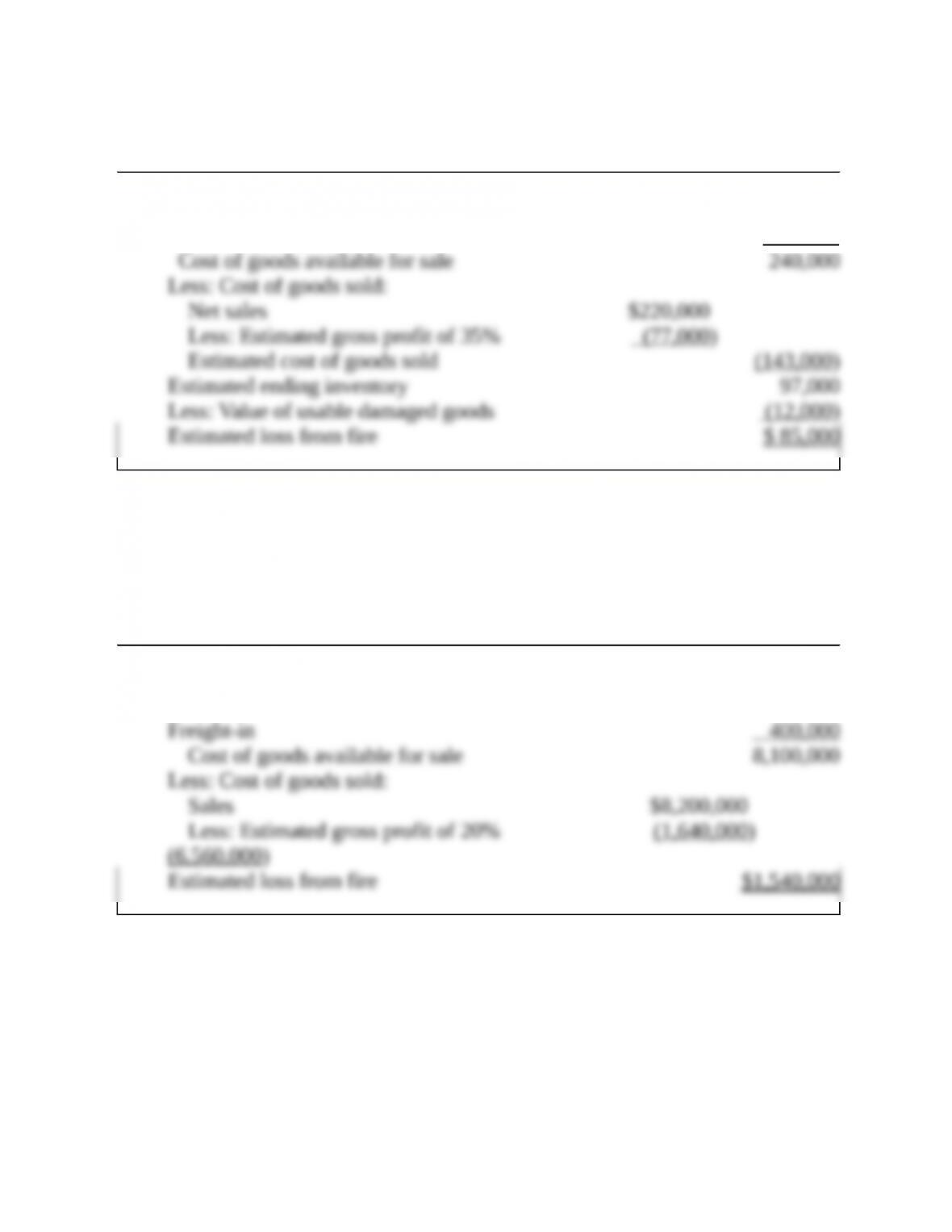
Exercise 9–9
Beginning inventory (from records) $100,000
Plus: Net purchases (from records) 140 ,000
Exercise 9–10
Merchandise inventory, January 1, 2018 $1,900,000
Purchases 5,800,000
Exercise 9–11
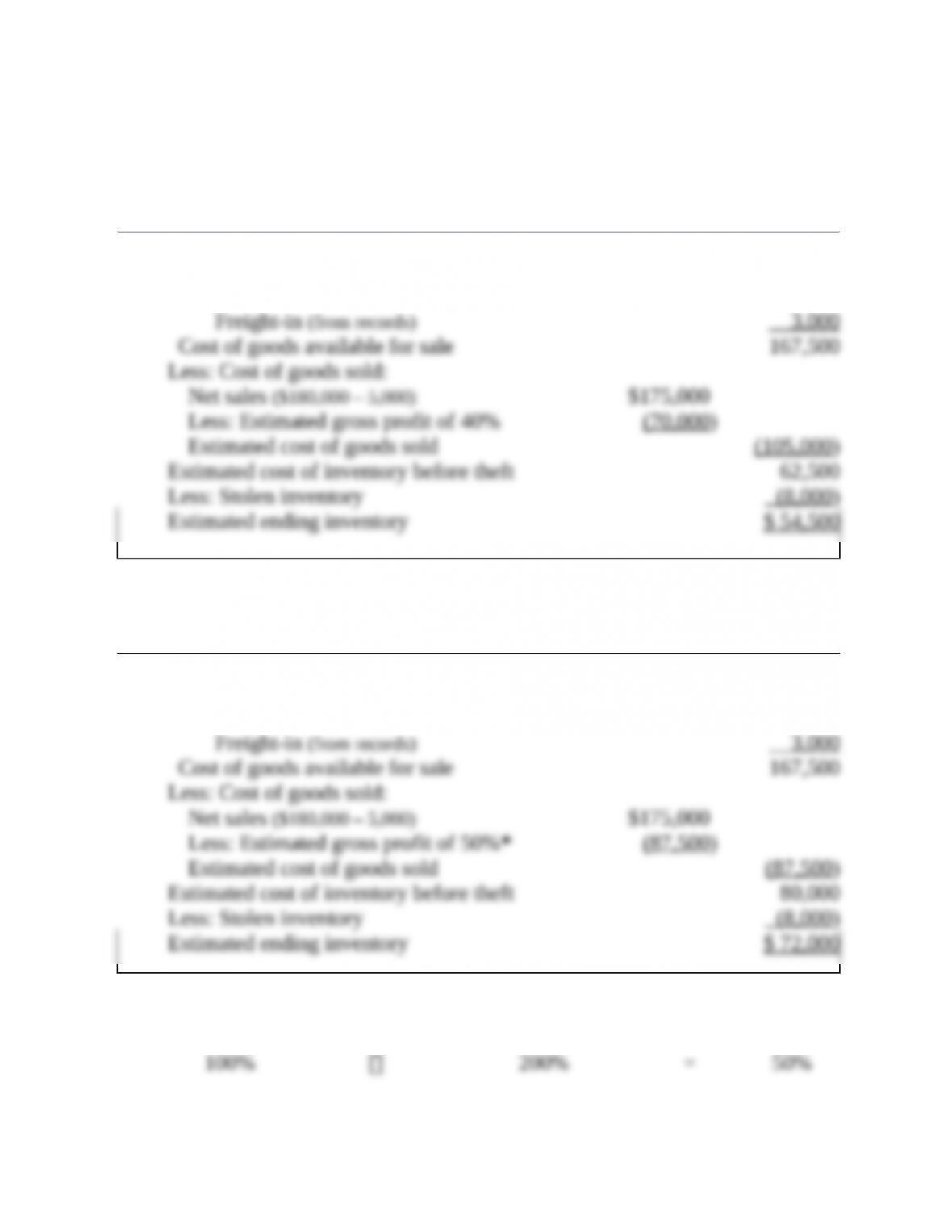
Requirement 1
Beginning inventory (from records) $ 58,500
Plus: Net purchases ($110,000 – 4,000) 106,000
Requirement 2
Beginning inventory (from records) $ 58,500
Plus: Net purchases ($110,000 – 4,000) 106,000
*Gross profit as a % of cost (1 + Gross profit as a % of cost) = Gross profit as a
% of sales.
Exercise 9–12
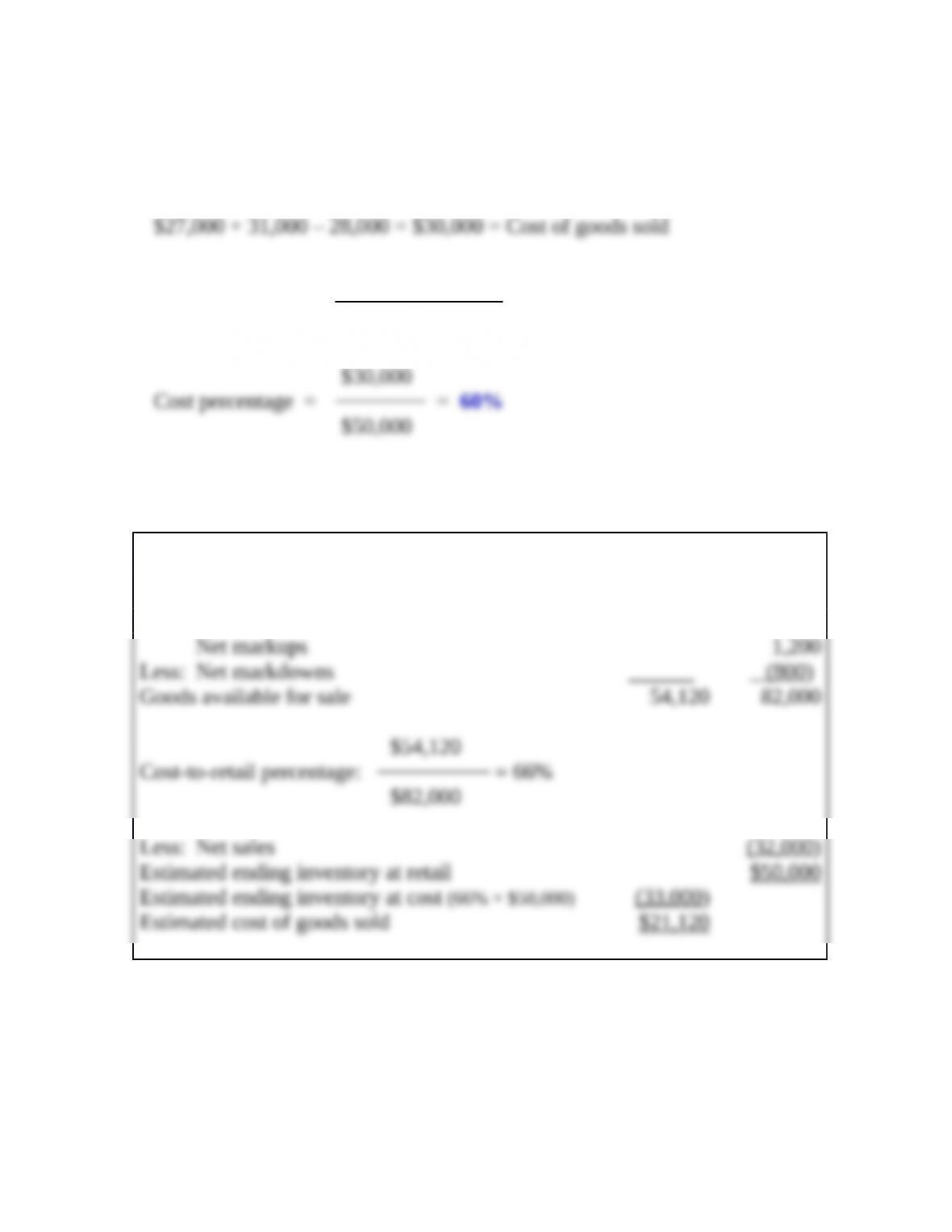
Beginning inventory + Net purchases – Ending inventory = Cost of goods sold
Cost of goods sold
Cost percentage =
Net sales
Exercise 9–13
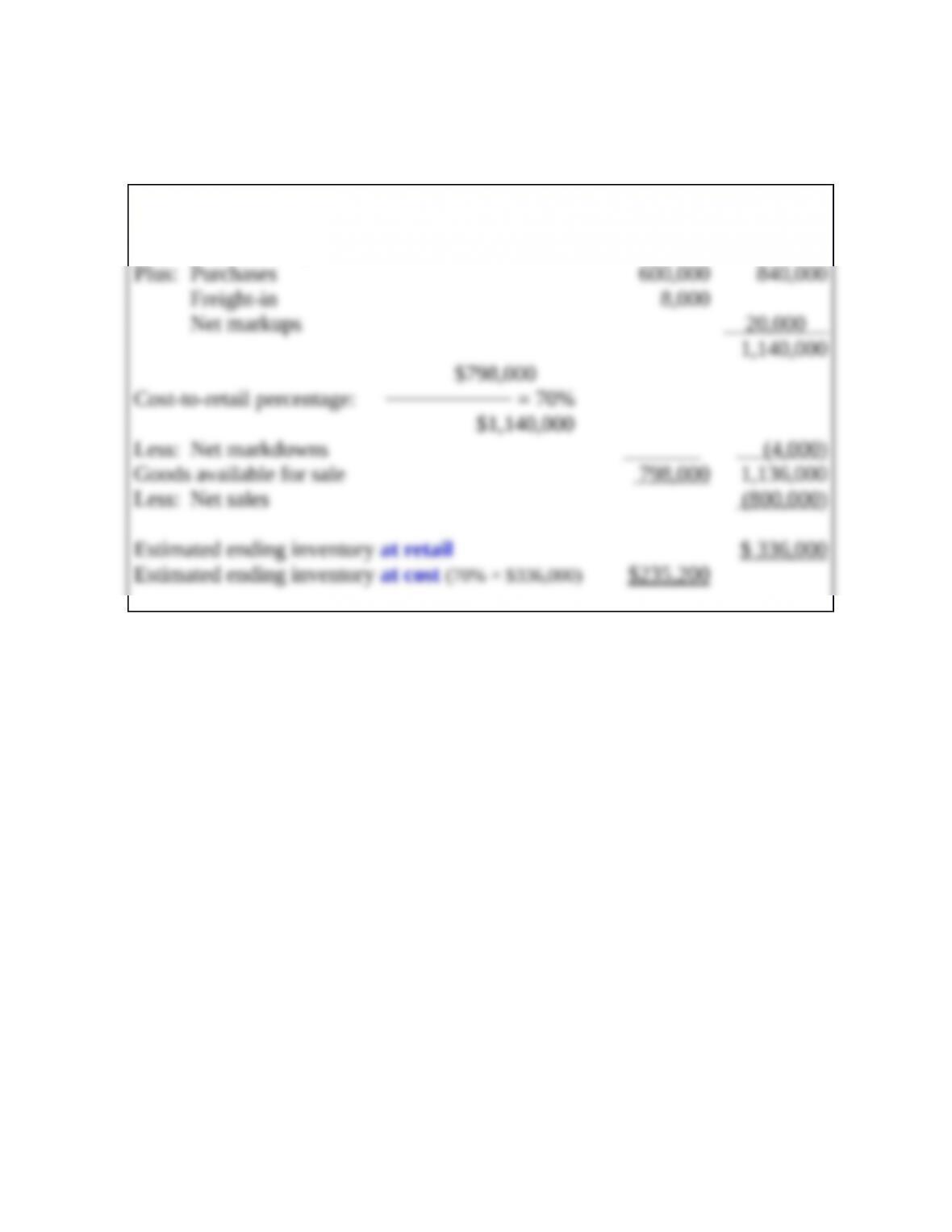
Cost Retail
Beginning inventory $35,000 $50,000
Plus: Net purchases 19,120 31,600
Exercise 9–14
Cost Retail
Beginning inventory $190,000 $ 280,000