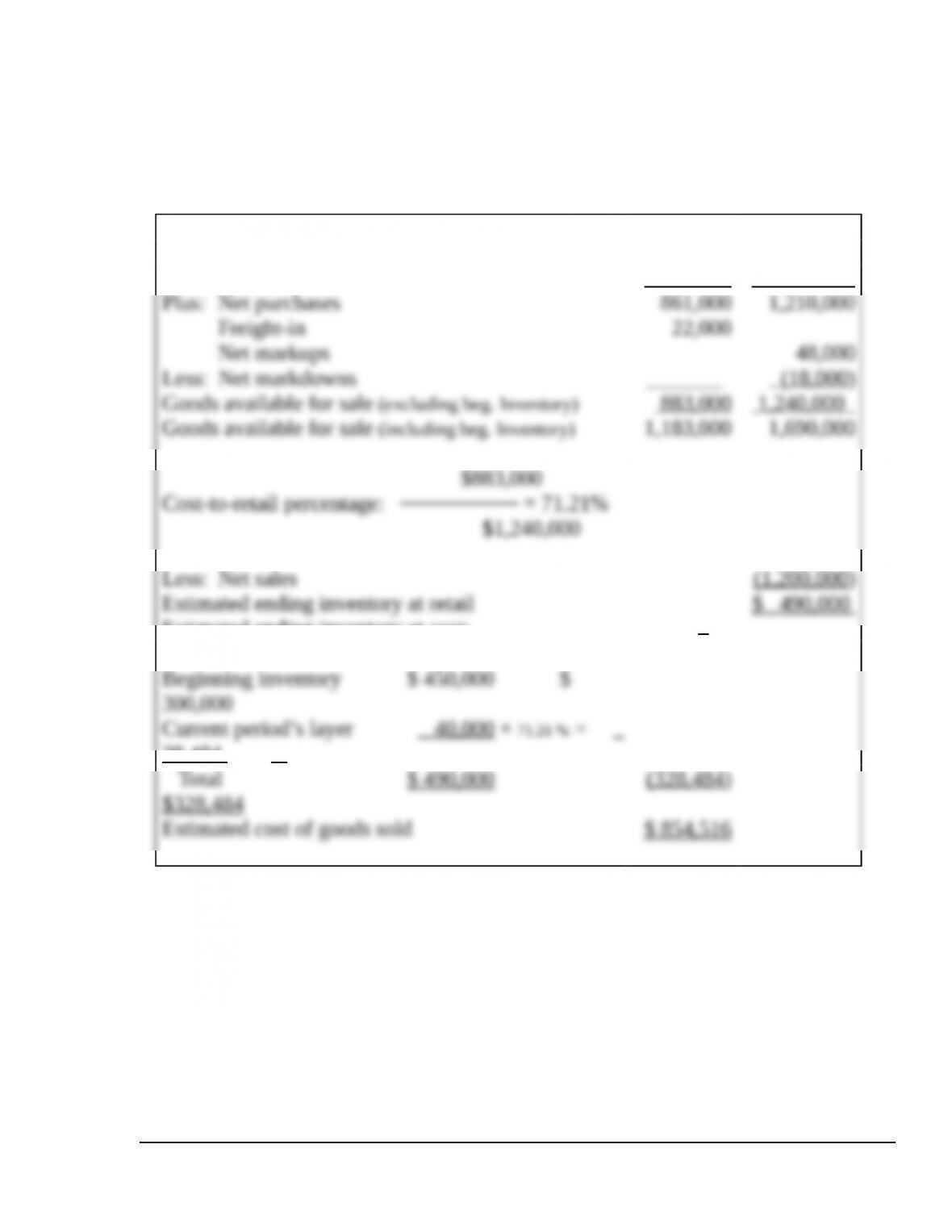
Brief Exercise 9–8
Cost Retail
Beginning inventory $ 300 ,000 $ 450 ,000
Estimated ending inventory at cost:
Retail Cost
28,484
Solutions Manual, Vol.1, Chapter 9 9–1
Copyright © 2015 McGraw-Hill Education. All rights reserved. No reproduction or distribution without the prior written consent of
McGraw-Hill Education.
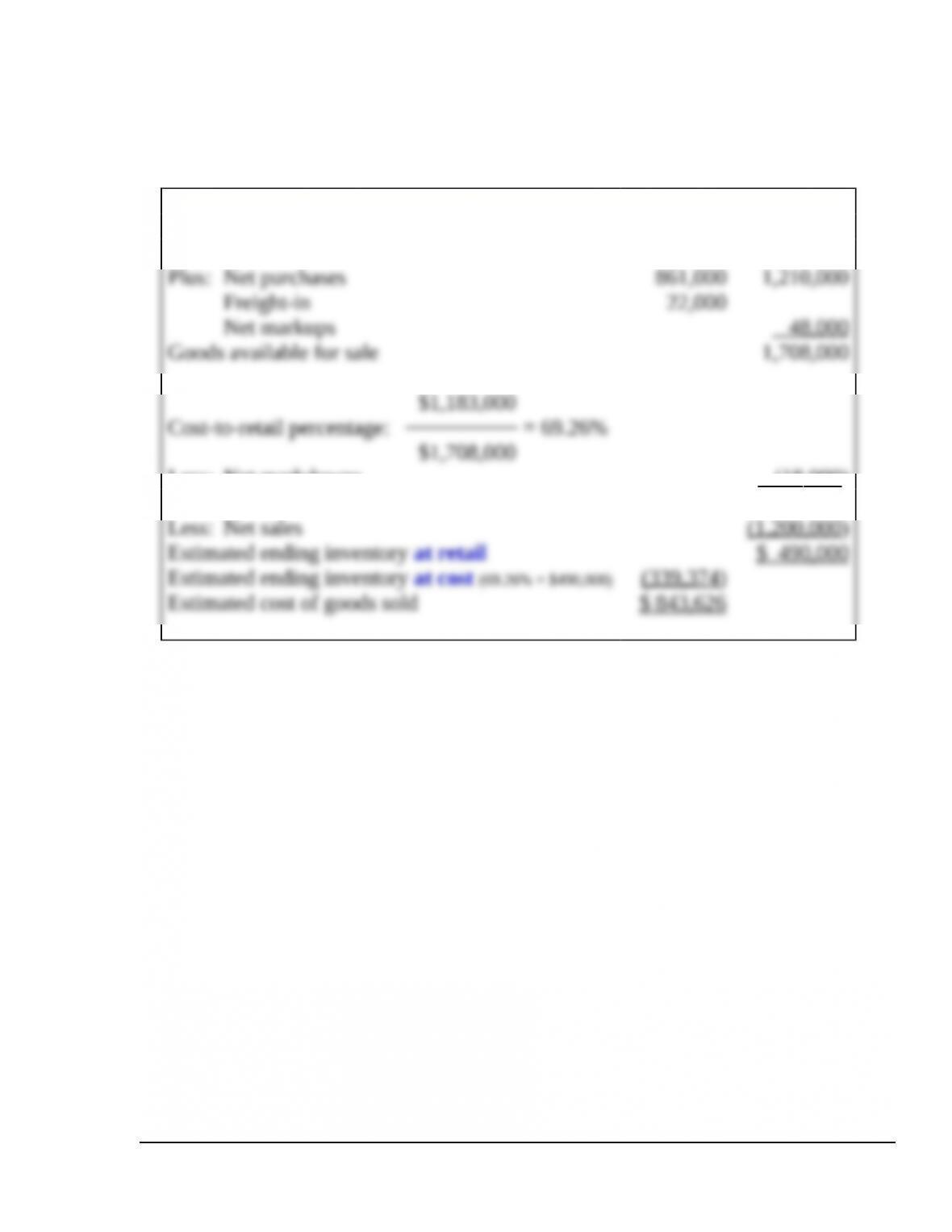
Brief Exercise 9–9
Cost Retail
Beginning inventory $ 300,000 $ 450,000
Less: Net markdowns ______ (18 ,000)
Goods available for sale 1,183,000 1,690,000
Solutions Manual, Vol.1, Chapter 9 9–2
Copyright © 2015 McGraw-Hill Education. All rights reserved. No reproduction or distribution without the prior written consent of
McGraw-Hill Education.
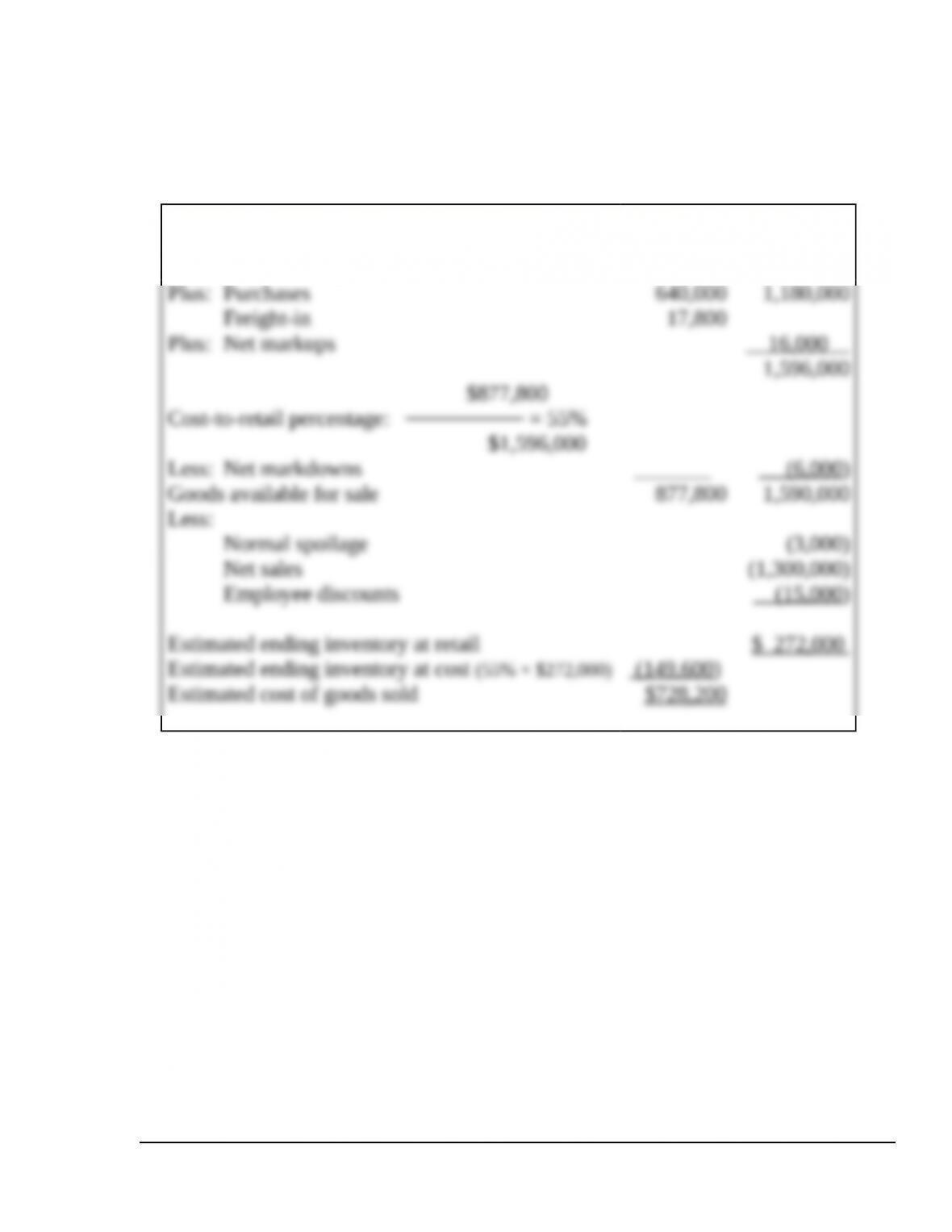
Brief Exercise 9–10
Cost Retail
Beginning inventory $220,000 $ 400,000
Solutions Manual, Vol.1, Chapter 9 9–3
Copyright © 2015 McGraw-Hill Education. All rights reserved. No reproduction or distribution without the prior written consent of
McGraw-Hill Education.
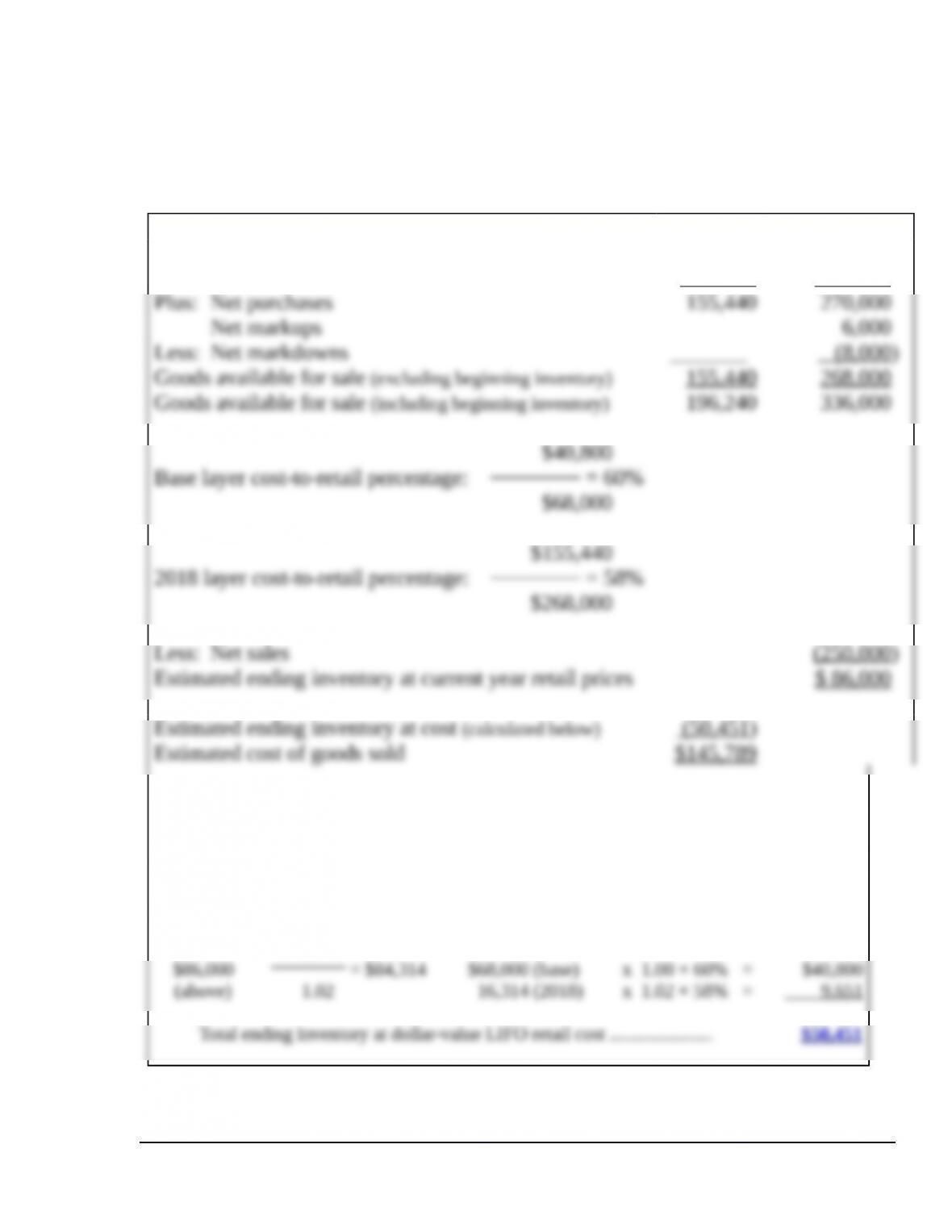
Brief Exercise 9–11
Cost Retail
Beginning inventory $ 40 ,800 $ 68 ,000
___________________________________________________________________________
Step 1 Step 2 Step 3
Ending Ending Inventory Inventory
Inventory Inventory Layers Layers
at Year-End at Base Year at Base Year Converted to
Retail Prices Retail Prices Retail Prices Cost
$86,000
Solutions Manual, Vol.1, Chapter 9 9–4
Copyright © 2015 McGraw-Hill Education. All rights reserved. No reproduction or distribution without the prior written consent of
McGraw-Hill Education.
Brief Exercise 9–12
Cost Retail
Beginning inventory $ 50 ,451 $ 86 ,000
Plus: Net purchases 168,000 301,000
___________________________________________________________________________
Step 1 Step 2 Step 3
Ending Ending Inventory Inventory
Inventory Inventory Layers Layers
at Year-End at Base Year at Base Year Converted to
Retail Prices Retail Prices Retail Prices Cost
$106,000
$106,000 = $100,000 $68,000 (base) x 1.00 × 60%* = $40,800
Solutions Manual, Vol.1, Chapter 9 9–5
Copyright © 2015 McGraw-Hill Education. All rights reserved. No reproduction or distribution without the prior written consent of
McGraw-Hill Education.
Brief Exercise 9–13
Hopyard applies the FIFO cost method retrospectively; that is, to all prior periods
as if it always had used that method. In other words, all financial statement amounts
Then, the cumulative effects of the new method on periods prior to those
presented are reflected in the reported balances of the assets and liabilities affected as
The effect of the change on each line item affected should be disclosed for each
period reported as well as any adjustment for periods prior to those reported. Also, the
2018 cost of goods sold is $7,000 higher than it would have been if Hopyard had
not switched to FIFO. This is because beginning inventory is $18,000 higher
Brief Exercise 9–14
When a company changes to the LIFO inventory method from any other method,
it usually is impossible to calculate the income effect on prior years. To do so would
A disclosure note is needed to explain (a) the nature of and justification for the
Solutions Manual, Vol.1, Chapter 9 9–6
Copyright © 2015 McGraw-Hill Education. All rights reserved. No reproduction or distribution without the prior written consent of
McGraw-Hill Education.
Brief Exercise 9–15
The 2016 error caused 2016 net income to be overstated, but since 2016 ending
Analysis of 2016 ending inventory error effects:
U = Understated
O = Overstated
2016 2017
Beginning inventory Beginning inventory O
Retained earnings O Retained earnings corrected
Solutions Manual, Vol.1, Chapter 9 9–7
Copyright © 2015 McGraw-Hill Education. All rights reserved. No reproduction or distribution without the prior written consent of
McGraw-Hill Education.
Brief Exercise 9–15 (concluded)
However, the 2017 error has not yet self-corrected. Both retained earnings and
inventory still are overstated as a result of the second error.
Analysis of 2017 ending inventory error effects:
U = Understated
O = Overstated
2017
Beginning inventory
Plus: net purchases
Less: ending inventory O
Retained earnings on January 1, 2018, in this case, would be overstated by
Brief Exercise 9–16
The financial statements that were incorrect as a result of both errors (effect of
one error in 2016 and effect of two errors in 2017) would be retrospectively restated to
report the correct inventory amounts, cost of goods sold, income from continuing
Solutions Manual, Vol.1, Chapter 9 9–8
Copyright © 2015 McGraw-Hill Education. All rights reserved. No reproduction or distribution without the prior written consent of
McGraw-Hill Education.
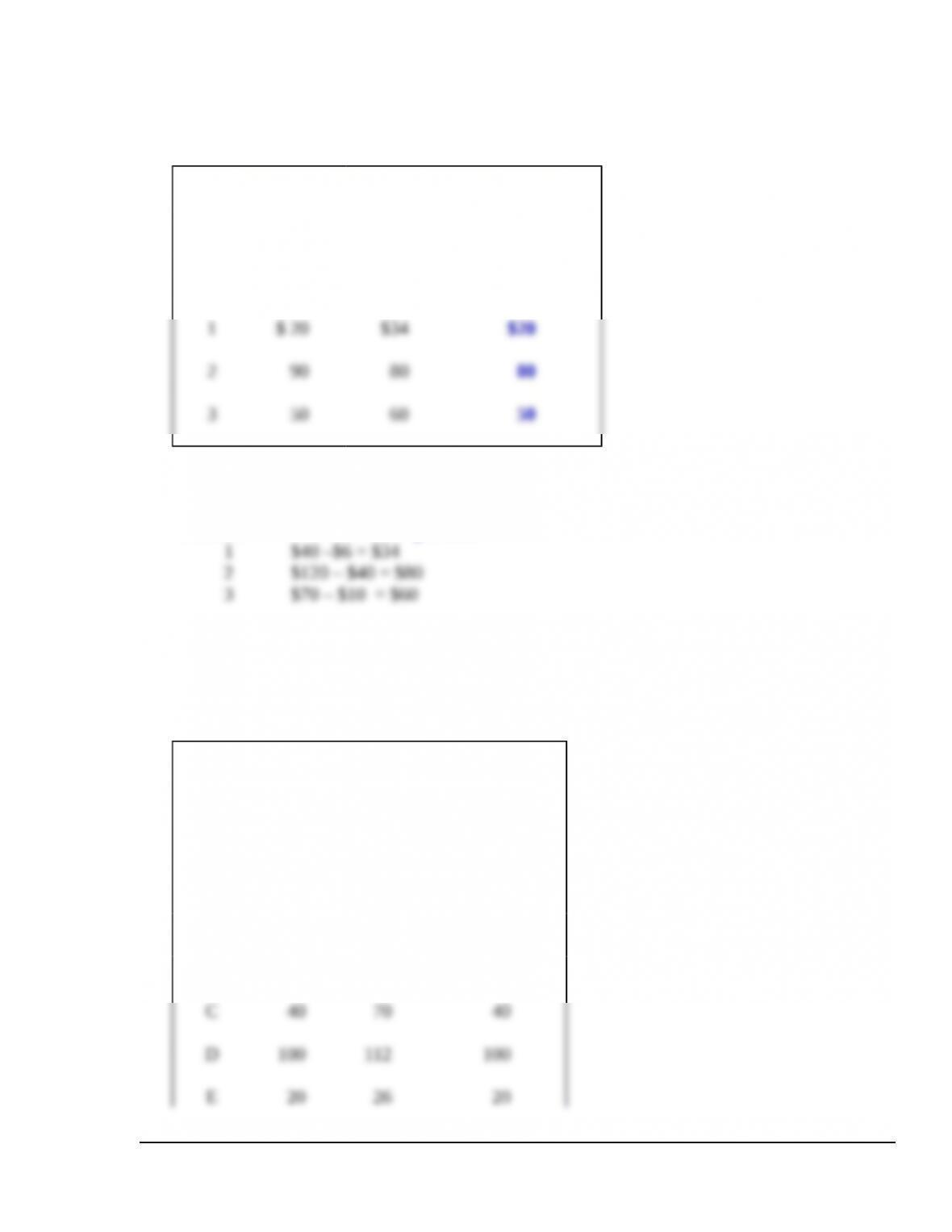
Exercise 9–1
(1) (2)
Product Cost NRV (*)
Per Unit
Inventory Value
[Lower of (1)
and (2)]
* Selling price less costs to sell.
Product NRV per unit
Exercise 9–2
(1) (2)
Product Cost NRV (*)
Per Unit
Inventory
Value
[Lower of (1)
and (2)]
A $40 $52 $40
B 80 86 80
Solutions Manual, Vol.1, Chapter 9 9–9
Copyright © 2015 McGraw-Hill Education. All rights reserved. No reproduction or distribution without the prior written consent of
McGraw-Hill Education.
EXERCISES
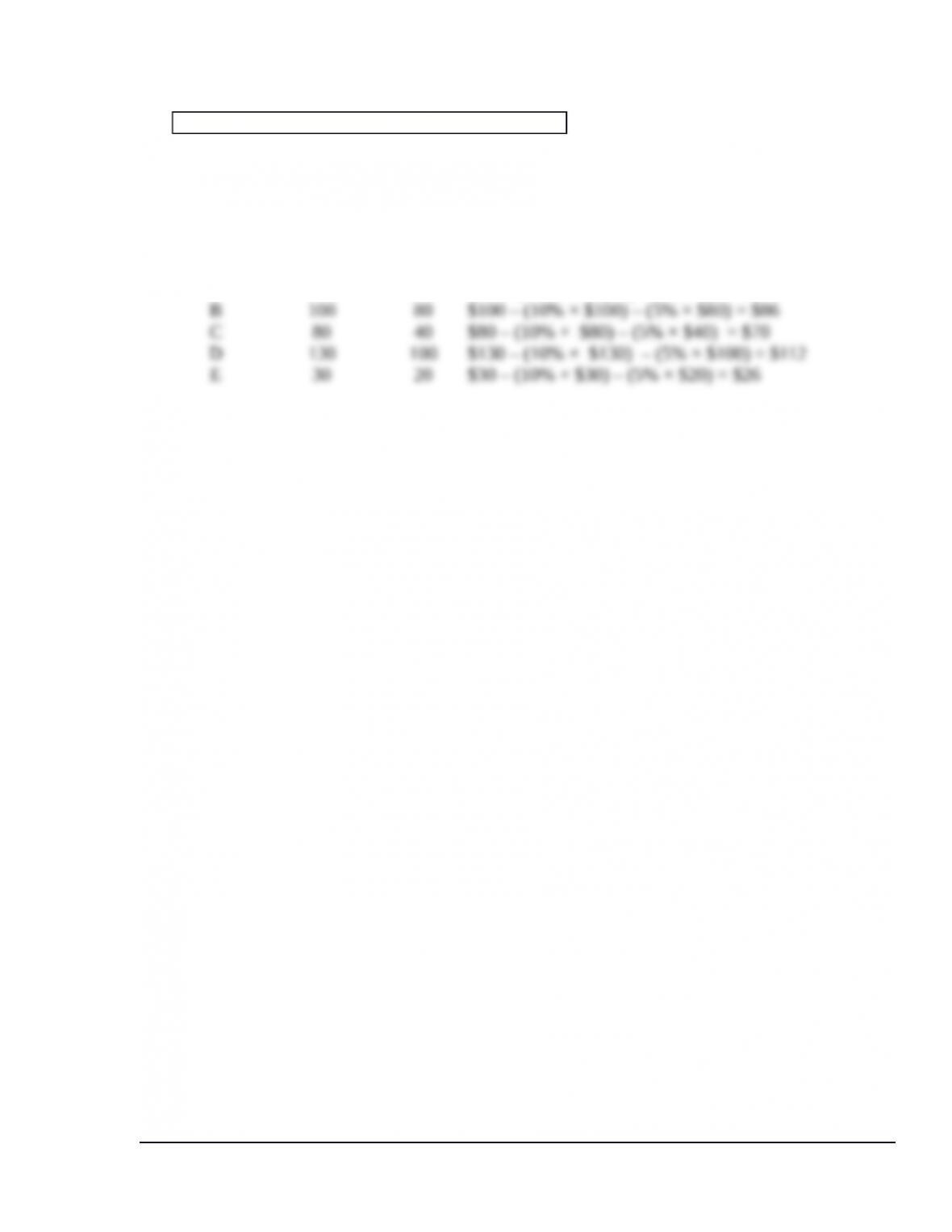
* Selling price less costs to sell. Costs to sell = 10% of selling price and 5%
of cost.
Product Selling price Cost NRV per unit
A $60 $40 $60 – (10% × $60) – (5% × $40) = $52
Solutions Manual, Vol.1, Chapter 9 9–10
Copyright © 2015 McGraw-Hill Education. All rights reserved. No reproduction or distribution without the prior written consent of
McGraw-Hill Education.