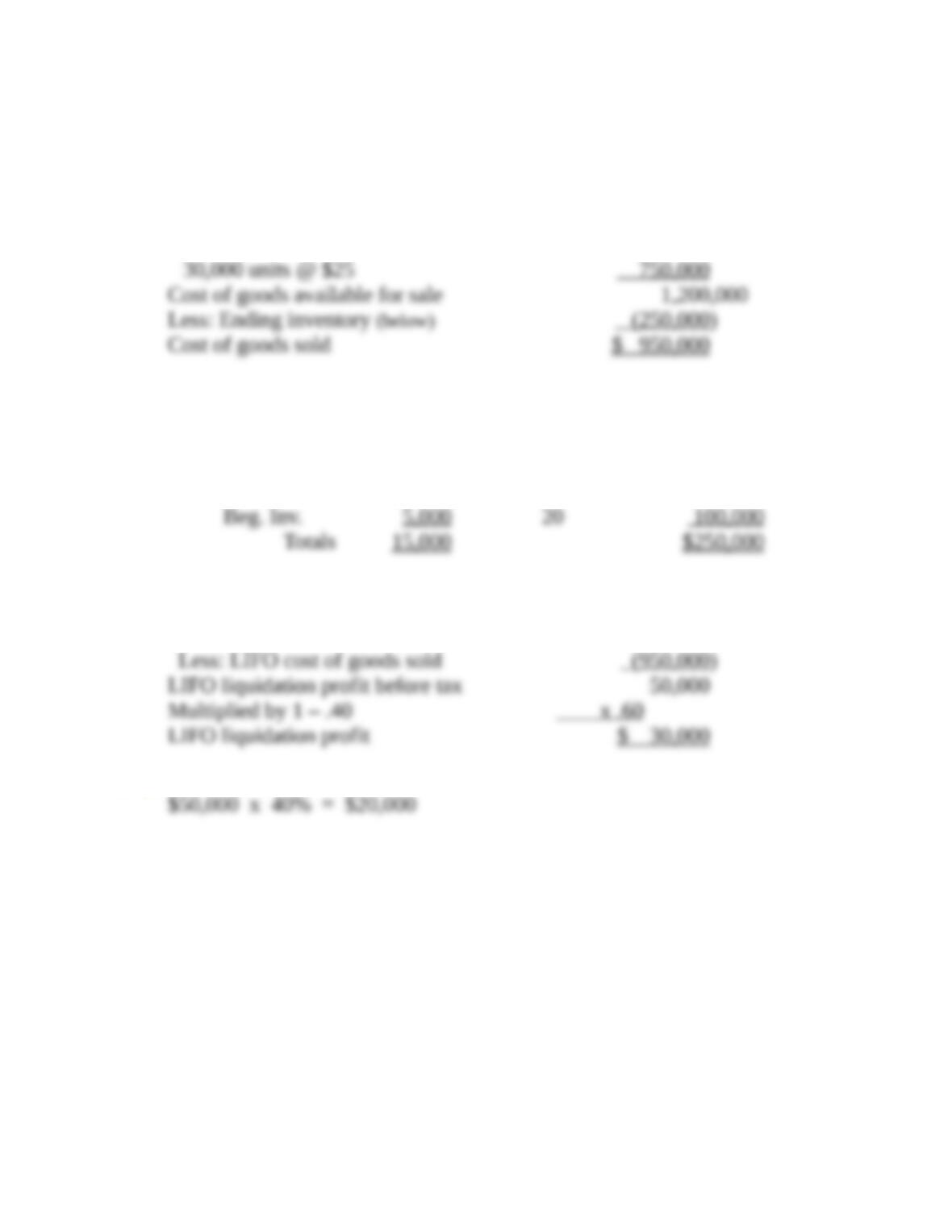
Problem 8–9
Requirement 1
Beginning inventory $ 450,000
Purchases:
Cost of ending inventory:
Date of
purchase UnitsUnit cost Total cost
Beg. Inv. 10,000 $15 $150,000
Requirement 2
Cost of goods sold assuming all units purchased at the year 2018 price:
40,000 units x $25.00 = $1,000,000
Requirement 3
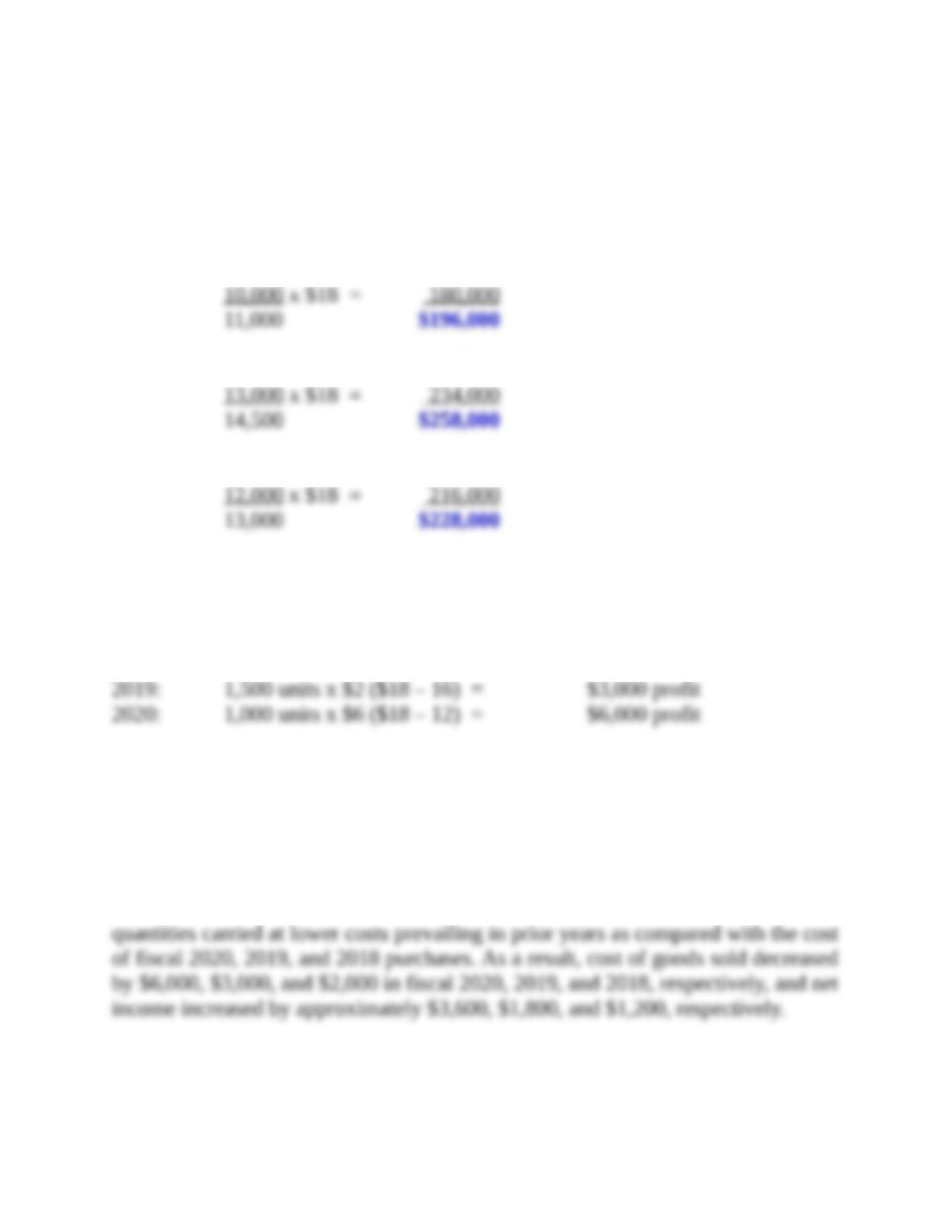
Problem 8–10
Requirement 1
Cost of goods sold:
2018: 1,000 x $16 = $ 16,000
2019: 1,500 x $16 = $ 24,000
2020: 1,000 x $12 = $ 12,000
Requirement 2
LIFO liquidation before-tax profit or loss:
2018: 1,000 units x $2 ($18 – 16) = $2,000 profit
Requirement 3
Disclosure note:
During fiscal 2020, 2019, and 2018, inventory quantities in certain LIFO layers
were reduced. These reductions resulted in a liquidation of LIFO inventory
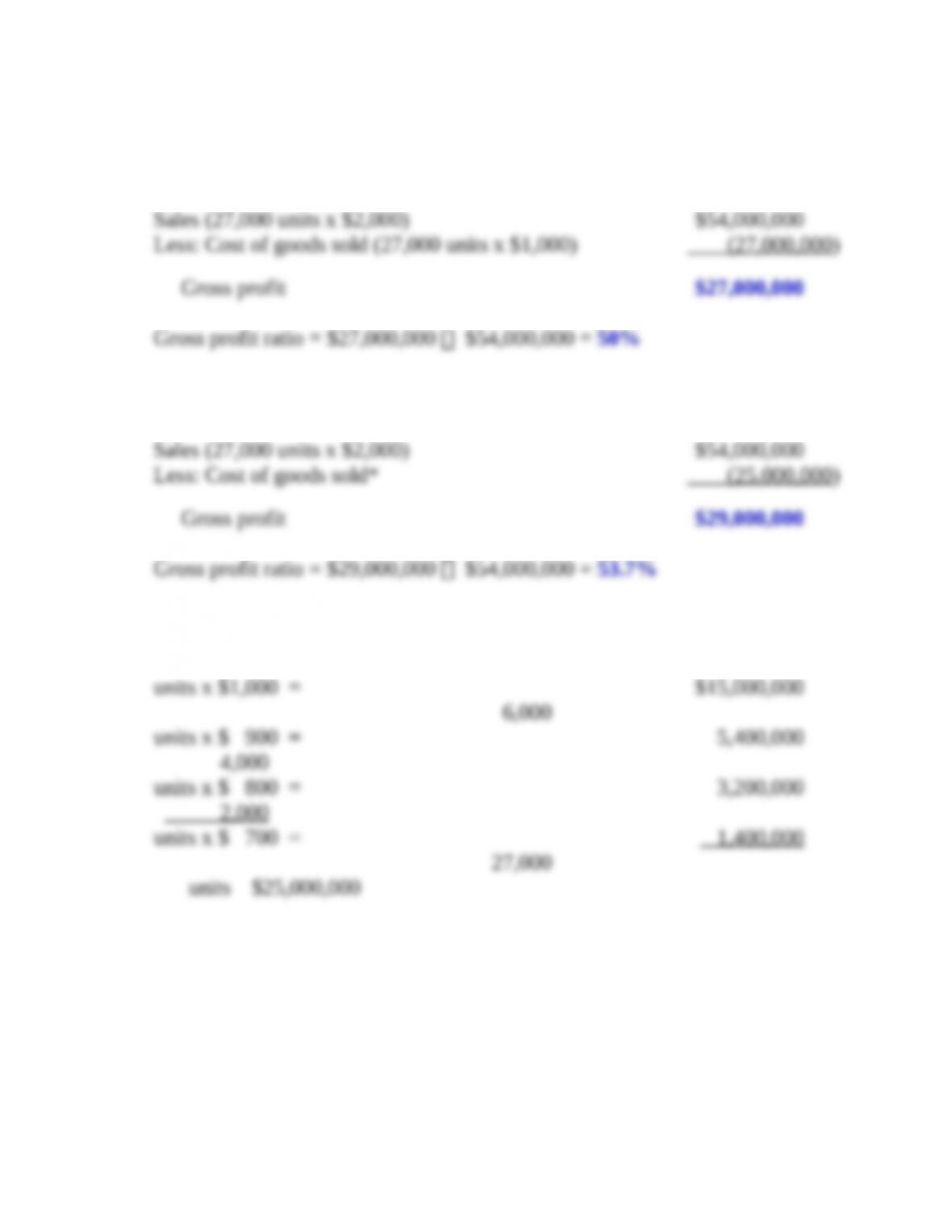
Problem 8–11
Requirement 1
Requirement 2
*Cost of goods sold:
15,000
Problem 8–11 (concluded)
Requirement 3
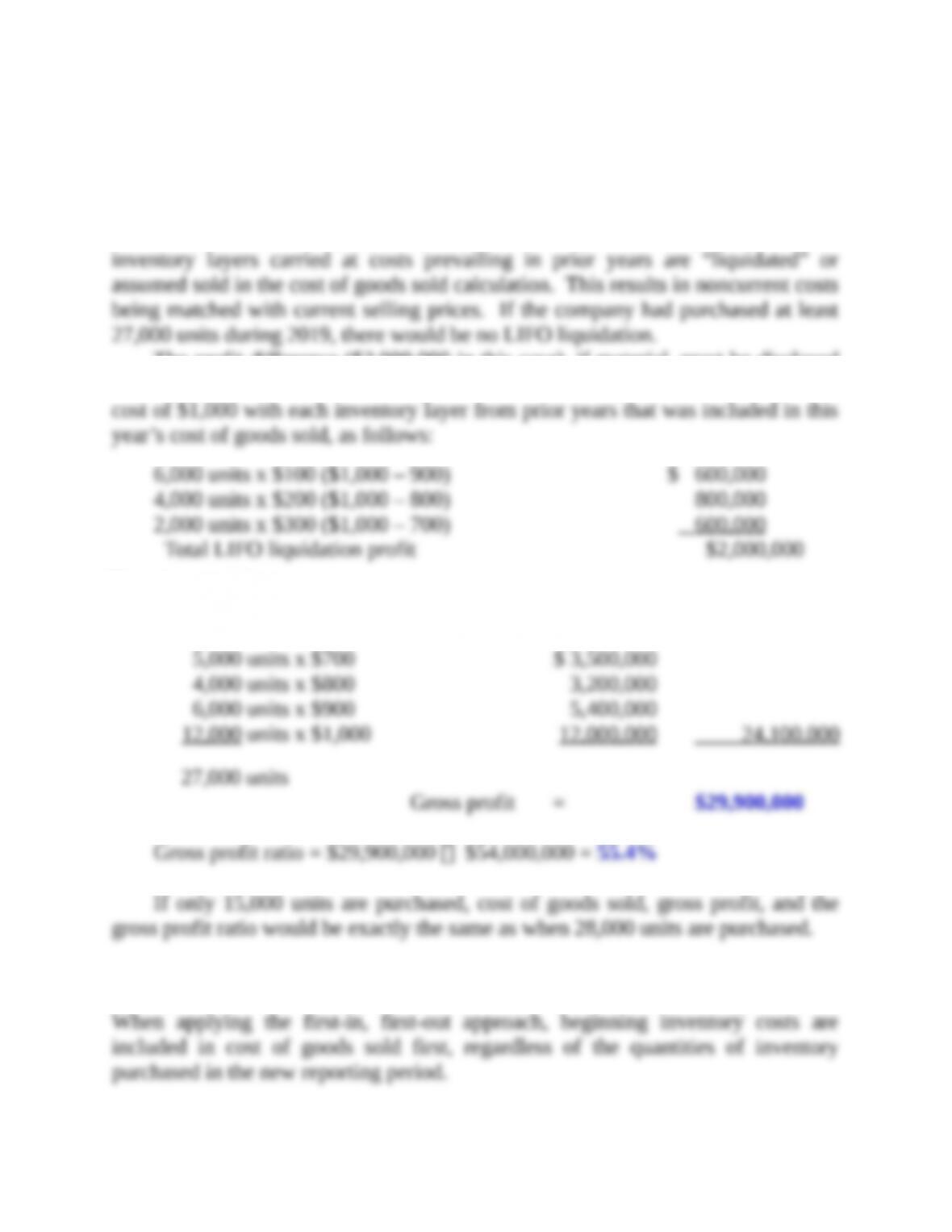
The gross profit and gross profit ratio are higher applying the requirement 2
assumption of 15,000 units purchased because of the LIFO liquidation profit that
results. When inventory quantity declines during a reporting period, LIFO
The profit difference ($2,000,000 in this case), if material, must be disclosed
in a note. The difference can be arrived at by comparing the current replacement
Requirement 4
Sales (27,000 units x $2,000) $54,000,000
Cost of goods sold:
Requirement 5
The number of units purchased has no effect on FIFO cost of goods sold.
Problem 8–12
Requirement 1
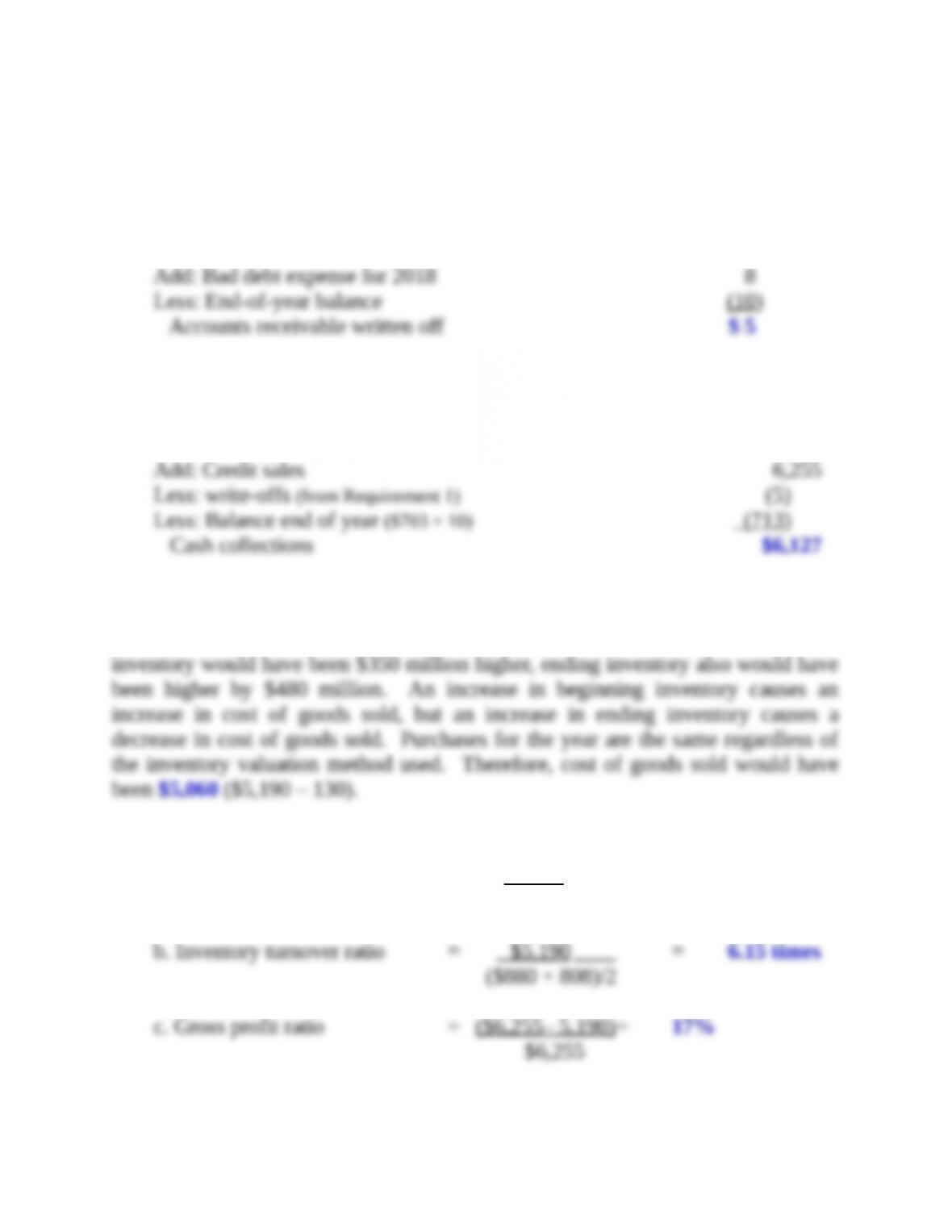
Allowance for uncollectible accounts
Balance, beginning of year $7
Requirement 2
Accounts receivable analysis:
Balance, beginning of year ($583 + 7) $ 590
Requirement 3
Cost of goods sold for 2018 would have been $130 million lower had
Inverness used the average cost method for its entire inventory. While beginning
Requirement 4
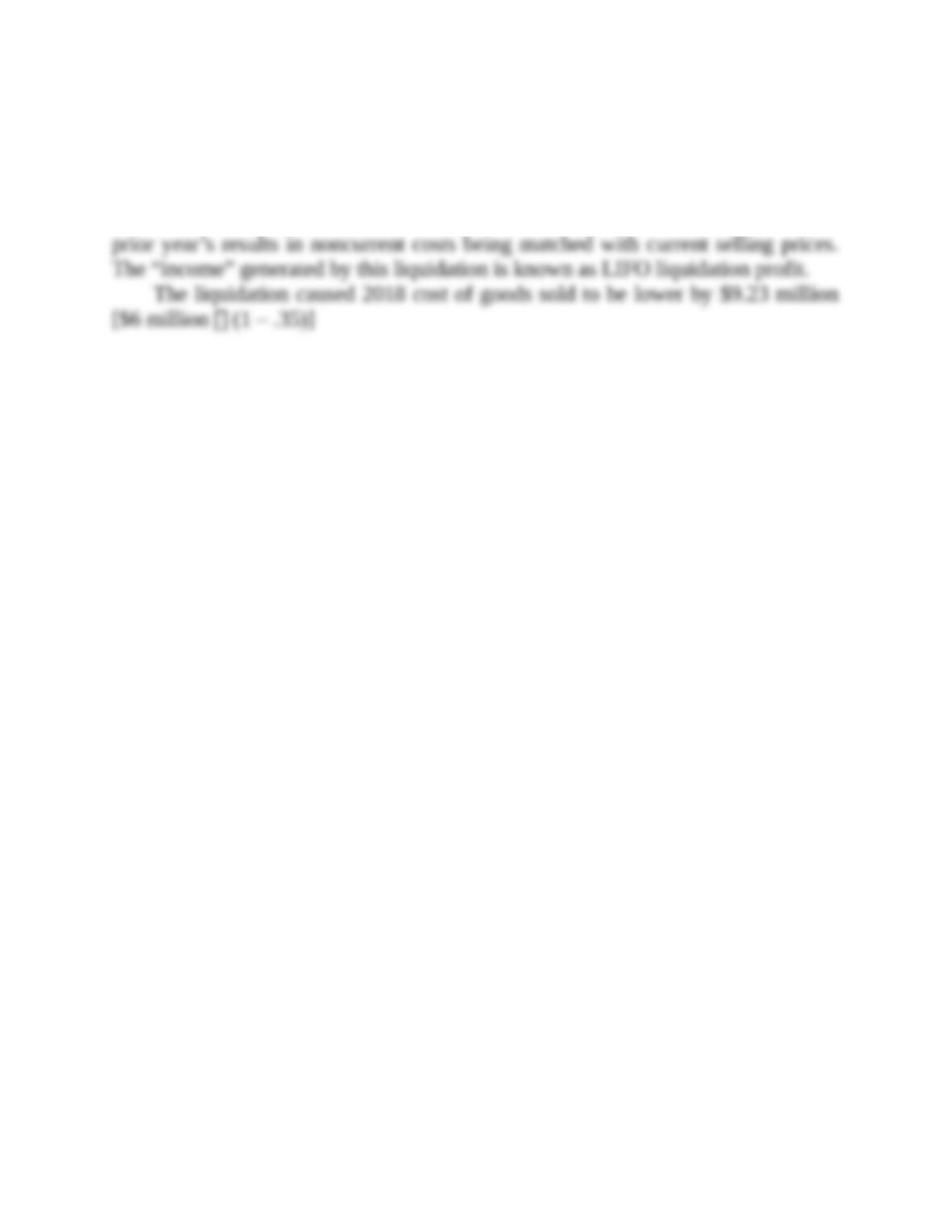
a. Receivables turnover ratio = $6,255 = 9.73 times
($703 + 583)/2
Problem 8–12 (concluded)
Requirement 5
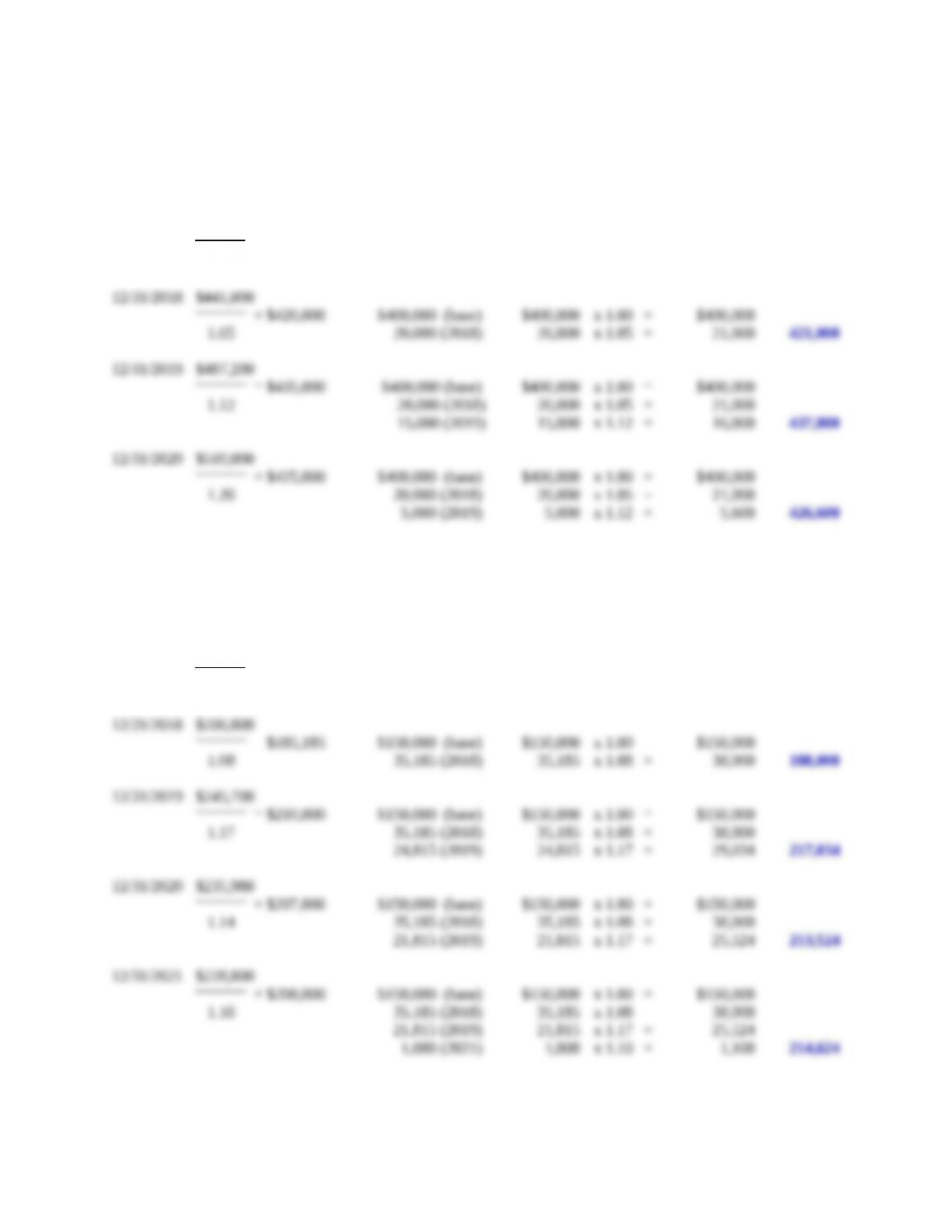
If inventory costs are increasing, when inventory quantity declines during a
period, liquidation of LIFO inventory layers carried at lower costs prevailing in
Problem 8–13
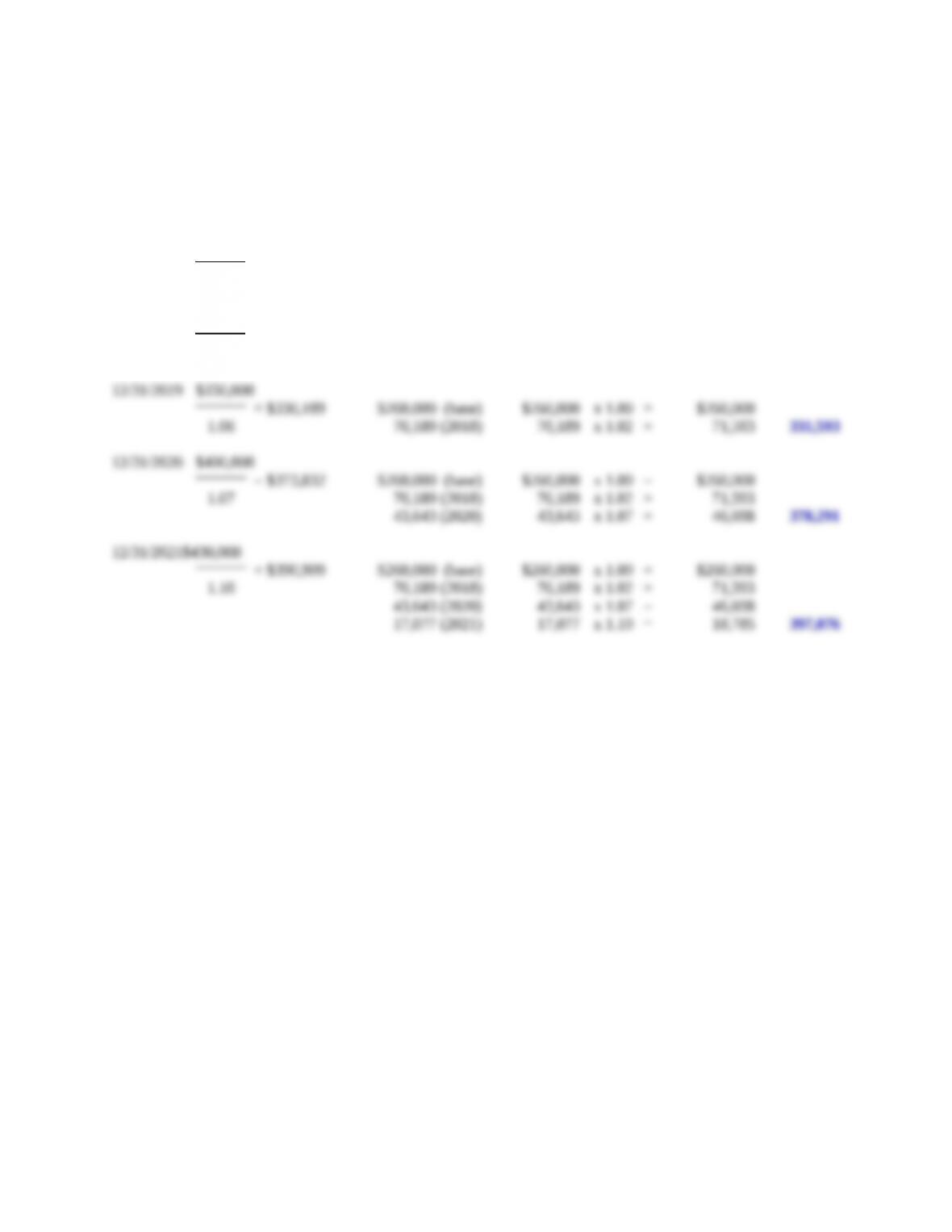
Ending
Ending Inventory Inventory Layers Inventory Layers Inventory
Date at Base Year Cost at Base Year Cost Converted to Cost DVL Cost
1/1/2018 $400,000
= $400,000 $400,000 (base) $400,000 x 1.00 = $400,000 $400,000
1.00
Problem 8–14
Ending
Ending Inventory Inventory Layers Inventory Layers Inventory
Date at Base Year Cost at Base Year Cost Converted to Cost DVL Cost
1/1/2018 $150,000
= $150,000 $150,000 (base) $150,000 x 1.00 = $150,000 $150,000
1.00
Problem 8–15
Ending
Ending Inventory Inventory Layers Inventory Layers Inventory
Date at Base Year Cost at Base Year Cost Converted to Cost DVL Cost
1/1/2018 $260,000
= $260,000 $260,000 (base) $260,000 x 1.00 = $260,000 $260,000
1.00
12/31/2018 $340,000
= $333,333 $260,000 (base) $260,000 x 1.00 = $260,000
1.02 73,333 (2018) 73,333 x 1.02 = 74,800 334,800
Problem 8–16
Ending
Ending Inventory Inventory Layers Inventory Layers Inventory
Date at Base Year Cost at Base Year Cost Converted to Cost DVL Cost
1/1/2018 $84,000
= $84,000 $84,000 (base) $84,000 x 1.00 = $84,000 $84,000
1.00
12/31/2018 $100,800
= $96,000 $84,000 (base) $84,000 x 1.00 = $84,000
1.05 12,000 (2018) 12,000 x 1.05 = 12,600 96,600
12/31/2019 $136,800
(1) $150,000 $125,000 = 1.20 (2020 cost index)
(2) $133,710 – 129,960 = $3,750
Judgment Case 8–1
Advance warning of the company’s impending bankruptcy existed at the date
The company’s report showed that inventories on January 30 were $82.2
million, up 37 percent from $60 million a year earlier. That’s well above the 15
CASES

Real World Case 8–2
Requirement 1
Identifying items that should be included in inventory is difficult due to goods
in transit, goods on consignment, and sales returns.
Goods in transit. Inventory shipped f.o.b. shipping point is included in the
Goods on consignment. Goods held on consignment are included in the
Sales returns. When the right of return exists, a seller must be able to
Requirement 2
In addition to the direct acquisition costs such as the price paid and
transportation costs to obtain inventory, the costs of unloading, unpacking, and
Requirement 3
Sport Chalet considers cost to include the direct cost of merchandise and
Judgment Case 8–3
1. a. The specific identification method requires each unit to be clearly
distinguished from similar units either by description, identification number,
location, or other characteristic. Costs are accumulated for specific units and
b. It is appropriate for Happlia to use the specific identification method
because each appliance is expensive, and easily identified by number and
2. a. Happlia should include in inventory carrying amounts all necessary
and reasonable costs to get an appliance into a useful condition and place for sale.
Common (or joint) costs should be allocated to individual units. Such costs
b. Examples of inventoriable costs include the unit invoice price, plus
3. The 2018 income statement should report in cost of goods sold all
inventory costs related to units sold in 2018, regardless of when cash is received