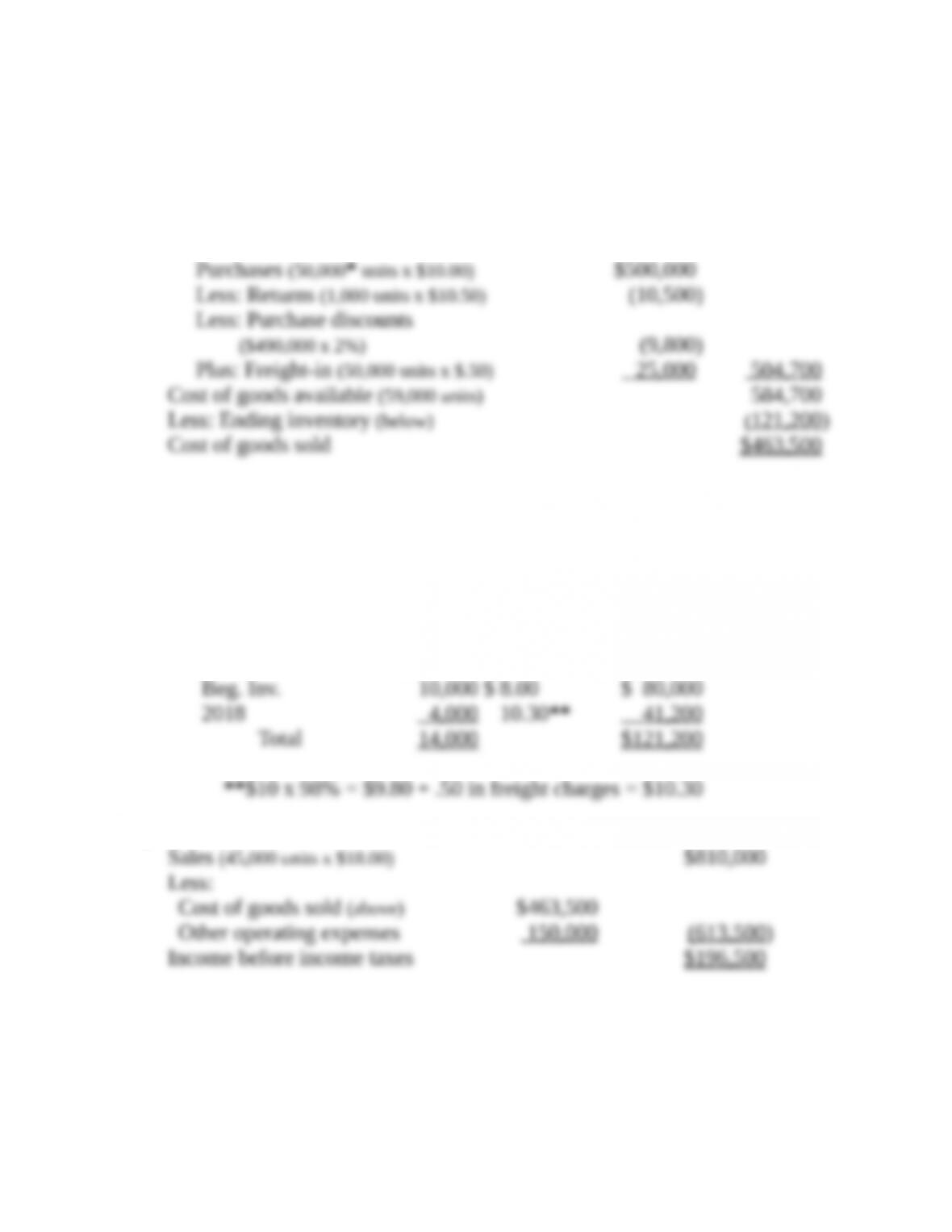
Problem 8–4
Requirement 1
Beginning inventory (10,000 x $8.00) $ 80,000
Net purchases:
* The 5,000 units purchased on December 28 are not included. The
merchandise was shipped f.o.b. destination and did not arrive at Johnson’s
warehouse until 2019.
Cost of ending inventory:
Date of
purchase Units Unit cost Total cost
Requirement 2
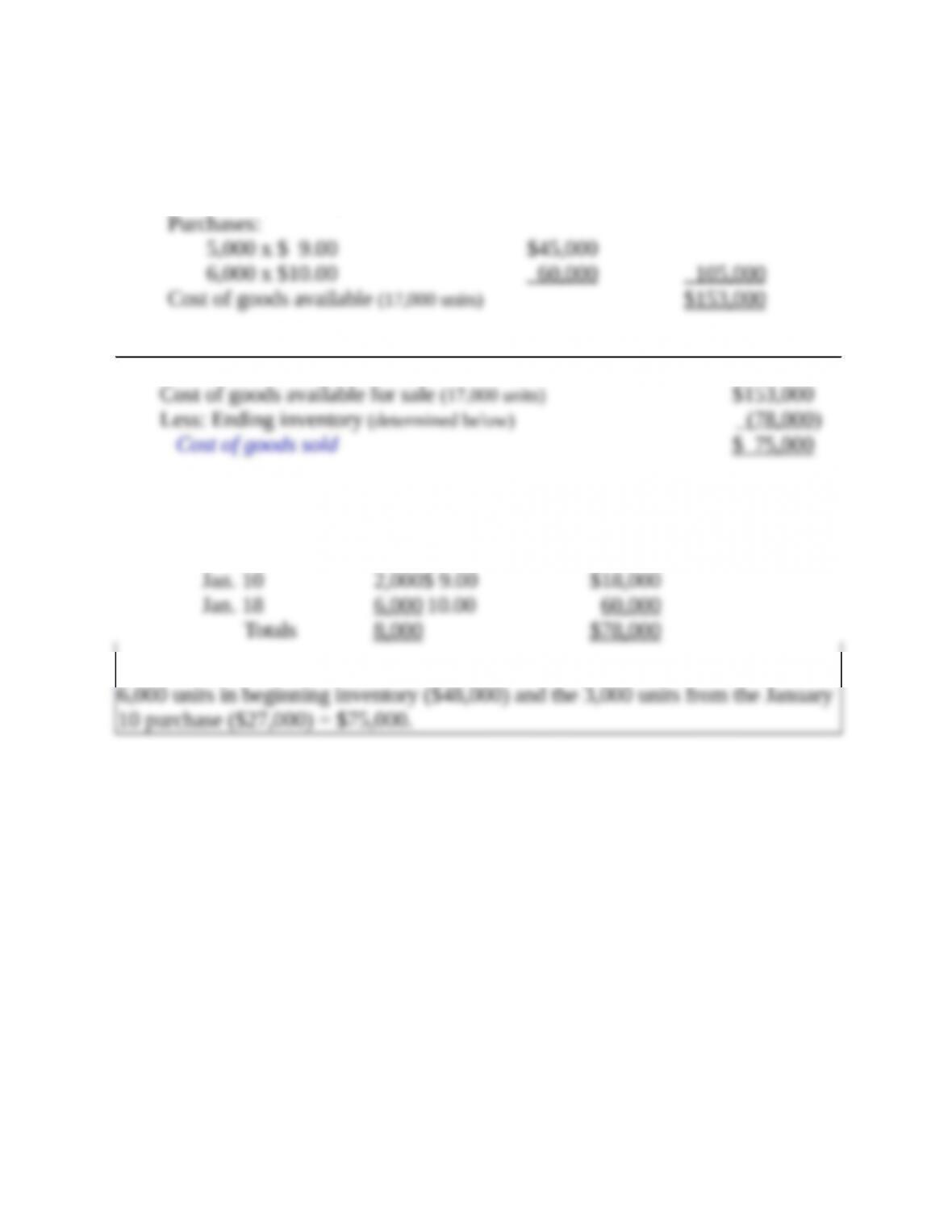
Problem 8–5
Cost of goods available for sale for periodic system:
Beginning inventory (6,000 x $8.00) $ 48,000
1. FIFO, periodic system
Cost of ending inventory:
Date of
purchase Units Unit cost Total cost
Alternatively, cost of goods sold can be determined by adding the cost of the
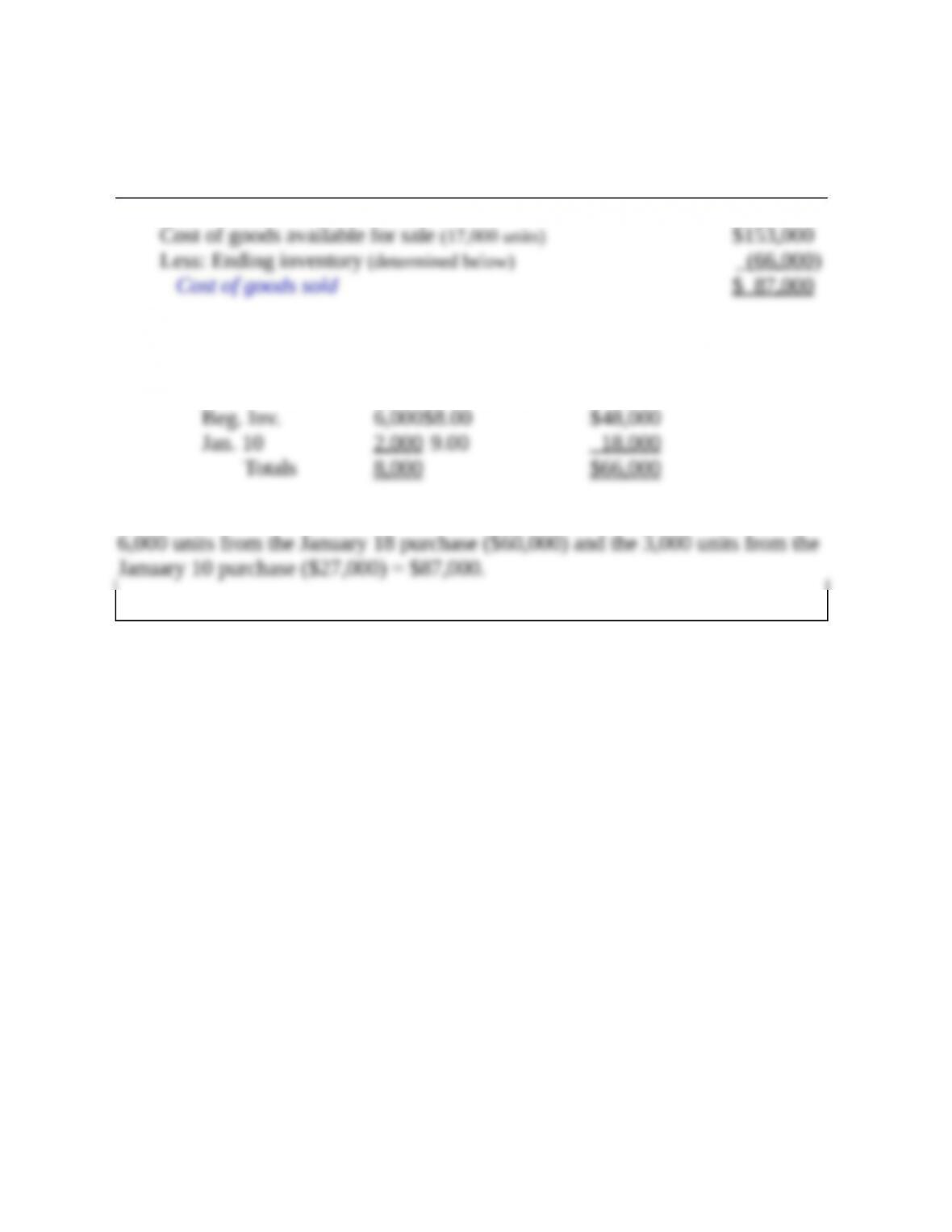
Problem 8–5 (continued)
2. LIFO, periodic system
Cost of ending inventory:
Date of
purchase Units Unit cost Total cost
Alternatively, cost of goods sold can be determined by adding the cost of the
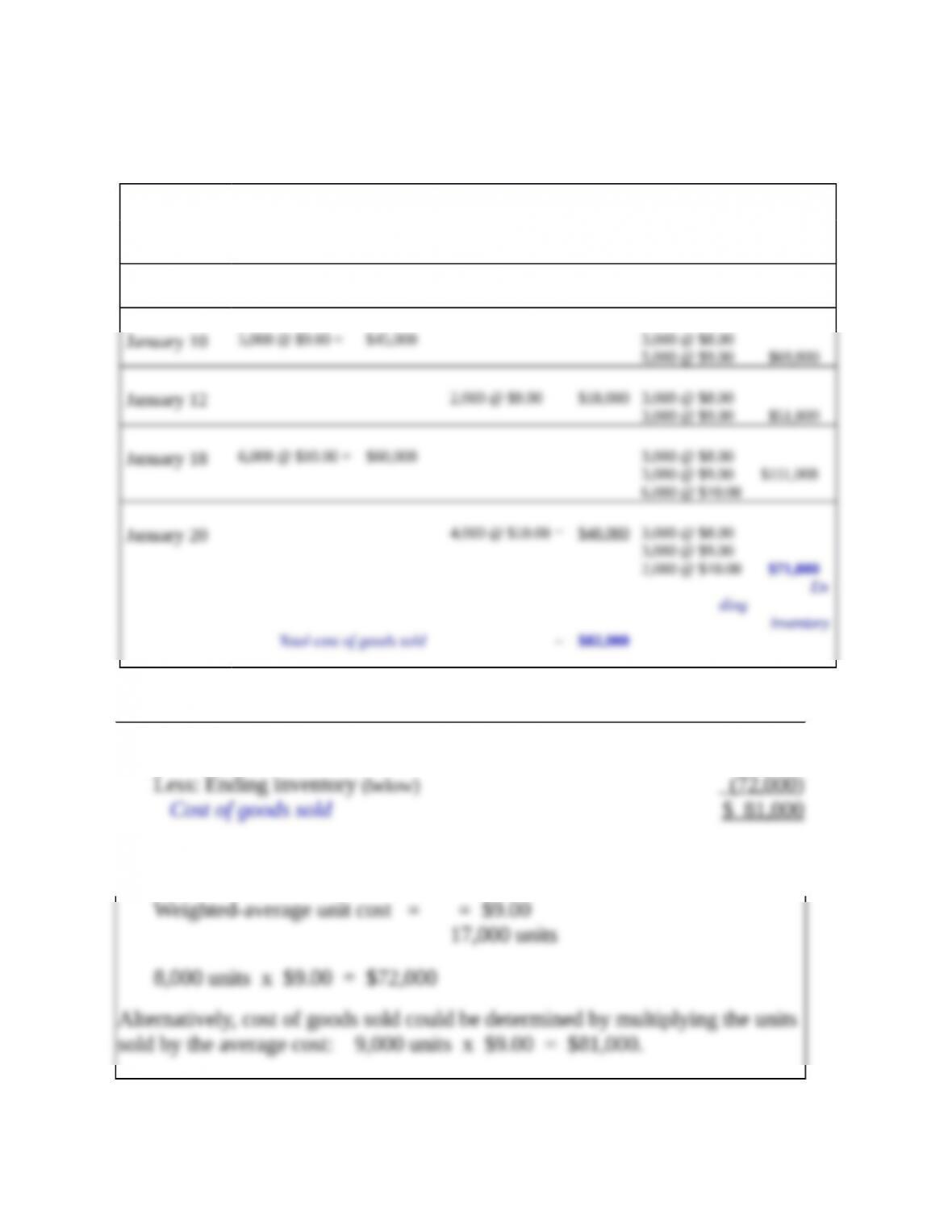
Problem 8–5 (continued)
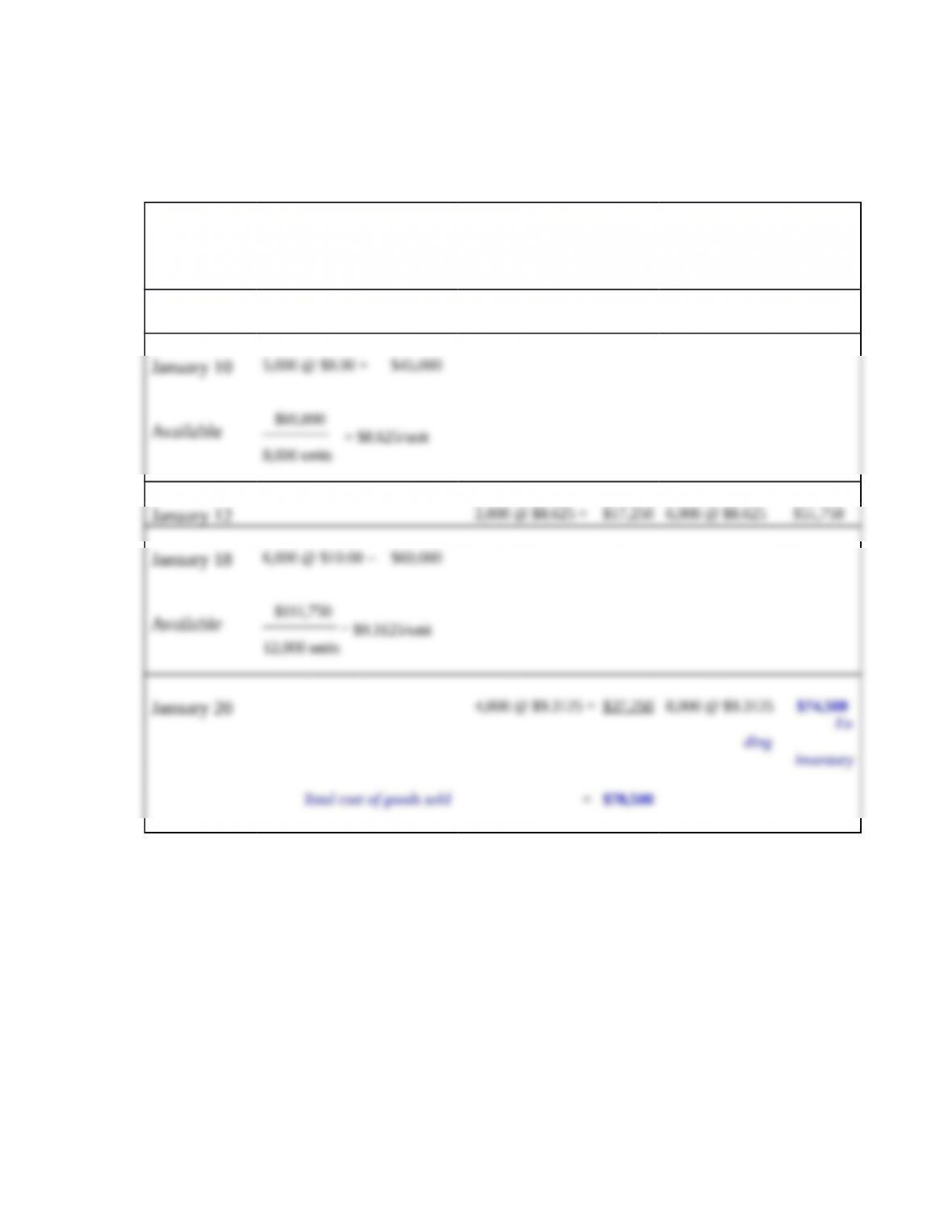
3. LIFO, perpetual system
Date Purchased Sold Balance
Beginning
inventory
6,000 @ $8.00 = $48,000 6,000 @ $8.00 $48,000
January 5 3,000 @ $8.00 = $24,000 3,000 @ $8.00 $24,000
4. Average cost, periodic system
Cost of goods available for sale (17,000 units) $153,000
Cost of ending inventory:
$153,000
Problem 8–5 (concluded)
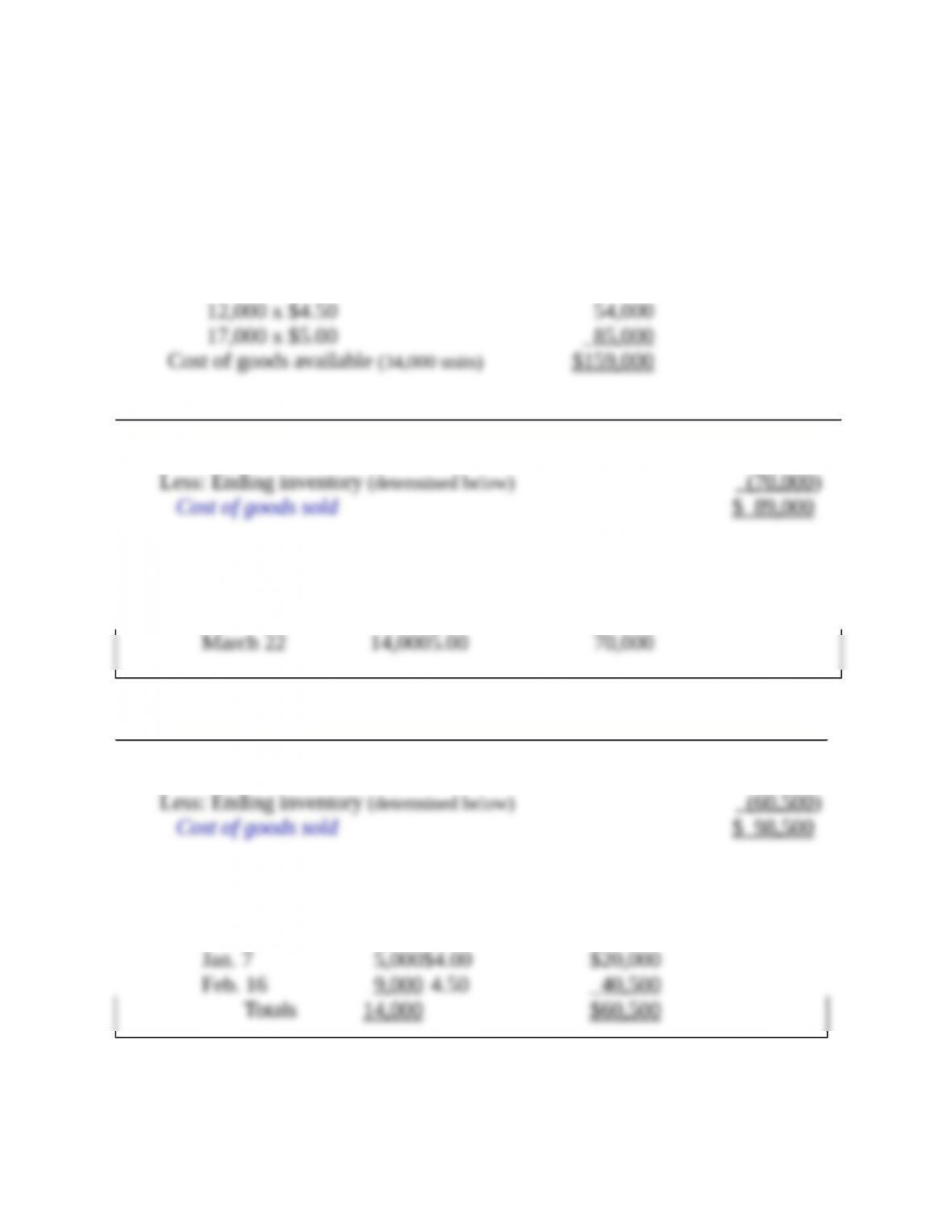
5. Average cost, perpetual system
Date Purchased Sold Balance
Beginning
inventory
6,000 @ $8.00 = $48,000 6,000 @ $8.00 $48,000
January 5 3,000 @ $8.00 = $24,000 3,000 @ $8.00 $24,000
Problem 8–6
Requirement 1
Cost of goods available for sale for periodic system:
Purchases:
5,000 x $4.00 $20,000
a. FIFO
Cost of goods available for sale (34,000 units) $159,000
Cost of ending inventory:
Date of
purchase Units Unit cost Total cost
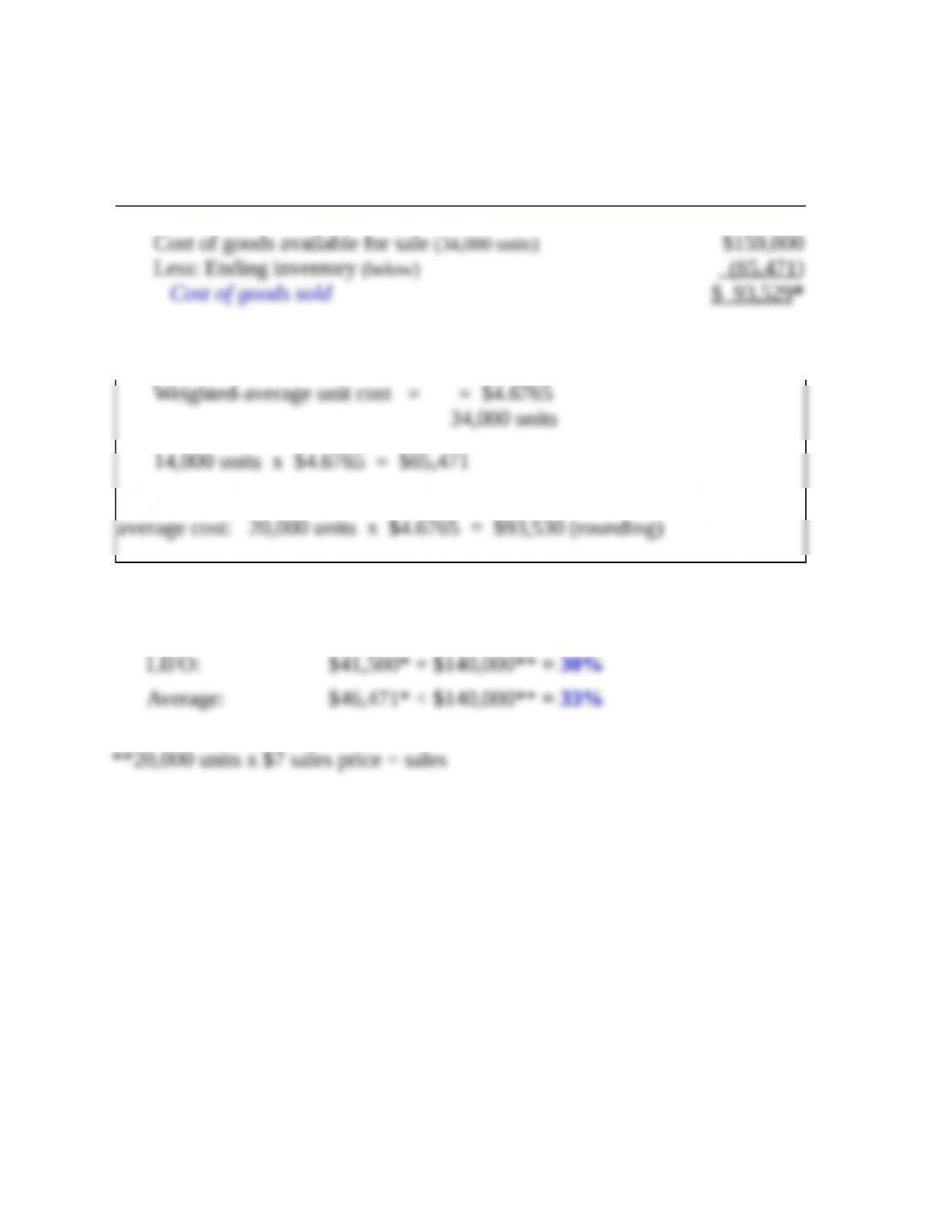
b. LIFO
Cost of goods available for sale (34,000 units) $159,000
Cost of ending inventory:
Date of
purchase Units Unit cost Total cost
Problem 8–6 (concluded)
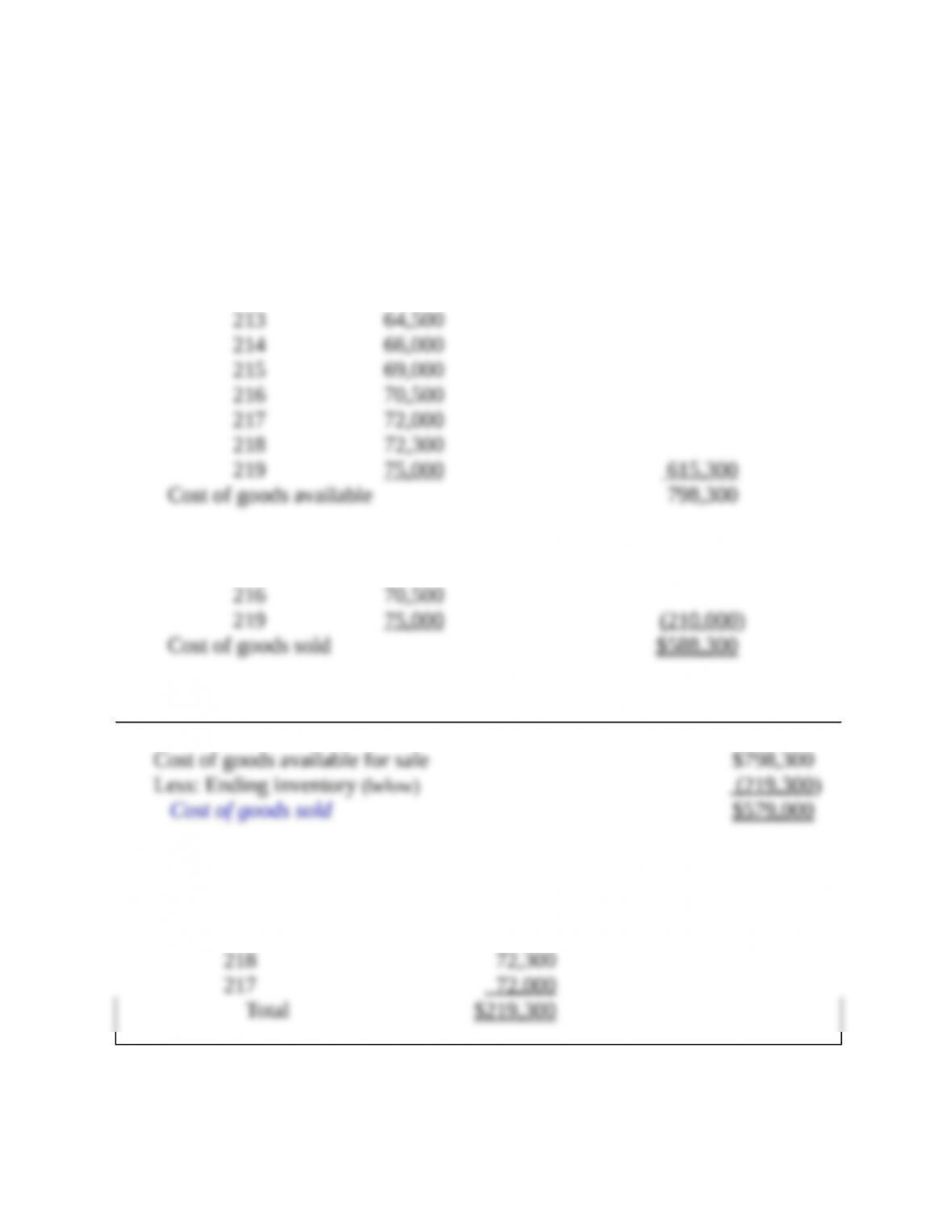
c. Average cost
Cost of ending inventory:
$159,000
* Alternatively, could be determined by multiplying the units sold by the
Gross Profit ratio:
FIFO: $51,000* ÷ $140,000** = 36%
*Sales less cost of goods sold
Requirement 2
In situations when costs are rising, LIFO results in a higher cost of goods sold
and, therefore, a lower gross profit ratio than FIFO.
Problem 8–7
Requirement 1
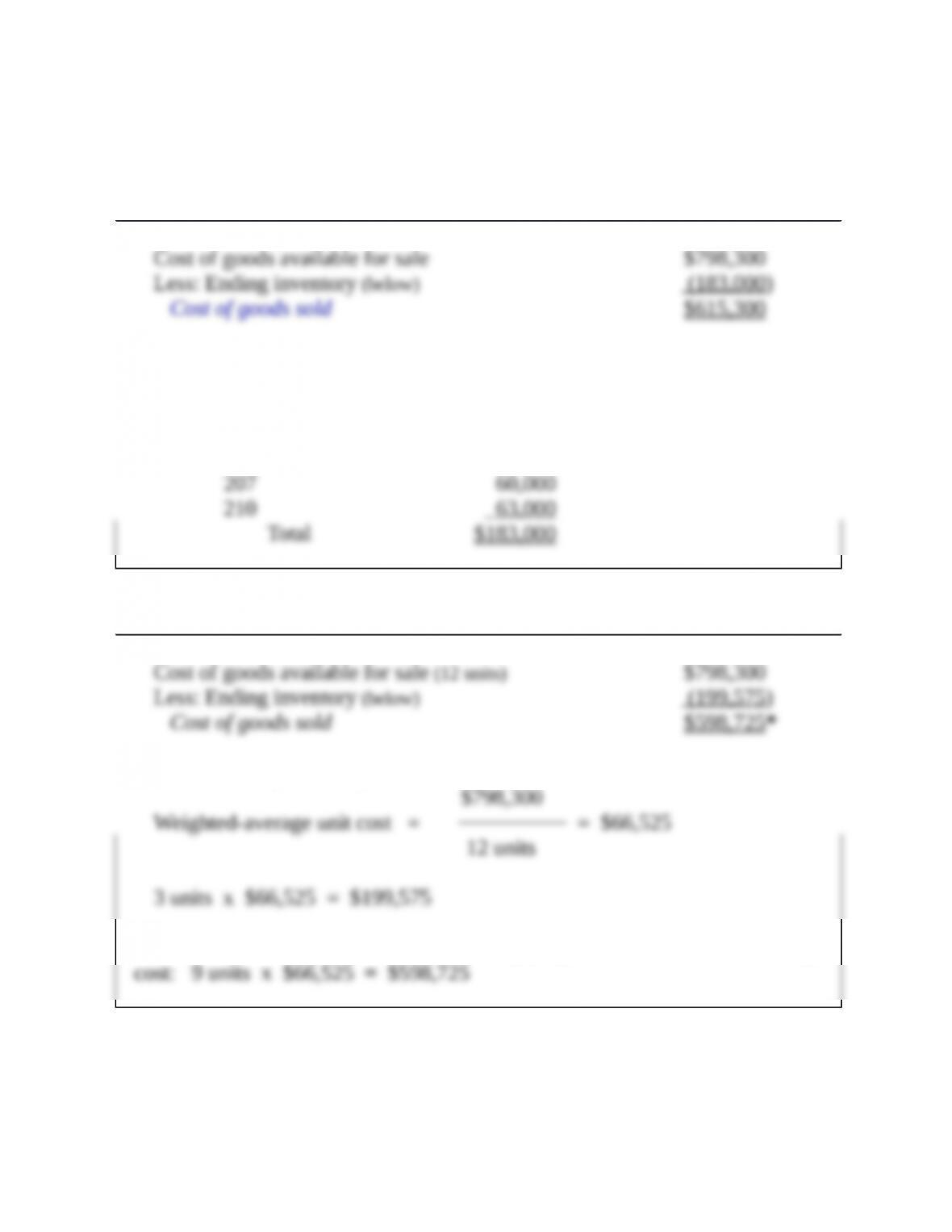
Beginning inventory ($60,000 + 60,000 + 63,000) $183,000
Purchases:
211 $63,000
212 63,000
Ending inventory:
213 $64,500
Requirement 2
Cost of ending inventory (3 autos):
Car ID Cost
219 $ 75,000
Problem 8–7 (concluded)
Requirement 3
Cost of ending inventory (3 autos):
Car ID Cost
203 $ 60,000
Requirement 4
Cost of ending inventory:
* Alternatively, could be determined by multiplying the units sold by the average

Problem 8–8
Requirement 1
The note indicates that if the company had used FIFO, inventory would have
been higher by $2,498 million and $2,430 million at the end of 2015 and
2014, respectively. The increase in the difference between LIFO and FIFO
Requirement 2
Requirement 3
The information might be useful to a financial analyst interested in comparing