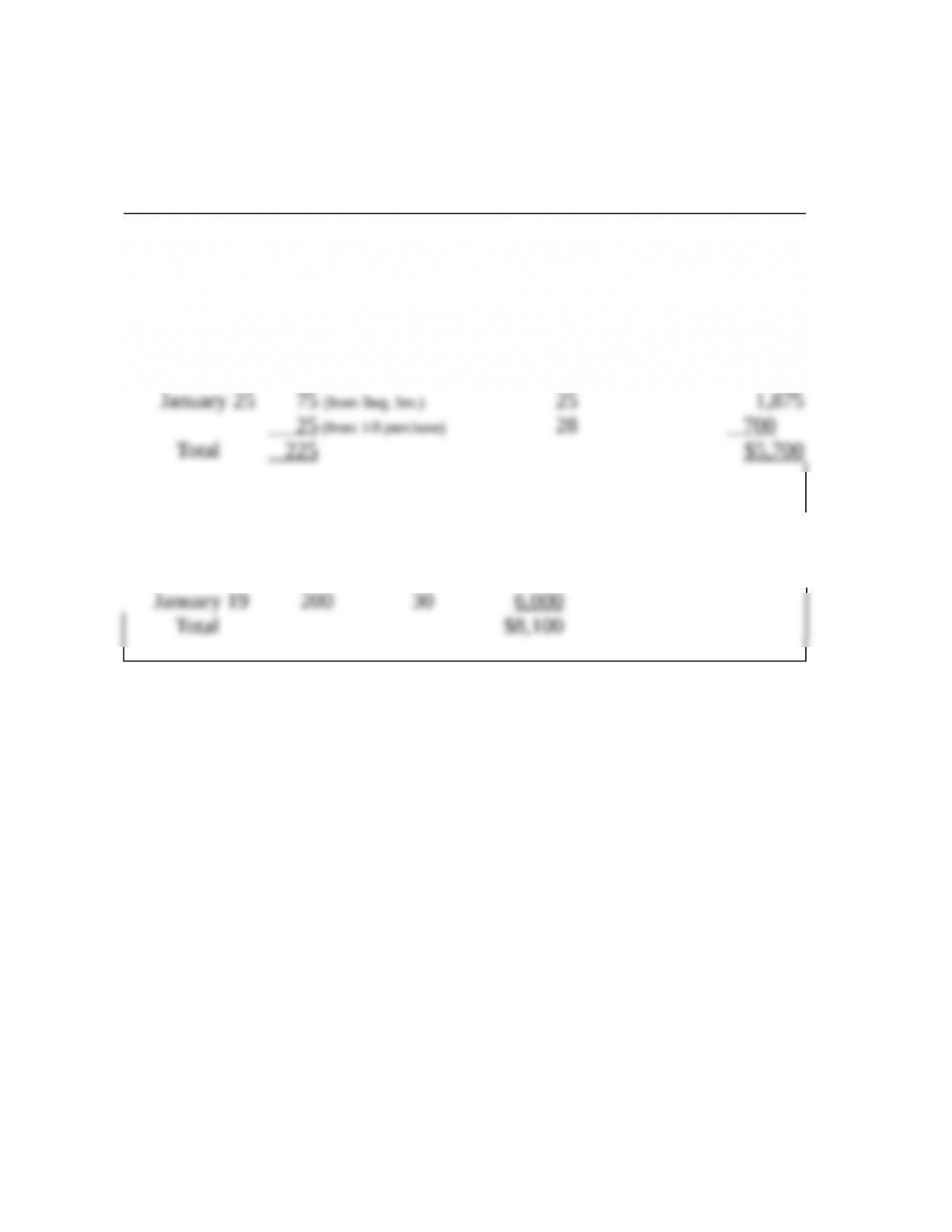
Brief Exercise 8–7
First-in, first-out (FIFO)
Cost of goods sold:
Date of Cost of
Sale Units Sold Units Sold Total Cost
January 10 125 (from Beg. Inv.) $25 $3,125
Ending inventory:
Date of
Purchase Units Unit Cost Total Cost
January 8 75 $28 $2,100
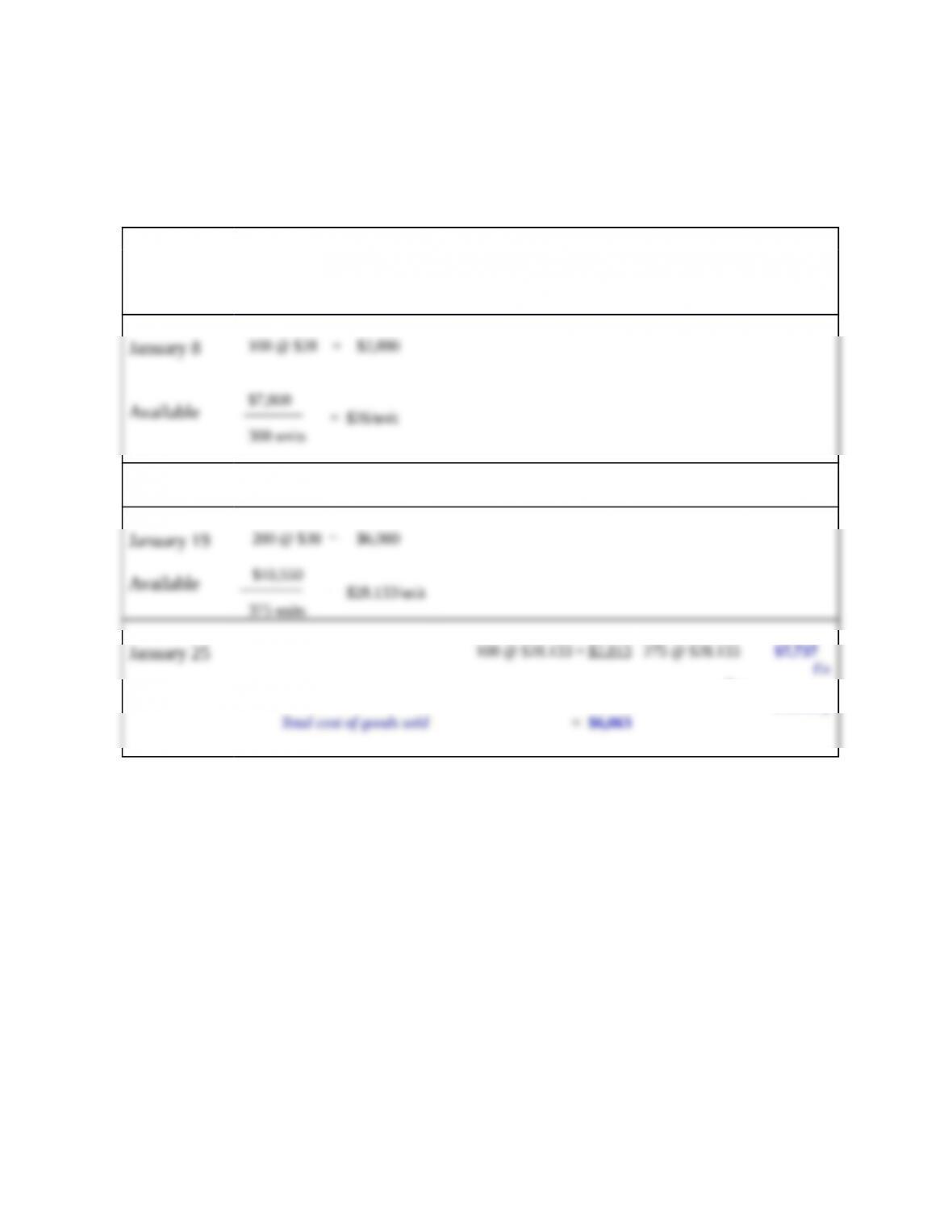
Brief Exercise 8–7 (concluded)
Average cost
Date Purchased Sold Balance
Beginning
inventory
200 @ $25 = $5,000 200 @ $25 $5,000
January 10 125 @ $26 = $3,250 175 @ $26 $4,550
En
ding
inventory
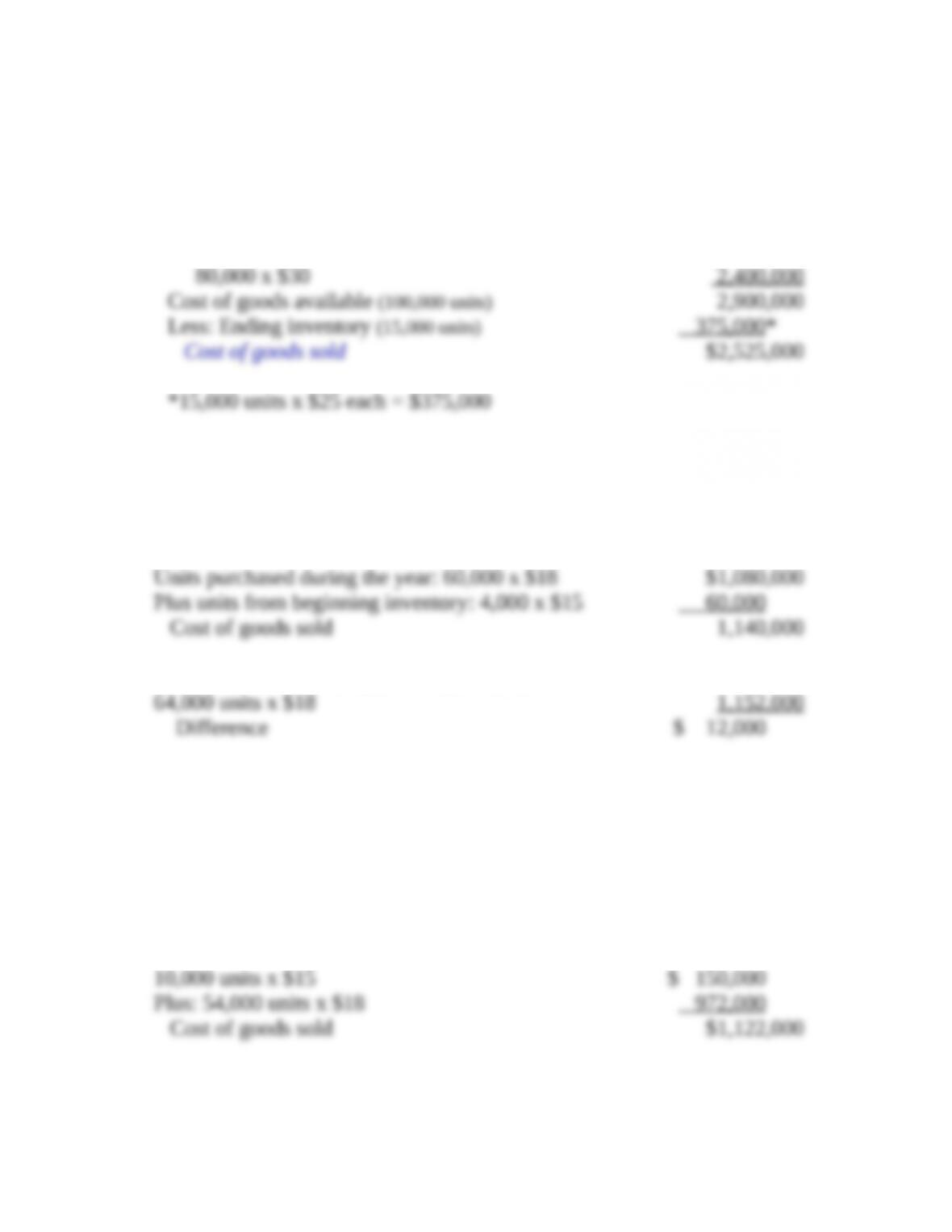
Brief Exercise 8–8
Cost of goods available for sale:
Beginning inventory (20,000 x $25) $ 500,000
Purchases:
Brief Exercise 8–9
64,000 units were sold.
Cost of goods sold without year-end purchase:
Cost of goods sold with year-end purchase:
Cost of goods sold would be $12,000 higher and income before income taxes
$12,000 lower if the year-end purchase is made.
If FIFO were used instead of LIFO, the year-end purchase would have no
effect on income before income taxes. FIFO cost of goods sold with or without the
purchase would consist of the 10,000 units from beginning inventory and 54,000
units purchased during the year at $18:
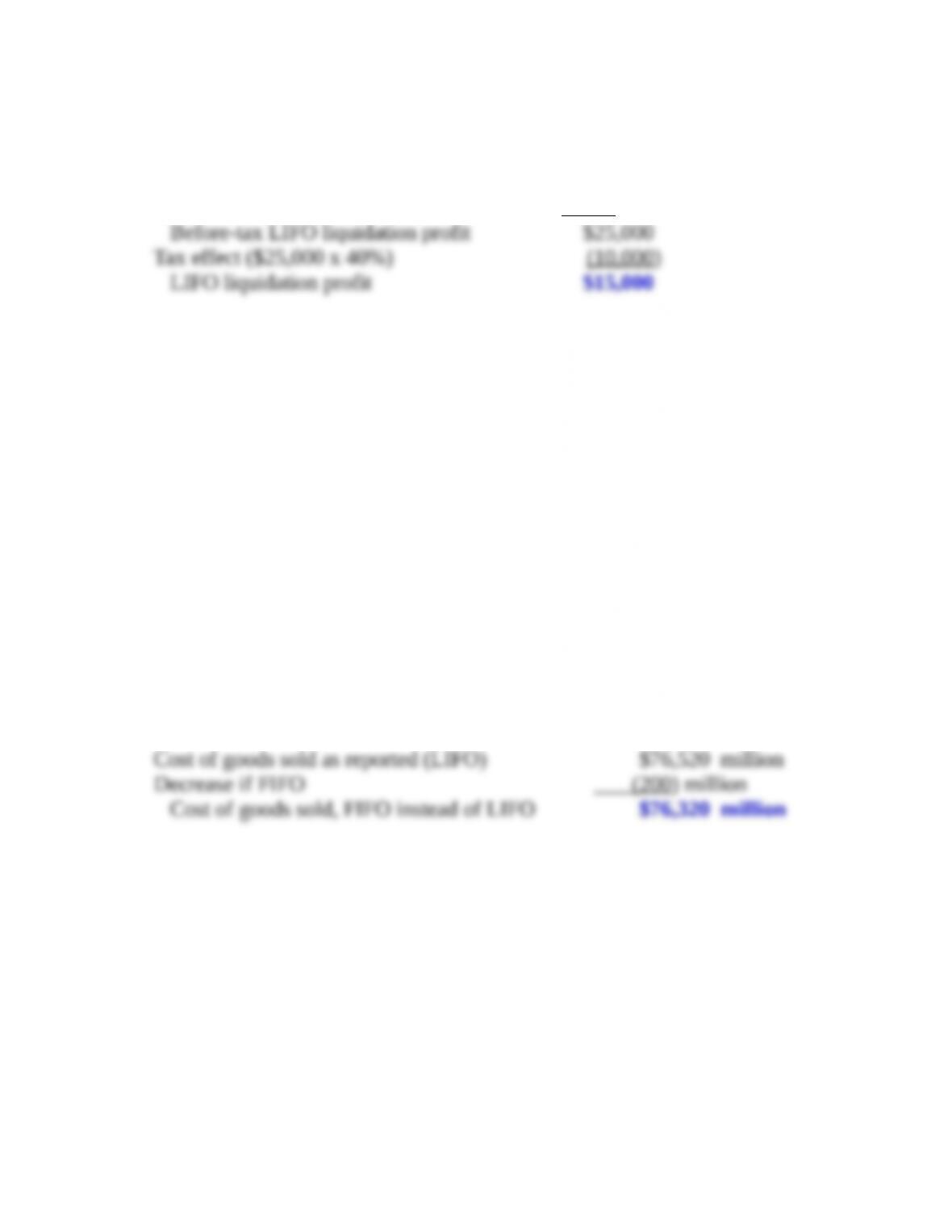
Brief Exercise 8–10
Units liquidated 5,000
Difference in cost ($30 – 25) x $5
Brief Exercise 8–11
Cost of goods sold for the year ended August 31, 2015, would have been $200
million lower had Walgreens used FIFO for its LIFO inventory. While beginning
inventory would have been $2,300 million higher, ending inventory also would
have been higher by $2,500 million. An increase in beginning inventory causes an
increase in cost of goods sold, but an increase in ending inventory causes a
decrease in cost of goods sold. Purchases for the year are the same regardless of
the inventory valuation method used.
Brief Exercise 8–12
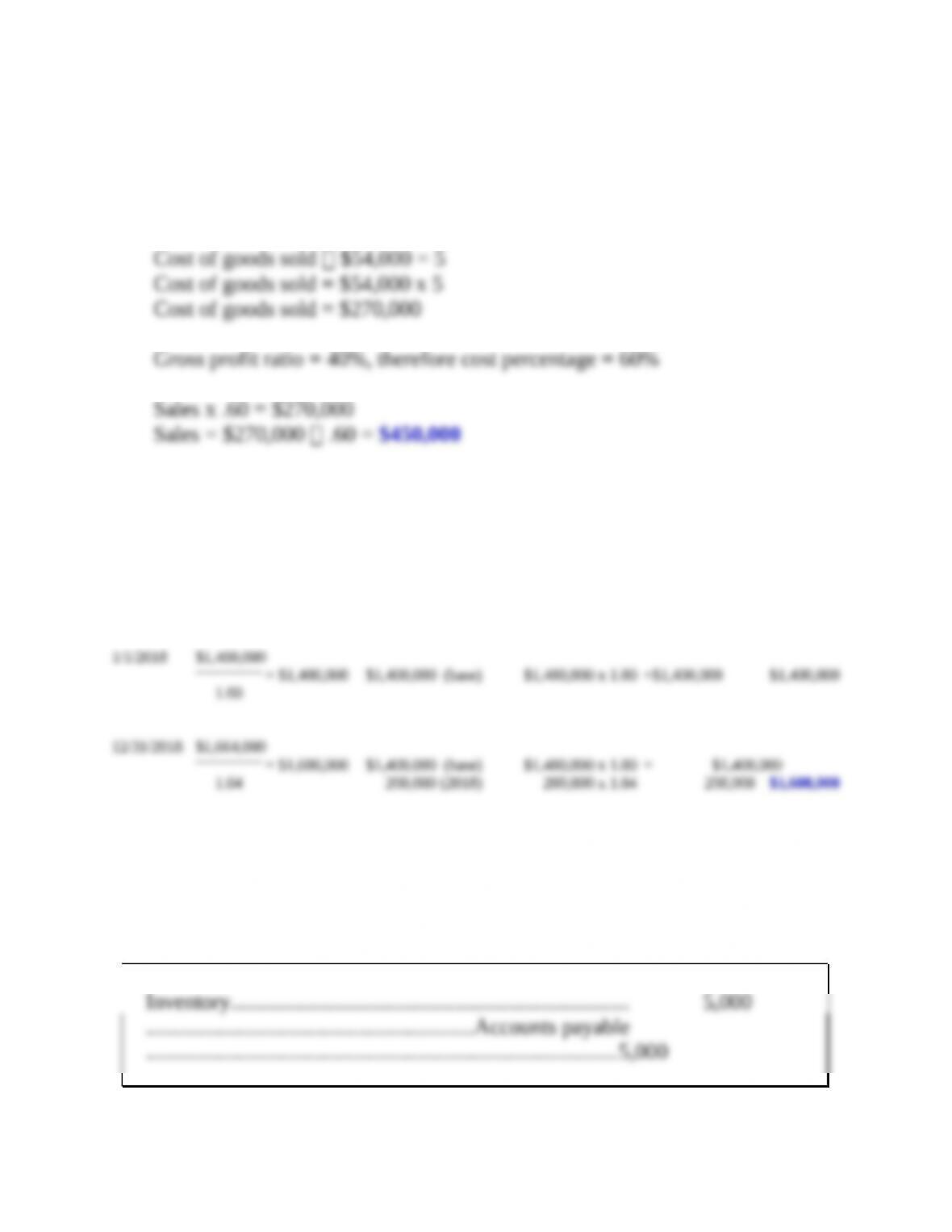
Average inventory = ($60,000 + 48,000) 2 = $54,000
Cost of goods sold Average inventory = Inventory turnover
Brief Exercise 8–13
Ending Inventory Inventory Layers Inventory Layers Inventory
Date at Base Year Cost at Base Year Cost Converted to Cost DVL Cost
Exercise 8–1
1. To record the purchase of inventory on account and the payment of freight
charges.
EXERCISES
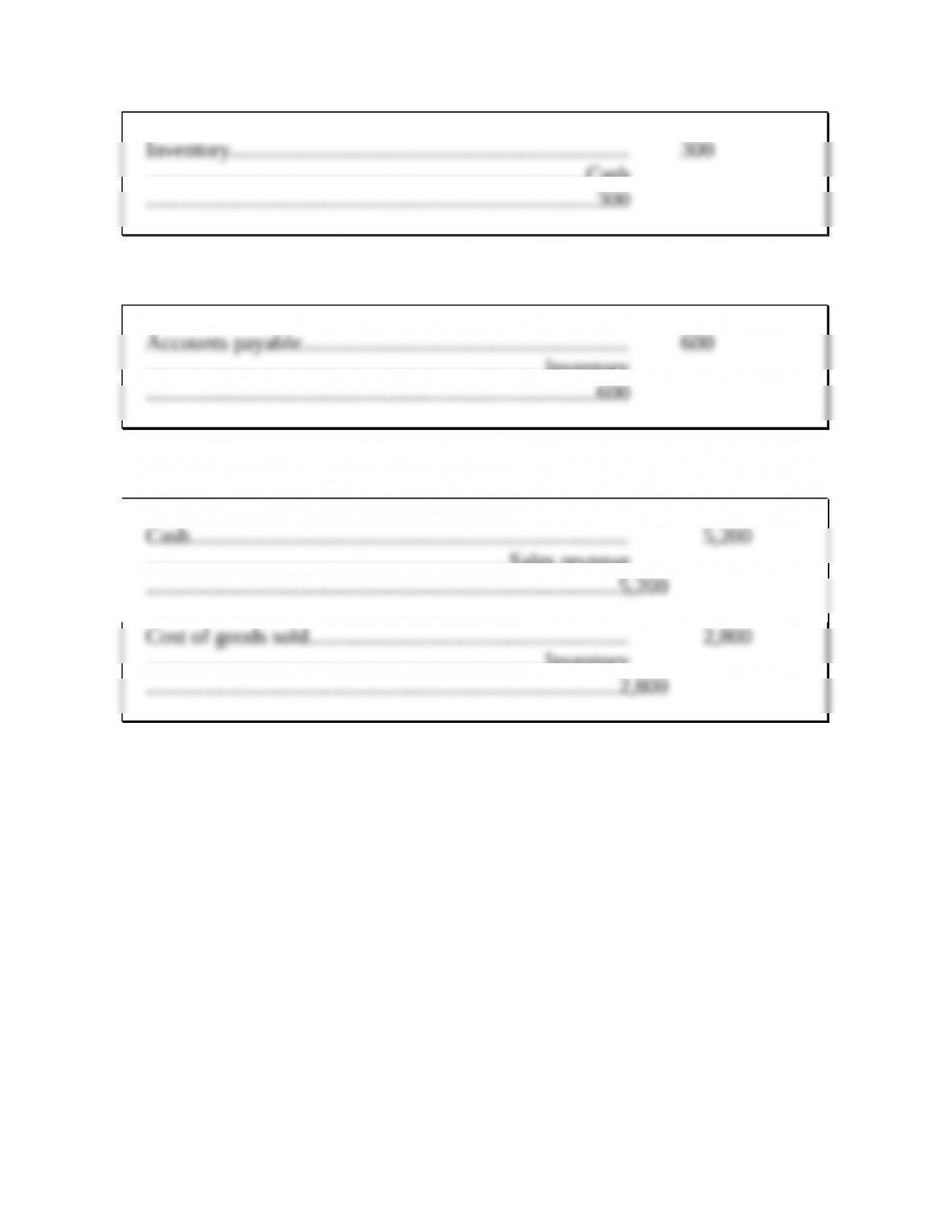
…………………………………………….….……….……….….Cash
2. To record purchase returns.
……………………………………………………….….…..Inventory
3. To record cash sales and cost of goods sold.
…………………………………..….……….………..Sales revenue
……………………………………………………….….…..Inventory
Exercise 8–2
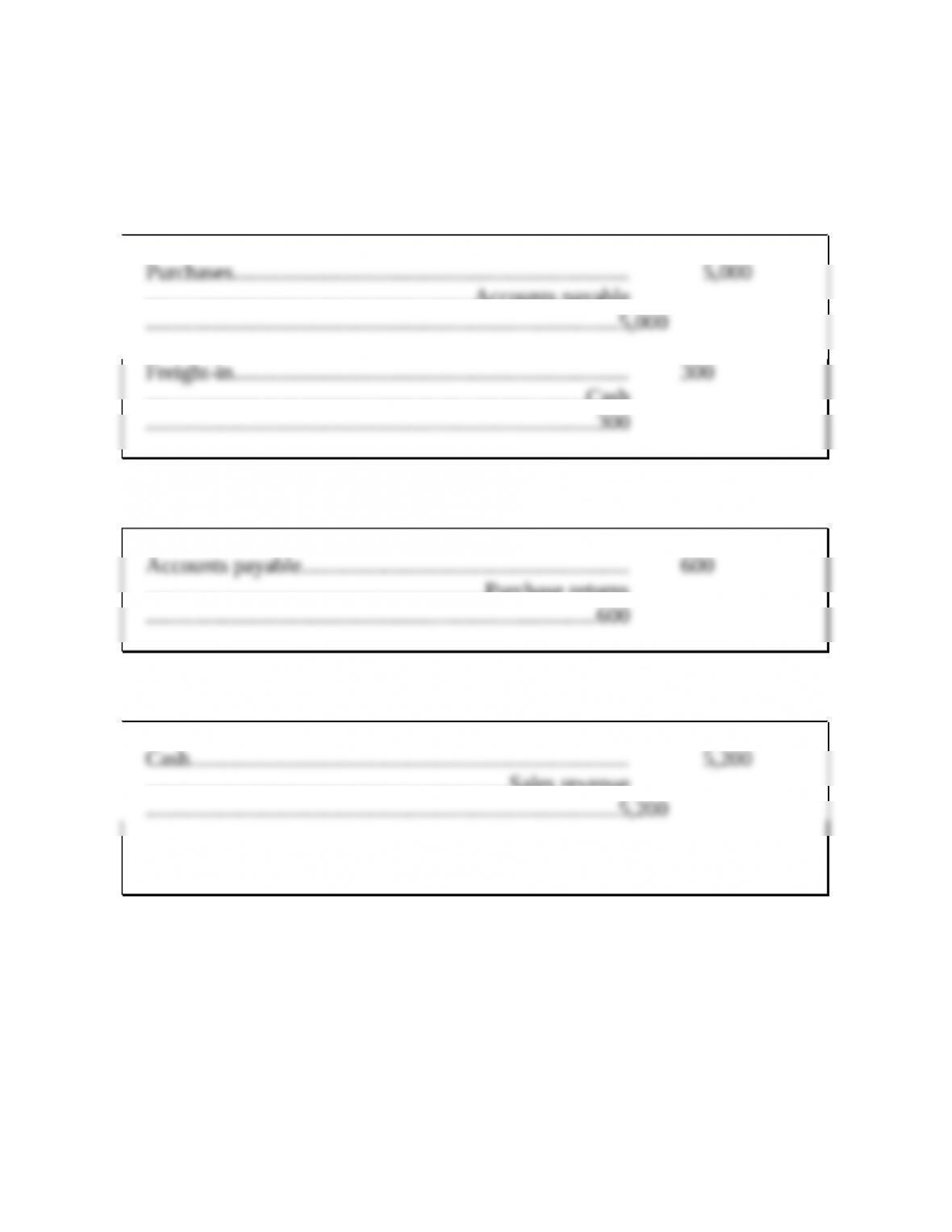
1. To record the purchase of inventory on account and the payment of freight
charges.
……………………………………………….…..Accounts payable
…………………………………………….….……….……….….Cash
2. To record purchase returns.
……………………………………………..….…..Purchase returns
3. To record cash sales.
…………………………………..….……….………..Sales revenue
NO ENTRY IS MADE FOR THE COST OF GOODS SOLD.
Exercise 8–3
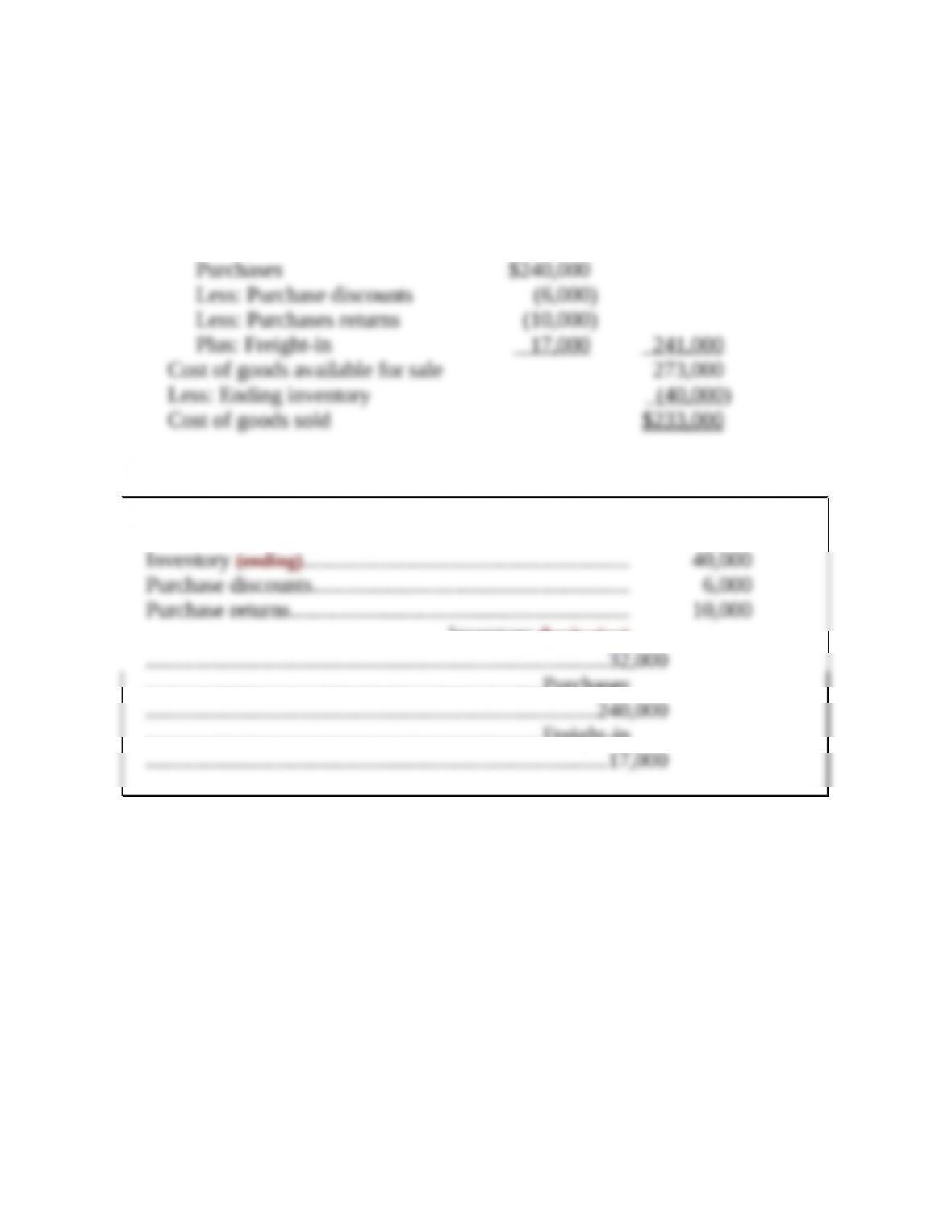
Requirement 1
Beginning inventory $ 32,000
Plus net purchases:
Requirement 2
Cost of goods sold (above)……………………………………….. 233,000
………………………………..….……….…Inventory (beginning)
……………………………………..….……….……….….Purchases
…………………………………….….……….……….…..Freight-in
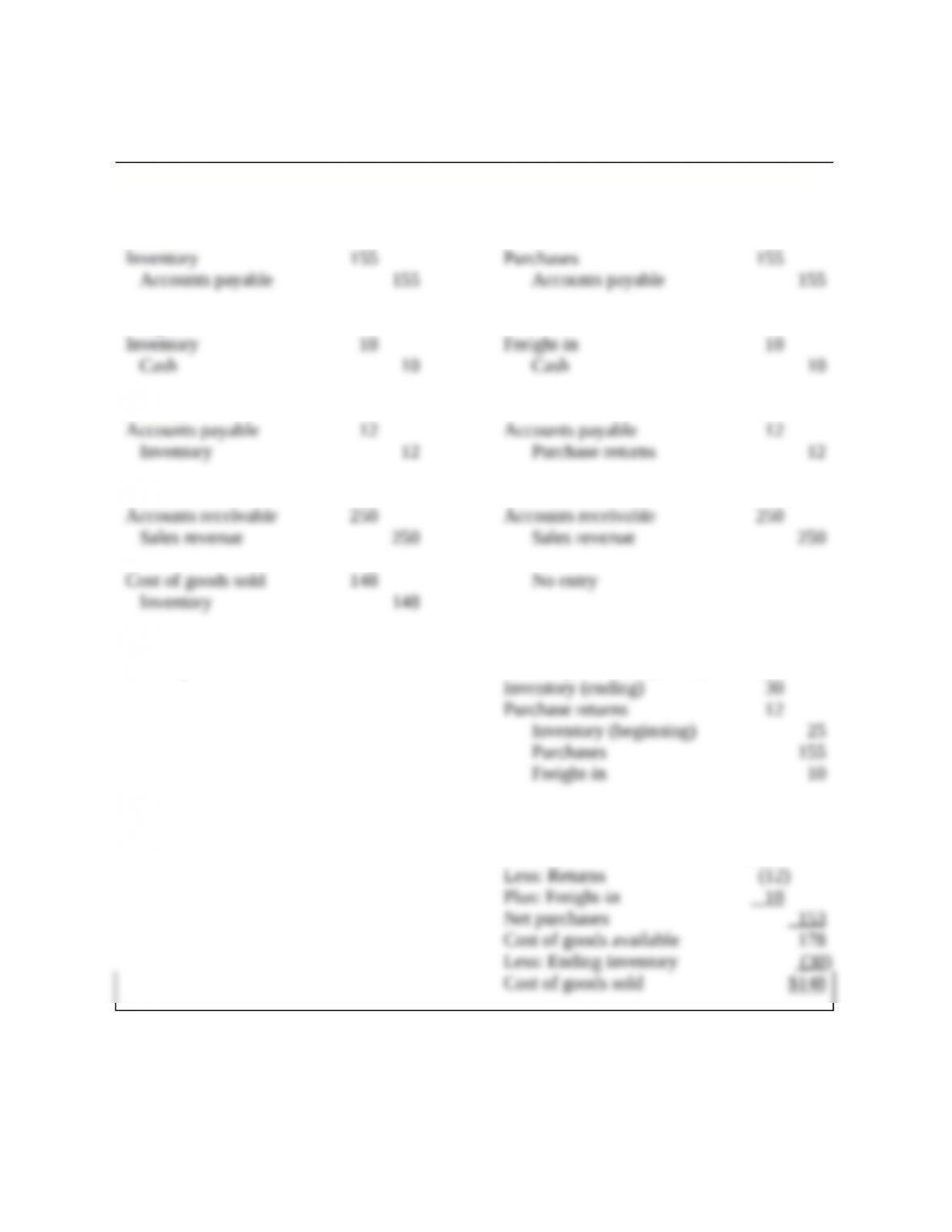
Exercise 8–4
PERPETUAL SYSTEM PERIODIC SYSTEM
($ in 000s)
Purchases
Freight
Returns
Sales
End of period
No entry Cost of goods sold (below) 148
Cost of goods sold:
Beginning inventory $25
Purchases $155
Exercise 8–5
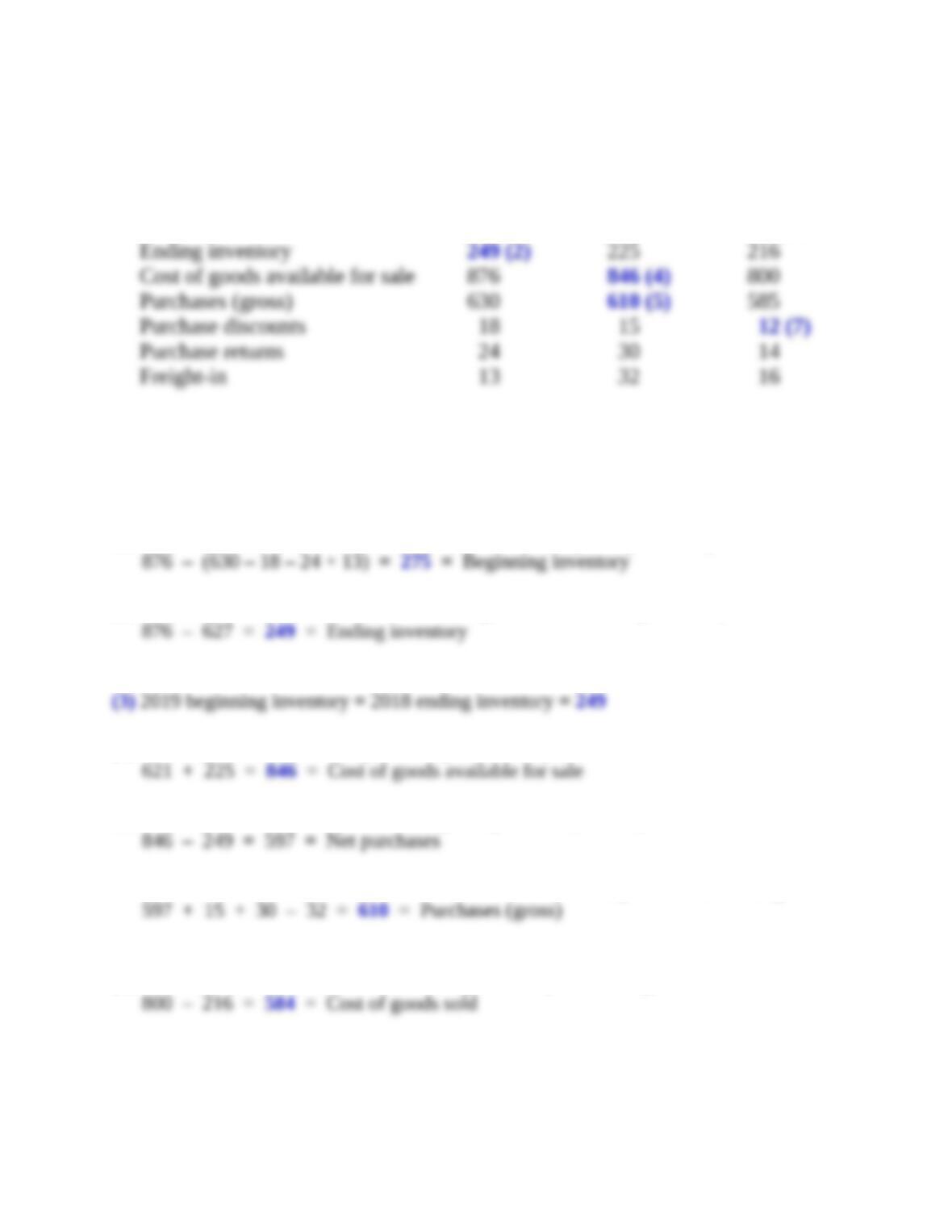
2018 2019 2020
Beginning inventory 275 (1) 249 (3) 225
Cost of goods sold 627 621 584 (6)
Net purchases = Purchases (gross) – Purchase returns – Purchase discounts + Freight-in
Beginning inventory + Net purchases = Cost of goods available for sale
Cost of goods available for sale – Ending inventory = Cost of goods sold
2018:
(1) Cost of goods available for sale – Net purchases = Beginning inventory
(2) Cost of goods available for sale – Cost of goods sold = Ending inventory
2019:
(4) Cost of goods sold + Ending inventory = Cost of goods available for sale
(5) Cost of goods available for sale – Beginning inventory = Net purchases
Net purchases + Purchases discounts + Purchase returns – Freight-in = Purchases(gross)
2020:
(6) Cost of goods available for sale – Ending inventory = Cost of goods sold
Exercise 8–5 (concluded)
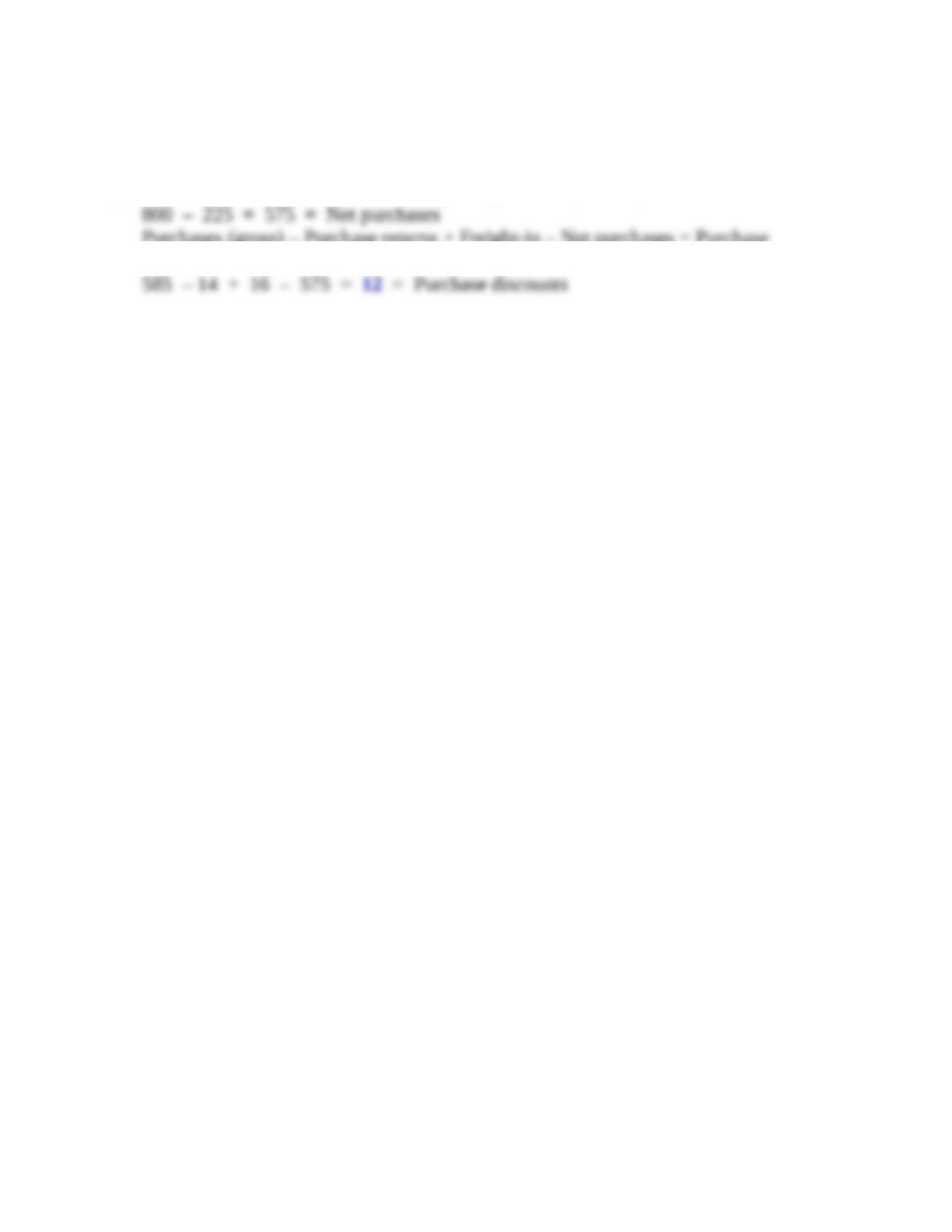
(7) Cost of goods available for sale – Beginning inventory = Net purchases
Purchases (gross) – Purchase returns + Freight-in – Net purchases = Purchase
discounts