Problem 7–15
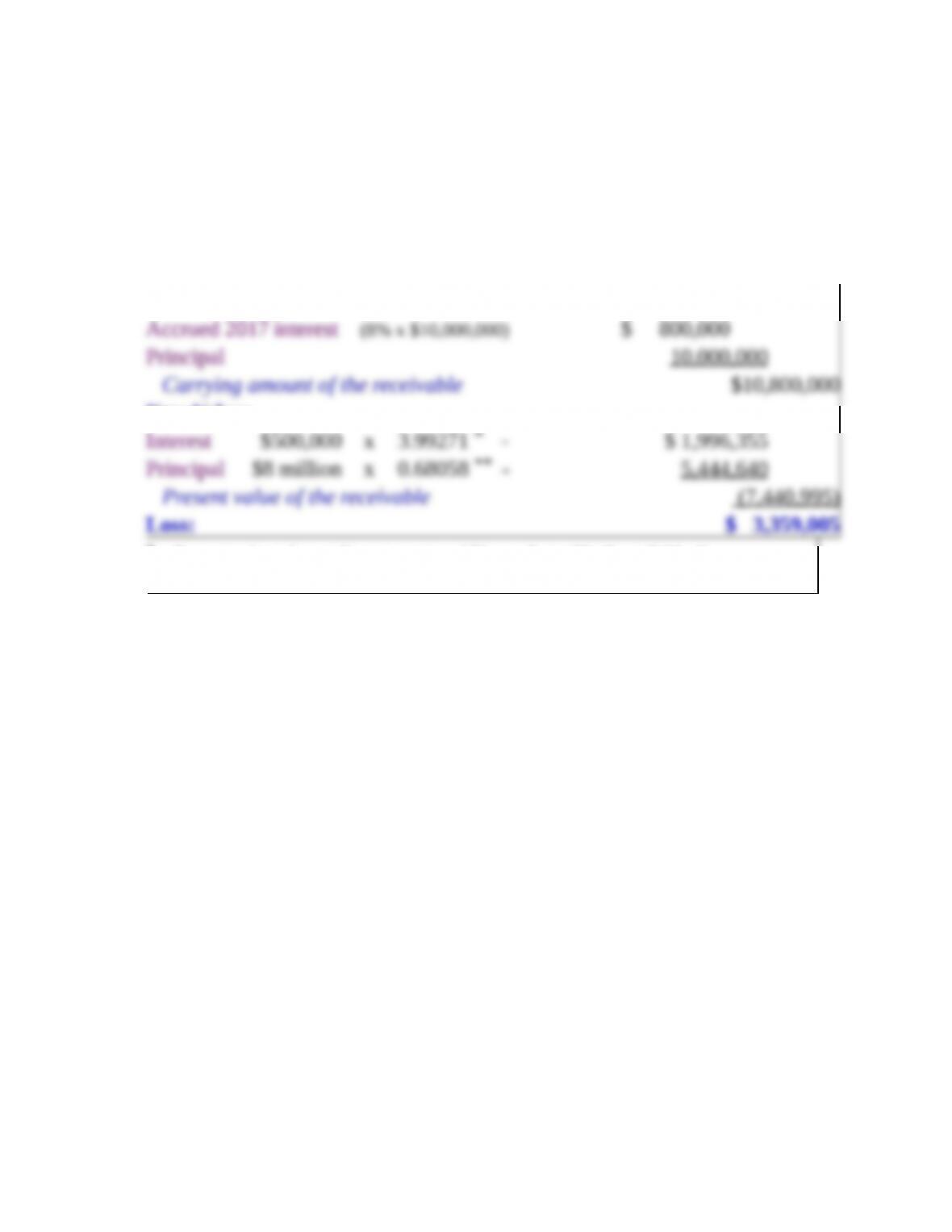
National Bank would recognize $3,359,005 of impairment, because it is not
probable that a loss will occur.
ANALYSIS
Previous Value:
New Value:
*Present value of an ordinary annuity of $1: n = 5, i = 8% (from Table 4)
** Present value of $1: n = 5, i = 8% (from Table 2)
Problem 7–16
Requirement 1
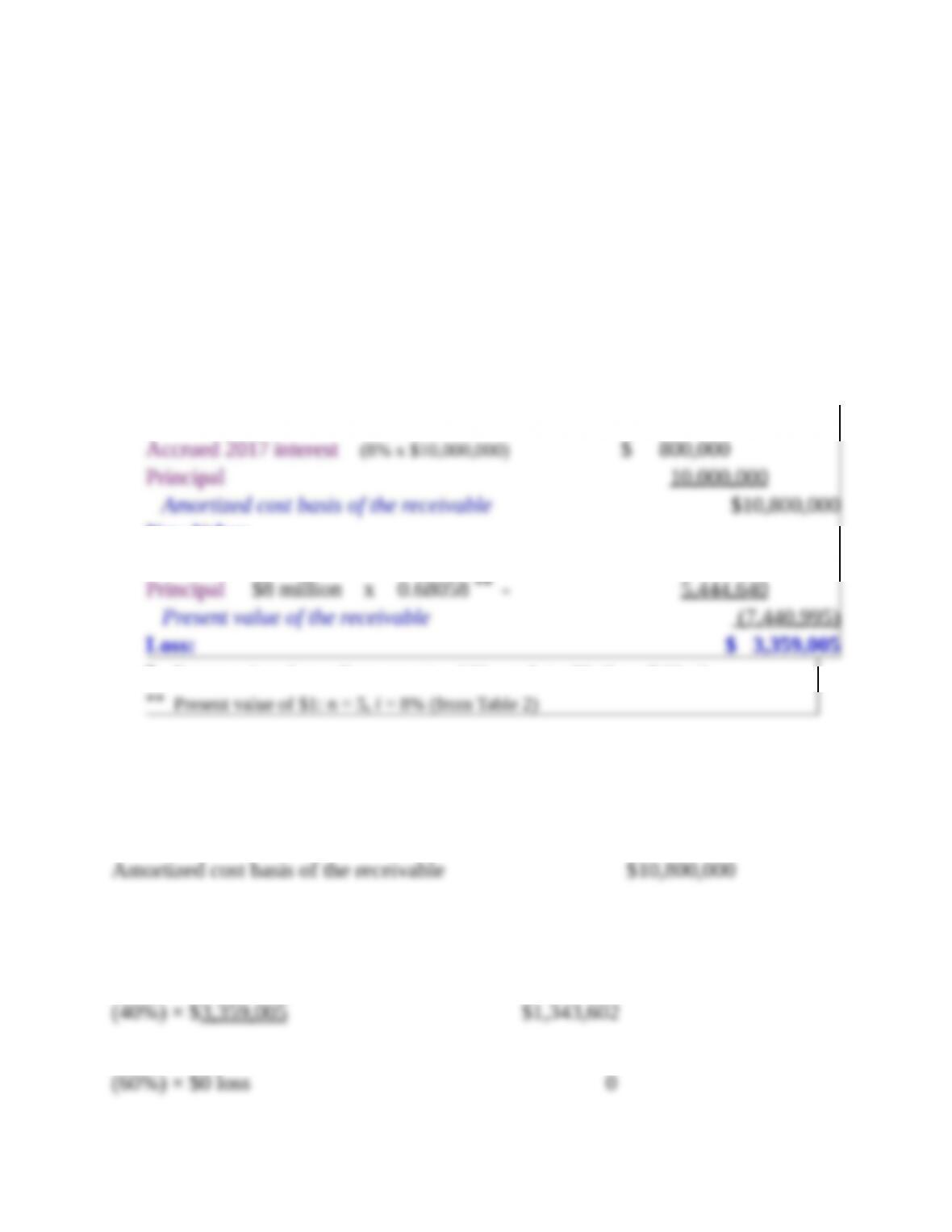
National Bank would recognize $0 impairment, because it is not probable that
a loss will occur.
Requirement 2
ANALYSIS ASSUMING DEFAULT
Previous Value:
New Value:
Interest $500,000 x 3.99271 * =$ 1,996,355
*Present value of an ordinary annuity of $1: n = 5, i = 8% (from Table 4)
Under the CECL model, National Bank would recognize a credit loss, calculated as
follows:
Expected credit loss
Problem 7–17
Requirement 1
($ in millions)
Requirement 2
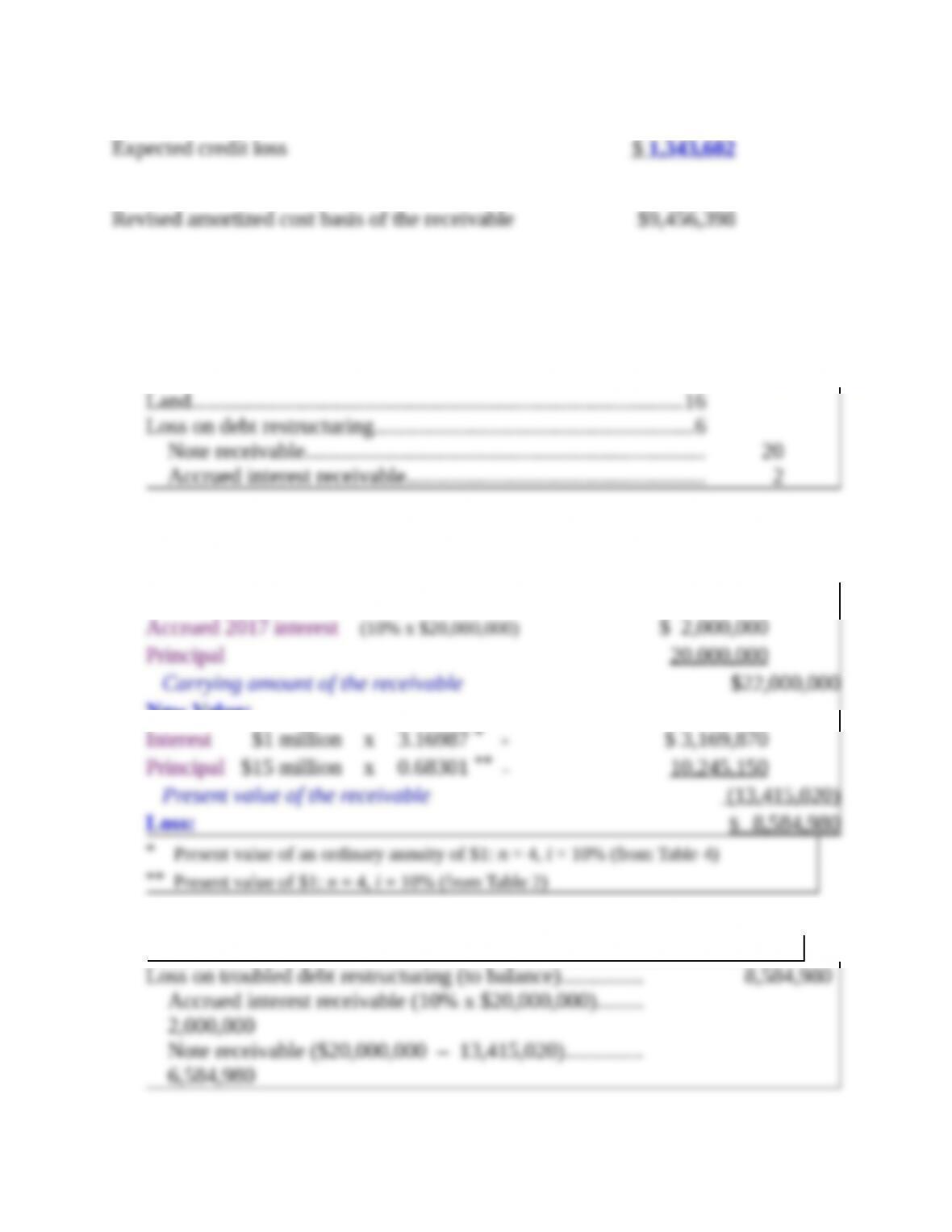
ANALYSIS
Previous Value:
New Value:
JOURNAL ENTRIES
January 1, 2018
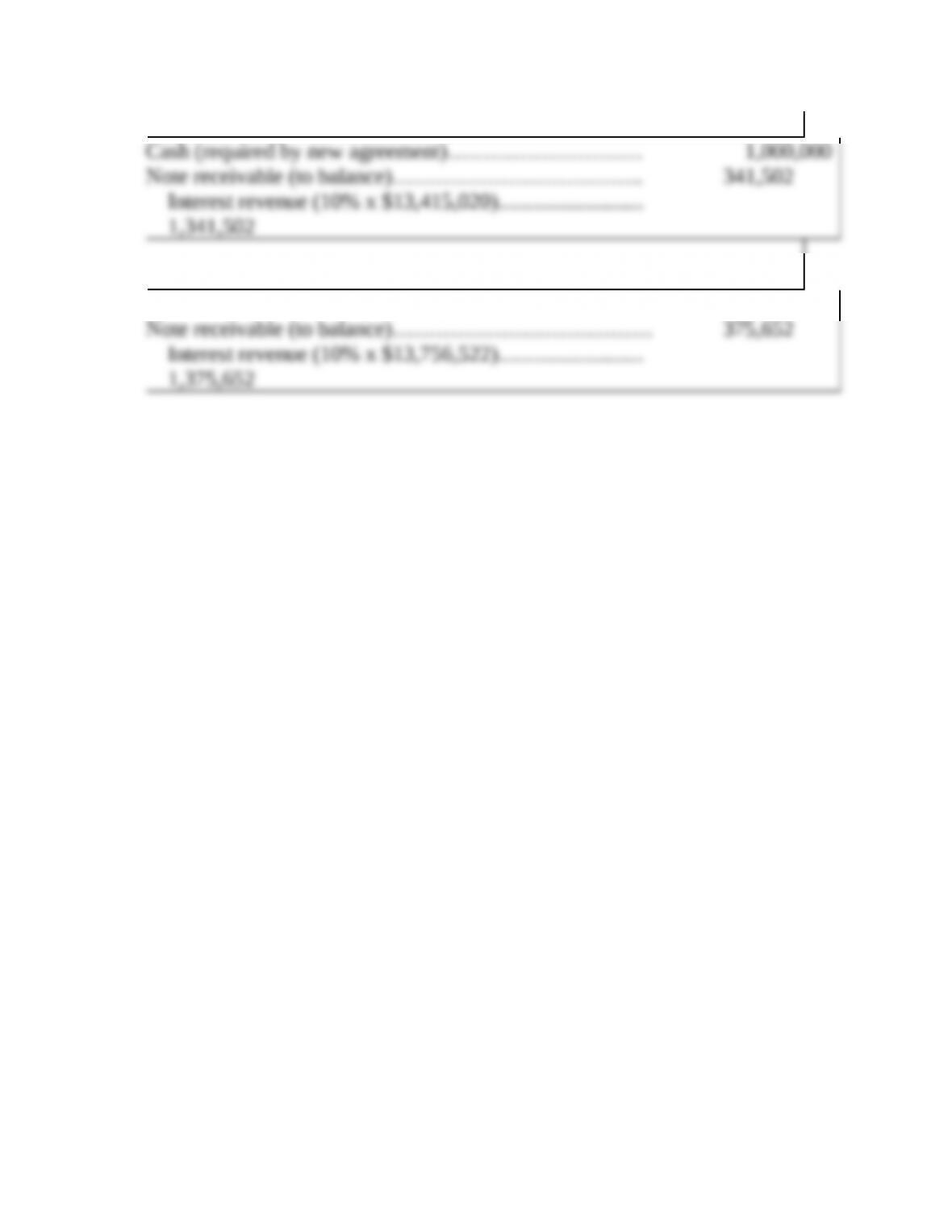
December 31, 2018
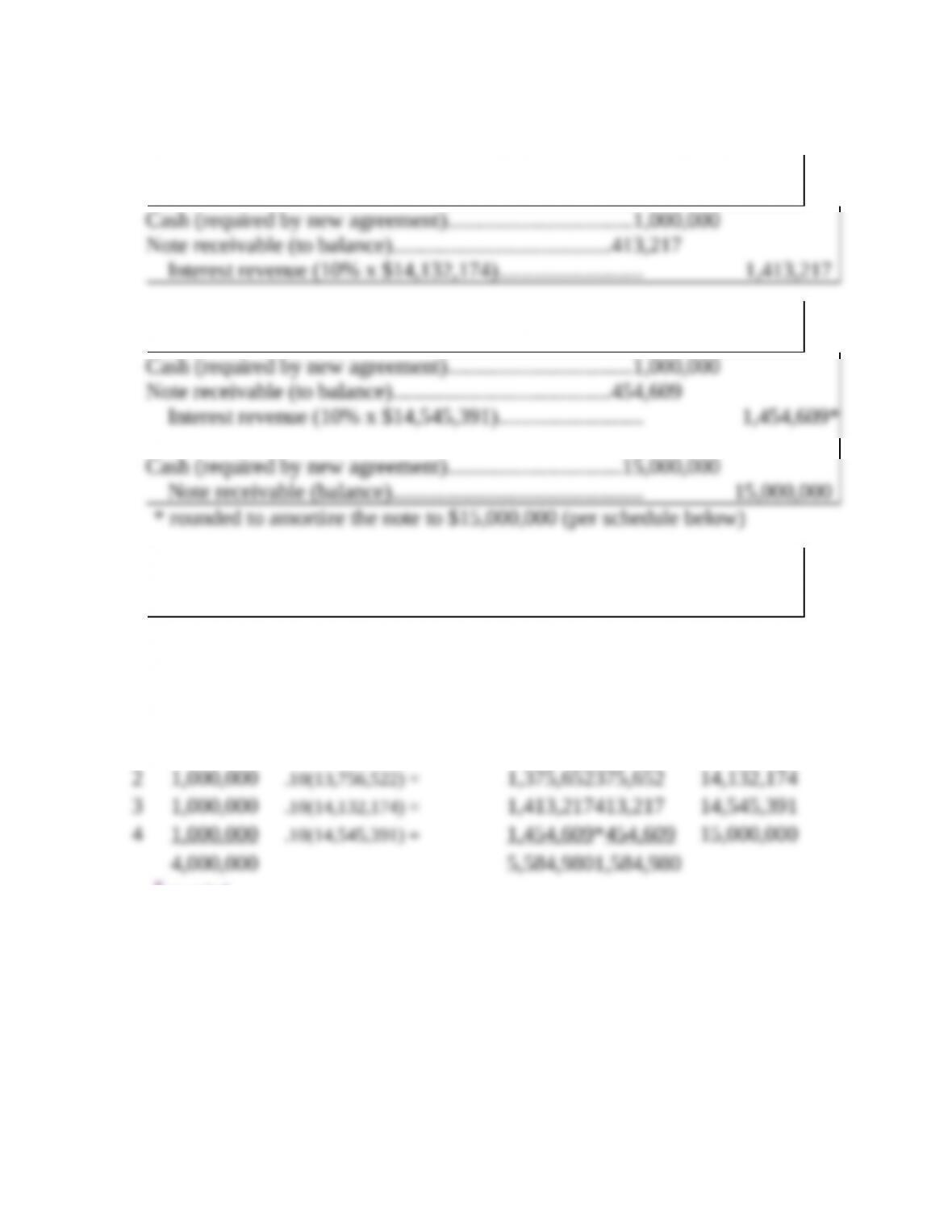
December 31, 2019
Cash (required by new agreement)……………………… 1,000,000
Problem 7–17 (continued)
December 31, 2020
December 31, 2021
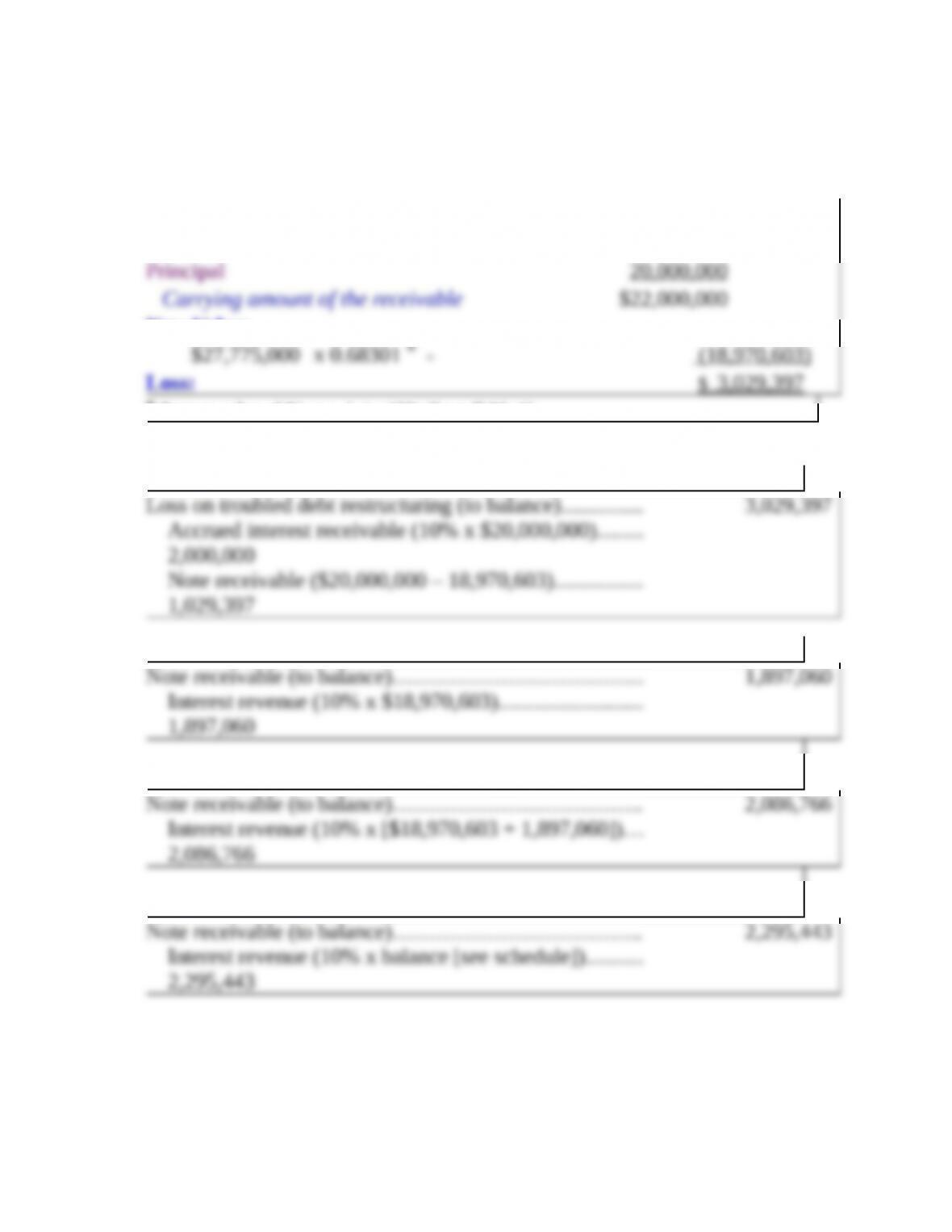
Amortization Schedule – Not required
Cash Effective Increase in Outstanding
Interest Interest Balance Balance
by agreement 10% x Outstanding Balance Discount Reduction
13,415,020
1 1,000,000 .10(13,415,020) = 1,341,502341,502 13,756,522
* rounded
Problem 7–17 (continued)
Requirement 3
ANALYSIS
Previous Value:
Accrued interest (10% x $20,000,000) $ 2,000,000
New Value:
*Present value of $1: n = 4, i = 10% (from Table 2)
JOURNAL ENTRIES
January 1, 2018 …..
December 31, 2018 …..
December 31, 2019 …..
December 31, 2020 …..

December 31, 2021 …..
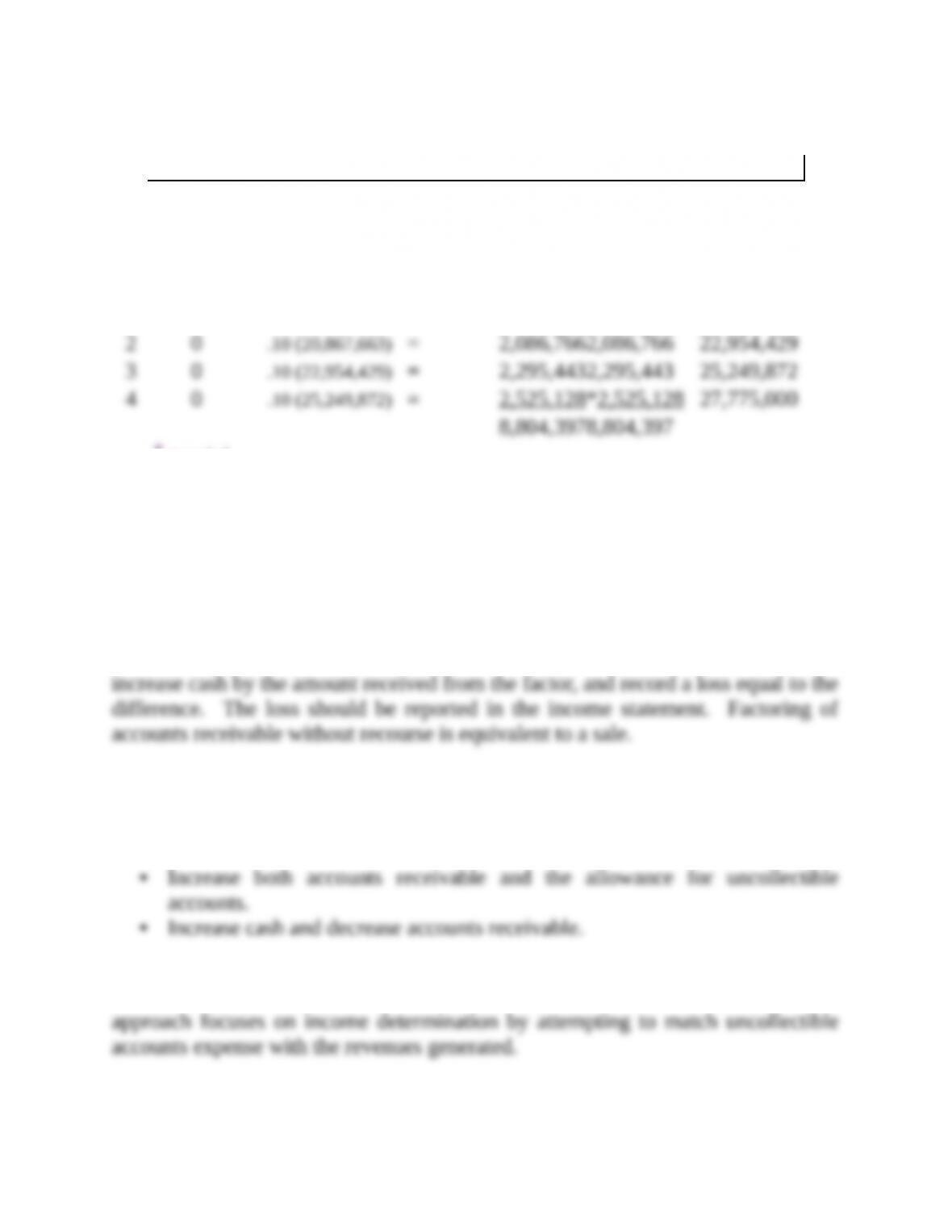
Interest revenue (10% x balance [see schedule])….……
Note receivable (balance)……………………………………….
* rounded to amortize the note to $27,775,000 (per schedule below)
Problem 7–17 (concluded)
Amortization Schedule – Not required
Cash Effective Increase in Outstanding
Interest Interest Balance Balance
by agreement 10% x Outstanding Balance Discount Reduction
18,970,603
1 0 .10 (18,970,603) = 1,897,0601,897,060 20,867,663
* rounded
Judgment Case 7–1
Requirement 1
To account for the accounts receivable factored on April 1, 2018, Magrath
should decrease accounts receivable by the amount of accounts receivable factored,
Requirement 2
Magrath should account for the collection of the accounts previously written
off as uncollectible as follows:
Requirement 3
One approach estimates uncollectible accounts based on credit sales. This
CASES

The other approach estimates uncollectible accounts based on the balance in
Communication Case 7–2
Suggested Grading Concepts and Grading Scheme:
Content (70%)
_______ 40 Explains the difference between the allowance method and the
direct write-off method.
______ Direct write-off is more objective.
______ Direct write-off has potential to violate the matching
principle.
______
Writing (30%)
_______ 6 Terminology and tone appropriate to the audience of a
company president.