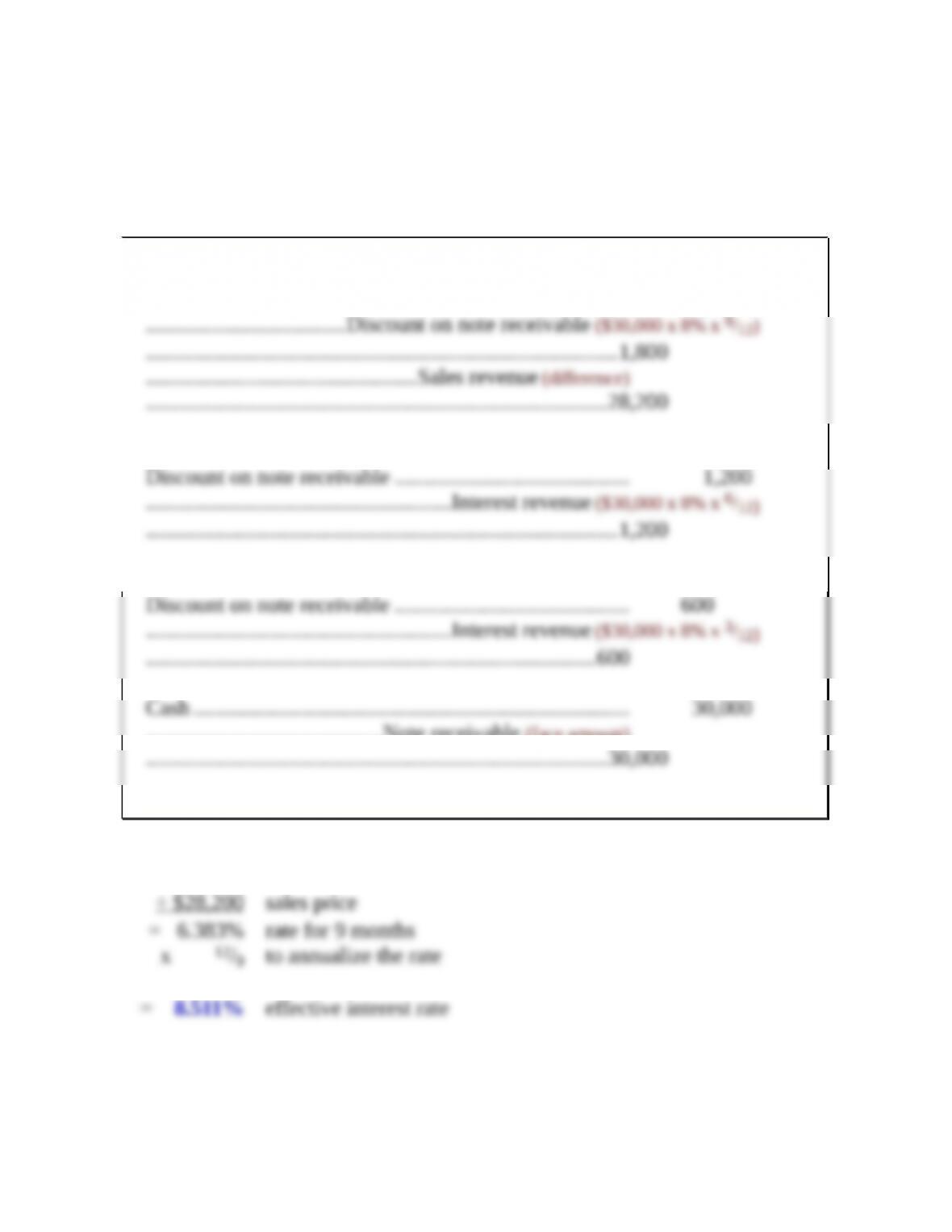
Exercise 7–15
Requirement 1
June 30, 2018
Note receivable (face amount)……………………………………. 30,000
December 31, 2018
March 31, 2019
…………………………………….Note receivable (face amount)
Requirement 2
$ 1,800 interest for 9 months
_______
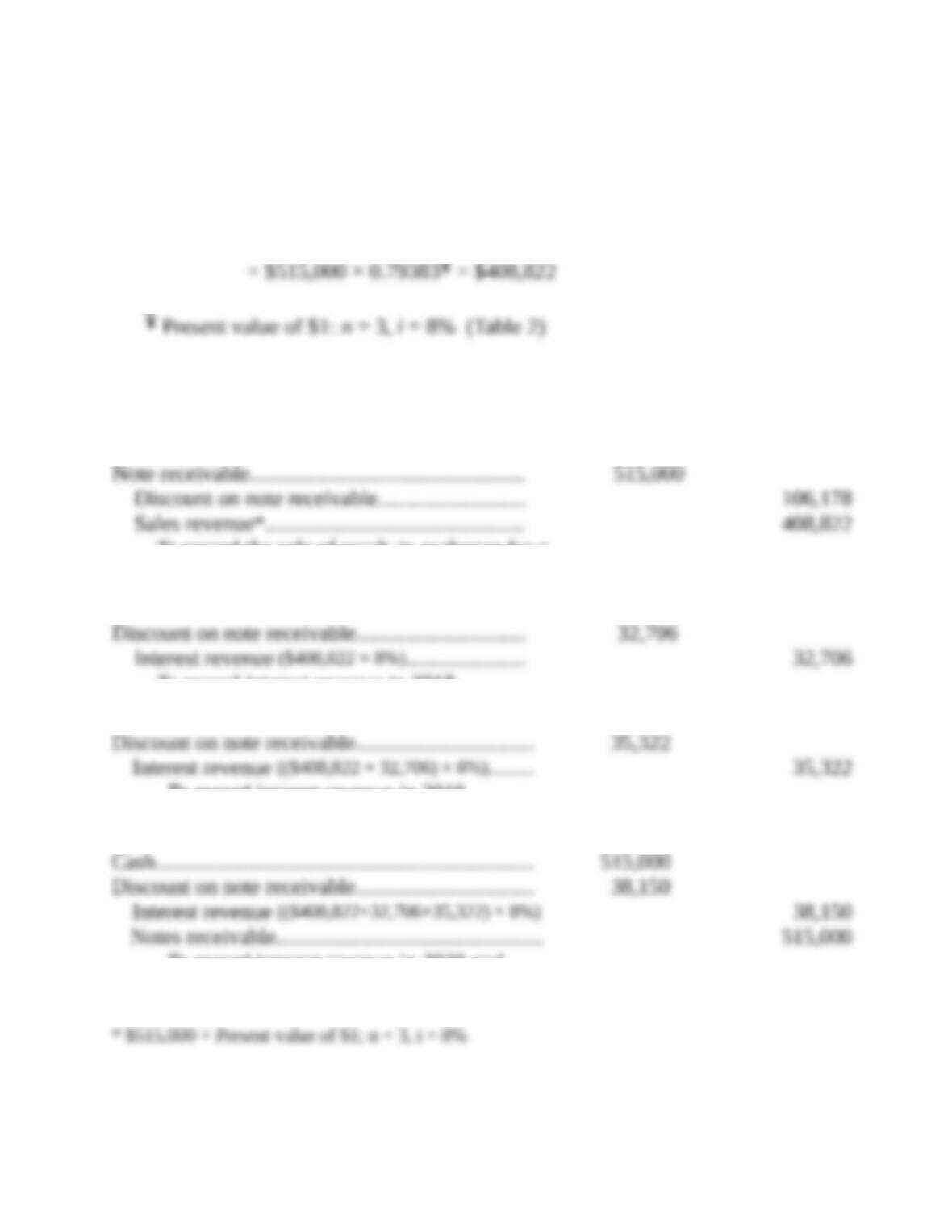
Exercise 7–16
Requirement 1
Sales revenue = present value of the note receivable
Requirement 2
January 1, 2018
To record the sale of goods in exchange for a
three-year note receivable.
December 31, 2018
To record interest revenue in 2018.
December 31, 2019
To record interest revenue in 2019.
December 31, 2020
To record interest revenue in 2020 and
collection of the note.
Note: the debit to Discount on note receivable of $38,150 is necessary to reduce
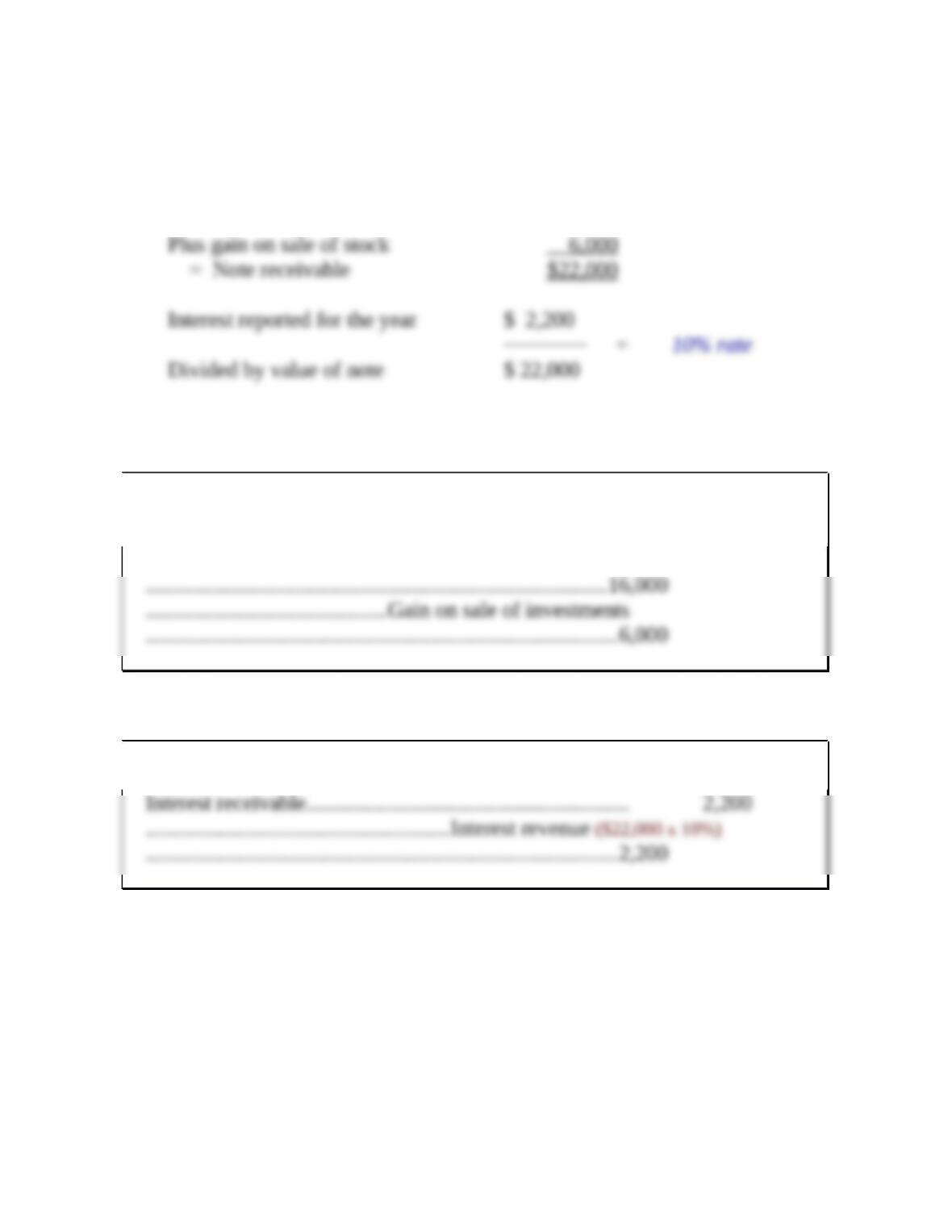
Exercise 7–17
Requirement 1
Book (carrying) value of stock $16,000
Requirement 2
To record sale of stock in exchange for note receivable:
January 1, 2018
Note receivable……………………………………………………… 22,000
……………………………………………………………Investments
To accrue interest on note receivable for twelve months:
December 31, 2018
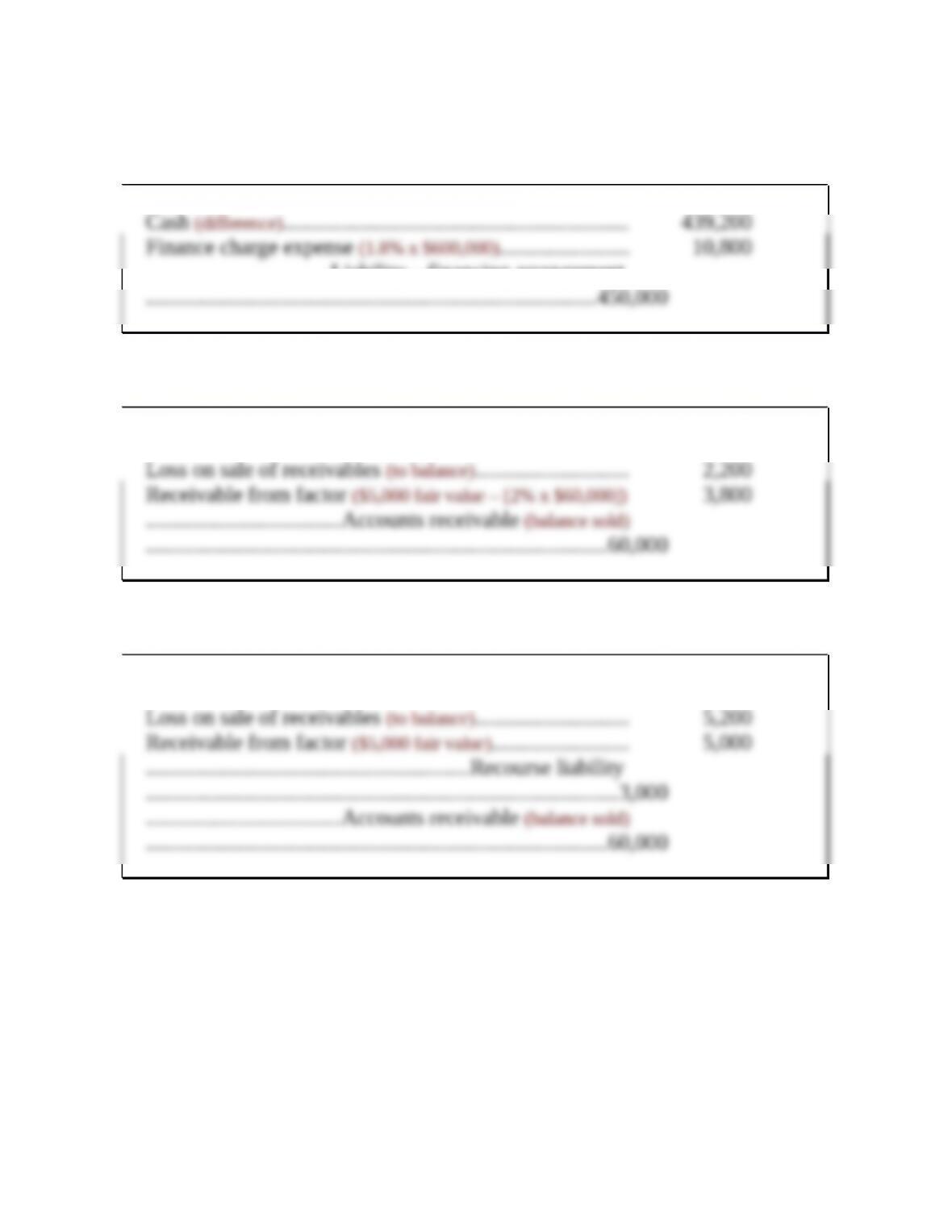
Exercise 7–18
…………………………….Liability—financing arrangement
Exercise 7–19
Cash (90% x $60,000)……………………………………………….. 54,000
Exercise 7–20
Cash ([90% – 2%] x $60,000)………………………………………. 52,800
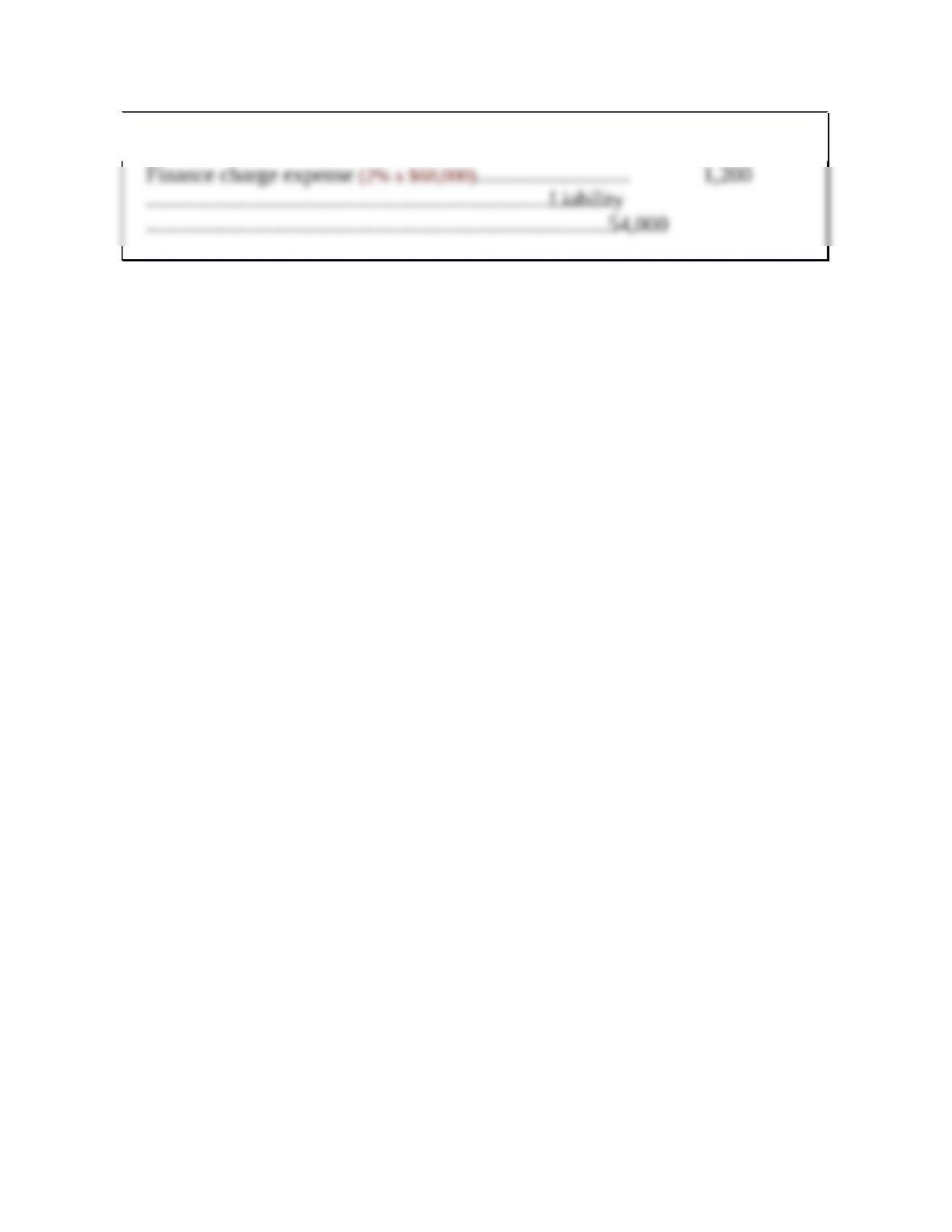
Exercise 7–21
Mountain High retains significant risks and rewards and therefore must treat the
transfer as a secured borrowing. The accounts receivable stay on the balance sheet
of Mountain High, and they must record a liability.
Cash ([90% – 2%] x $60,000)………………………………………. 52,800
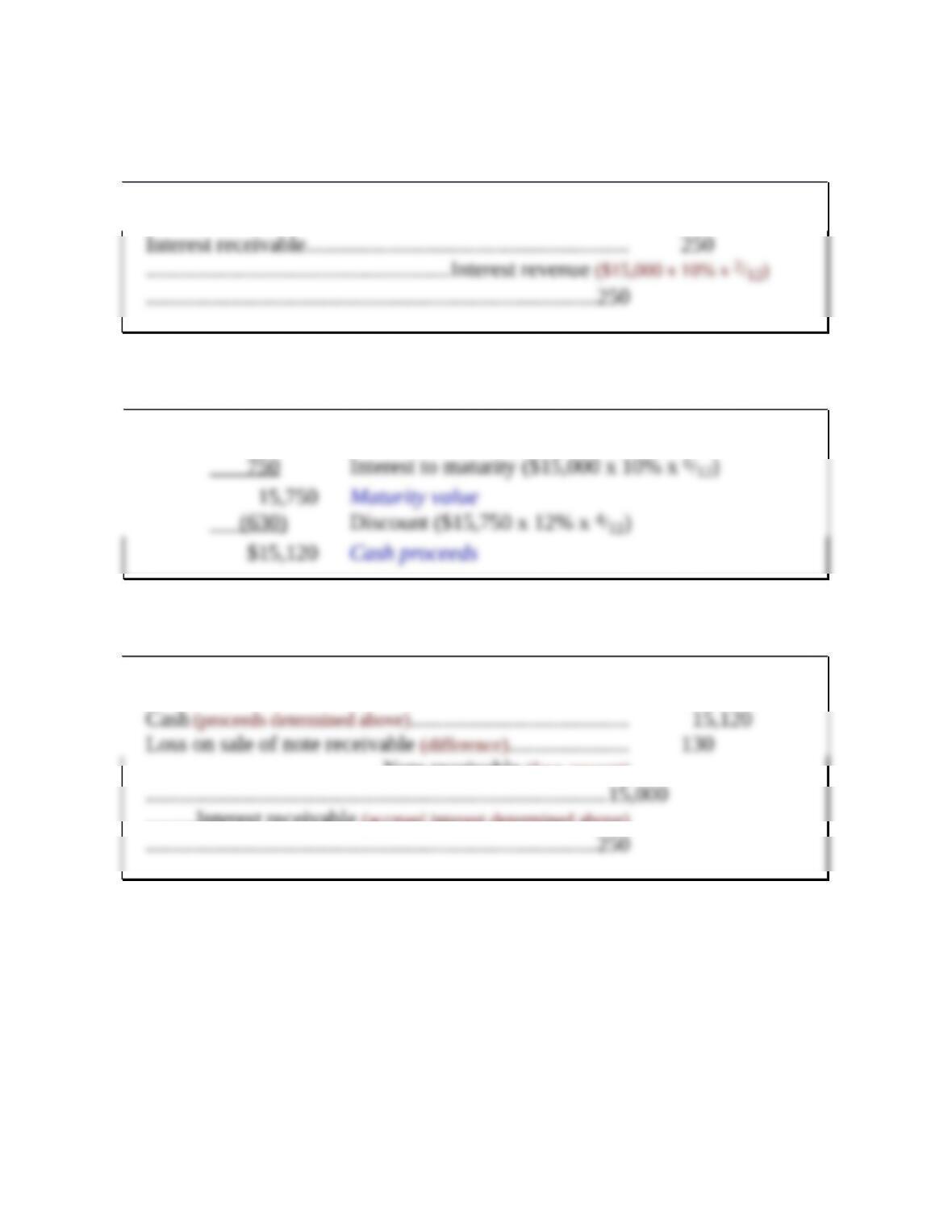
Exercise 7–22
Step 1: Accrue interest earned.
February 28, 2018
Step 2: Add interest to maturity to calculate maturity value.
Step 3: Deduct discount to calculate cash proceeds.
$15,000 Face amount
15,750 Maturity value
Step 4: Record a loss for the difference between the cash proceeds and the
note’s book value.
February 28, 2018
…………………………………….Note receivable (face amount)
………Interest receivable (accrued interest determined above)
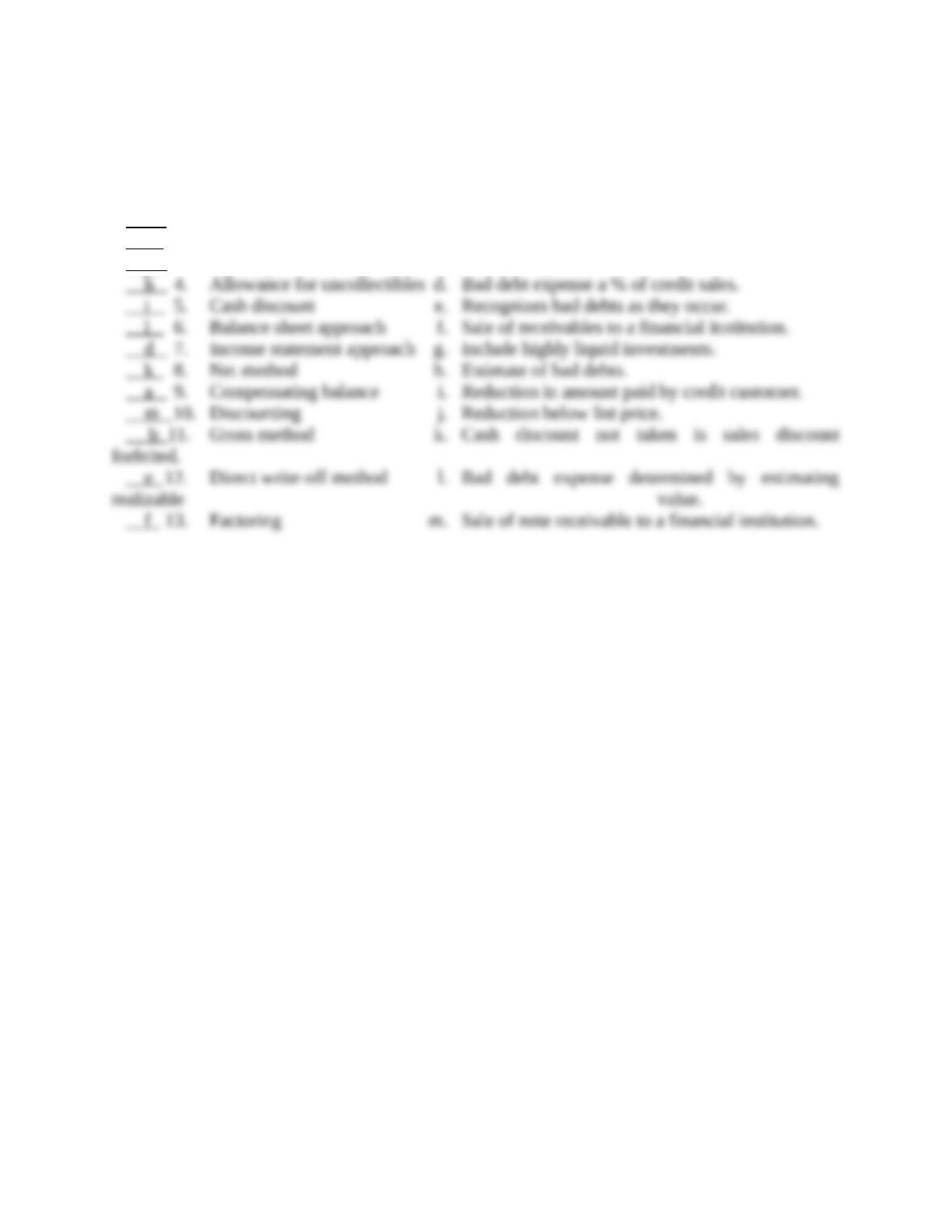
Exercise 7–23
List A List B
c 1. Internal control a. Restriction on cash.
j 2. Trade discount b. Cash discount not taken is sales revenue.
g 3. Cash equivalents c. Includes separation of duties.
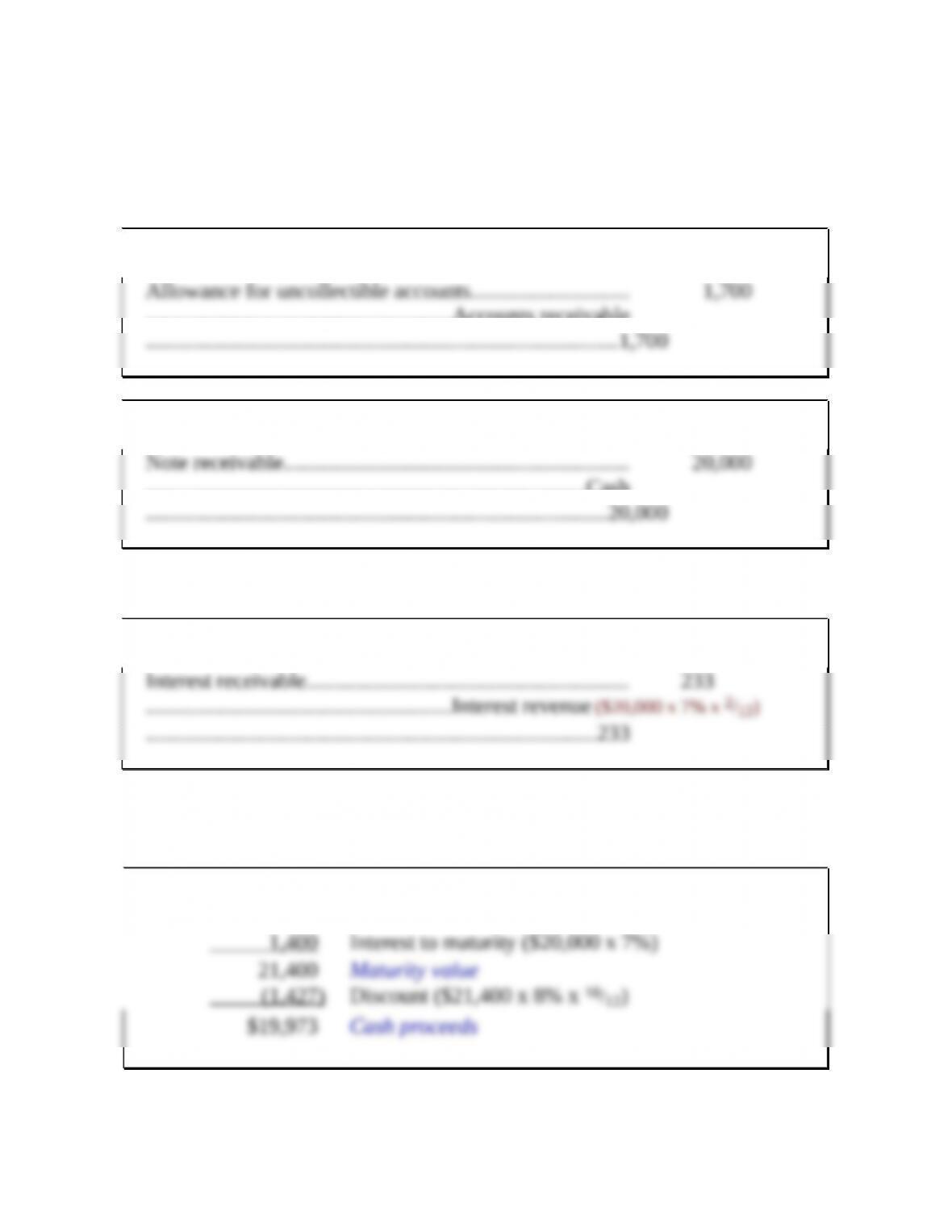
Exercise 7–24
Requirement 1
March 17, 2018
………………………………………………..Accounts receivable
March 30, 2018
……………………………………………………………………..Cash
Step 1: Accrue interest earned for two months on note receivable.
May 30, 2018
Step 2: Add interest to maturity to calculate maturity value.
Step 3: Deduct discount to calculate cash proceeds.
$20,000 Face amount
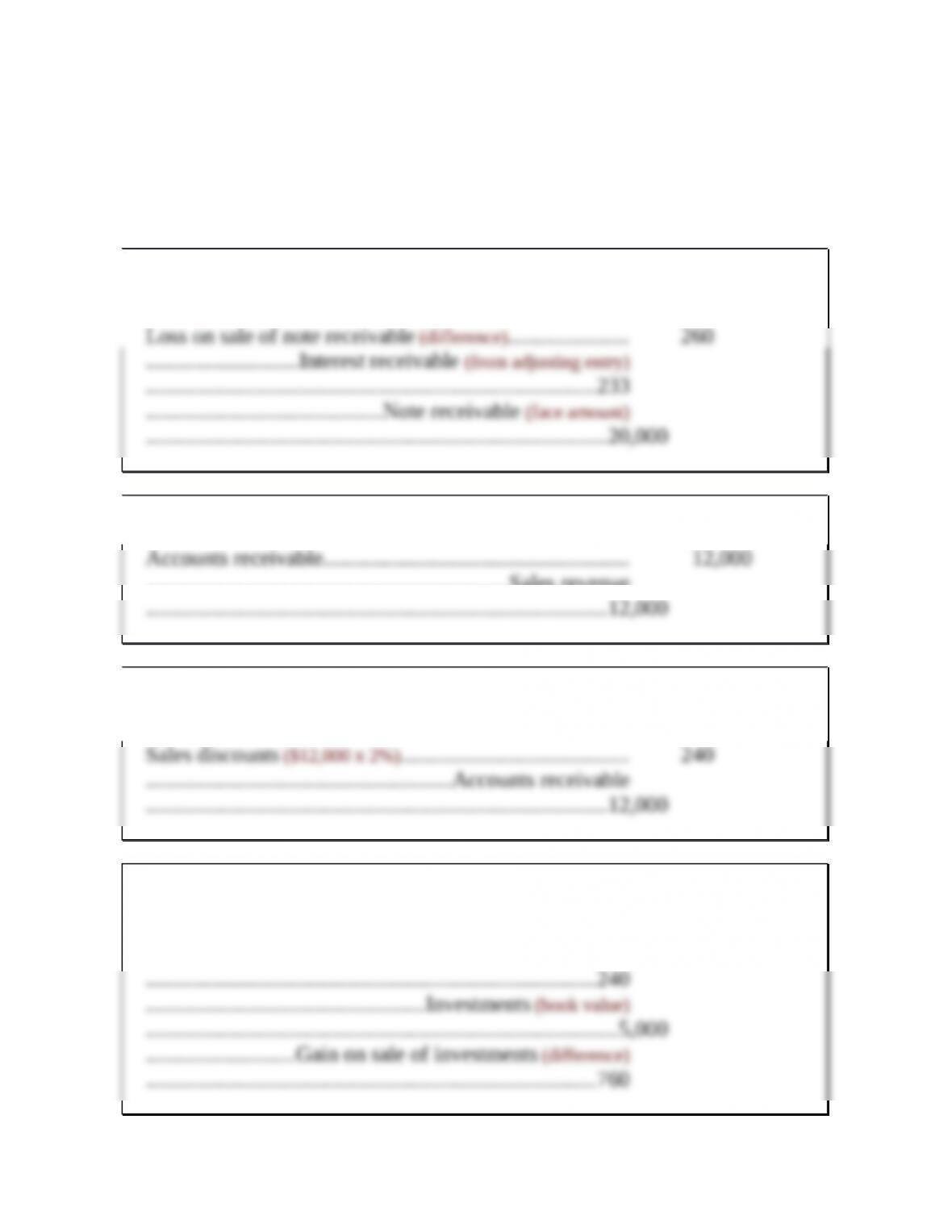
Exercise 7–24 (continued)
Step 4: Record a loss for the difference between the cash proceeds and the note’s book
value.
May 30, 2018
Cash (proceeds determined above)…………………………………. 19,973
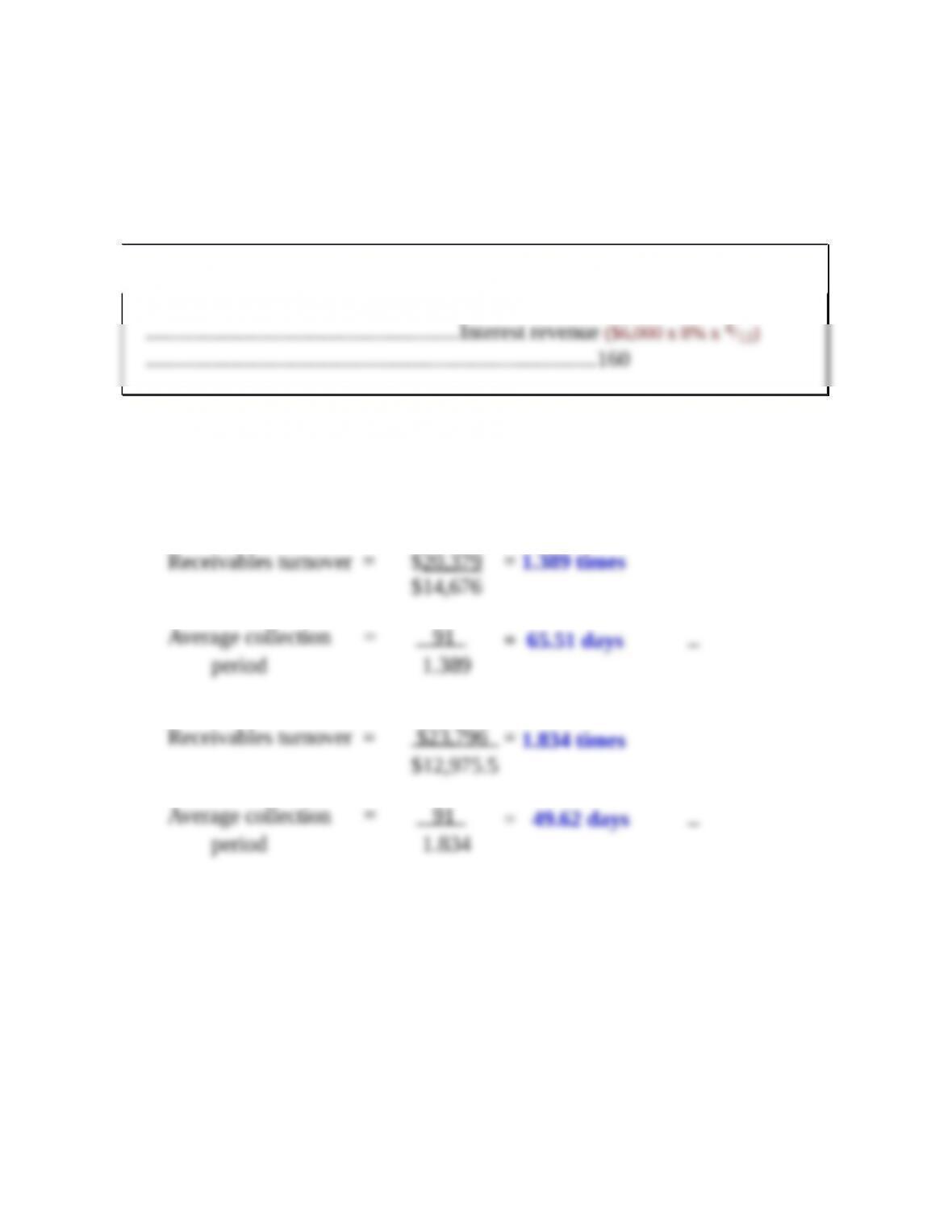
June 30, 2018
…………………………………………………………Sales revenue
July 8, 2018
Cash ($12,000 x 98%)……………………………………………….. 11,760
August 31, 2018
Notes receivable (face amount)…………………………………… 6,000
………………………………..Discount on note receivable ($6,000 x 8% x 6/12)

December 31, 2018
Bad debt expense ($700,000 x 2%)……………………………… 14,000
………………………..Allowance for uncollectible accounts
Exercise 7–24 (concluded)
Requirement 2
To accrue interest earned on note receivable:
December 31, 2018
Discount on note receivable…………………………………….. 160
Exercise 7–25
Q1 (ended 9/30/2015):
Q2 (ended 12/31/2015):
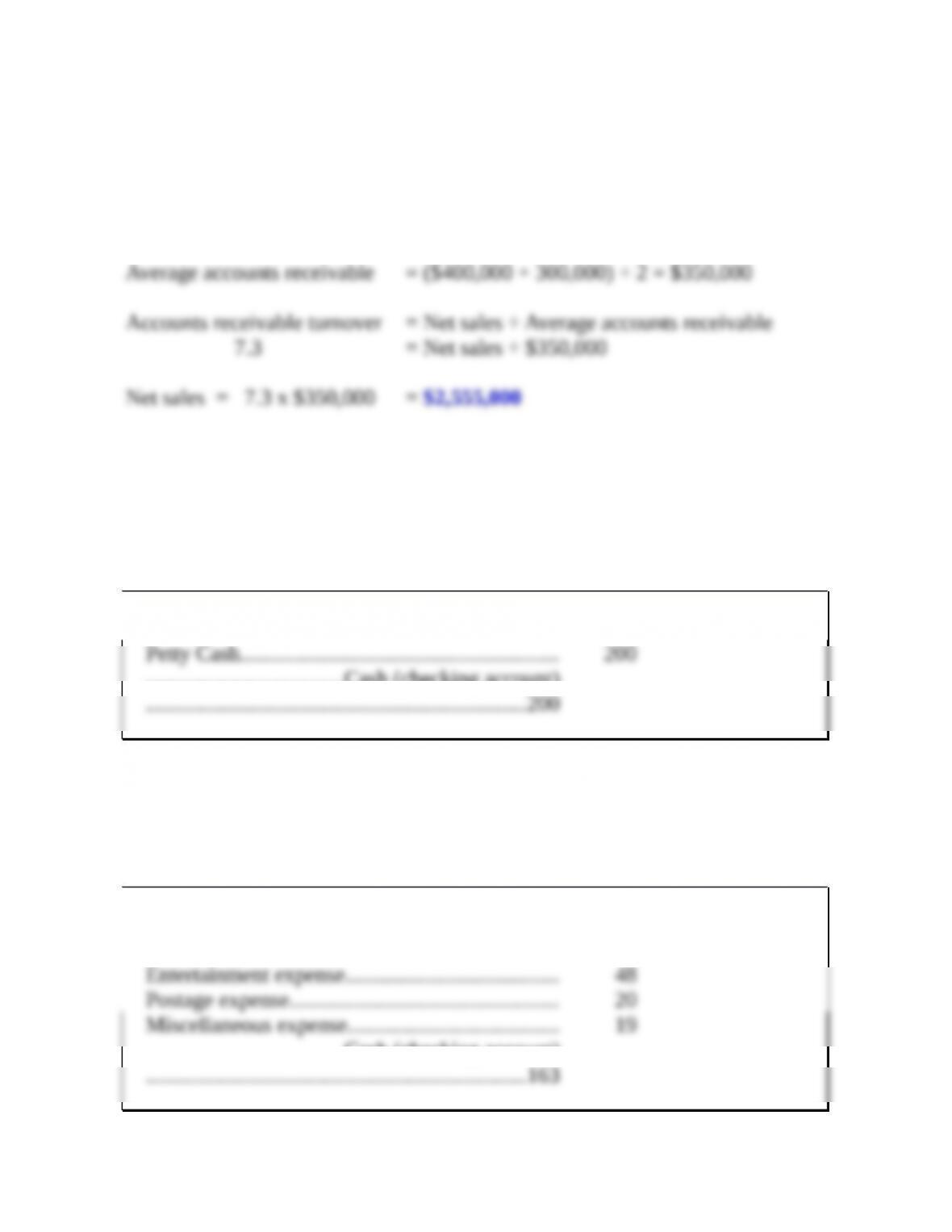
Exercise 7–26
Average collection period = 365 ÷ Accounts receivable turnover = 50 days
Accounts receivable turnover = 365 ÷ 50 = 7.3
Exercise 7–27
To establish the petty cash fund:
October 2, 2018
………………………………Cash (checking account)
To replenish the petty cash fund:
October 31, 2018
Office supplies expense………………………………. 76
………………………………Cash (checking account)
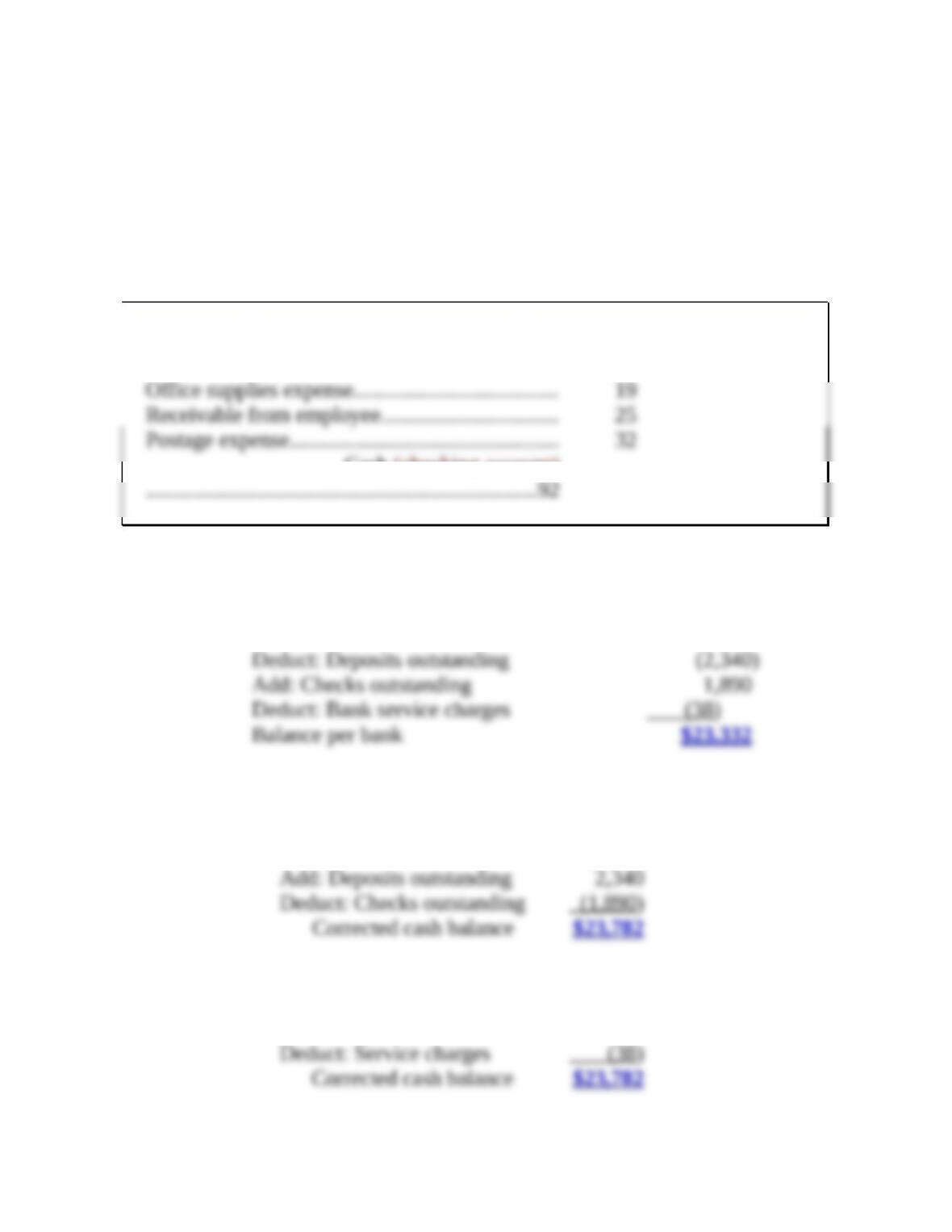
Exercise 7–28
September 30, 2018 To replenish the petty cash fund
Delivery expense………………………………………… 16
………………………………Cash (checking account)
Exercise 7–29
Compute balance per bank statement:
Balance per books $23,820
Step 1: Bank Balance to Corrected Balance
Balance per bank statement $23,332
Step 2: Book Balance to Corrected Balance
Balance per books $23,820