Problem 5-1 (concluded)
Requirement 2
a. Number of performance obligations in the contract: 1.
The access to the gym for 50 visits is one performance obligation. The option to
is not a performance obligation in the contract.
(Note: It could be argued that the coupon book actually includes 50
would be allocated to the 50 visits with revenue recognized for each visit.)
b. Since the option to visit on additional days is not a performance obligation,
book.
c. Cash 500
Problem 5–2
Requirement 1
Number of performance obligations in the contract: 2.
Delivery of a Protab computer is one performance obligation.
highly interrelated with the other performance obligation of delivering a Protab
The 6-month quality assurance warranty is not a performance obligation. It is
The coupon providing an option to purchase an extended warranty does not
Protab package.
Problem 5-2 (continued)
Requirement 2
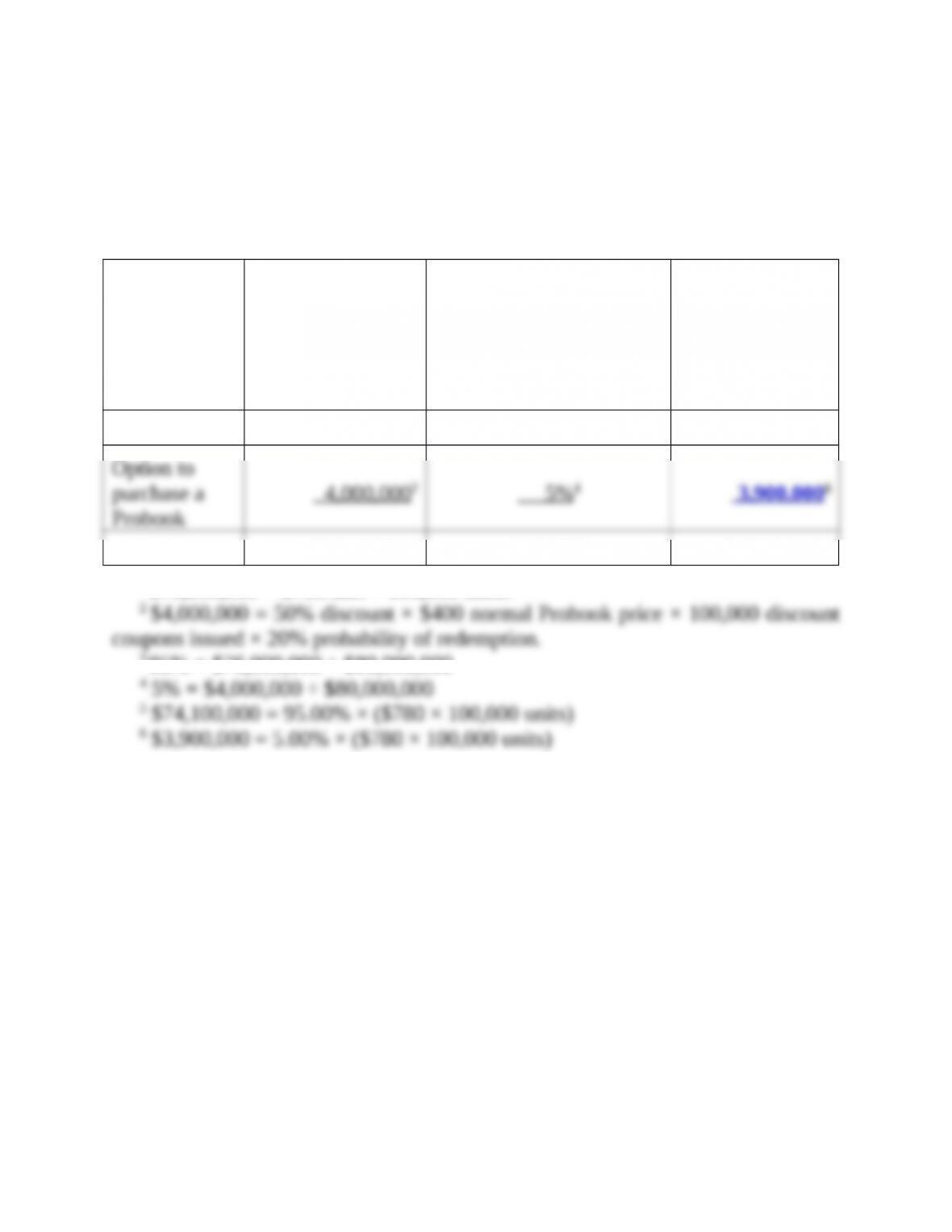
Allocation of purchase price to performance obligations:
Performance
obligation:
Stand-alone
selling price of
the performance
obligation:
Percentage of the sum
of the stand-alone
selling prices of the
performance
obligations:
Allocation of
total
transaction
price to each
performance
obligation:
Protab tablet $76,000,000195%3$74,100,0005
Probook
Total $80,000,000 100.00% $78,000,000
1 $76,000,000 = $760/unit × 100,000 units.
3 95% = $76,000,000 ÷ $80,000,000
Problem 5-2 (concluded)
Requirement 3
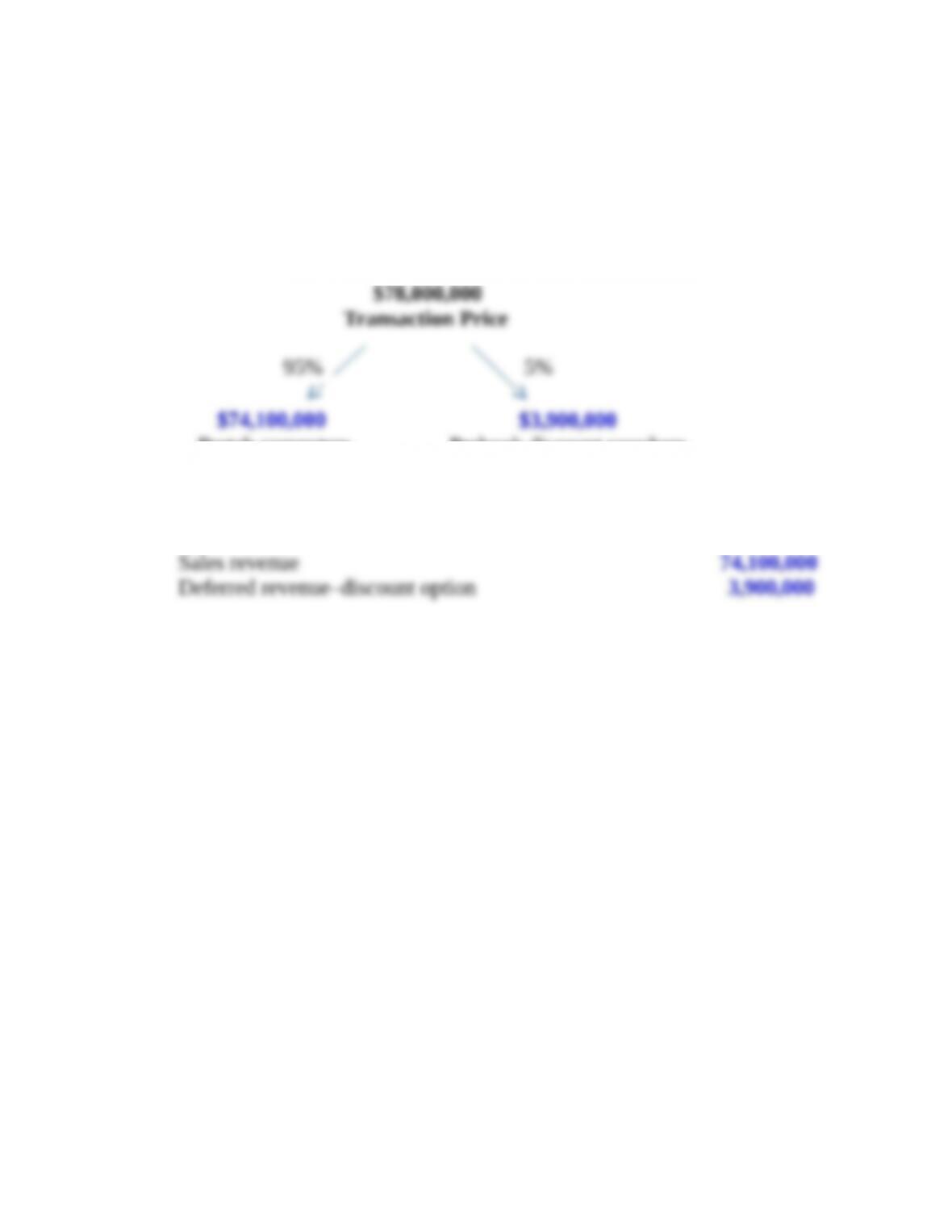
Creative then allocates the total selling price based on stand-alone selling
prices, as follows:
The journal entry to record the sale is:
Cash ($780 × 100,000 units) 78,000,000
Sales revenue 74,100,000
Deferred revenue–discount option 3,900,000
$78,000,000
Transaction Price
$74,100,000
Protab computers
$3,900,000
Probook discount vouchers
95% 5%
Problem 5–3
Requirement 1
Number of performance obligations in the contract: 3.
Delivery of a Protab computer is one performance obligation.
The option to purchase a Probook at a 50% discount is a second performance
discount coupon qualifies as a performance obligation.
The 6-month quality assurance warranty is not a performance obligation. It is
customer, as the extended warranty costs less when purchased with the coupon that
in the contract, and the seller’s role is not to integrate and customize them to create
one product or service. So, the discount coupon qualifies as a performance
obligation.
Problem 5-3 (continued)
Requirement 2
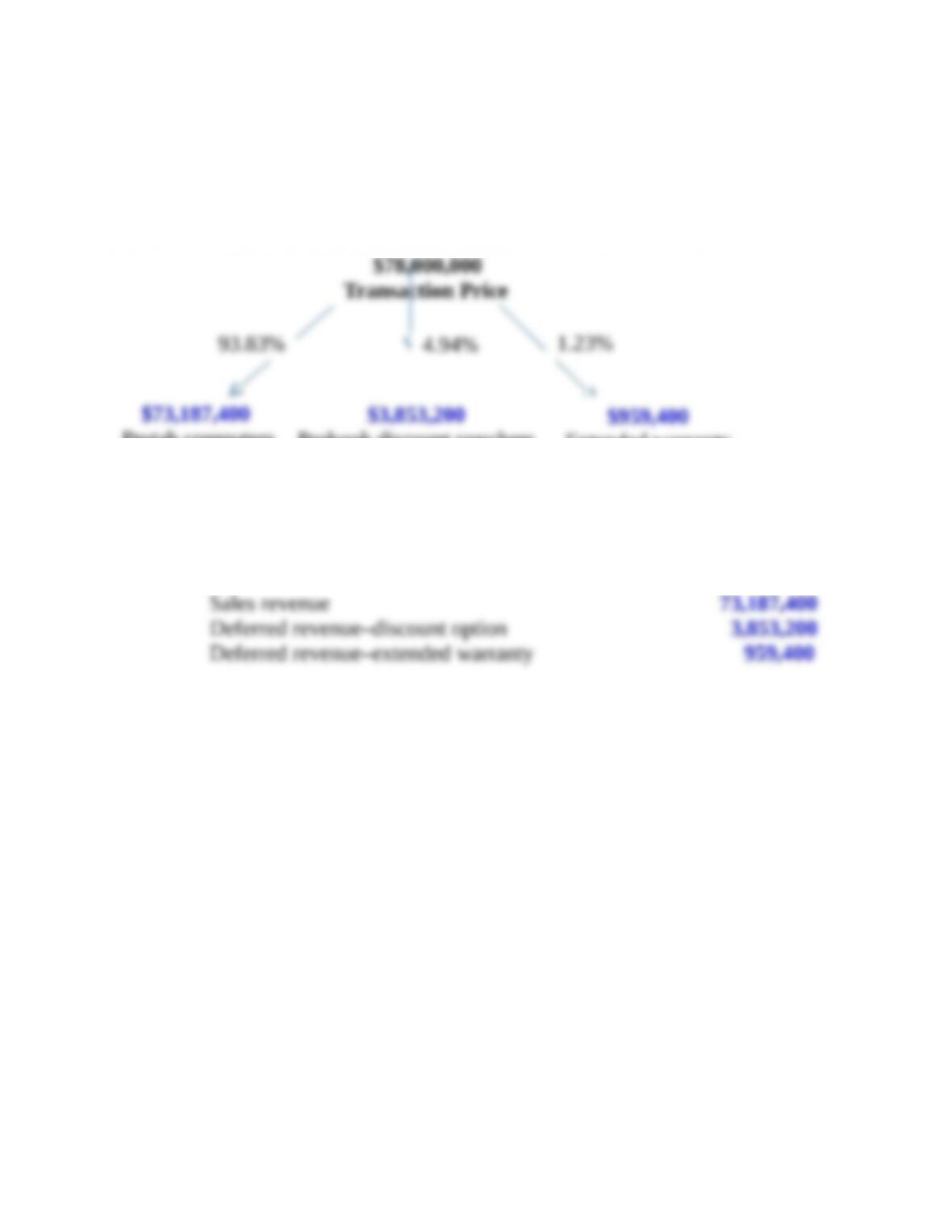
Allocation of purchase price to performance obligations:
Performance
obligation:
Stand-alone
selling price of
the performance
obligation:
Percentage of the
sum of the
stand-alone selling
prices of the
performance
obligations (to two
decimal places):
Allocation of
total transaction
price to each
performance
obligation:
Option to purchase
extended warranty 1,000,000 3 1.23%6 959,4009
1 $76,000,000 = $760/unit × 100,000 units.
warranty sold at time of software purchase) × 100,000 units sold × 40% probability
6 1.23% = $1,000,000 ÷ $81,000,000
9 $959,400 = 1.23% × ($780 × 100,000 units)
Problem 5-3 (concluded)
Requirement 3
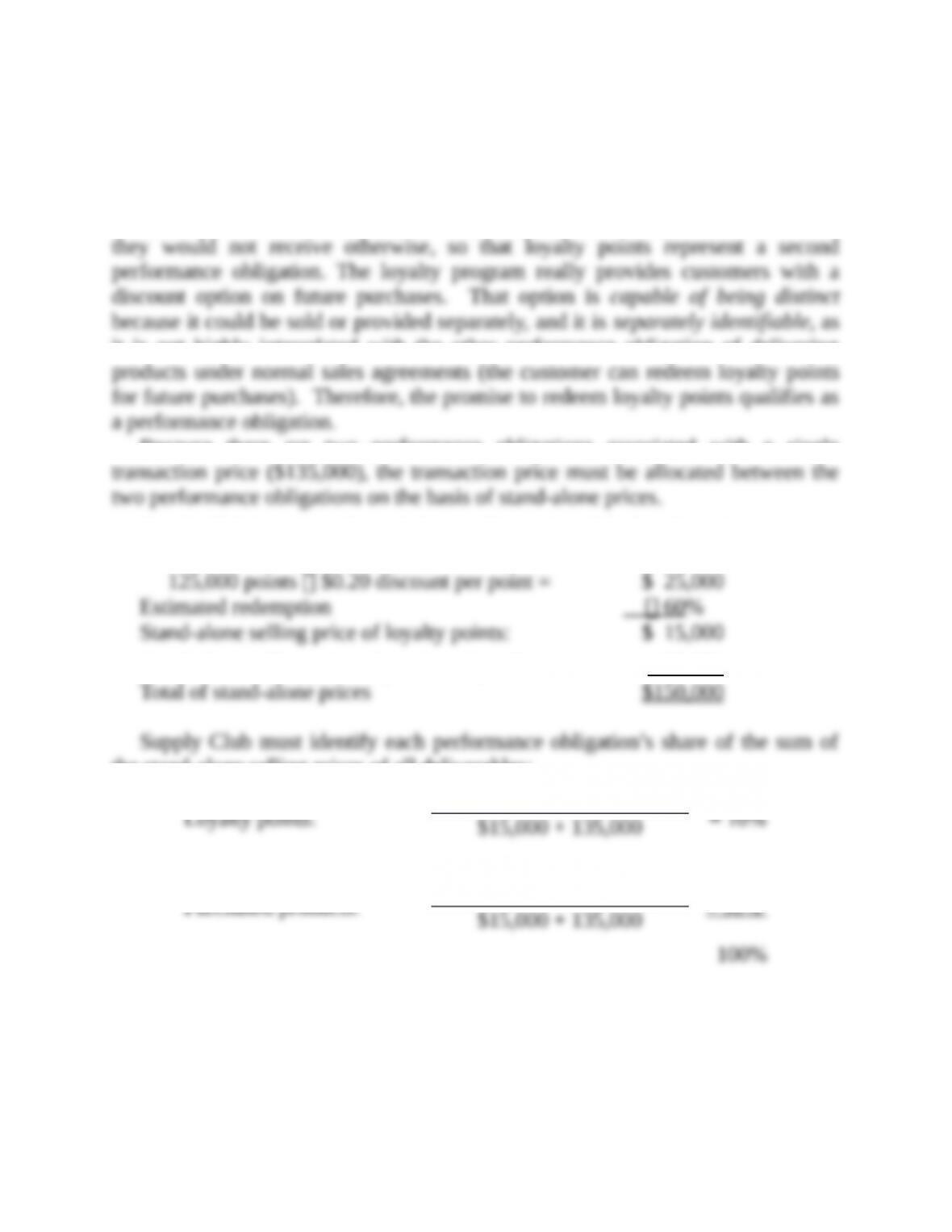
Creative then allocates the total selling price based on stand-alone selling
prices, as follows:
The journal entry to record the sale is:
Cash ($800 × 100,000 units) 78,000,000
Sales revenue 73,187,400
Deferred revenue–discount option 3,853,200
Deferred revenue–extended warranty 959,400
$78,000,000
Transaction Price
$73,187,400
Protab computers
$3,853,200
Probook discount vouchers
93.83% 1.23%
$959,400
Extended warranty
4.94%
Problem 5-4
Requirement 1
The delivery of Supply Club’s normal products is one performance obligation.
The promise to redeem loyalty points represent a material right to customer that
it is not highly interrelated with the other performance obligation of delivering
Because there are two performance obligations associated with a single
Supply Club’s estimated stand-alone selling price of the loyalty points is:
Value of the loyalty points:
Stand-alone selling price of purchased products: 135 ,000
the stand-alone selling prices of all deliverables:
Problem 5-4 (concluded)
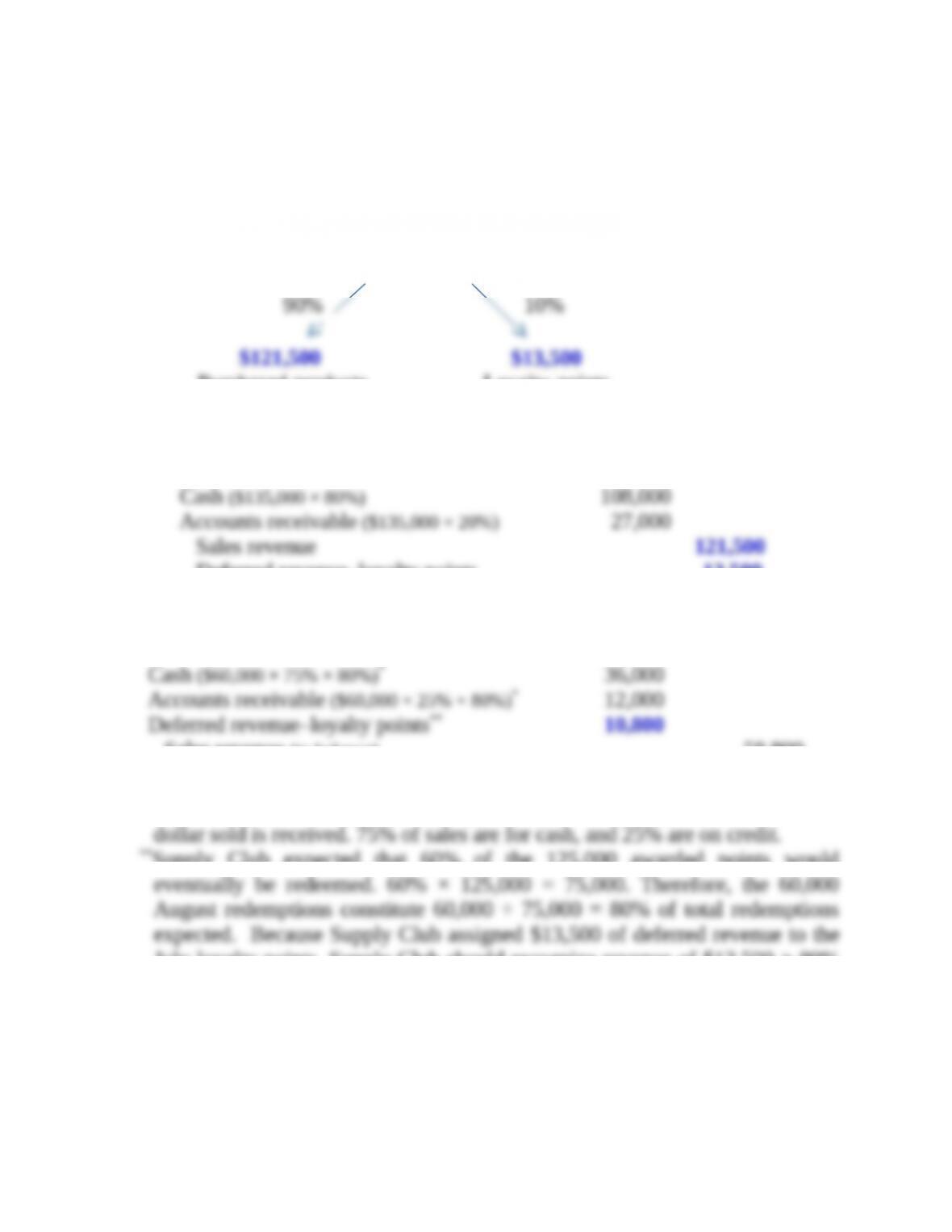
Supply Club then allocates the total selling price based on stand-alone selling
prices, as follows:
The journal entry to record July sales would be:
Deferred revenue–loyalty points 13,500
Requirement 2
Sales revenue (to balance) 58,800
*Sales are discounted by 20% when points are redeemed, so only 80% of each
**Supply Club expected that 60% of the 125,000 awarded points would
July loyalty points, Supply Club should recognize revenue of $13,500 × 80%
= $10,800.
$135,000
Transaction Price
Purchased products
Loyalty points
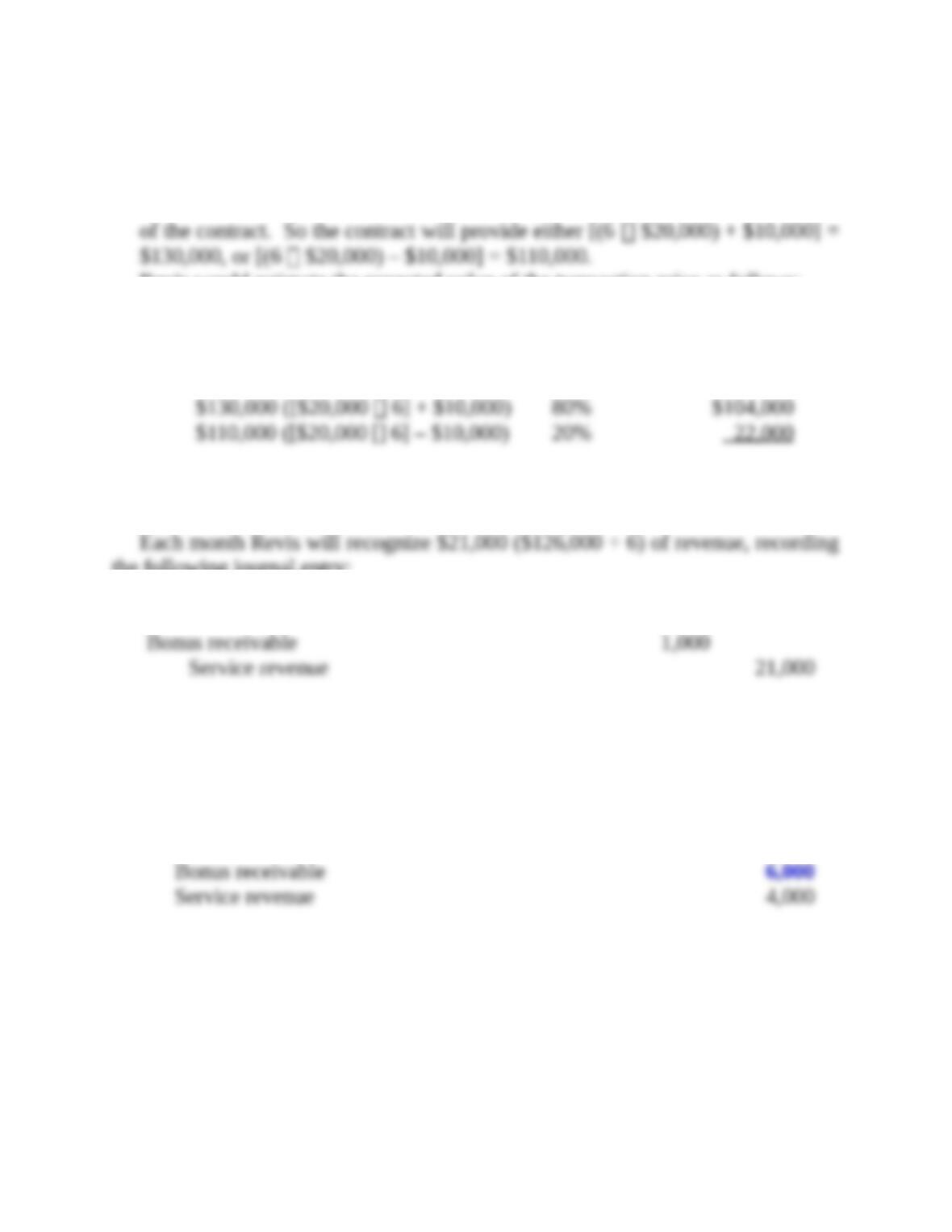
Revis would estimate the expected value of the transaction price as follows:
Possible Expected
Prices Probability Consideration
Expected value of contract price at inception $126,000
the following journal entry:
Cash 20,000
Requirement 2
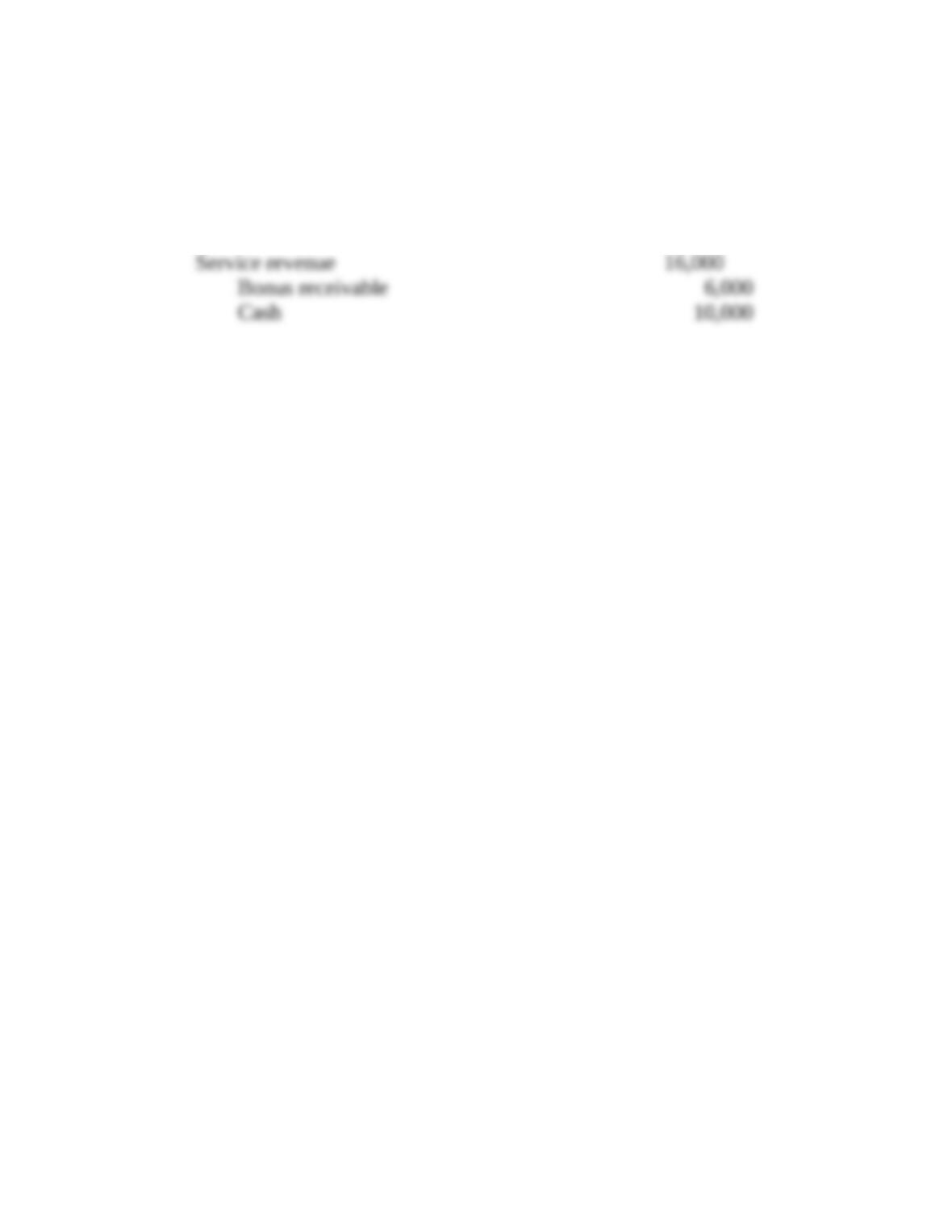
After six months the bonus receivable will have accumulated to $6,000 (6
$1,000). If Revis receives the bonus, it will record the following entry:
Cash 10,000
Problem 5-5 (concluded)
Requirement 3
If Revis pays the penalty, it will record the following entry: