Case 4–15 (concluded)
1. The company could have chosen to present the information in the two
statements in a single, continuous statement of comprehensive income.
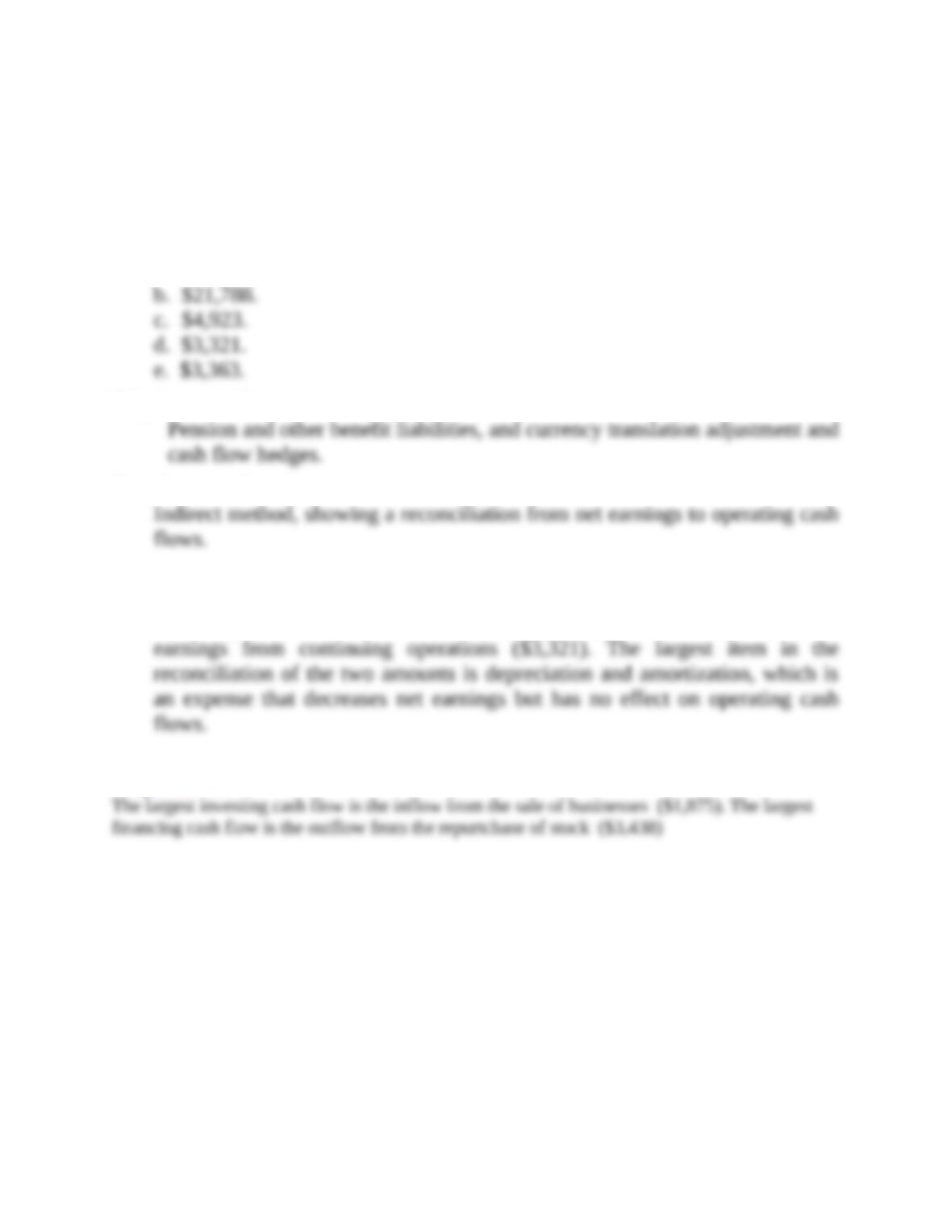
2. The company reported the following other comprehensive income items:
a. Foreign currency translation adjustments.
3. The company uses the indirect method to report net cash provided by
4. The largest cash outflow from investing activities was the purchase of
Analysis Case 4–16
This case encourages students to obtain hands-on familiarity with an actual
annual report and library sources of industry data. They also must apply the
Judgment Case 4–17
Apparently, a significant increase in assets occurred during the last quarter.
Total assets were $324 million and now they total $450 million, as can be
calculated as follows:
Return on shareholders’ equity = Net income ÷ Shareholders’ equity = 14%
Integrating Case 4–18
Case 4–18
(concluded)
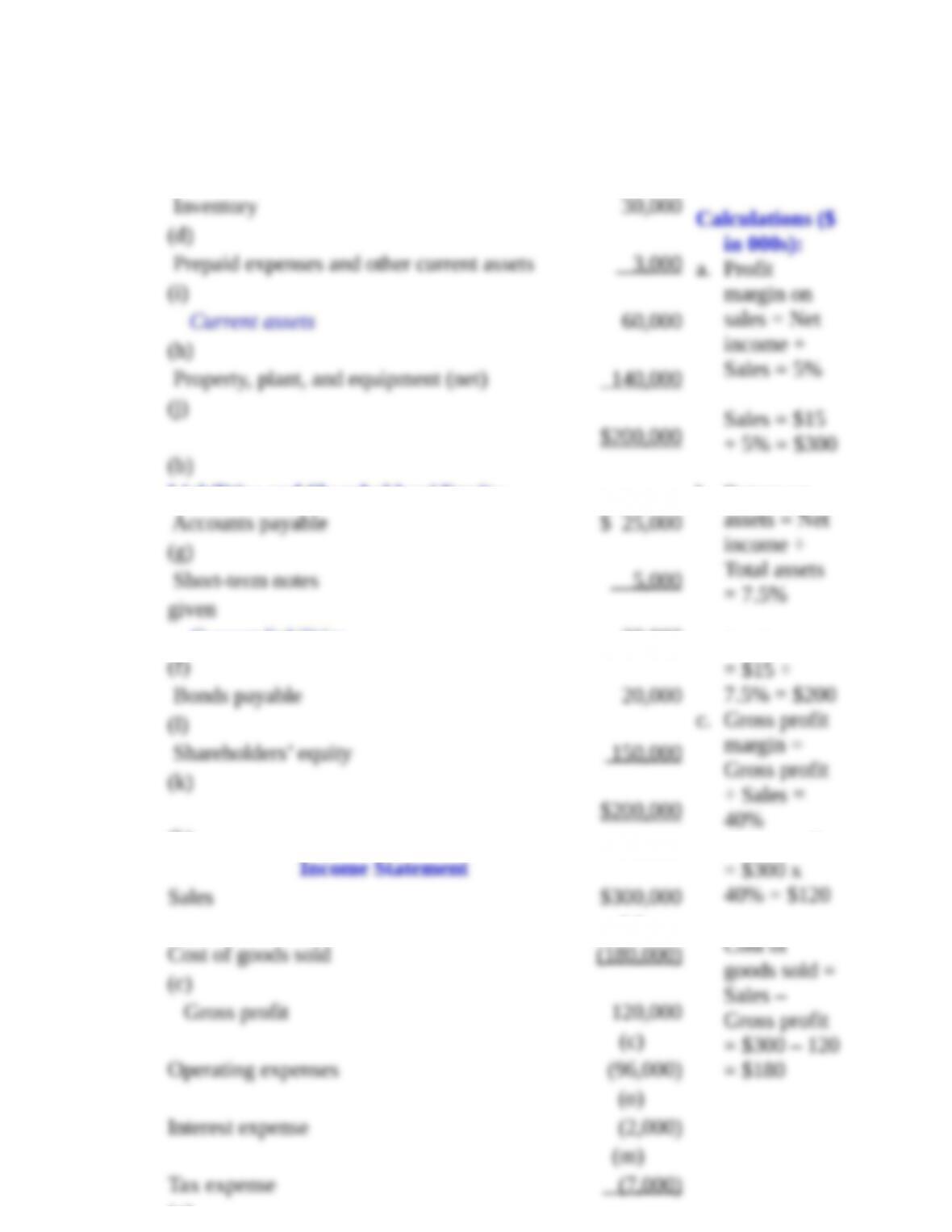
b. Return on
Total assets
40%
Gross profit
Cost of
Balance Sheet
Assets
Cash $ 15,000
given
Accounts receivable (net) 12,000
(e)
Liabilities and Shareholders’ Equity
Current liabilities 30,000
(b)
(a)
(n)
Net income $ 15 ,000
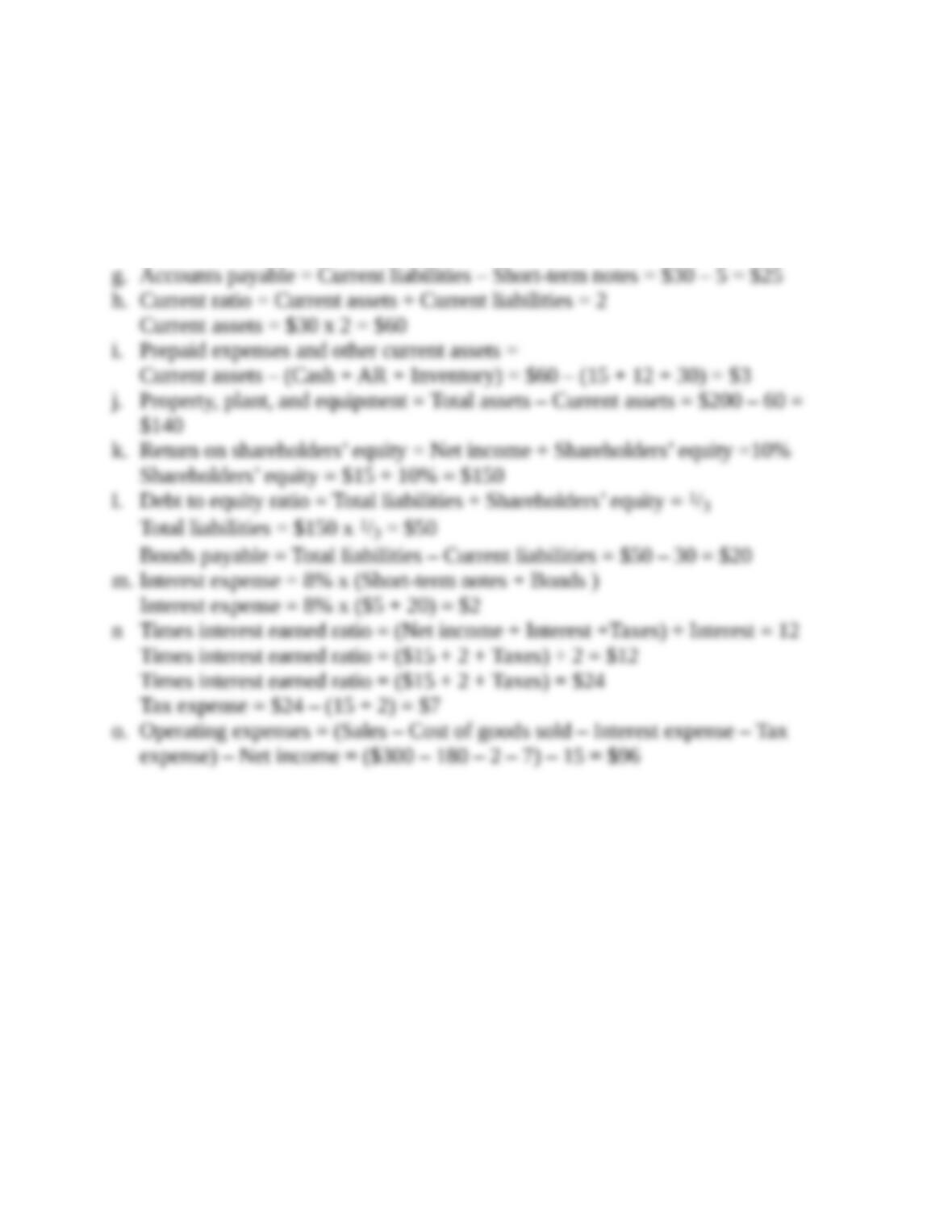
d. Inventory turnover ratio = Cost of goods sold ÷ Inventory = 6
Inventory = $180 ÷ 6 = $30
e. Receivables turnover ratio = Sales ÷ Accounts receivable = 25
Accounts receivable = $300 ÷ 25 = $12
f. Acid-test ratio = Cash + AR + ST Investments ÷ Current liabilities = .9
Current liabilities = ($15 + 12 + 0) ÷ .9 = $30
Target Case
Requirement 1
Consolidated Statements of Operations.
Requirement 2
a. $73,785.
Requirement 3
Requirement 4
Requirement 5
Operating cash flows from continuing operations ($5,140) are higher than net
Requirement 6