Question 4–1
The income statement is a change statement that reports transactions—
Question 4–2
Income from continuing operations includes the revenue, expense, gain, and
Question 4–3
Operating income includes revenues and expenses and gains and losses that
Question 4–4
The single-step format first lists all revenues and gains included in income
from continuing operations to arrive at total revenues and gains. All expenses and
Chapter 4 The Income Statement, Comprehensive
Income, and the Statement of Cash Flows
QUESTIONS FOR REVIEW OF KEY TOPICS
Answers to Questions (continued)
Question 4–5
The term earnings quality refers to the ability of reported earnings (income)
Question 4–6
Restructuring costs include costs associated with shutdown or relocation of
Question 4–7
The process of intraperiod tax allocation matches tax expense or tax benefit
with each major component of income, specifically continuing operations and any
Question 4–8
The net-of-tax income effects of a discontinued operation must be disclosed
separately in the income statement, below income from continuing operations. The
income effects include income (loss) from operations and gain (loss) on disposal.
Answers to Questions (continued)
Question 4–9
A change in accounting principle refers to a change from one acceptable
accounting method to another.
The various approaches chose by the FASB to require implementation by
companies include:
1. Retrospective approach. The new standard is applied to all periods
presented in the financial statements. That is, we restate prior period
2. Modified retrospective approach. The new standard is applied to the
adoption period only. Prior period financial statements are not restated. The
3. Prospective approach. This approach requires neither a modification of
prior period financial statements nor an adjustment to account balances.
Question 4–10
A change in accounting estimate is accounted for in the year of the change and
in subsequent periods; prior years’ financial statements are not restated. A
Answers to Questions (continued)
Question 4–11
Prior period adjustments are accounted for by restating prior years’ financial
statements when those statements are presented again for comparison purposes.
Question 4–12
Earnings per share (EPS) is the amount of income achieved during a period
for each share of common stock outstanding. If there are different components of
Question 4–13
Comprehensive income is the total change in equity for a reporting period
other than from transactions with owners. Reporting comprehensive income can be
Question 4–14
The purpose of the statement of cash flows is to provide information about the
cash receipts and cash disbursements of an enterprise during a period. Similar to
Answers to Questions (continued)
Question 4–15
The three categories of cash flows reported on the statement of cash flows are:
1. Operating activities—Inflows and outflows of cash related to the
transactions entering into the determination of net income from operations.
Question 4–16
Noncash investing and financing activities are transactions that do not
increase or decrease cash but are important investing and financing activities. An
Question 4–17
The direct method of reporting cash flows from operating activities presents
the cash effect of each operating activity directly on the statement of cash flows.
Answers to Questions (continued)
Question 4–18
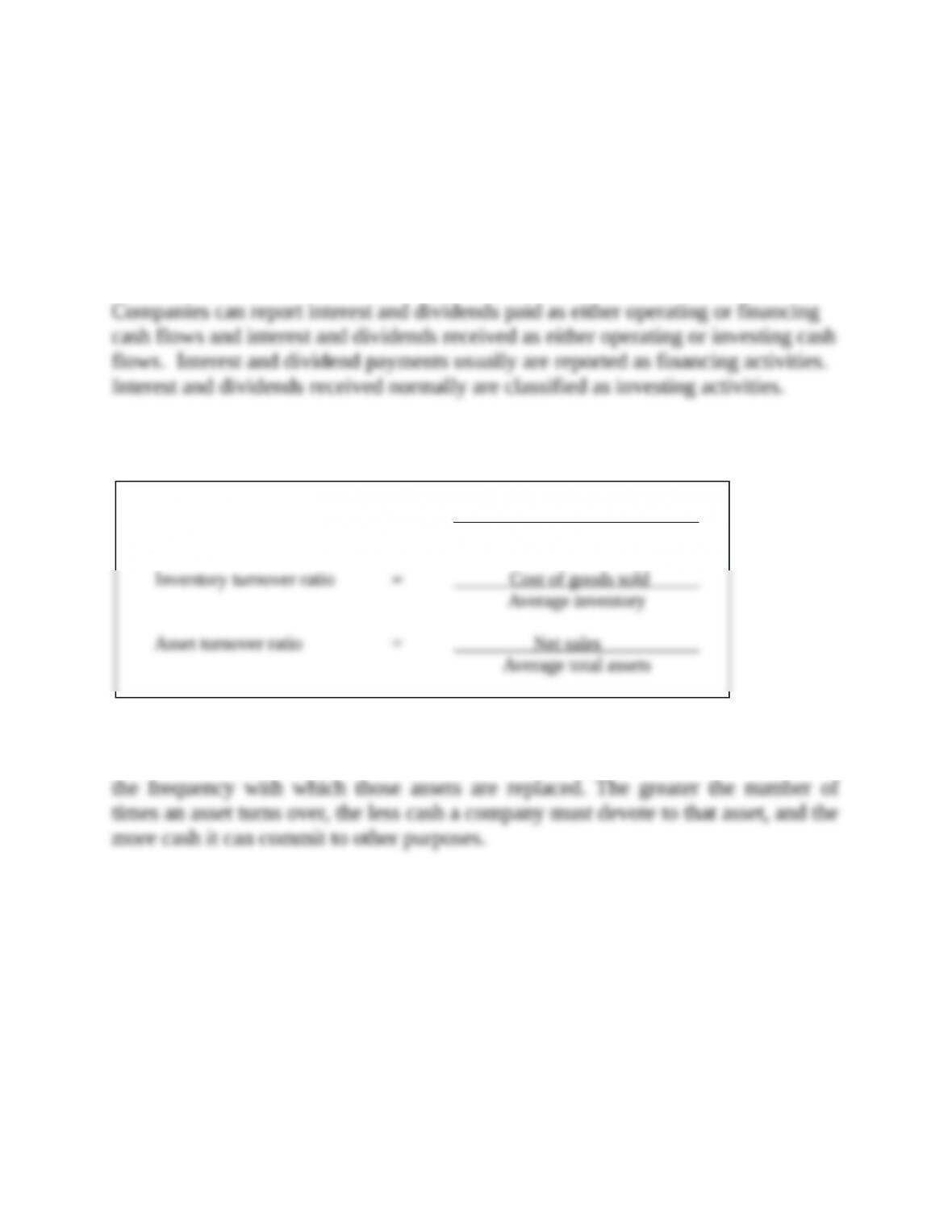
U.S. GAAP designates cash outflows for interest payments and cash inflows from
interest and dividends received as operating cash flows. Dividends paid to
shareholders are classified as financing cash flows. IFRS allows more flexibility.
Question 4–19
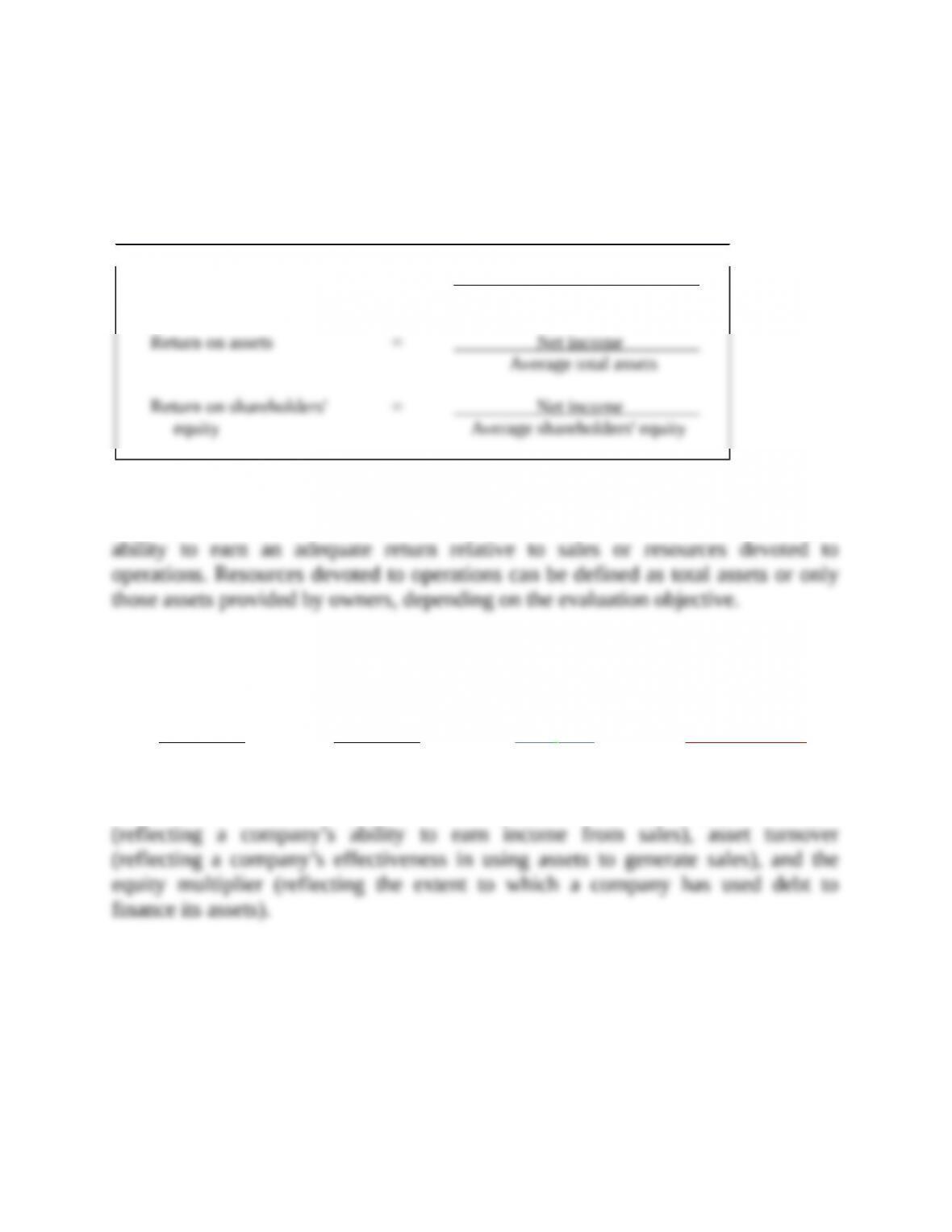
Receivables turnover ratio = Net sales
Average accounts receivable (net)
Activity ratios are designed to provide information about a company’s
effectiveness in managing assets. Activity or turnover of certain assets measures
Answers to Questions (continued)
Question 4–20
Profit margin on sales = Net income
Net sales
A fundamental element of an analyst’s task is to develop an understanding of a
firm’s profitability. Profitability ratios provide information about a company’s
Question 4–21
Return on equity = Profit margin × Asset turnover × Equity multiplier
Net income
Avg. total equity
= Net income
Total sales
×Total sales
Avg. total assets
×Avg. total assets
Avg. total equity
The DuPont framework shows return on equity as being driven by profit margin
Answers to Questions (concluded)
Question 4–22
Current interim reporting requirements and existing practice generally view
interim reports as integral parts of annual statements. However, the discrete
approach is applied to some items. Most revenues and expenses are recognized in
interim periods as they are incurred. However, if an expenditure clearly benefits
Question 4–23
U.S. GAAP views interim reports as an integral part of the annual report, so
amounts that affect multiple interim periods are accrued or deferred and then
charged to each of the periods they affect. IFRS takes much more of a
Brief Exercise
4–1
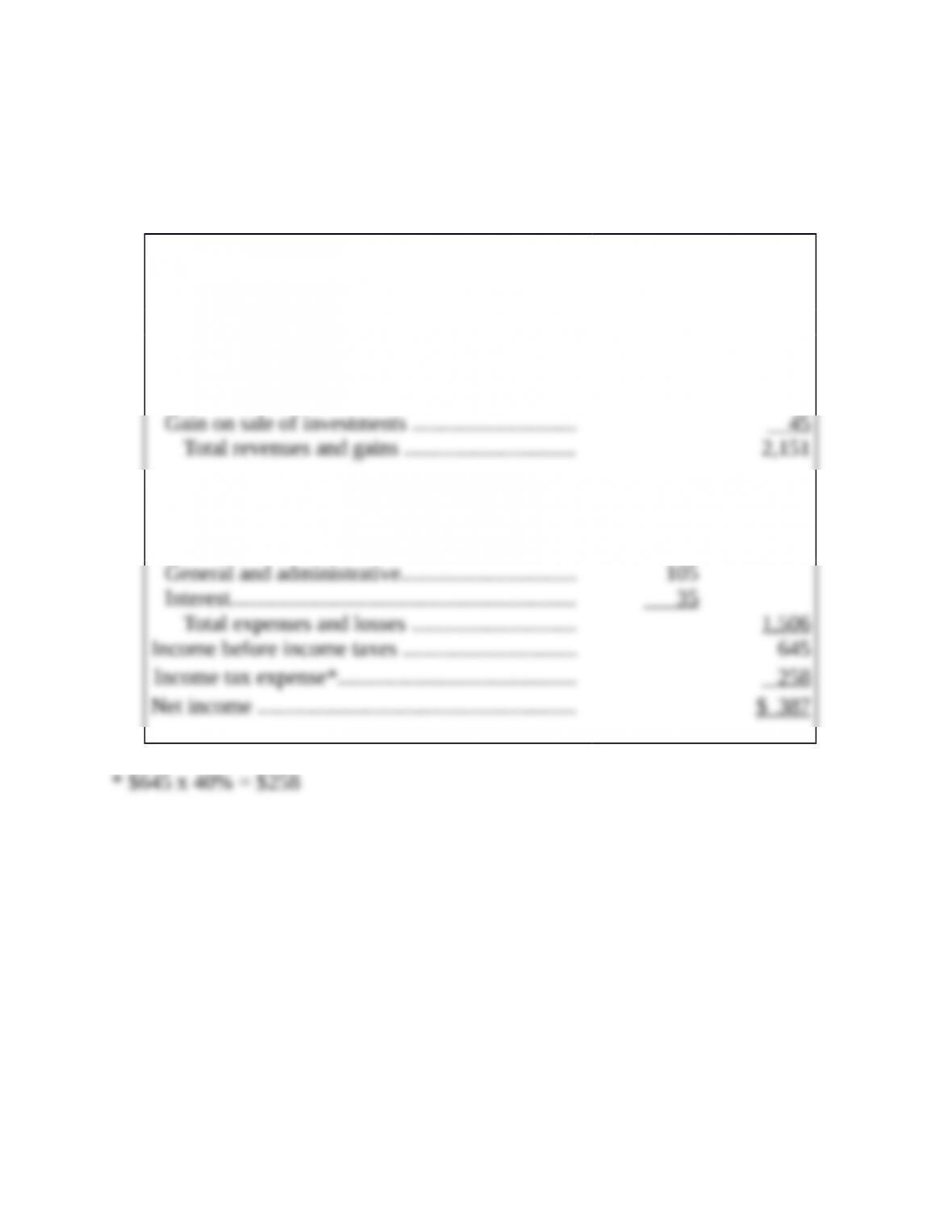
PACIFIC SCIENTIFIC CORPORATION
Income Statement
For the Year Ended December 31, 2018
($ in millions)
Revenues and gains:
Sales ………………………………………………………… $2,106
Expenses and losses:
Cost of goods sold …………………………………….. $1,240
Selling………………………………………………………. 126
BRIEF EXERCISES
Brief Exercise 4–2
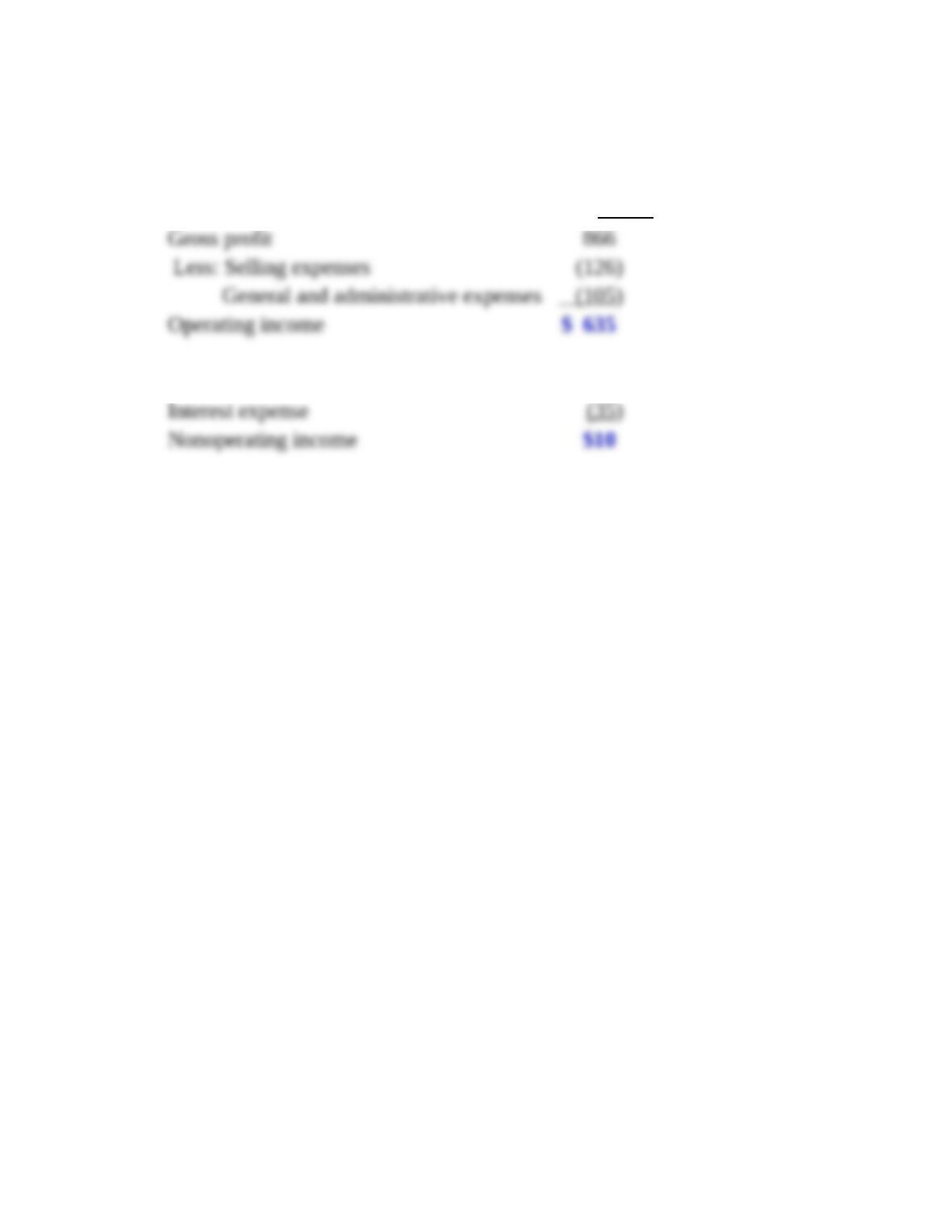
(a) Sales revenue $2,106
Less: Cost of goods sold (1 ,240)
(b) Gain on sale of investments 45
Air France–KLM Case
Requirement 1
AF classifies its expenses by both natural descriptions (e.g., salaries and
Requirement 2
AF classifies interest paid and interest received as operating cash flows, and