Exercise 3–12
1. (B) in a separate disclosure note.
2. (A) in the summary of significant policies note.
3. (C) on the face of the balance sheet.
Exercise 3–13
Requirement 1
The topic number that provides guidance on information contained in the
Requirement 2
The specific citation that describes the information that companies must
Requirement 3
Disclosure of accounting policies should identify and describe the accounting
principles the company follows and the methods of applying those principles that
a. A selection from existing acceptable alternatives.
b. Principles and methods peculiar to the industry in which the entity
Exercise 3–14
The FASB Accounting Standards Codification represents the single
source of authoritative U.S. generally accepted accounting principles.
The specific citation for each of the following items is:
1. What is the balance sheet classification for a note payable due in
six months that was used to purchase a building?
FASB ASC 210–10–45–9: “Notes to Financial
Statements–Overall–Other Presentation Matters–Other Liabilities.”
a. Short-term debts arising from the acquisition of capital assets.
b. Serial maturities of long-term obligations.
d. Agency obligations arising from the collection or acceptance of
cash or other assets for the account of third persons. Loans
accompanied by pledge of life insurance policies would be classified
Exercise 3–14 (continued)
2. Which assets may be excluded from current assets?
FASB ASC 210–10–45–4: “Notes to Financial
Statements–Overall–Other Presentation Matters.”
The concept of the nature of current assets contemplates the exclusion
from that classification of such resources as the following:
a. Cash and claims to cash that are restricted as to withdrawal or use
for other than current operations, are designated for expenditure in the
acquisition or construction of long-term assets, or are segregated for
the liquidation of long-term debts. Even though not actually set aside
b. Investments in securities (whether marketable or not) or advances
c. Receivables arising from unusual transactions (such as the sale of
g. Long-term prepayments that are fairly chargeable to the operations
Exercise 3–14 (continued)
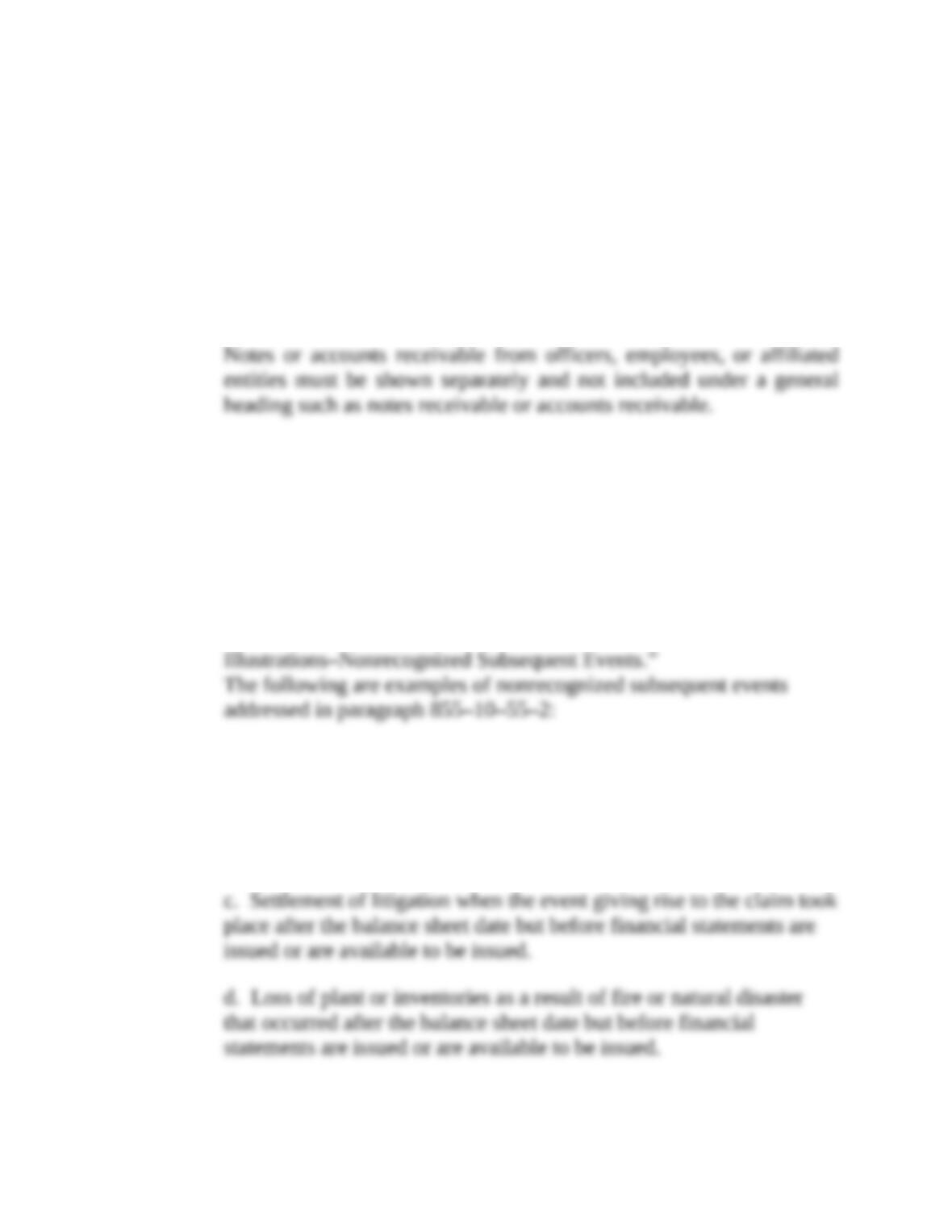
3. Should a note receivable from a related party be included in the
balance sheet with notes receivable from customers?
FASB ASC 850–10–50–2: “Related Party
Disclosures–Overall–Disclosure.”
Exercise 3–14 (concluded)
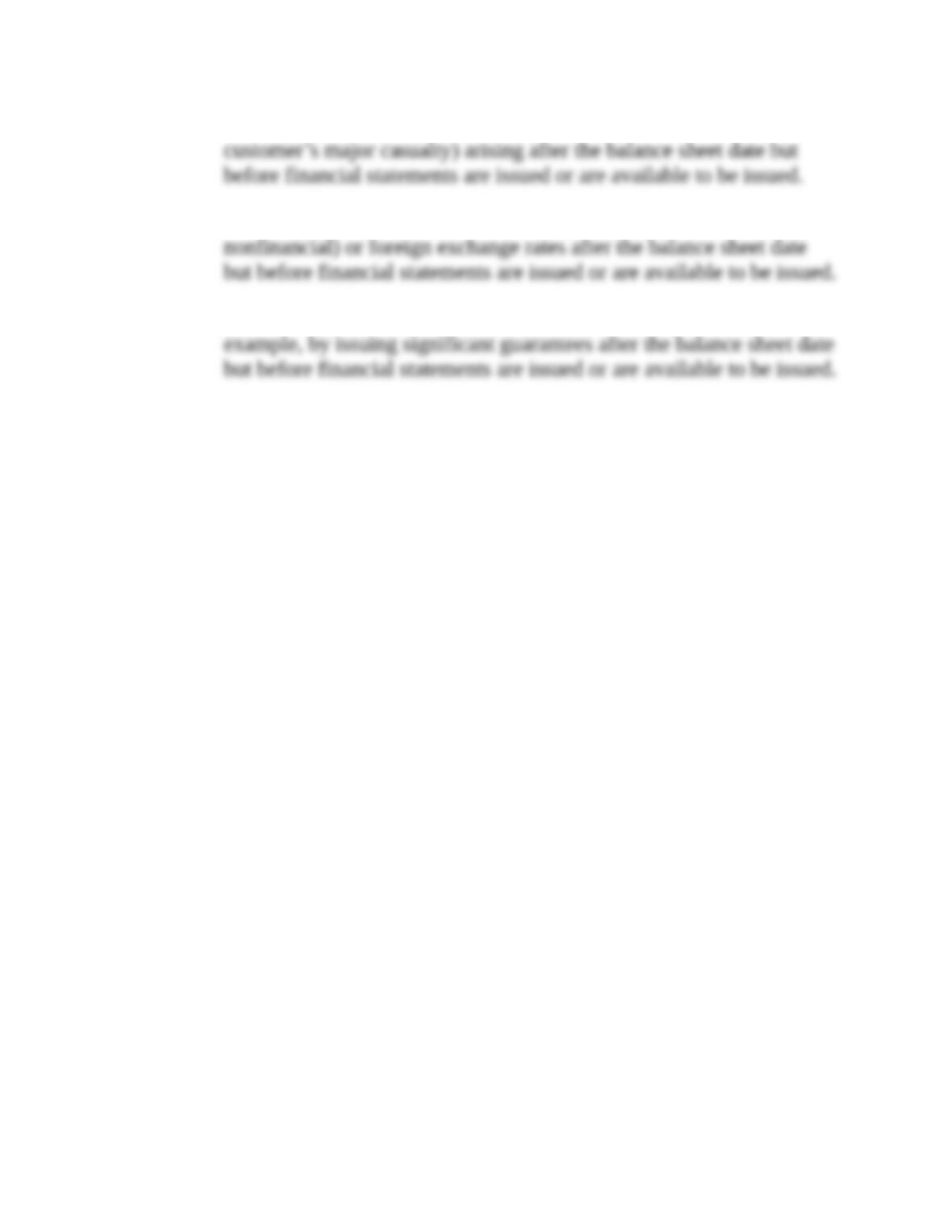
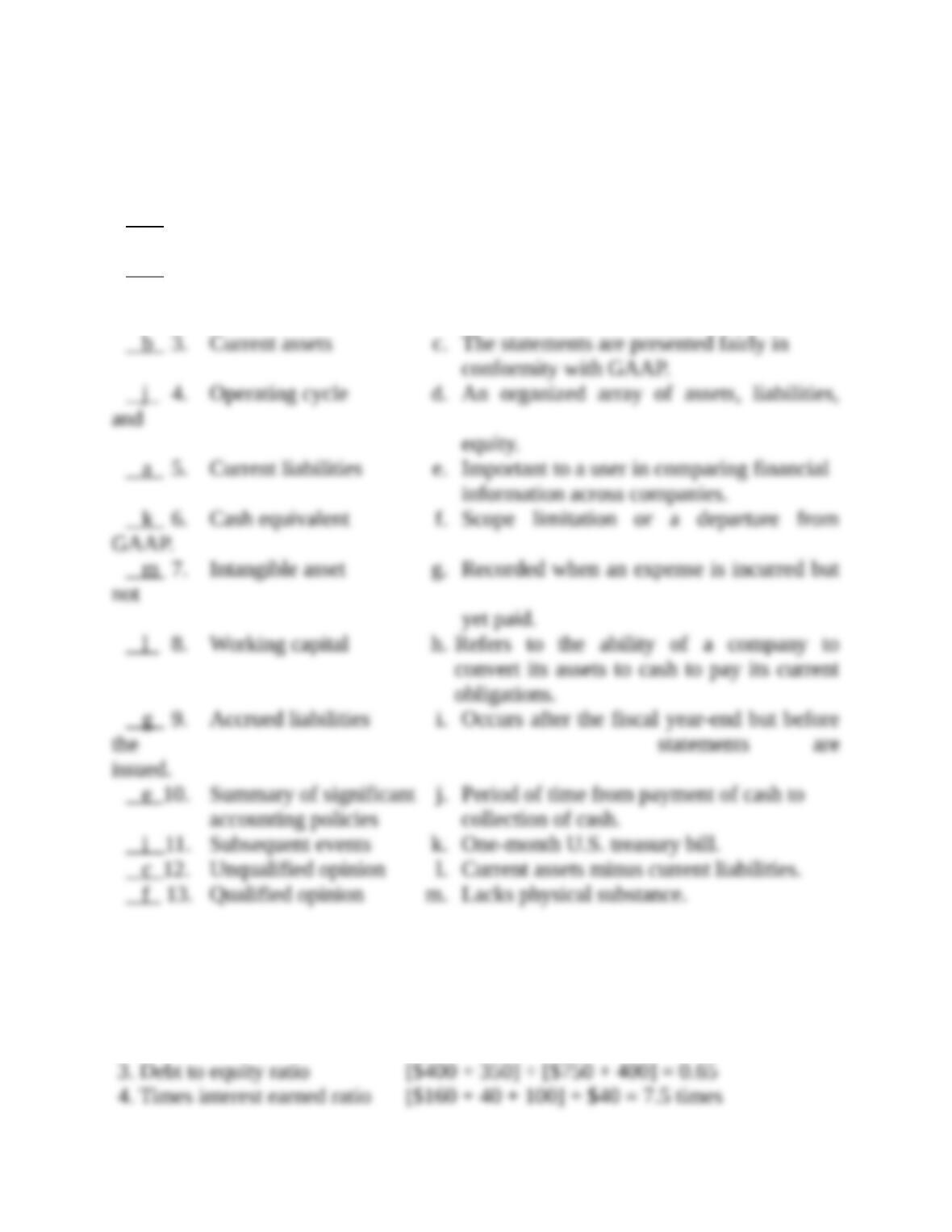
4. What items are nonrecognized subsequent events that require a
disclosure in the notes to the financial statements?
FASB ASC 855–10–55–2: “Subsequent
Events–Overall–Implementation Guidance and
a. Sale of a bond or capital stock issued after the balance sheet date
but before financial statements are issued or are available to be issued.
b. A business combination that occurs after the balance sheet date but
before financial statements are issued or are available to be.
e. Losses on receivables resulting from conditions (such as a
f. Changes in the fair value of assets or liabilities (financial or
g. Entering into significant commitments or contingent liabilities, for
Exercise 3–15
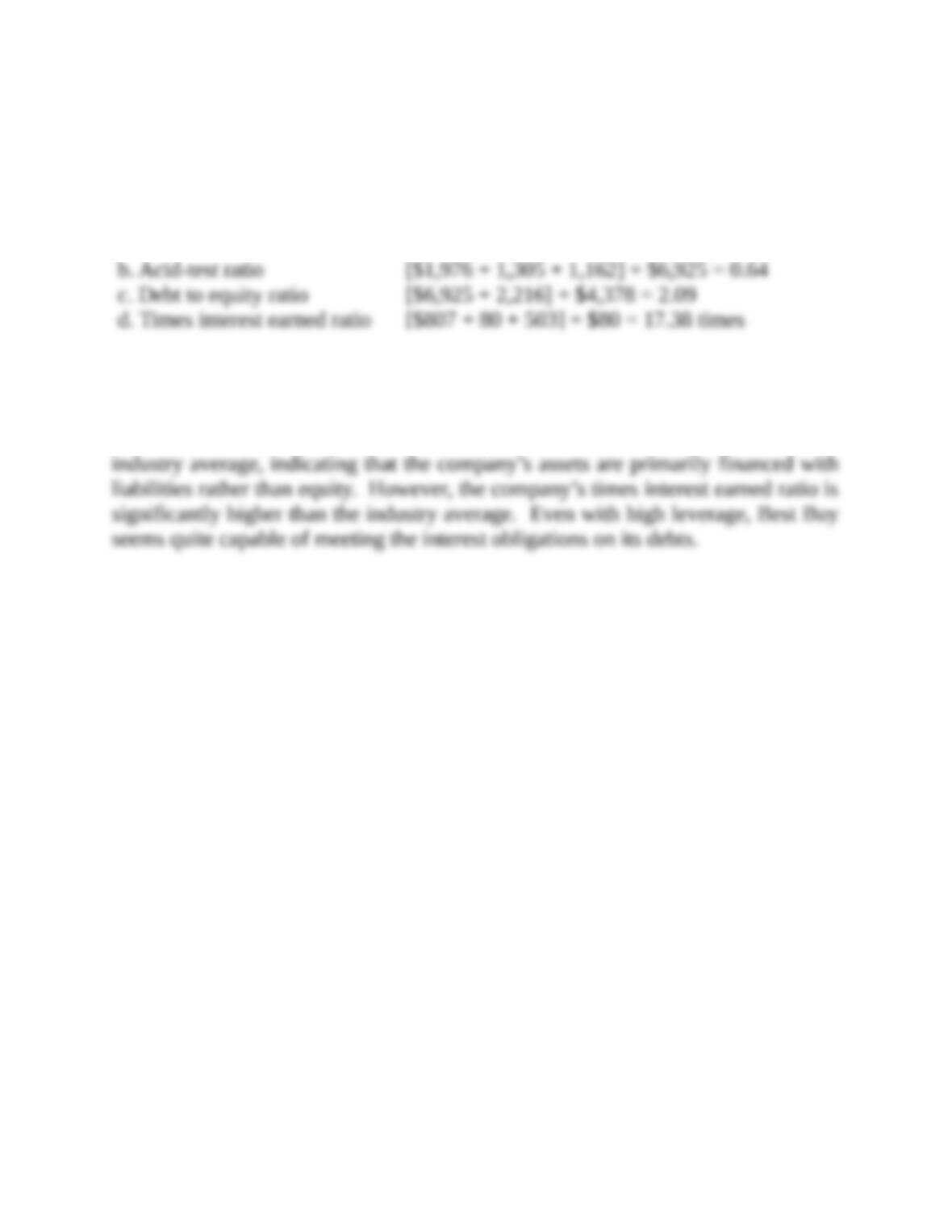
List A List B
d 1. Balance sheet a. Will be satisfied through the use of current
assets.
h 2. Liquidity b. Items expected to be converted to cash or
consumed within one year or the operating
cycle, whichever is longer.
Exercise 3–16
1. Current ratio [$200 + 150 + 200 + 350] ÷ $400 = 2.25
2. Acid-test ratio [$200 + 150 + 200] ÷ $400 = 1.375
Exercise 3–17
Requirement 1
a. Current ratio $9,886÷ $6,925 = 1.43
Requirement 2
Best Buy’s current ratio is above the industry average and the acid-test ratio is
above the industry average. The debt to equity ratio is significantly higher than the
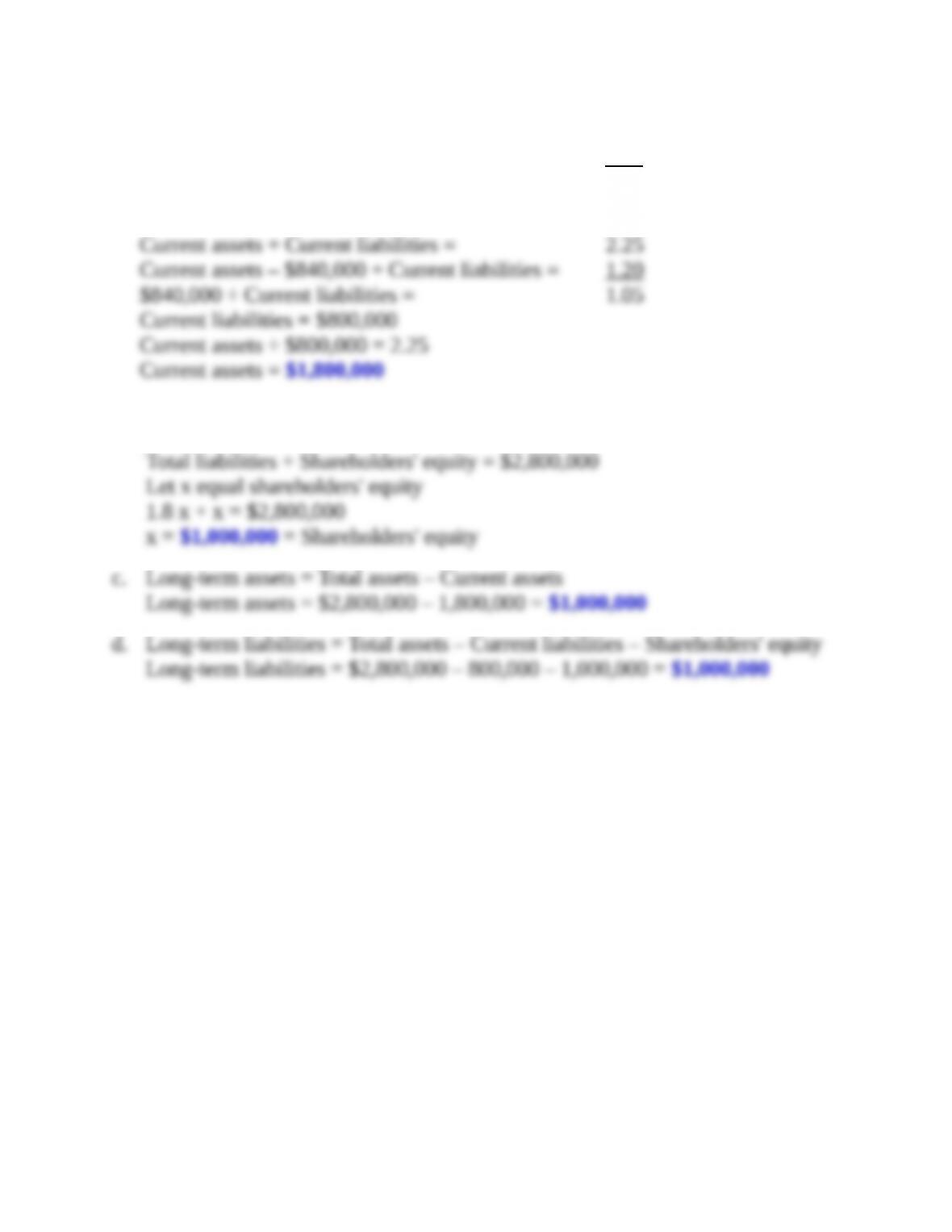
Exercise 3–18
a. Acid-test ratio = Quick assets ÷ Current liabilities = 1.20
Quick assets = Current assets – Inventories
Quick assets = Current assets – $840,000
b. Debt to equity ratio = Total liabilities ÷ Shareholders’ equity = 1.8
Total liabilities + Shareholders’ equity = Total assets