($ in millions)
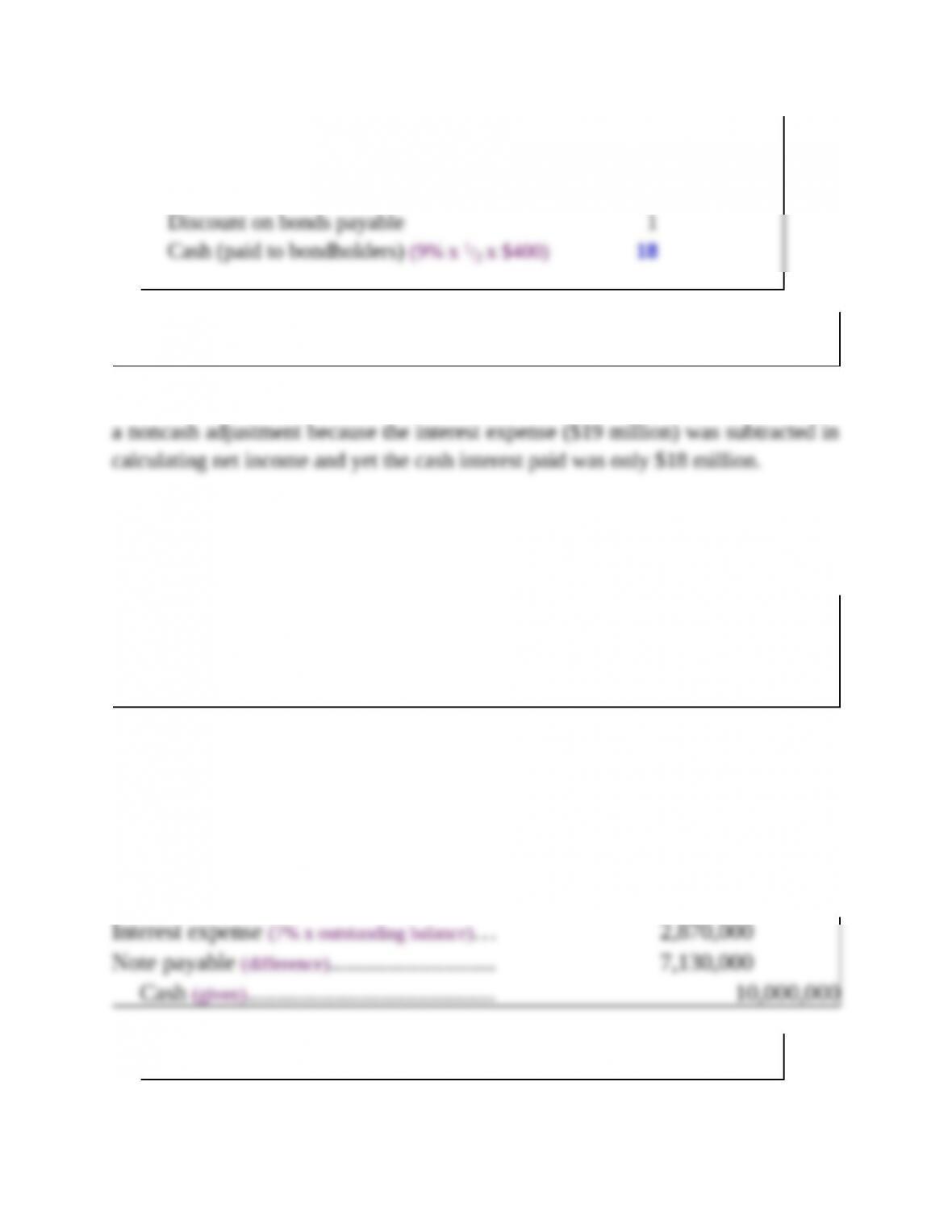
Interest expense (10% x 1/2 x $380) 19
Agee would report the cash inflow of $380 million from the sale of the bonds as a
cash inflow from financing activities in its statement of cash flows.
The $1 million amortization of the discount would be added back to net income as
Merit would report the cash inflow of $41 million from
the borrowing as a cash inflow from financing activities in its statement of cash
flows.
Each installment payment includes both an amount that represents interest and an
amount that represents a reduction of principal. In its statement of cash flows,
then, Merit reports the interest portion ($2,870,000*) as a cash outflow from
operating activities and the principal portion ($7,130,000*) as a cash outflow from
financing activities.
*December 31, 2018
($ in millions)
Brief Exercise 21–6
Brief Exercise 21–7
Brief Exercise 21–8
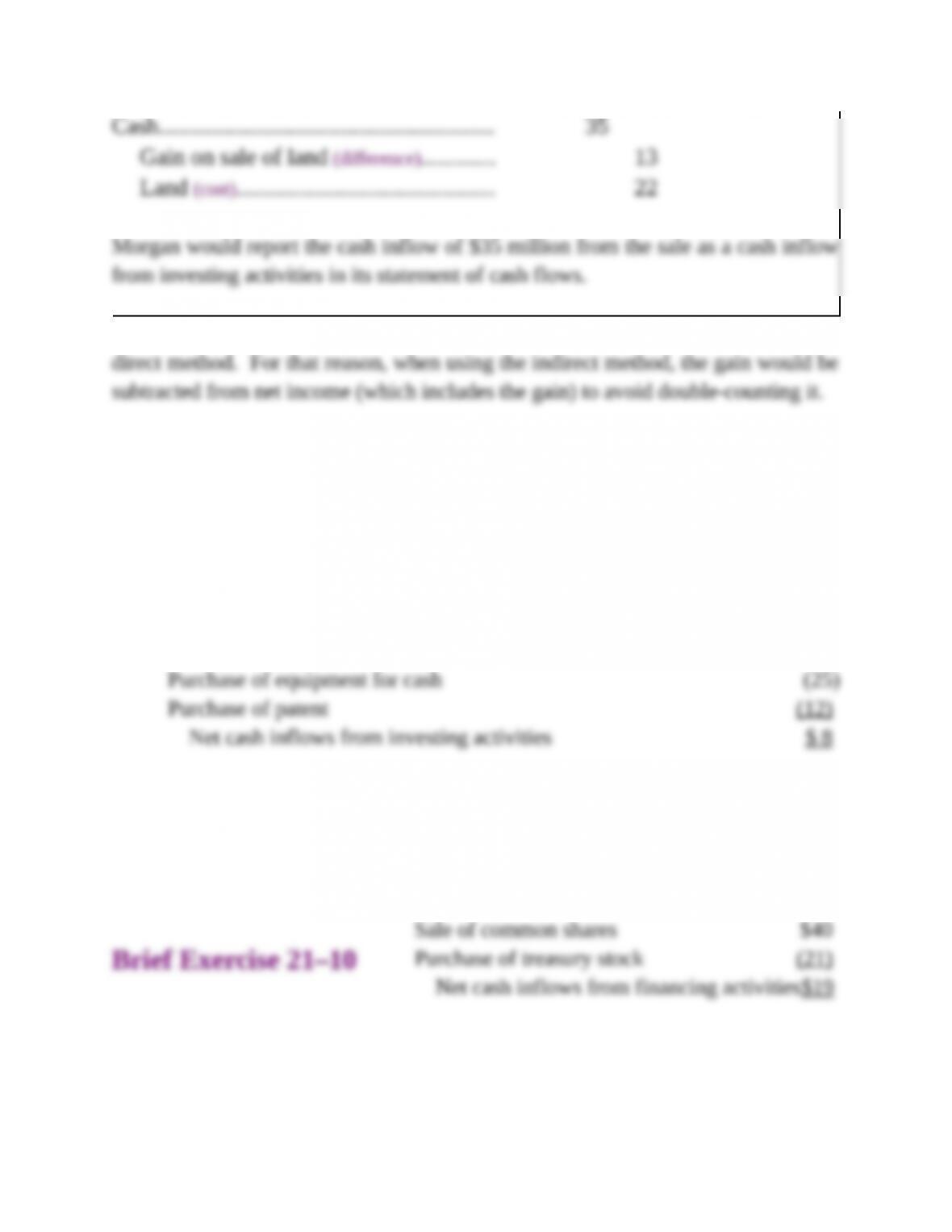
The $13 million gain is not a cash flow and would not be reported when using the
Cash Flows from Investing Activities:
Proceeds from sale of marketable securities
Proceeds from sale of land
Cash Flows from Financing Activities:
Brief Exercise 21–9
Brief Exercise 21–11
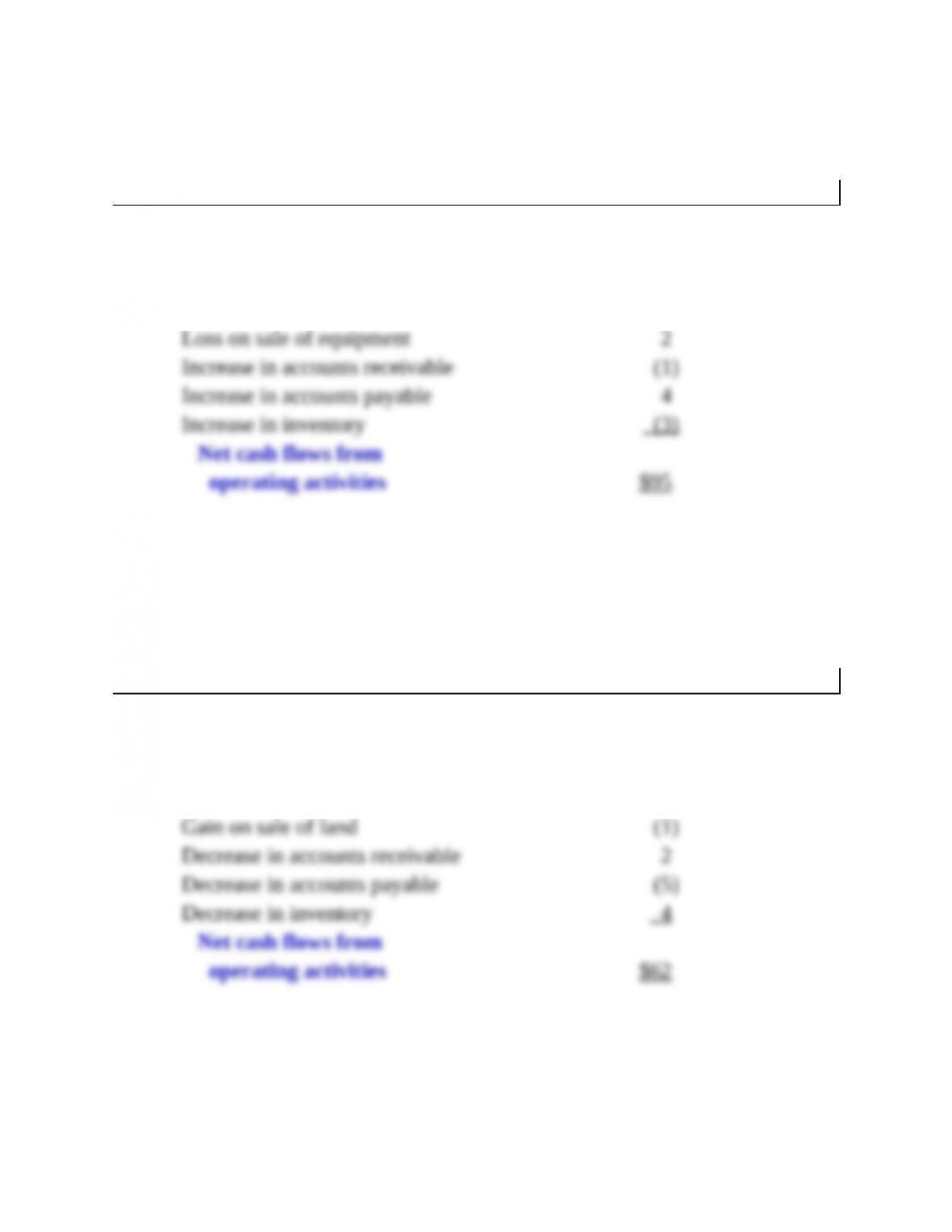
Net income $90
Adjustments for noncash effects:
Depreciation expense 3
Brief Exercise 21–12
Net income $60
Adjustments for noncash effects:
Amortization expense 2
Exercise 21–1
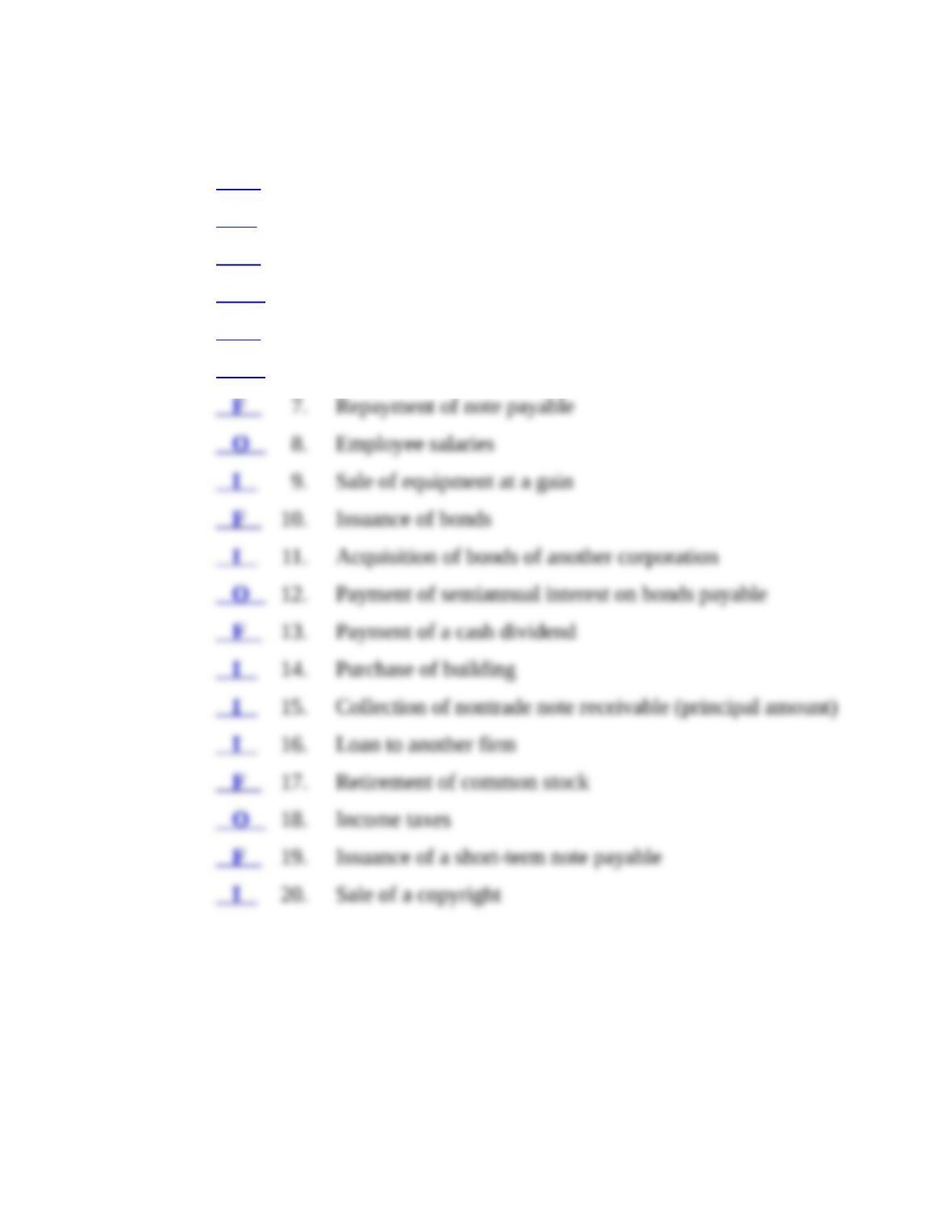
Example F 1. Sale of common stock
I 2. Sale of land
F 3. Purchase of treasury stock
O 4. Merchandise sales
F 5. Issuance of a long-term note payable
O 6. Purchase of merchandise
Requirement 1
($ in millions)
Exercises
Exercise 21–2
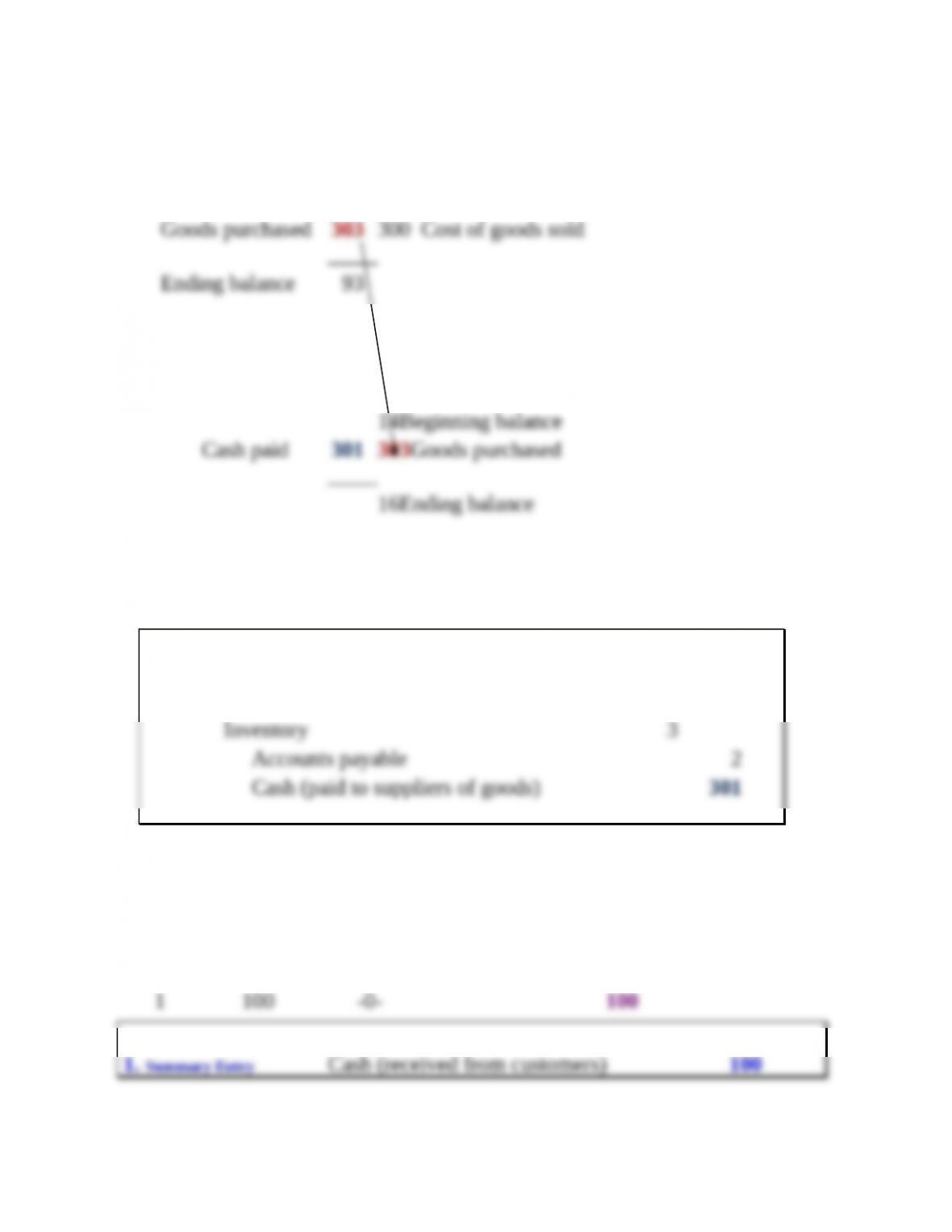
Inventory
_________________________________________
Beginning balance 90
Accounts Payable
_________________________________________
Requirement 2
Summary Entry ($ in millions)
Cost of goods sold 300
($ in millions)
Situation Sales Accounts Cash
received
revenue receivable from
customers
increase
(decrease)
Exercise 21–3
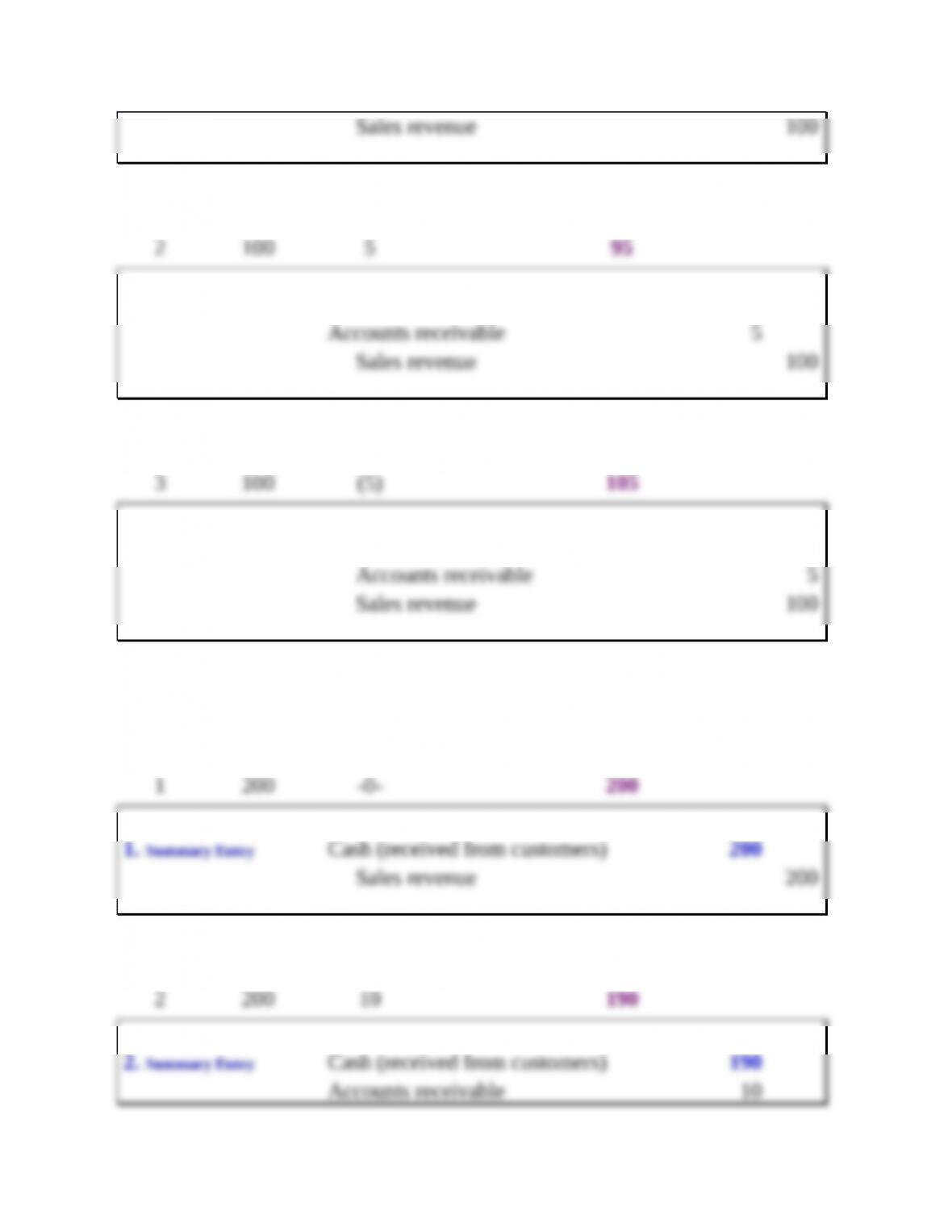
2. Summary Entry Cash (received from customers) 95
3. Summary Entry Cash (received from customers) 105
Situation Sales Accounts
Cash received
revenue receivable from
customers
increase
(decrease)
Exercise 21–4
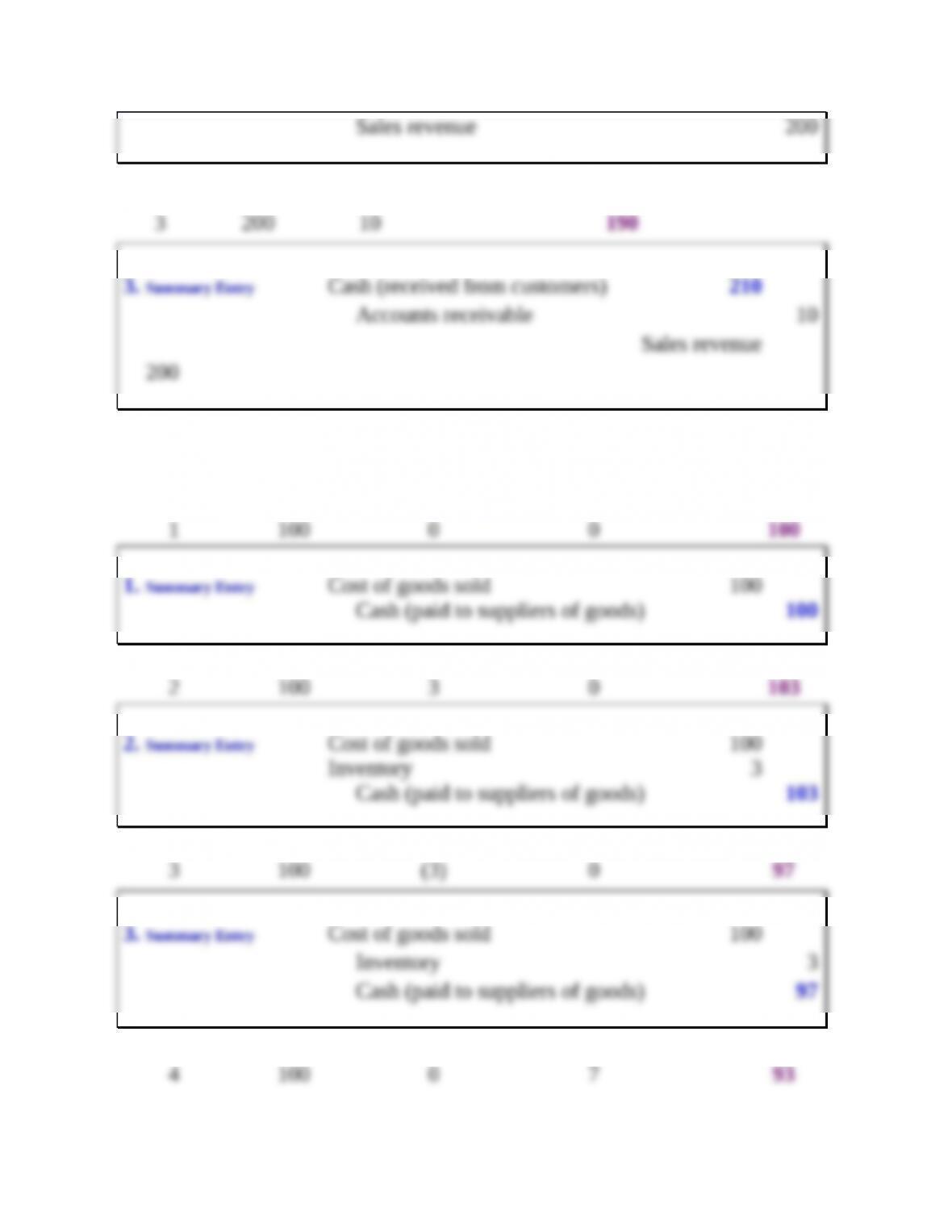
Cost of Accounts
Cash paid to
Situation goods sold Inventory payable suppliers
increase (decrease) increase (decrease)
Exercise 21–5
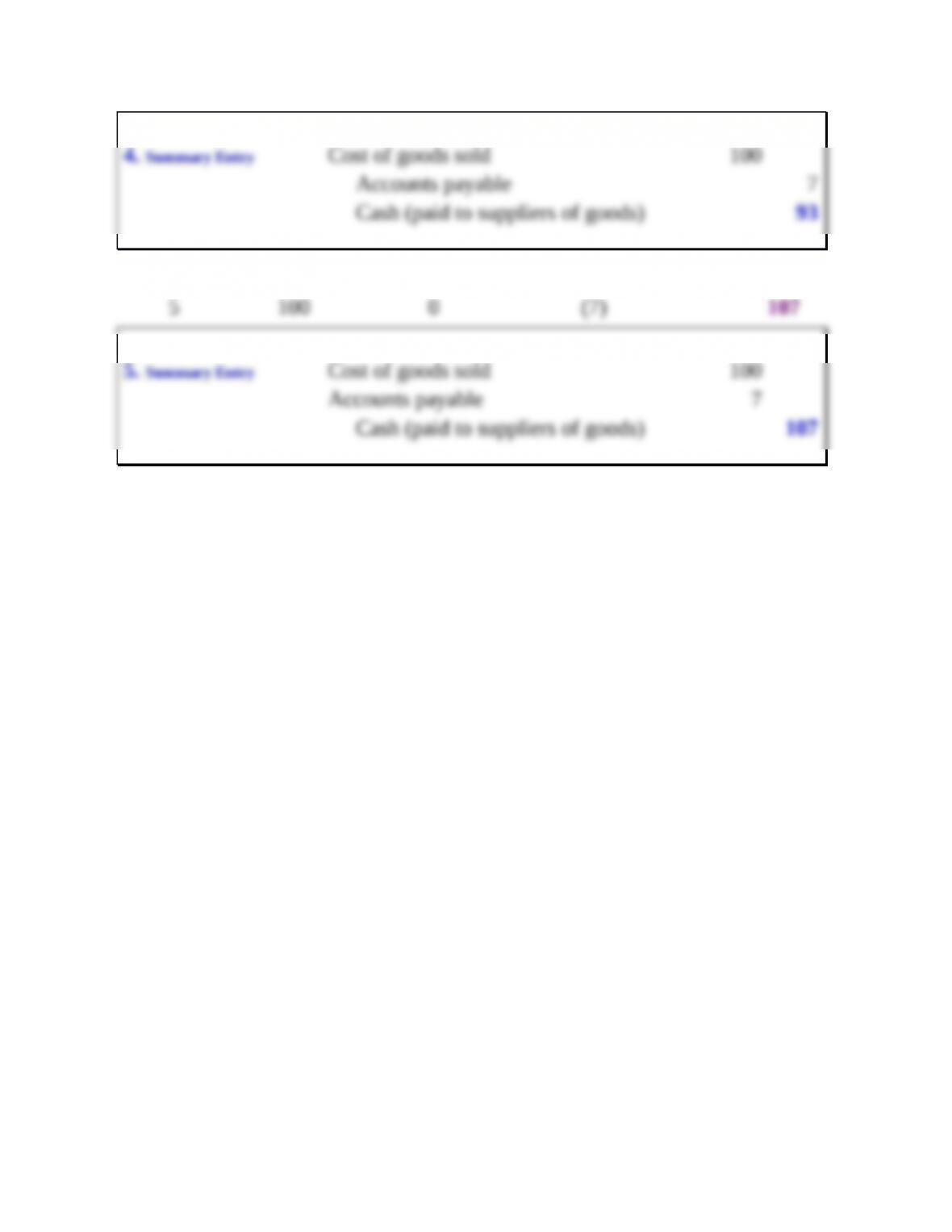
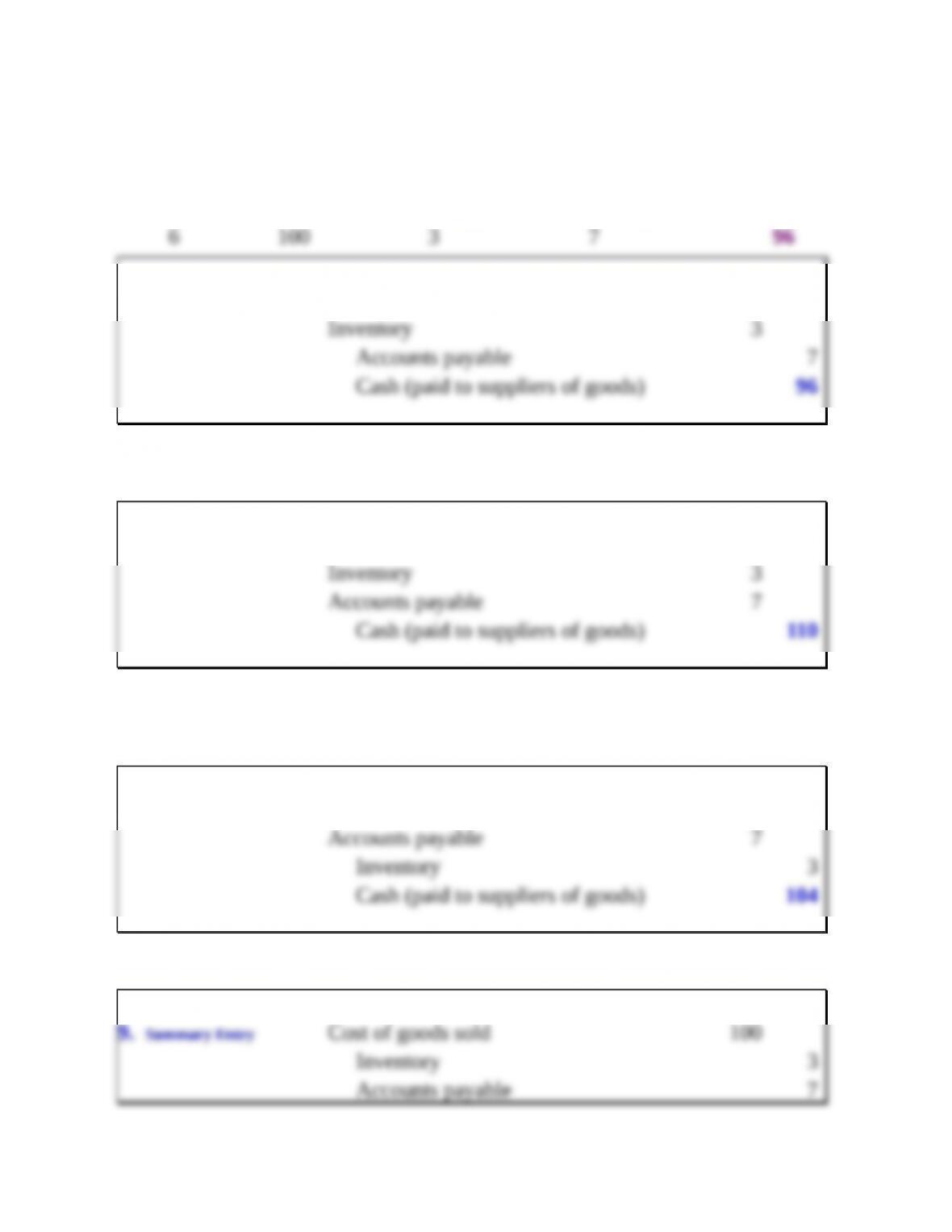
Exercise 21–5 (concluded)
Cost of Accounts Cash paid to
Situation goods sold Inventory payable suppliers
increase (decrease) increase (decrease)
6. Summary Entry Cost of goods sold 100
7 100 3 (7) 110
7. Summary Entry Cost of goods sold 100
8 100 (3) (7) 104
8. Summary Entry Cost of goods sold 100
9 100 (3) 7 90