Analysis Case 21–5
Requirement 1
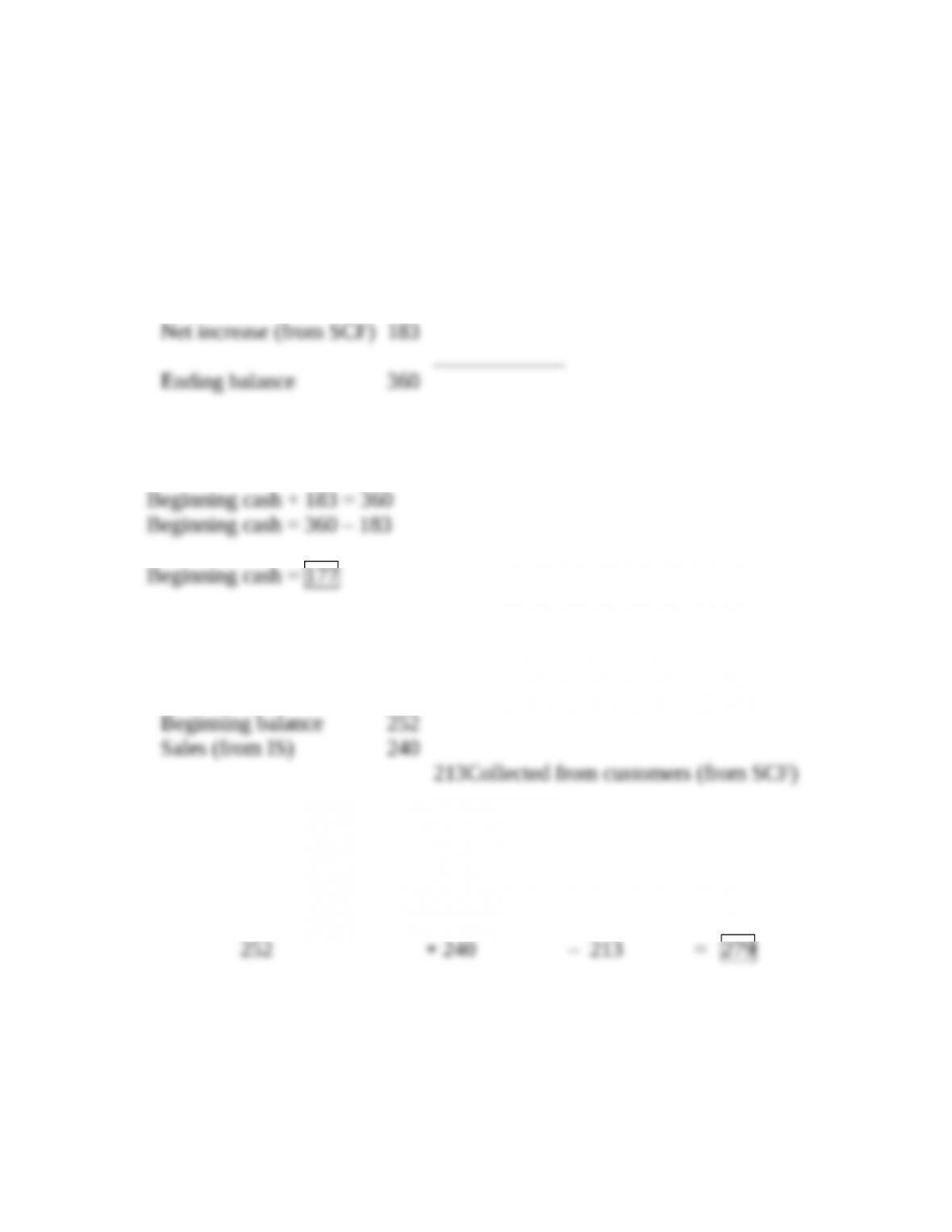
(a)
Cash
_________________________________________________________________
Beginning balance ?
Beginning cash + Net increase in cash = Ending cash
(b)
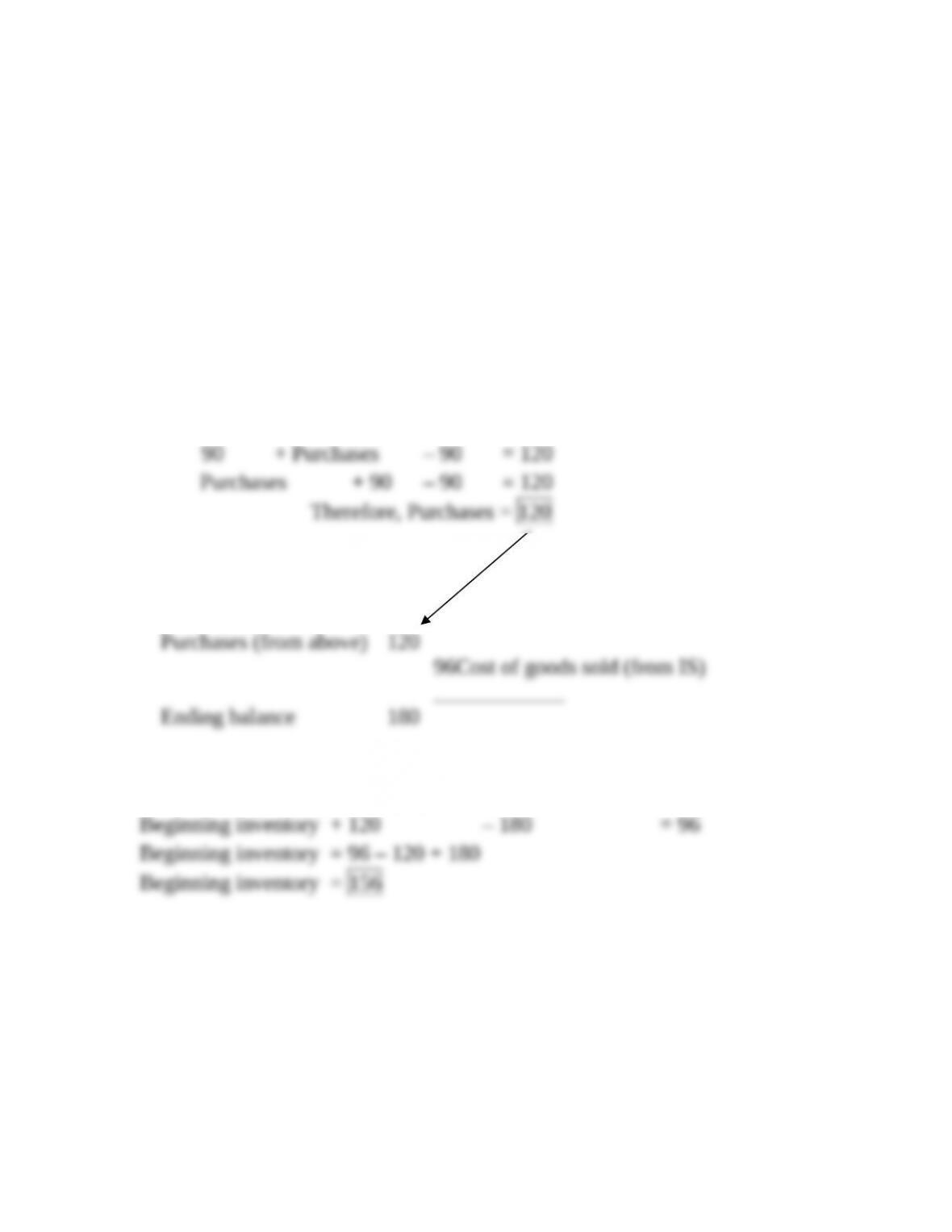
Accounts Receivable
_________________________________________________________________
____________
Ending balance ?
Ending accounts receivable =
Beginning accounts receivable + Sales – Cash collections =
Case 21–5 (continued)
(c)
Accounts Payable
_________________________________________________________________
90Beginning balance
?Purchases
Cash paid to suppliers 90
____________
120Ending balance
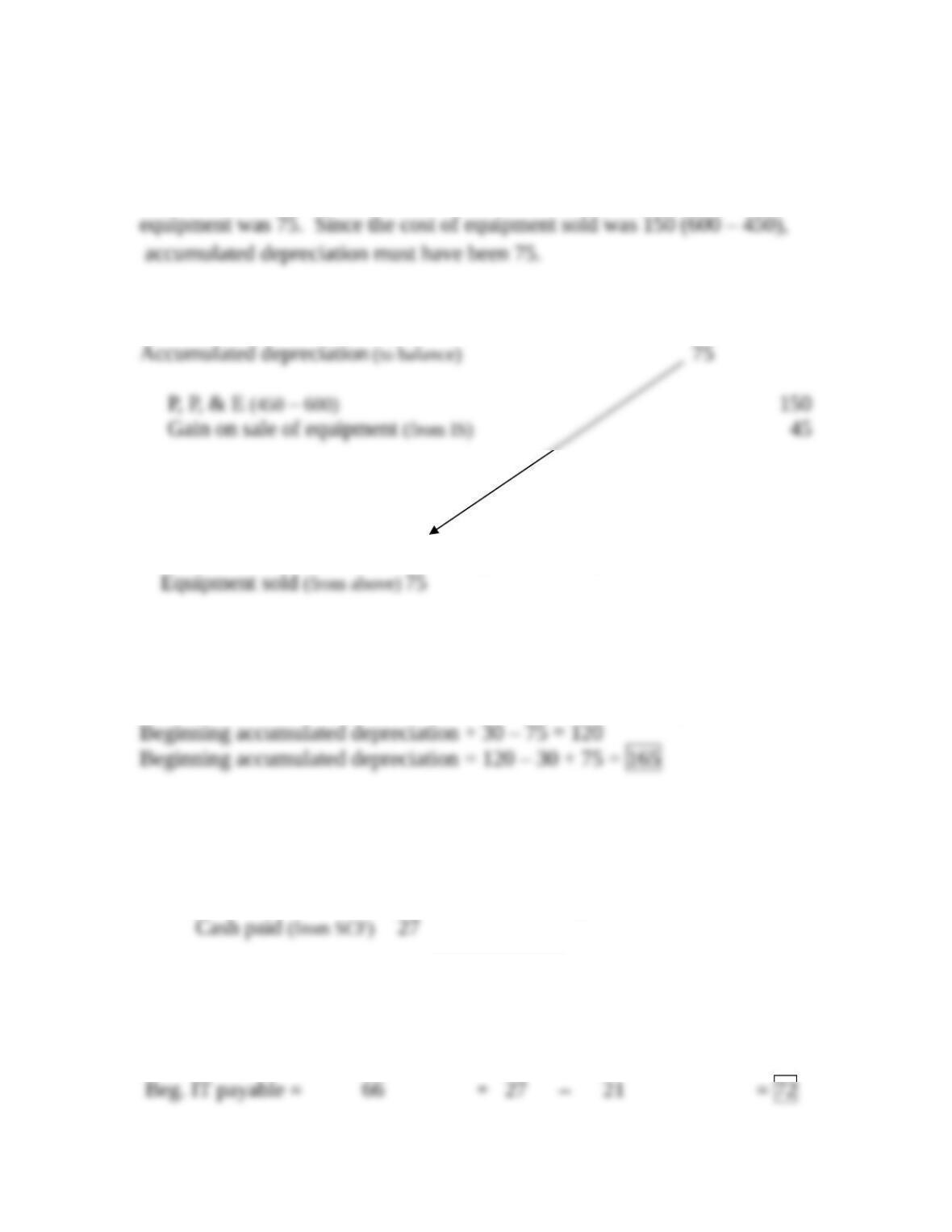
Beginning A/P + Purchases – Cash paid = Ending A/P
Inventory
_________________________________________________________________
Beginning balance ?
Beginning inventory + Purchases – Ending inventory = Cost of goods sold
Case 21–5 (continued)
(d)
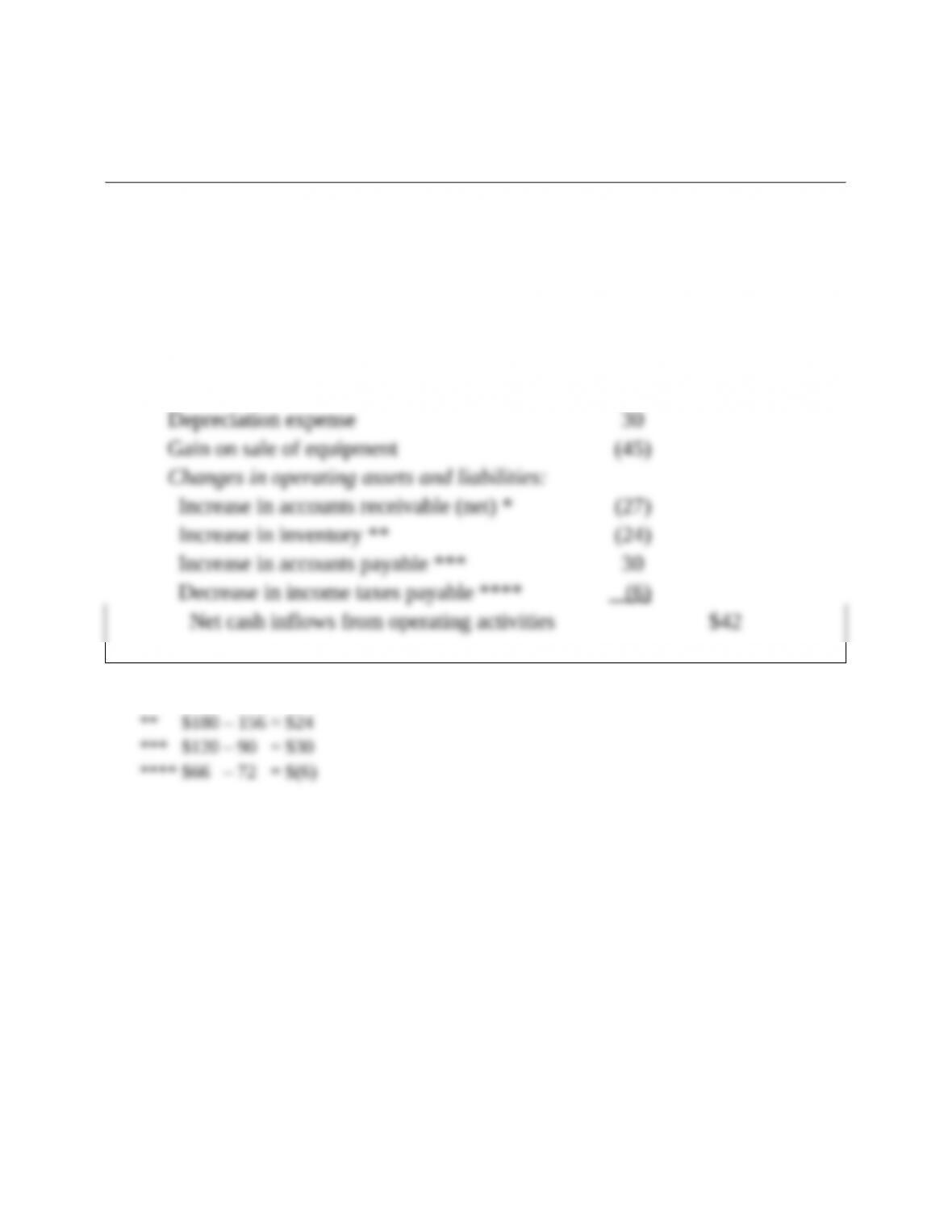
Gain on sale of equipment was 45; cash received was 120; therefore, book value of
Summary Entry
Cash (from SCF) 120
Accumulated Depreciation
_________________________________________________________________
?Beginning balance
30Depreciation expense
____________
120Ending balance
Beginning accumulated depreciation + Depreciation expense – Accumulated
depreciation on equipment sold = Ending accumulated depreciation
(e)
Income Taxes Payable
_________________________________________________________________
?Beginning balance
21Income tax expense
____________
66Ending balance
Beg. IT payable + IT expense – IT paid = Ending IT payable
Beg. IT payable = Ending IT payable + IT paid – IT expense
Case 21–5 (continued)
(f)
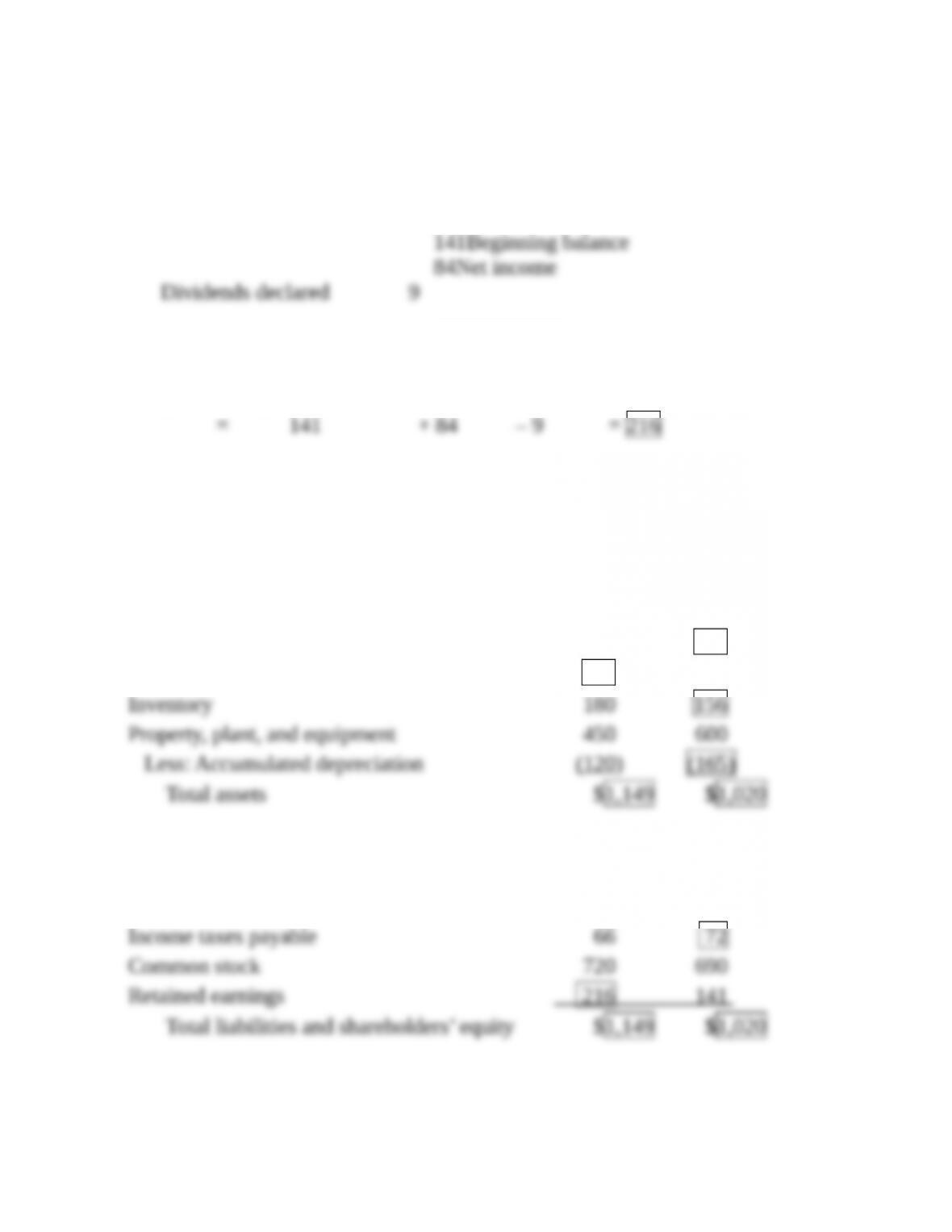
Retained Earnings
_________________________________________________________________
____________
?Ending balance
Ending R/E = Beginning R/E + Net income – Dividends
DISTINCTIVE INDUSTRIES
Comparative Balance Sheets
At December 31
2018 2017
Assets:
Cash $ 360 $ 177
Accounts receivable (net) 279 252
Liabilities and shareholders’ equity:
Accounts payable $ 120 $ 90
General and administrative expenses payable 27 27
Case 21–5 (concluded)
Requirement 2
DISTINCTIVE INDUSTRIES
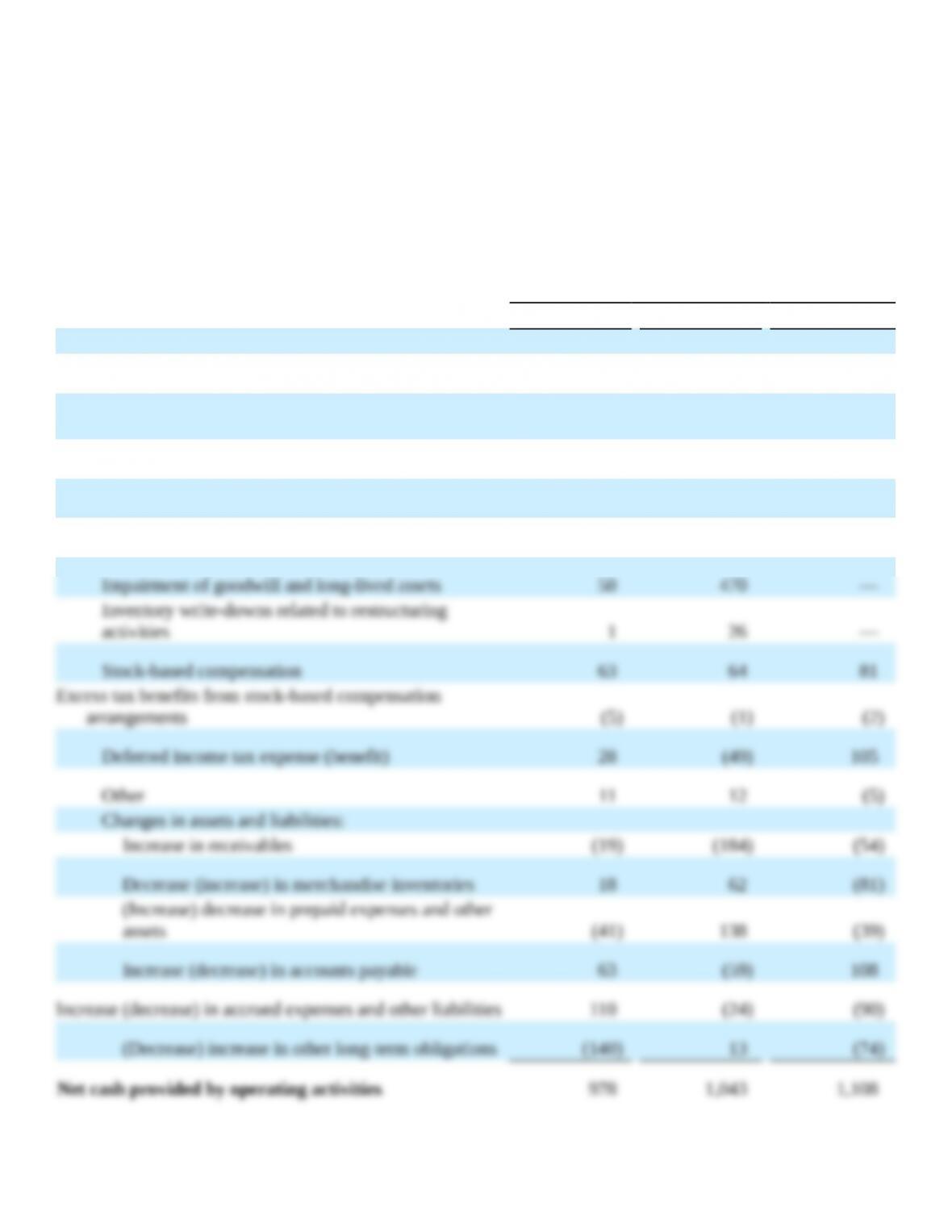
Statement of Cash Flows
For the Year Ended December 31, 2018
($ in millions)
Cash flows from operating activities:
Net income $ 84
Adjustments for noncash effects:
* $279 – 252 = $27
Real World Case 21–6
Requirement 1
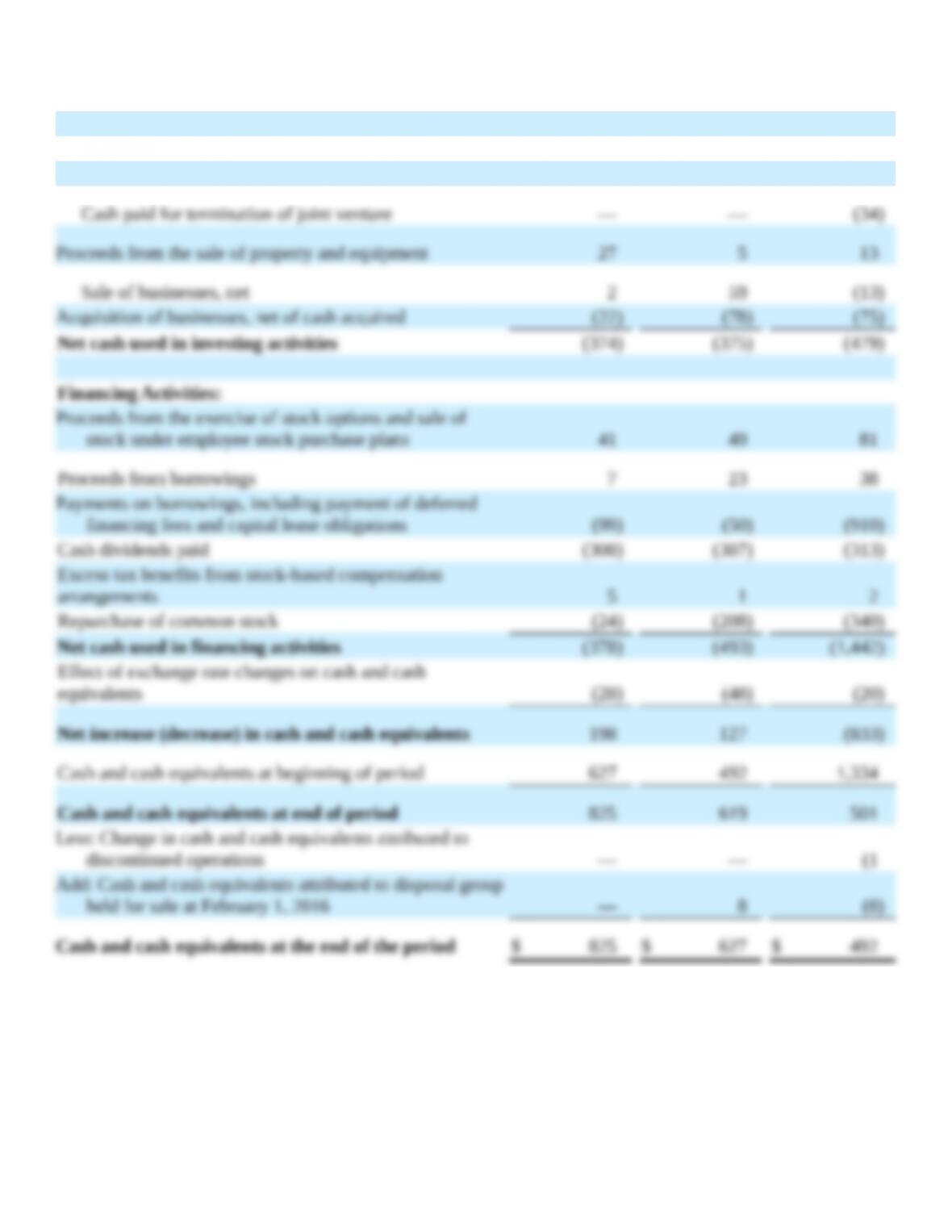
STAPLES, INC. AND SUBSIDIARIES
Consolidated Statements of Cash Flows
(Dollar Amounts in Millions)
Fiscal Year Ended
January 30, 2016 January 31, 2015 February 1, 2014
Operating Activities:
Net income $ 379 $ 135 $ 620
Adjustments to reconcile net income to net cash provided
by operating activities:
Depreciation 388 405 403
Amortization of intangibles 67 62 55
Loss (gain) on sale of businesses and assets, net 5 (27) 81
Investing Activities:
Acquisition of property and equipment (381) (361) (371)
See notes to consolidated financial statements.
Year to year during the three years, Staples’ largest investing activity was the
acquisition of property and equipment. A look at financing activities reveals that
in all three years, financing activities produced a decrease, not an increase, in
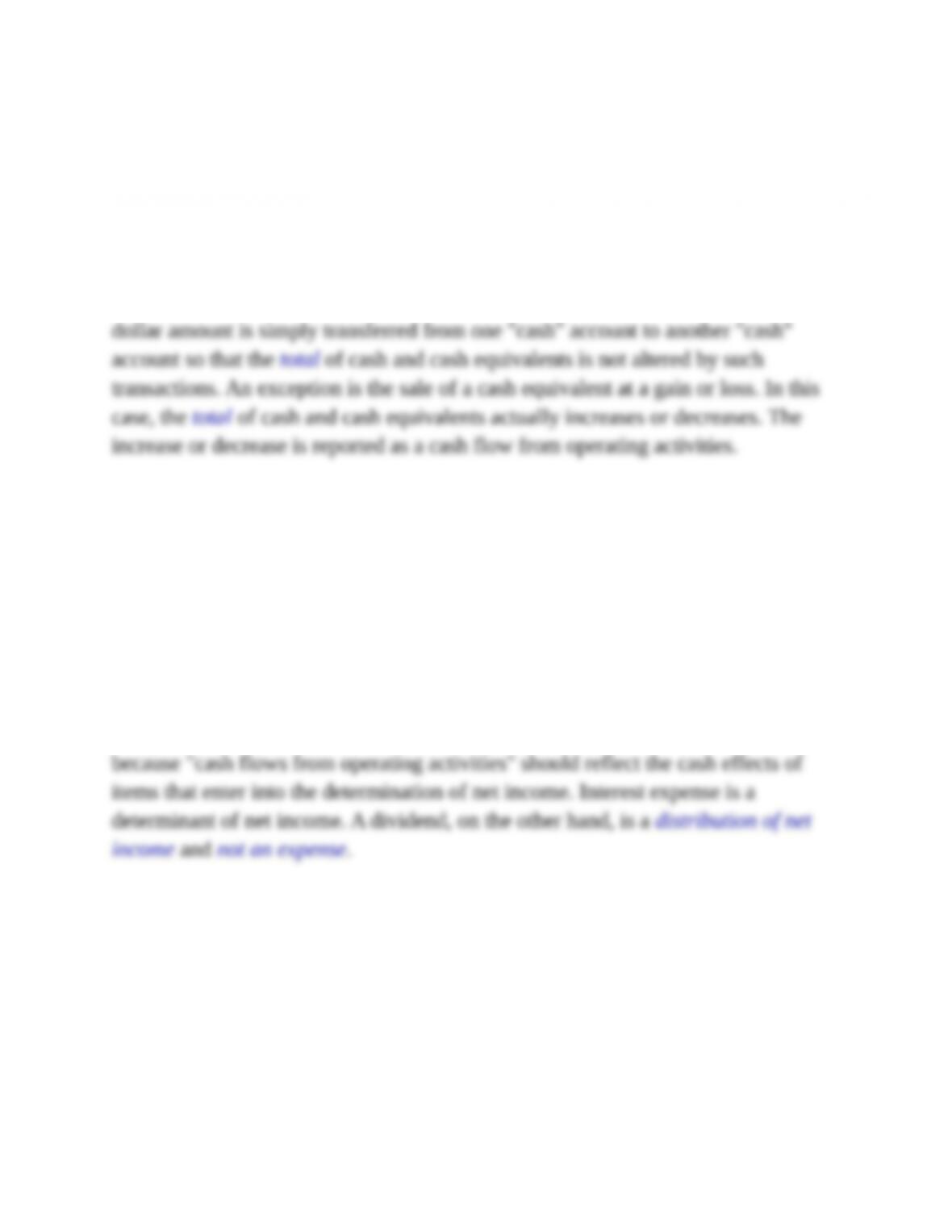
cash. The bulk of the funds for investments came from cash provided by
operations (internal financing) in each year.
Requirement 2
Transactions that involve merely transfers from cash to “cash equivalents” such as
the purchase of a CD should not be reported in the statement of cash flows. A
Requirement 3
The sale of debt and the sale of stock are reported as financing activities.
Requirement 4
The payment of cash dividends to shareholders is classified as a financing activity,
but paying interest to creditors is classified as an operating activity. This is
Case 21–6 (concluded)
Requirement 5
A statement of cash flows reports transactions that cause an increase or a decrease
in cash. However, some transactions that don’t increase or decrease cash, but
which result in significant investing and financing activities, must be reported in
related disclosures. Entering a significant investing activity and a significant
financing activity as two parts of a single transaction does not limit the value of
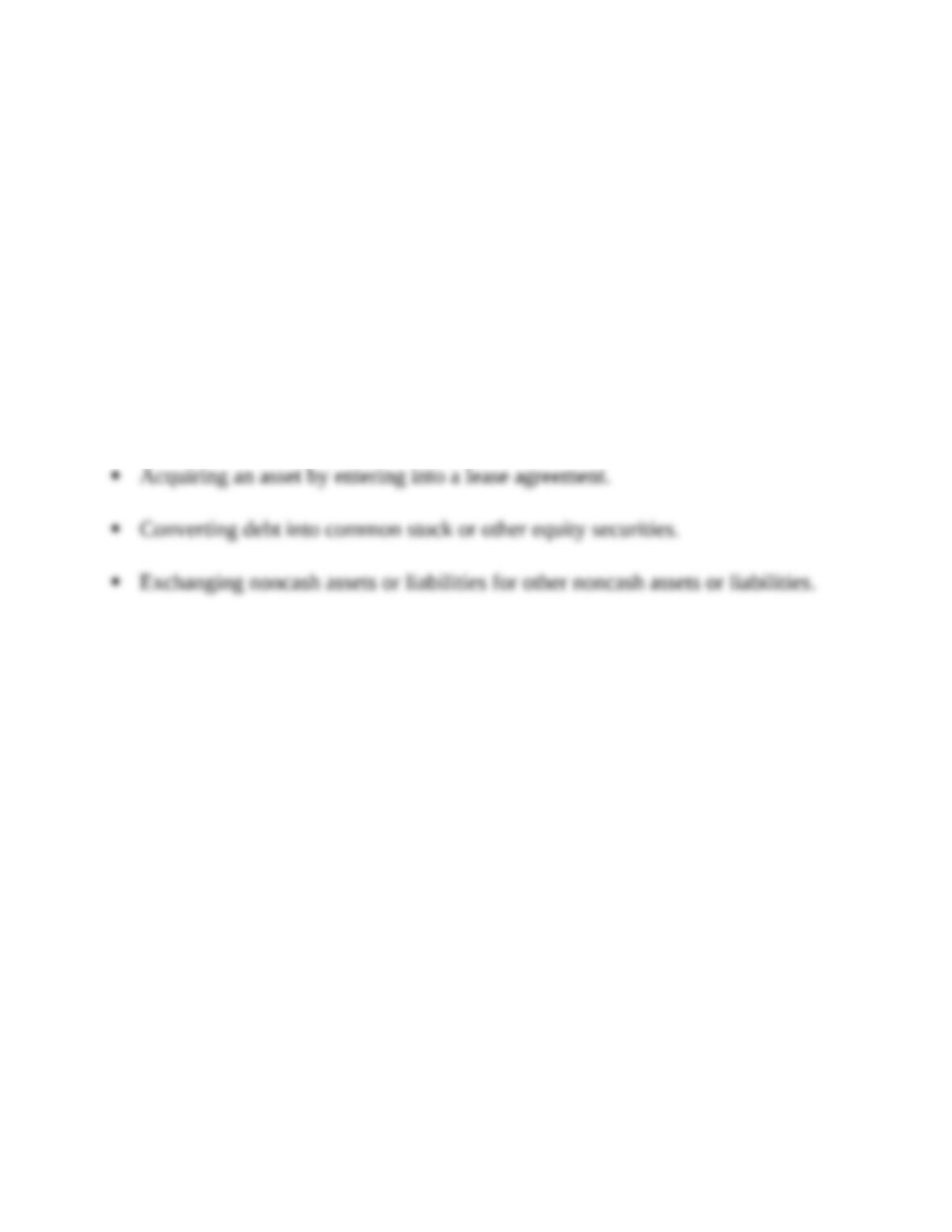
reporting these activities. Examples of noncash transactions that would be
reported:
Acquiring an asset by incurring a debt payable to the seller.
Ethics Case 21–7
Discussion should include these elements.
The apparent situation:
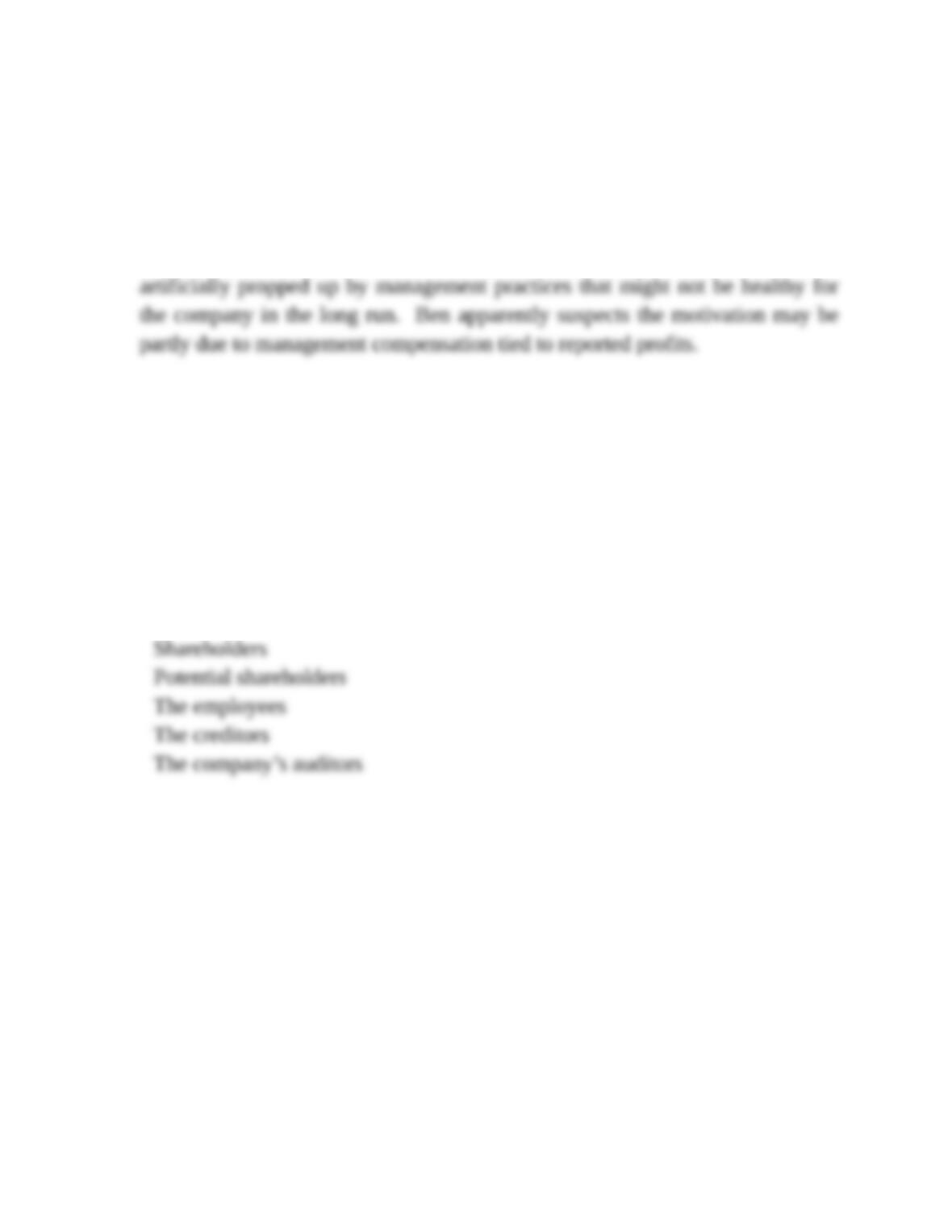
There seems to be at least superficial evidence that income is being
Ethical Dilemma:
Does Ben have an obligation to challenge the questionable practices? If his
suspicions are confirmed, what action, if any, should he take?
Who is affected?:
Ben
President, controller, and other managers
Analysis Case 21–8
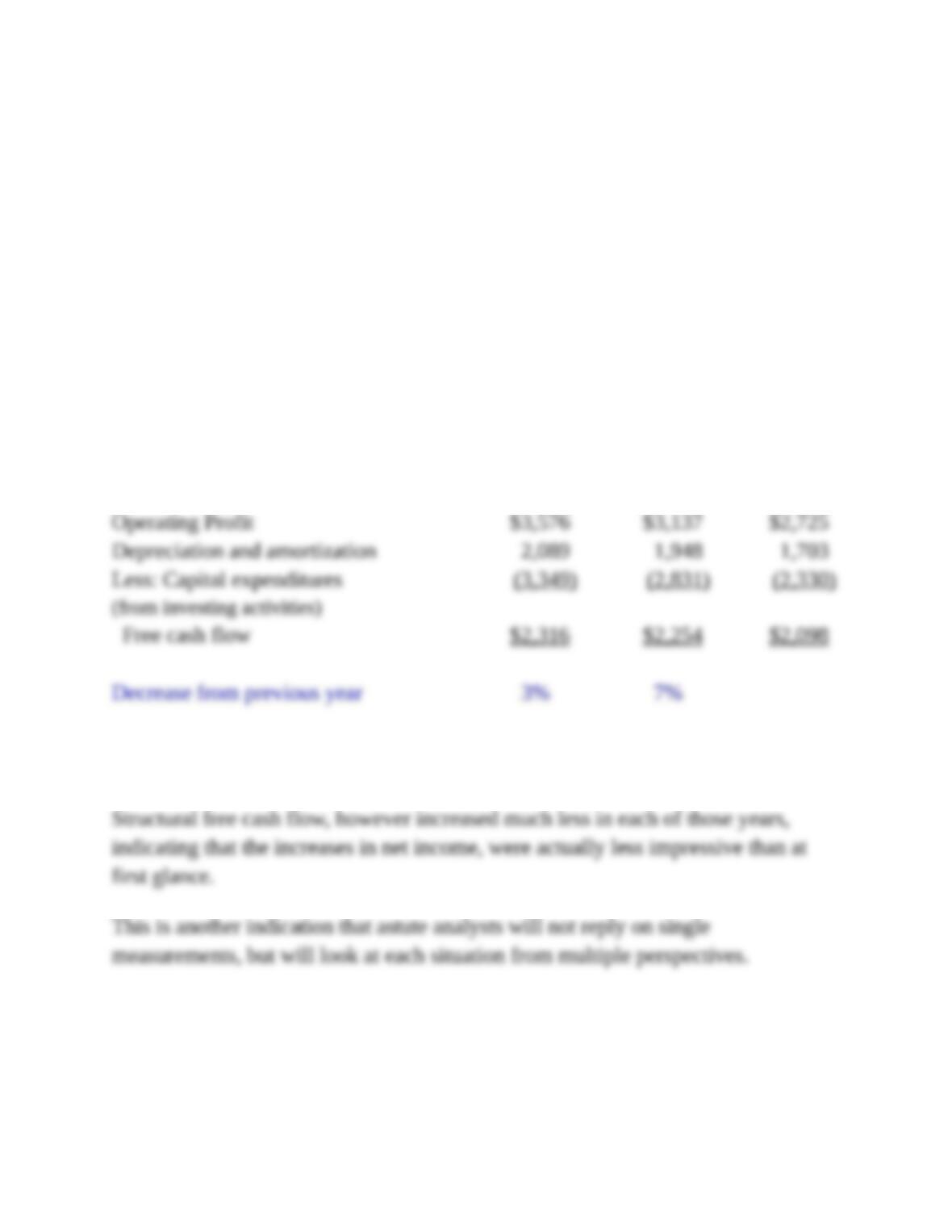
Structural free cash flow (what Warren Buffett calls “owner’s earnings”) is net
income from operations plus depreciation and amortization minus capital
expenditures:
Jan. 30 Jan. 31 Feb. 1
2016 2015 2014
Net income $2,039 $1,728 $1,519
Increase from previous year 18% 14%
We see a sizeable increase in net income in each of the two previous years.