
AACSB assurance of learning standards in accounting and business education require
documentation of outcomes assessment. Although schools, departments, and faculty may approach
assessment and its documentation differently, one approach is to provide specific questions on exams
that become the basis for assessment. To aid faculty in this endeavor, we have labeled each question,
exercise, and problem in Intermediate Accounting, 9e, with the following AACSB learning skills:
Questions AACSB Tags Exercises (cont.) AACSB Tags
21–1 Reflective thinking 21–6 Analytic
21–2 Reflective thinking 21–7 Analytic
21–3 Reflective thinking 21–8 Analytic
21–4 Reflective thinking 21–9 Analytic
21–5 Reflective thinking 21–10 Analytic
21–6 Reflective thinking 21–11 Analytic
21–7 Reflective thinking 21–12 Analytic
21–8 Reflective thinking 21–13 Analytic
21–9 Reflective thinking 21–14 Analytic
21–10 Reflective thinking 21–15 Analytic
21–11 Reflective thinking 21–16 Analytic
21–12 Reflective thinking 21–17 Analytic
21–13 Analytic 21–18 Analytic
21–14 Reflective thinking 21–19 Analytic
21–15 Reflective thinking 21–20 Analytic
21–16 Reflective thinking 21–21 Analytic
21–17 Reflective thinking 21–22 Analytic
21–18 Reflective thinking 21–23 Analytic
21–19 Reflective thinking 21–24 Analytic
21–20 Reflective thinking 21–25 Analytic
21–21 Diversity, Reflective thinking 21–26 Analytic
21–22 Diversity, Reflective thinking 21–27 Analytic
Brief Exercises 21–28 Analytic
21–1 Analytic 21–29 Communication
21–2 Analytic 21–30 Communication
21–3 Analytic 21–31 Analytic
21–4 Analytic 21–32 Analytic
21–5 Analytic CPA/CMA
21–6 Analytic 1 Reflective thinking
21–7 Analytic 2 Analytic
21–8 Analytic 3 Analytic
21–9 Analytic 4 Reflective thinking
21–10 Analytic 5 Reflective thinking
21–11 Analytic 6 Analytic
21–12 Analytic 7 Diversity, Reflective thinking
Exercises 8 Diversity, Reflective thinking
21–1 Reflective thinking 9 Diversity, Analytic
21–2 Analytic 1 Reflective thinking
21–3 Analytic 2 Analytic
21–4 Analytic 3 Analytic
21–5 Analytic
Problems AACSB Tags
21–1 Reflective thinking
© The McGraw-Hill Companies, Inc., 2018
Solutions Manual, Vol.2, Chapter 21 21–&
Chapter 21 The Statement of Cash Flows Revisited
21–2 Analytic
21–3 Analytic
21–4 Analytic
21–5 Analytic
21–6 Analytic
21–7 Analytic
21–8 Analytic
21–9 Analytic
21–10 Analytic
21–11 Analytic
21–12 Analytic
21–13 Analytic
21–14 Analytic
21–15 Analytic
21–16 Analytic
21–17 Analytic
21–18 Analytic
21–19 Analytic
21–20 Analytic
21–21 Analytic
Question 21–1
Every cash flow eventually affects the balance of
one or more accounts in the balance sheet, and the
cash flows related to income-producing activities also are represented in the income
statement. The activities, though, are not necessarily reported in the balance sheet and
income statement in the period the cash flows occur. This is because the income
statement measures activities on an accrual basis rather than a cash basis. The
statement of cash flows fills the information gap by reporting the cash flows directly
and in the period the cash flows occur.
Question 21–2
The informational value of the presentation is enhanced if the cash flows are
classified according to the nature of the activities that create the cash flows. The three
Question 21–3
© The McGraw-Hill Companies, Inc., 2018
Solutions Manual, Vol.2, Chapter 21 21–&
Questions for Review of Key Topics
No, an investment in Treasury bills need not always be classified as a cash
equivalent. A guideline—not a rule—for cash equivalents is that these investments
© The McGraw-Hill Companies, Inc., 2018
Solutions Manual, Vol.2, Chapter 21 21–&
Answers to Questions (continued)
Question 21–4
Transactions that involve merely transfers from cash to cash equivalents such as
the purchase of a three-month Treasury bill, or from cash equivalents to cash such as
the sale of a Treasury bill, should not be reported on the statement of cash flows. A
Question 21–5
“Cash flows from operating activities” are both inflows and outflows of cash that
result from the same activities that are reported on the income statement. However,
Question 21–6
The generalization that “cash flows from operating activities” report all the
elements of the income statement on a cash basis is not strictly true for all elements of
the income statement. No cash effects are reported for depreciation and amortization
© The McGraw-Hill Companies, Inc., 2018
Solutions Manual, Vol.2, Chapter 21 21–&
Answers to Questions (continued)
Question 21–7
“Cash flows from investing activities” are both outflows and inflows of cash due to
the acquisition and disposition of assets. This classification includes cash payments to
Two exceptions are inventories and cash equivalents. The purchase and sale of
inventories are not considered investing activities because inventories are purchased
Question 21–8
The payment of cash dividends to shareholders is classified as a financing activity,
but paying interest to creditors is classified as an operating activity. This is because
© The McGraw-Hill Companies, Inc., 2018
Solutions Manual, Vol.2, Chapter 21 21–&
Answers to Questions (continued)
Question 21–9
A statement of cash flows reports transactions that cause an increase or a decrease
in cash. However, some transactions that don’t increase or decrease cash, but which
1. Acquiring an asset by incurring a debt payable to the seller.
Question 21–10
The acquisition of a building purchased by issuing a mortgage note payable in
addition to a cash down payment is an example of a transaction involving a significant
Question 21–11
Perhaps the most noteworthy item reported on an income statement is net income
—the amount by which revenues exceed expenses. The most noteworthy item
reported on a statement of cash flows is not the amount of net cash flows. In fact, this
© The McGraw-Hill Companies, Inc., 2018
Solutions Manual, Vol.2, Chapter 21 21–&
Answers to Questions (continued)
Question 21–12
The spreadsheet entries shown in the two “changes” columns, which separate the
beginning and ending balances, explain the increase or decrease in each account
balance. Spreadsheet entries duplicate the actual journal entries used to record the
Question 21–13
If sales revenue is $200,000, this does not necessarily mean that $200,000 cash
was received from customers. Amounts reported on the income statement usually do
not represent the cash effects of the items reported. By referring to the beginning and
Question 21–14
When an asset is sold at a gain, the gain is not reported as a cash inflow from
operating activities. A gain (or loss) is simply the difference between cash received in
© The McGraw-Hill Companies, Inc., 2018
Solutions Manual, Vol.2, Chapter 21 21–&
Answers to Questions (continued)
Question 21–15
When determining the amount of cash paid for income taxes, an increase in the
deferred income tax liability account would indicate that less cash had been paid than
Question 21–16
When using the indirect method of determining net cash flows from operating
activities, the net cash increase or decrease from operating activities is derived
indirectly by starting with reported net income and “working backwards” to convert
Question 21–17
When using the indirect method of determining net cash flows from operating
activities, when components of net income increase or decrease cash, but by an
amount different from that reported on the income statement, net income is adjusted
© The McGraw-Hill Companies, Inc., 2018
Solutions Manual, Vol.2, Chapter 21 21–&
Answers to Questions (continued)
Question 21–18
Either the direct method or the indirect method is permitted, but the FASB strongly
encourages companies to report “cash flows from operating activities” by the direct
method. The direct method reports specific operating cash receipts and operating cash
Question 21–19
The direct and indirect methods are alternative approaches to deriving net cash
Question 21–20
Question 21–21
U.S. GAAP designates cash outflows for interest payments and cash inflows from
interest and dividends received as operating cash flows. Dividends paid to
© The McGraw-Hill Companies, Inc., 2018
Solutions Manual, Vol.2, Chapter 21 21–&
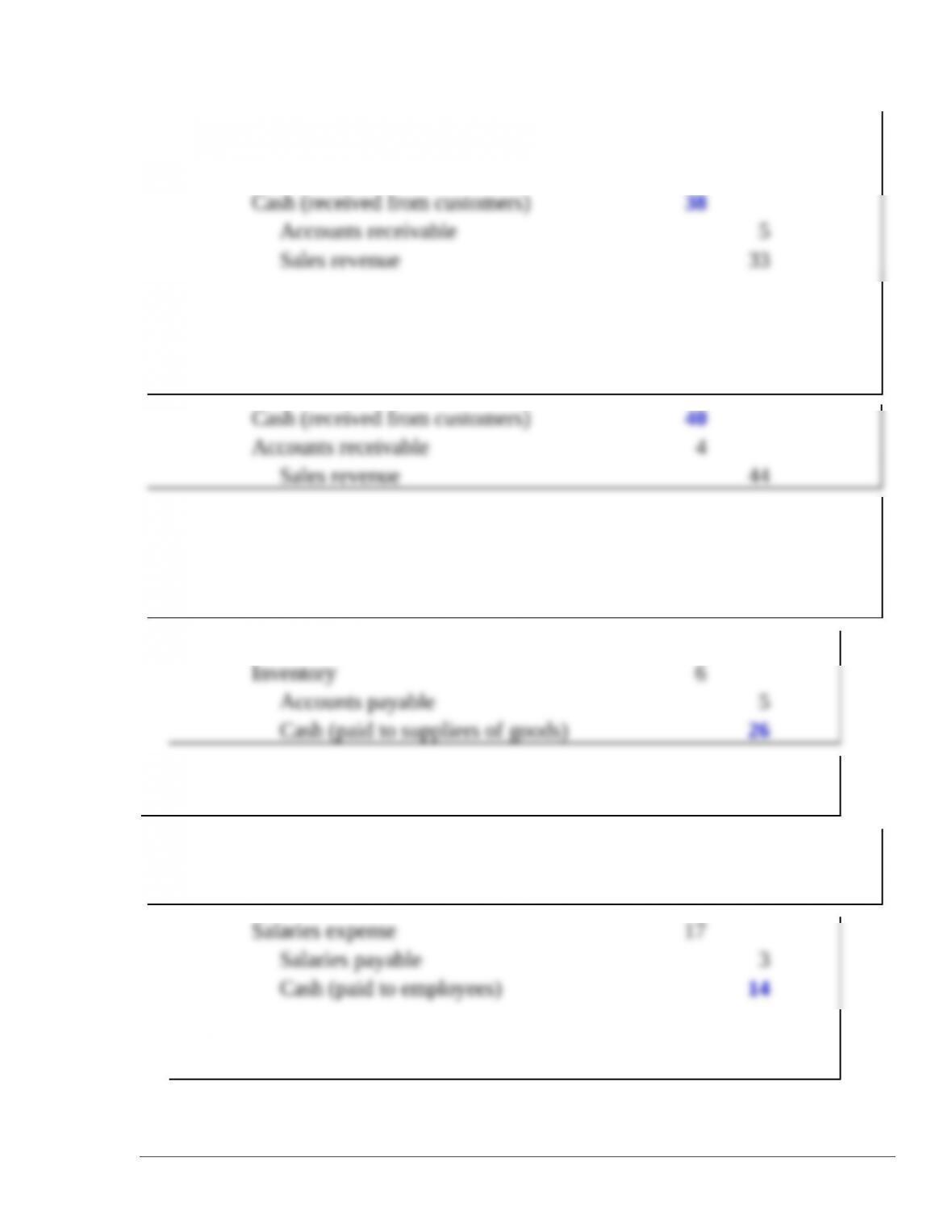
Summary Entry ($ in
millions)
Summary Entry ($ in
millions)
Summary Entry ($ in
millions)
Cost of goods sold 25
Summary Entry ($ in
millions)
© The McGraw-Hill Companies, Inc., 2018
Solutions Manual, Vol.2, Chapter 21 21–&
BRIEF Exercises
Brief Exercise 21–1
Brief Exercise 21–2
Brief Exercise 21–3
Brief Exercise 21–4
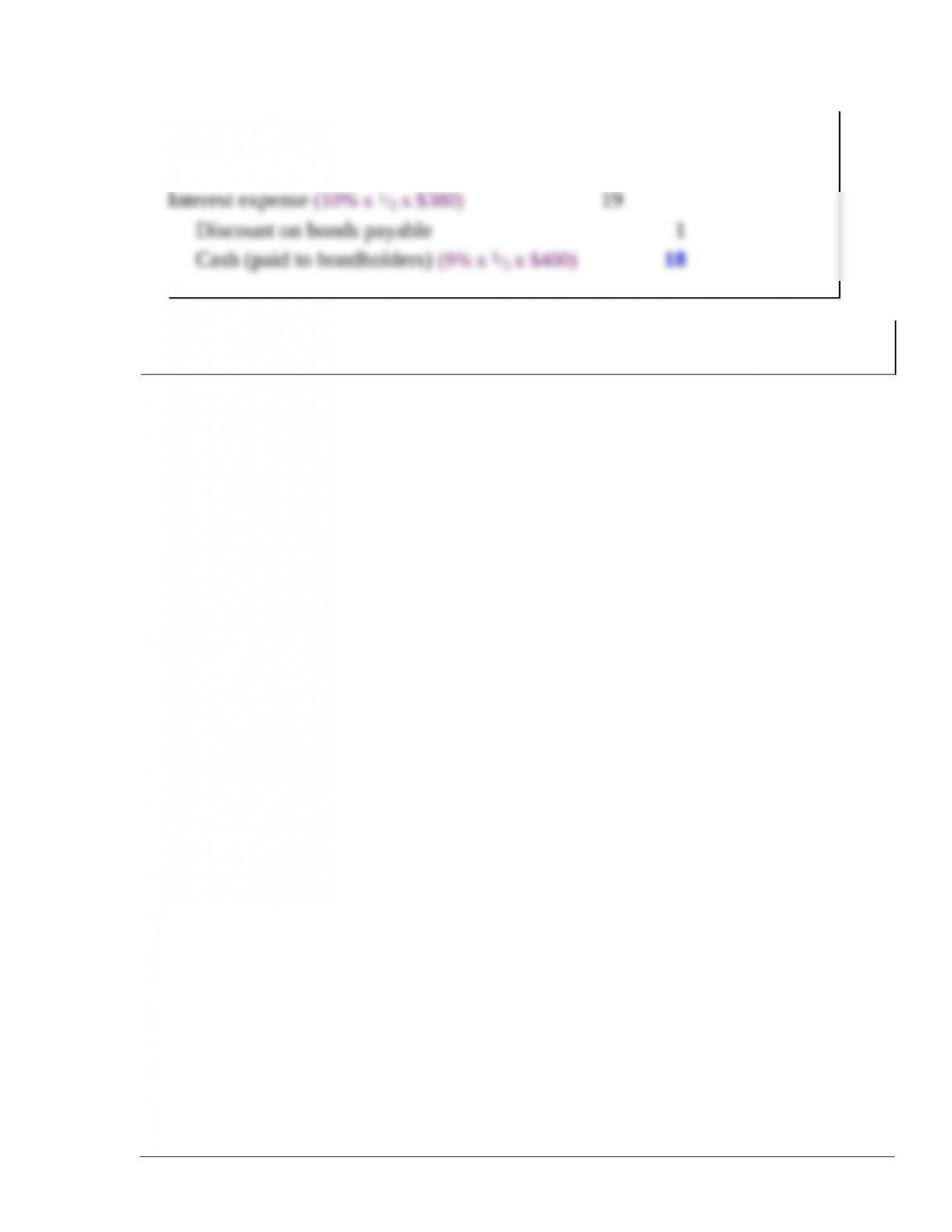
($
in millions)
Agee would report the cash inflow of $380 million from the sale of the bonds as a
cash inflow from financing activities in its statement of cash flows.
The $18 million cash interest paid is cash outflow from operating activities because
interest is an income statement (operating) item.
© The McGraw-Hill Companies, Inc., 2018
Solutions Manual, Vol.2, Chapter 21 21–&
Brief Exercise 21–5