Problem 20-12 (concluded)
f. This is a change in estimate resulting from a change in accounting principle and
is accounted for prospectively.
No entry is needed to record the change
2018 adjusting entry:
A change in depreciation method is considered a change in accounting
estimate resulting from a change in accounting principle. Accordingly,
Undepreciated cost, Jan. 1, 2018 (given) $460,800
Estimated residual value (0 )
g. This is a change in estimate.
No entry is needed to record the change
2018 adjusting entry:
If the effect is material, a disclosure note should describe the effect of a
Problem 20-13
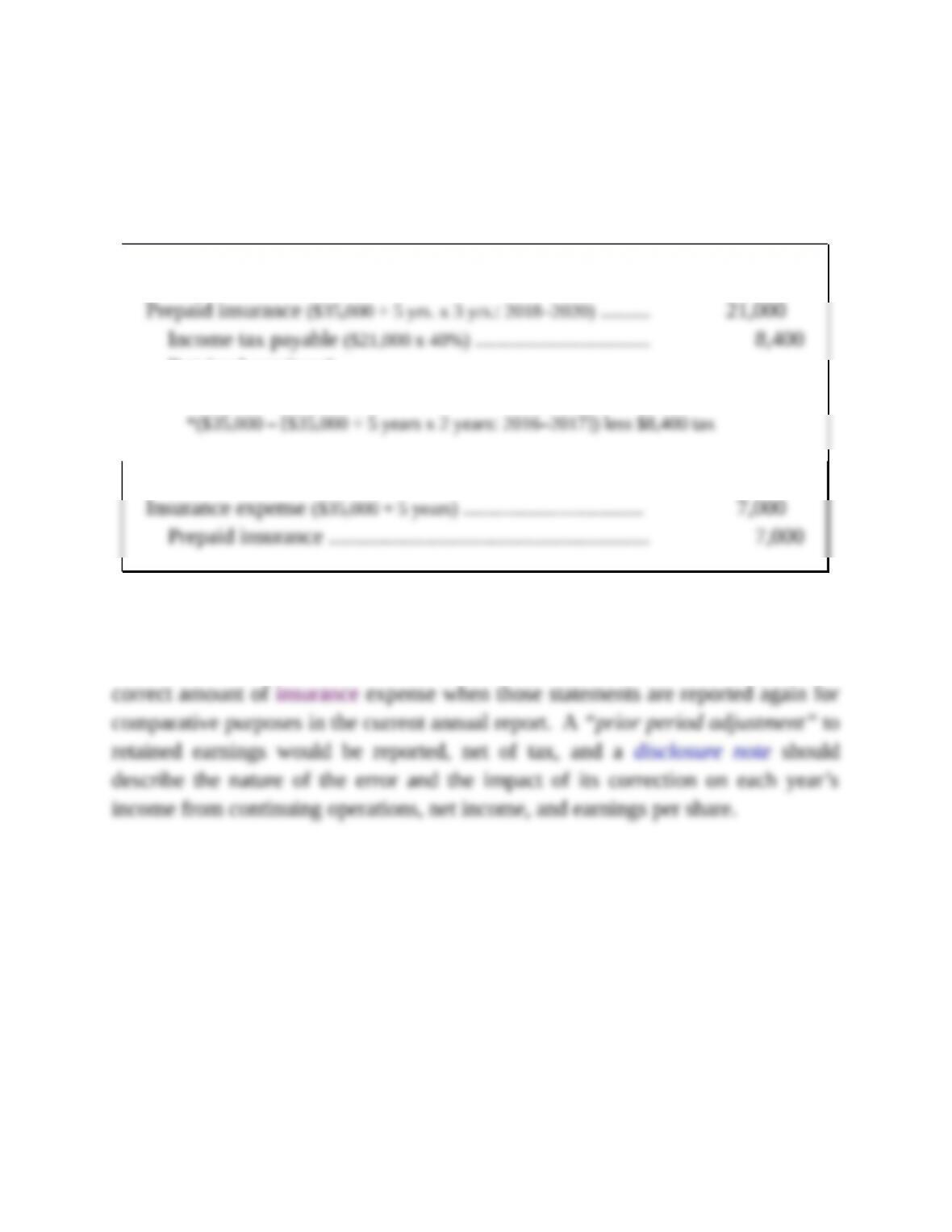
a. This is a correction of an error.
To correct the error:
Retained earnings* ………………………………………………………..
12,600
2018 adjusting entry:
The financial statements that were incorrect as a result of the error would be
retrospectively restated to report the prepaid insurance acquired and reflect the
Problem 20-13 (continued)
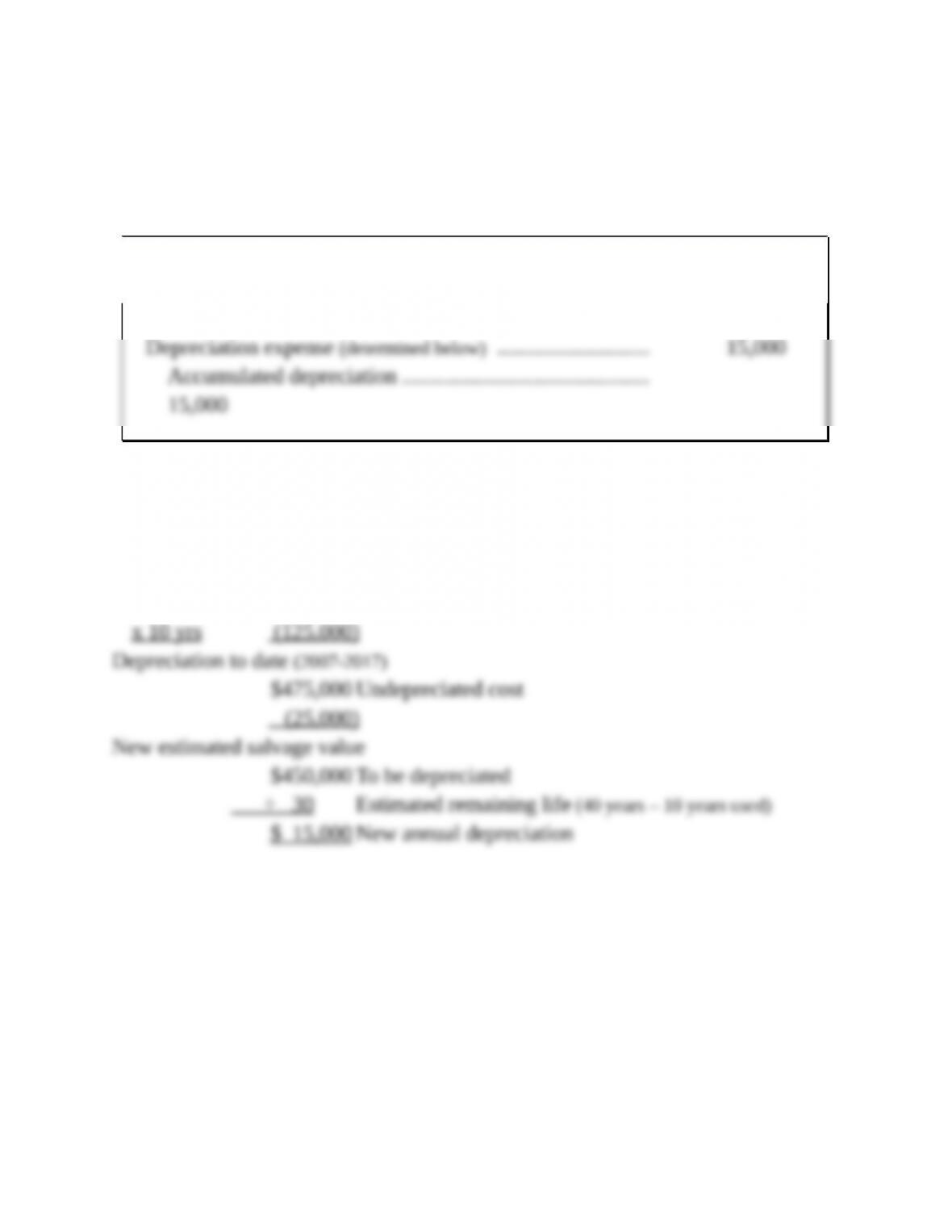
b. This is a change in estimate.
No entry is needed to record the change
2018 adjusting entry:
Calculation of annual depreciation after the change:
$600,000
Cost
$12,500 Old depreciation ([$600,000 – 100,000] ÷ 40 years)
Problem 20-13 (continued)
A disclosure note should describe the effect of a change in estimate on income
from continuing operations, net income, and related per share amounts for the
current period.
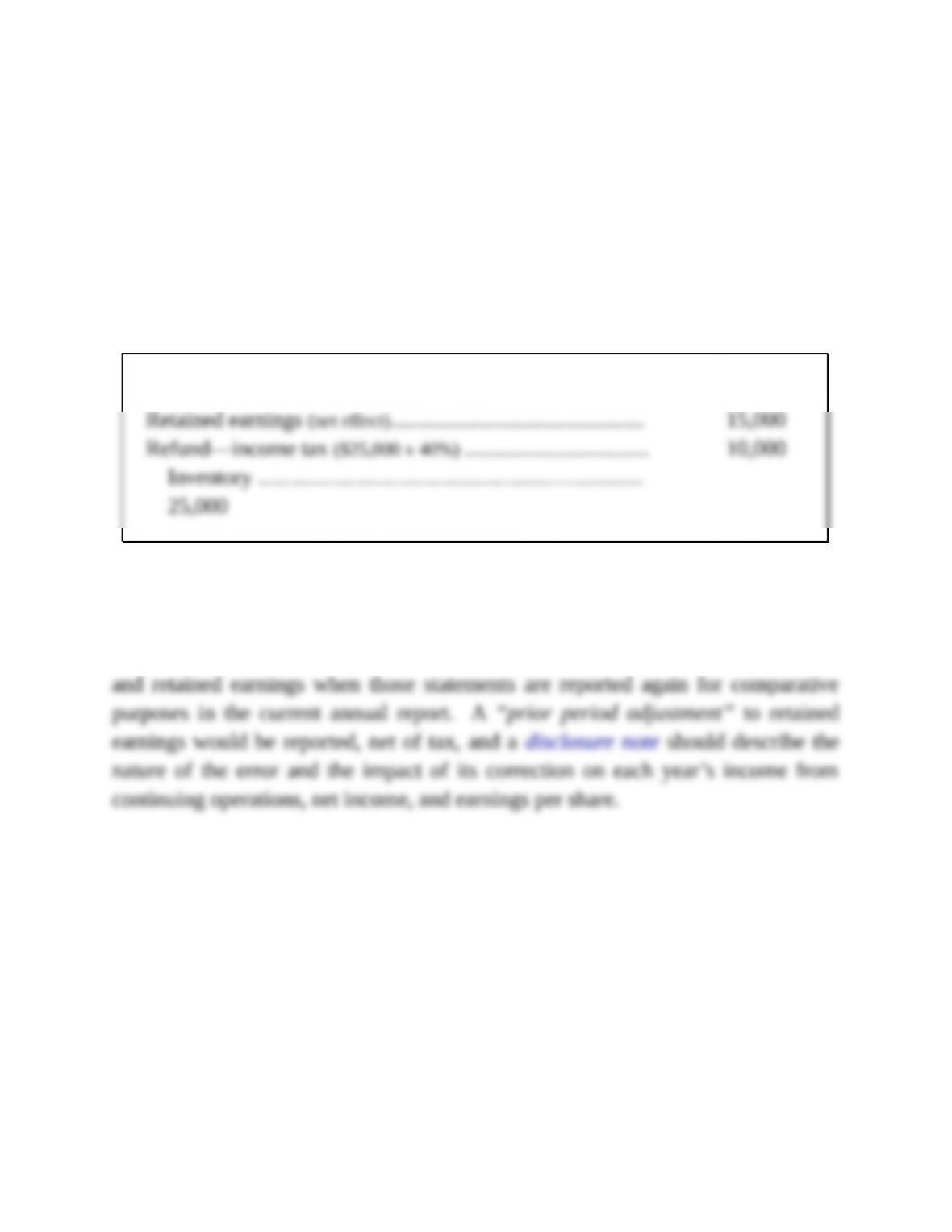
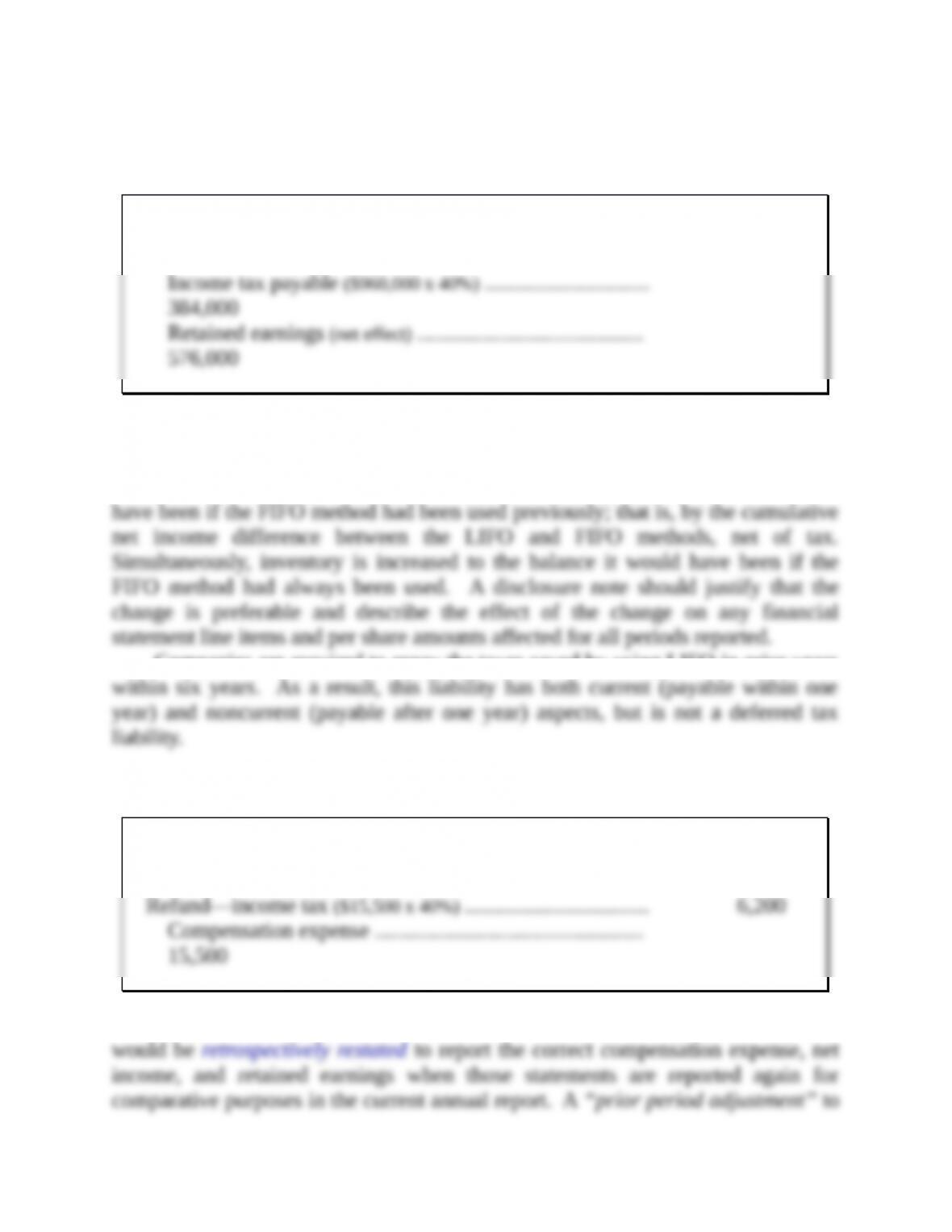
c. This is a correction of an error.
To correct the error:
The financial statements that were incorrect as a result of the error would be
retrospectively restated to report the correct inventory amounts, cost of goods sold,
Problem 20-13 (continued)
d. This is a change in accounting principle and is reported retrospectively.
To record the change:
Inventory (given)………………………………………………………… 960,000
Most changes in accounting principle are accounted for retrospectively. Prior
years’ financial statements are recast to reflect the use of the new accounting
method. The company should increase retained earnings to the balance it would
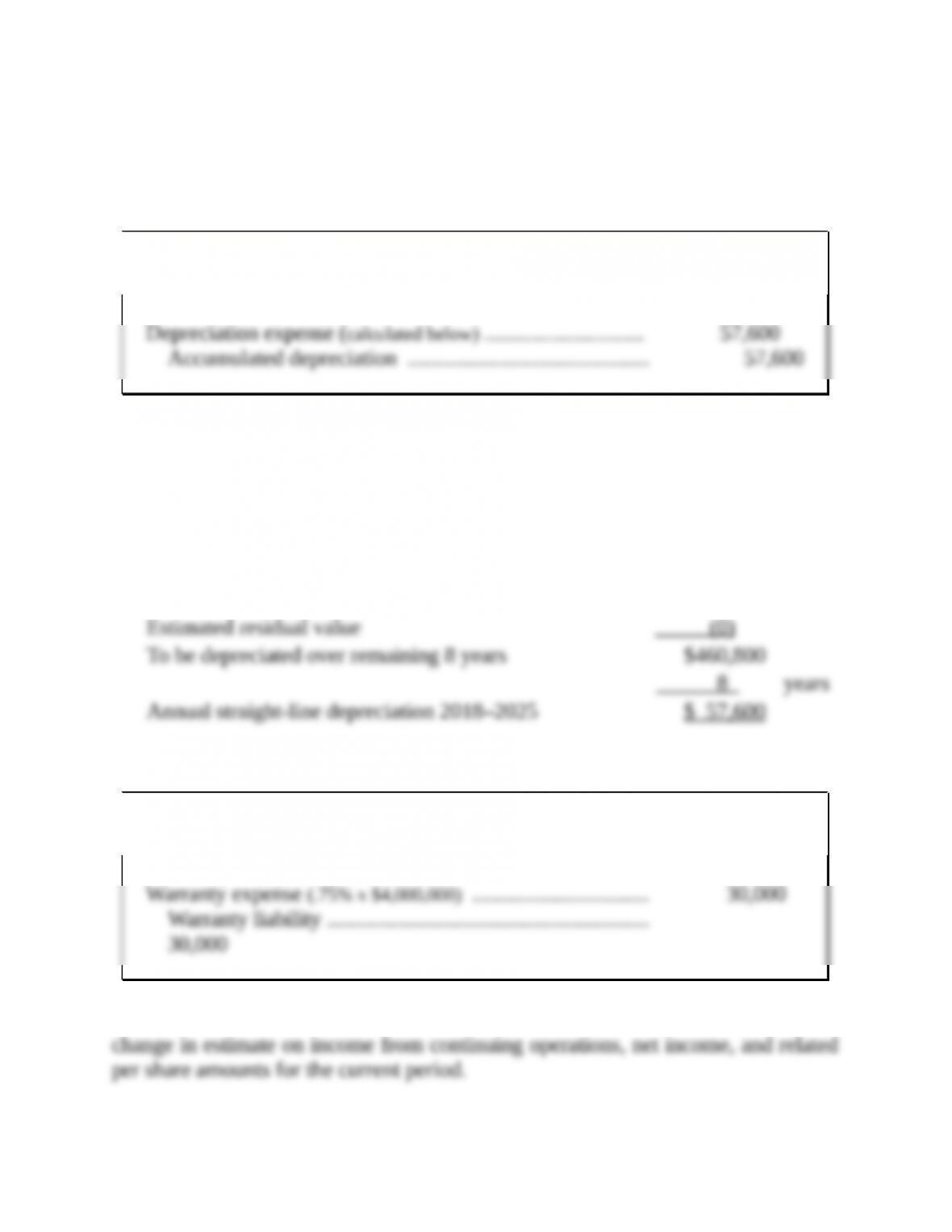
Companies are required to repay the taxes saved by using LIFO in prior years
e. This is a correction of an error.
To correct the error:
Retained earnings (net effect)……………………………………………… 9,300
The 2017 financial statements that were incorrect as a result of the error

Problem 20-13 (concluded)
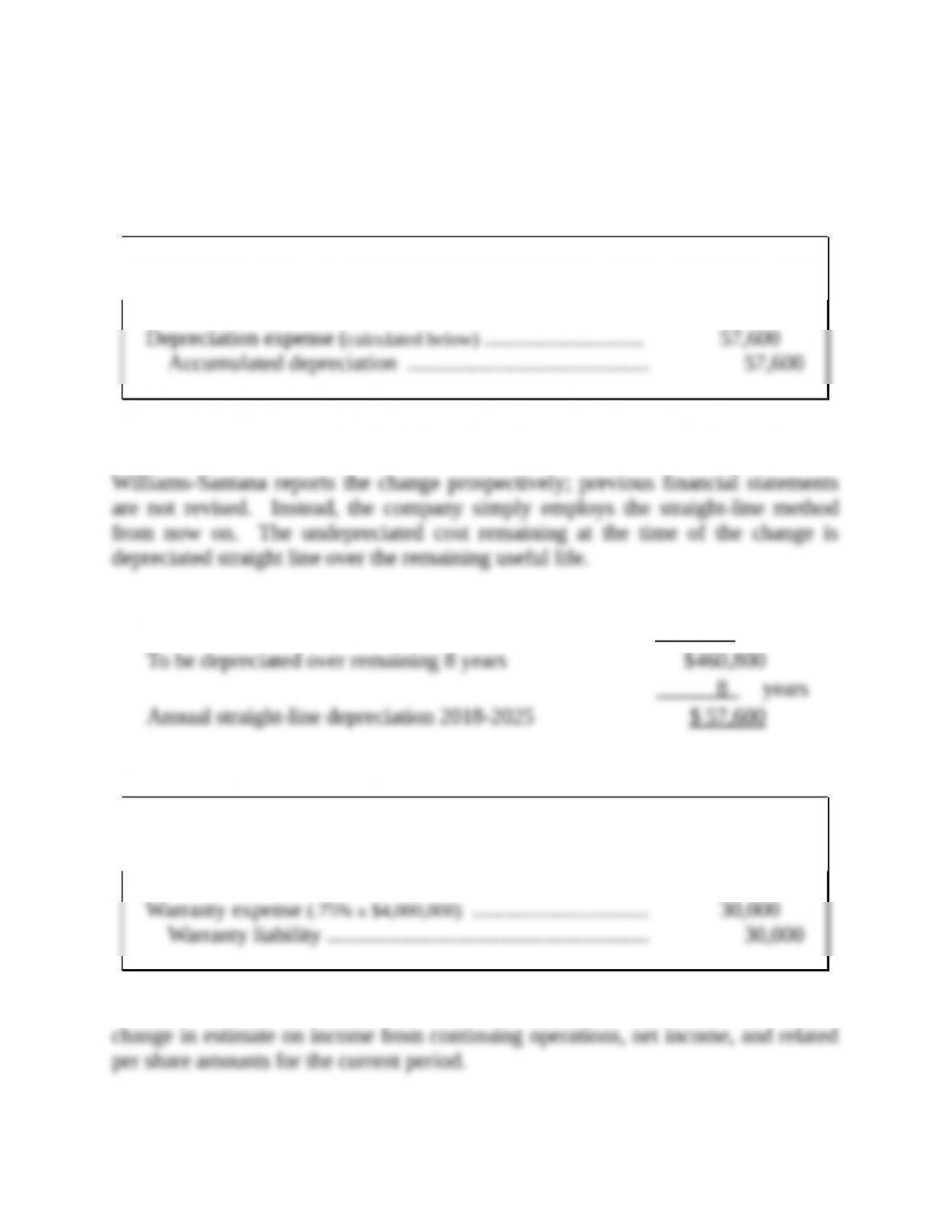
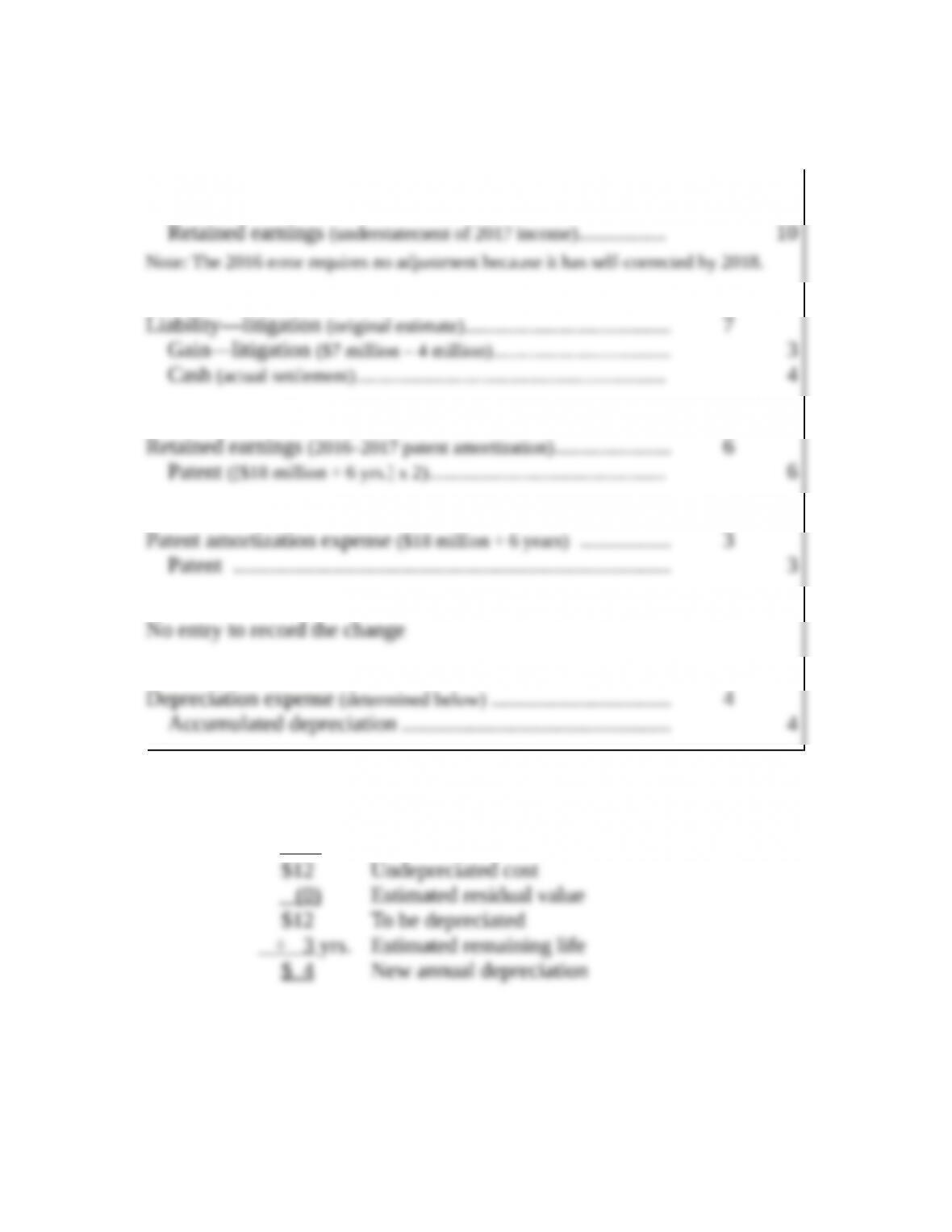
f. This is a change in estimate resulting from a change in accounting principle and
is accounted for prospectively.
No entry is needed to record the change
2018 adjusting entry:
A change in depreciation method is considered a change in accounting
estimate resulting from a change in accounting principle. Accordingly,
Williams-Santana reports the change prospectively; previous financial statements
are not revised. Instead, the company simply employs the straight-line method
from now on. The undepreciated cost remaining at the time of the change is
depreciated straight line over the remaining useful life.
Undepreciated cost, Jan. 1, 2018 (given) $460,800
g. This is a change in estimate.
No entry is needed to record the change.
2018 adjusting entry:
If the effect is material, a disclosure note should describe the effect of a
Problem 20-14
Requirement 1
a. ($ in millions)
Inventory (understatement of 2018 beginning inventory)……………. 10
b.
c.
2018 adjusting entry:
d.
2018 adjusting entry:
Calculation of annual depreciation after the change:
$30 Cost
(18 ) Previous depreciation (calculated below*)
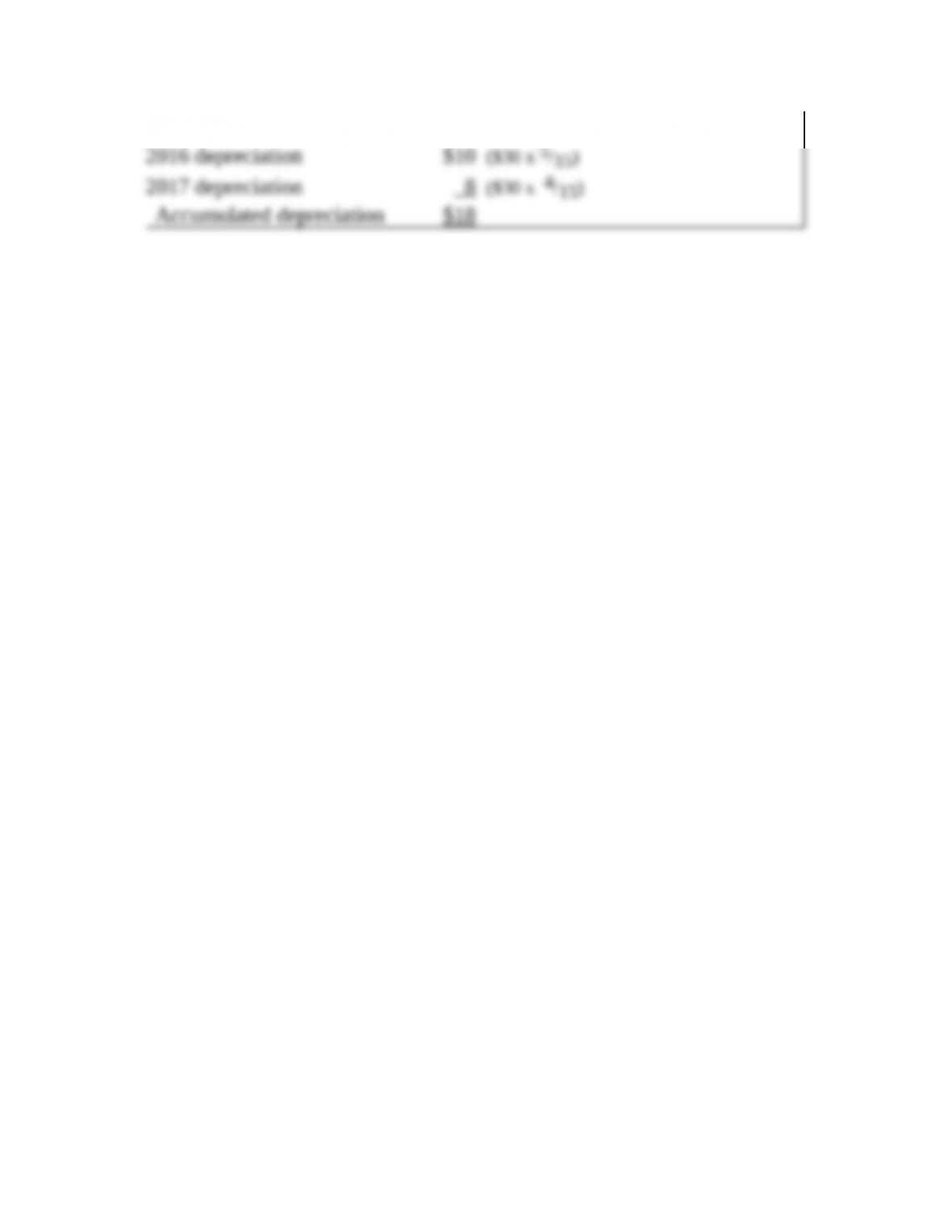
*SYD:
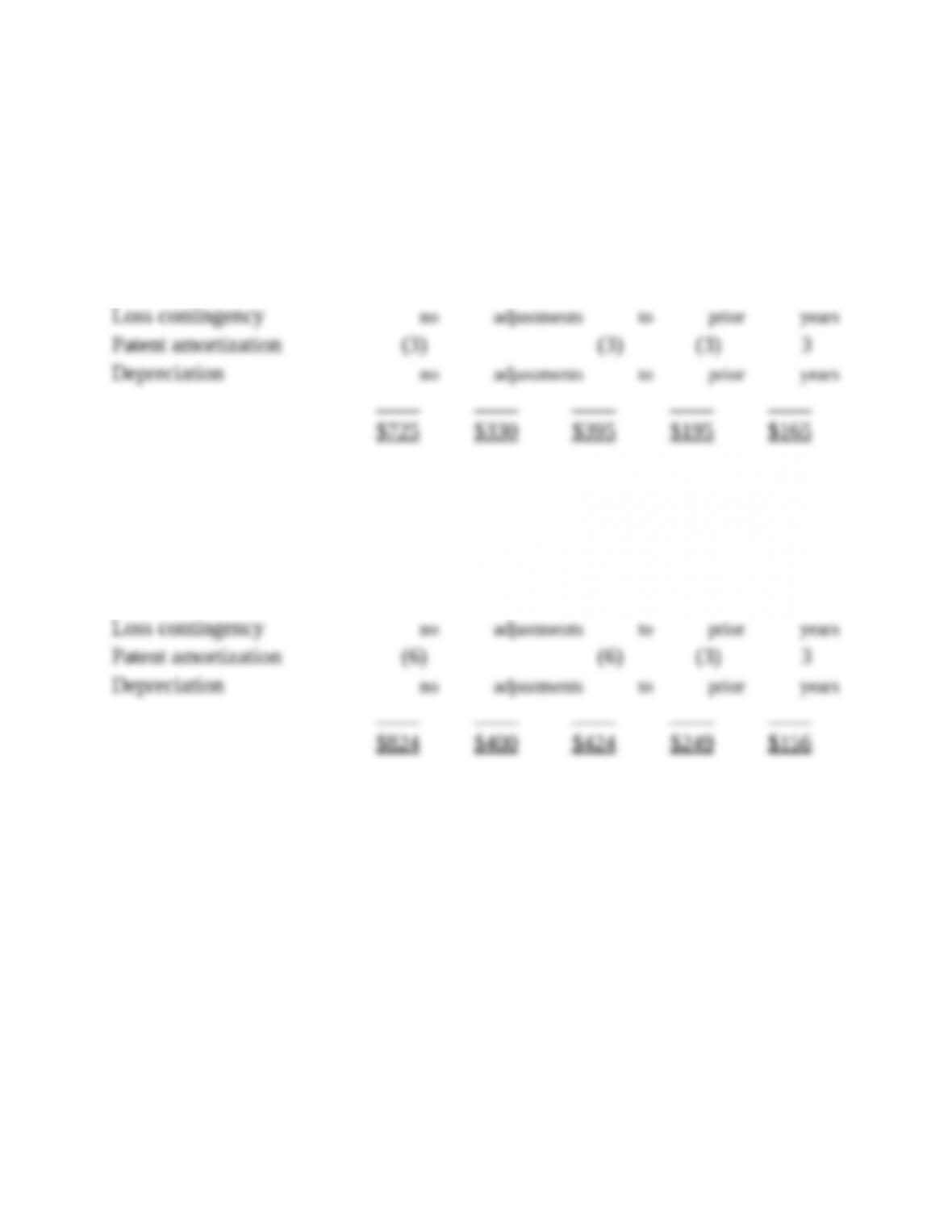
Problem 20-14 (concluded)
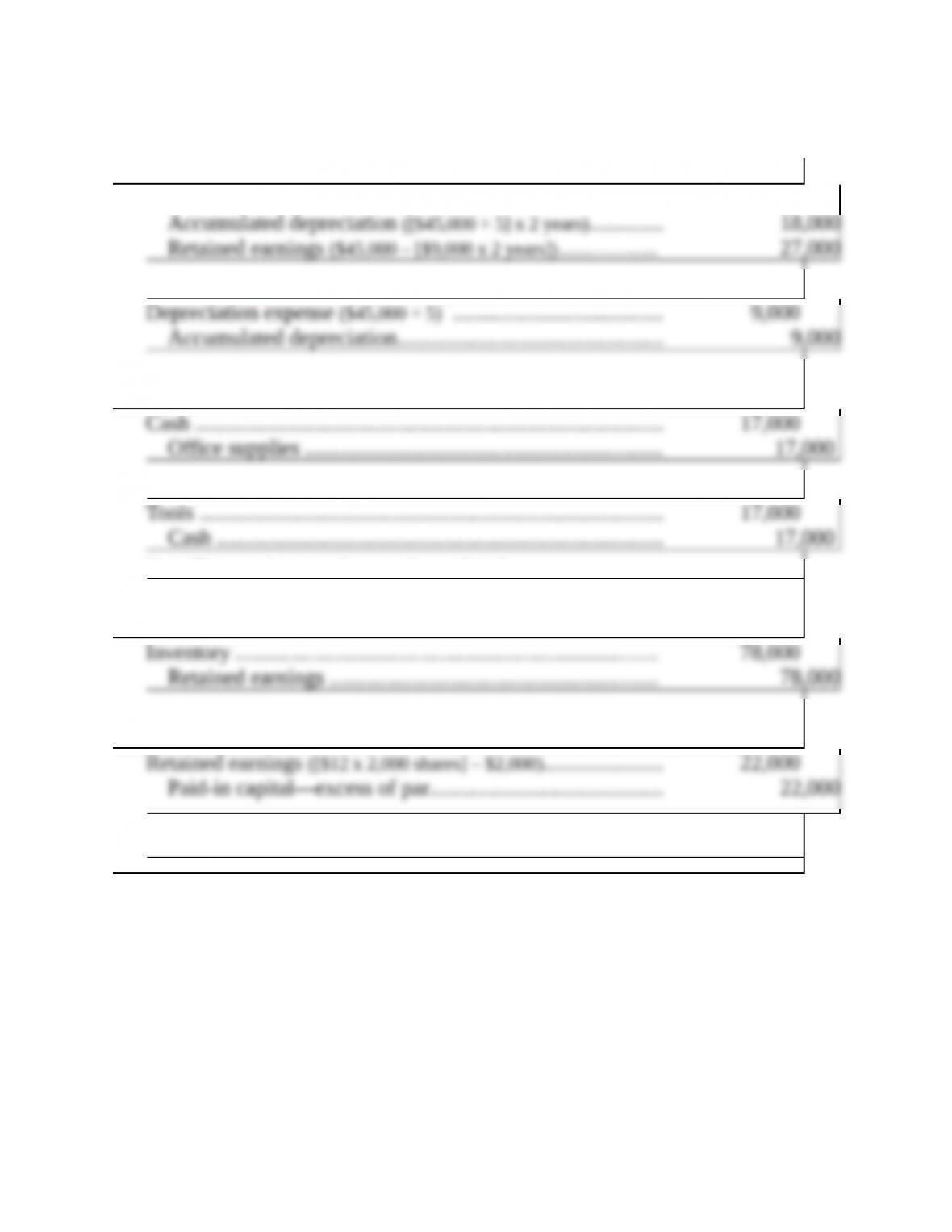
Requirement 2
Shareholders’ Net
Assets Liabilities Equity Income Expenses
2016 $740 $330 $410 $210 $150
2016 inventory (12) (12) (12) 12
2017 $820 $400 $420 $230 $175
2016 inventory 12 (12)
2017 inventory 10 10 10 (10)
Problem 20-15
1a. To correct the error:
Equipment (cost)………………………………………………………….. 45,000
2018 adjusting entry:
b. To reverse erroneous entry:
To record correct entry:
Note: These entries can, of course, be combined.
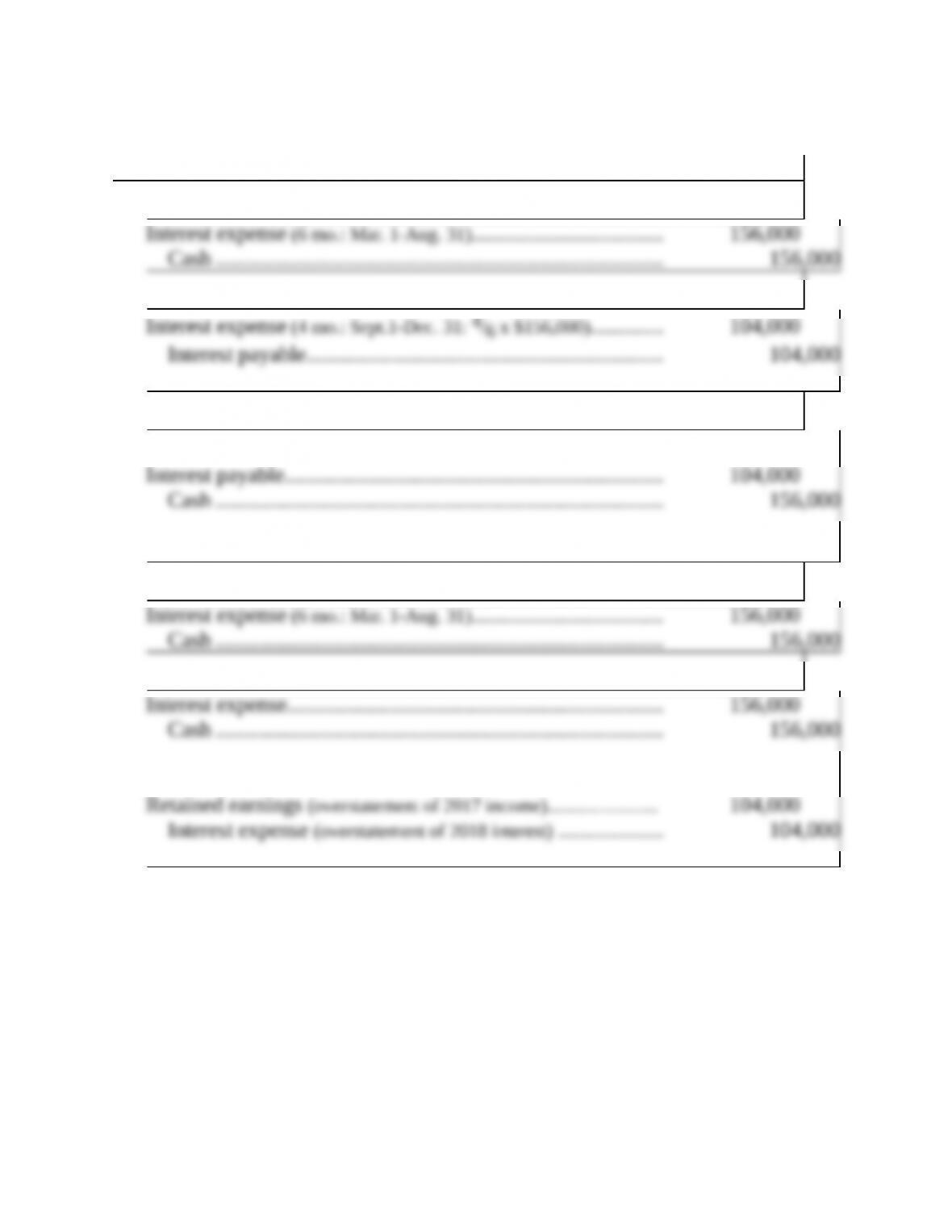
c. To correct the error:
d. To correct the error:
Note: A “small” stock dividend (< 25%) requires that the market value of the additional
shares be “capitalized.”
Problem 20-15 (continued)
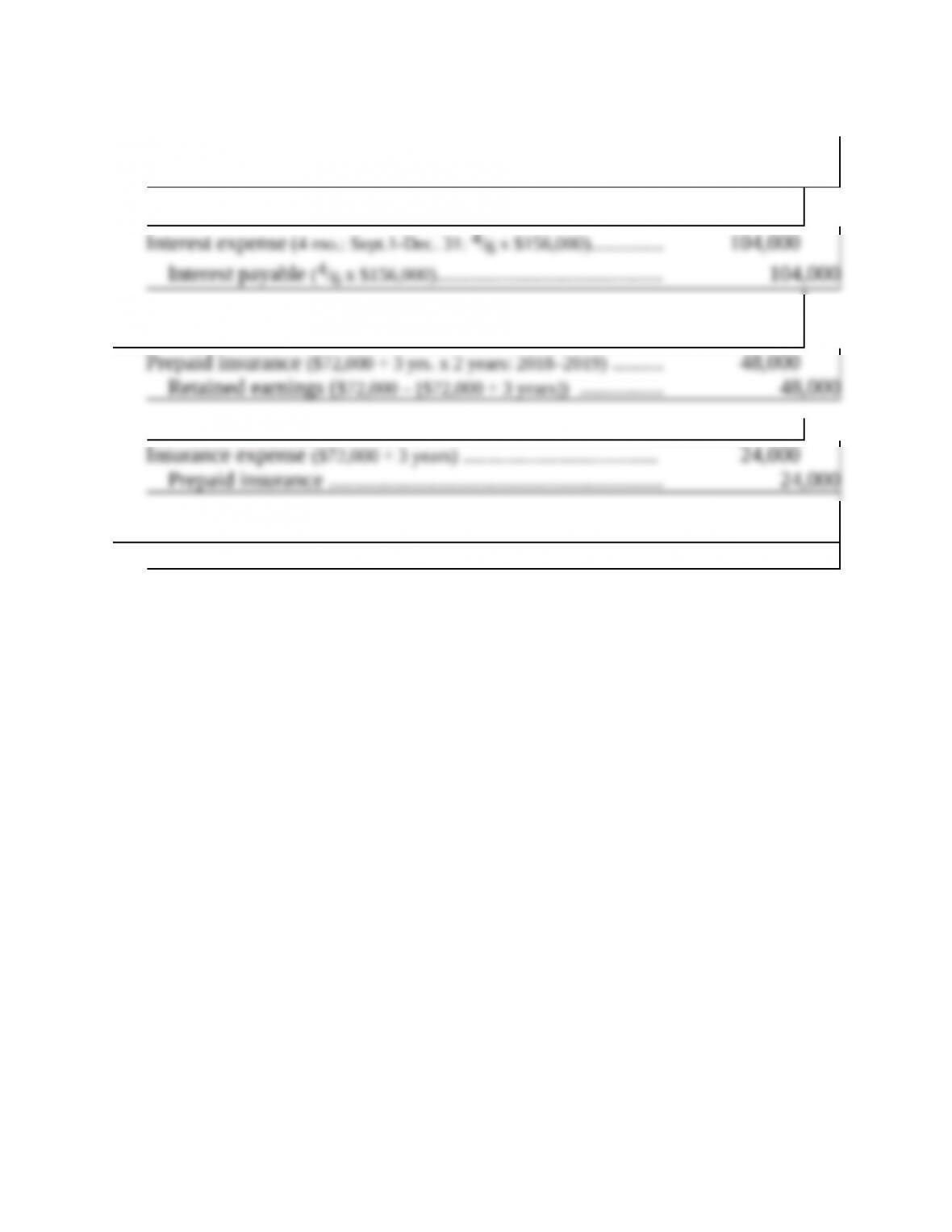
e. Should have been recorded:
September 1, 2017, semiannual interest payment:
December 31, 2017 adjusting entry:
March 1, 2018, semiannual interest payment:
Interest expense (2 mo.: Jan. – Feb.: 2/6 x $156,000)………………. 52,000
Incorrectly recorded:
September 1, 2017, semiannual interest payment:
March 1, 2018, semiannual interest payment:
To fix the error:
Problem 20-15 (concluded)
Annual adjusting entry:
2018 adjusting entry:
f. To correct the error:
2018 adjusting entry: