Problem 20-8 (concluded)
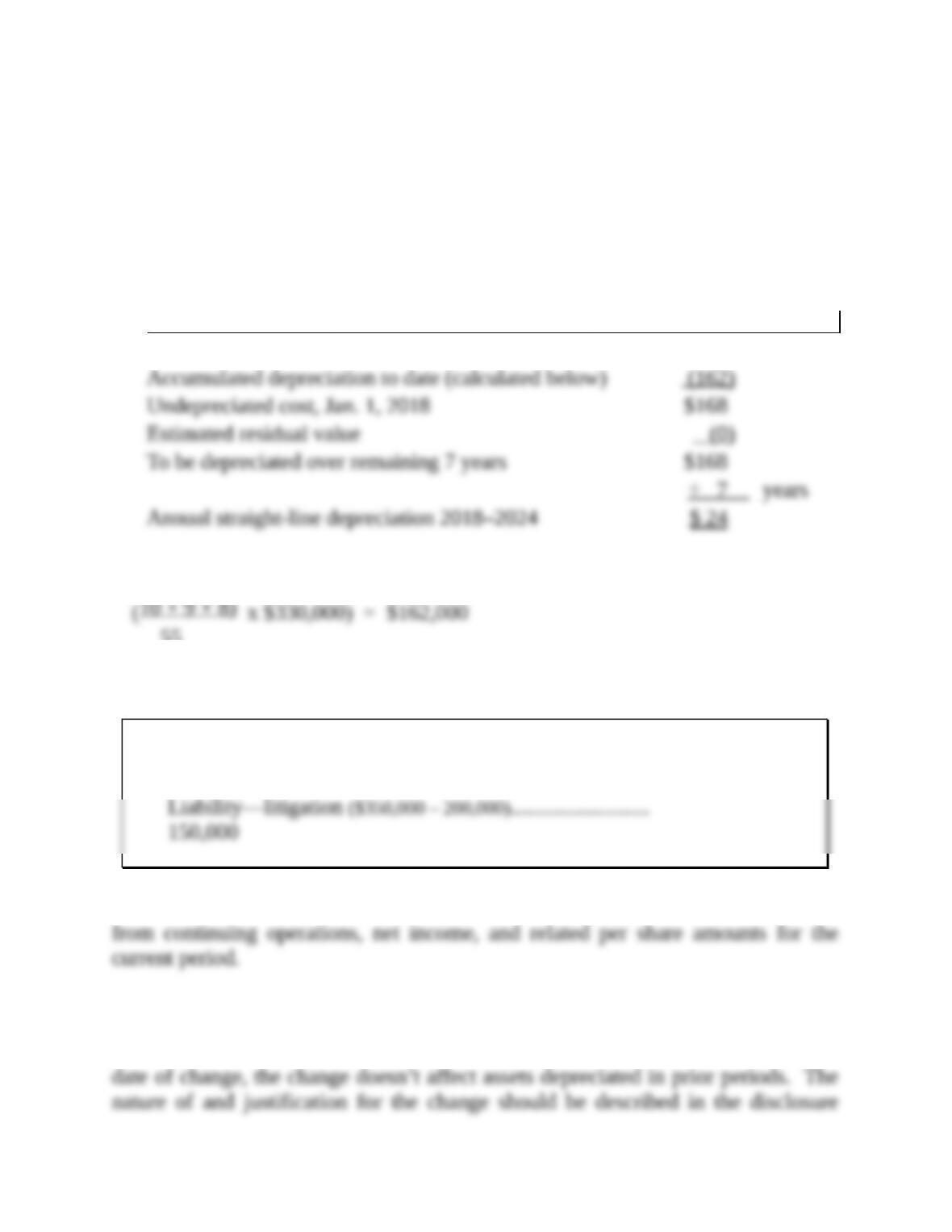
A change in depreciation method is considered a change in accounting
estimate resulting from a change in accounting principle. Accordingly, the
Hoffman Group reports the change prospectively; previous financial statements are
not revised. Instead, the company simply employs the straight-line method from
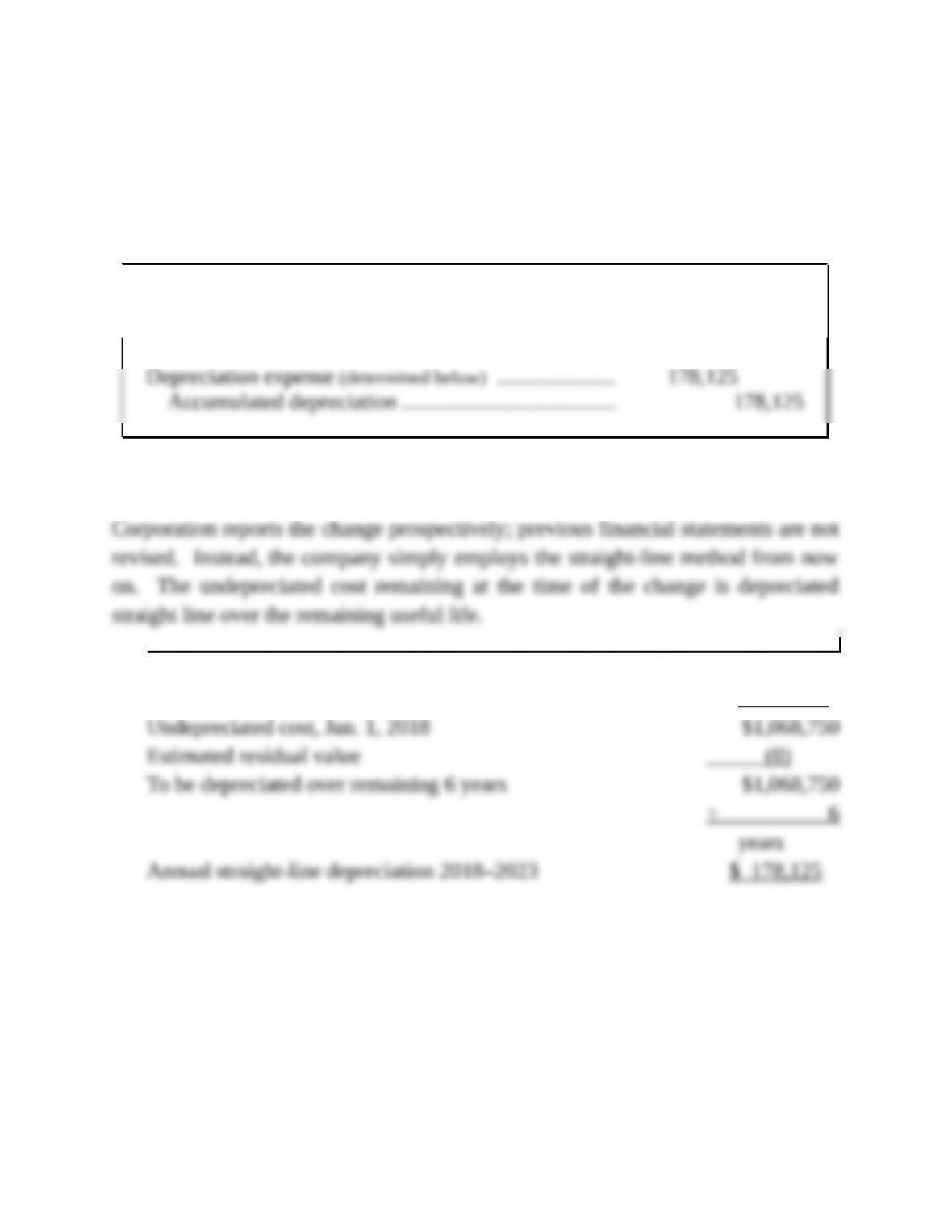
now on. The undepreciated cost remaining at the time of the change is depreciated
straight line over the remaining useful life.
($ in 000s)
Asset’s cost $330
Calculation of SYD depreciation:
55
e. This is a change in estimate.
To revise the liability on the basis of the new estimate:
Loss—litigation………………………………………………………… 150,000
A disclosure note should describe the effect of a change in estimate on income
f. This is a change in accounting principle accounted for prospectively.
Because the change will be effective only for assets placed in service after the

Problem 20-9
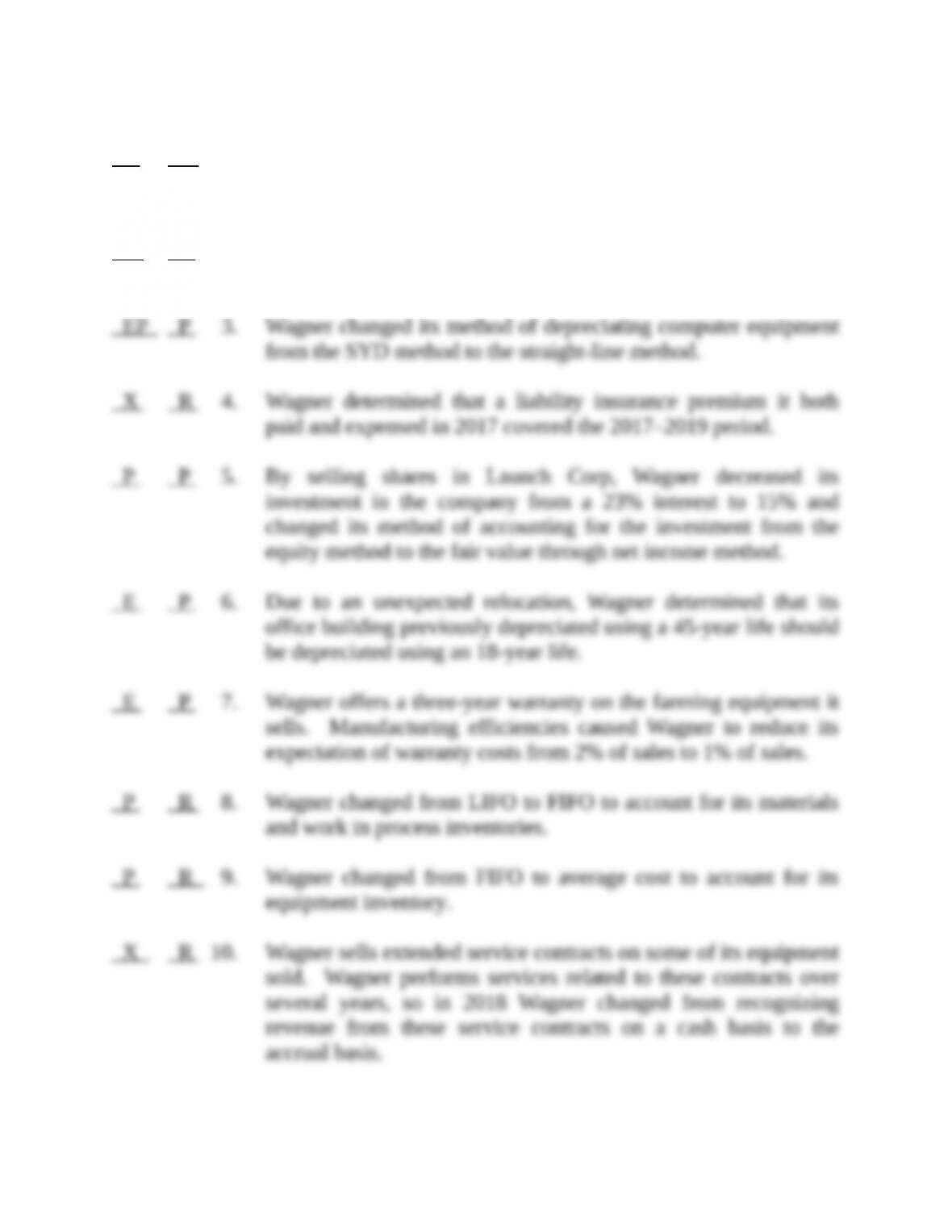
P R 1. By acquiring additional stock, Wagner increased its investment in
Wise, Inc., from a 12% interest to 25% and changed its method
of accounting for the investment to the equity method.
N P 2. Wagner instituted a postretirement benefit plan for its employees
in 2018. Wagner did not previously have such a plan.
Problem 20-10
Requirement 1
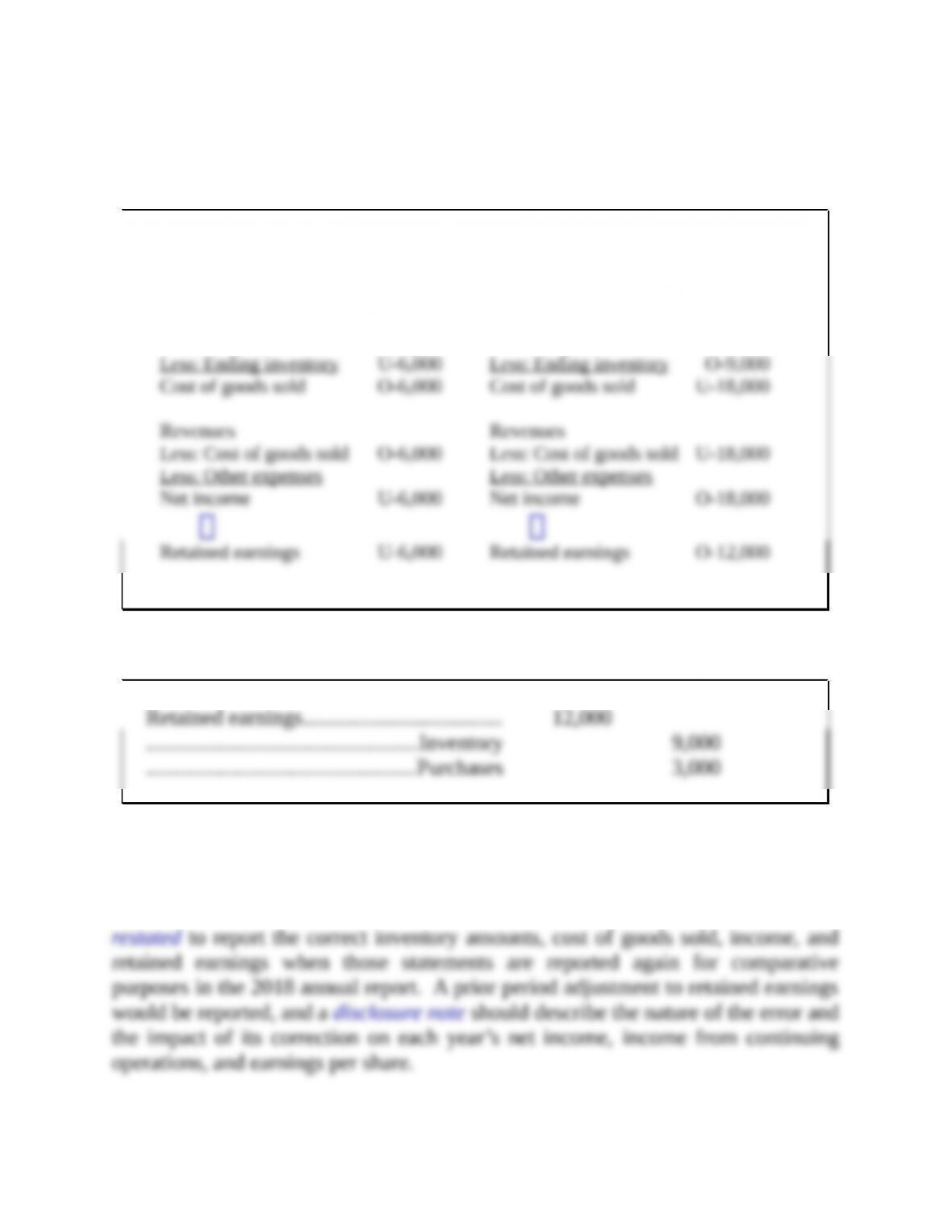
Analysis: U = Understated
O = Overstated
2016 2017
Beginning inventory Beginning inventory U-6,000
Plus: Net purchases Plus: Net purchases U-3,000
Requirement 2
Requirement 3
The financial statements that were incorrect as a result of both errors (effect of
one error in 2016 and effect of three errors in 2017) would be retrospectively
Problem 20-11
Requirement 1
Analysis:
Correct Incorrect
(Should Have Been Recorded) (As Recorded)
2016 Equipment 1,900,000 Equipment 2,000,000
Expense 100,000 Cash 2,000,000
Cash 2,000,000
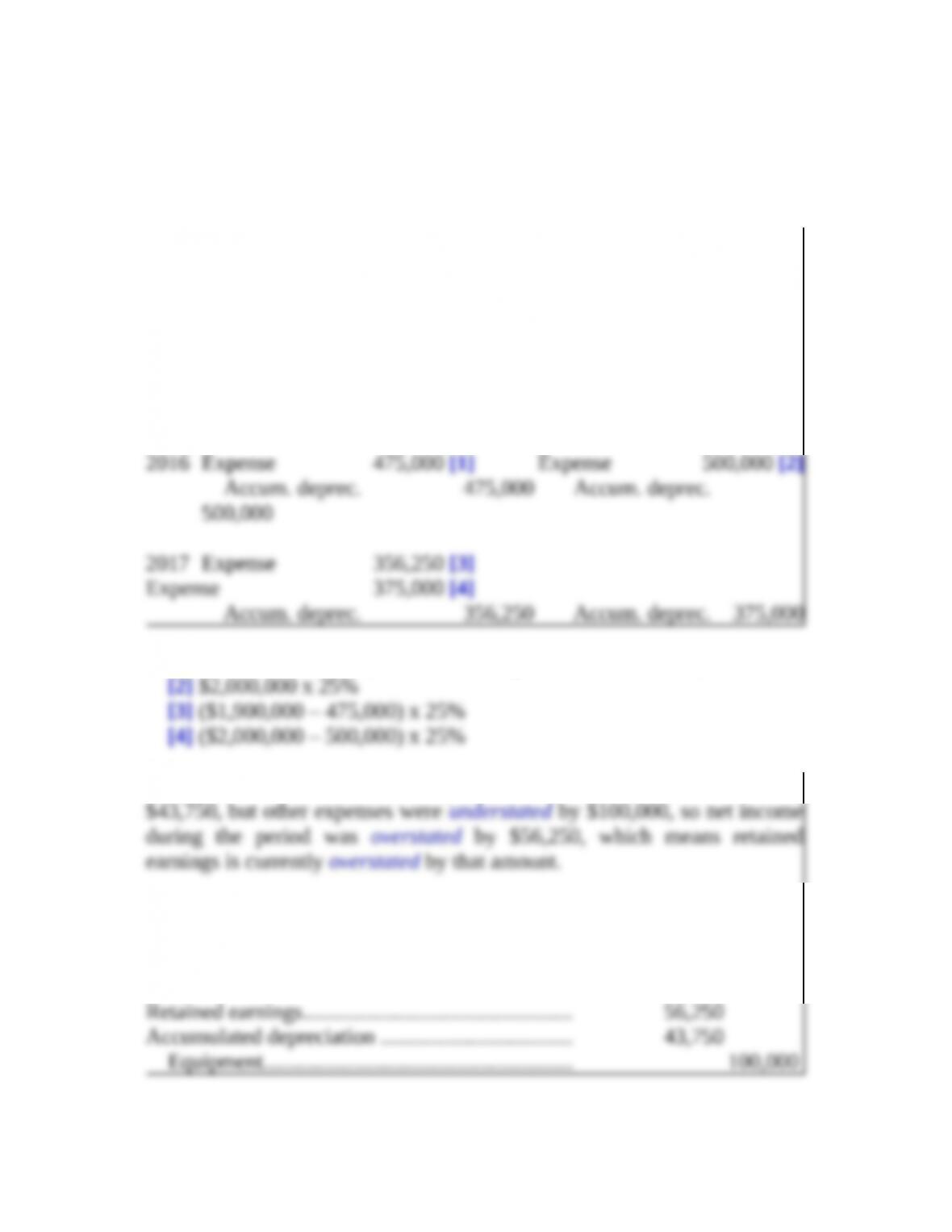
[1] $1,900,000 x 25% (2 times the straight-line rate of 12.5%)
During the two-year period, depreciation expense was overstated by
During the two-year period, accumulated depreciation was overstated, and
continues to be overstated by $43,750.
To correct incorrect accounts
Problem 20-11 (concluded)
Requirement 2
This is a change in accounting estimate resulting from a change in accounting
principle.
No entry is needed to record the change
2018 adjusting entry:
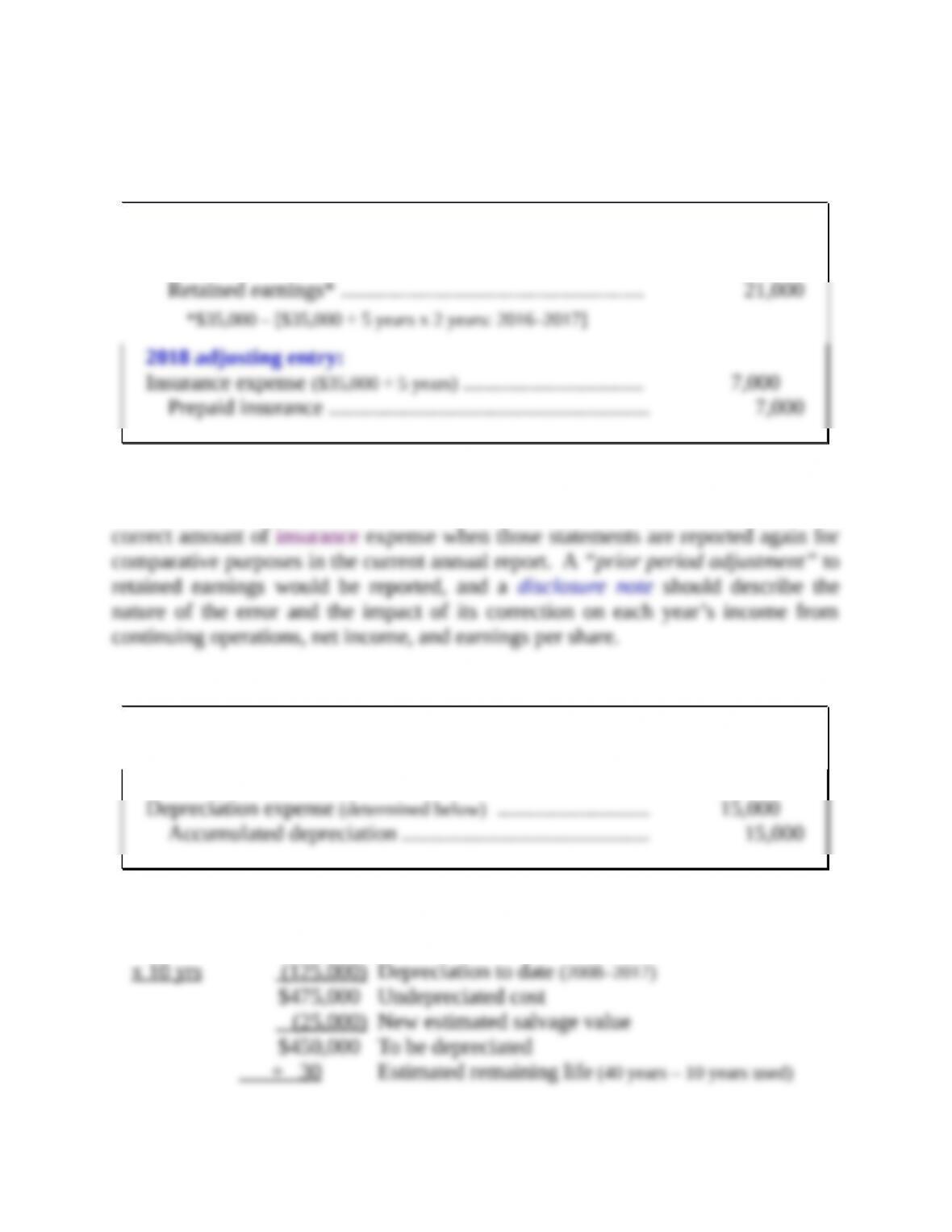
A change in depreciation method is considered a change in accounting
estimate resulting from a change in accounting principle. Accordingly, the Collins
Asset’s cost (after correction) $1,900,000
Accumulated depreciation to date ($475,000 + 356,250) (831 ,250)
Problem 20-12
a. This is a correction of an error.
To correct the error:
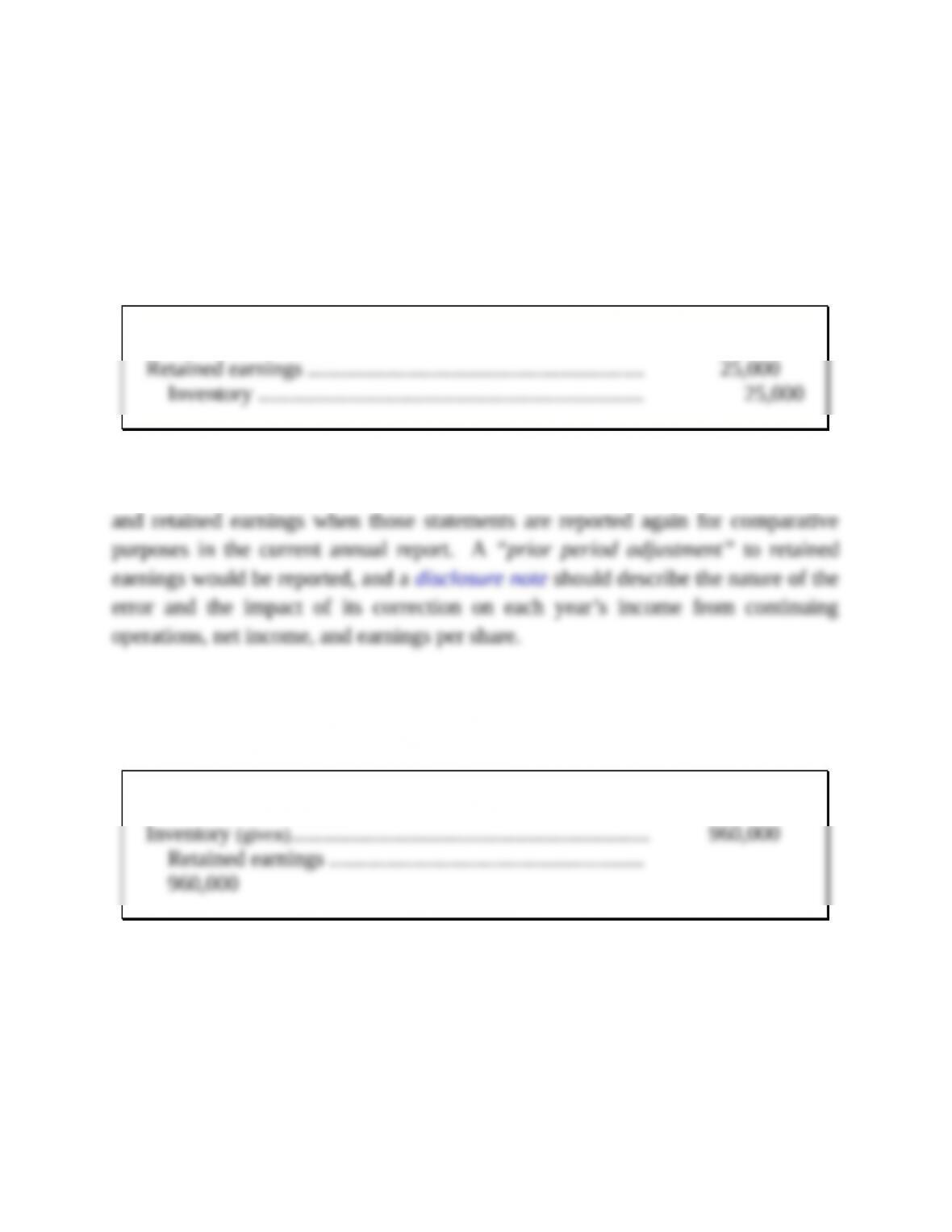
Prepaid insurance ($35,000 ÷ 5 yrs. x 3 yrs.: 2018–2020) ……… 21,000
The financial statements that were incorrect as a result of the error would be
retrospectively restated to report the prepaid insurance acquired and reflect the
b. This is a change in estimate.
No entry is needed to record the change
2018 adjusting entry:
Calculation of annual depreciation after the estimate change:
$600,000 Cost
$12,500 Old depreciation ([$600,000 – 100,000] ÷ 40 years)

Problem 20-12 (continued)
A disclosure note should describe the effect of a change in estimate on income
from continuing operations, net income, and related per share amounts for the
current period.
c. This is a correction of an error.
To correct the error:
The financial statements that were incorrect as a result of the error would be
retrospectively restated to report the correct inventory amounts, cost of goods sold,
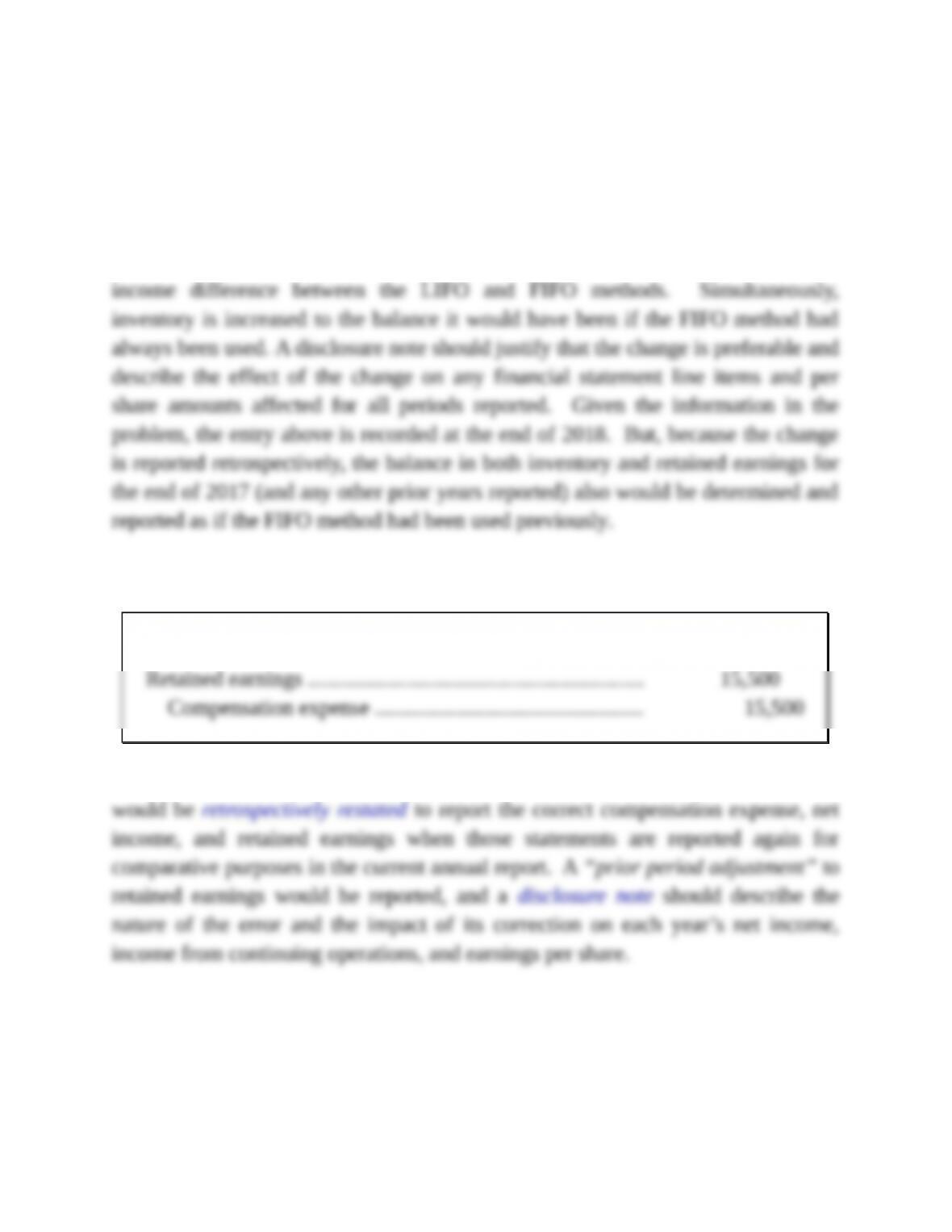
d. This is a change in accounting principle and is reported retrospectively.
To record the change:
Problem 20-12 (continued)
Most changes in accounting principle are accounted for retrospectively. Prior
years’ financial statements are recast to reflect the use of the new accounting
method. The company should increase retained earnings to the balance it would
have been if the FIFO method had been used previously; that is, by the cumulative
e. This is a correction of an error.
To correct the error:
The 2017 financial statements that were incorrect as a result of the error