Problem 20-4
Requirement 1
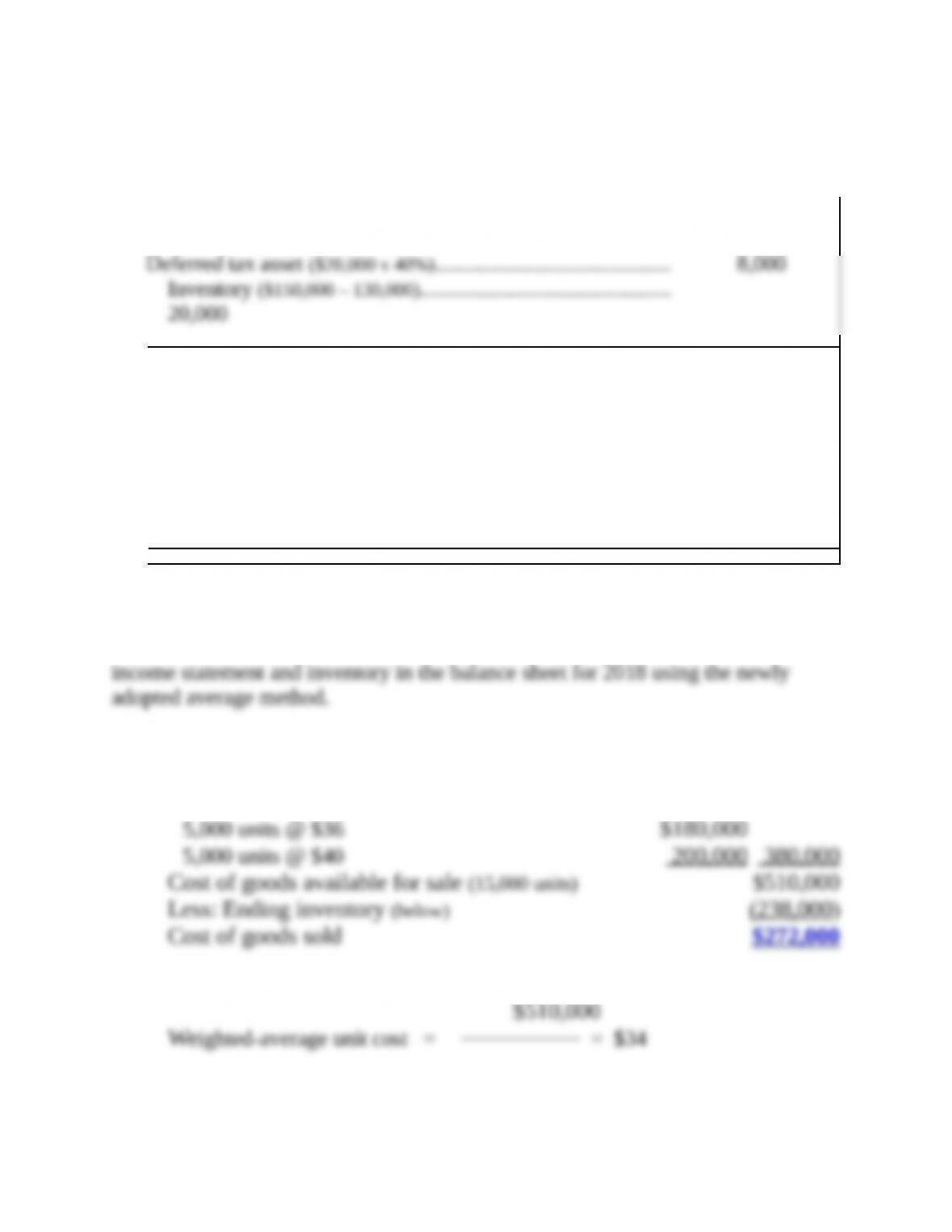
To record the change:
Retained earnings (net effect) ………………………………………….. 12,000
Note: For financial reporting purposes, but not for tax, the company is
retrospectively decreasing accounting income, but not taxable income.
This creates a temporary difference between the two that will reverse
over time as the unsold inventory becomes cost of goods sold. When
that happens, taxable income will be lower than accounting income.
When taxable income will be lower than accounting income as a
temporary difference reverses, we have a “future deductible amount”
and record a deferred tax asset.
Requirement 2
Rockwell will recast its financial statements to appear as if the average
method always had been used. This will include reporting cost of goods sold in the
Average cost method cost of goods sold:
Beginning inventory (5,000 units) $130,000
Purchases:
Cost of ending inventory:

Problem 20-5
Requirement 1
January 1, 2018
($ in
millions)
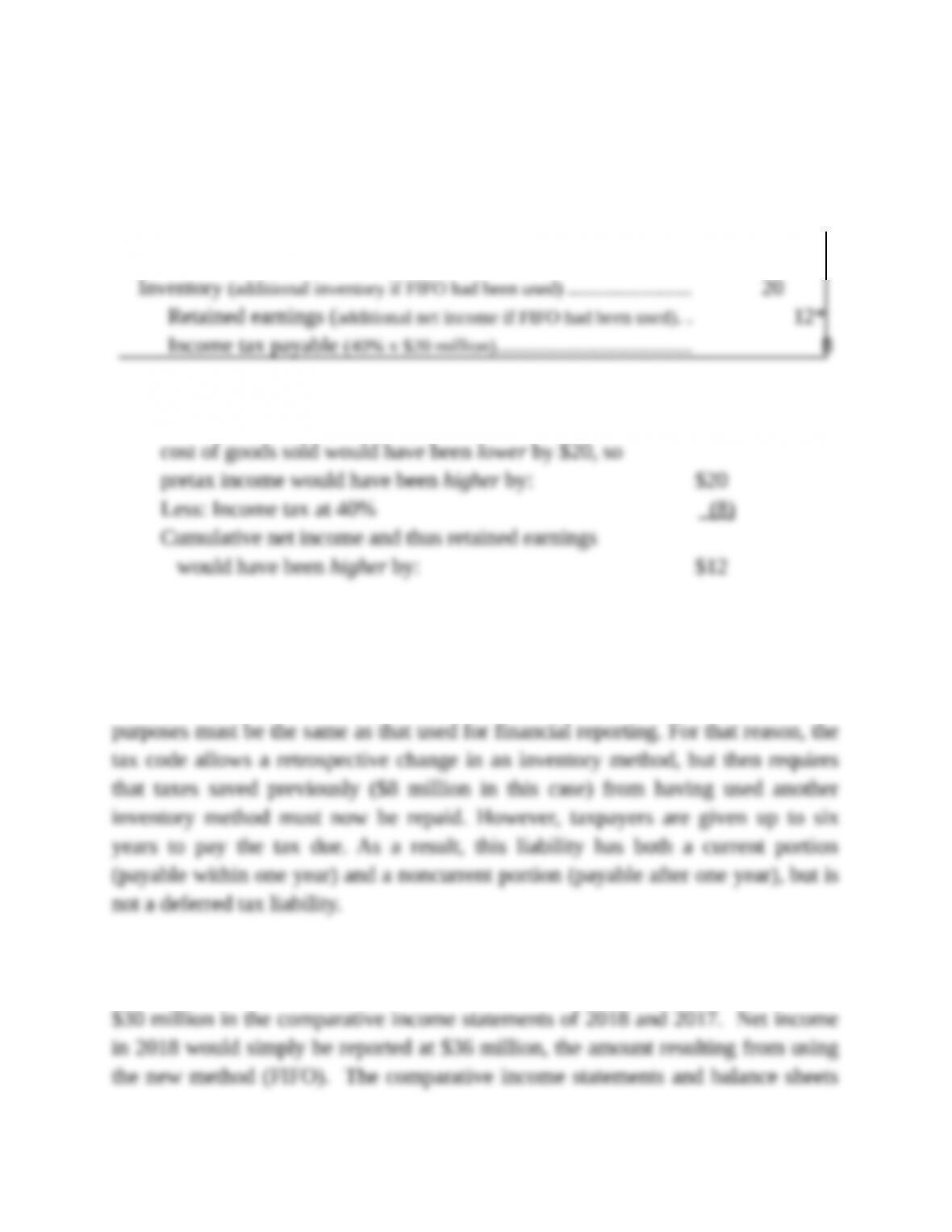
* Prior to 2018, using FIFO:
Inventory would have been higher by $20, so
Notice that the income tax effect is reflected in the income tax payable
account. The reason is that, unlike for other accounting method changes, the
Internal Revenue Code requires that the inventory costing method used for tax
Requirement 2
Net income, which was reported in 2017 as $28 million, would be revised to

Problem 20-5 (concluded)
Requirement 3
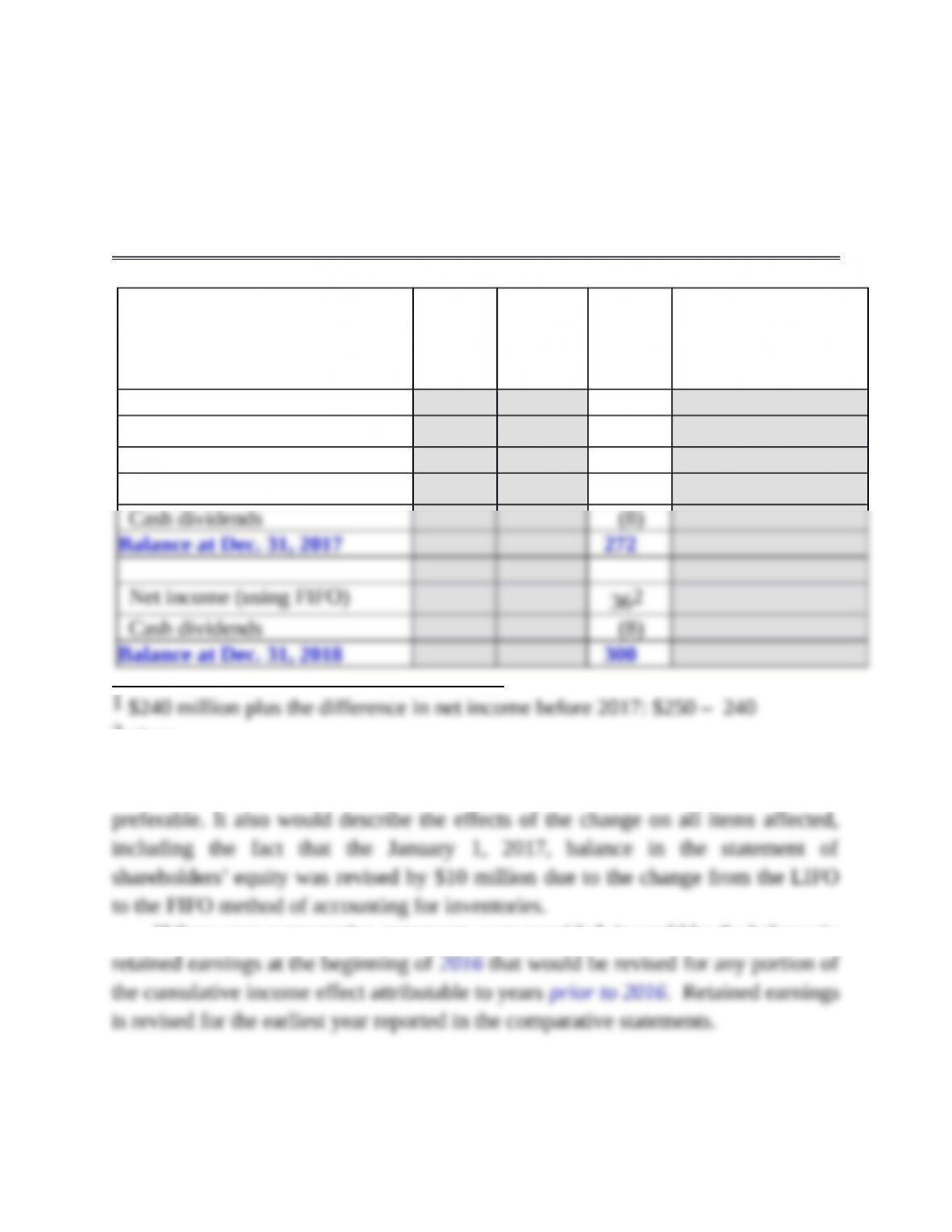
Fantasy Fashions
Statement of Shareholders’ Equity
For the Years Ended Dec. 31, 2018 and 2017
($ in millions)
Common
Stock
Additiona
l Paid-in
Capital
Retained
Earnings
Total
Shareholders’
Equity
Balance at Jan. 1, 2017 2501
Net income (revised to FIFO) 302
2 given
A disclosure note would describe the change and justify the new method as
If three-year comparative statements were provided, it would be the balance in
Problem 20-6
Requirement 1
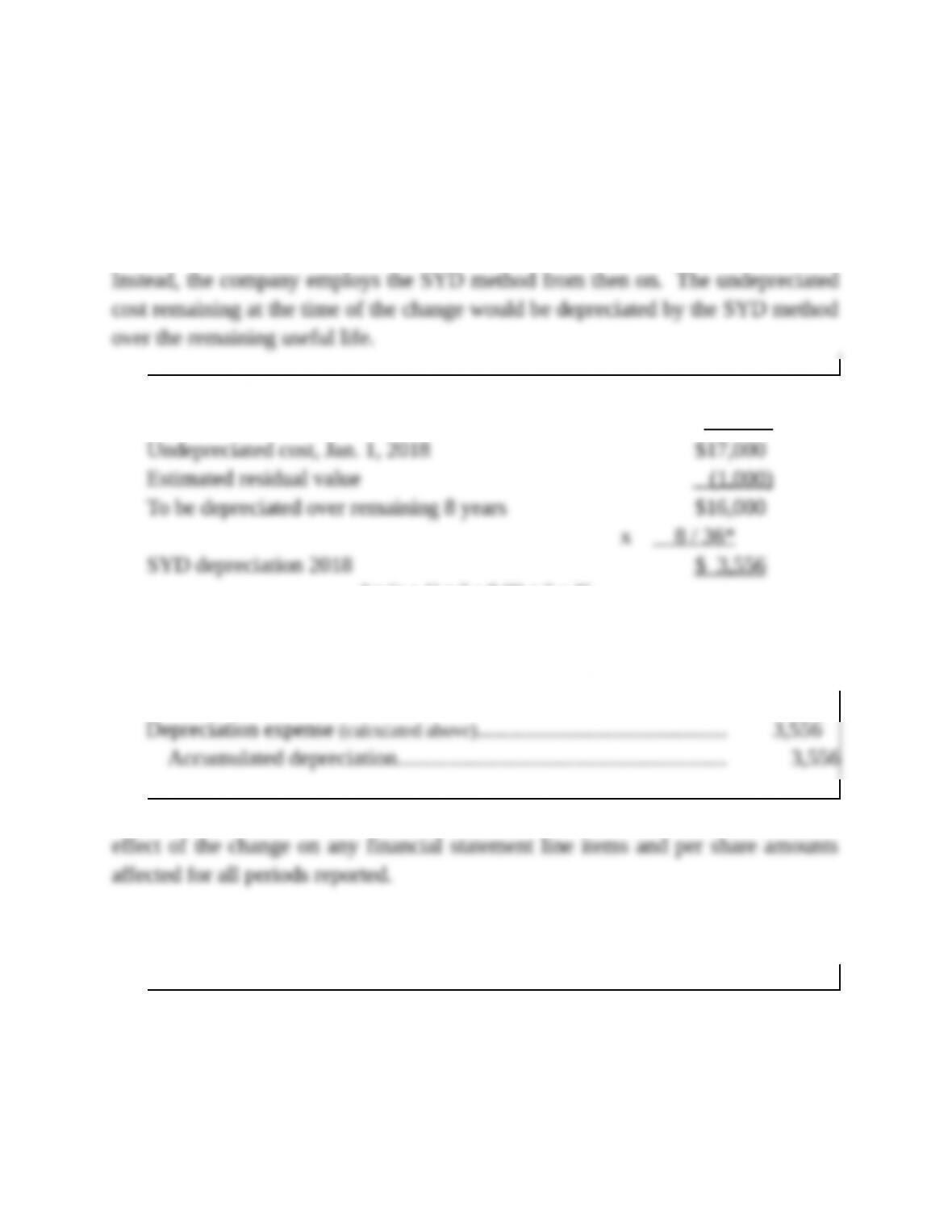
A change in depreciation method is considered a change in accounting
estimate resulting from a change in accounting principle. In other words, a change
in the depreciation method is similar to changing the economic useful life of a
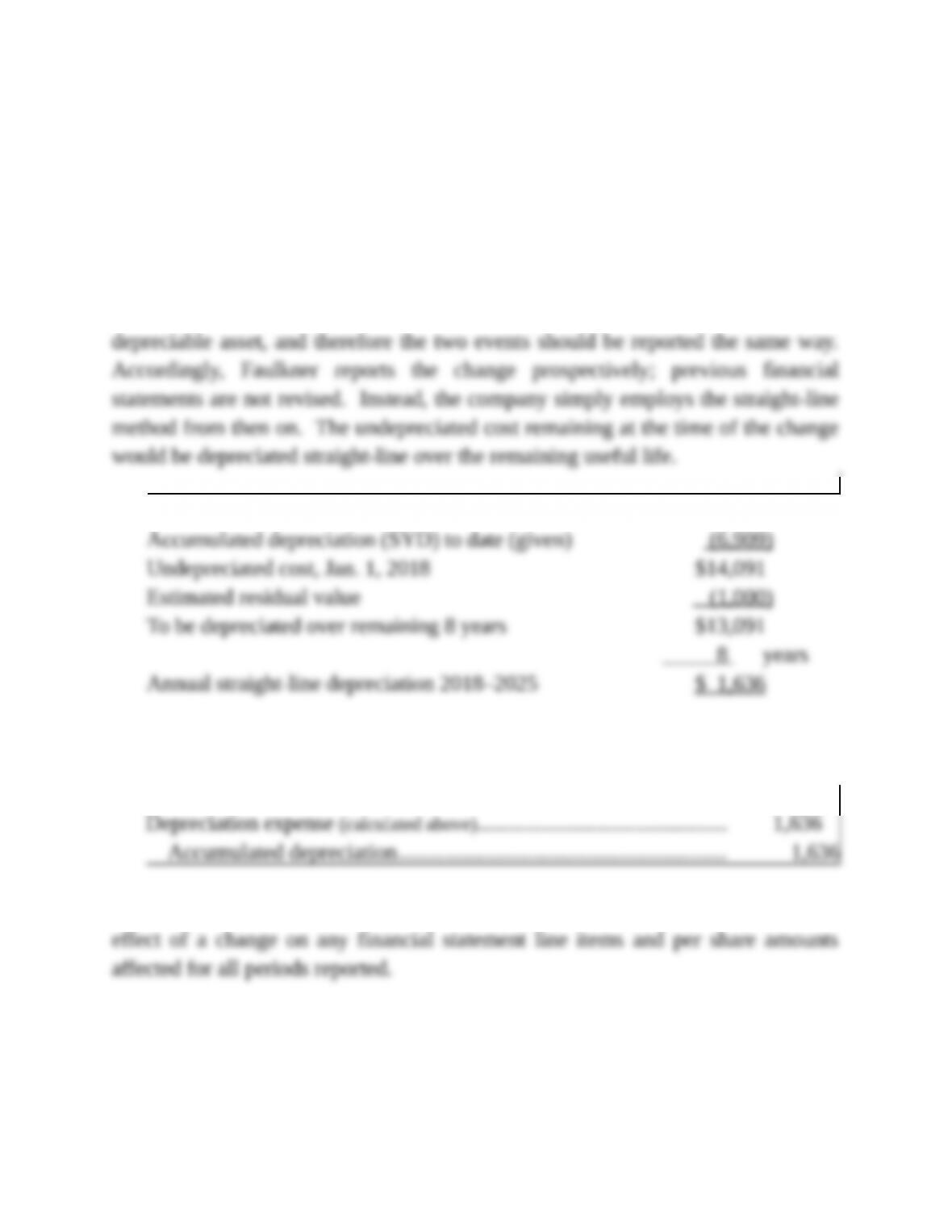
Asset’s cost $21,000
Adjusting entry (2018 depreciation):
A disclosure note should justify that the change is preferable and describe the
Problem 20-6 (concluded)
Requirement 2
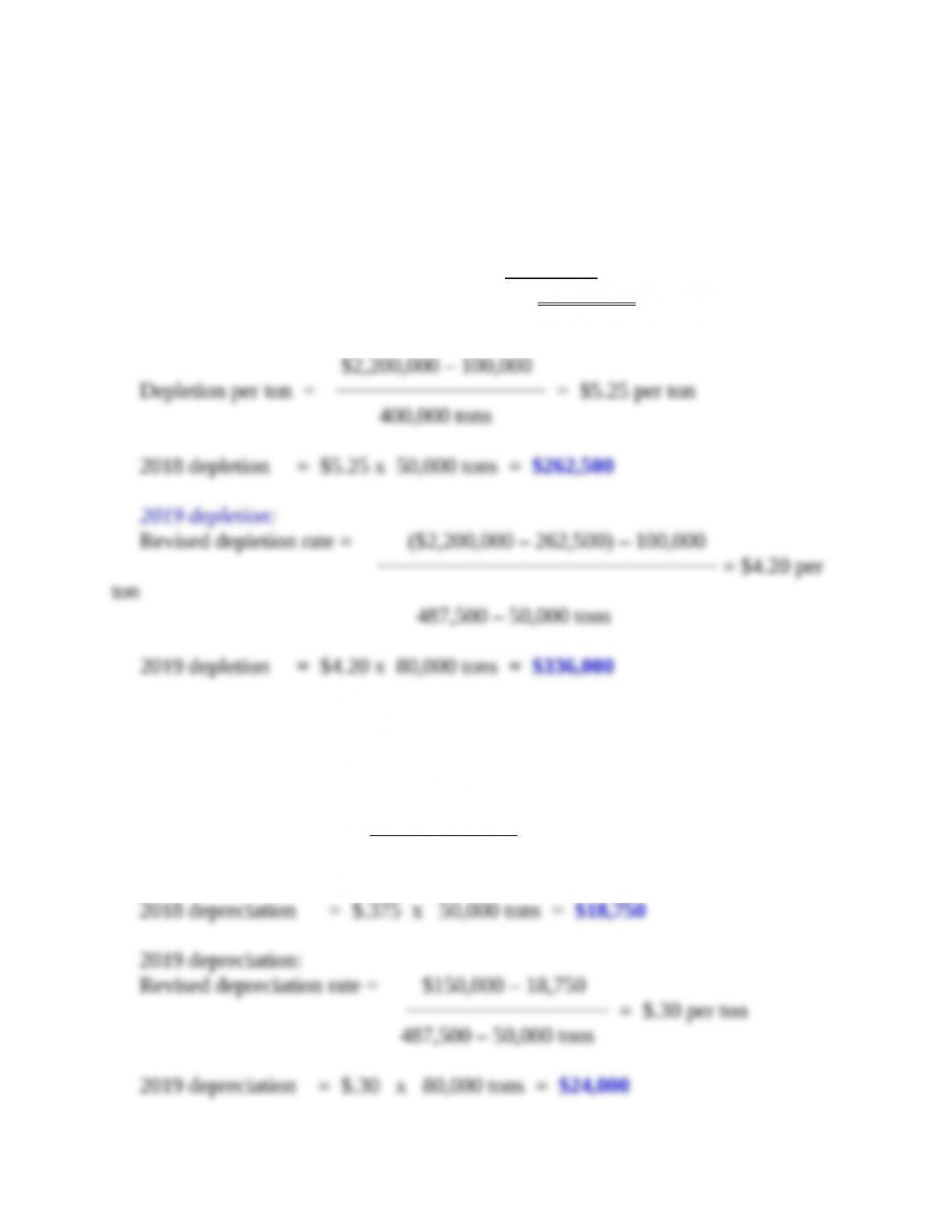
If Faulkner switched to sum-of-the-years’ digits with eight years remaining, it
reports the change prospectively; previous financial statements are not revised.
Asset’s cost $21,000
Accumulated depreciation (S-L) to date (given) (4 ,000)
* n (n + 1) ÷ 2 = 8 (9) ÷ 2 = 36
Adjusting entry (2018 depreciation):
A disclosure note should justify that the change is preferable and describe the
Problem 20-7
Requirement 1
Cost of mineral mine:
Purchase price $1,600,000
Development costs 600 ,000
$2 ,200,000
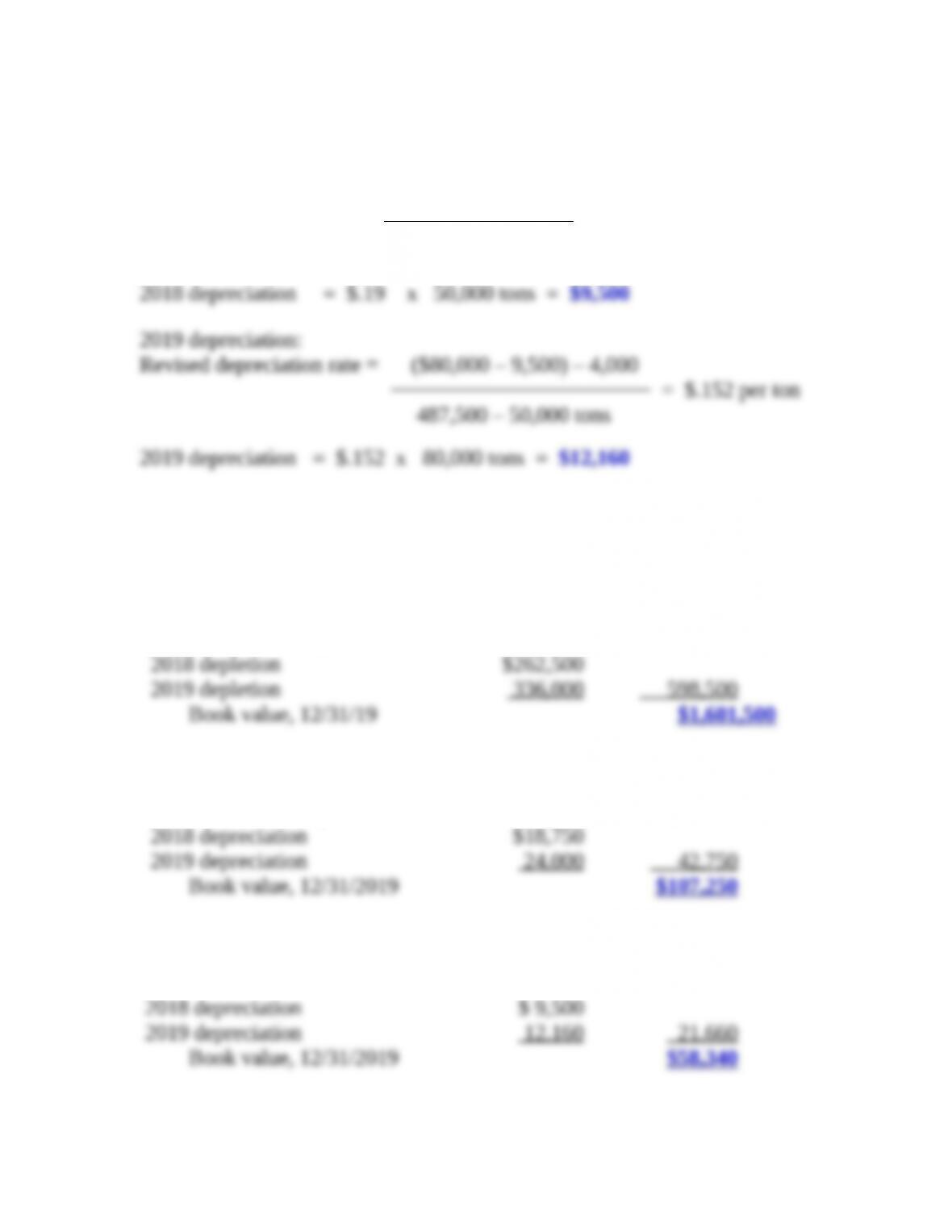
Depletion:
Depreciation:
Structures:
$150,000
Depreciation per ton = = $.375 per ton
400,000 tons
Problem 20-7 (concluded)
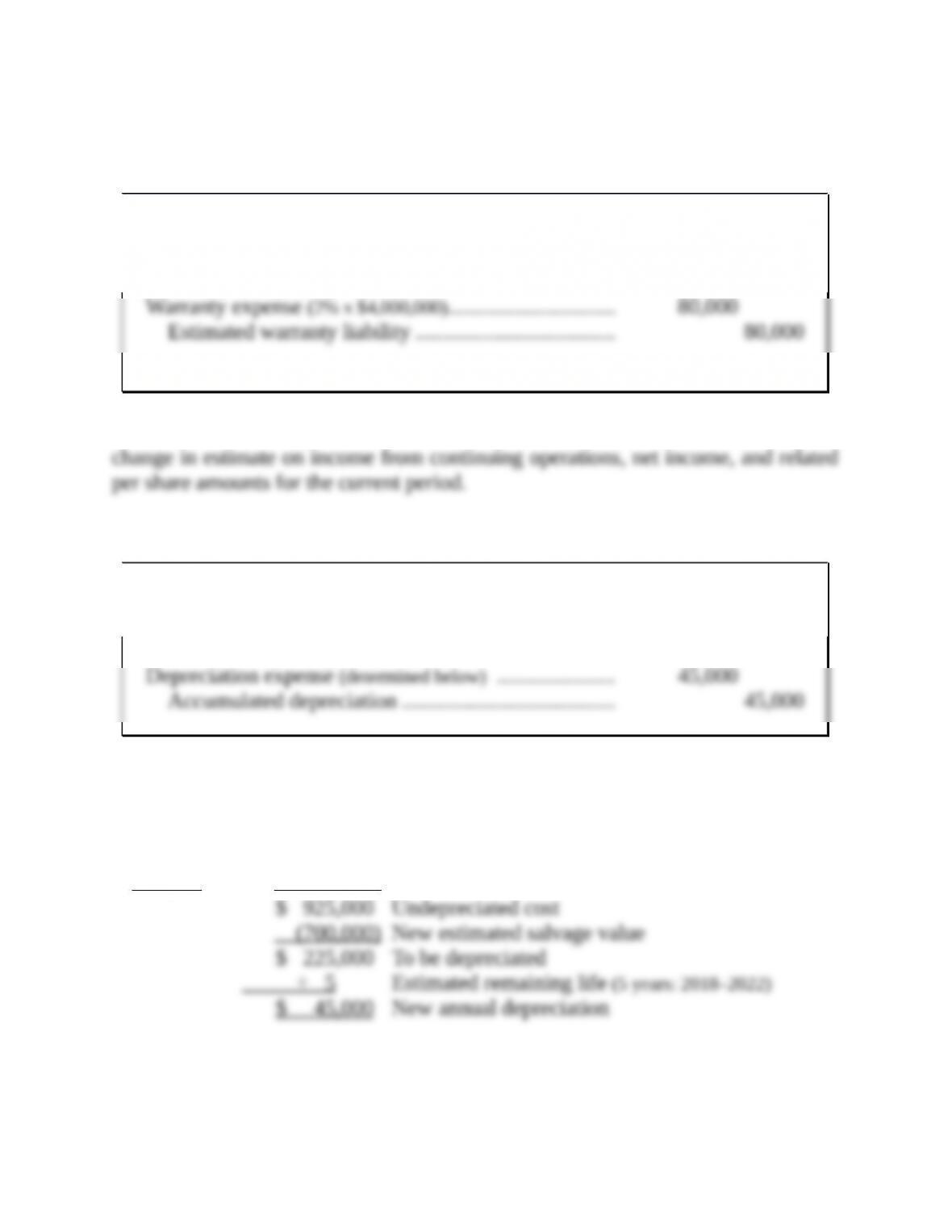
Equipment:
$80,000 – 4,000
Depreciation per ton = = $.19 per ton
400,000 tons
Requirement 2
Mineral mine:
Cost $ 2,200,000
Less accumulated depletion:
Structures:
Cost $150,000
Less accumulated depreciation:
Equipment:
Cost $80,000
Less accumulated depreciation:
Problem 20-8
a. This is a change in estimate.
No entry is needed to record the change
2018 adjusting entry:
If the effect is material, a disclosure note should describe the effect of a
b. This is a change in estimate.
No entry is needed to record the change
2018 adjusting entry:
Calculation of annual depreciation after the estimate change:
$1,000,000
Cost
$25,000 Old depreciation ($1,000,000 ÷ 40 years)
x 3 yrs. (75 ,000) Depreciation to date (2015-2017)
A disclosure note should describe the effect of a change in estimate on income
from continuing operations, net income, and related per share amounts for the
current period.
Problem 20-8 (continued)
c. This is a change in accounting principle that usually is reported prospectively.
No entry is needed to record the change.
When a company changes to the LIFO inventory method from another
inventory method, accounting records usually are insufficient to determine the
cumulative income effect of the change necessary to retrospectively revise
d. This is a change in accounting estimate resulting from a change in accounting
principle.
No entry is needed to record the change
2018 adjusting entry: