Exercise 20-21
Requirement 1
The error caused both 2016 net income and 2017 net income to be overstated,
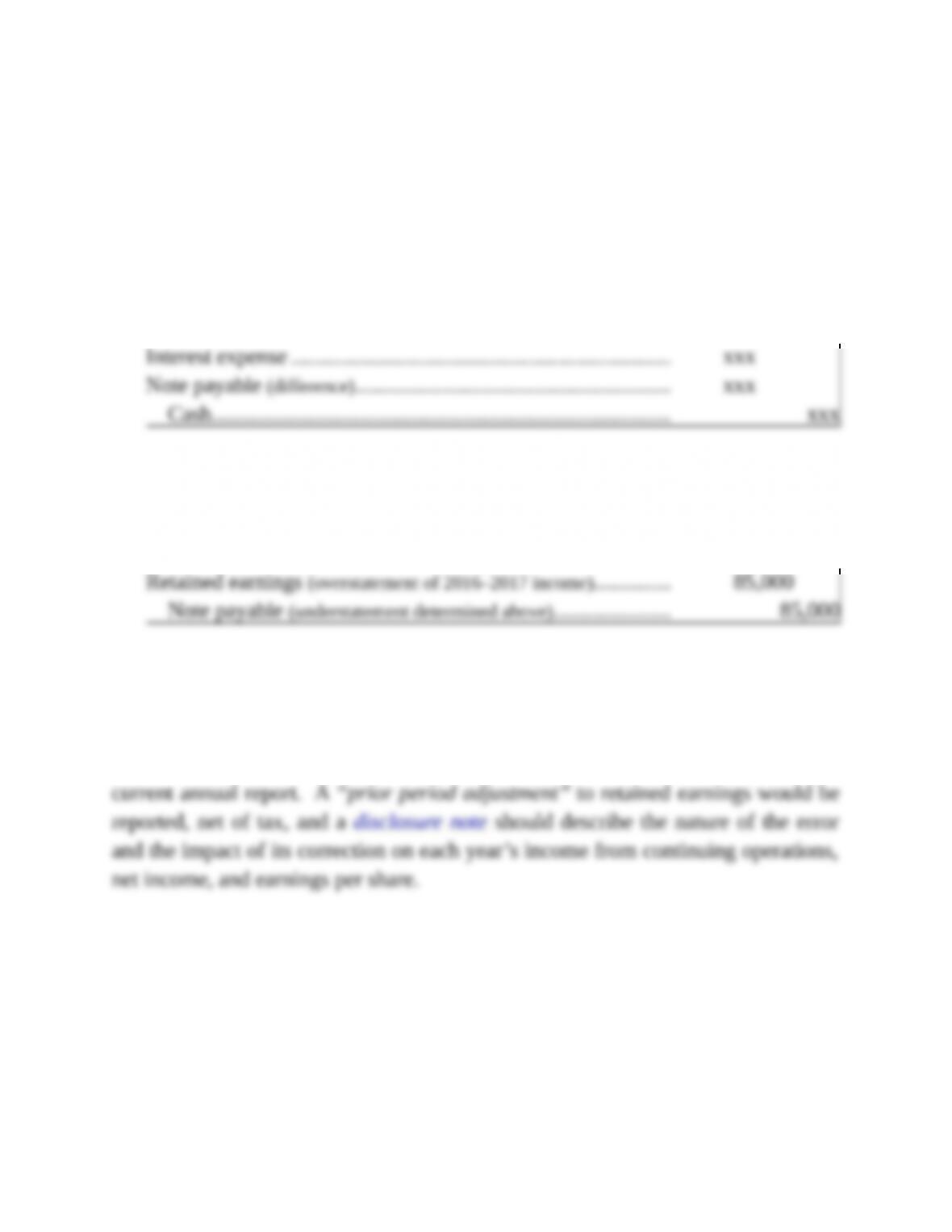
so retained earnings is overstated by a total of $85,000. Also, the note payable
would be understated by the same amount. Remember, the entry to record interest
is:
So, if interest expense is understated, the reduction in the note will be too
much, causing the balance in that account to be understated.
Requirement 2
Requirement 3
The financial statements that were incorrect as a result of the errors would be
retrospectively restated to report the correct interest amounts, income, and retained
earnings when those statements are reported again for comparative purposes in the
Exercise 20-22
The 2018 interest expense is overstated by the extra interest recorded in
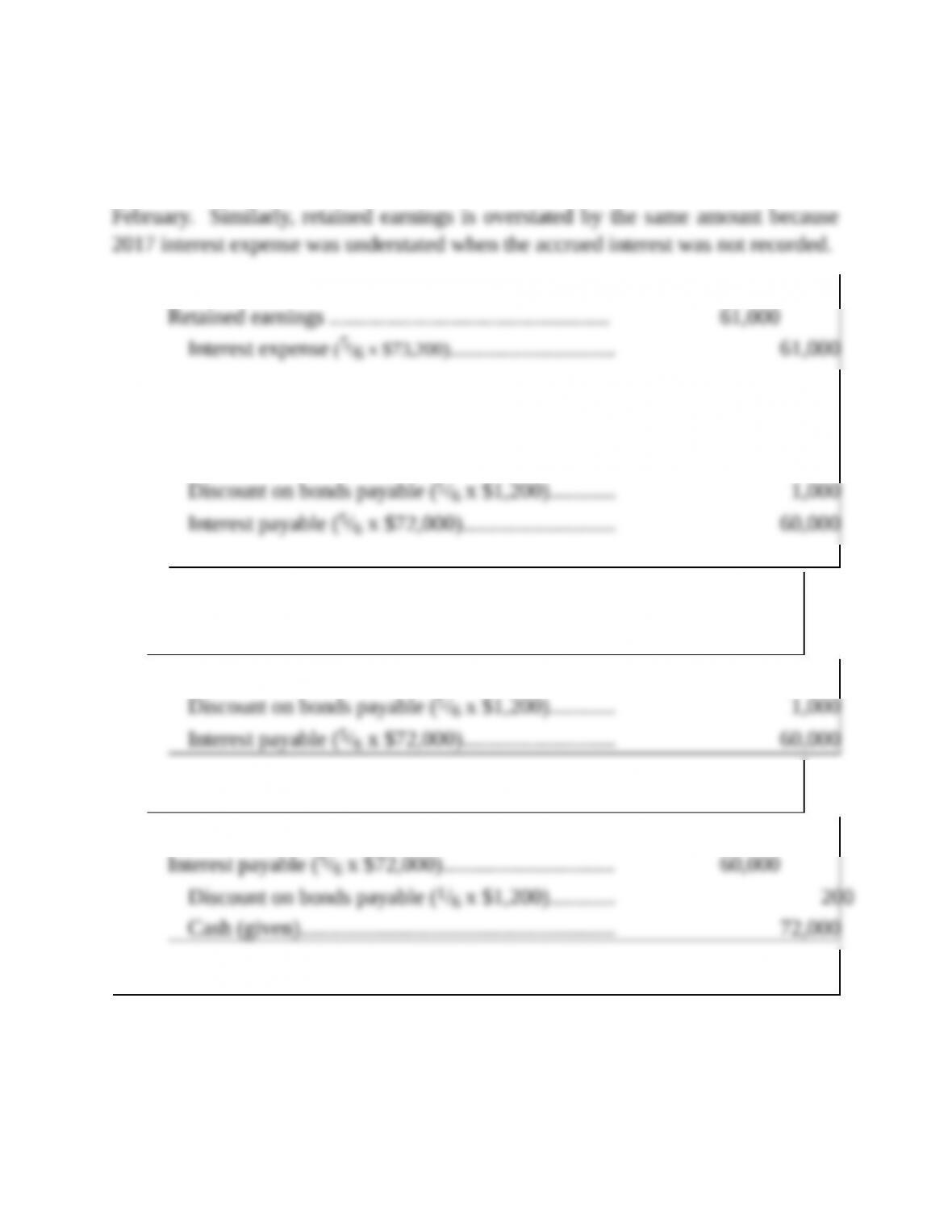
To correct the error:
2018 adjusting entry:
Interest expense (5/6 x $73,200)…………………………. 61,000
*ENTRIES THAT SHOULD HAVE BEEN RECORDED:
2017 adjusting entry:
Interest expense (5/6 x $73,200)…………………………. 61,000
February 1, 2018:
Interest expense (1/6 x $73,200)…………………………. 12,200
Exercise 20-23
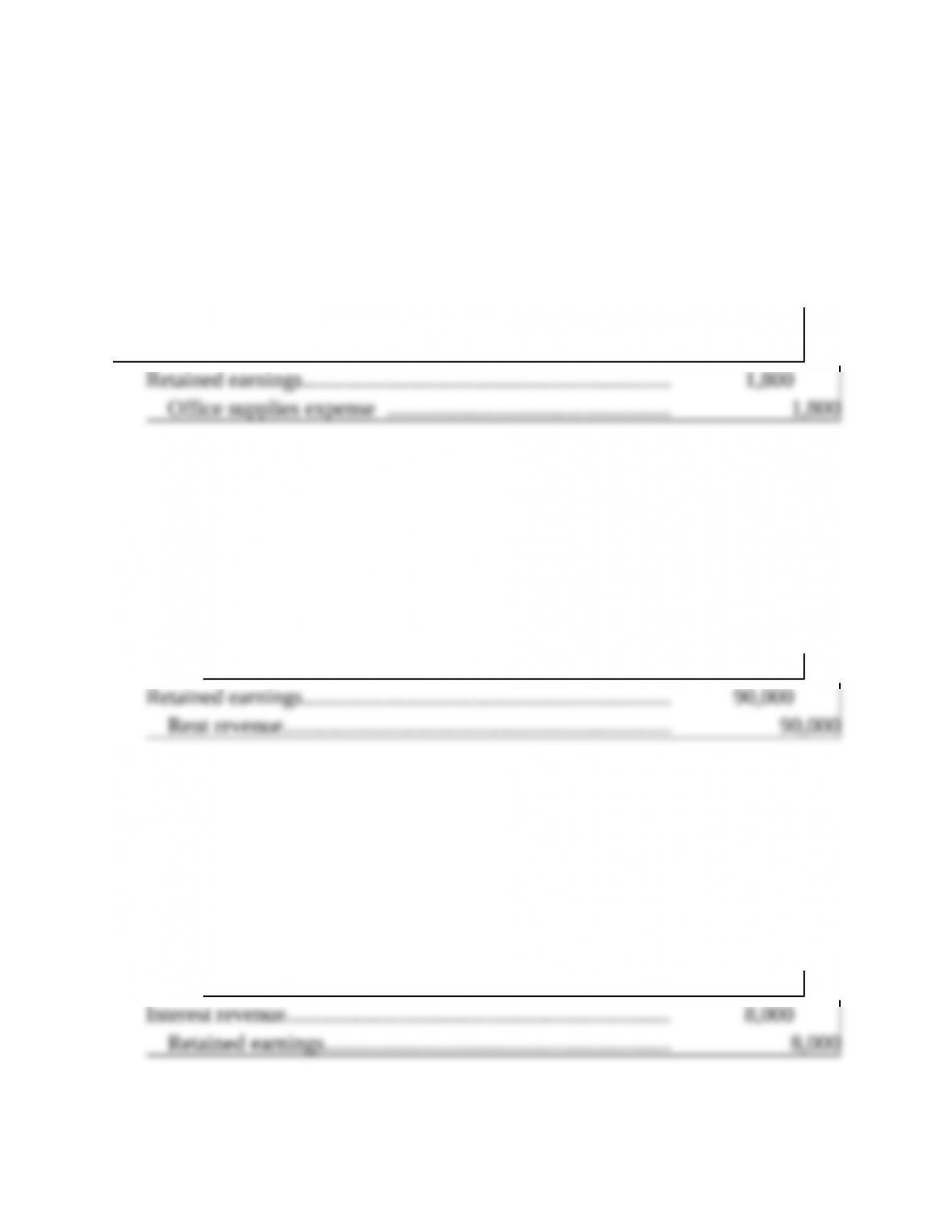
Error a
2017
Income Statement: Expenses understated, net income overstated.
Balance Sheet: Liabilities understated, retained earnings overstated.
2018
Error b
2017
Income Statement: Revenue overstated, net income overstated.
Balance Sheet: Liabilities understated, retained earnings overstated.
2018
Error c
2017
Income Statement: Revenue understated, net income understated.
Balance Sheet: Assets understated, retained earnings understated.
2018
Exercise 20-24
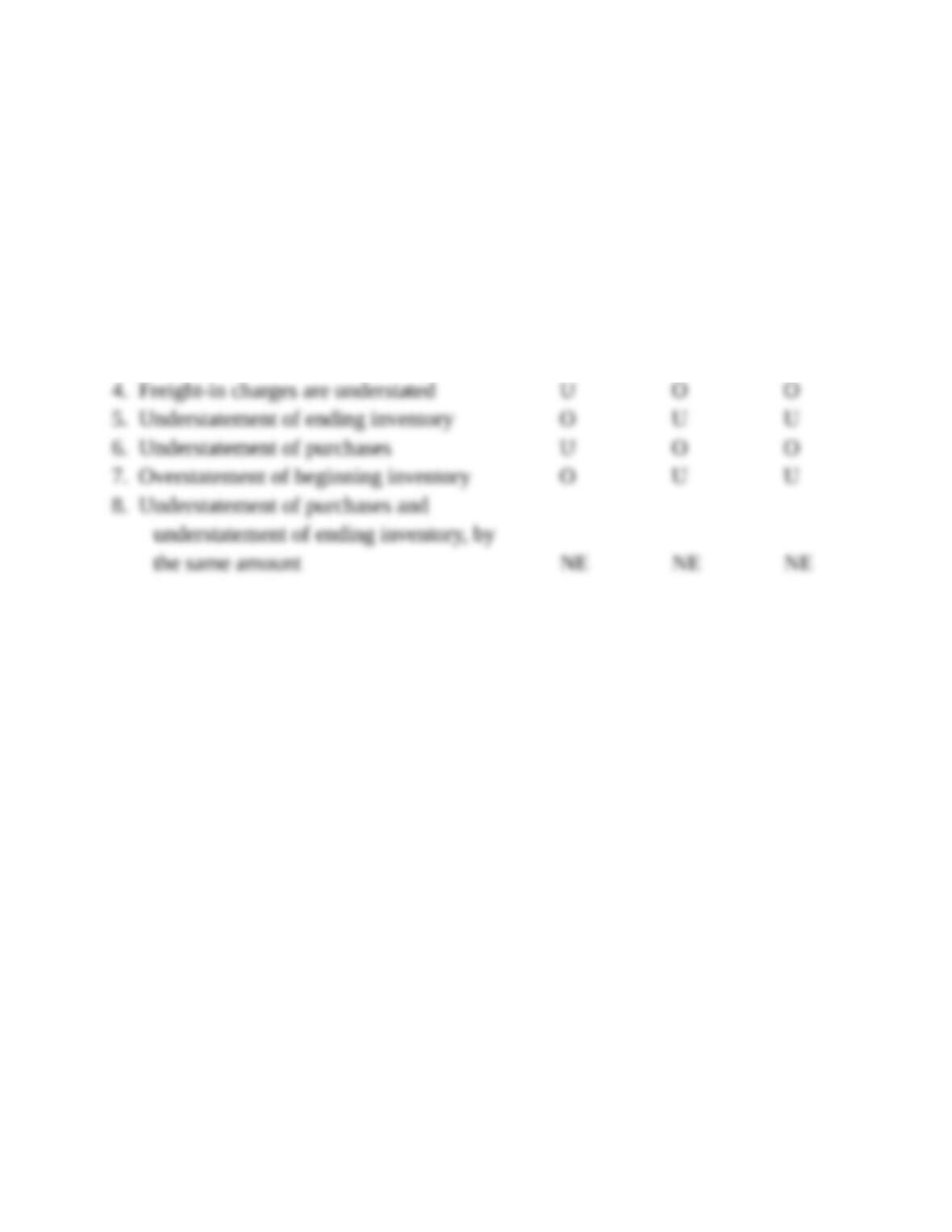
U = understated
O = overstated
NE = no effect
Cost of Net Retained
Goods Sold Income Earnings
1. Overstatement of ending inventory U O O
2. Overstatement of purchases O U U
3. Understatement of beginning inventory U O O
Exercise 20-25
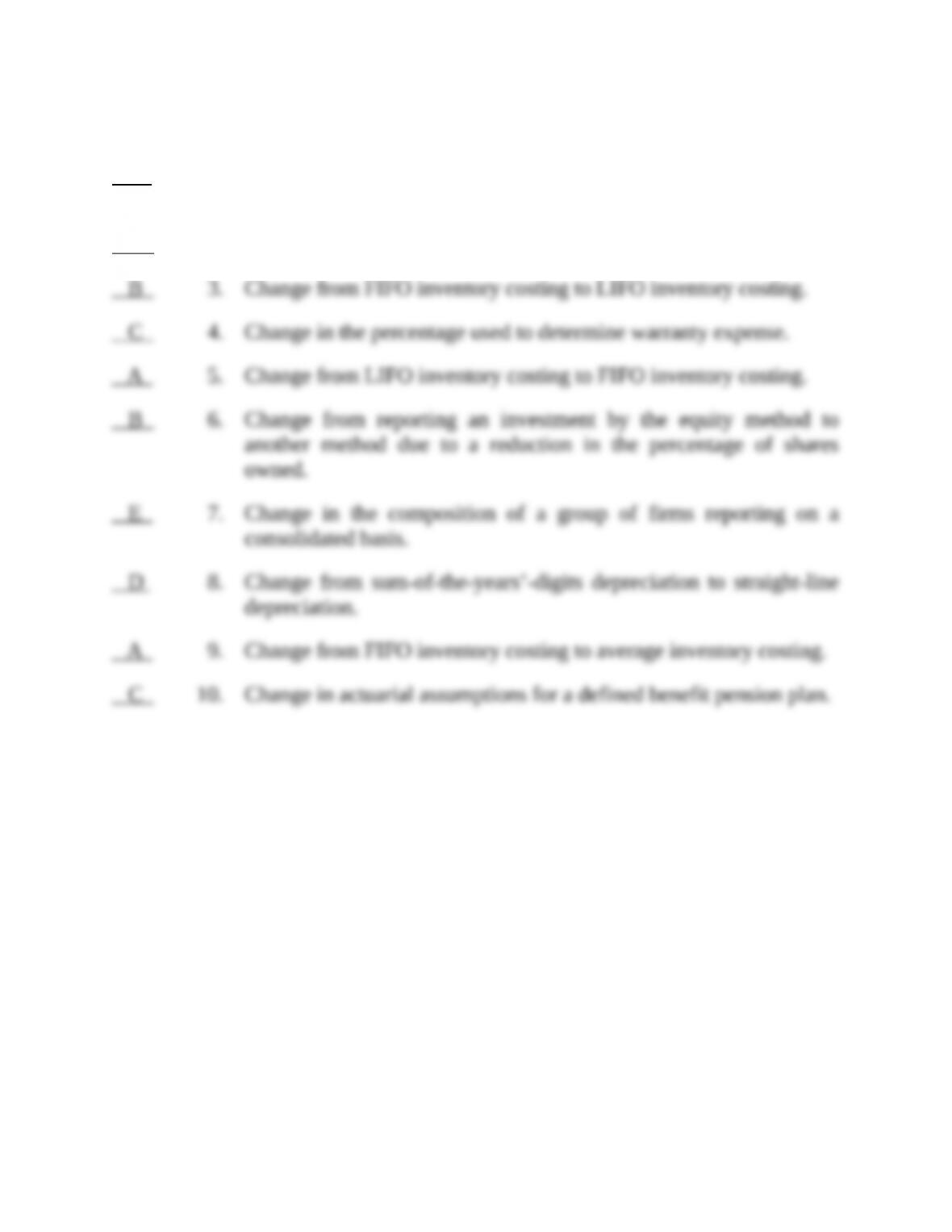
F 1. Change from expensing extraordinary repairs to capitalizing the
expenditures.
C 2. Change in the residual value of machinery.
Problem 20-1
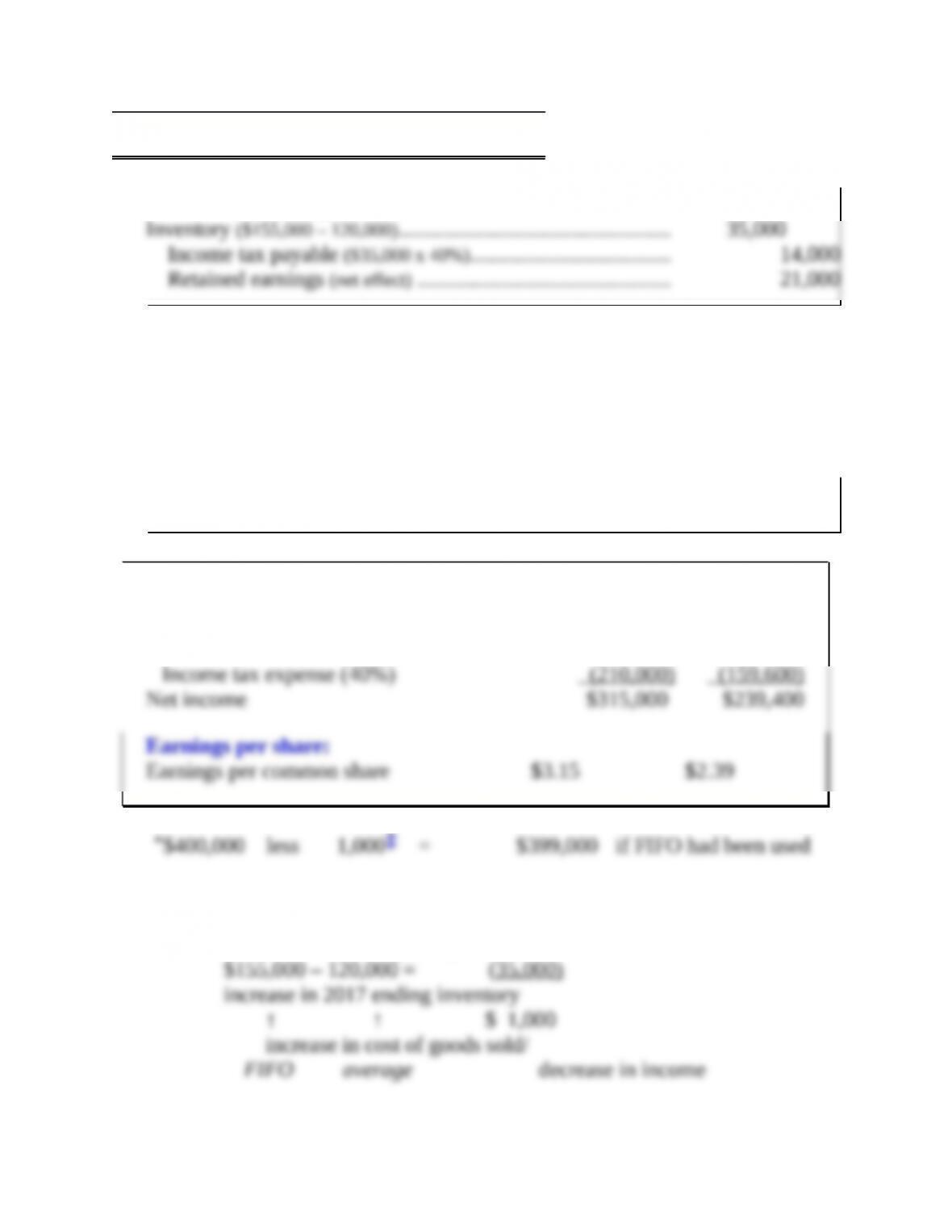
Requirement 1
To record the change:
Note:
Notice that the income tax effect is reflected in the income tax payable account. The reason is
that an accounting method used for tax purposes cannot be changed retrospectively for prior
years. The Internal Revenue Code requires that taxes saved previously ($14 million in this case)
from having used another inventory method must now be repaid. However, taxpayers are given
up to six years to pay the tax due. As a result, this liability has both current (portion payable
within one year) and noncurrent (payable after one year) aspects, but is not a deferred tax
liability.
.
Requirement 2
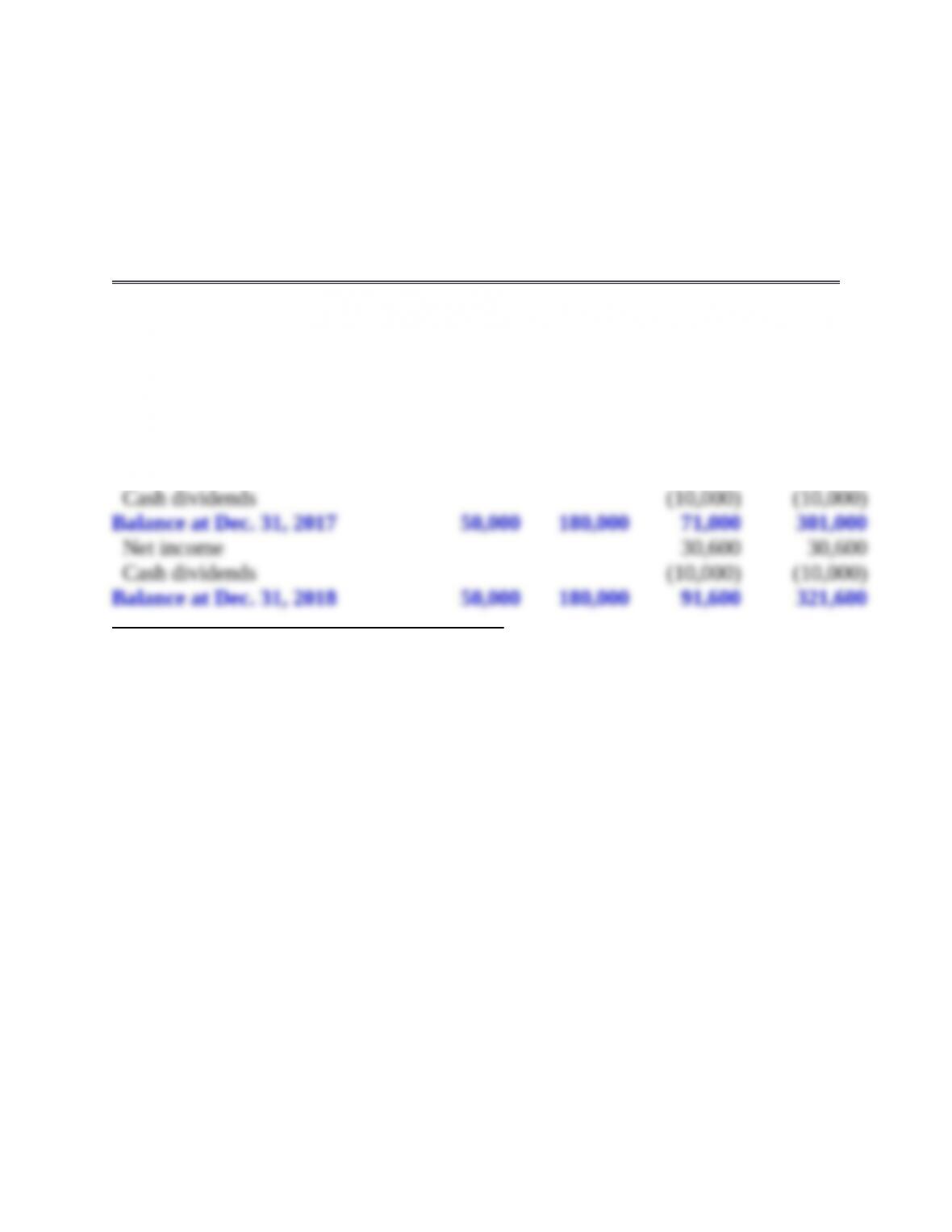
COMPARATIVE INCOME STATEMENTS
2018 2017
Income from continuing operations $525,000 $399,000*
‡ Calculation of decrease in 2017 pretax income:
$160,000 – 124,000 = $36,000
increase in 2017 beginning inventory
PROBLEMS

Problem 20-2
Requirement 1
Inventory (additional amount due to the new method) ……………….. 39,000
* 2016 difference plus 2017 difference
Note: Notice that the income tax effect is reflected in the income tax
payable account. The reason is that, unlike for other accounting
method changes, the Internal Revenue Code requires that the
inventory costing method used for tax purposes must be the same
as that used for financial reporting. For that reason, the tax code
allows a retrospective change in an inventory method, but then
requires that taxes saved previously ($15,600 in this case) from
having used another inventory method must now be repaid.
However, taxpayers are given up to six years to pay the tax due.
As a result, this liability has both a current portion (payable
within one year) and a noncurrent portion (payable after one
year), but is not a deferred tax liability.
.
Retained earnings is increased by $23,400 because the net income for 2016
and 2017 would have been higher by that amount, and net income increases
retained earnings.
Requirement 2
2018 2017
Income before income taxes $51,000 $45,000
Earnings per share:
Problem 20-2 (concluded)
Requirement 3
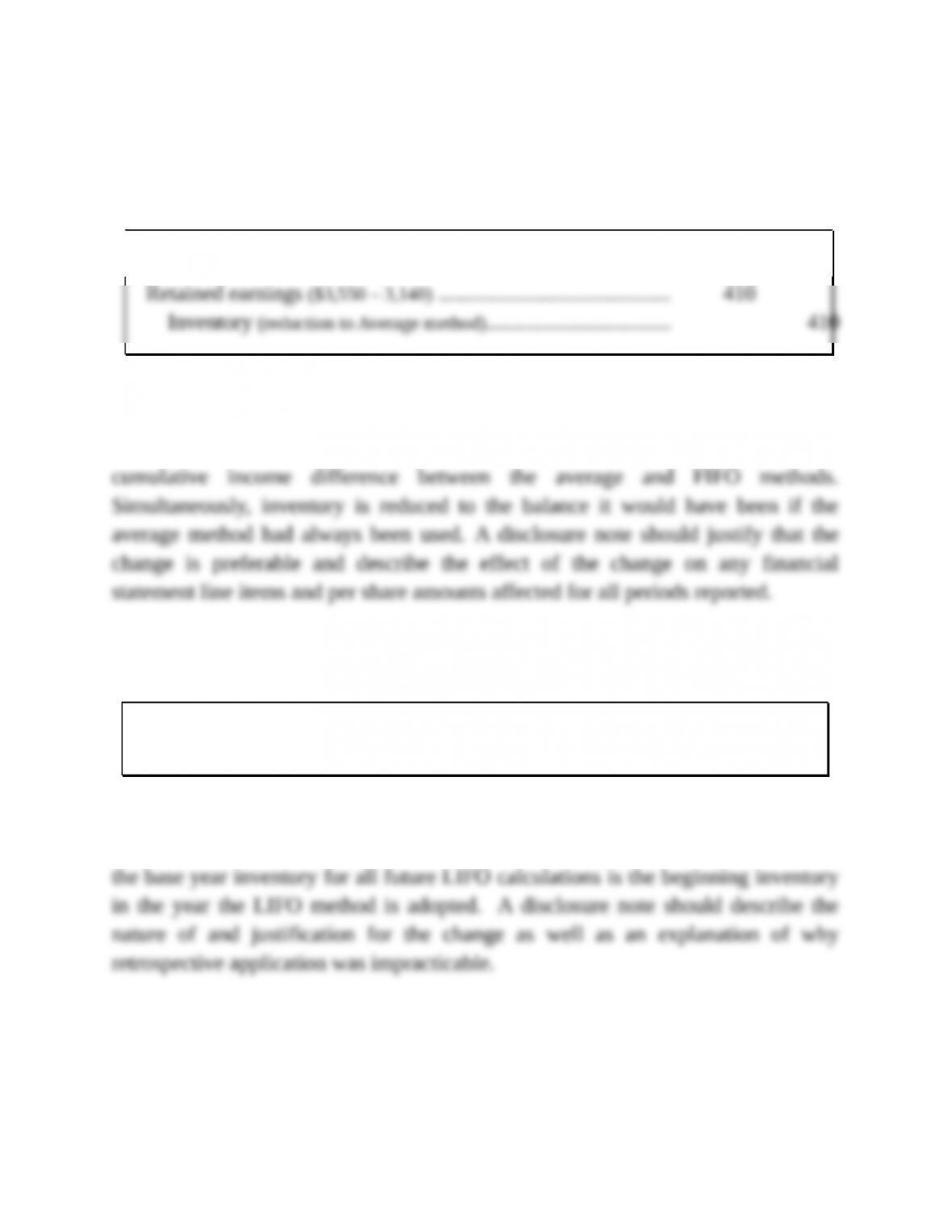
Pyramid Company
Statement of Shareholders’ Equity
For the Years Ended Dec. 31, 2018 and 2017
Common
Stock
Additional
Paid-in
Capital
Retained
Earnings
Total
Shareholders’
Equity
Balance at Jan. 1 * 50,000 180,000 54,000 284,000
Net income 27,000 27,000
* Retained earnings at the beginning of 2017 (end of 2016) is increased by $18,000
because the net income for 2016 would have been higher by that amount, and net
income increases retained earnings.
Problem 20-3
1. This is a change in accounting principle to be recorded retrospectively.
($ in 000s)
Weihrich will recast its financial statements to appear as if the average method
always had been used. It also will reduce retained earnings to the balance it would
have had if the average method had been used previously; that is, by the
2. This is a change in accounting principle that usually is reported prospectively.
No entry is needed to record the change.
When a company changes to the LIFO inventory method from another
inventory method, it usually does not report the change retrospectively. Instead,
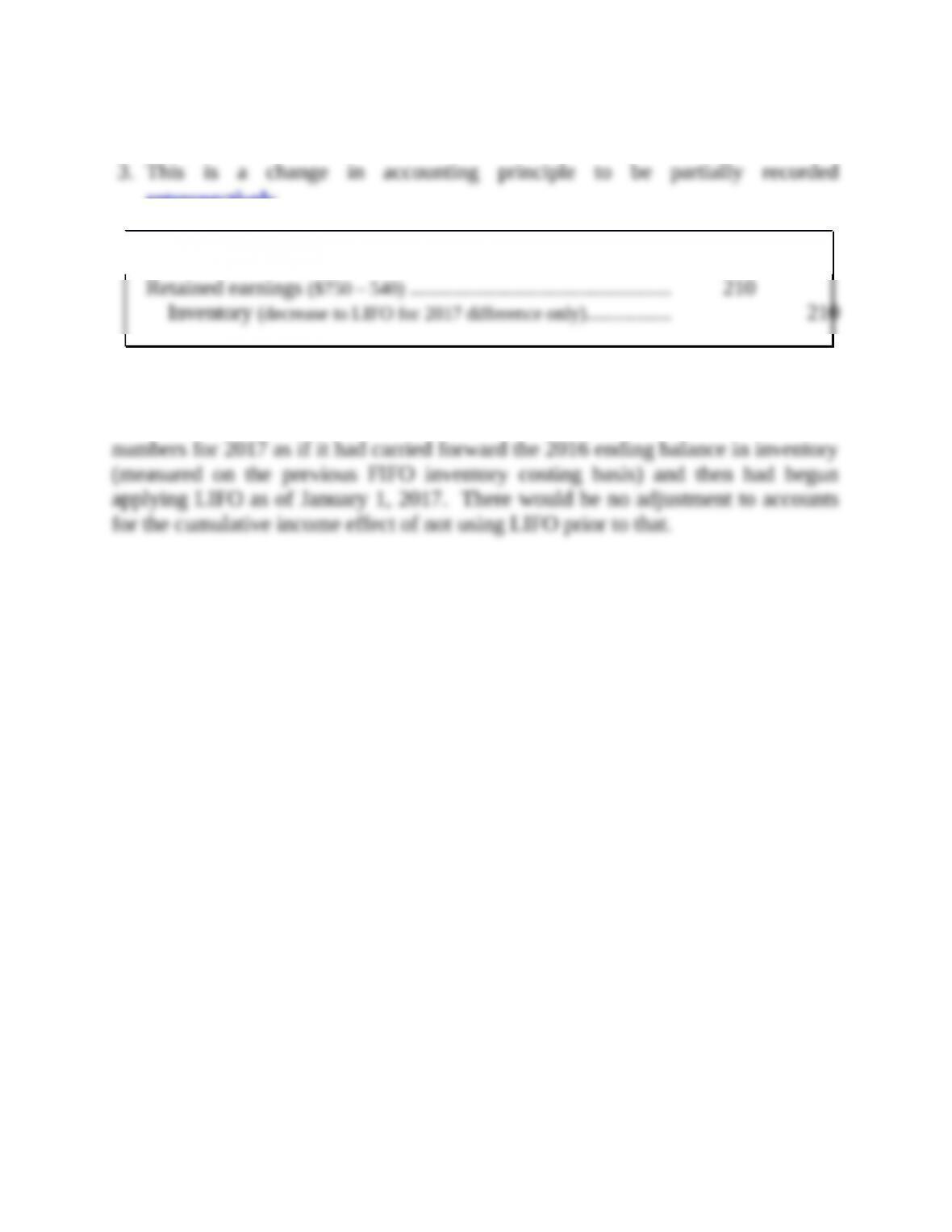
Problem 20-3 (concluded)
retrospectively.
($ in 000s)
In its comparative 2018–2017 financial statements, Weihrich should report