Exercise 20-6
The FASB Accounting Standards Codification® represents the single source of
authoritative U.S. generally accepted accounting principles. The specific citation
for each of the following items is:
1. Reporting most changes in accounting principle:
2. Disclosure requirements for a change in accounting principle:
3. Illustration of the application of a retrospective change in the method of
accounting for inventory:
FASB ASC 250–10–55–3: “Accounting Changes and Error Corrections
Exercise 20-7
Requirement 1
($ in millions)
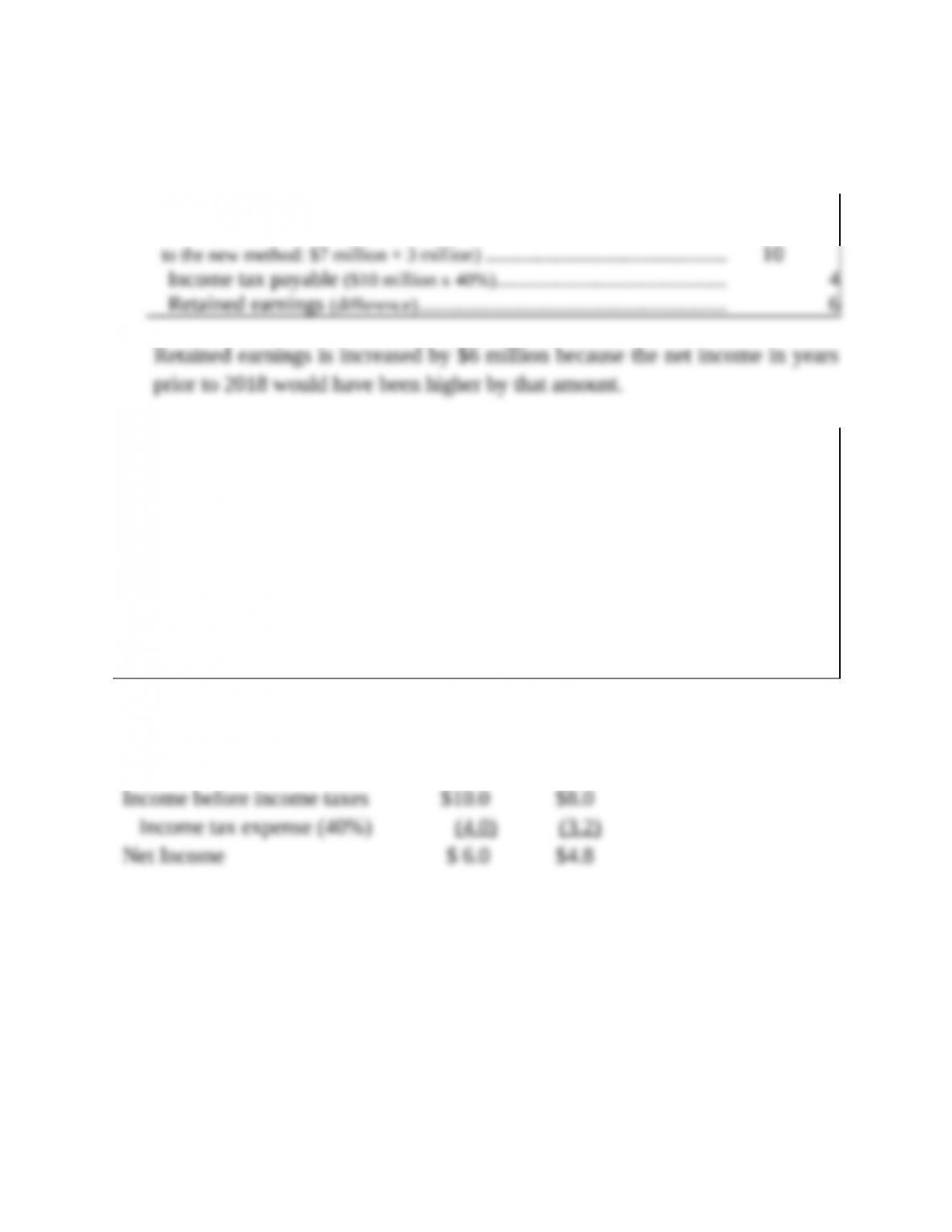
Inventory (additional amount due
Note: Notice that the income tax effect is reflected in the income tax payable
account. The reason is that, unlike for other accounting method changes, the
Internal Revenue Code requires that the inventory costing method used for
tax purposes must be the same as that used for financial reporting. For that
reason, the tax code allows a retrospective change in an inventory method,
but then requires that taxes saved previously ($6 million in this case) from
having used another inventory method must now be repaid. However,
taxpayers are given up to six years to pay the tax due. As a result, this
liability has both a current portion (payable within one year) and a
noncurrent portion (payable after one year), but is not a deferred tax liability.
Requirement 2
2018 2017

Exercise 20-7 (continued)
Requirement 3
Besides net income, which was reported in 2017 as $3 million ($5 million less
tax) and now revised to $4.8 million, other amounts that would be revised to
reflect accounting by the FIFO costing method are:
Earnings per share
Cost of goods sold
Exercise 20-7 (concluded)
Requirement 4
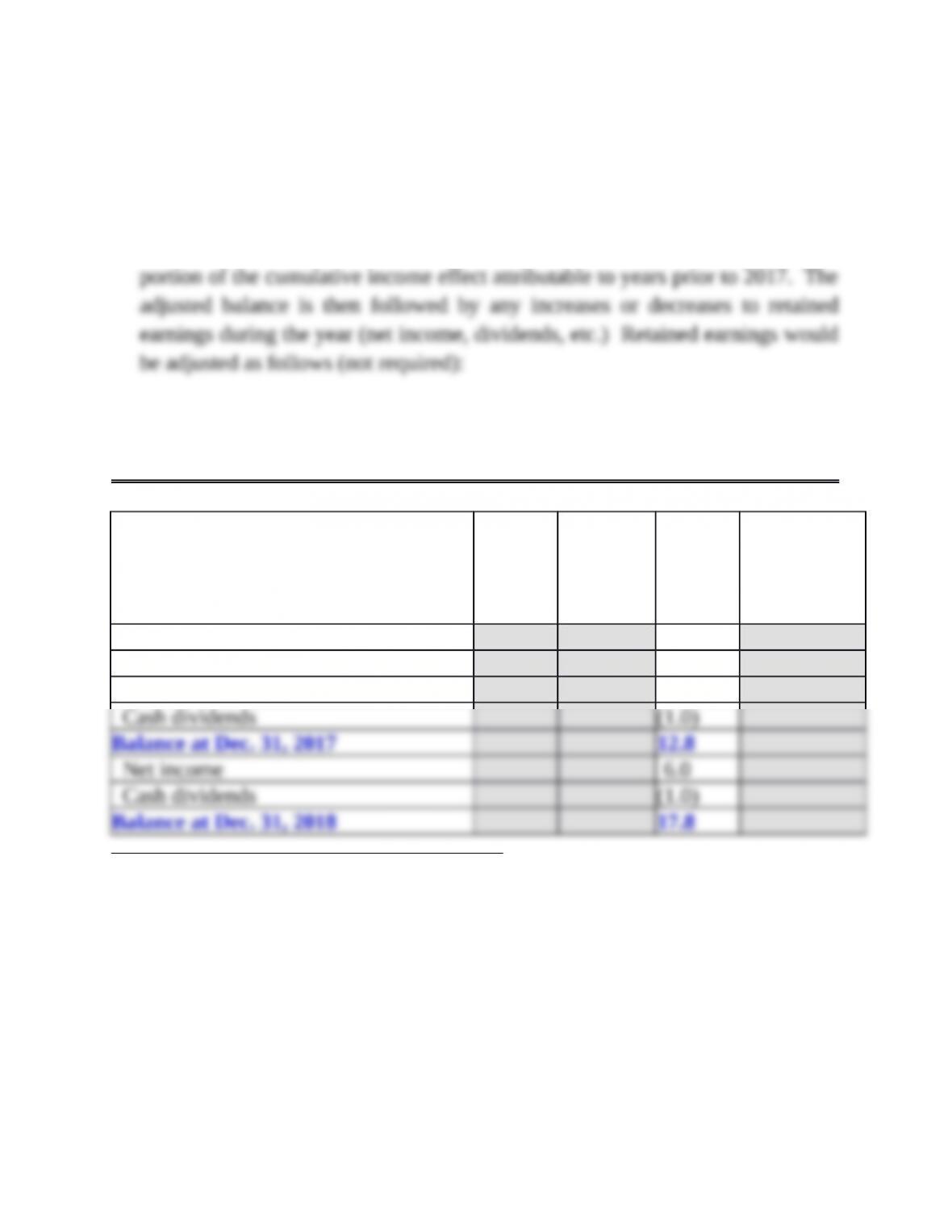
In the retained earnings column of the comparative statements of shareholders’
equity, the beginning balance of 2017 retained earnings is revised to include any
Millington Supplies
Statement of Shareholders’ Equity
For the Years Ended Dec. 31, 2018 and 2017
($ in millions)
Common
Stock
Additional
Paid-in
Capital
Retained
Earnings
Total
Shareholders’
Equity
Balance at Jan. 1 9.0*
Net income 4.8
* $15 million, less 40% income tax.
Exercise 20-8
Requirement 1
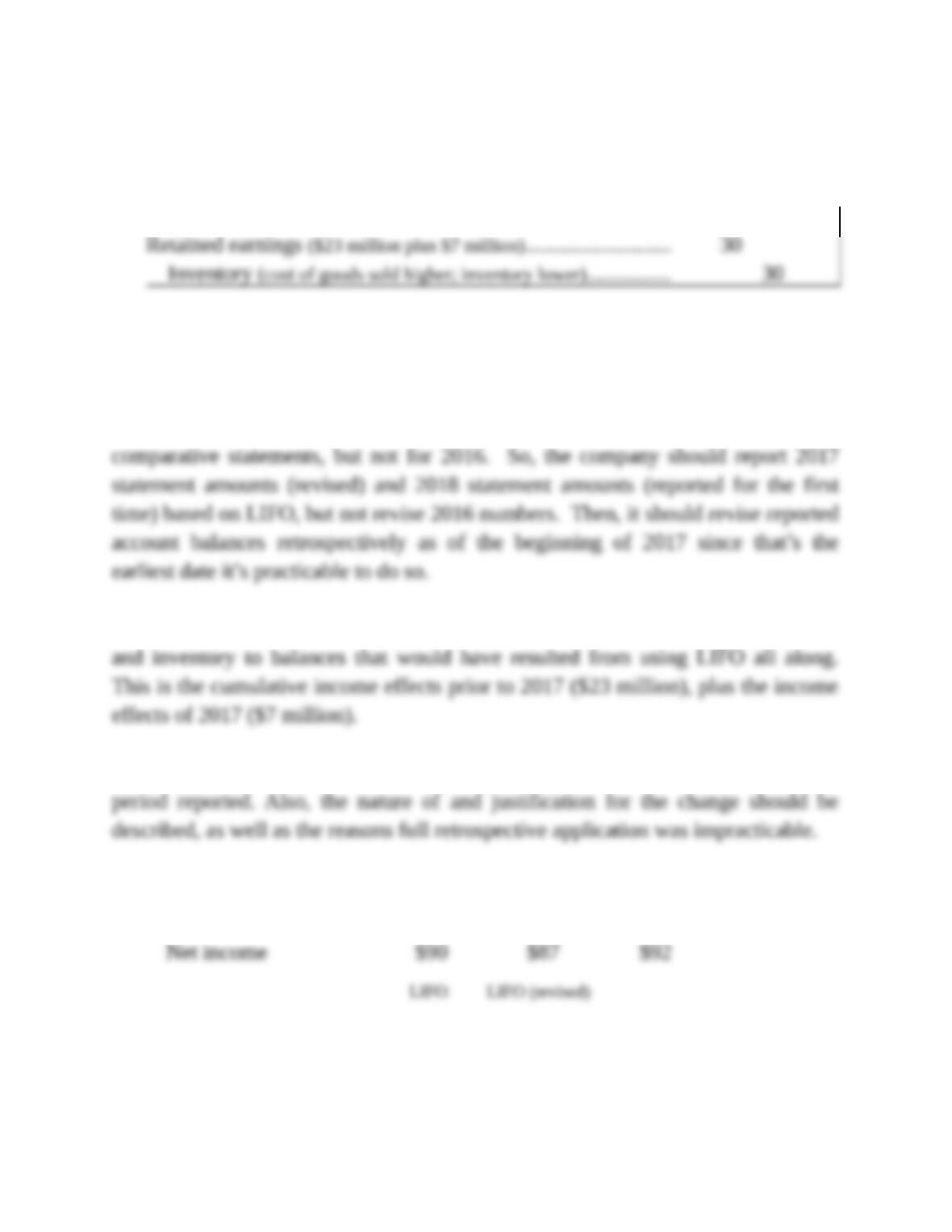
To record the change: ($ in millions)
Requirement 2
A journal entry is needed to revise retained earnings and inventory to balances
The effect of the change on each line item affected should be disclosed for each
period reported. Also, the nature of and justification for the change should be
described, as well as the reasons full retrospective application was impracticable.
Requirement 3
($ in millions) 2018 2017 2016
Flay is unable to apply the LIFO cost method retrospectively. It does, however,
have sufficient information to apply the new method prospectively beginning in
Exercise 20-9
Requirement 1
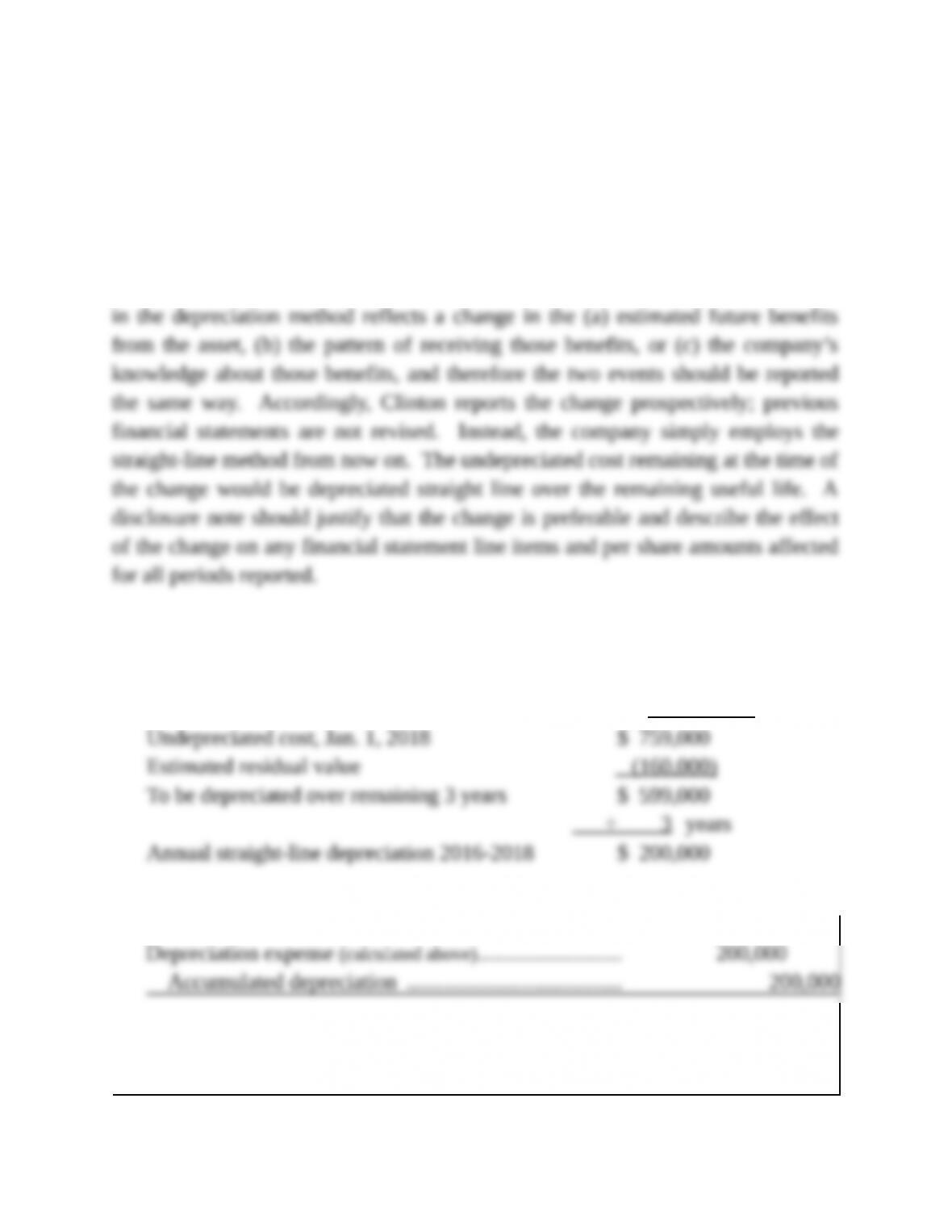
To record the change: ($ in millions)
Requirement 2
If it is impracticable to revise all specific years reported, a change is applied
retrospectively as of the earliest year practicable. Wolfgang has information that
would allow it to revise all assets and liabilities on the basis of LIFO for 2017 in its
A journal entry is needed at the beginning of 2018 to adjust retained earnings
The effect of the change on each line item affected should be disclosed for each
Requirement 3
($ in millions) 2018 2017 2016
Exercise 20-10
Requirement 1
In general, we report voluntary changes in accounting principles retrospectively.
However, a change in depreciation method is considered a change in accounting
estimate resulting from a change in accounting principle. In other words, a change
Requirement 2
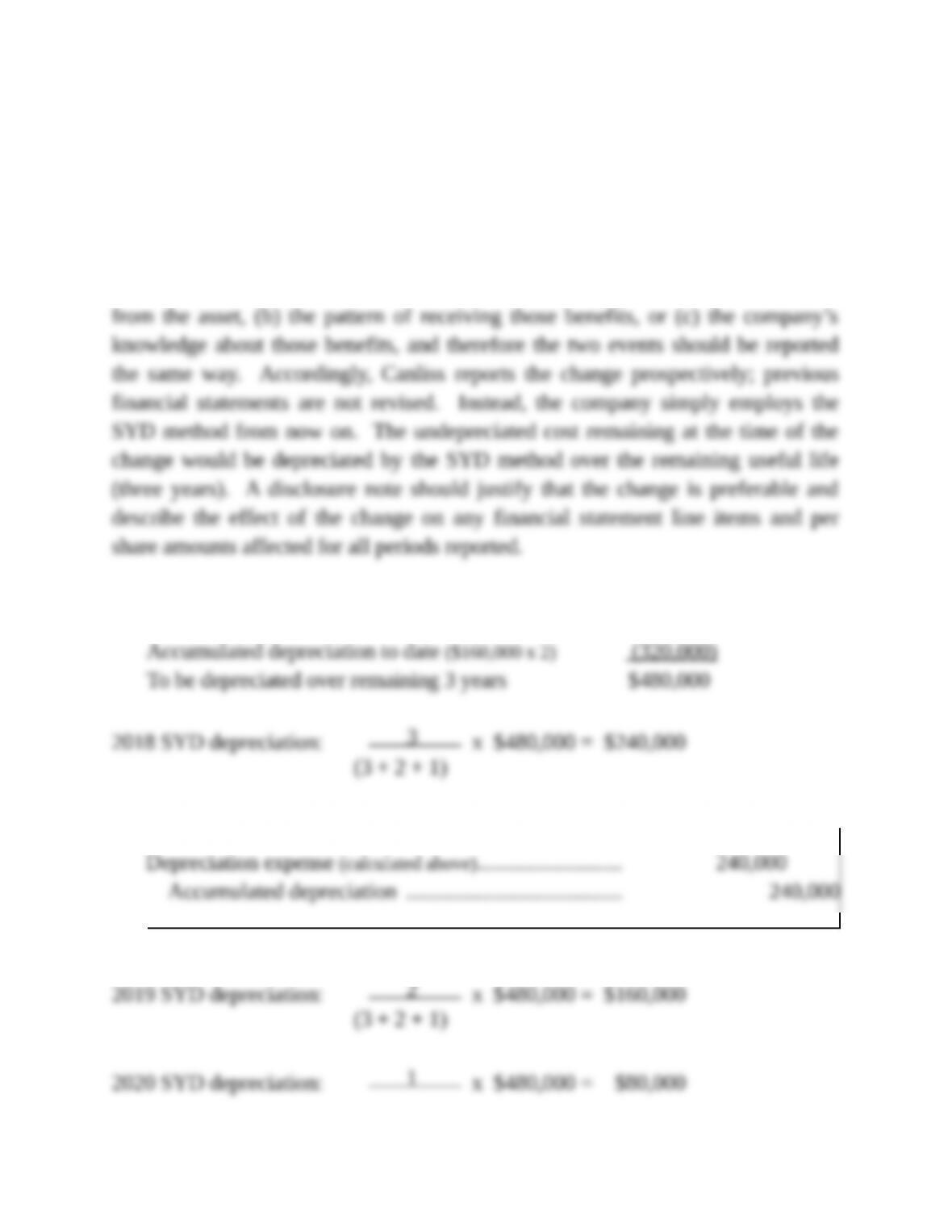
Asset’s cost $2,560,000
Accumulated depreciation to date (given) (1 ,801,000)
Adjusting entry (2018):
Exercise 20-11
Requirement 1
In general, we report voluntary changes in accounting principles retrospectively.
However, a change in depreciation method is considered a change in accounting
estimate resulting from a change in accounting principle. In other words, a change
in the depreciation method reflects a change in the (a) estimated future benefits
Requirement 2
Asset’s cost $800,000
Adjusting entry:
Not required:

Exercise 20-12
Requirement 1
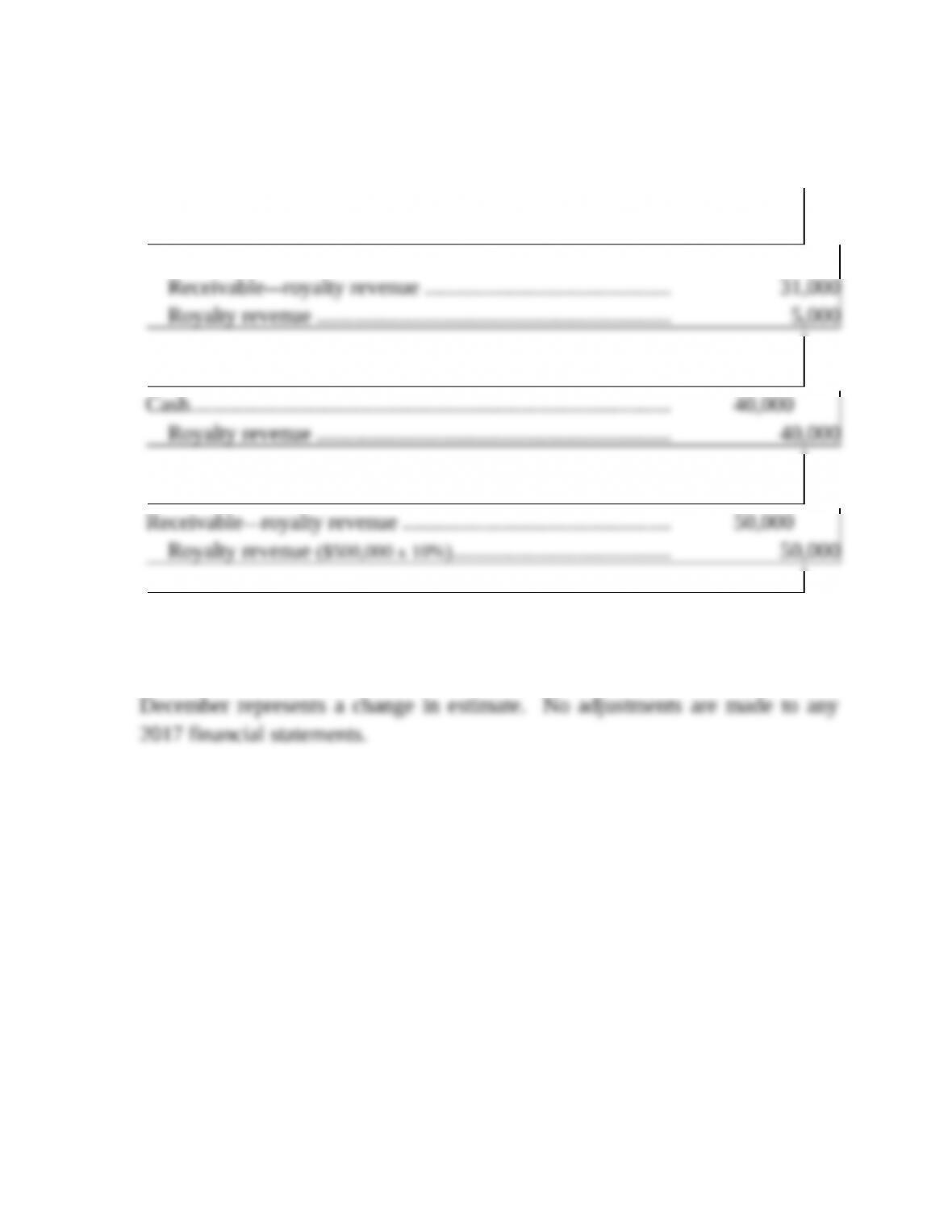
April 1, 2018
Cash……………………………………………………………………………. 36,000
October 1, 2018
December 31, 2018
Requirement 2
The fact that more royalty revenue was received in April than anticipated in
Exercise 20-13
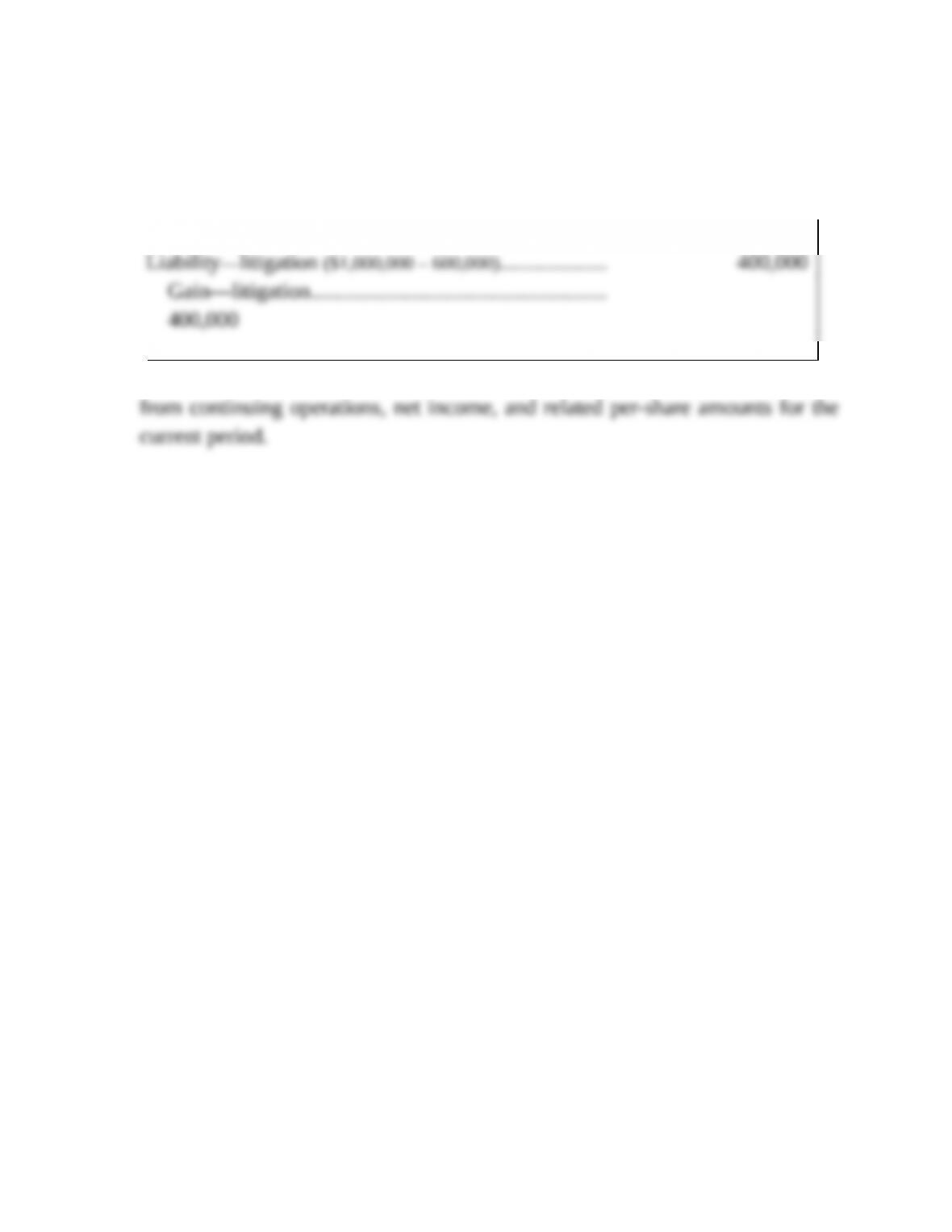
1. This is a change in estimate.
To revise the liability on the basis of the new estimate:
2. A disclosure note should describe the effect of a change in estimate on income
Exercise 20-14
Requirement 1
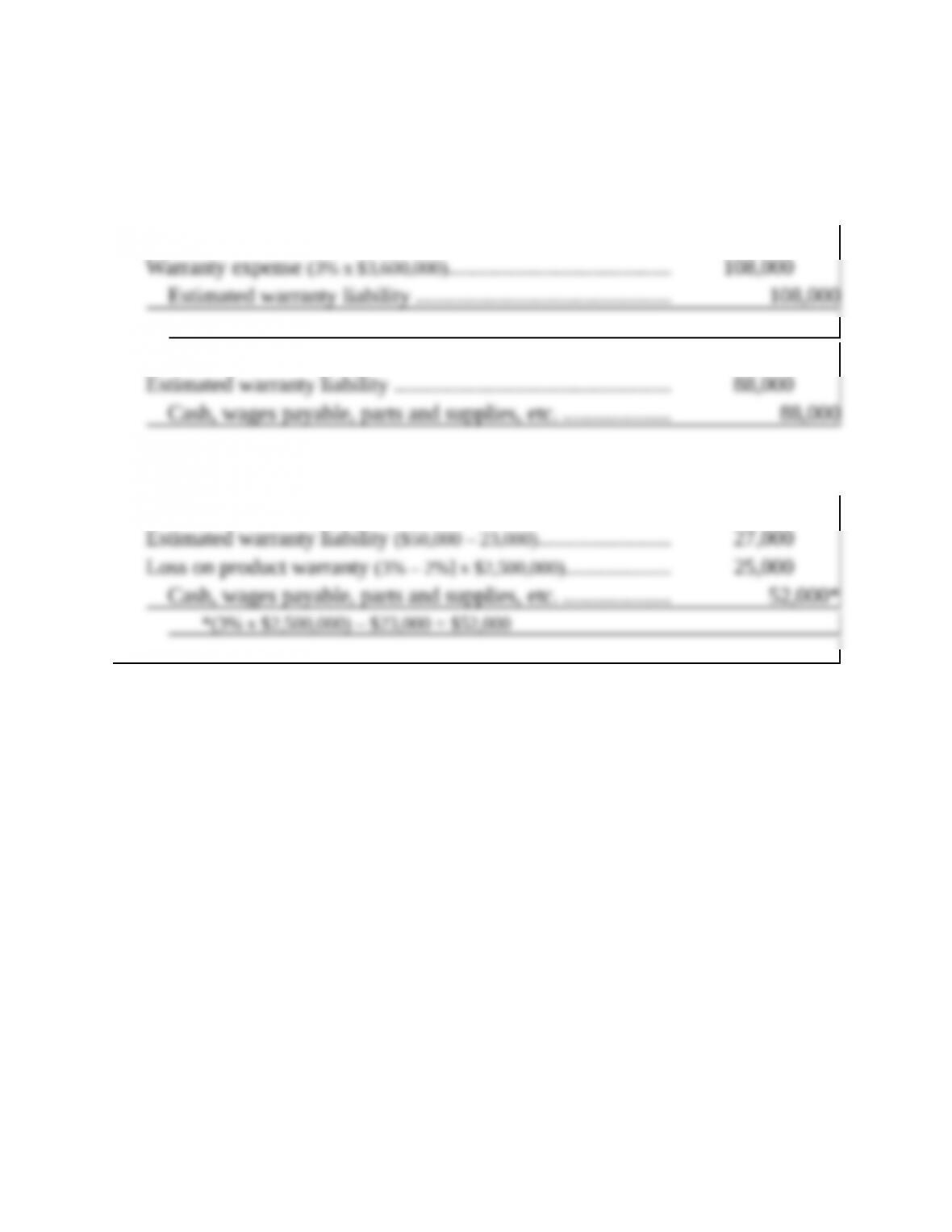
Accrued liability and expense
Actual expenditures (summary entry)
Requirement 2
Actual expenditures (summary entry)