Brief Exercise
20-1
To record the change: ($ in millions)
Retained earnings ……………………………………………………………………………. 8.2
Inventory ($32 million – 23.8 million)………………………………. 8.2
B & B applies the average cost method retrospectively; that is, to all prior
Then, the cumulative effects of the new method on periods prior to those
presented are reflected in the reported balances of the assets and liabilities affected
as of the beginning of the first period reported and a corresponding adjustment is
The effect of the change on each line item affected should be disclosed for
BRIEF EXERCISES
Brief Exercise 20-2
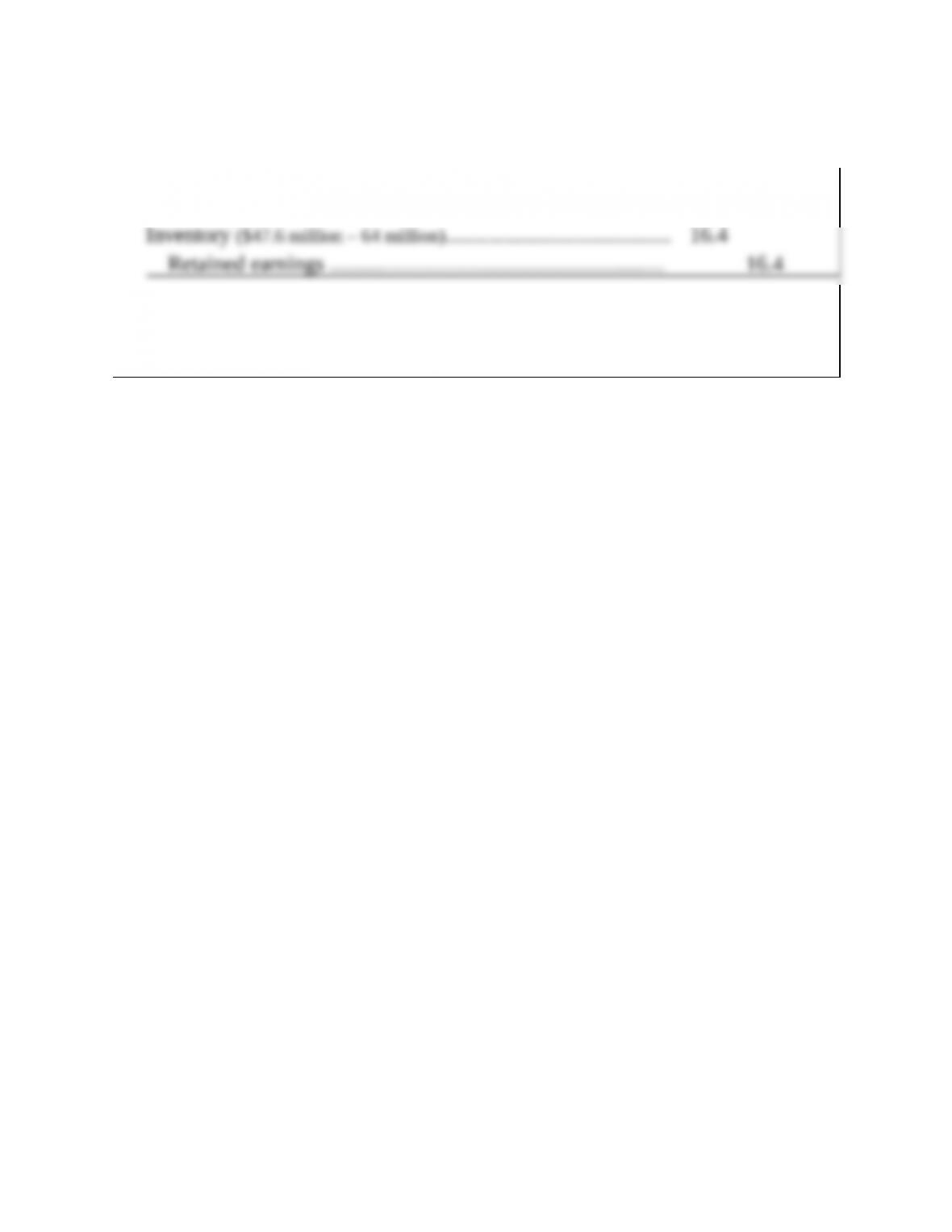
To record the change: ($ in millions)
Brief Exercise 20-3
When a company changes to the LIFO inventory method from another
inventory method, accounting records of prior years often are inadequate to
determine the cumulative income effect of the change for prior years. For instance,
it would be necessary to make assumptions as to when specific LIFO inventory
Brief Exercise 20-4
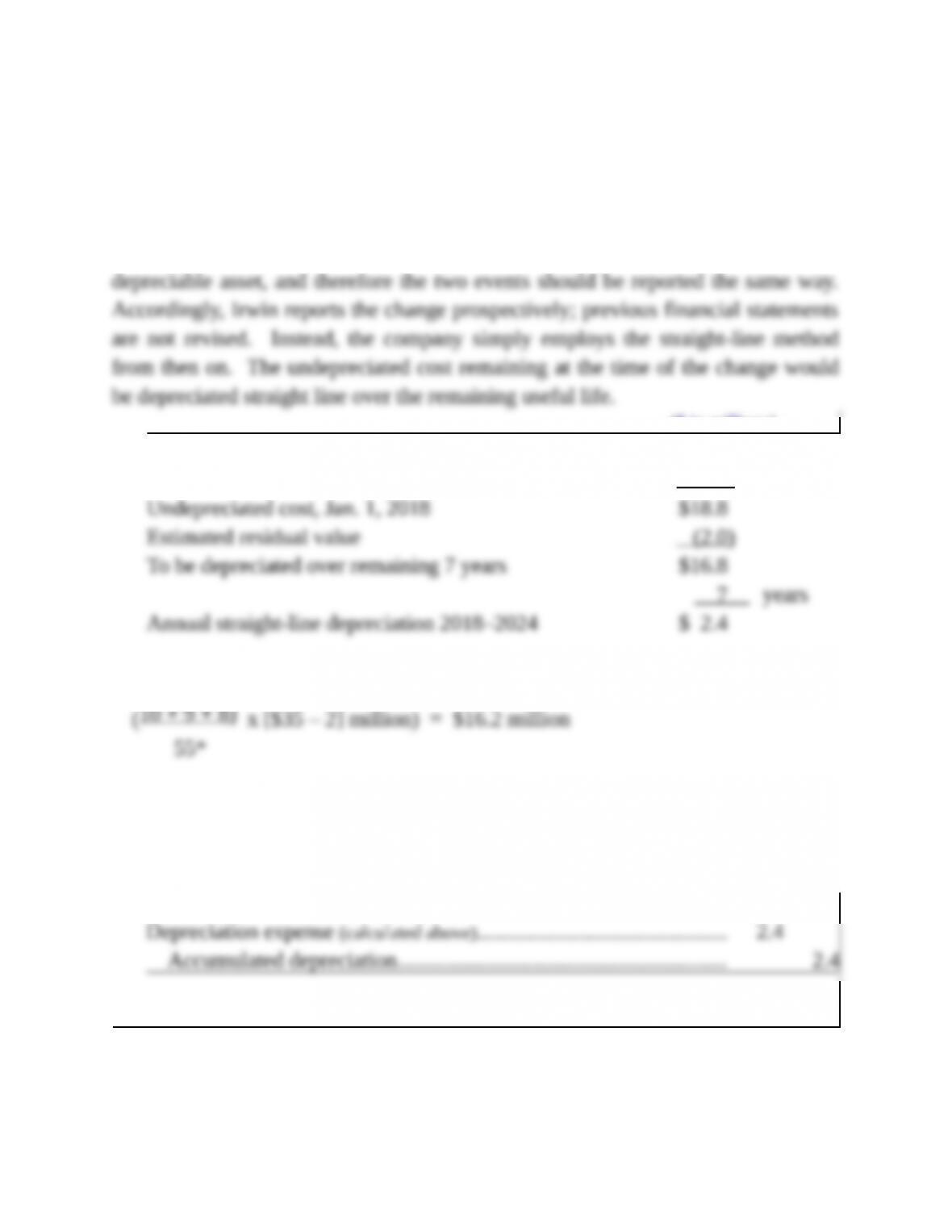
A change in depreciation method is considered a change in accounting
estimate resulting from a change in accounting principle. In other words, a change
in the depreciation method is similar to changing the economic useful life of a
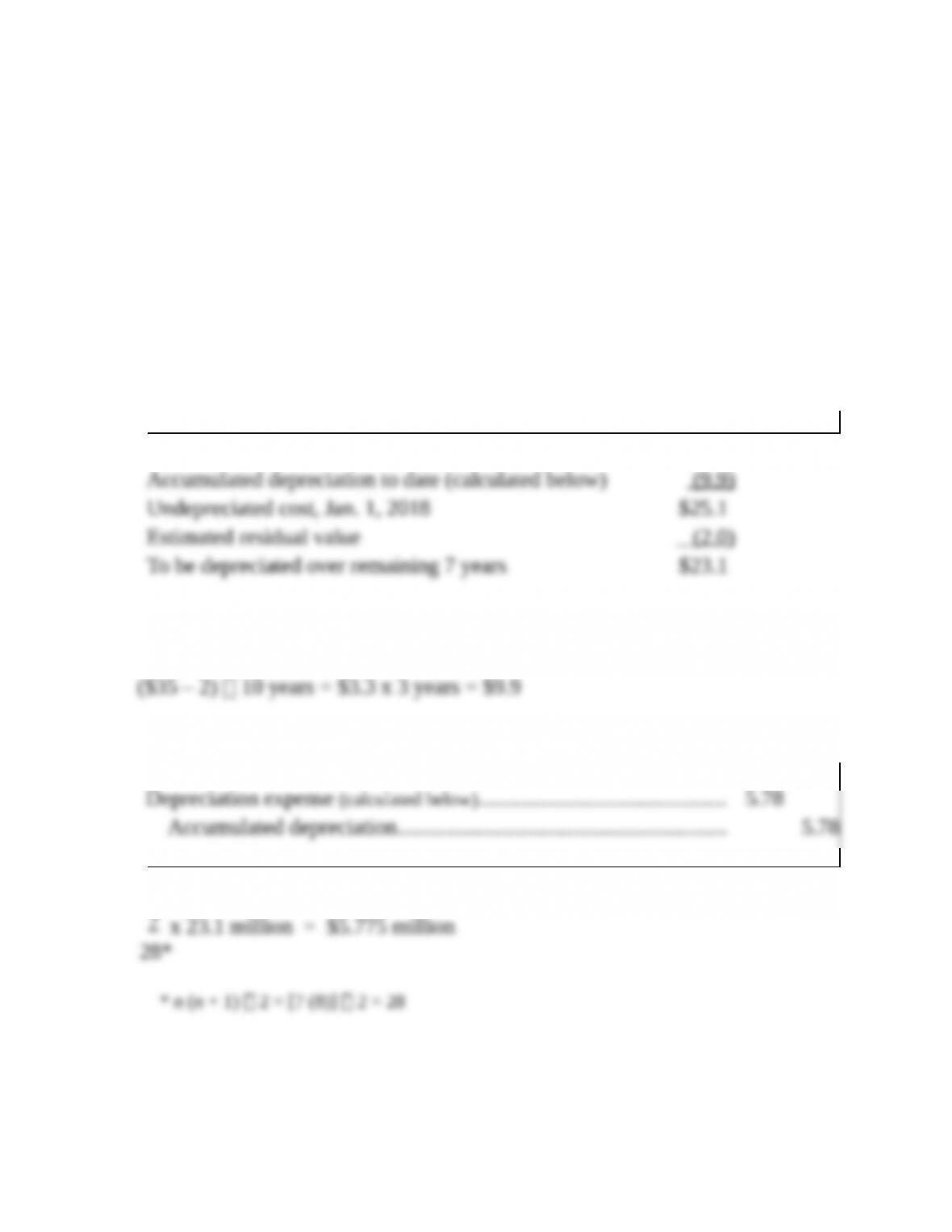
($ in millions)
Asset’s cost $35.0
Accumulated depreciation to date (calculated below) (16.2 )
Calculation of SYD depreciation
* n (n = 1) 2 = [10 (11)] 2 = 55
Adjusting entry (2018 depreciation):
($ in millions)
Brief Exercise 20-5
A change in depreciation method is considered a change in accounting
estimate resulting from a change in accounting principle. In other words, a change
in the depreciation method is similar to changing the economic useful life of a
depreciable asset, and therefore the two events should be reported the same way.
Accordingly, Irwin reports the change prospectively; previous financial statements
are not revised. Instead, the undepreciated cost remaining at the time of the change
would be depreciated by the sum-of-the-years’-digits method over the remaining
useful life.
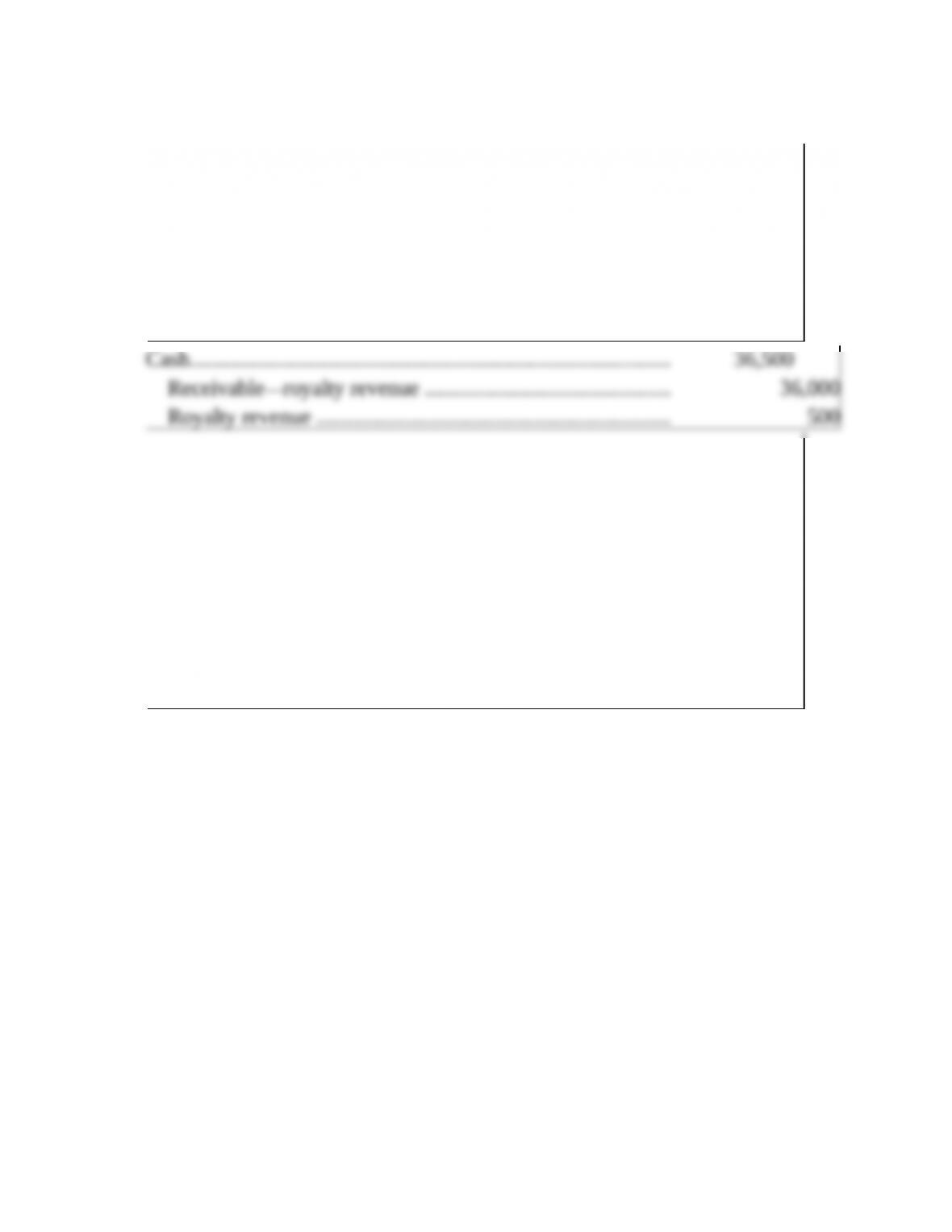
($ in millions)
Asset’s cost $35.0
Calculation of straight-line depreciation to date
Adjusting entry (2018 depreciation):
($ in millions)
Calculation of SYD depreciation
Brief Exercise 20-6
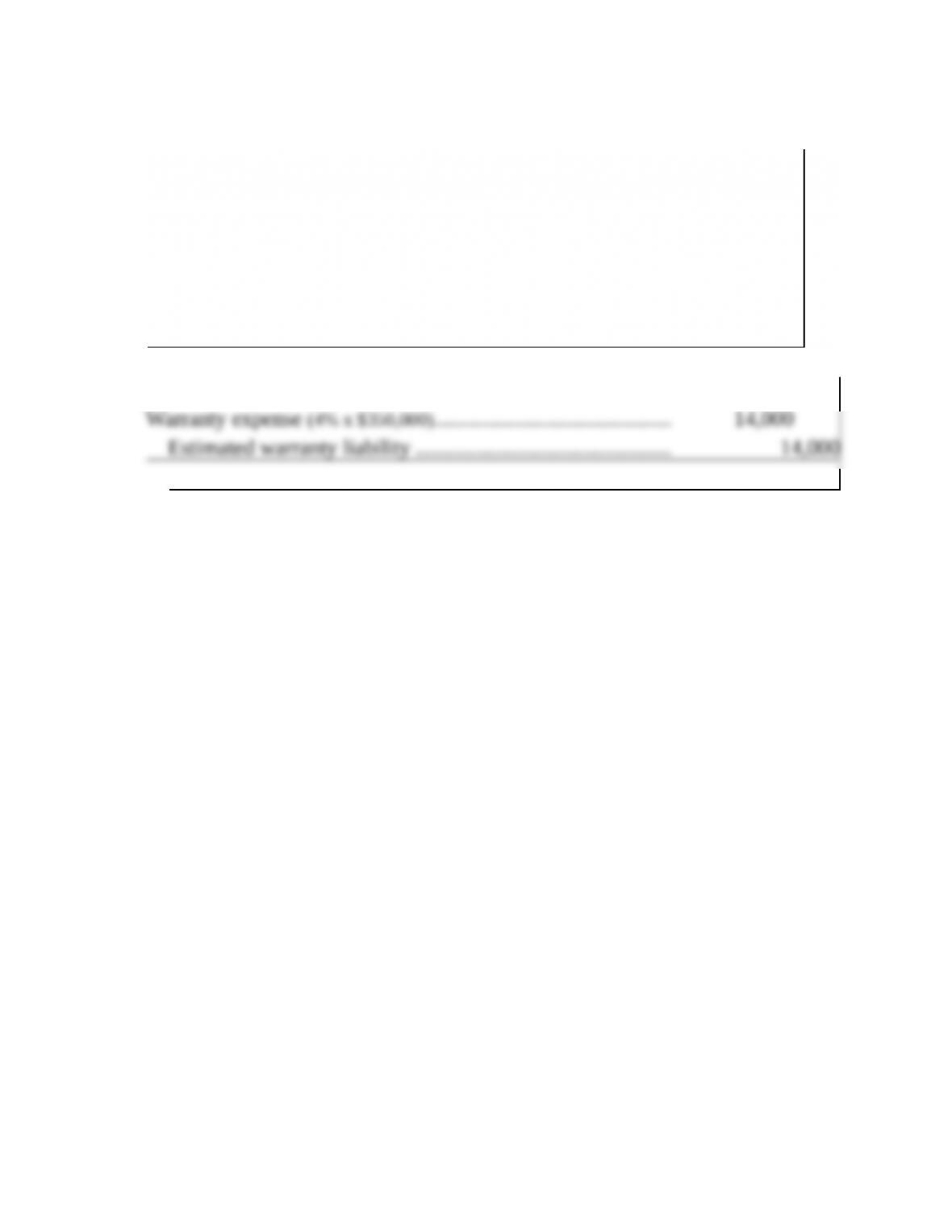
The fact that more royalty revenue was received in February than
anticipated in December represents a change in estimate. No adjustments
are made to any 2018 financial statements. Feenix would record the
following entry at February 1, 2019, upon receiving the 2018 royalties (not
required):
Brief Exercise 20-7
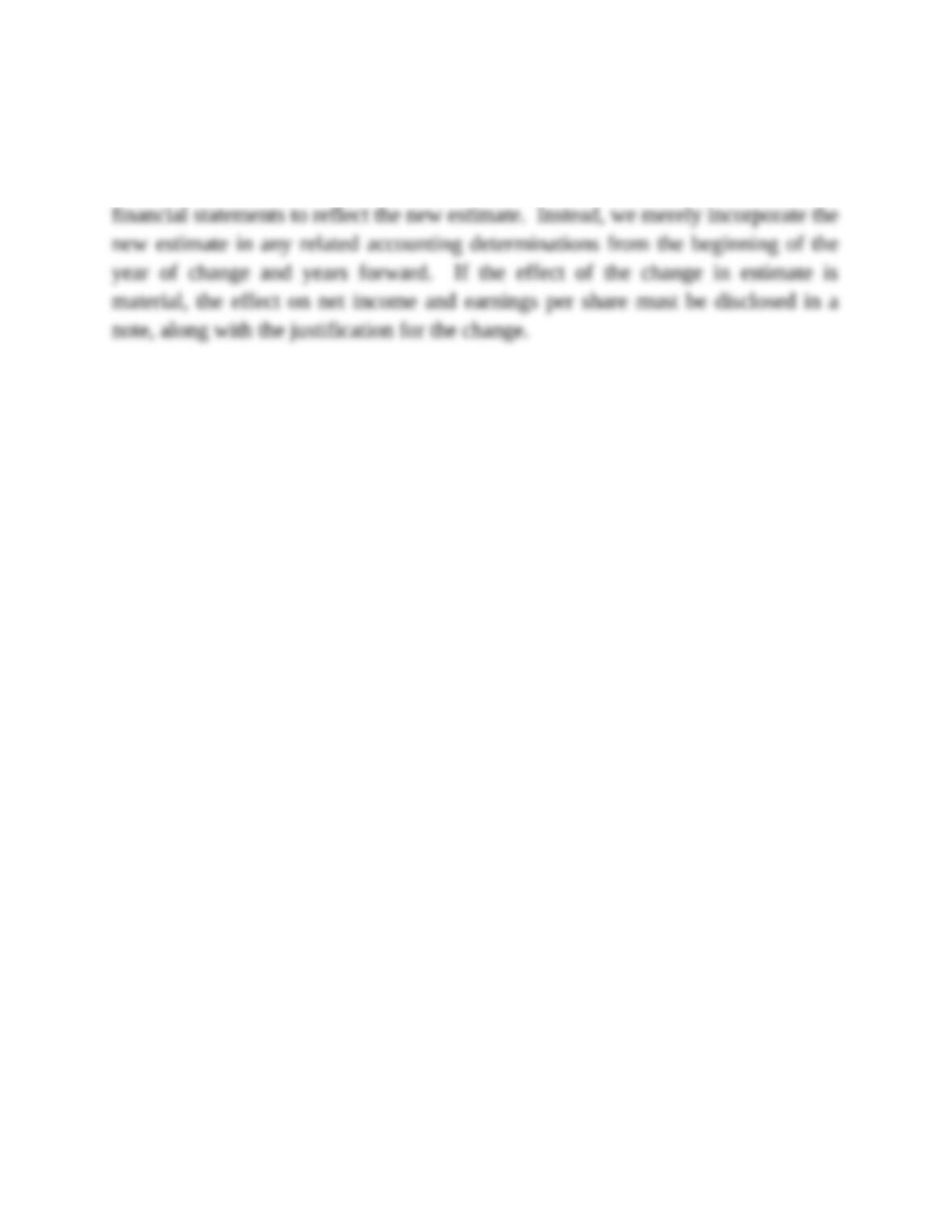
The fact that claims were less than expected represents a change in
estimate. As a result, no adjustments are made to any 2017 financial
statements, and the 2018 warranty expense is unaffected by any previous
estimates. 2018 warranty expense is $350,000 times 4%, or $14,000.
Quapau would record the following entry to record the expense (not
required):
Accrued liability and expense
Brief Exercise 20-8
When an estimate is revised as new information comes to light, accounting for
the change in estimate is quite straightforward. We do not recast prior years’
($ in
millions)
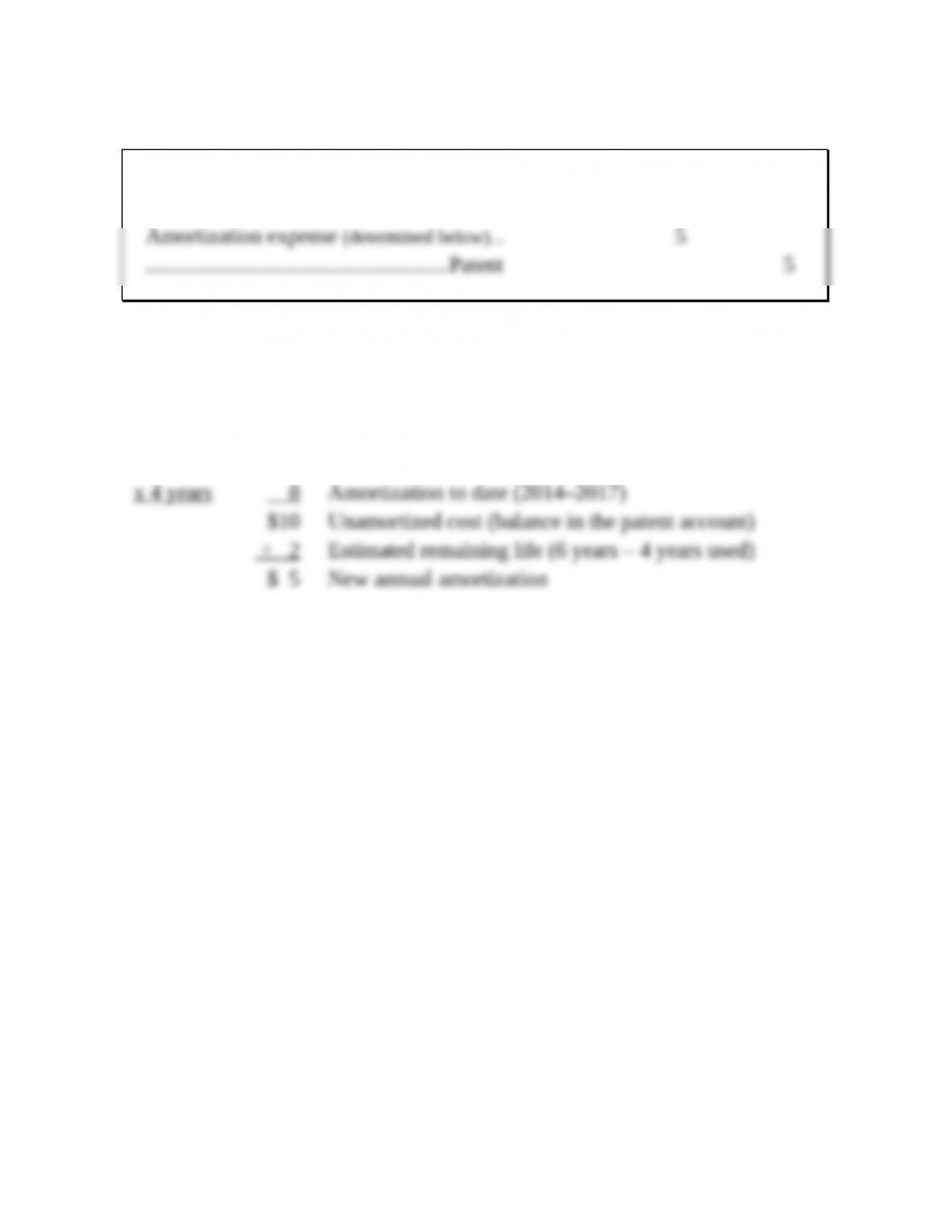
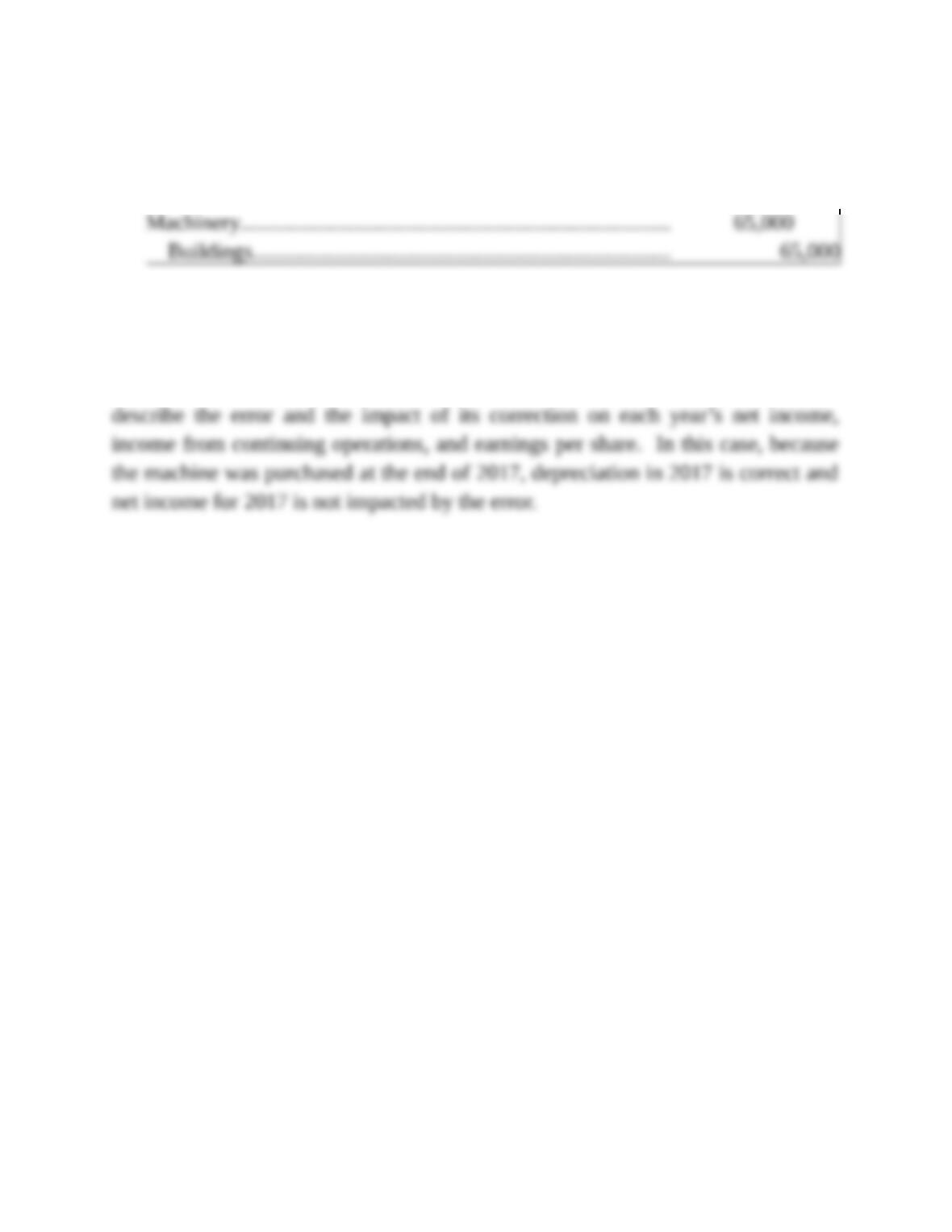
Calculation of annual amortization after the estimate change:
($ in millions)
$18 Cost
$2 Previous annual amortization ($18 ÷ 9 years)
Brief Exercise 20-9
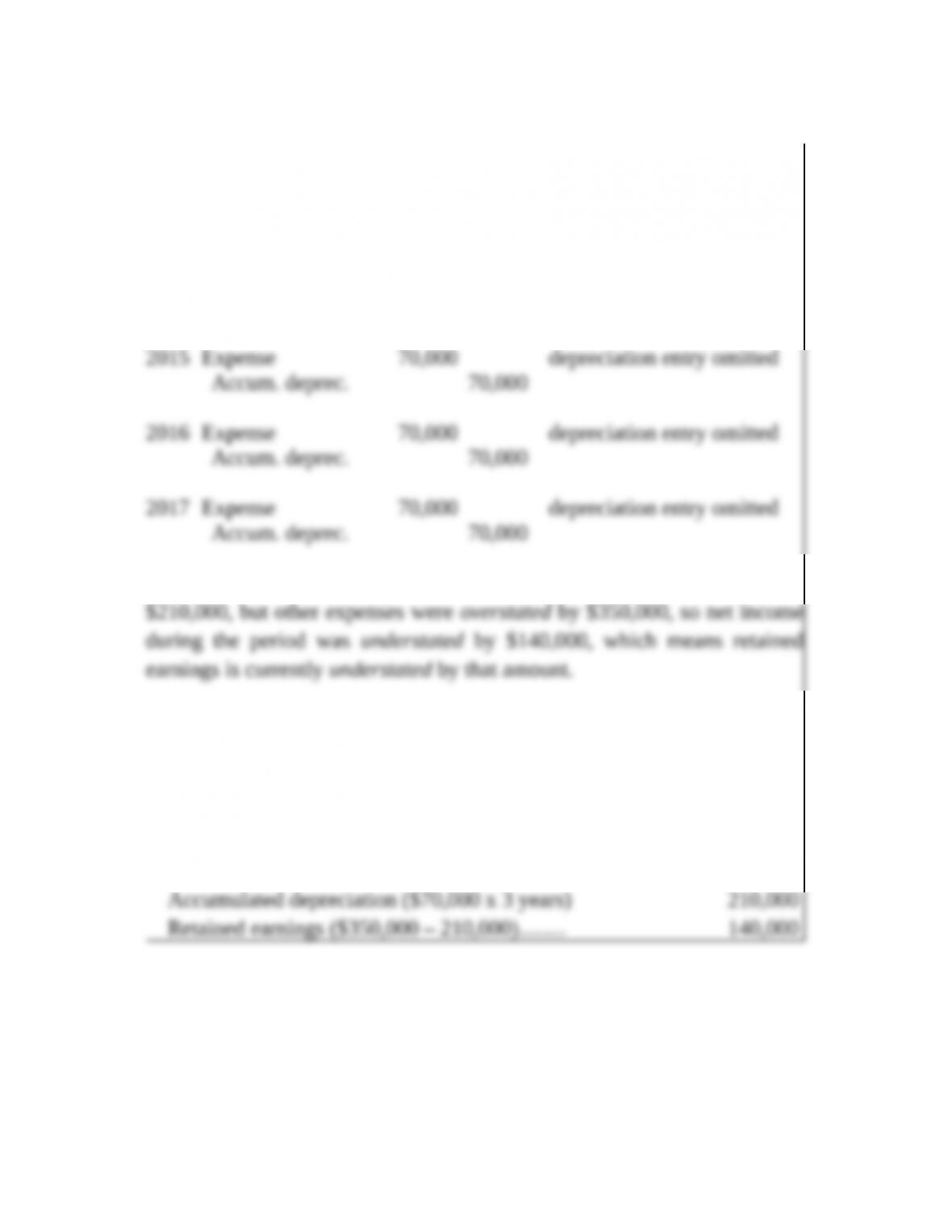
To correct the error:
Other step(s) that would be taken in connection with the error:
When comparative balance sheets are reported that include 2017, the 2017
balance sheet would be restated to reflect the correction. A disclosure note should
Brief Exercise 20-10
Analysis:
Correct Incorrect
(Should Have Been Recorded) (As Recorded)
2015 Equipment 350,000 Expense 350,000
Cash 350,000 Cash 350,000
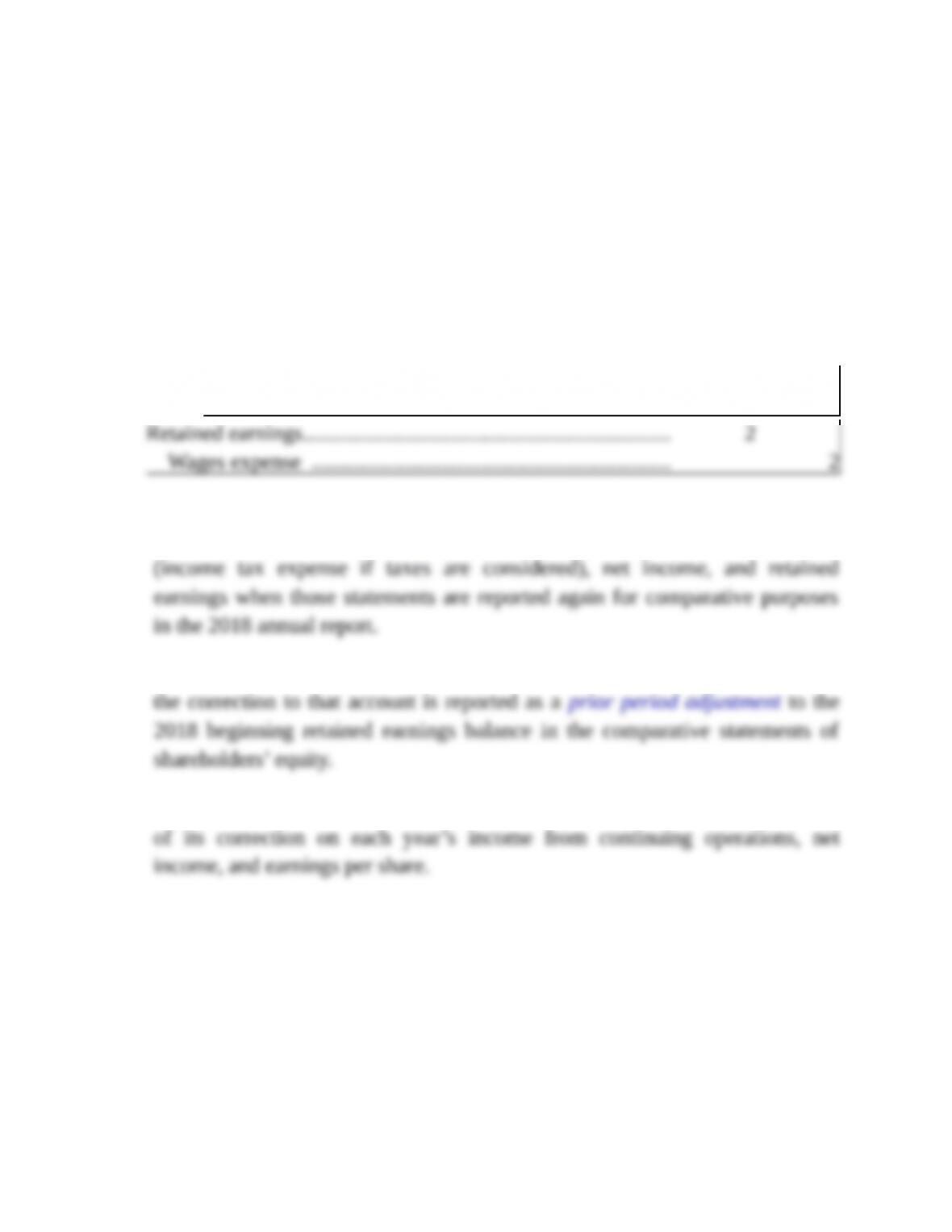
During the three-year period, depreciation expense was understated by
During the three-year period, accumulated depreciation was understated,
and continues to be understated by $210,000.
To correct incorrect accounts
Equipment …………………………………………………. 350,000
Brief Exercise 20-11
No correcting entry would be required because, after five years, the accounts
would show appropriate balances.
Brief Exercise 20-12
Error a
1.
2017 Income Statement: Expenses understated, net income overstated.
2017 Balance Sheet: Liabilities understated, retained earnings overstated.
The journal entry for the correction in 2018 is:
($ in
millions)
2. The 2017 financial statements that were incorrect as a result of the error
would be retrospectively restated to reflect the correct wages expense,
3. Because retained earnings is one of the accounts incorrectly stated accounts,
4. Also, a disclosure note should describe the nature of the error and the impact