Problem 20-16
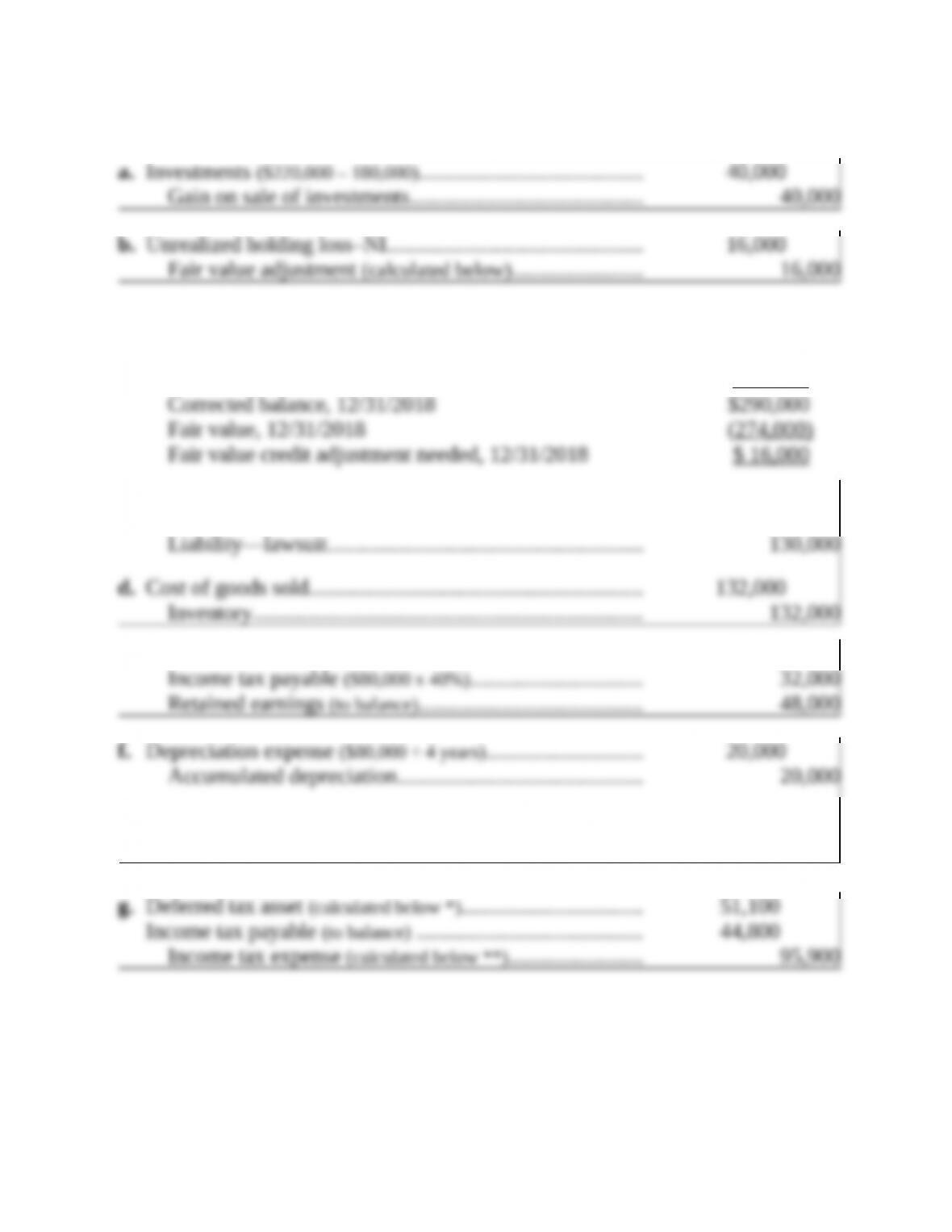
Fair value adjustment calculation:
Investment balance, December 31, 2018, as reported $250,000
Error adjustment 40,000
c. Loss–lawsuit……………………………………………………………. 130,000
e. Property, plant, and equipment (amount expensed in error).... 80,000
Depreciation expense already has been recorded, but an additional amount is
needed for the amount added due to the error correction.
Problem 20-16 (concluded)
Income taxes:
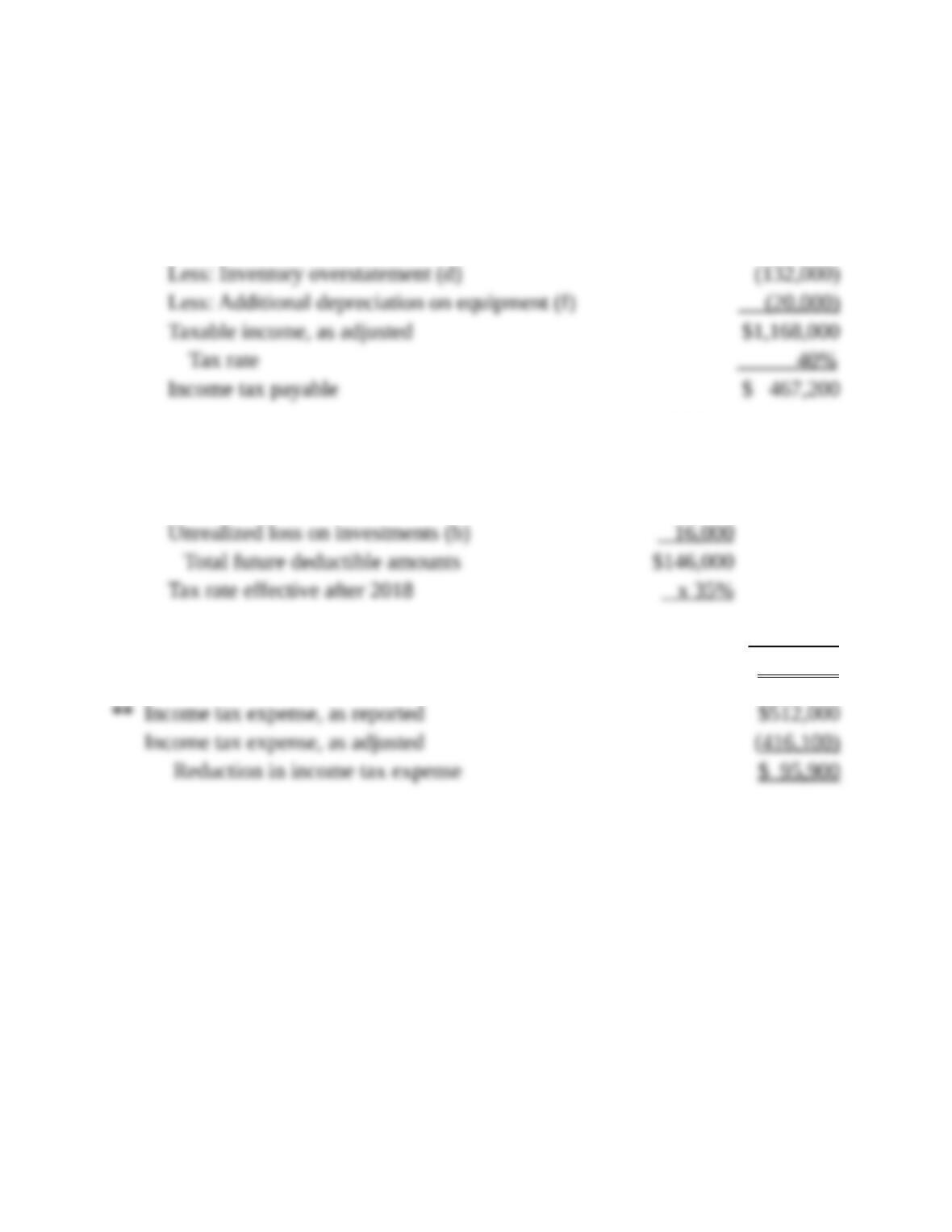
Taxable income (same as pretax accounting income
before temporary differences), as reported $1,280,000
Add: Realized gain on sale of investments (a) 40,000
Future deductible amounts (not included in taxable income):
Lawsuit expected to be settled in 2021 (c) $130,000
* Deferred tax asset (51 ,100)
Income tax expense, as adjusted $416 ,100
Problem 20-17
Requirement 1
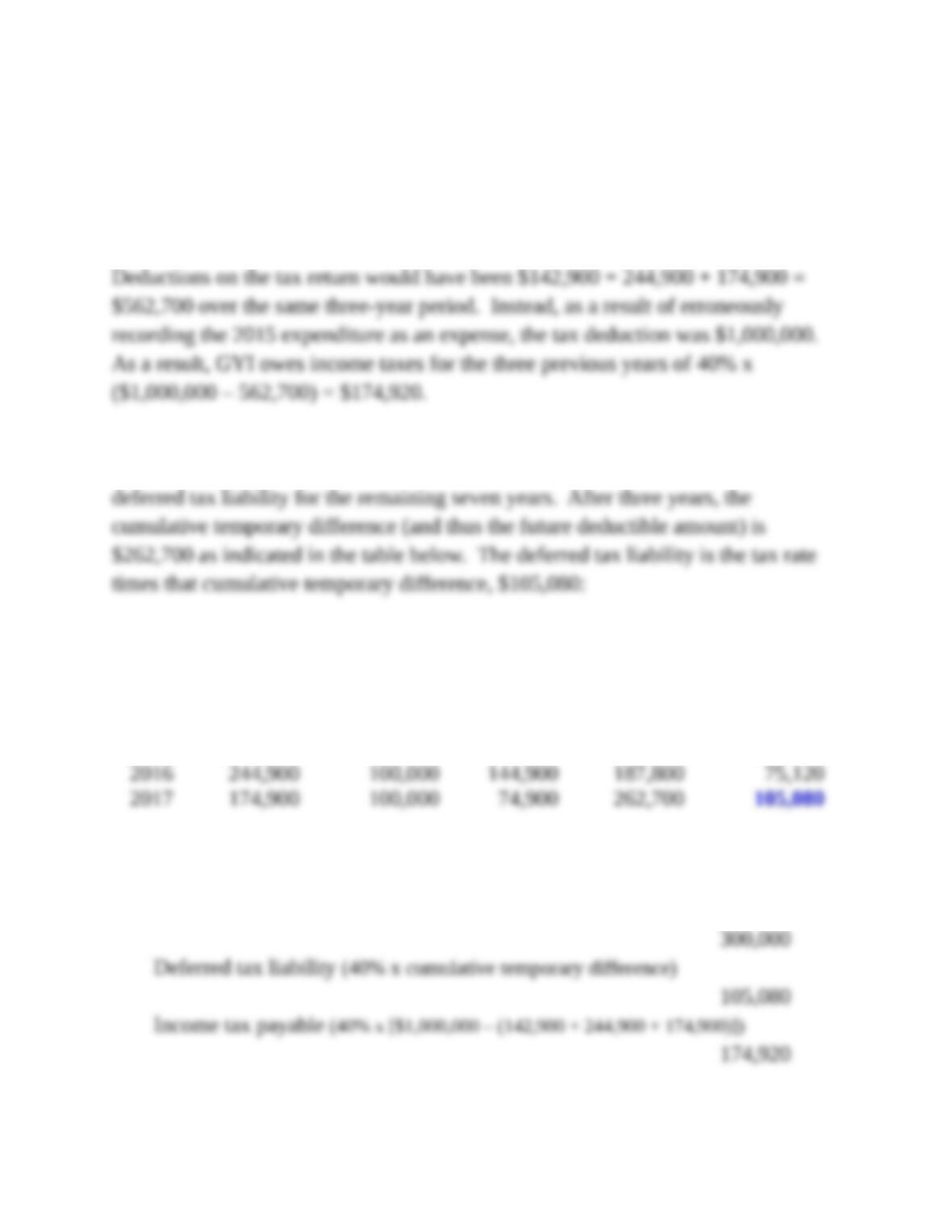
If GYI had recorded the purchase correctly, depreciation would have been
$100,000 per year in the financial statements for 2015, 2016, and 2017.
In addition, because using straight-line depreciation in the income statement and
MACRS on the tax return creates a temporary difference, GYI needs to record a
Year MACRS
Deductions
Straight-
Line
Depreciation Difference
Cumulative
Temporary
Difference
Deferred
Tax
Liability
2015 $142,900 $100,000 $42,900 $42,900 $17,160
Correcting entry:
Machinery (cost) 1,000,000
Accumulated depreciation (S-L depr: $100,000 x 3 years)

Problem 20-17 (concluded)
Requirement 2
The financial statements that were incorrect as a result of the error would be
retrospectively restated to report the correct depreciation, assets, and retained
Requirement 3
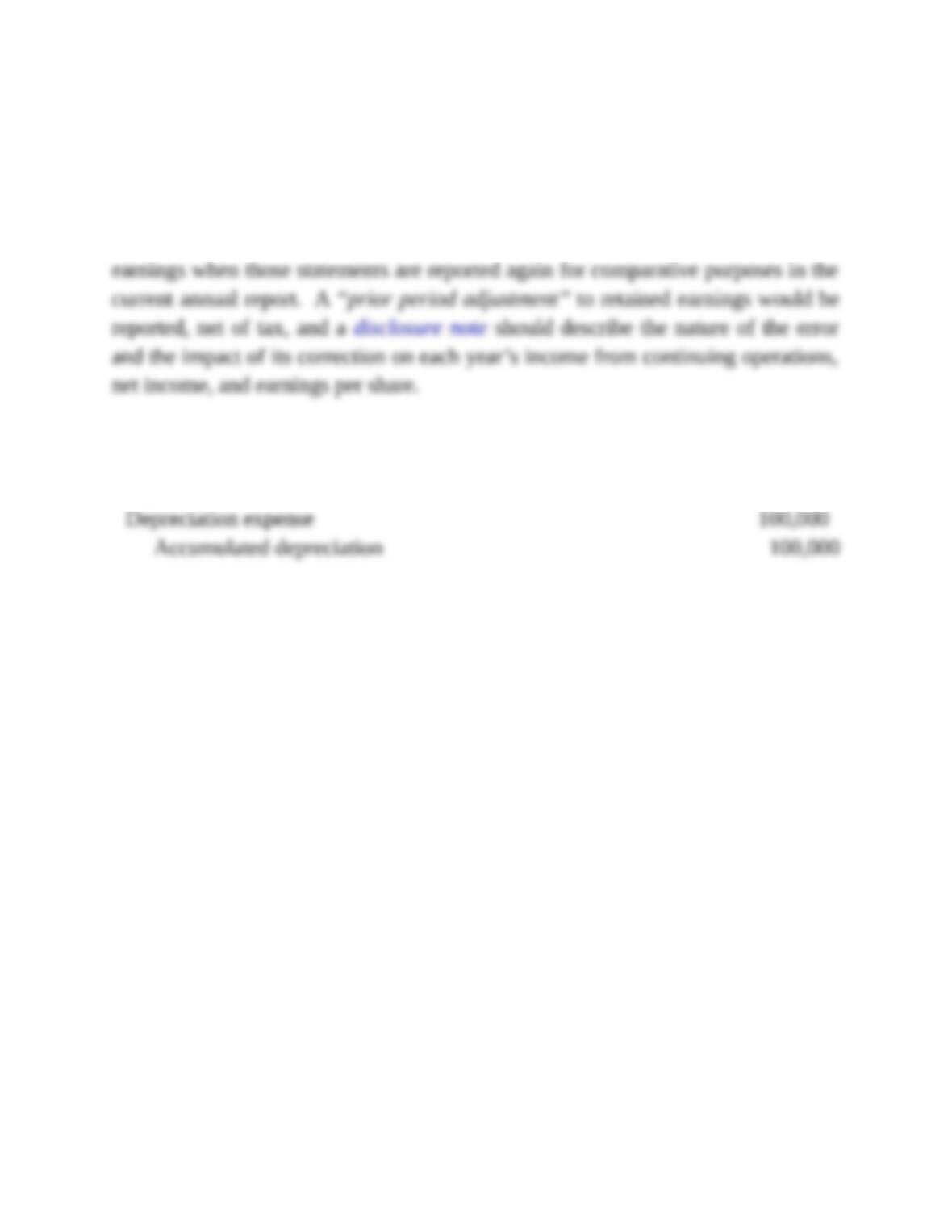
Adjusting entry:
CASES
Integrating Case 20-1
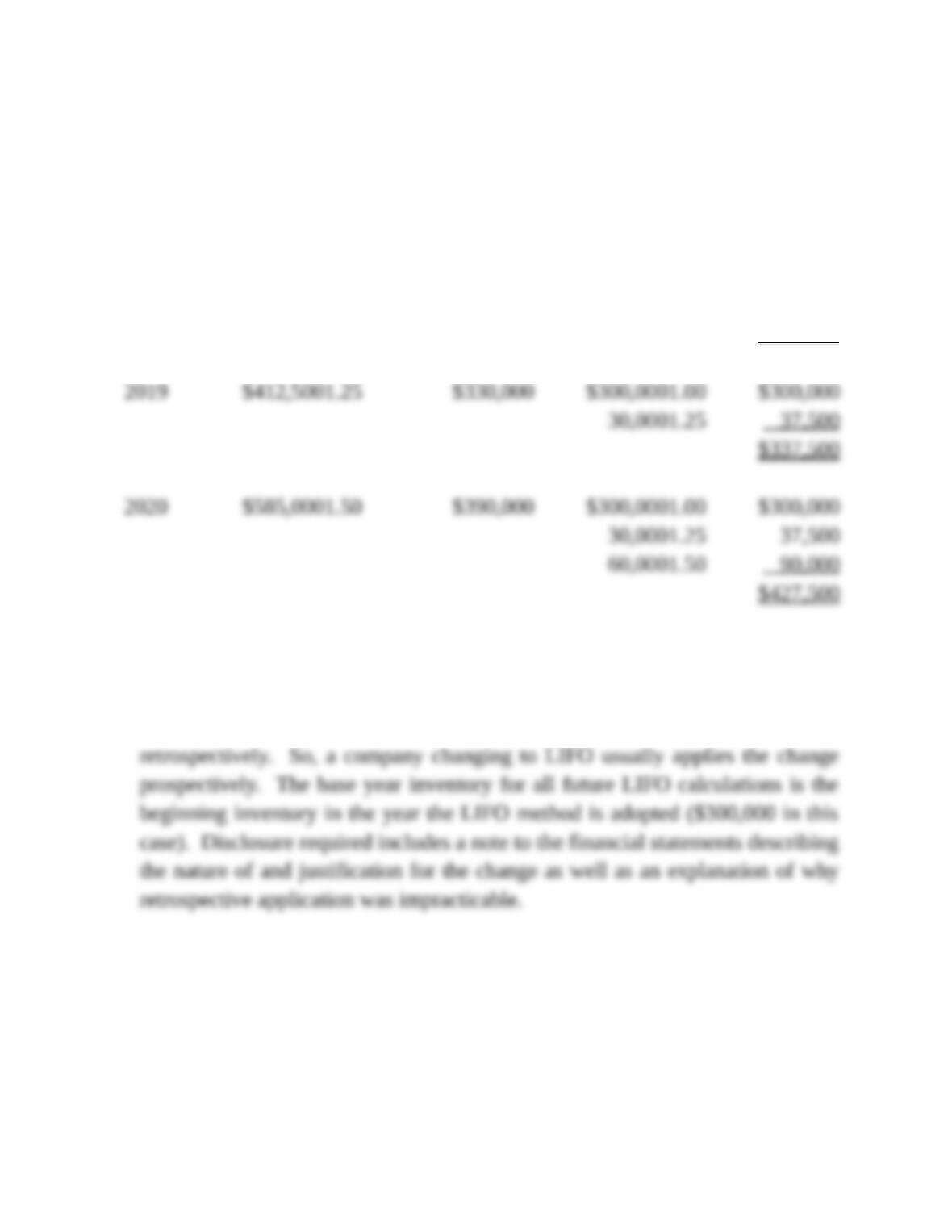
1. Webster’s dollar-value LIFO inventory at December 31, 2019 and 2020, is
calculated as follows:
Year Inventory Divided Inventory Layers
at by At Base At Base Times Inventory
FIFO Index Year Cost Year Cost Index at DVL
2018 $300,0001.00 $300,000 $300,0001.00 $300 ,000
2. When a company changes to the LIFO inventory method from another
inventory method, accounting records usually are insufficient to determine the
cumulative income effect of the change required to apply the new method
Communication Case 20-2
Requirement 1
Change in Inventory Method
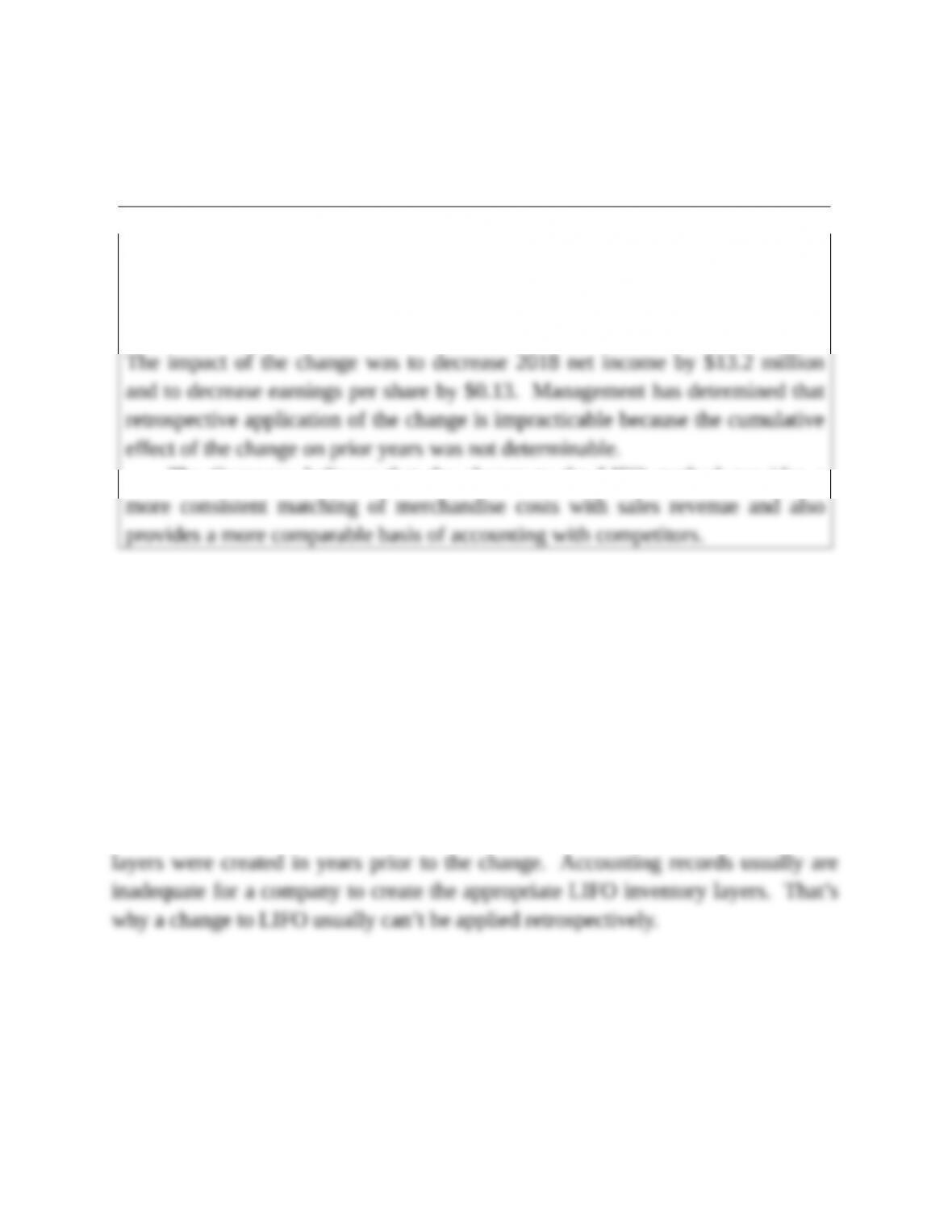
During 2018, the Company changed the method of valuing its inventories from
the first-in, first-out (FIFO) method, to the last-in, first-out (LIFO) method,
determined by the retail method. To estimate the effects of changing retail
prices on inventories, the Company utilizes internally developed price indexes.
The Company believes that the change to the LIFO method provides a
Note: Because cost of goods sold would have been $22 million lower if the
change had not been made, income before tax would have been $22
million higher, and net income would have been $13.2 million higher ($22
million multiplied by 60% [1 – .40]).
Requirement 2
It usually is impracticable to calculate the cumulative effect of a change to
LIFO. To do so would require assumptions as to when specific LIFO inventory
Ethics Case 20-3
Discussion should include these elements.
How would the actions suggested contribute toward “softening” the bad
news?
The choice of inventory method will affect earnings. FIFO will increase
Less obvious would be a change in LIFO pools. By drastically increasing
Changing estimates on depreciable lives, salvage values, pension
Academic research performed in this area would indicate that accounting
changes that merely increase reported earnings without any real economic (or
cash flow) effect will not produce the desired effect of increasing share price.
Case 20-3 (concluded)
Ethical Dilemma:
Is the auditor’s obligation to challenge the questionable change in methods
greater than the obligation to the financial interests of the CPA firm and its
client?
Who is affected?
You, the auditor
Managers
CPA firm (lost fees? reputation? legal action?)
Shareholders
Potential shareholders
The employees
The creditors
Company managers, particularly the president, stand to benefit from the
suggested actions.
The auditor risks negative consequences if the changes occur and are
challenged.