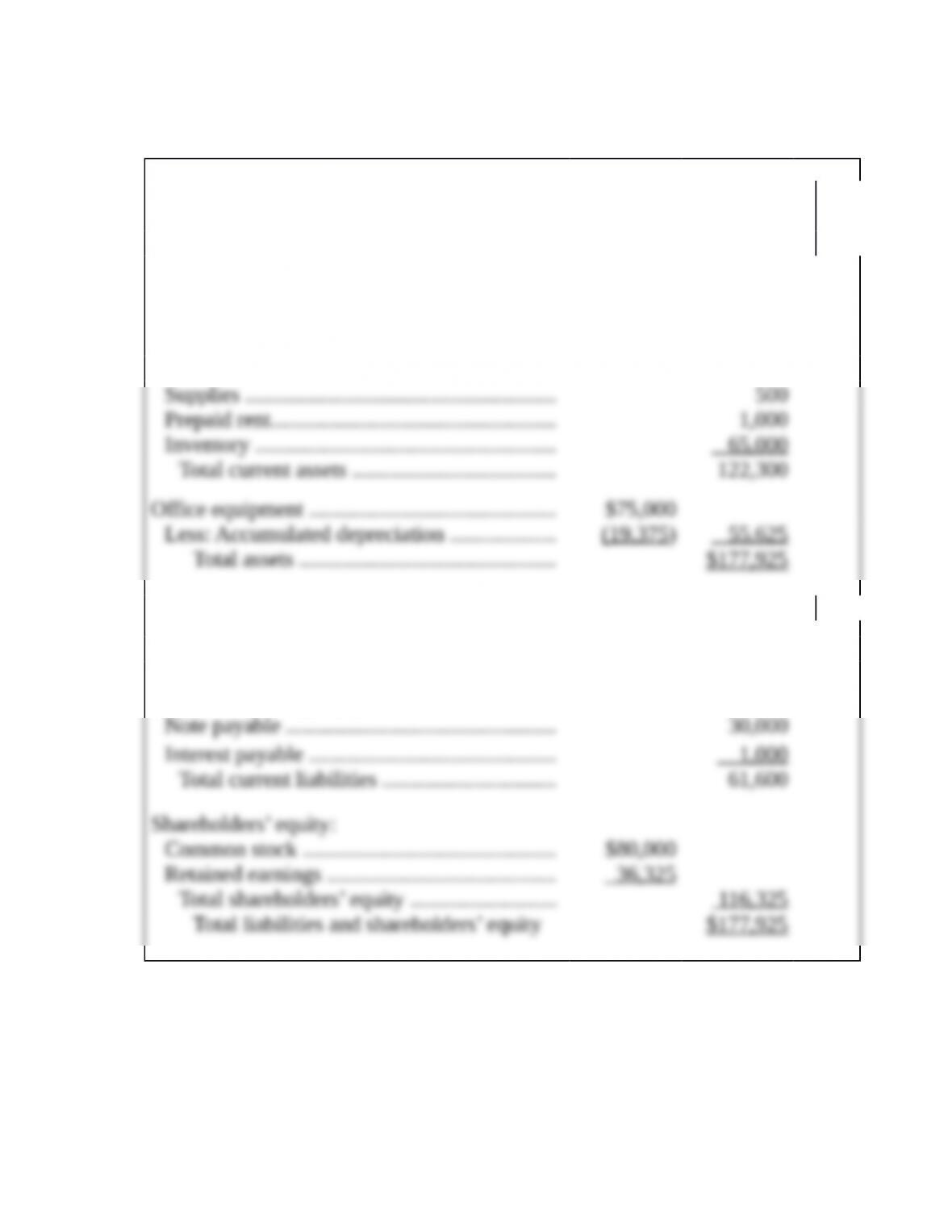
Problem 2–13 (continued)
EXCALIBUR CORPORATION
Balance Sheet
At December 31, 2018
Assets
Current assets:
Cash ……………………………………………………… $ 23,300
Accounts receivable ……………………………….. 32,500
Liabilities and Shareholders’ Equity
Current liabilities:
Accounts payable …………………………………… $ 26,100
Salaries and wages payable ……………………… 4,500
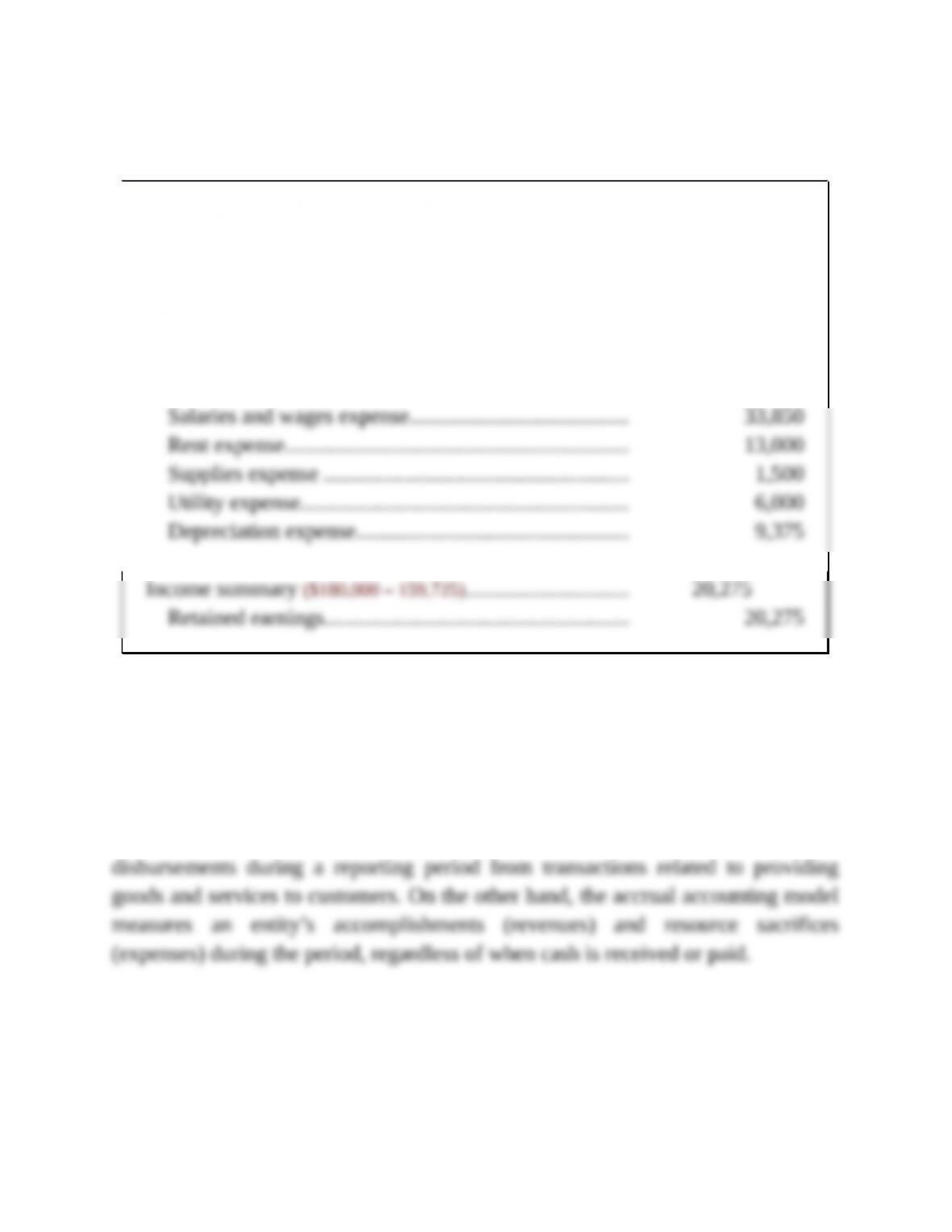
Problem 2–13 (concluded)
December 31, 2018
Sales revenue………………………………………………………… 180,000
Income summary……………………………………………….. 180,000
Income summary…………………………………………………… 159,725
Cost of goods sold……………………………………………… 95,000
Interest expense…………………………………………………. 1,000
Judgment Case 2–1
Requirement 1
Cash basis accounting produces a measure of performance called net
operating cash flow. This measure is the difference between cash receipts and cash
Requirement 2
In most cases, the accrual accounting model provides a better measure of
performance because it attempts to measure the accomplishments and sacrifices
CASES
Requirement 3
Adjusting entries, for the most part, are conversions from cash to accrual.
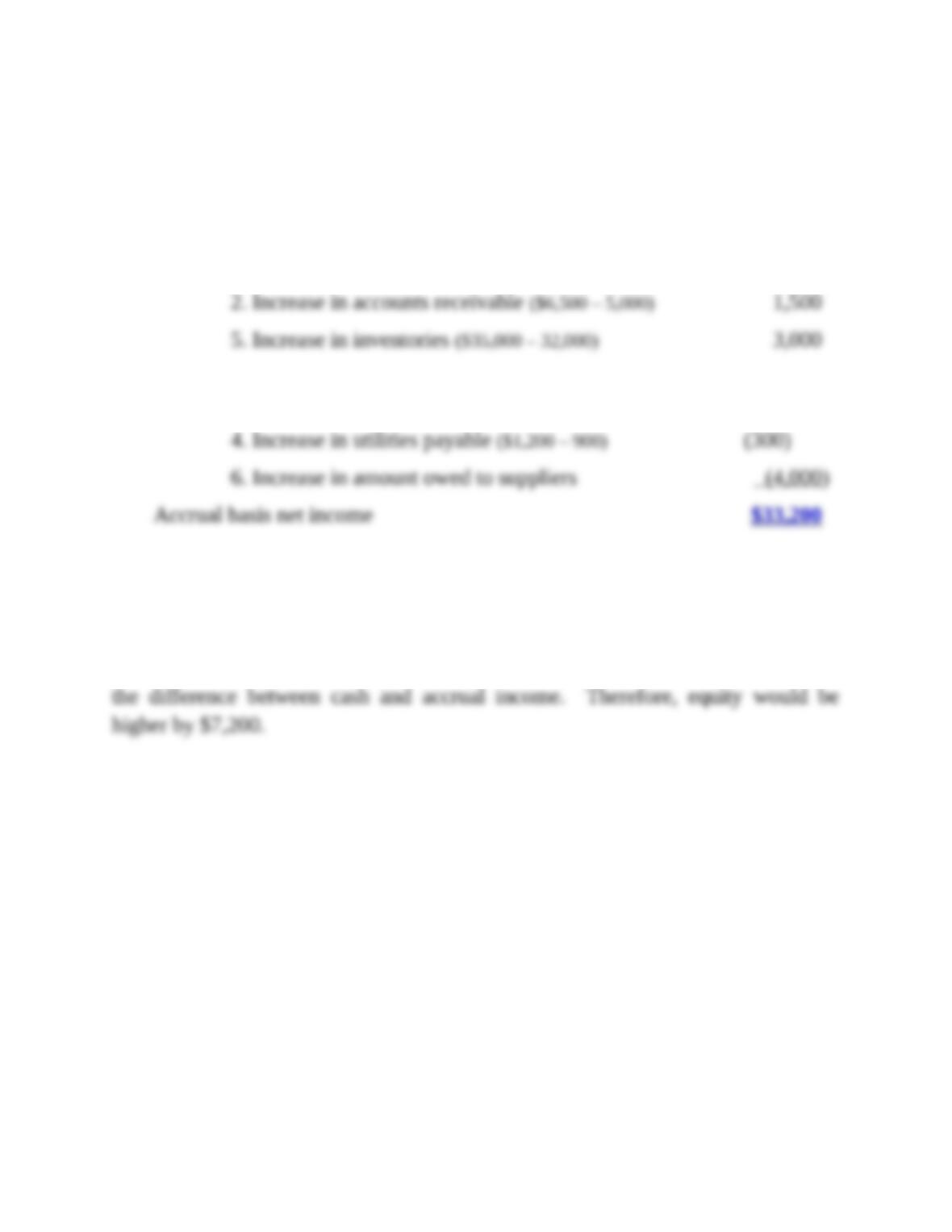
Judgment Case 2–2
Requirement 1
Cash basis net income $26,000
Add: 1. Unexpired (prepaid insurance) $12,000 x 8/12 8,000
Deduct: 3. Increase in salaries and wages payable ($8,200 – 7,200) (1,000)
Requirement 2
Assets would be higher by $12,500 ($8,000 + 1,500 + 3,000) and liabilities
would also be higher by $5,300 ($1,000 + 300 + 4,000). The difference, $7,200, is
Communication Case 2–3
Requirement 1
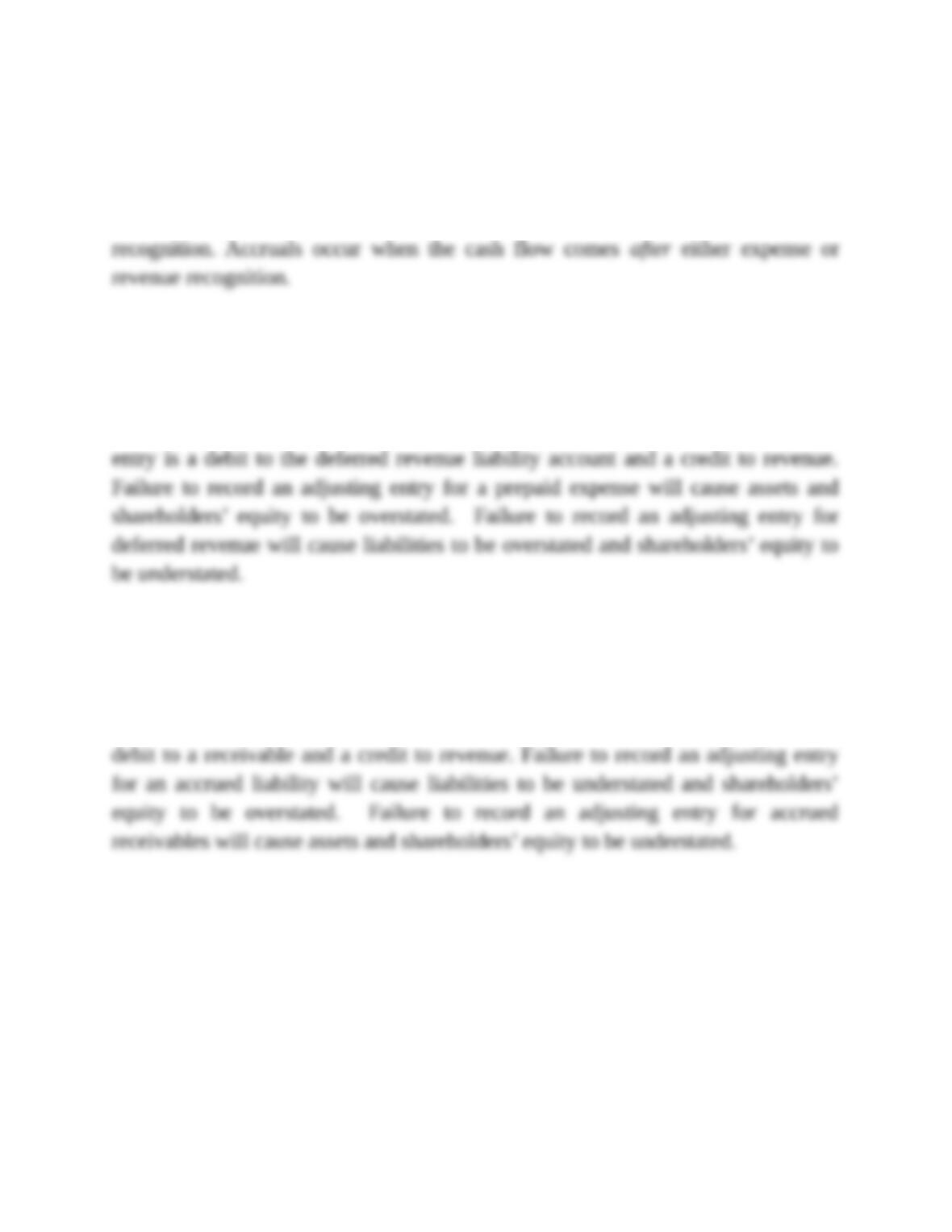
Prepayments occur when the cash flow precedes either expense or revenue
Requirement 2
The appropriate adjusting entry for a prepaid expense is a debit to expense
and a credit to the prepaid asset. For deferred revenue, the appropriate adjusting
Requirement 3
The required adjusting entry for accrued liabilities is a debit to expense and a
credit to a liability. For accrued receivables, the appropriate adjusting entry is a
Target Case
Requirement 1
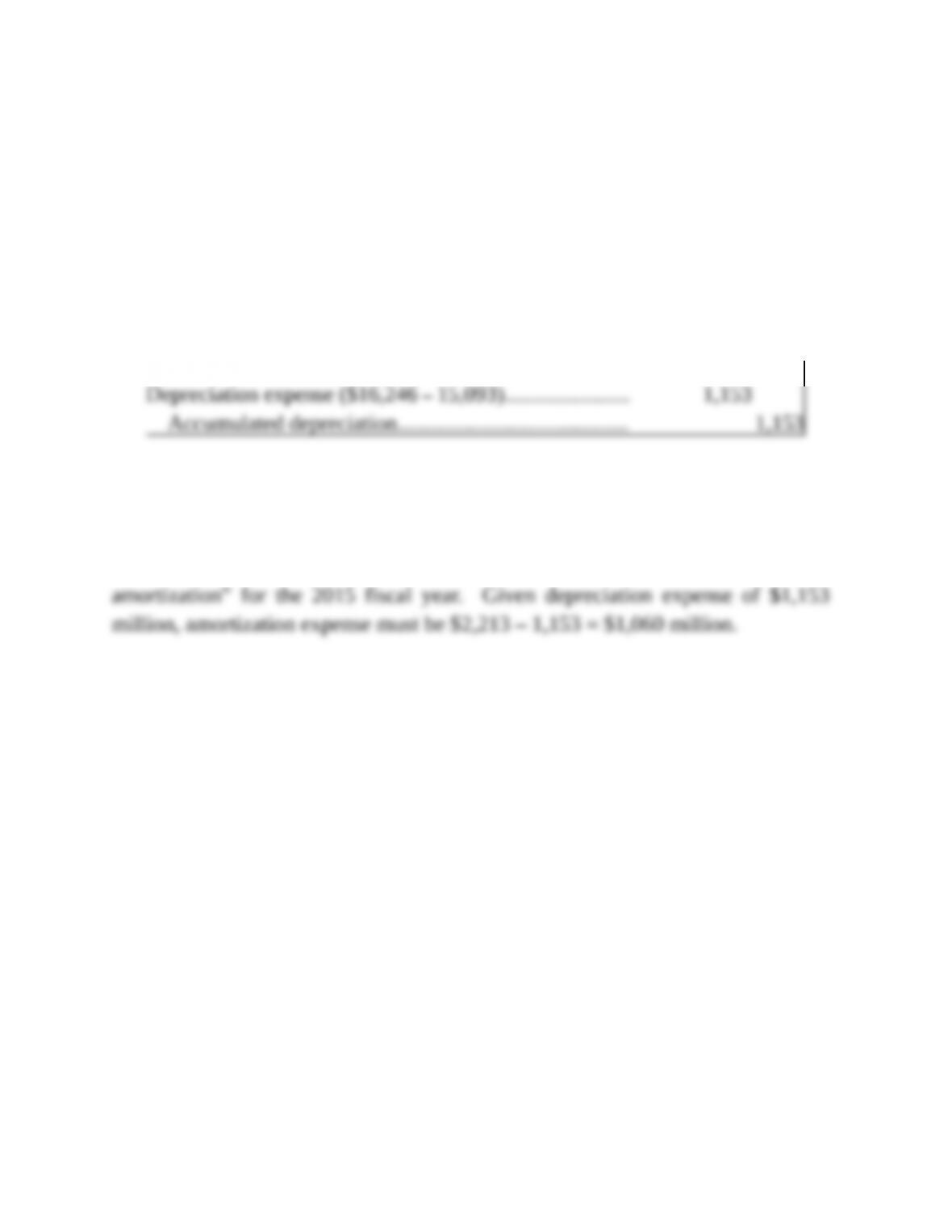
Target’s balance sheet reports accumulated depreciation of $16,246 million
and $15,093 million for the years ended January 30, 2016, and January 31, 2015,
respectively. Assuming no depreciable assets were sold during the year, Target’s
adjusting entry to record depreciation for the year would be:
($ in millions)
Requirement 2
The statement of cash flows shows $2,213 million for “depreciation and
Target Case (concluded)
Requirement 3
Note 13, “ Other Current Assets,” reports Prepaid expenses of $214 million
and $231 million for the years ended January 30, 2016, and January 31, 2015,
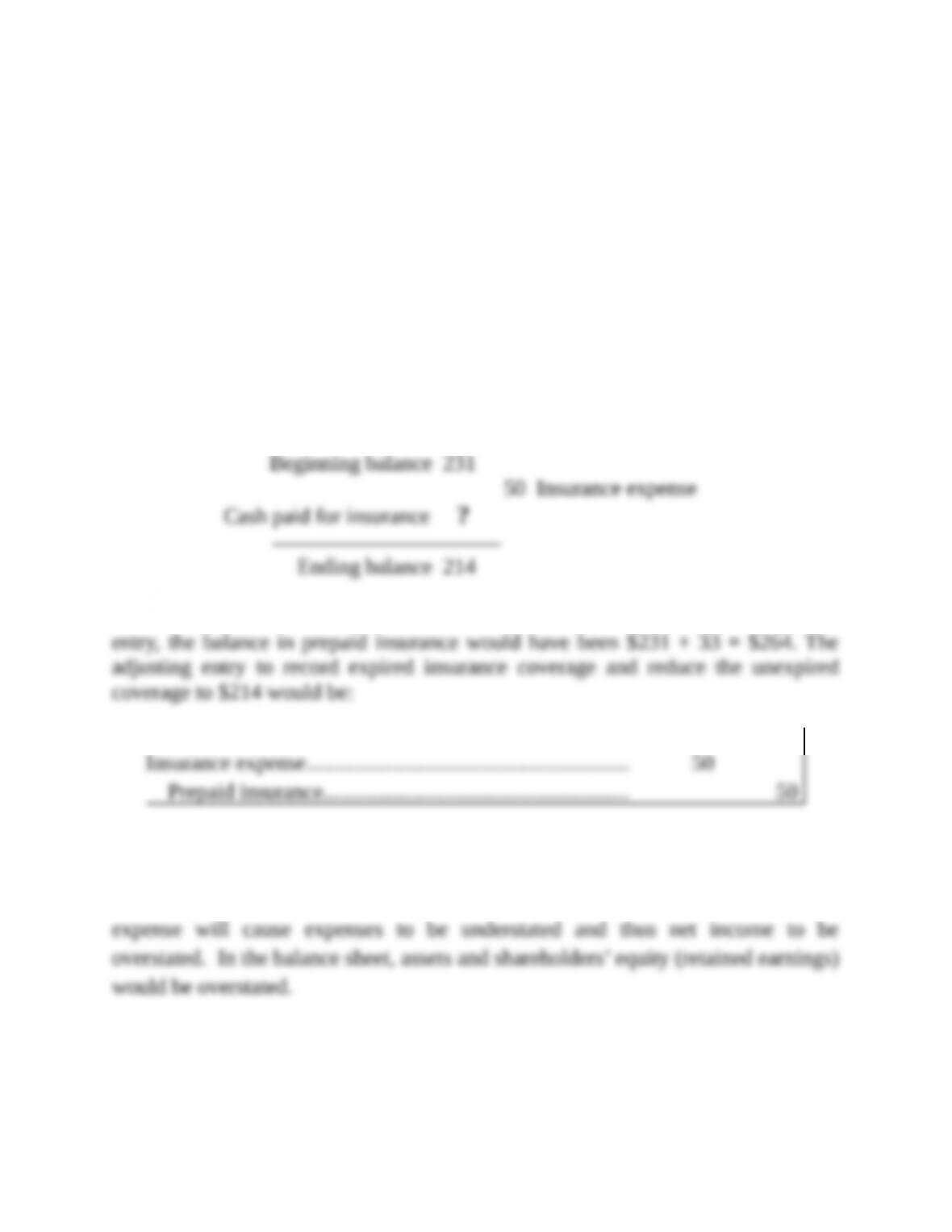
respectively. Assuming this pertains to prepaid insurance, insurance expense must
have exceeded the amount paid for insurance coverage, because the balance
decreased during the year. We can visualize the change with a T account:
Prepaid Insurance
_________________________
Cash paid for insurance must have been $33 million. Prior to the adjusting
($ in millions)
The appropriate adjusting entry for a prepaid expense is a debit to expense and
a credit to the prepaid asset. Failure to record an adjusting entry for a prepaid
Air France–KLM Case
Requirement 1
Typically, the order of presentation of the components of the balance sheet is
different between U.S. GAAP and IFRS. Looking at the balance sheet of Air
Requirement 2
Some of the differences we see in terminology occur in the Shareholders’
equity section of the balance sheet. In fact, the title of that section is simply Equity
in AF’s balance sheet. AF lists four items in the shareholders’ equity section of the
balance sheet. If AF used U.S. GAAP, Issued share capital would be Common