Problem 19–19 (continued)
Requirement 2
(amounts in millions, except per share amount)
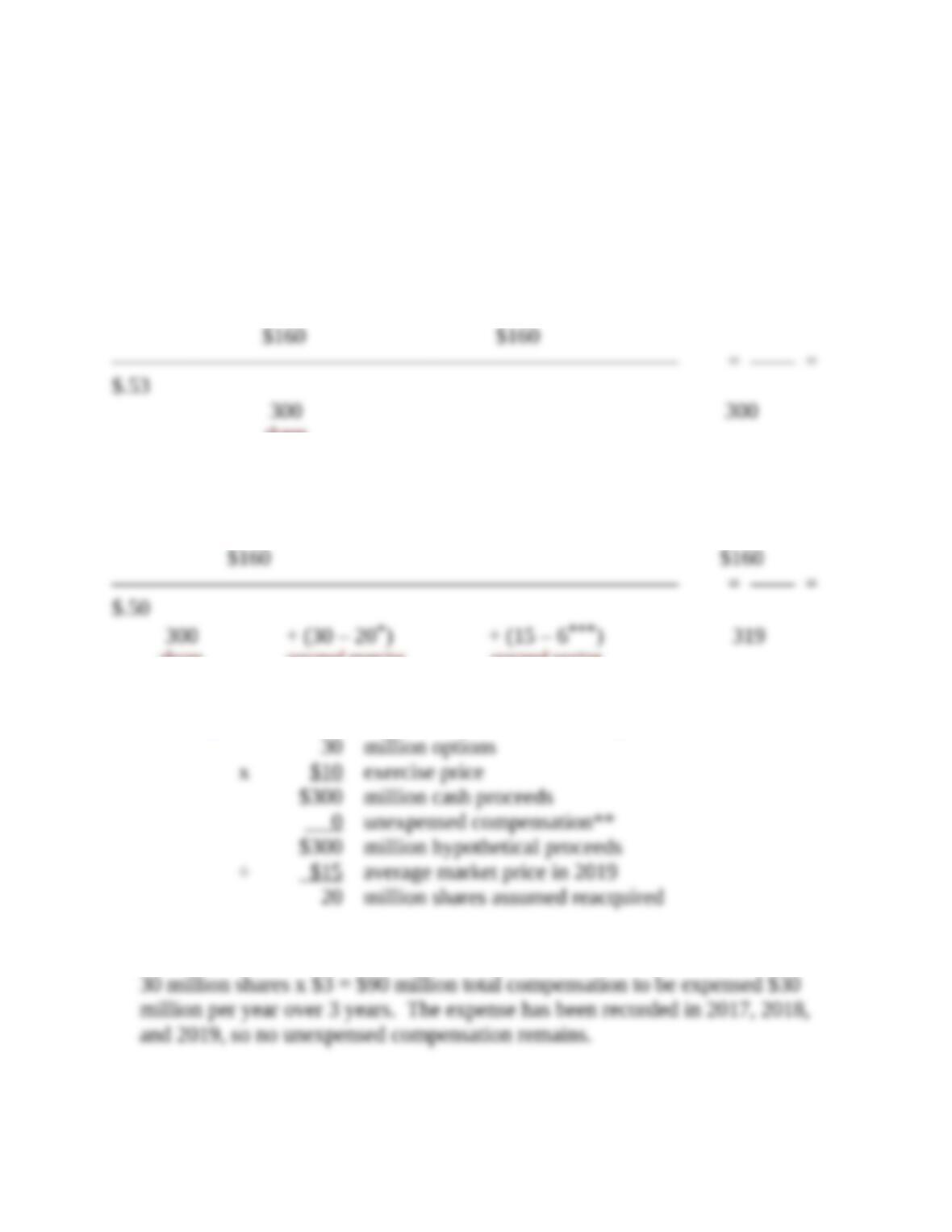
2019 Basic EPS
net
income
shares
at Jan. 1
2019 Diluted EPS
net
income
shares assumed exercise assumed vesting
at Jan. 1 of options of restricted stock
* Reacquired shares for assumed exercise of stock options in 2019:
** Calculation of proceeds from unexpensed compensation:
Problem 19–19 (concluded)
Restricted Stock Award
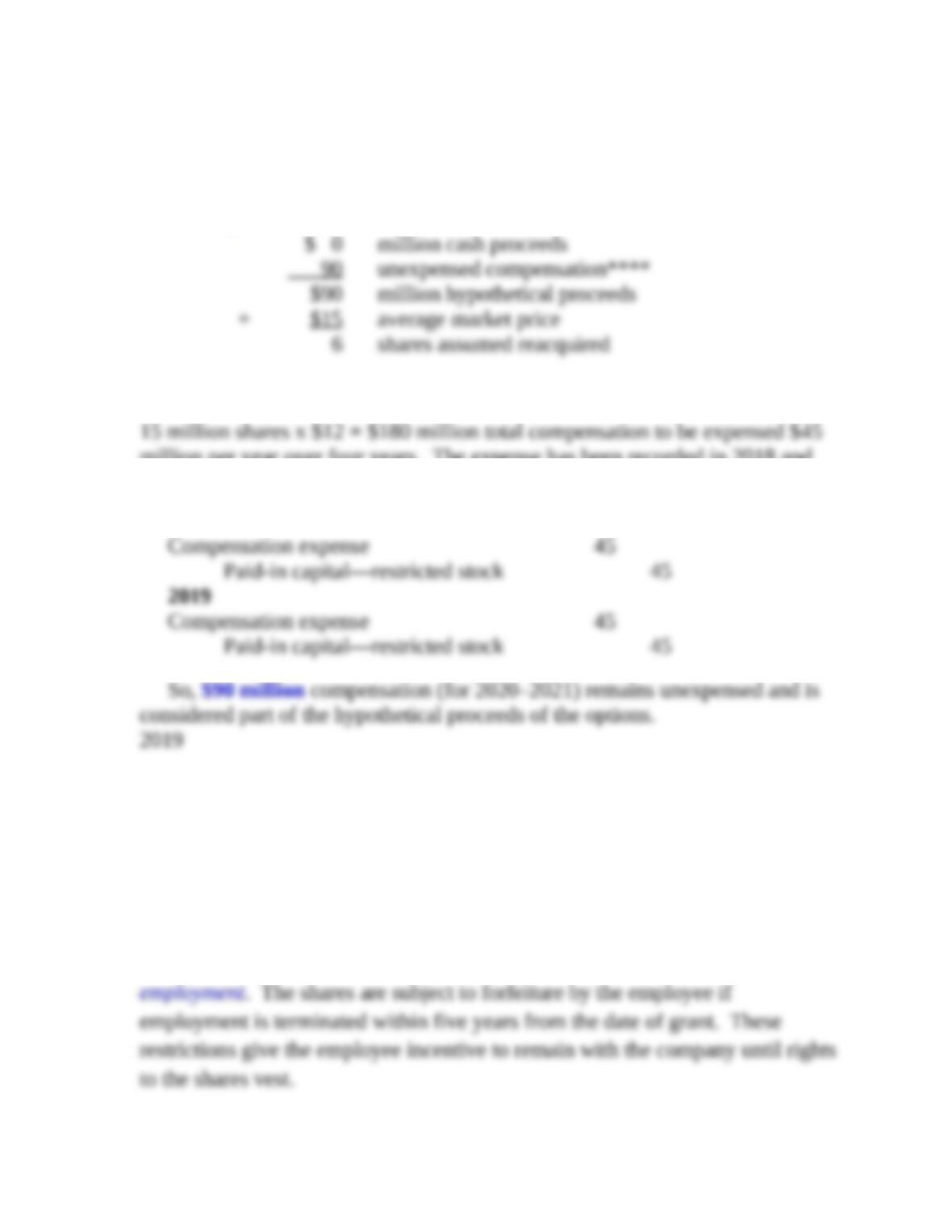
*** Reacquired shares for assumed vesting of restricted stock in 2019:
**** Calculation of proceeds from unexpensed compensation:
million per year over four years. The expense has been recorded in 2018 and
2019:
2018 ($ in millions)
Real World Case 19–1
Requirement 1
The shares are restricted in such a way as to provide some incentive to the
recipient. Microsoft’s restricted stock award plans are tied to continued
CASES
Requirement 2
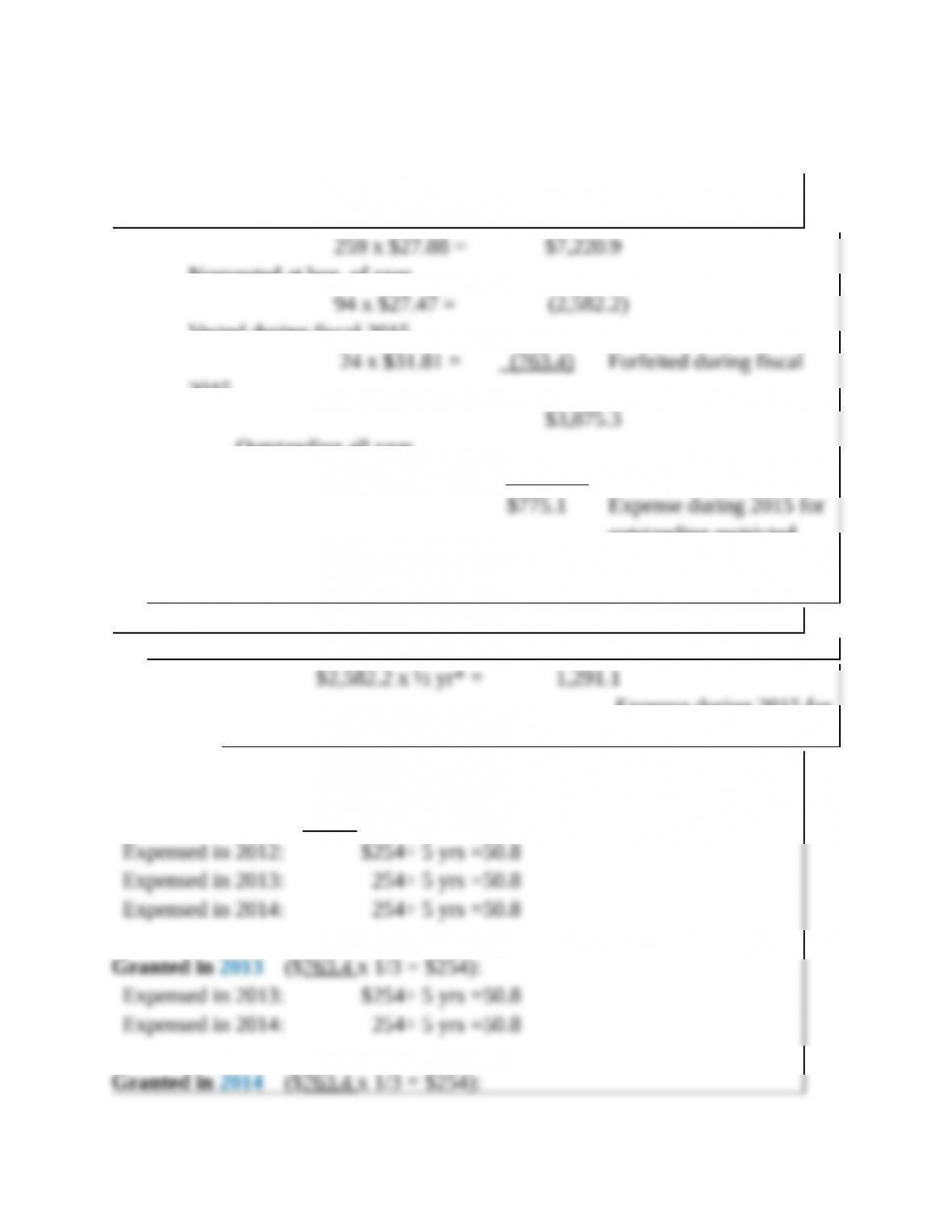
Compensation pertaining to pre-2015 grants:
Outstanding all year:
Nonvested at beg. of year
Vested during fiscal 2015
2015
Outstanding all year
Expense during 2015 for
vested shares
Forfeited in 2015:
Granted in 2012 ($763.4 x 1/3 = $254):

forfeited shares**
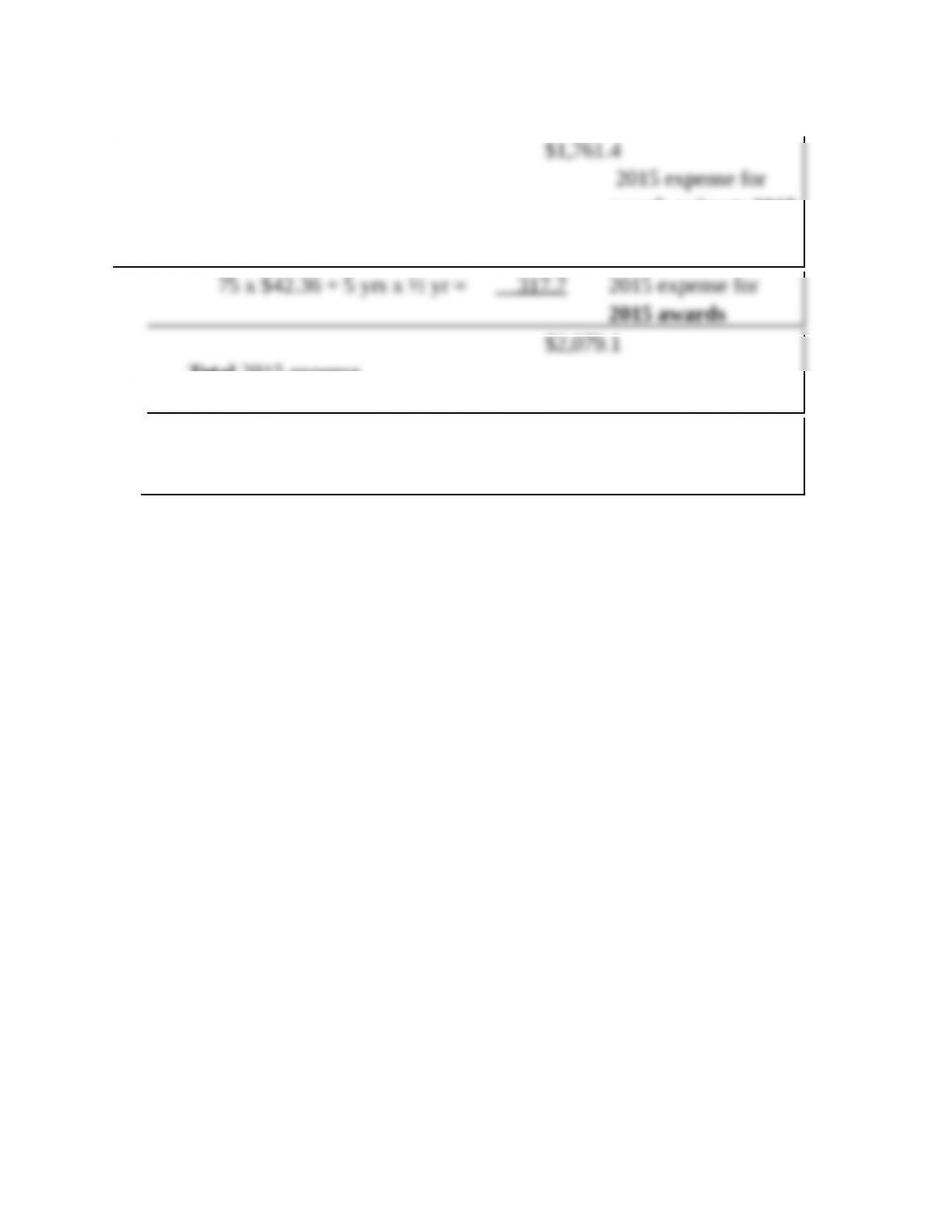
2015 expense for
awards prior to 2015
(concluded)
awards prior to 2015
2015 grants:
Total 2015 expense
* vested evenly throughout the year
** expense is reduced in year of forfeiture for amount expensed in previous years
Communication Case 19–2
Suggested Grading Concepts and Grading Scheme:
Content (80%)
30 Measurement of compensation.
Compensation cost should be measured at the date of grant.
25 Determination of compensation expense.
Expensed over the period of service for which the
options are given, 2018–2020.
15 Effect of forfeiture before vesting.
10 Effect of forfeiture after vesting.
Bonus (5) For unvested, nonqualifying options:
Bonus (5) Option pricing model considers:
Exercise price of the option.
Expected term of the option.
80–85 points

Case 19–2 (concluded)
Writing (20%)
5 Terminology and tone appropriate to the audience of controller.
6 Organization permits ease of understanding.
Ethics Case 19–3
Discussion should include these elements:
Facts:
The choice of method will affect earnings. FIFO will increase reported net
income.
FIFO will cause an increase in taxes paid.
Company managers stand to benefit from the change.
The auditor risks negative consequences if the change is challenged.
Ethical Dilemma:
Is the auditor’s obligation to challenge the questionable change in methods
greater than the obligation to the financial interests of the CPA firm and its
client?
Who is affected?
You, the auditor
Managers
CPA firm (lost fees? reputation? legal action?)
Shareholders
Potential shareholders
The employees
The creditors
[From research performed in this area, it is not clear that accounting changes
that increase earnings without any real economic (cash flow) effect will have the
desired effect of increasing share price. In fact, the preponderance of such
research indicates that the market “sees through” cosmetic accounting changes.
Nevertheless, there is plenty of evidence, at least anecdotal, that managers
attempt to fool the market. Some efforts to manage earnings may not be an
attempt to affect share prices, but to avoid violating terms of contracts based on
earnings or related balance sheet items. Some may be to favorably affect terms
of compensation agreements.]
Trueblood Accounting Case 19–4
A solution and extensive discussion materials accompany each case in the Deloitte
& Touche Trueblood Case Study Series. These are available to instructors at:
www.deloitte.com/us/truebloodcases.
Real World Case 19–5
Requirement 1
Whether an incentive plan is a stock option plan, a stock award plan, a
performance award plan, or one of the various similar plans, the intention is to
Requirement 2
The $448 million Walmart reported as share-based expense in 2016 includes,
among amounts for other forms of share-based compensation, that period’s portion
of the value of options granted in 2016 and prior years. Each reporting period,
Ethics Case 19–6
Discussion should include these elements.
Effect of share repurchase on EPS.
Reducing the number of shares will increase earnings per share. That
impact will be lessened, though, the closer to the end of the year the shares
are bought due to the way the share reduction is “time-weighted” for the
fraction of the year they are not outstanding.
Ethical Dilemma:
Apparently, a more productive use for available funds will be offered by
Barber. How does a less-than-optimal use of company funds compare with
the perceived need to maintain a record of increasing reported EPS?
Who is affected?
Mashburn
Lane
Managers under the bonus plan
Shareholders
Potential shareholders
Employees
Creditors