Requirement 1
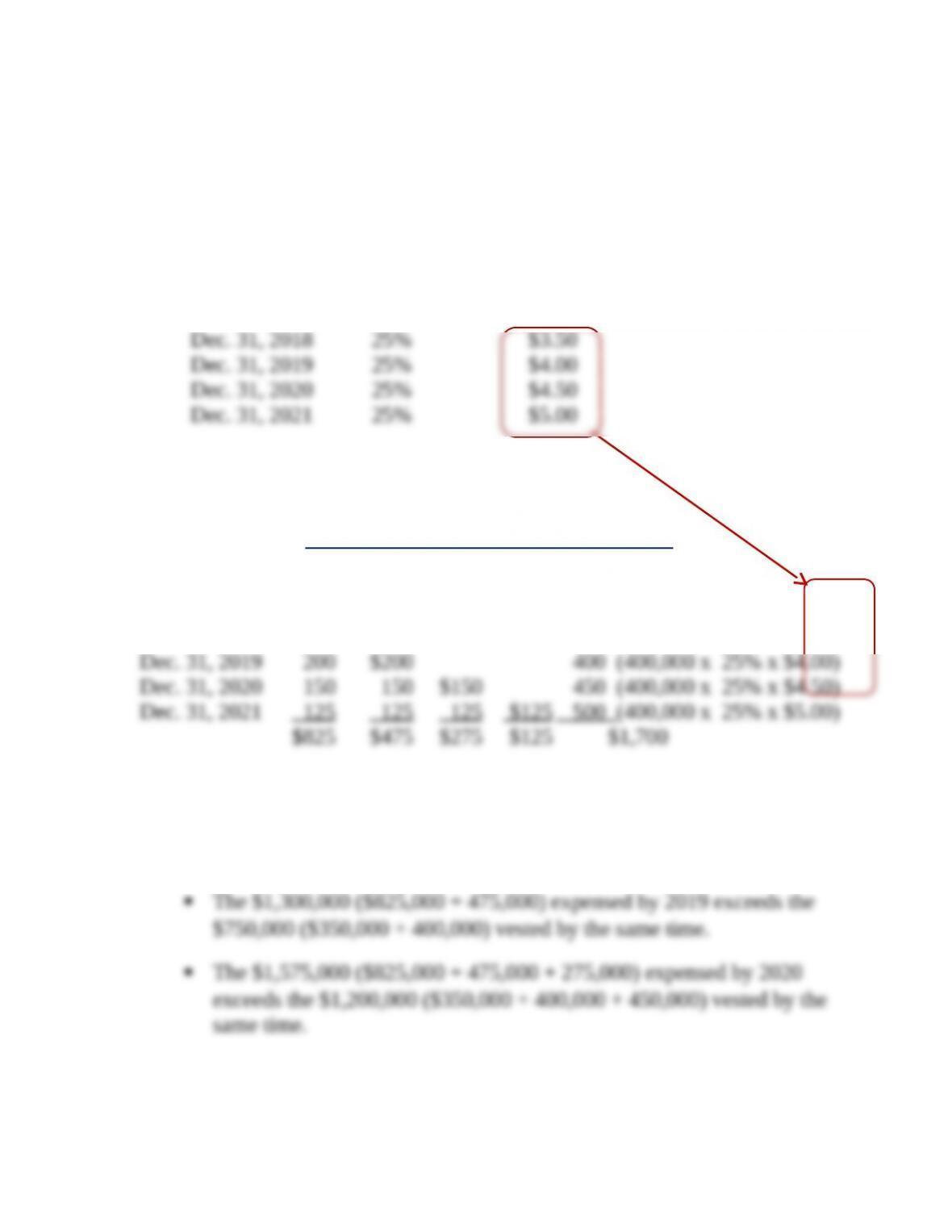
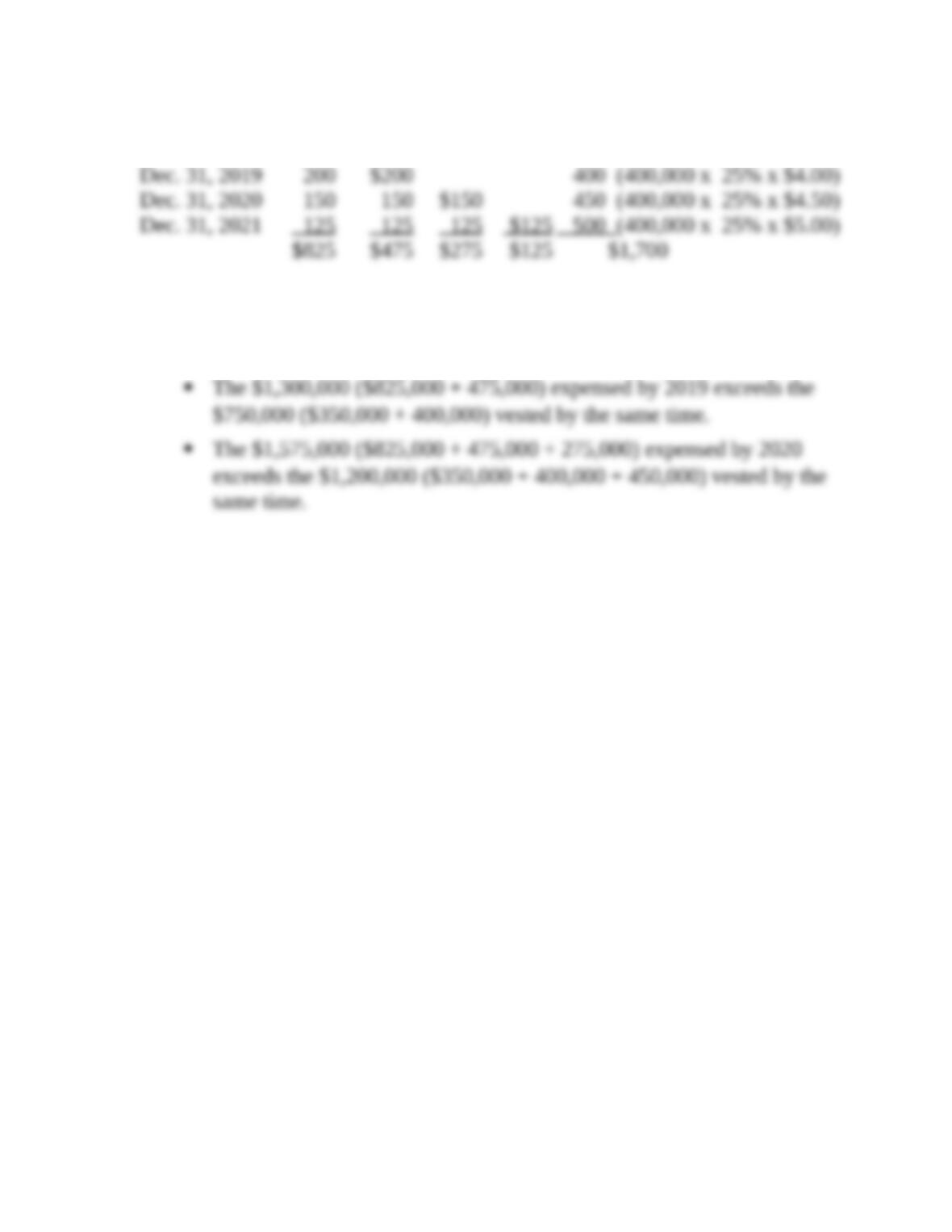
We treat each individual vesting date as a separate award and
allocate the compensation cost for each of the four groups (tranches) evenly
over its individual vesting (service) period:
Vesting Amount Fair Value
Date Vesting per Option
The compensation cost is allocated evenly over the appropriate vesting (service)
period: ($ in 000s)
Shares Compensation Expense in:
Vesting at: 2018 2019 2020 2021 Total
Dec. 31, 2018 $350 $ 350 (400,000 x 25% x
$3.50)
Also, a company must have expensed at least the amount vested by that date.
The allocation here meets that constraint:
The $825,000 recognized in 2018 exceeds the $350,000 vested.
Problem 19–2
Problem 19–2 (concluded)
Requirement 2
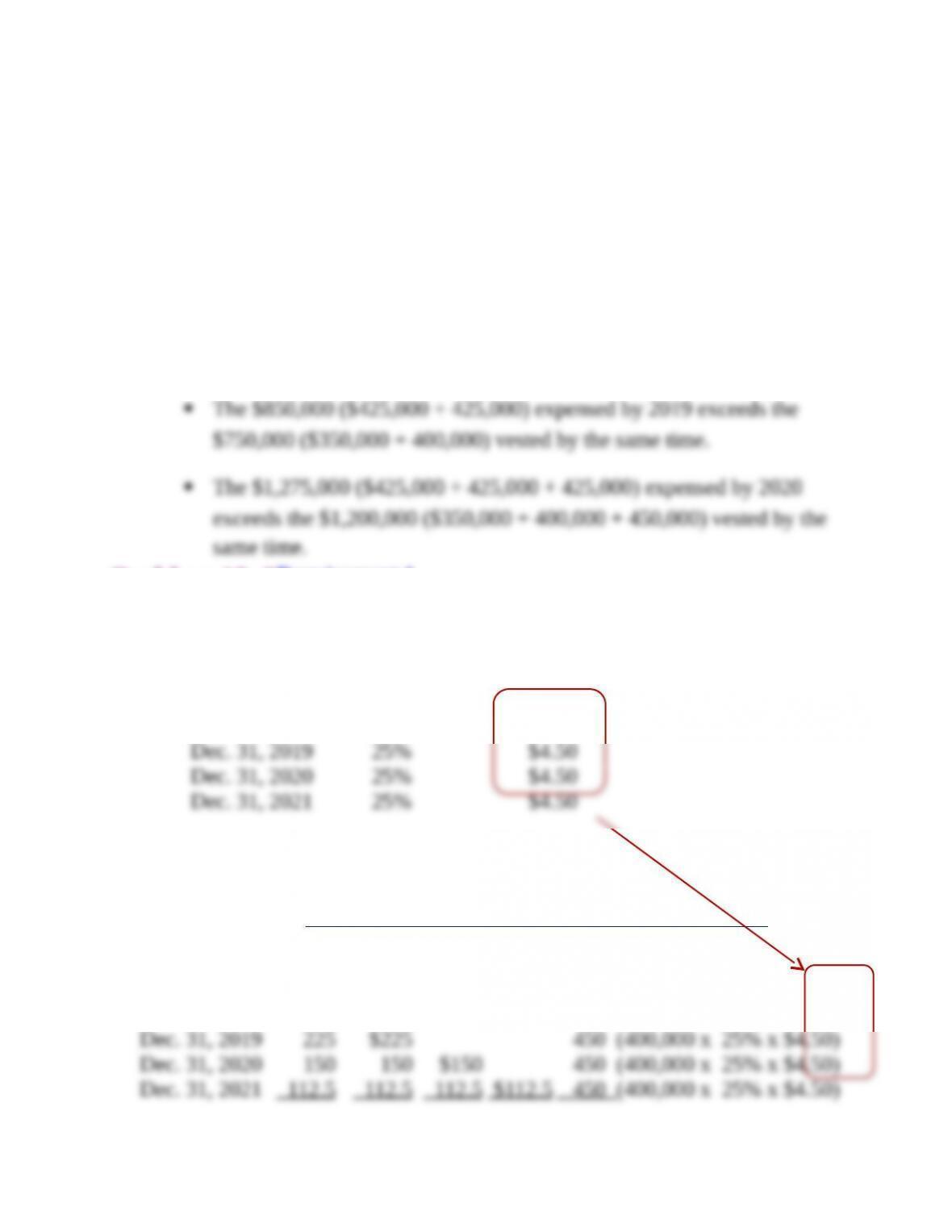
Companies are allowed to use the straight-line method. The $1,700,000 total
compensation cost is allocated equally to 2018, 2019, 2020, and 2021 at
$425,000 per year. Also, a company must have expensed at least the amount
vested by that date. The straight-line allocation meets that constraint:
The $425,000 expensed in 2018 exceeds the $350,000 vested.
Requirement 1
We treat each individual vesting date as a separate award:
Vesting Number Fair Value
Date Vesting per Option
Dec. 31, 2018 25% $4.50
The compensation cost is allocated equally over the appropriate vesting
(service) period: ($ in 000s)
Shares Compensation Expense Recorded in:
Vesting at: 2018 2019 2020 2021 Total
Dec. 31, 2018 $450 $ 450 (400,000 x 25% x
$4.50)
Problem 19–3
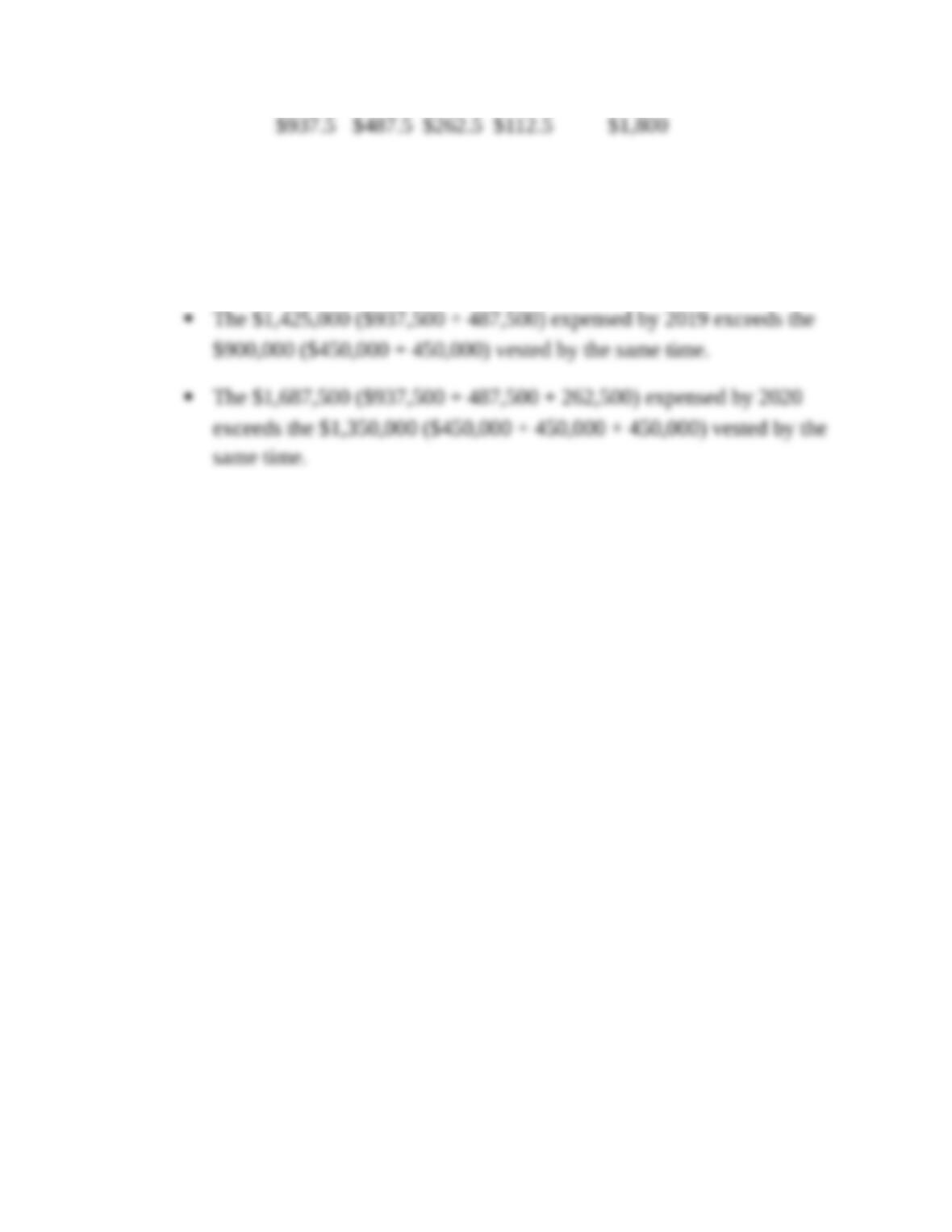
Also, a company must have expensed at least the amount vested by that date.
The allocation here meets that constraint:
The $937,500 expensed in 2018 exceeds the $450,000 vested.
Problem 19–3 (concluded)
Requirement 2
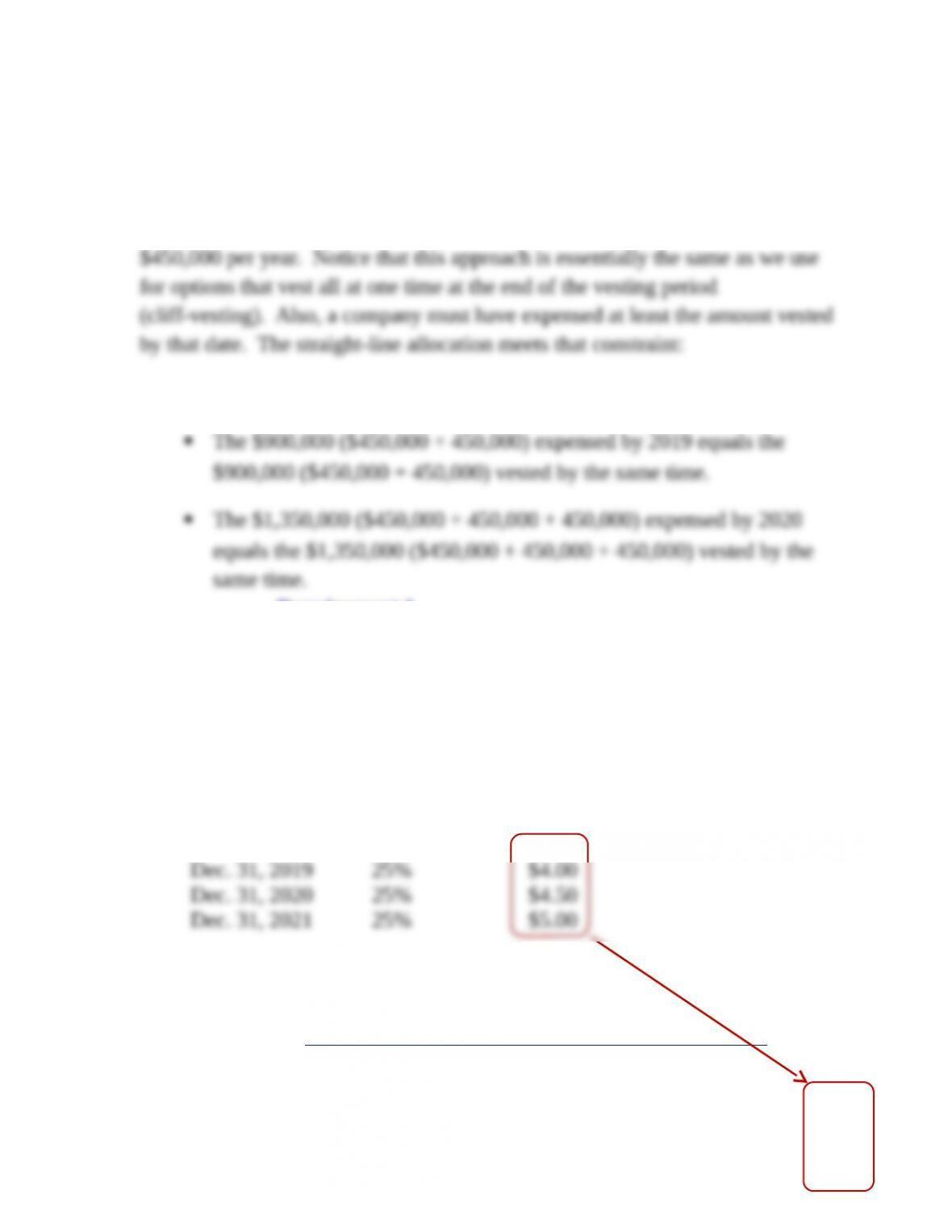
Companies are allowed to use the straight-line method. The $1,800,000 total
compensation cost is allocated equally to 2018, 2019, 2020, and 2021 at
The $450,000 expensed in 2018 equals the $450,000 vested.
Requirement 1
Using IFRS, the basic accounting would be the same as
under U.S. GAAP, except there is no specific requirement that a company must
have recognized at least the amount vested by that date. We treat each
individual vesting date as a separate award:
Vesting Amount Fair Value
Date Vesting per Option
Dec. 31, 2018 25% $3.50
The compensation cost is allocated equally over the appropriate vesting
(service) period: ($ in 000s)
Shares Compensation Expense Recorded in:
Vesting at: 2018 2019 2020 2021 Total
Problem 19–4
Dec. 31, 2018 $350 $ 350 (400,000 x 25% x
$3.50)
Also, a company must have expensed at least the amount vested by that date.
The allocation here meets that constraint:
The $825,000 expensed in 2018 exceeds the $350,000 vested.
Requirement 2
Under IFRS companies are not permitted to use the straight-line method.
Requirement 1
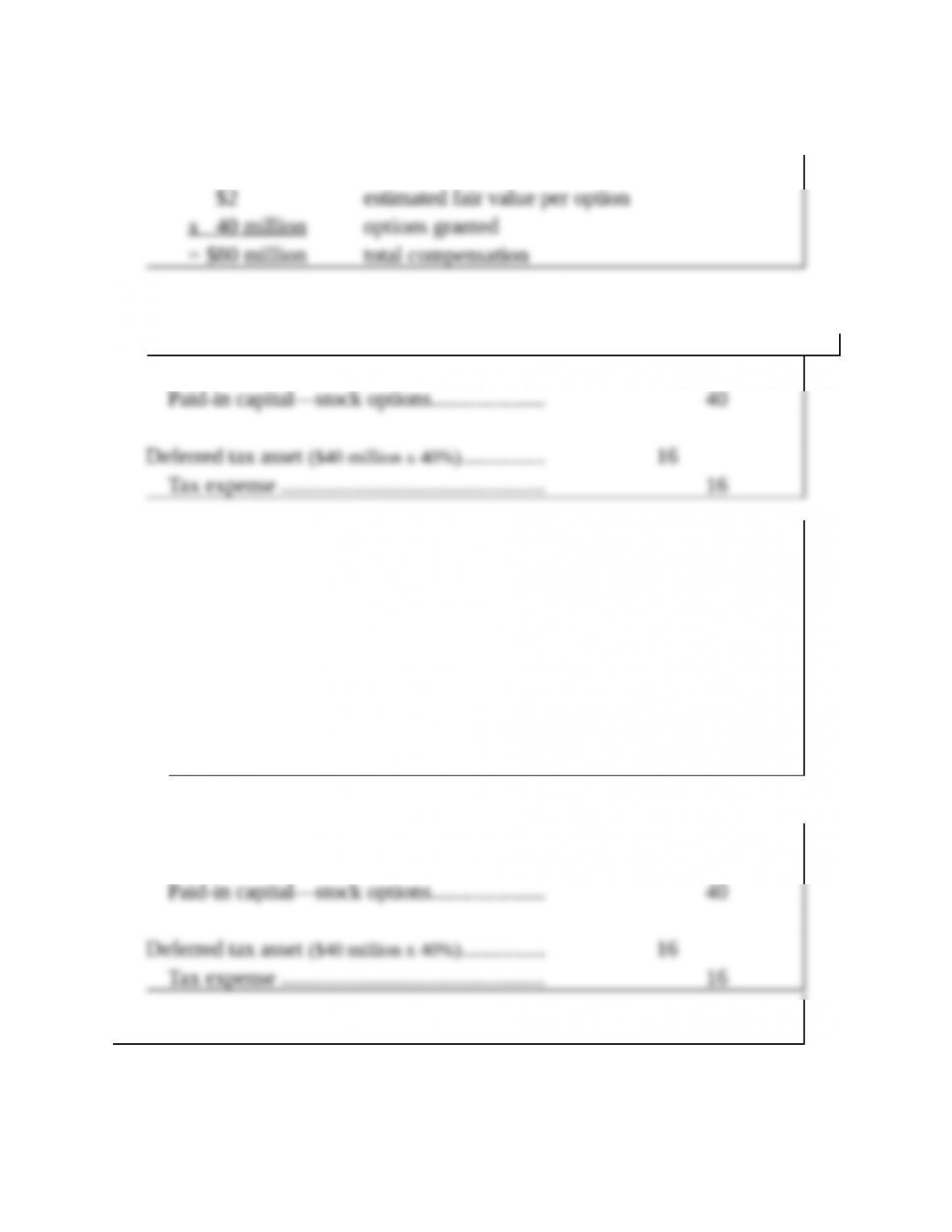
At January 1, 2018, the estimated value of the award is:
Requirement 2
($ in millions)
Compensation expense ($80 million ÷ 2 years)... 40
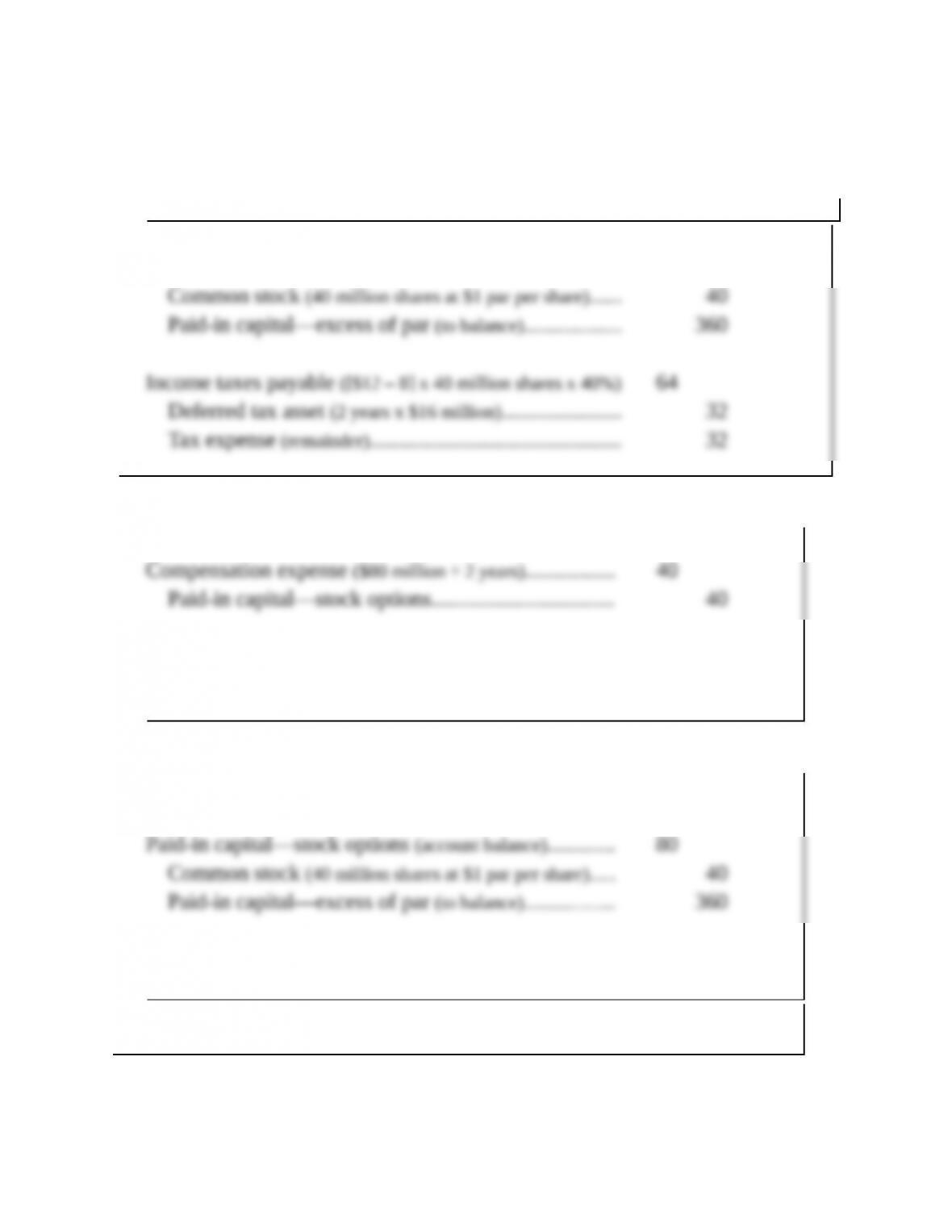
Note: Since the plan does not qualify as an incentive plan, Walters will
deduct the difference between the exercise price and the market
price at the exercise date. Recall from Chapter 16 that this creates a
temporary difference between accounting income (for which
compensation expense is recorded currently) and taxable income
(for which the tax deduction is taken later upon the exercise of the
options). We assume the temporary difference is the cumulative
amount expensed for the options, $40 million at this point. So, the
deferred tax benefit is 40% x $40 million.
Requirement 3
Compensation expense ($80 million ÷ 2 years)... 40
Problem 19–5
Problem 19–5 (concluded)
Requirement 4
($ in millions)
Cash ($8 exercise price x 40 million shares)………………....… 320
Paid-in capital—stock options (account balance)……….… 80
Requirement 5
No deferred tax asset is recorded because an incentive plan does not
provide the employer a tax deduction.
Requirement 6
Cash ($8 exercise price x 40 million shares)…………………... 320
No tax effect because an incentive plan does not provide the employer a
tax deduction.
Problem 19–6
Requirement 1
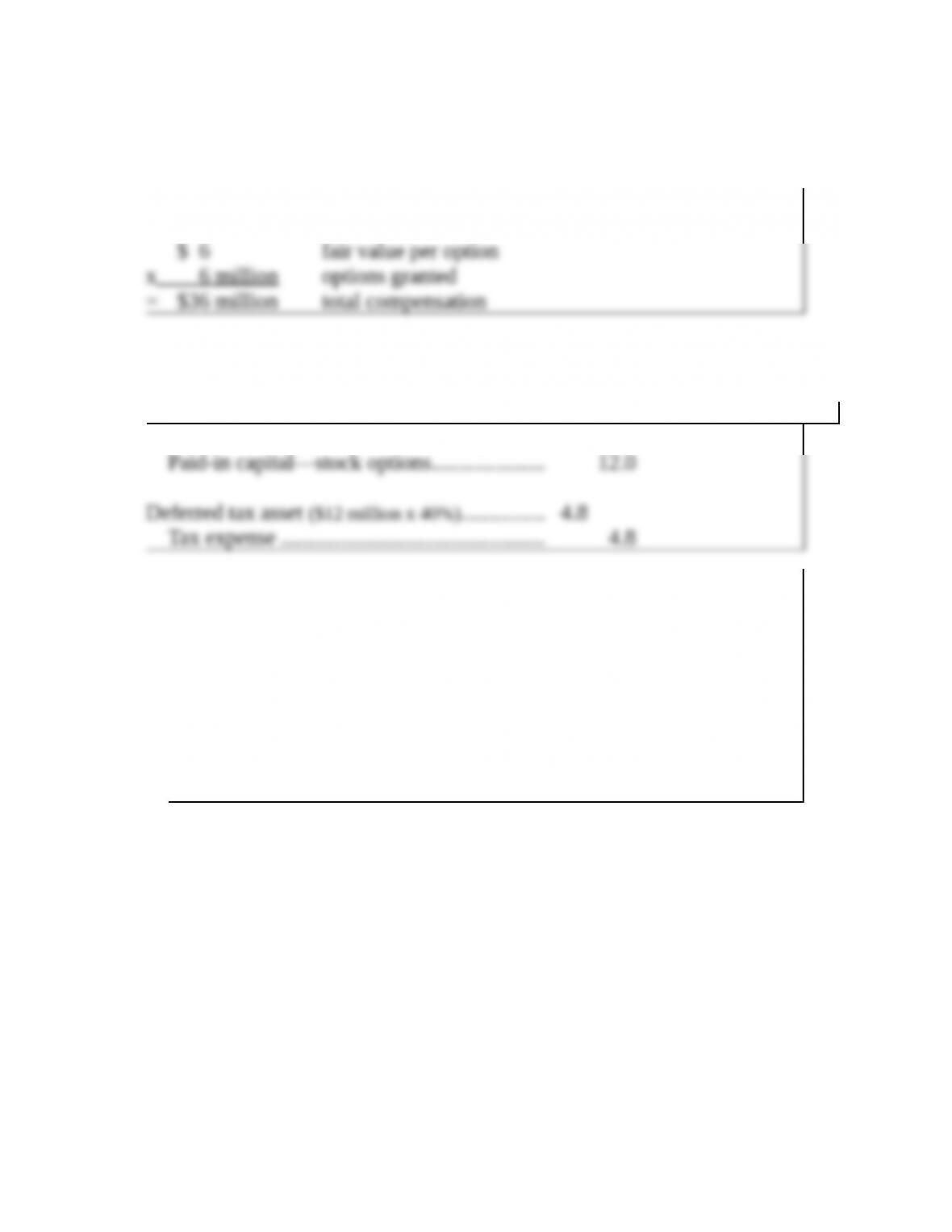
At January 1, 2018, the total compensation is measured as:
Requirement 2
Dec. 31, 2018, 2019, 2020
($ in millions)
Compensation expense ($36 million ÷ 3 years)... 12.0
Note: Since the plan does not qualify as an incentive plan, JBL will deduct
the difference between the exercise price and the market price at the
exercise date. Recall from Chapter 16 that this creates a temporary
difference between accounting income (for which compensation expense
is recorded currently) and taxable income (for which the tax deduction is
taken later upon the exercise of the options). Under GAAP, we assume
the temporary difference is the cumulative amount expensed for the
options, $12 million, $24 million, and $36 million at Dec. 31, 2018, 2019,
and 2020, respectively. So, the deferred tax benefit is 40% of that amount
each year.
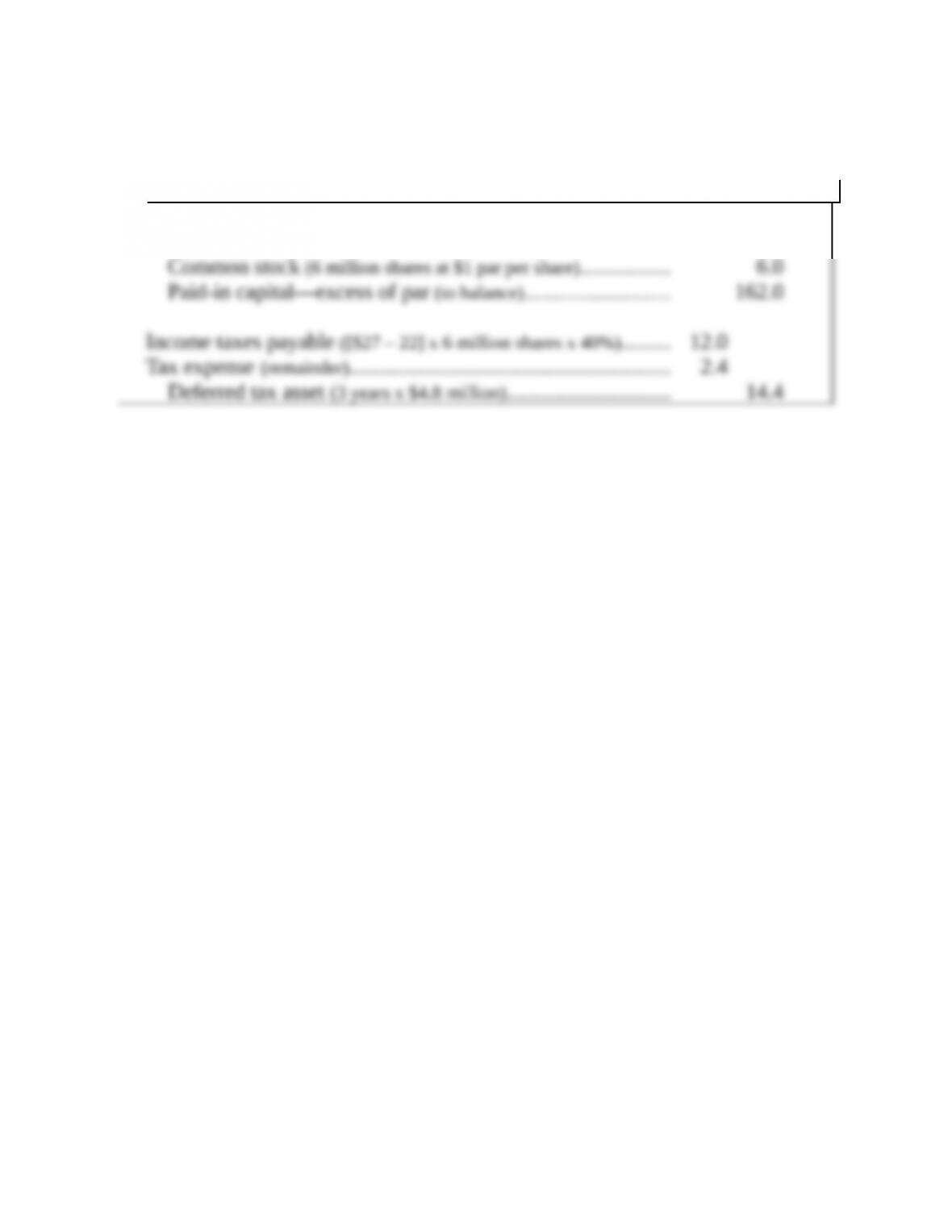
Requirement 3
August 21, 2022
($ in millions)
Cash ($22 exercise price x 6 million shares)…………………………….. 132.0
Paid-in capital—stock options (account balance)………….......... 36.0